
Why humidity causes trouble

Moisture can make melted chocolate seize and can dissolve sugar on the surface. When that moisture later evaporates, a rough pale coating known as sugar bloom may remain.
Keep equipment completely dry
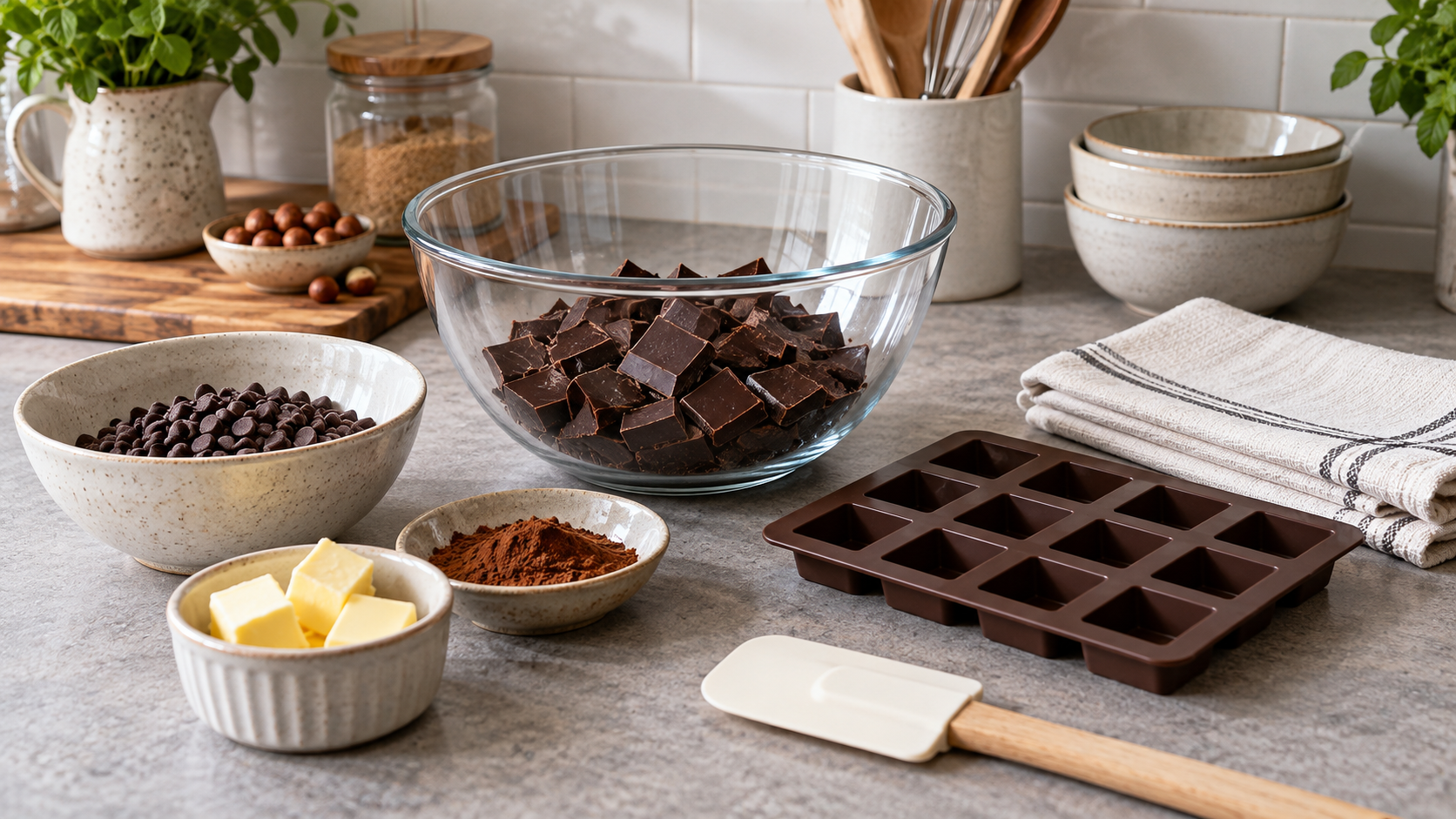
Dry bowls, moulds and utensils thoroughly before starting. Keep pans of boiling water, wet cloths and steam away from the chocolate workspace.
Control the room
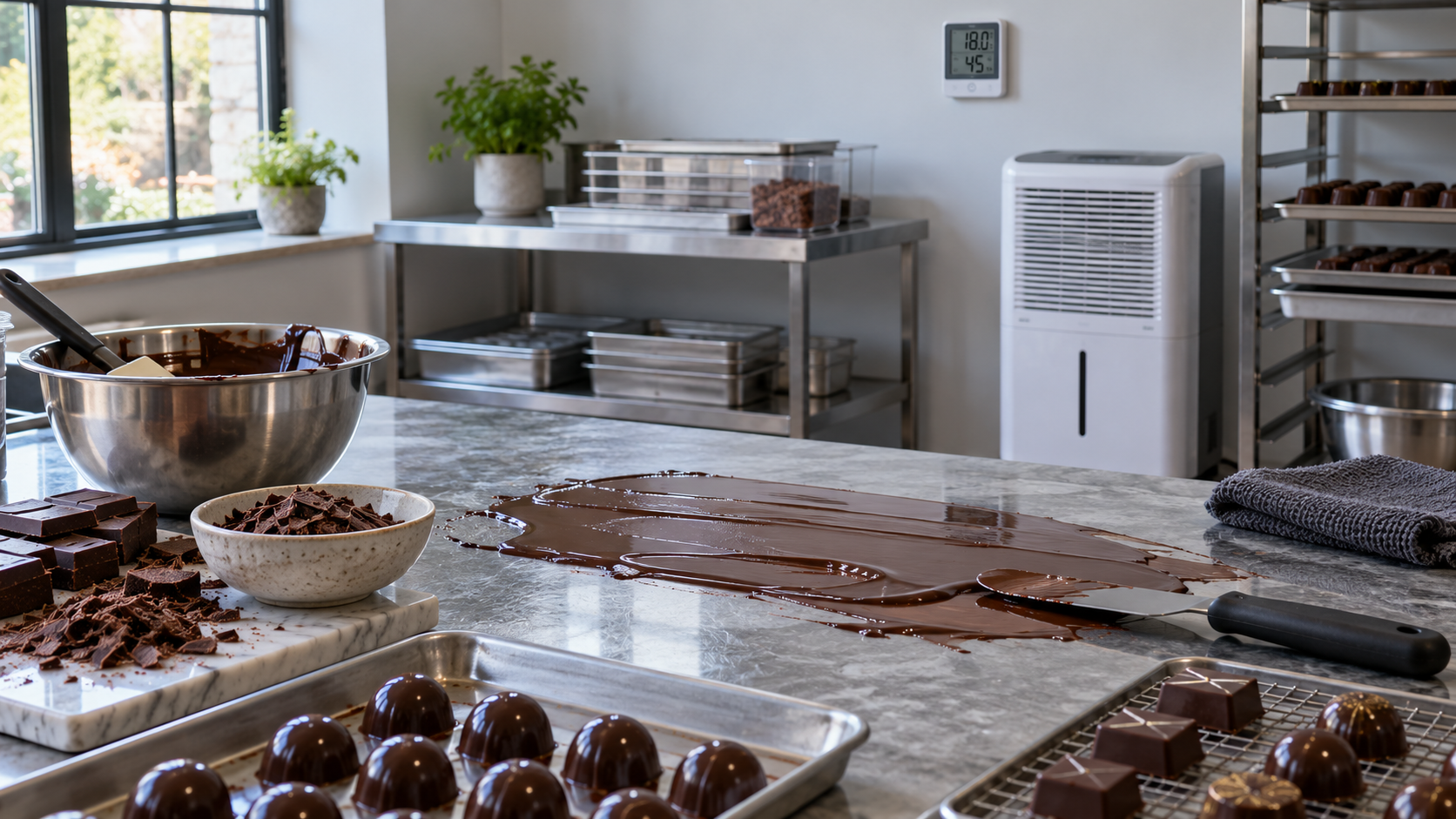
If possible, work in an air-conditioned or dehumidified room and monitor both temperature and relative humidity. A cool room alone is not enough when surfaces are damp.
Avoid condensation

Moving cold chocolate into warm humid air causes condensation. Keep chilled items wrapped while they gradually approach room temperature, then open the package only when the surface is no longer cold.
Temper in small batches
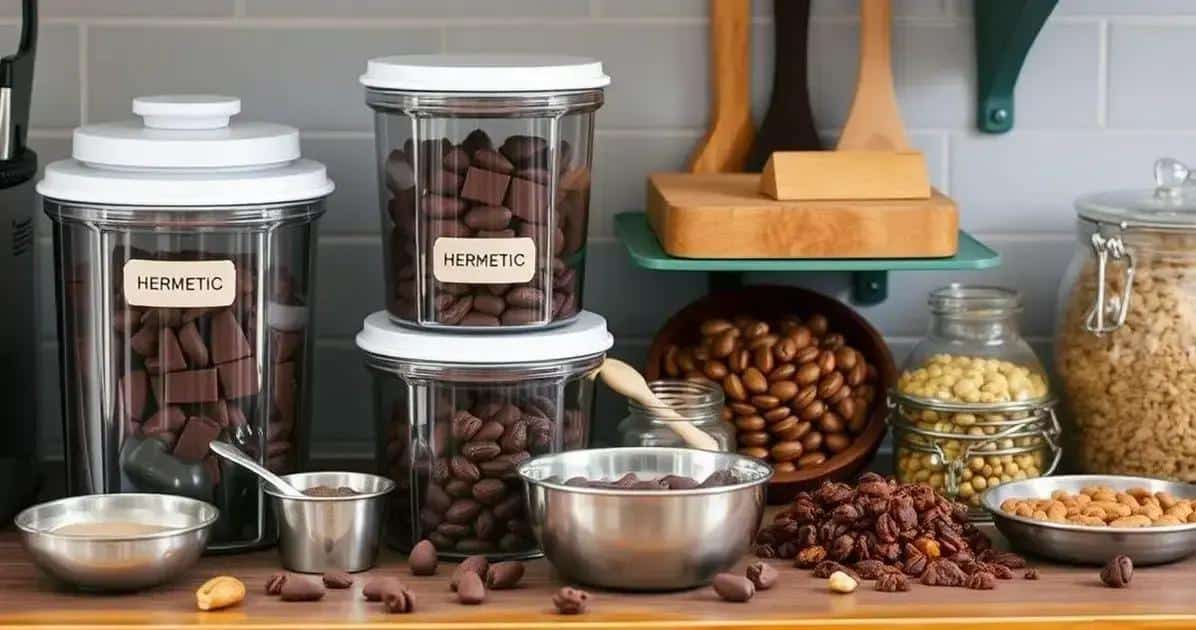
Prepare only the quantity you can mould or dip promptly. Check the chocolate’s working temperature and rewarm gently within its tempering range if it thickens.
Package only when set
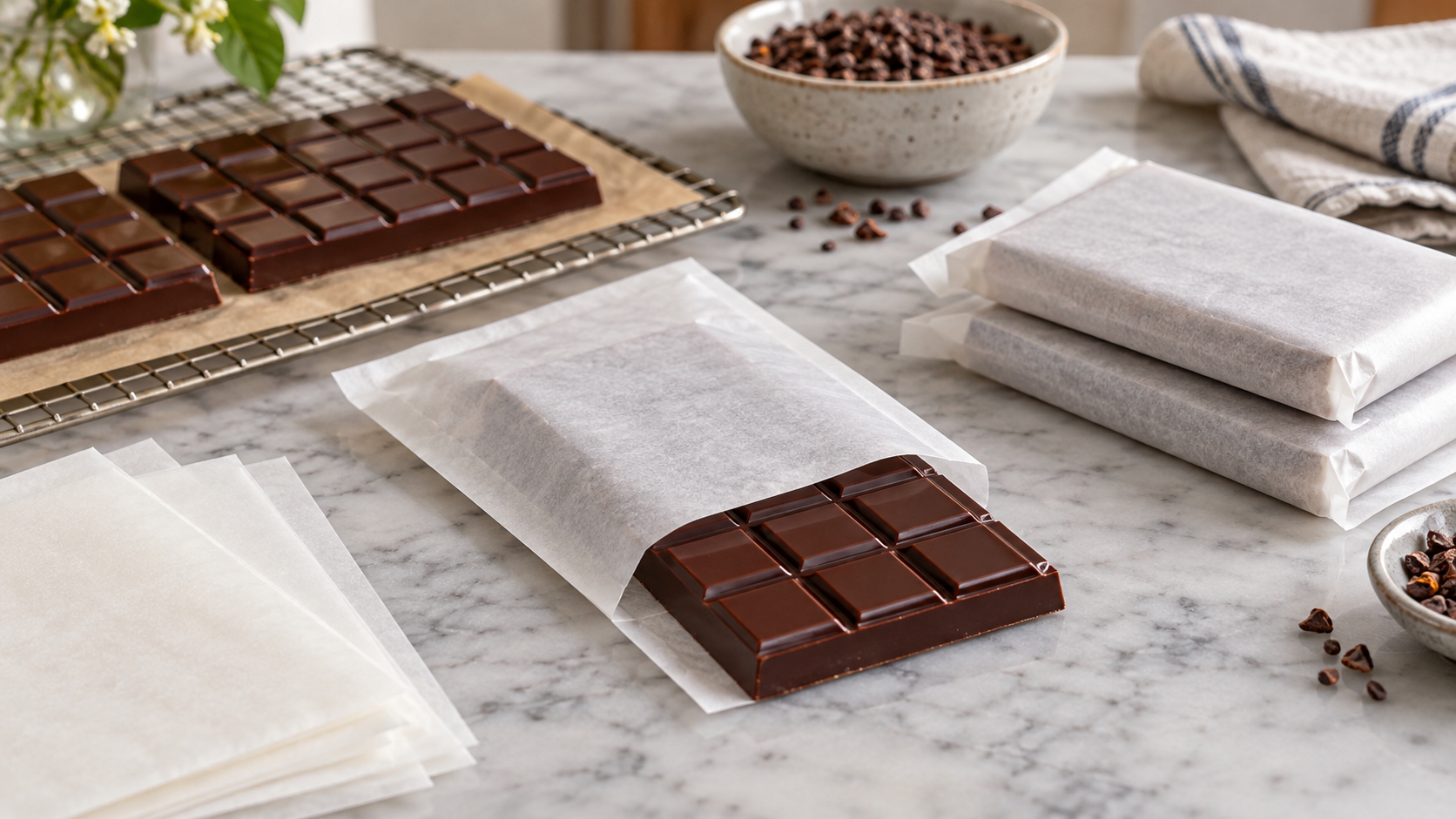
Allow pieces to crystallise fully before wrapping. Trapped moisture damages shine and can soften dry decorations or labels.
Store finished chocolate carefully
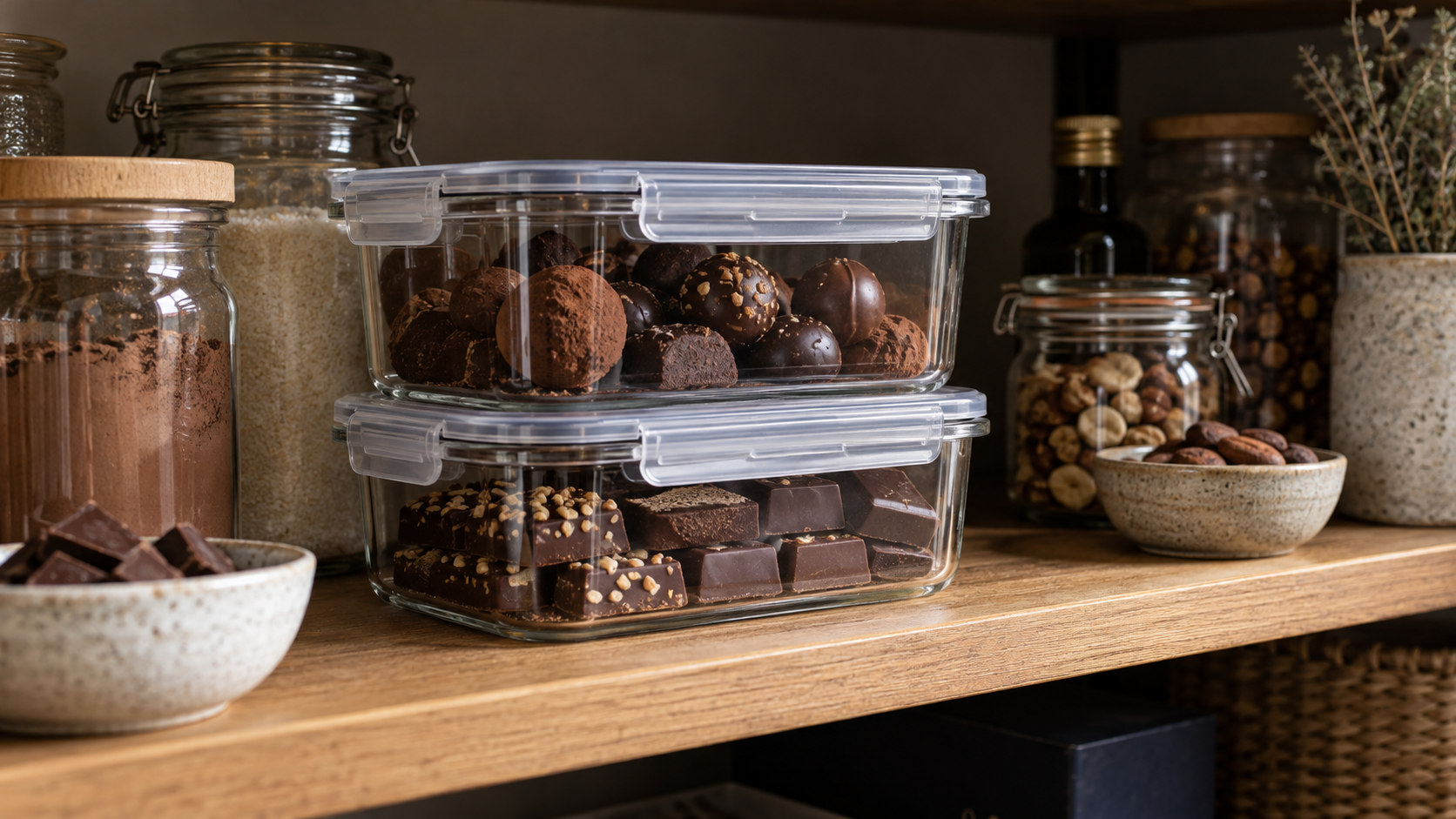
Use airtight food-safe packaging and keep finished products away from heat, sunlight and strong smells. Avoid refrigerators unless the product requires chilling, and manage condensation whenever it returns to room temperature.
Frequently asked questions
Can I use chocolate chips?
Sometimes. Chips are designed to hold their shape in baking and may be too thick for smooth dipping or moulding.
Can I replace dark chocolate with milk chocolate?
Only when the recipe allows it. The change affects sweetness, firmness and flow, so ratios may need adjustment.
Why has my chocolate turned pale?
Fat bloom or sugar bloom can follow poor tempering, heat changes or condensation. It is usually a quality issue, but check storage and freshness.
How should chocolate be stored?
Keep it sealed in a cool, dry place away from sunlight, moisture and strong odours.
Which allergens should I check?
Read every label for milk, soya, nuts, gluten and other relevant allergens, including shared-equipment warnings.
What is the safest approach for gifts?
Use clean food-safe packaging and include ingredients, allergens, the preparation date and clear storage guidance.