
Preparing the tasting
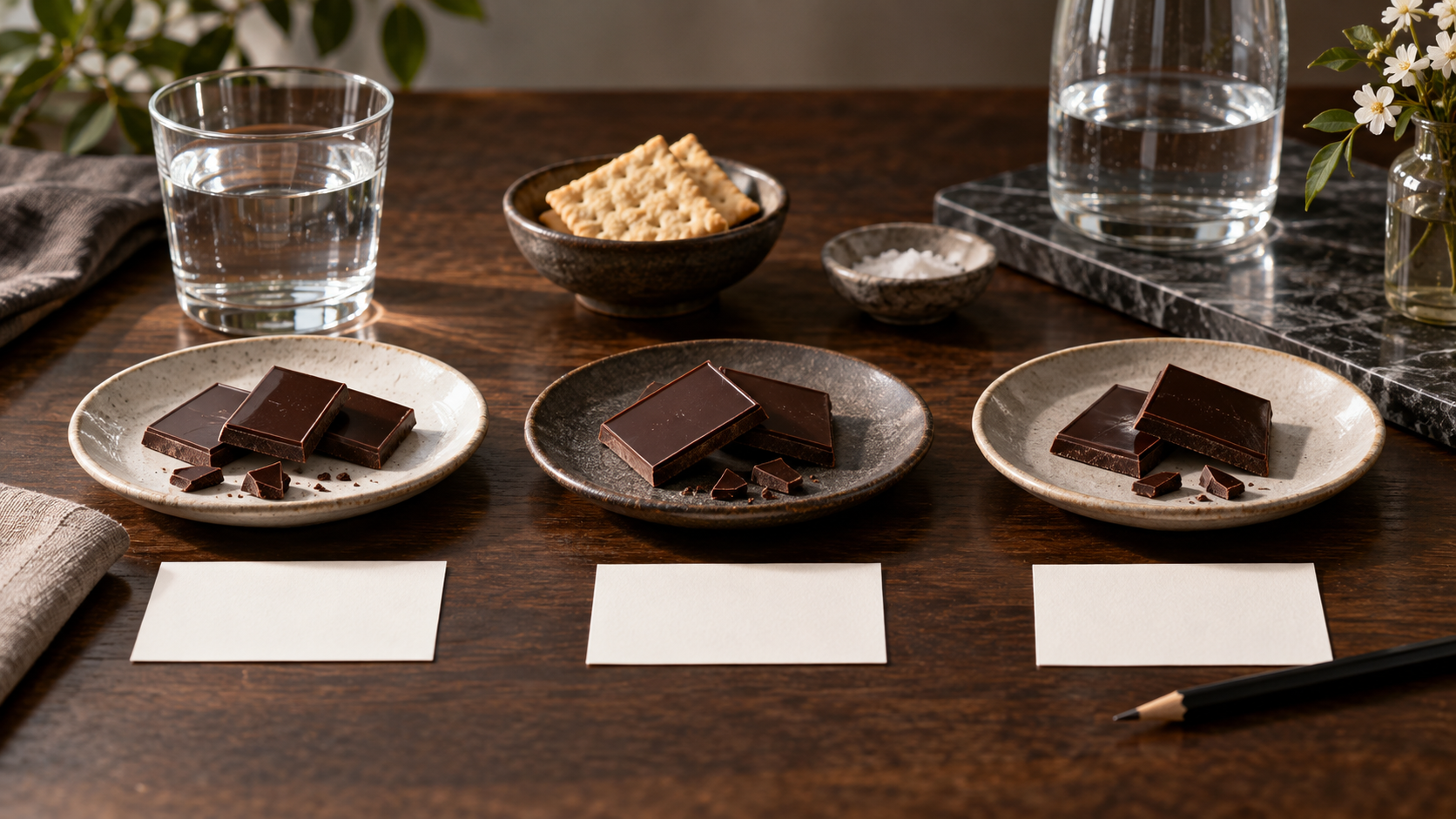
Choose three or four plain chocolates with different cocoa percentages. Serve them at cool room temperature with water and unsalted crackers.
Looking at the chocolate
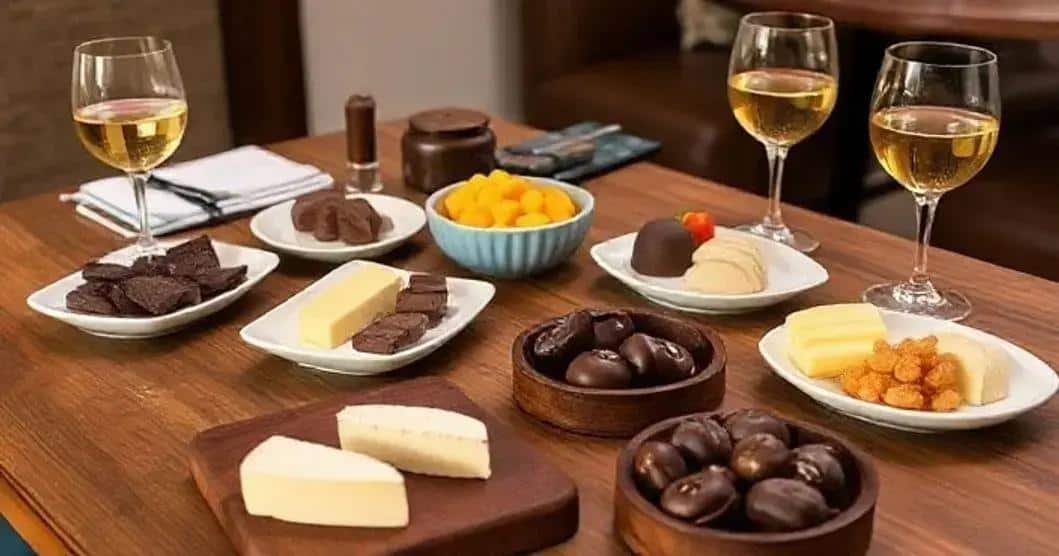
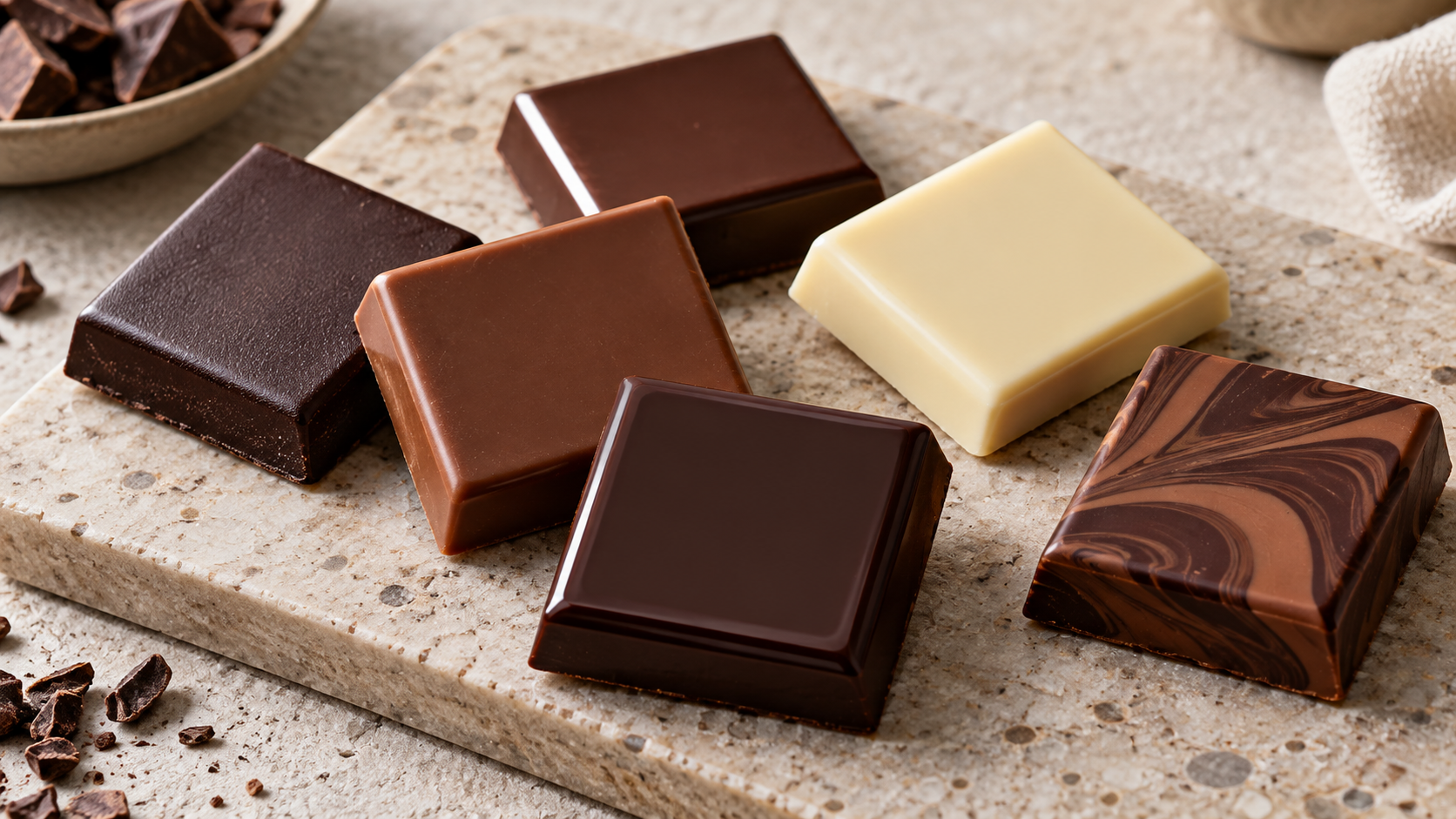
Notice the colour, surface and finish without assuming darker always means stronger. Well-stored chocolate should be clean and free from strong odours.
Listening to the snap
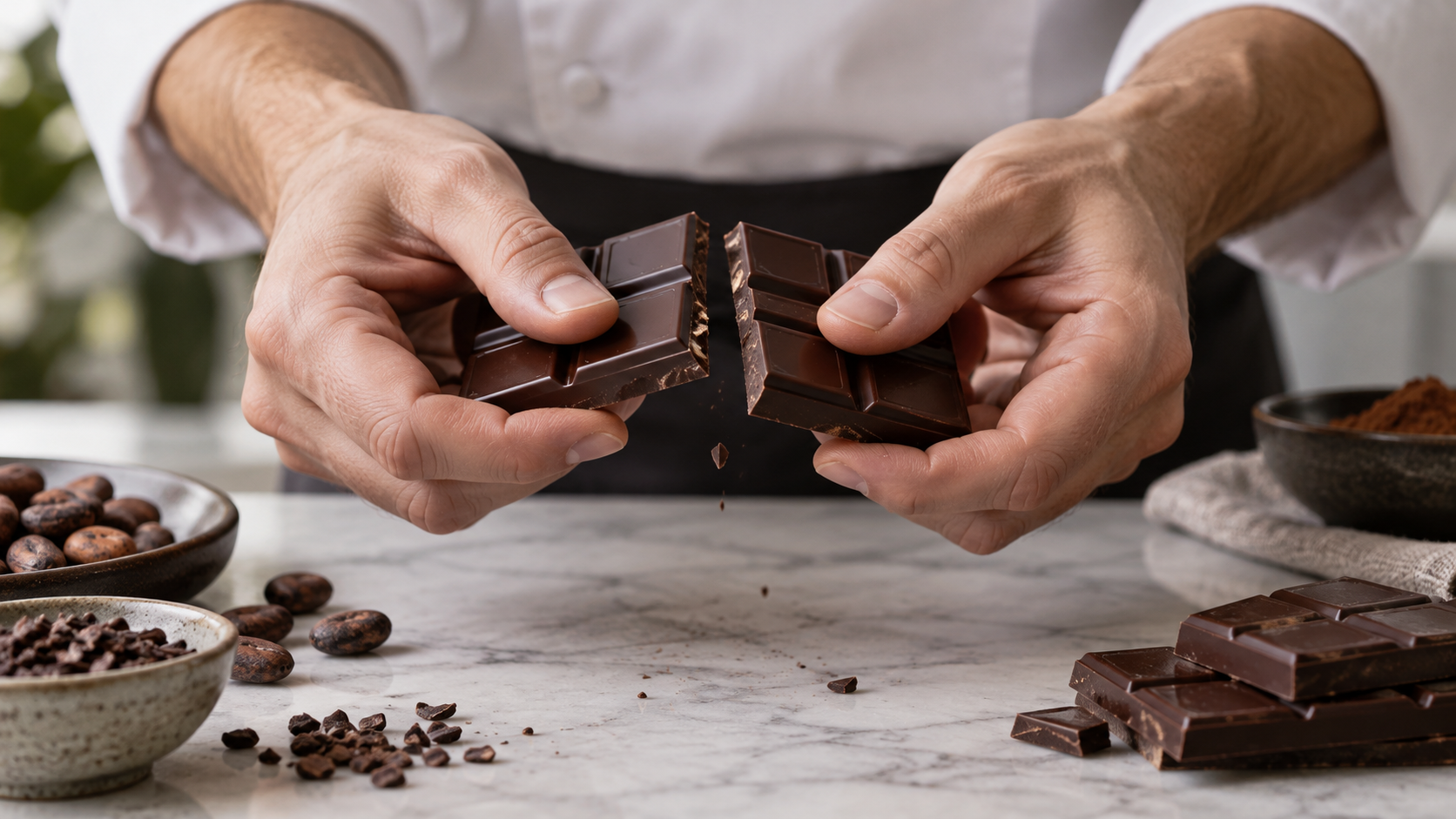
Break a small piece close to your ear. A clear snap can indicate good temper, although filled and high-milk chocolates naturally behave differently.
Smelling the aromas
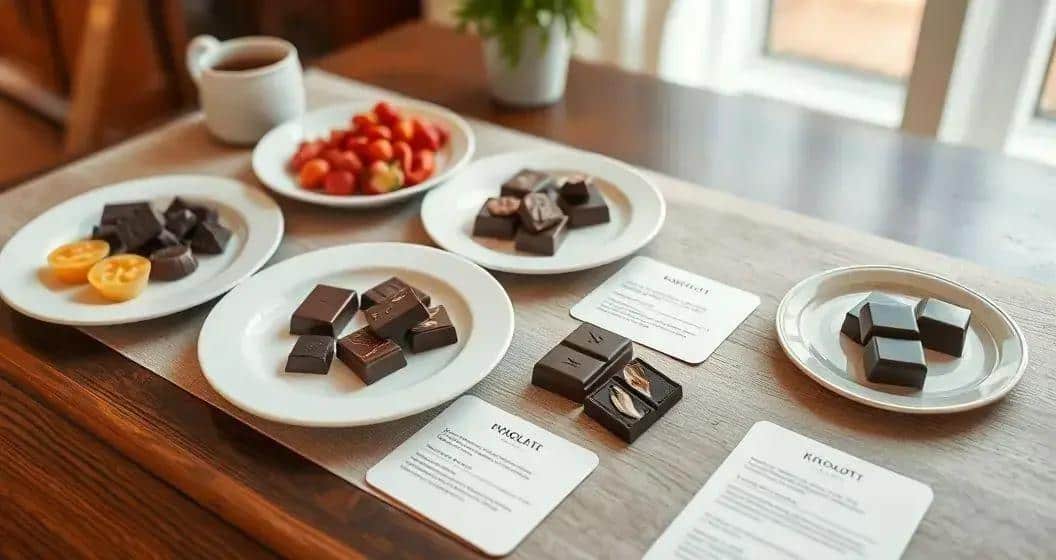
Warm the piece briefly between your fingers and smell it. Look for cocoa, fruit, nut, spice, caramel or roasted notes without forcing a description.
Tasting slowly
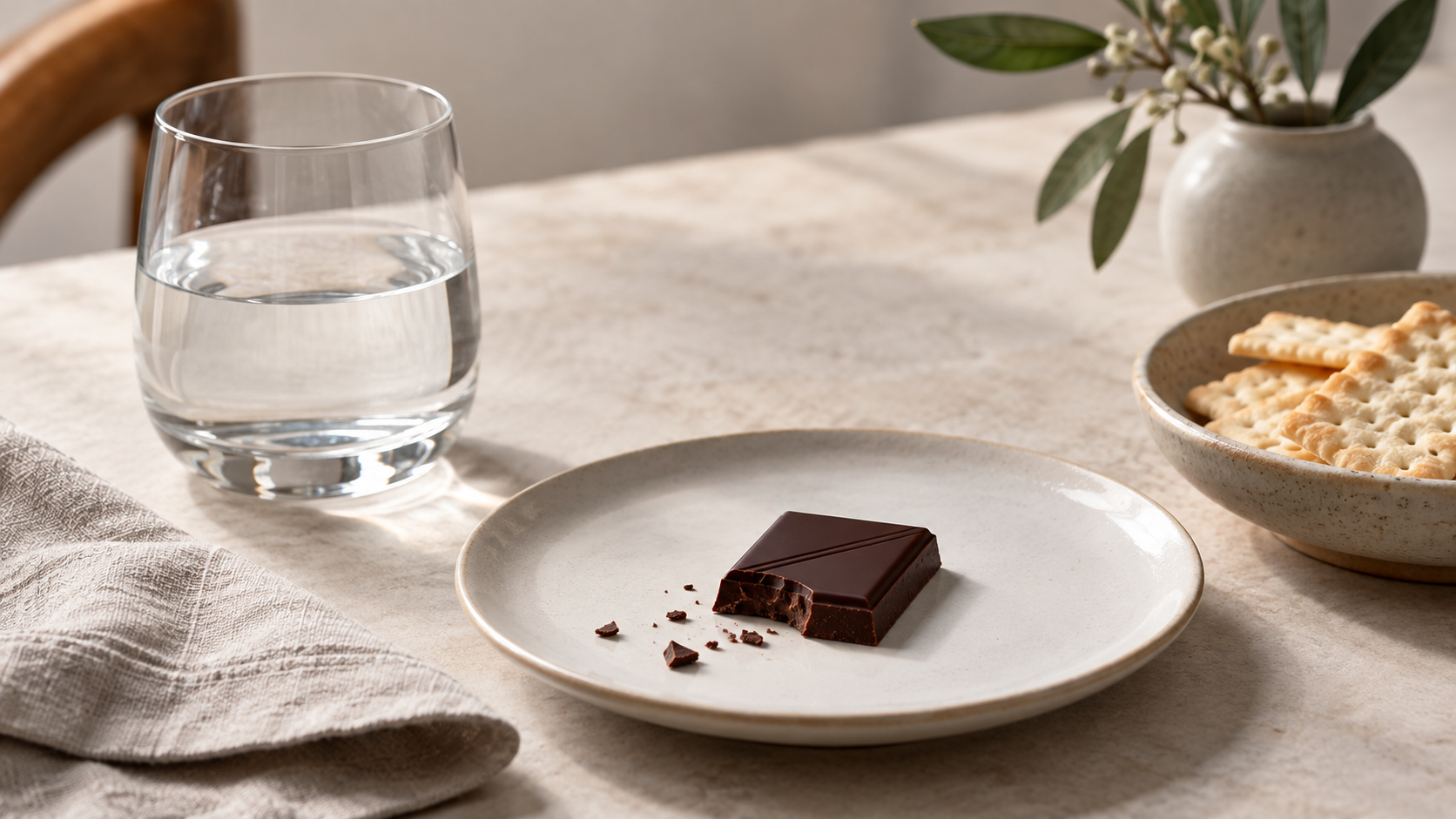
Let a small piece melt on the tongue before chewing. Notice sweetness, acidity, bitterness, texture and how the flavour changes.
Comparing and recording notes
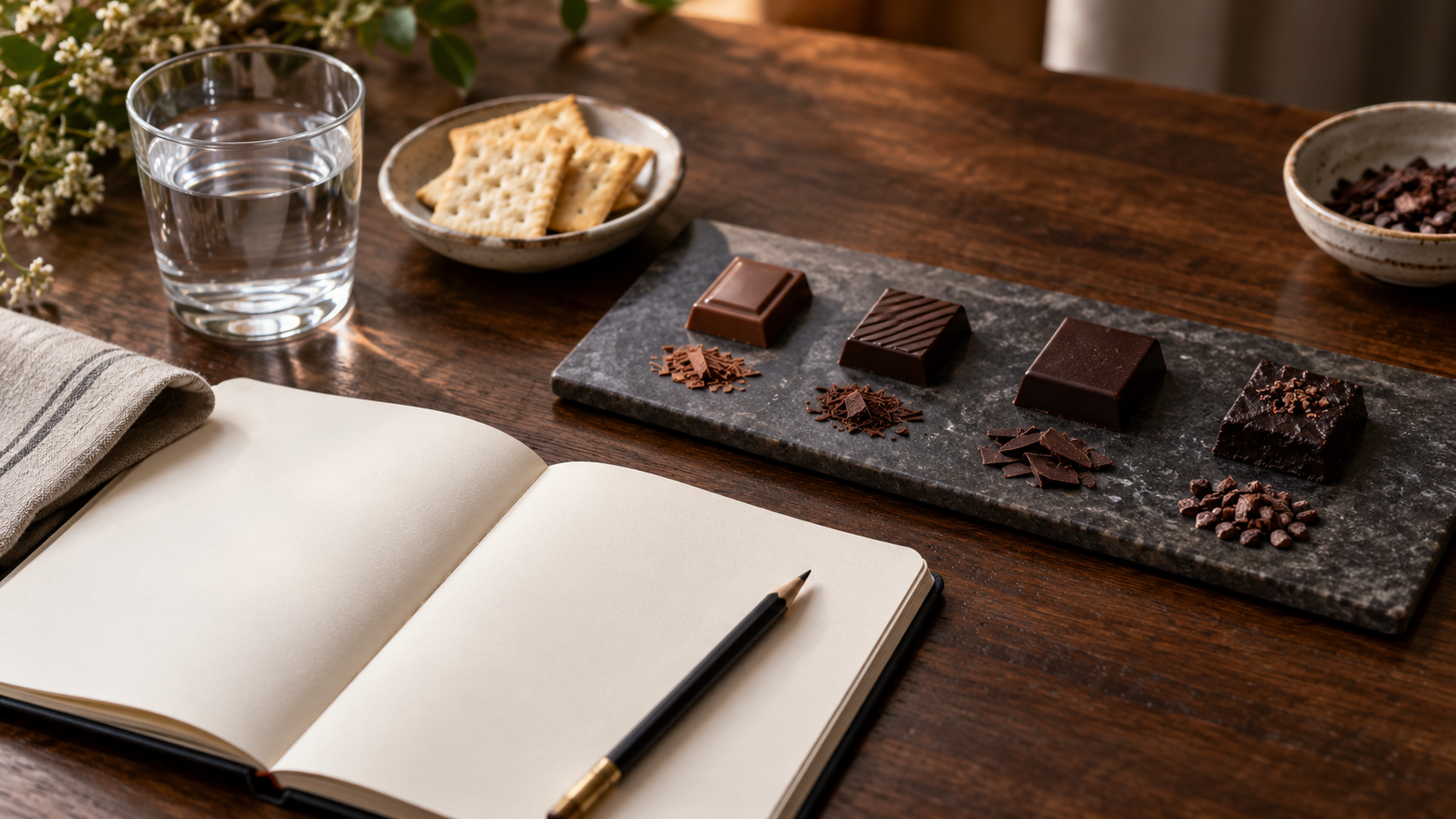
Taste from mild to intense, cleanse the palate between samples and record simple observations. Personal preference matters more than elaborate vocabulary.
Frequently asked questions
Can it be prepared ahead?
Yes. Prepare the stable components ahead and follow the storage guidance in the method.
Can I use a different chocolate?
Yes, but cocoa percentage changes sweetness, firmness and flavour, so adjust gradually.
How should it be stored?
Keep chocolate cool and dry, and refrigerate any dairy, egg or fresh-fruit components.
Can I reduce the sugar?
Usually a small reduction is possible, although sweetness and texture should be tested together.
Which allergens should I check?
Check every label for milk, soya, gluten, eggs, nuts and any other ingredient relevant to the recipe.
How do I get the best result?
Measure accurately, change one variable at a time and use the visual texture cues in each step.