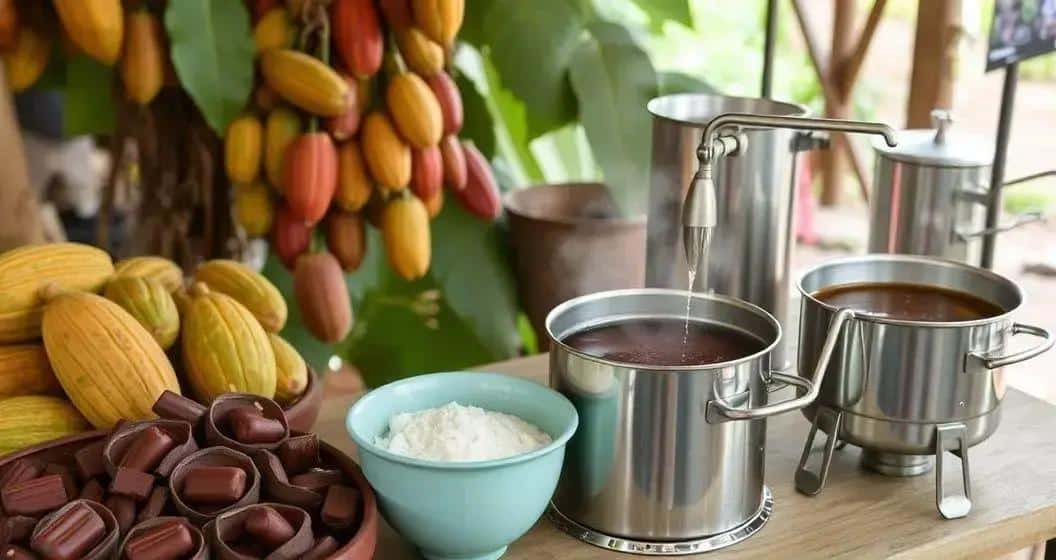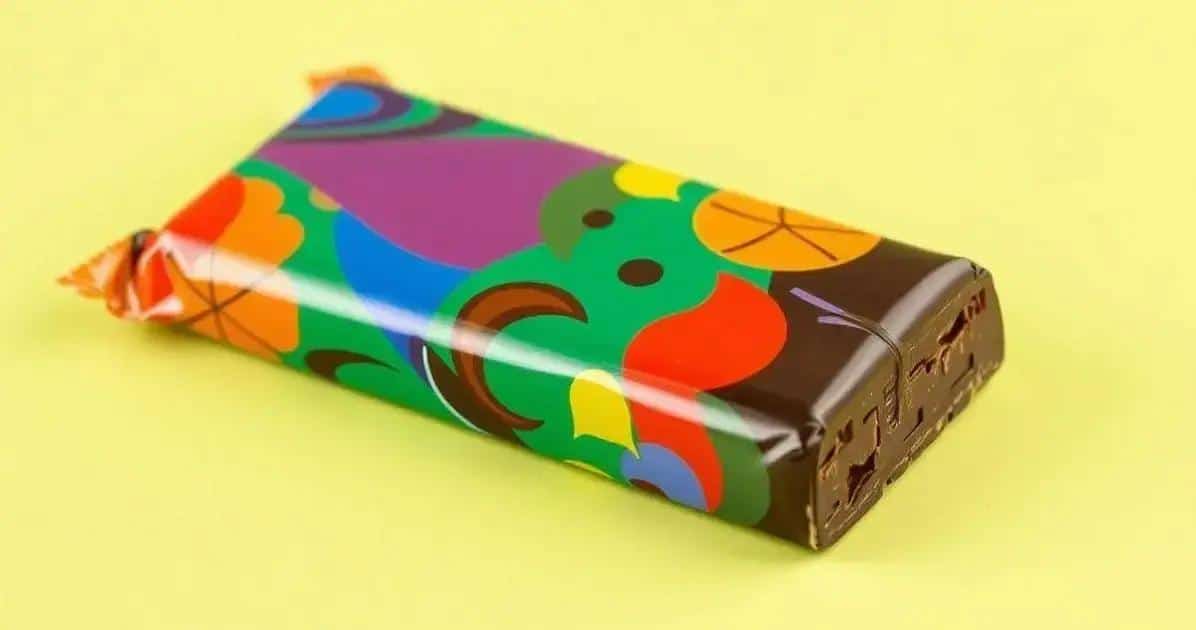

Early packaging protected the product
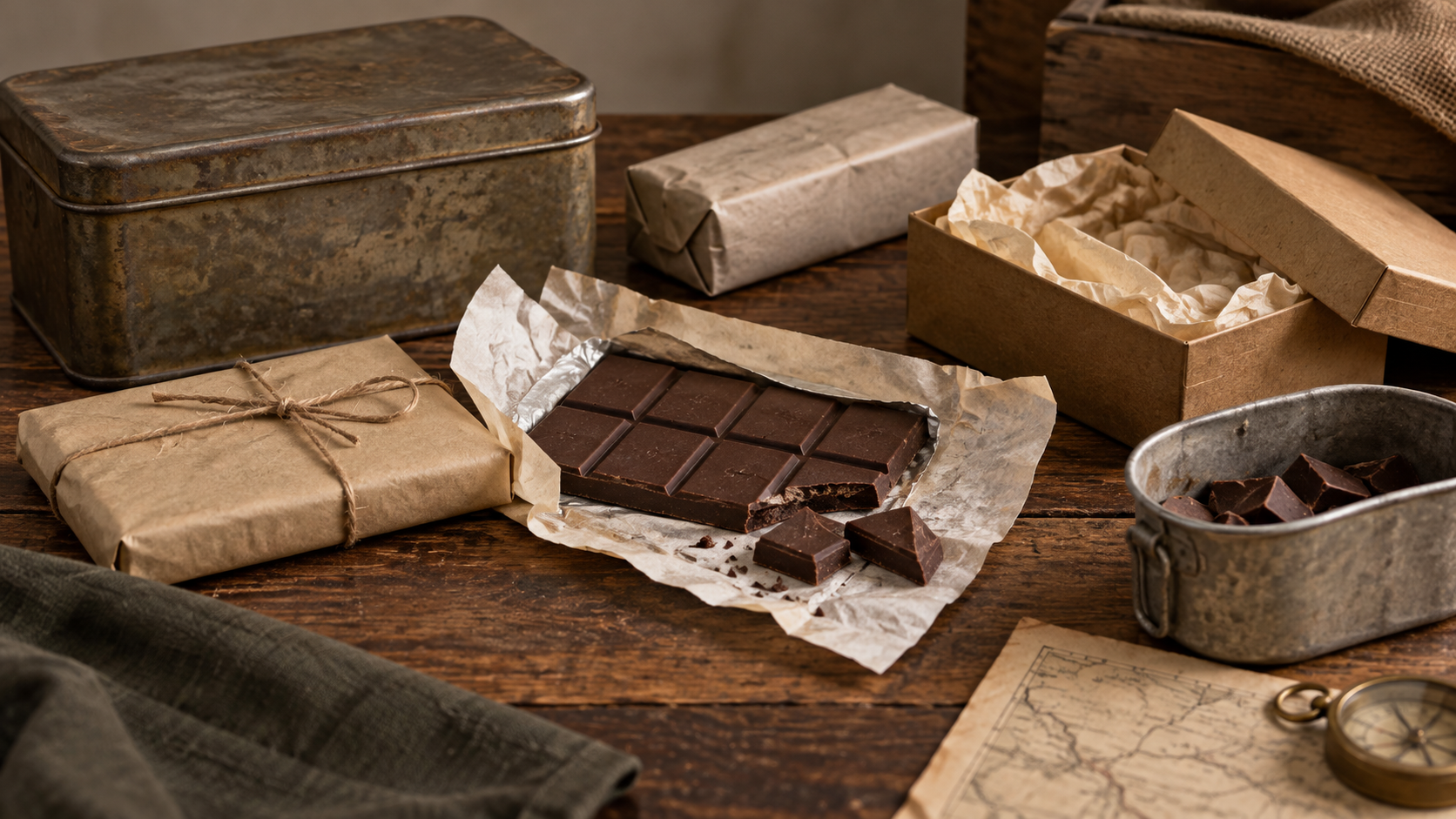
Chocolate needs protection from moisture, odours, light, heat and physical damage. Early papers, tins and boxes served practical needs before packaging became a major advertising surface.
Printing built recognisable brands
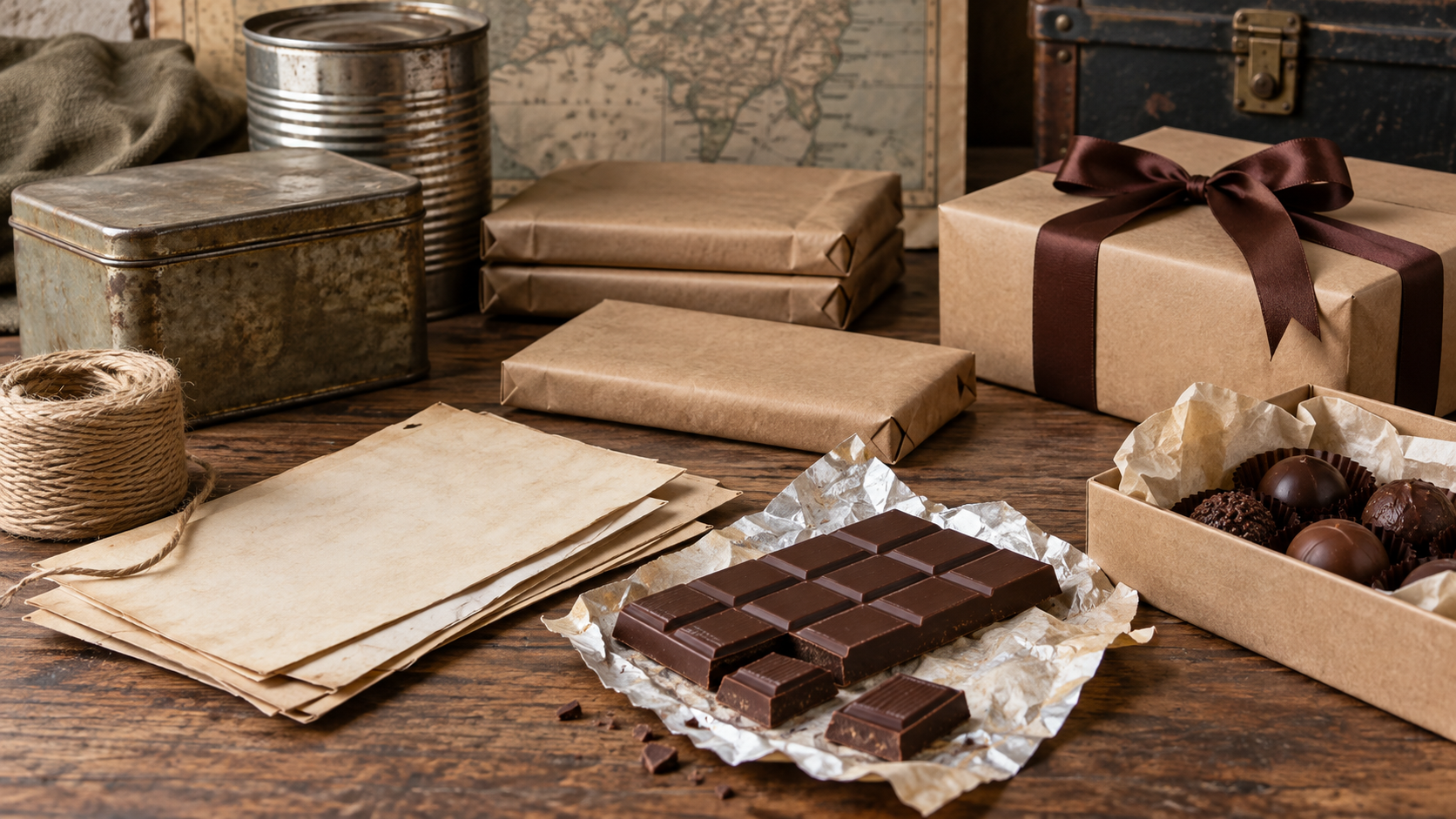
Advances in colour printing allowed makers to repeat names, images and decorative themes at scale. Consistent wrappers helped shoppers recognise a product across different shops.
Boxes turned chocolate into a gift
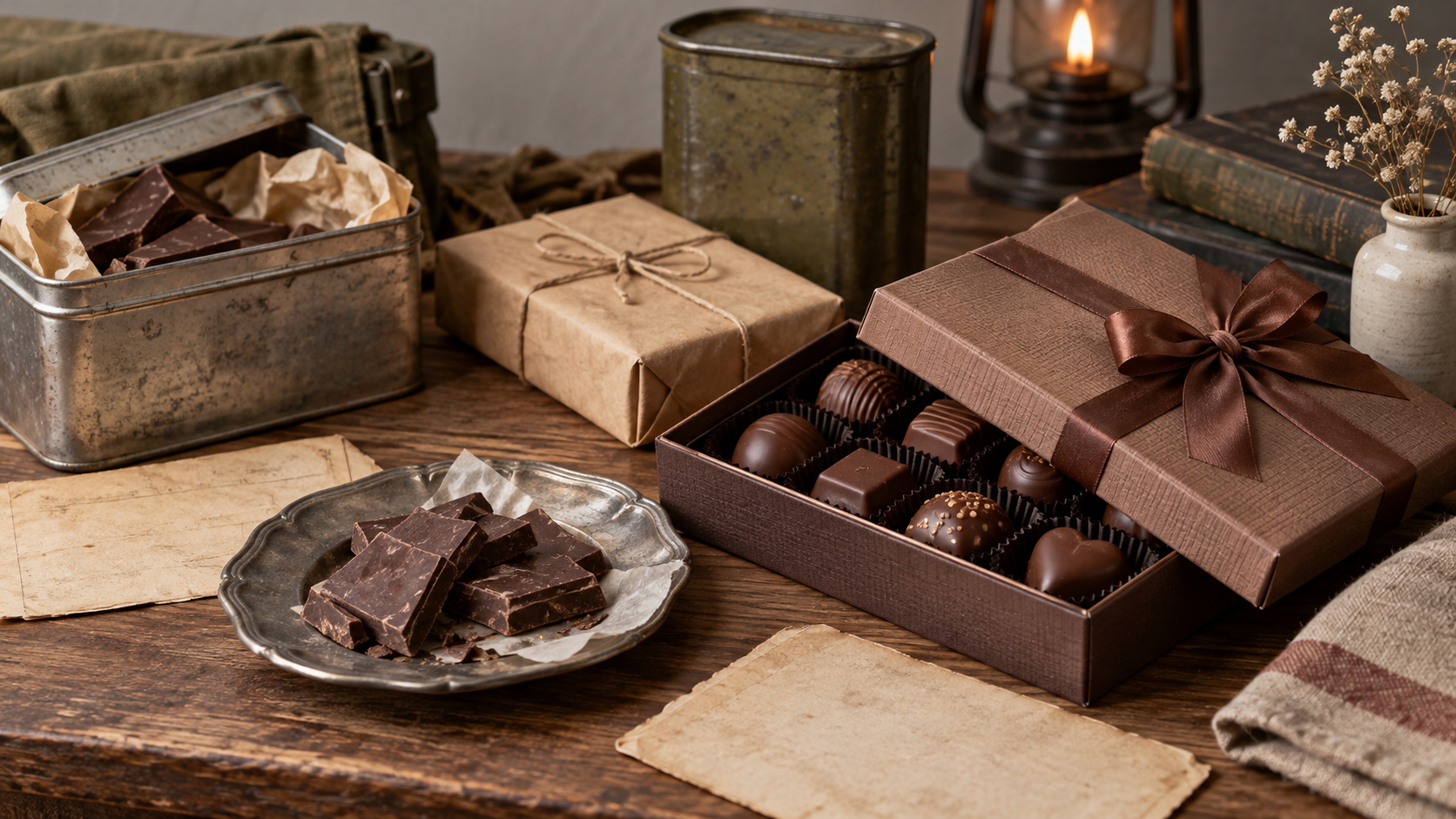
Assorted chocolates in decorative boxes made the container part of the present. Some boxes were kept for letters or sewing items, extending their life beyond the sweets.
Materials changed with distribution
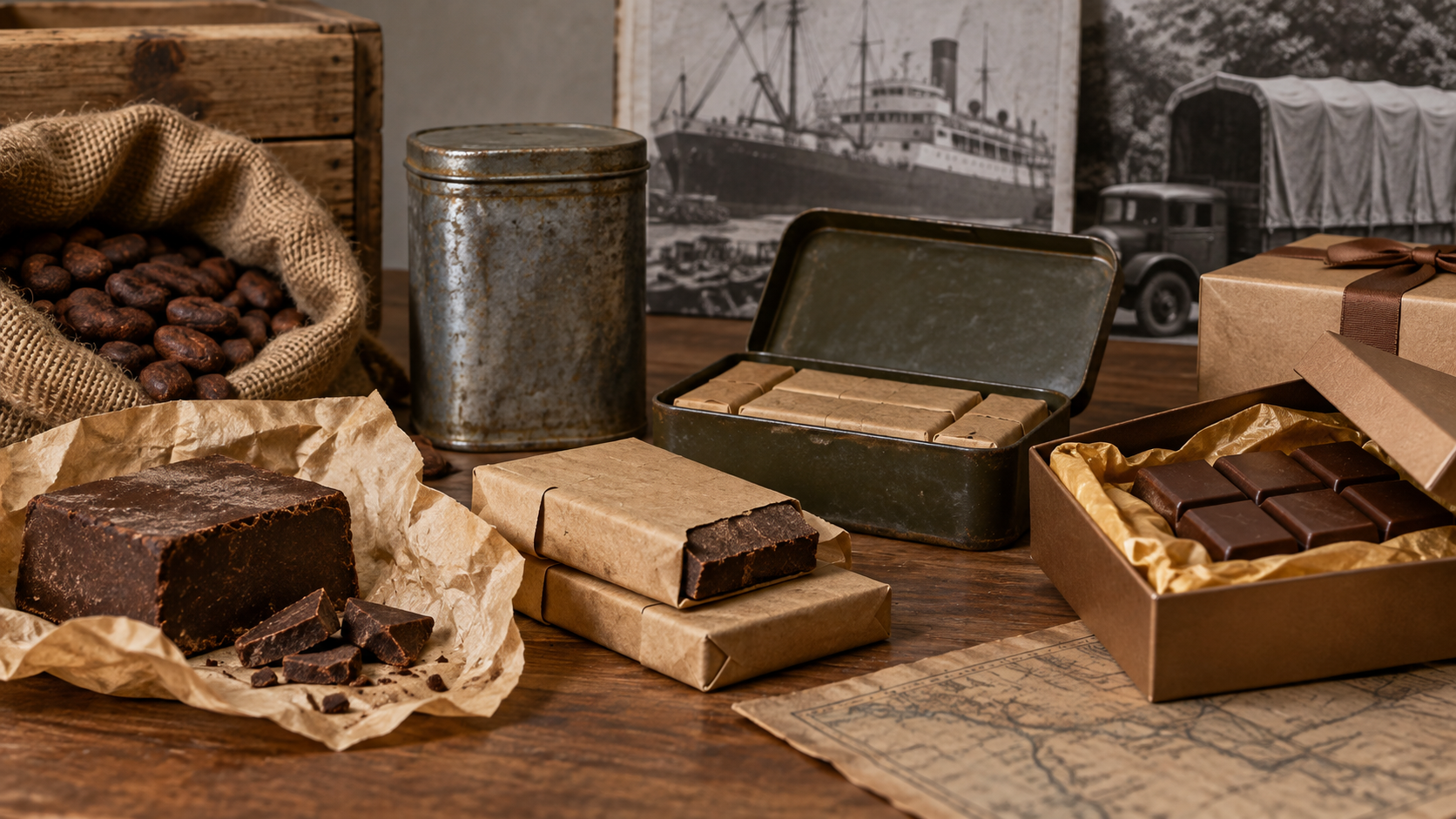
Foils, coated papers, plastics and laminates supported longer distribution and different shapes. Each material brought trade-offs in cost, protection and waste.
Design reflects its period
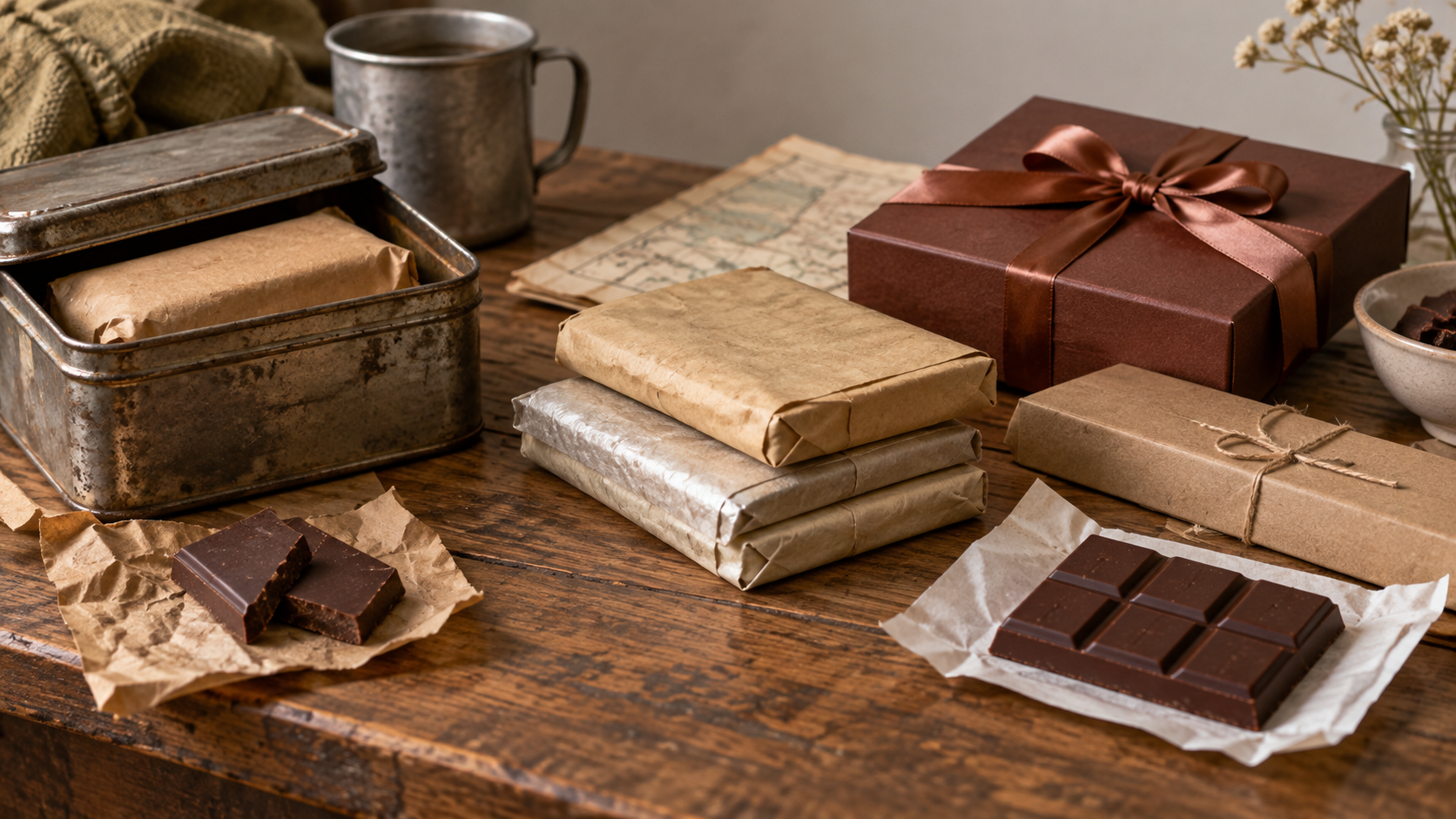
Typography and illustration reveal changing ideas about luxury, childhood, gender and origin. Older designs can also contain colonial stereotypes that deserve critical context.
Safety information became more important
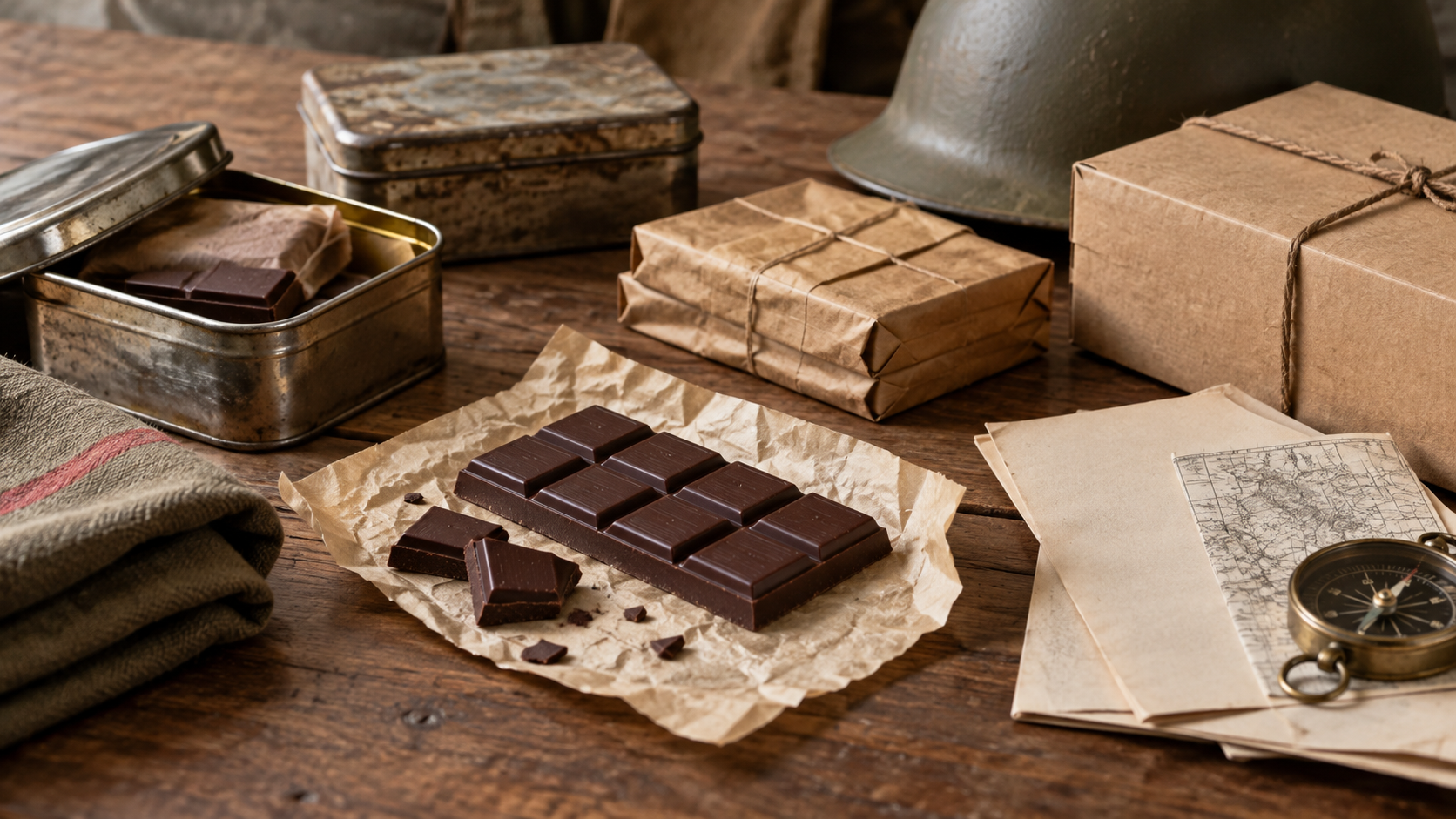
Modern packs carry ingredients, allergens, dates, nutrition and traceability information. Decorative design must leave these details clear and legible.
Luxury still needs practical function
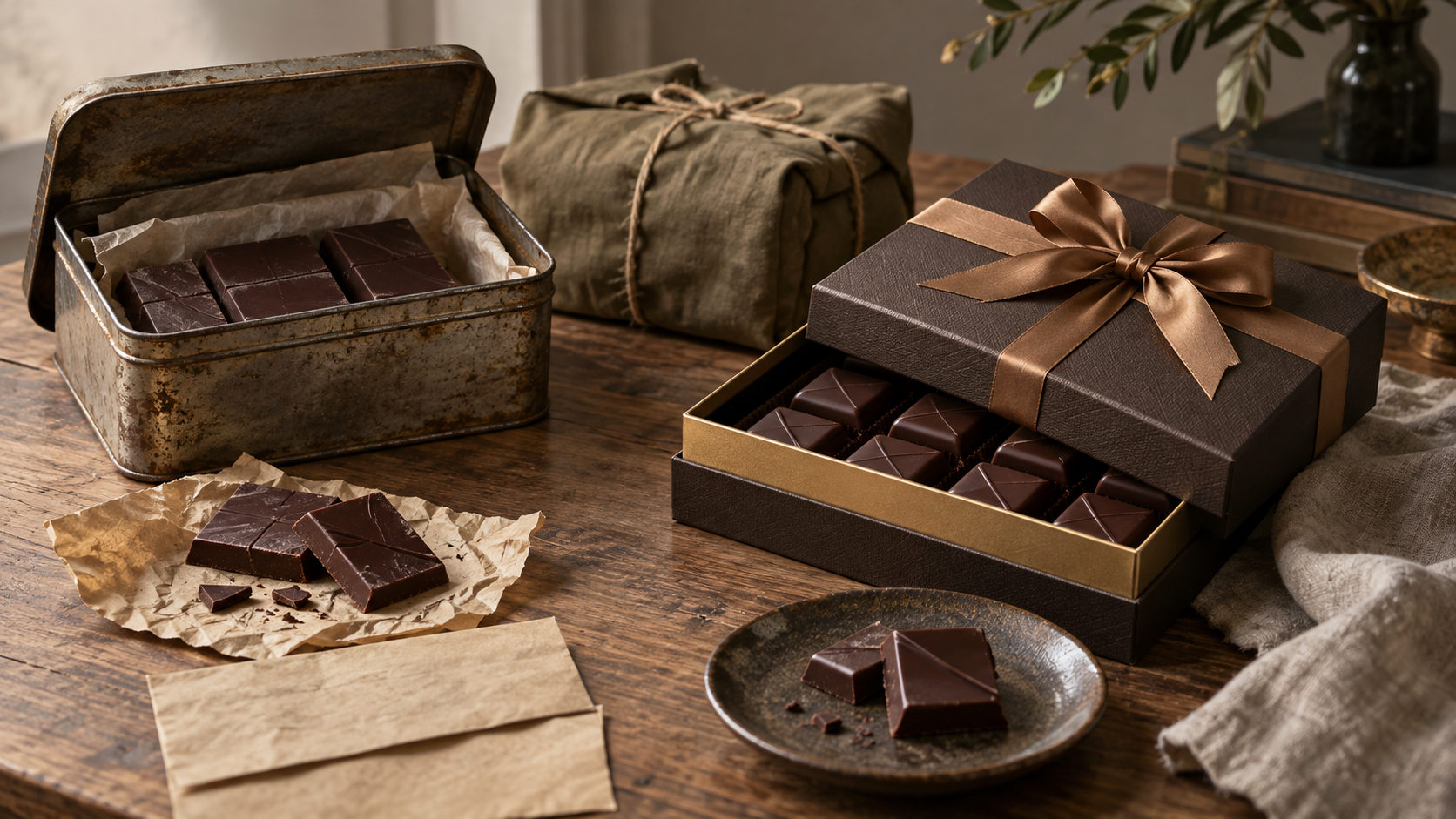
A premium box should still protect food and use materials appropriate to local recycling systems. Weight and decoration alone do not establish product quality.
Frequently asked questions
Are all popular chocolate-history stories reliable?
No. Many repeat marketing legends, so check dates, sources and the difference between evidence and interpretation.
Did chocolate always mean the same thing?
No. Recipes, status and symbolism changed across communities, centuries and markets.
Can chocolate treat low mood or improve desire?
Ordinary chocolate is not a treatment. Enjoyment and expectation may affect an experience, but medical concerns need qualified advice.
Why does packaging matter?
It protects chocolate and communicates ingredients, allergens, dates, origin and brand information.
How should international rankings be compared?
Use the same year, category, unit and method, and distinguish total volume from per-person figures.
How should historical images and quotations be used?
Verify them through museums, archives or reliable editions and explain their period and context.