
Alcohol does not simply disappear
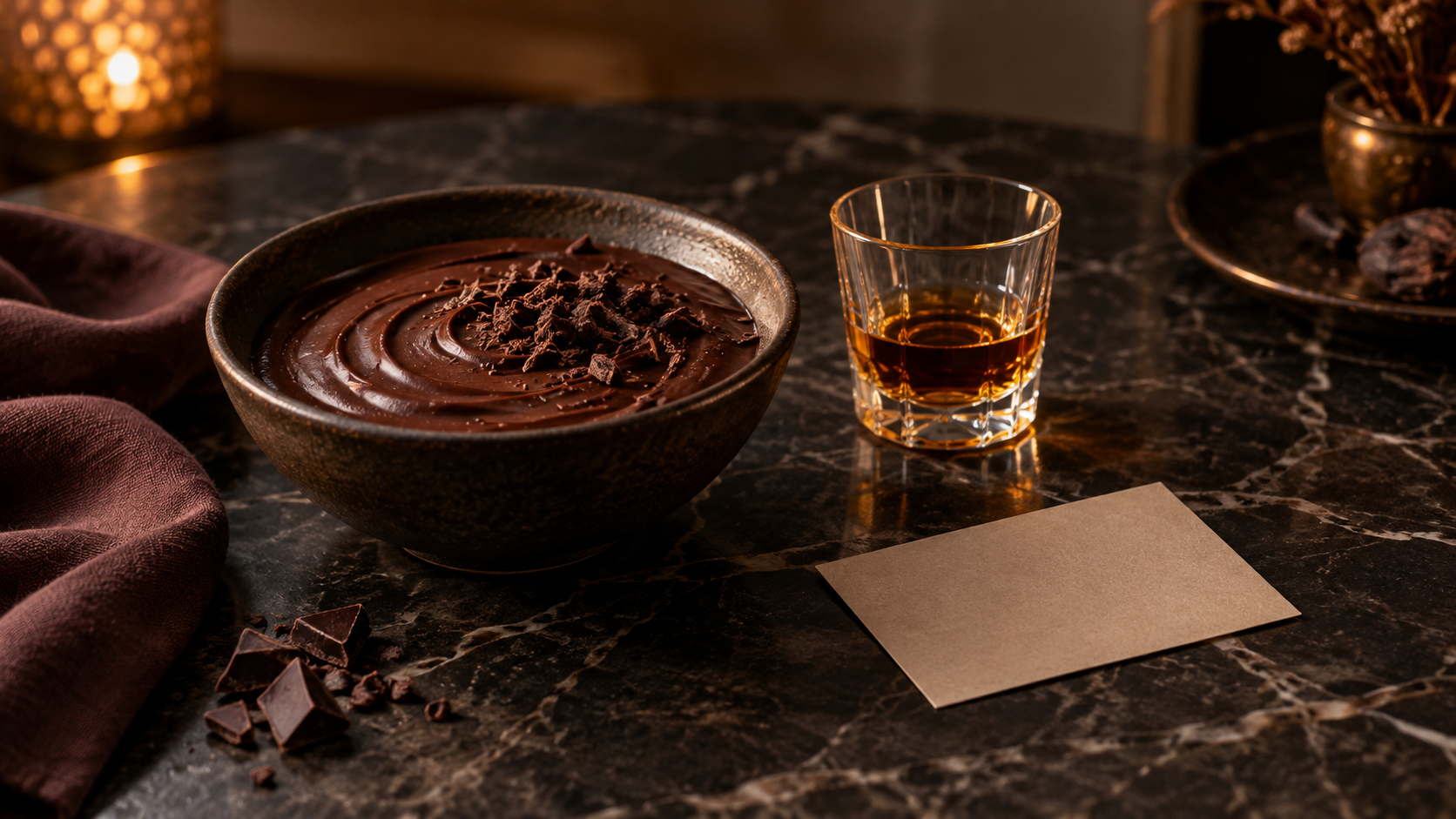
A small amount of spirit can flavour ganache, truffles or sauce, but mixing or gentle heating does not guarantee that alcohol is removed. Products containing it are for adults and may be unsuitable for medical, religious, recovery or personal reasons.
Measure for texture as well as flavour
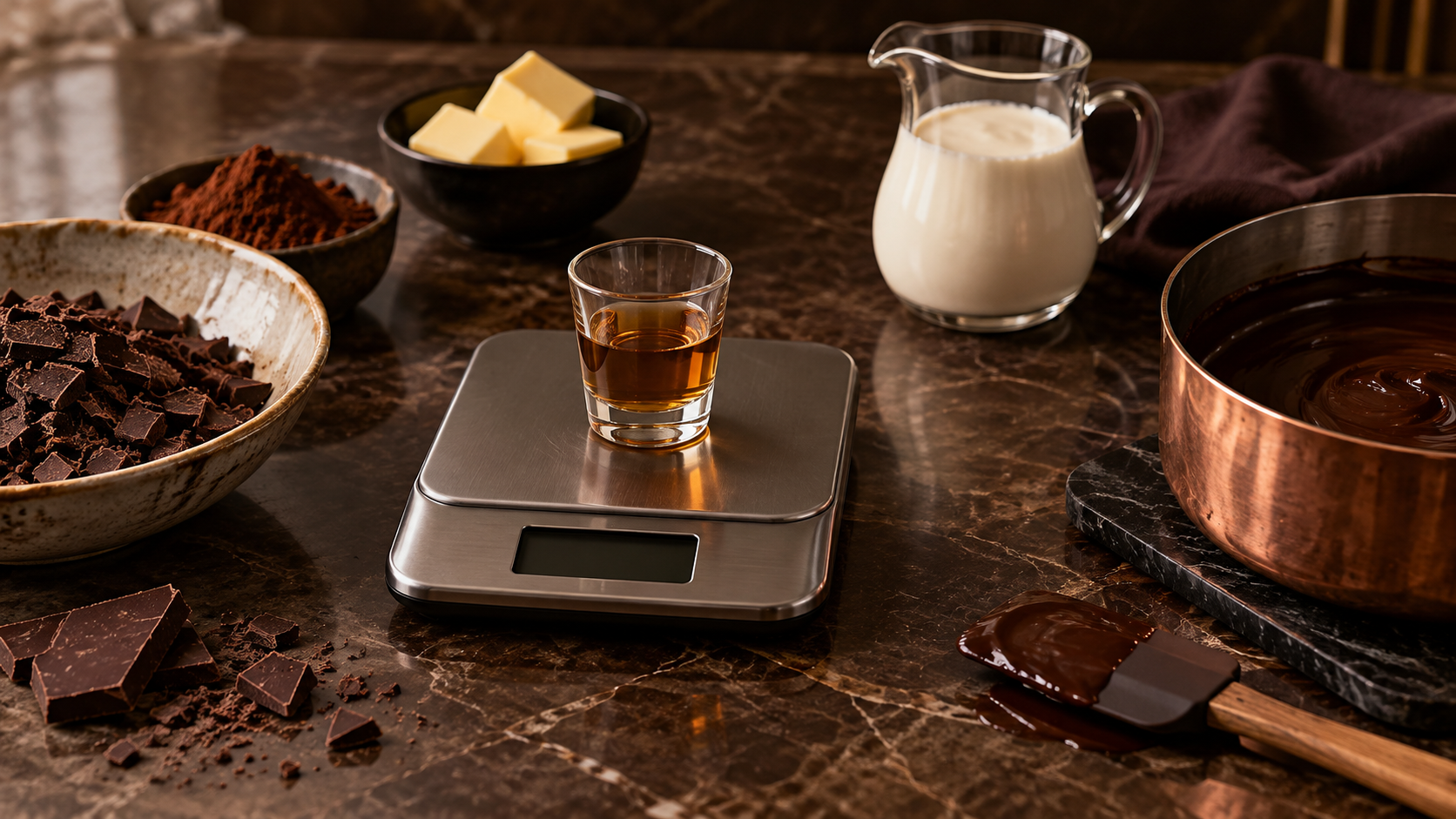
Liquid changes an emulsion. Begin with a tested formula and weigh the spirit rather than pouring by eye. Too much can split ganache, soften a filling or prevent a chocolate shell from sealing properly.
Match spirit to chocolate

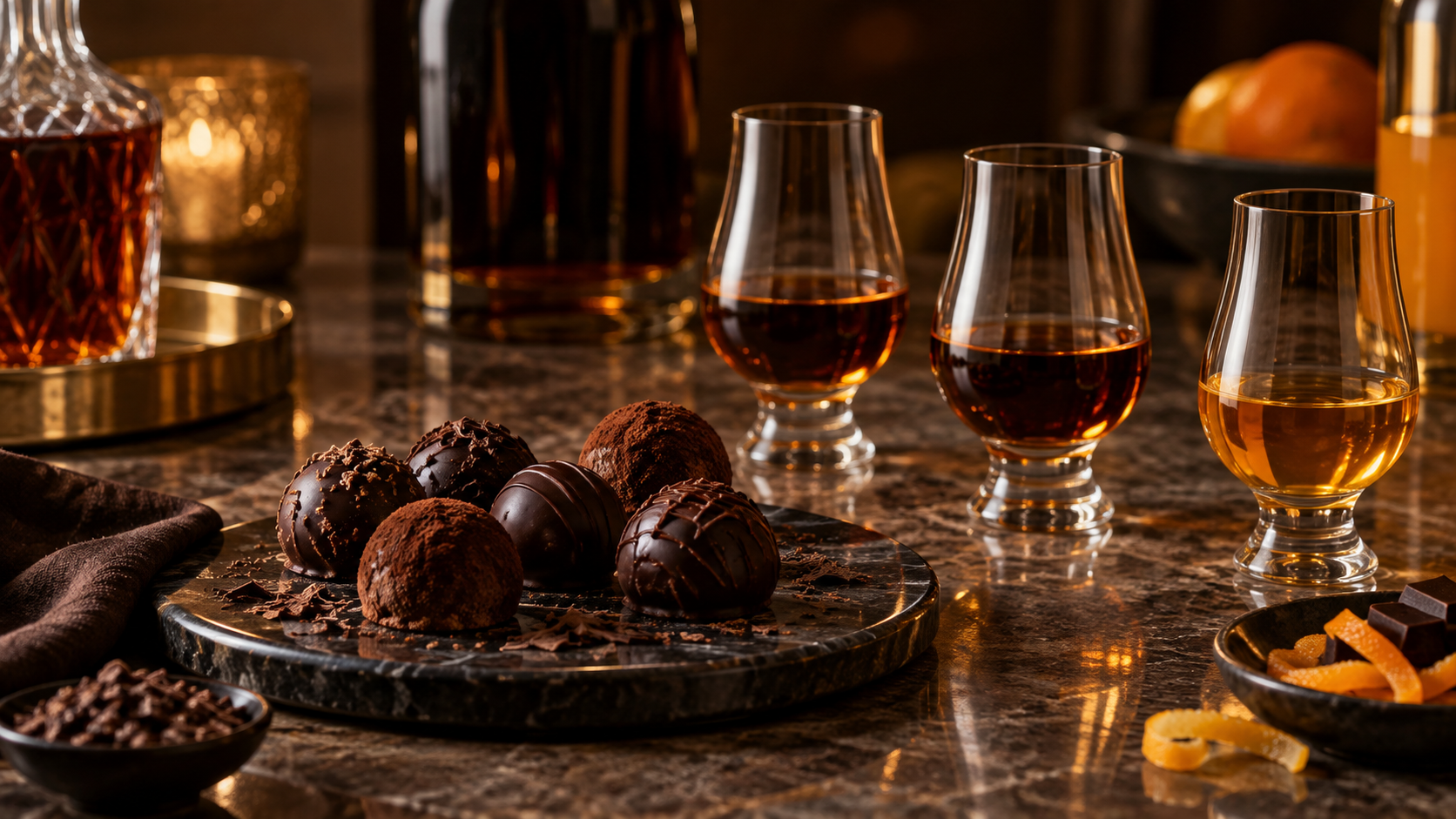
Brandy and dark rum often suit dark chocolate; orange liqueur may work with milk or dark chocolate. The pairing is subjective, and sugar content varies between drinks. Test a small batch before scaling.
Add it at the right stage
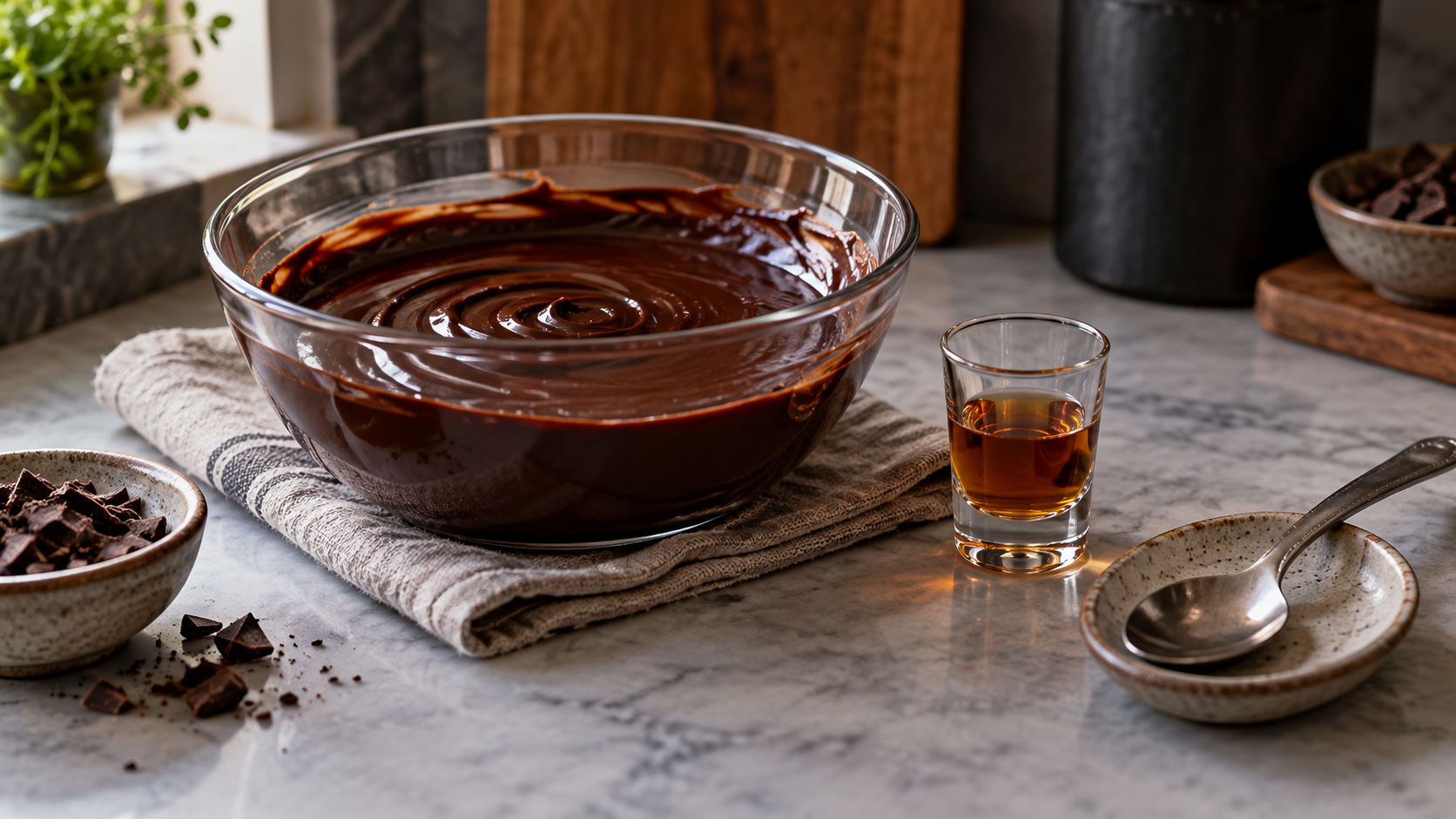
Make the ganache emulsion first and add the measured spirit when the mixture has cooled slightly, following the recipe. Avoid pouring cold liquid into tempered chocolate or adding alcohol near an open flame.
Keep the audience clear
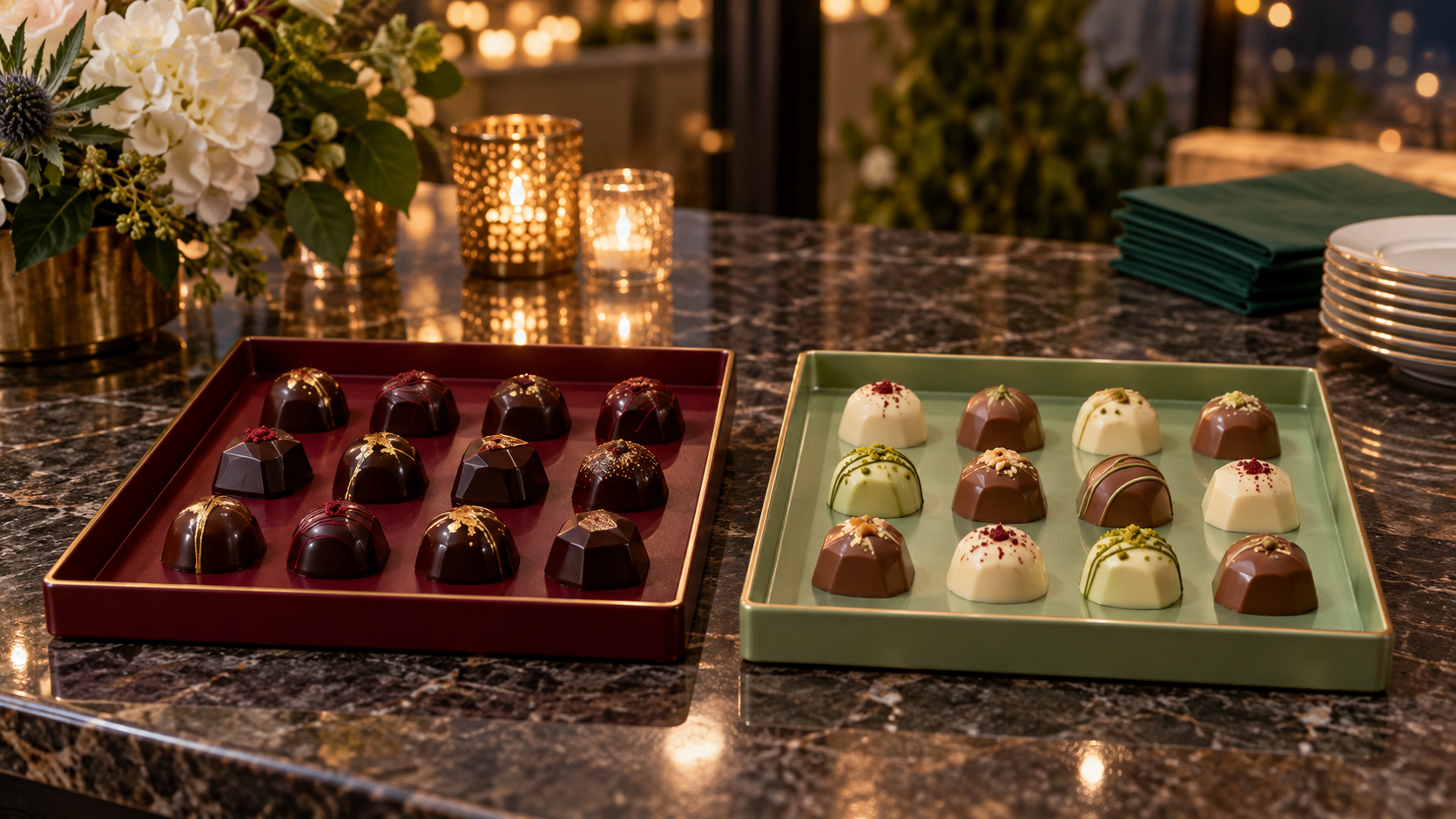
Keep alcoholic sweets separate from children’s products and use distinct packaging. Do not imply that small size makes them suitable for everyone. At events, identify alcohol before a guest chooses a piece.
Label alcohol and allergens

State the presence of alcohol clearly and retain the bottle details for traceability. Also declare milk, soya, nuts and other allergens from every ingredient. Marketing terms such as alcohol-free require evidence.
Store perishable centres correctly

Cream, fruit and butter still determine storage needs; alcohol is not an automatic preservative. Use a validated shelf life, clean production and suitable temperature control. Discard any batch with uncertain handling.
Frequently asked questions
Why was the source rewritten rather than translated literally?
It needed factual, recipe or safety correction, so the useful topic was rebuilt directly in British English.
Can alcohol be assumed to cook away?
No. Label it clearly and keep the product for an appropriate adult audience.
Are vegan products automatically allergen-free?
No. Check every ingredient and cross-contact statement for soya, nuts, gluten and other allergens.
Can the stated storage time be guaranteed?
No. Ingredients and handling vary; use a validated shelf life for the actual recipe and process.
May decorative or workshop materials touch food?
Only materials intended for food contact should touch edible products.
How should historical firsts be described?
Use primary records where possible and state uncertainty rather than inventing a precise first.