
Decide what the ganache is for
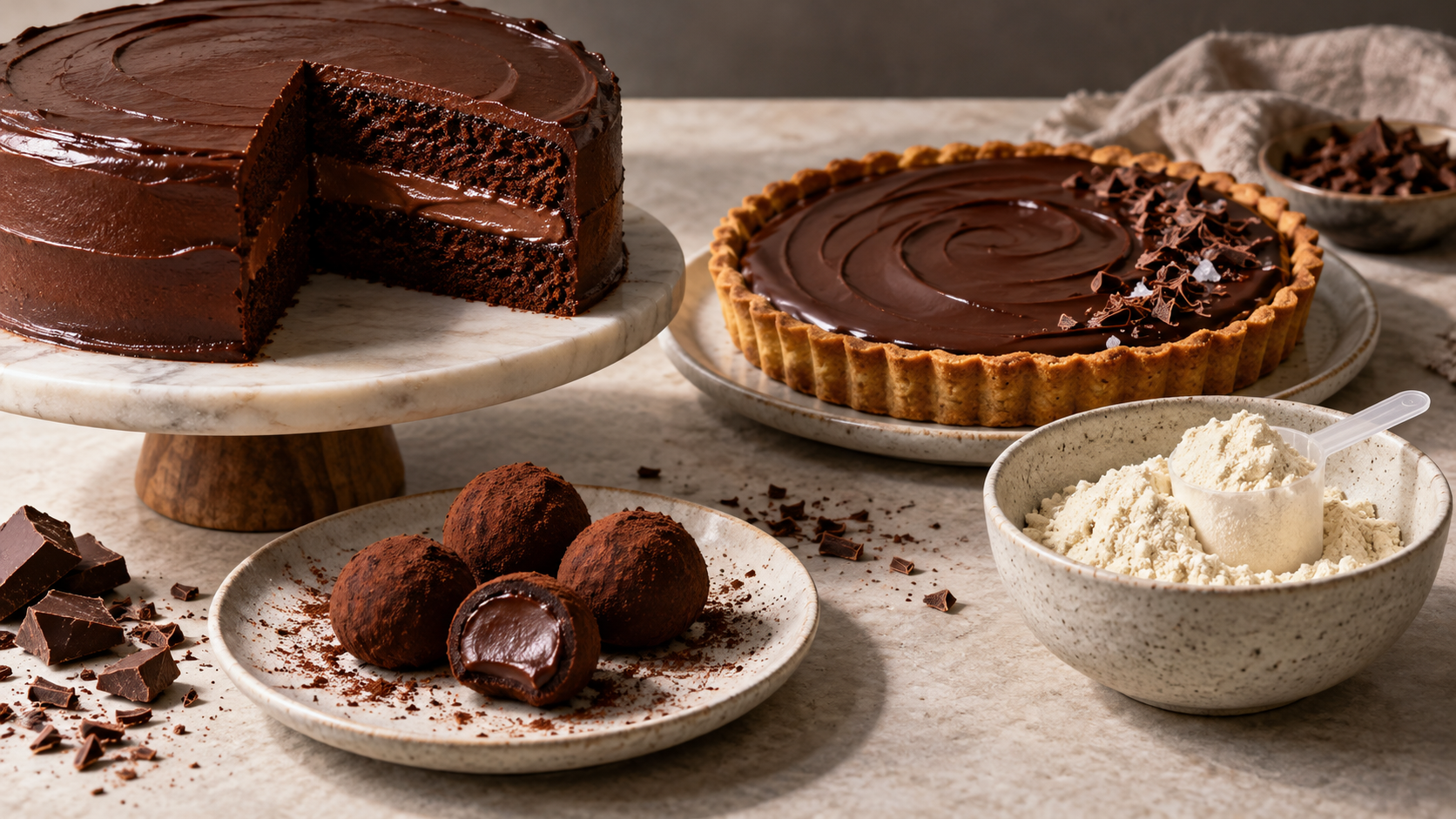
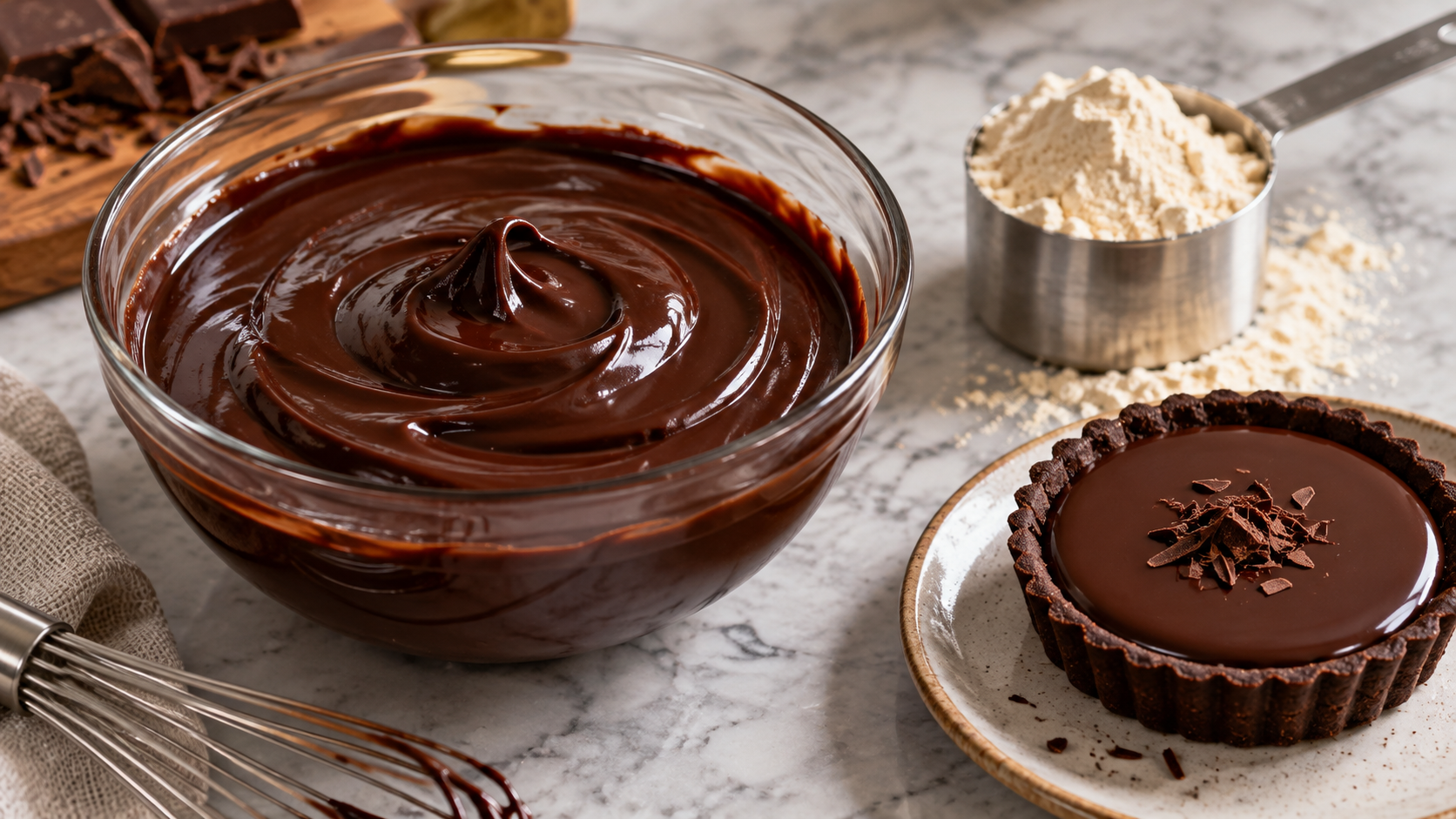
A protein-enriched ganache behaves differently from classic ganache and may set firmer or feel chalky. It can be useful as a filling or topping, but it should not be marketed as healthy solely because powder was added.
Choose a compatible protein powder
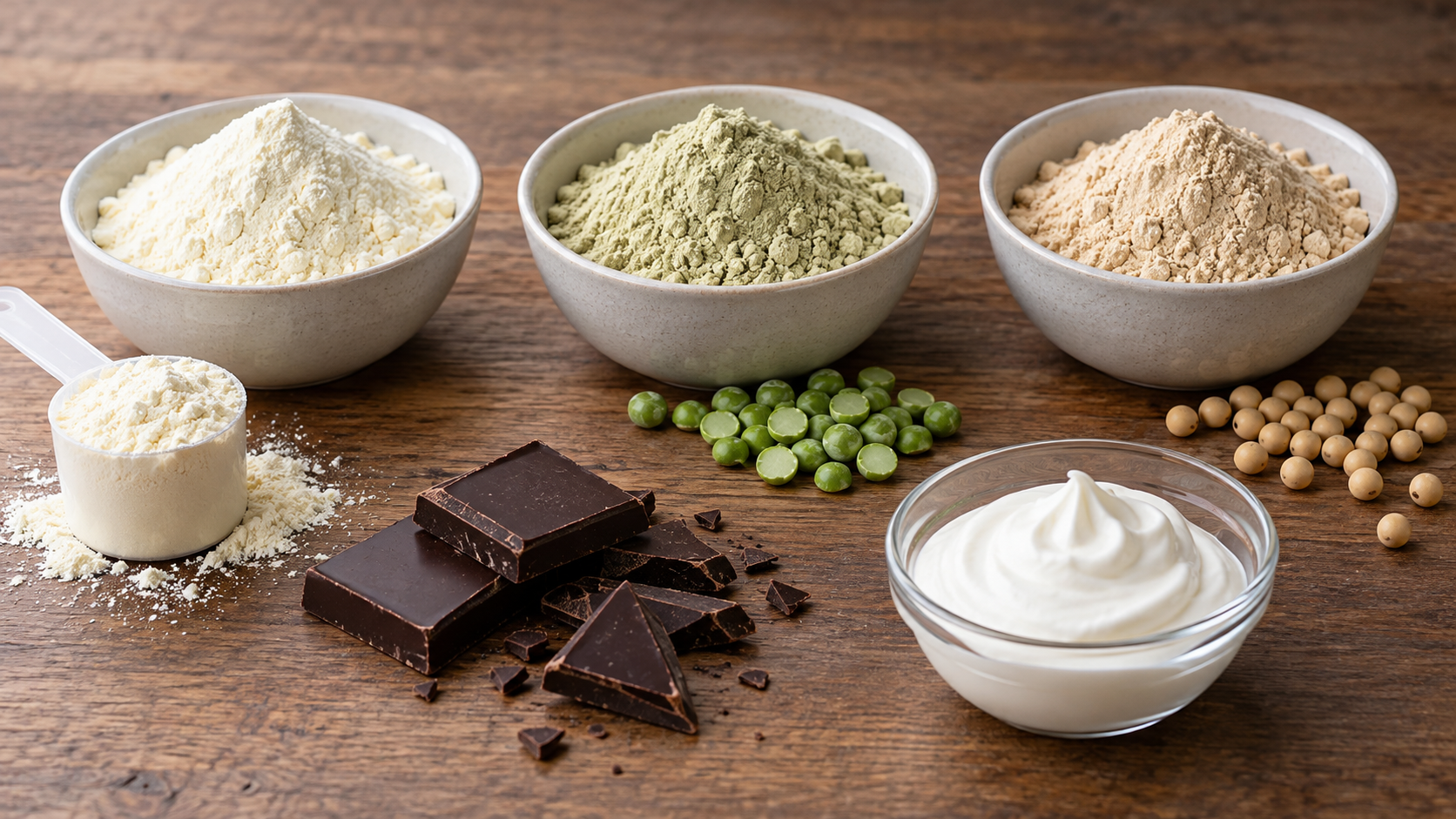
Whey, casein, pea and soy proteins absorb liquid differently. Use a product with a mild flavour, check sweeteners and allergens, and test a small batch. Collagen powder does not provide the same baking or nutritional profile as a complete protein.
Ingredients for a small batch
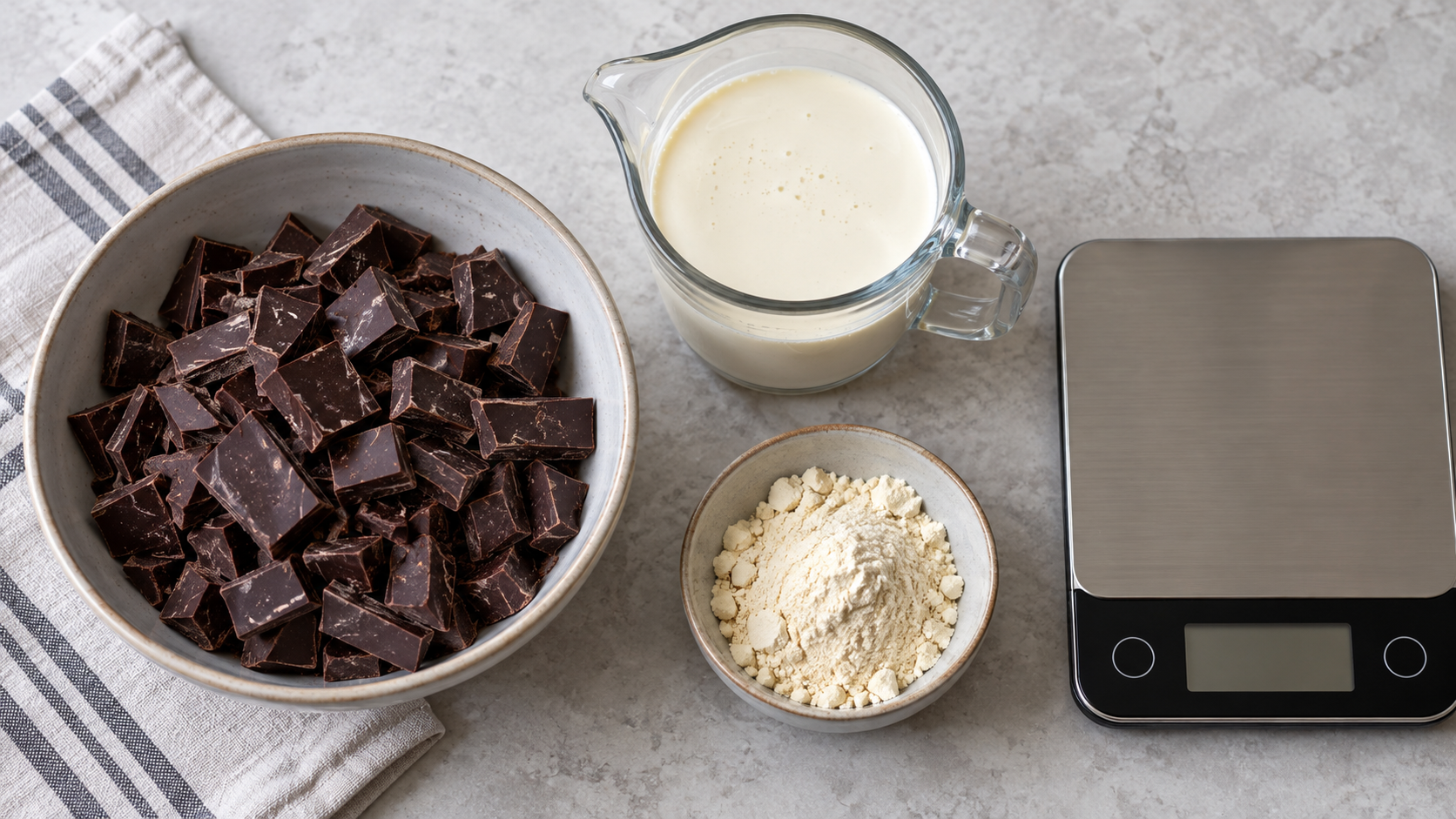
Start with 200 g dark chocolate, 160 g double cream and 15 to 20 g protein powder. This conservative amount reduces grittiness. Chocolate and powder labels determine milk, soya and other allergen statements.
Disperse the powder first
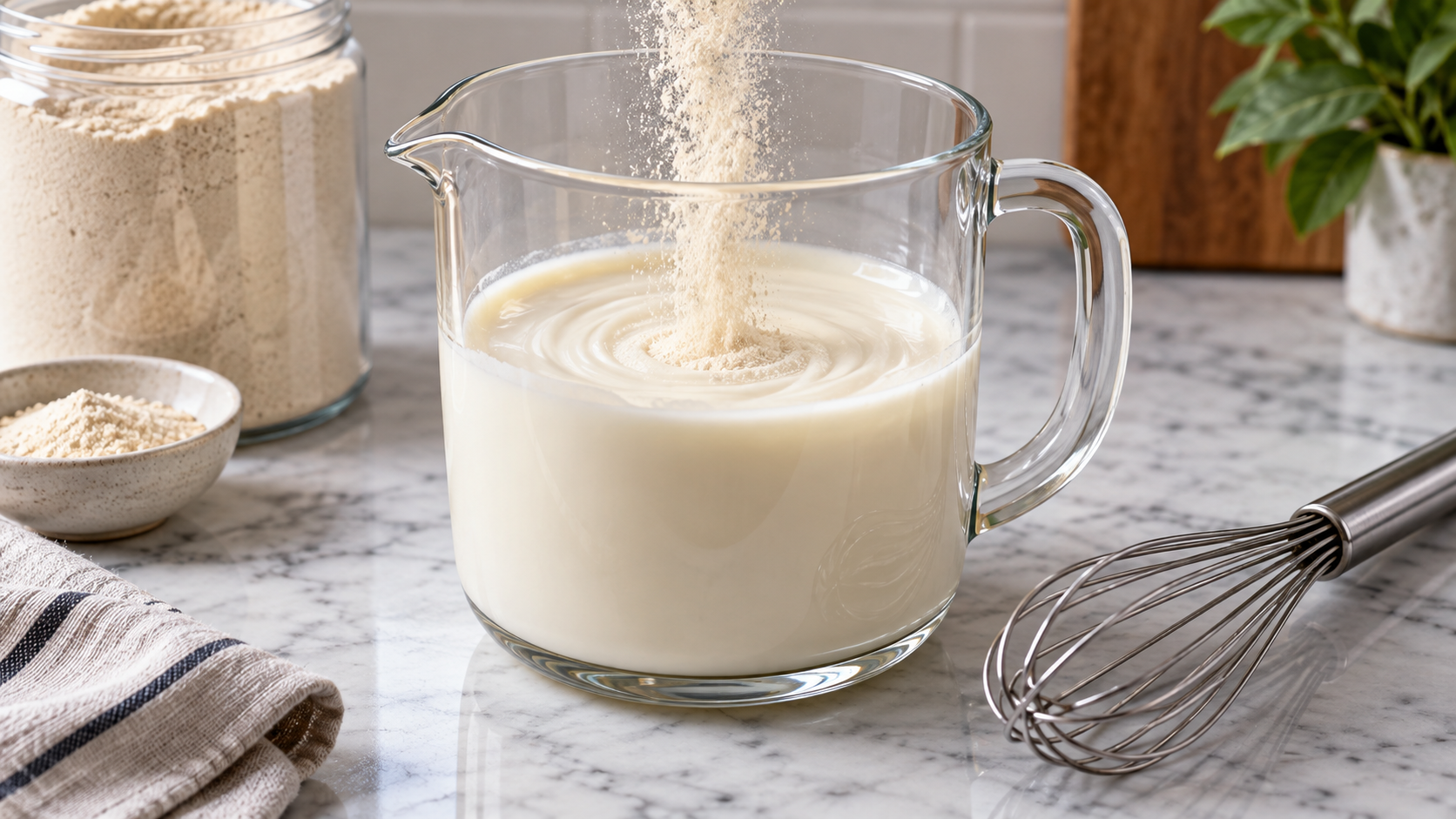
Whisk the protein powder into the cold cream until no dry pockets remain, then pass it through a fine sieve if needed. Let it hydrate for several minutes. Adding dry powder directly to melted chocolate encourages lumps.
Build the emulsion gradually
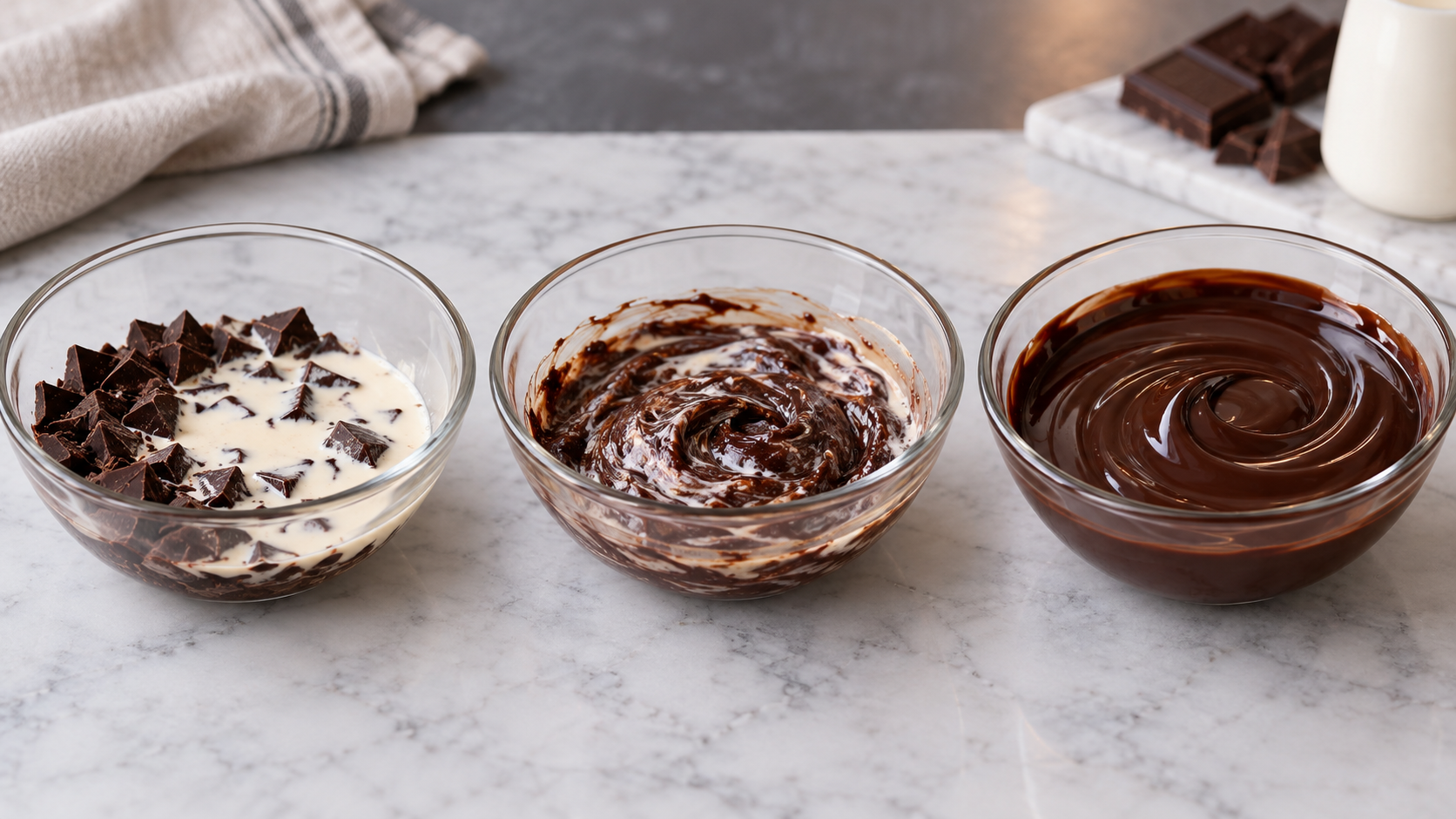
Heat the cream mixture until steaming but not vigorously boiling. Pour it over finely chopped chocolate in three additions, stirring from the centre to form a glossy emulsion. A stick blender can help, but keep its head submerged to avoid bubbles.
Adjust texture after resting
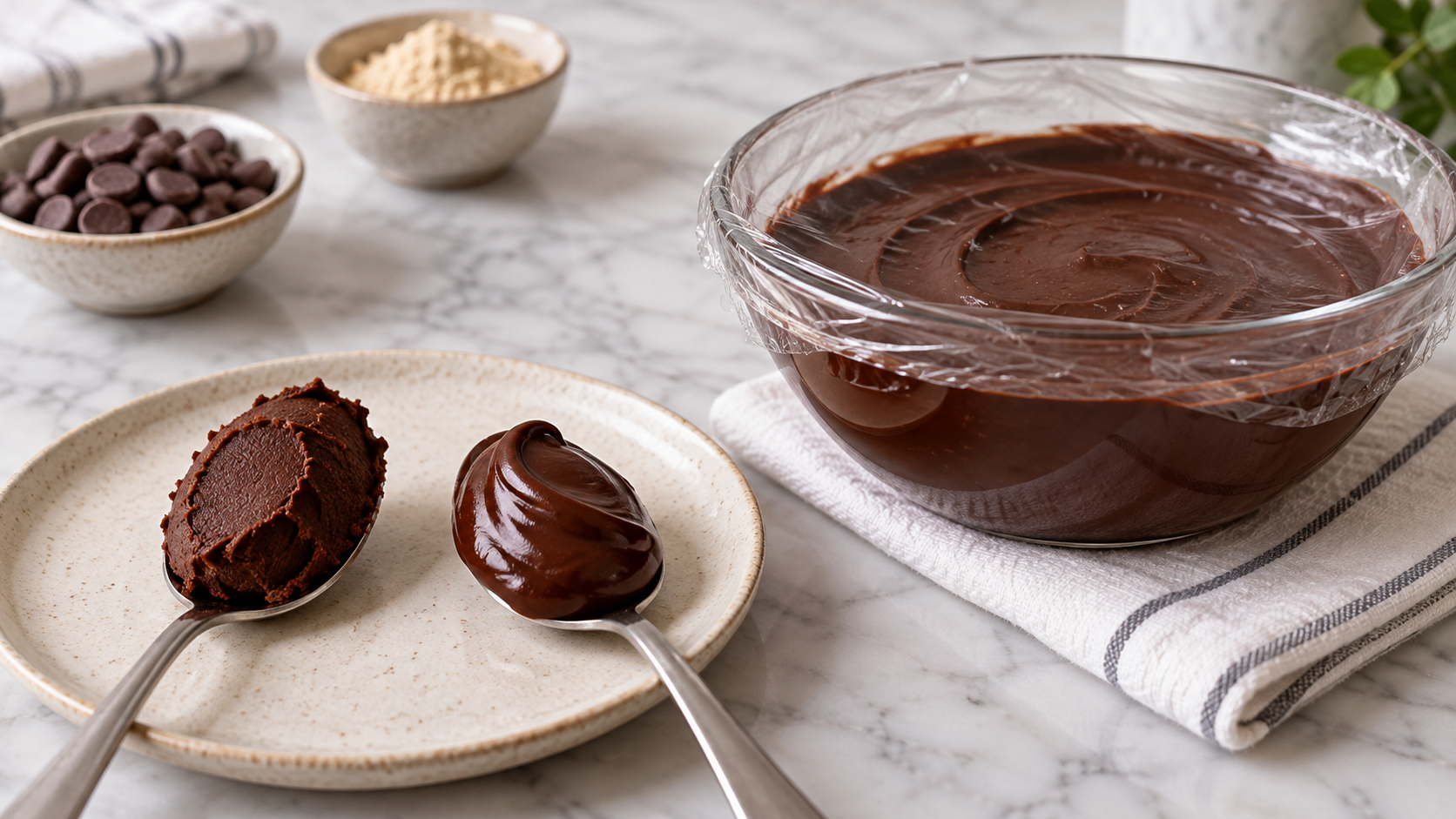
Cover the surface and let the ganache crystallise at a controlled temperature. If too firm, make another small amount with more cream rather than adding random liquid. Refrigerate when required by the recipe and validate shelf life for sale.
Frequently asked questions
Why was the original article not translated word for word?
It contained an unsafe, unsupported or technically unreliable point, so the useful subject was rebuilt directly in British English.
Can ingredient quantities be changed freely?
Small tests are safer. Changes to water, fat, sugar or protein can alter texture, setting and storage.
How should allergens be handled?
Read every current pack, prevent cross-contact and keep accurate ingredient information with the finished food.
Can a storage period be copied from another recipe?
No. Storage and shelf life need to match the actual ingredients, process, hygiene and packaging.
Do chocolate temperatures stay the same for every brand?
No. Chocolate type and formulation differ, so the manufacturer’s tempering guidance takes priority.
Are nutrition or hydration claims appropriate here?
Only when supported by the complete recipe and applicable rules. These guides describe preparation rather than medical or performance benefits.