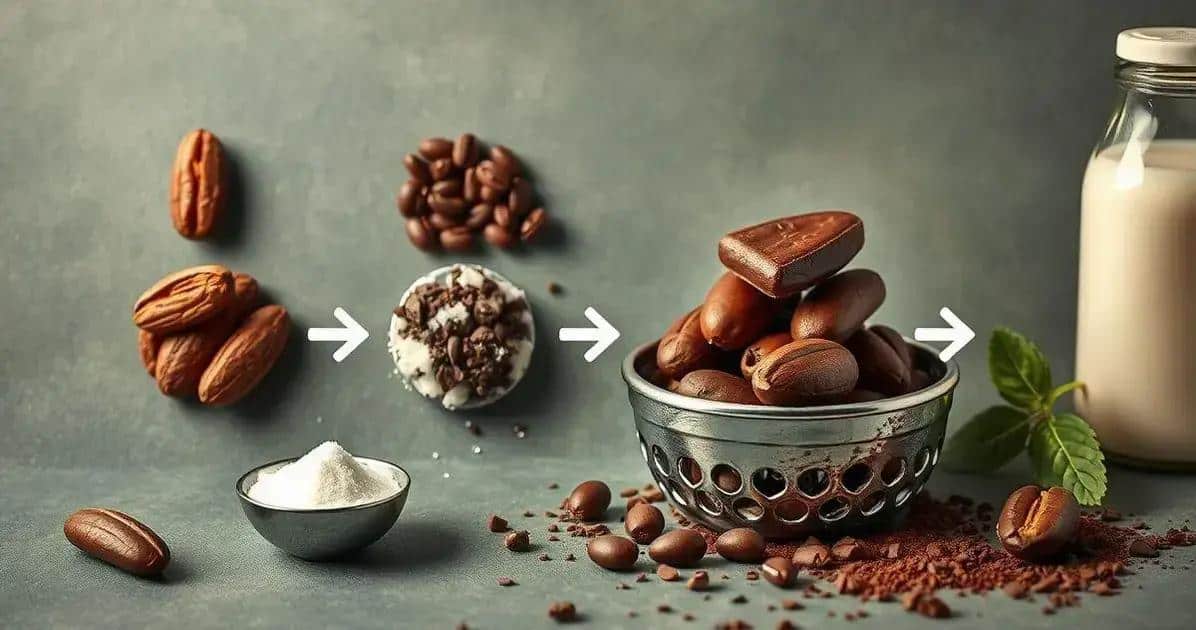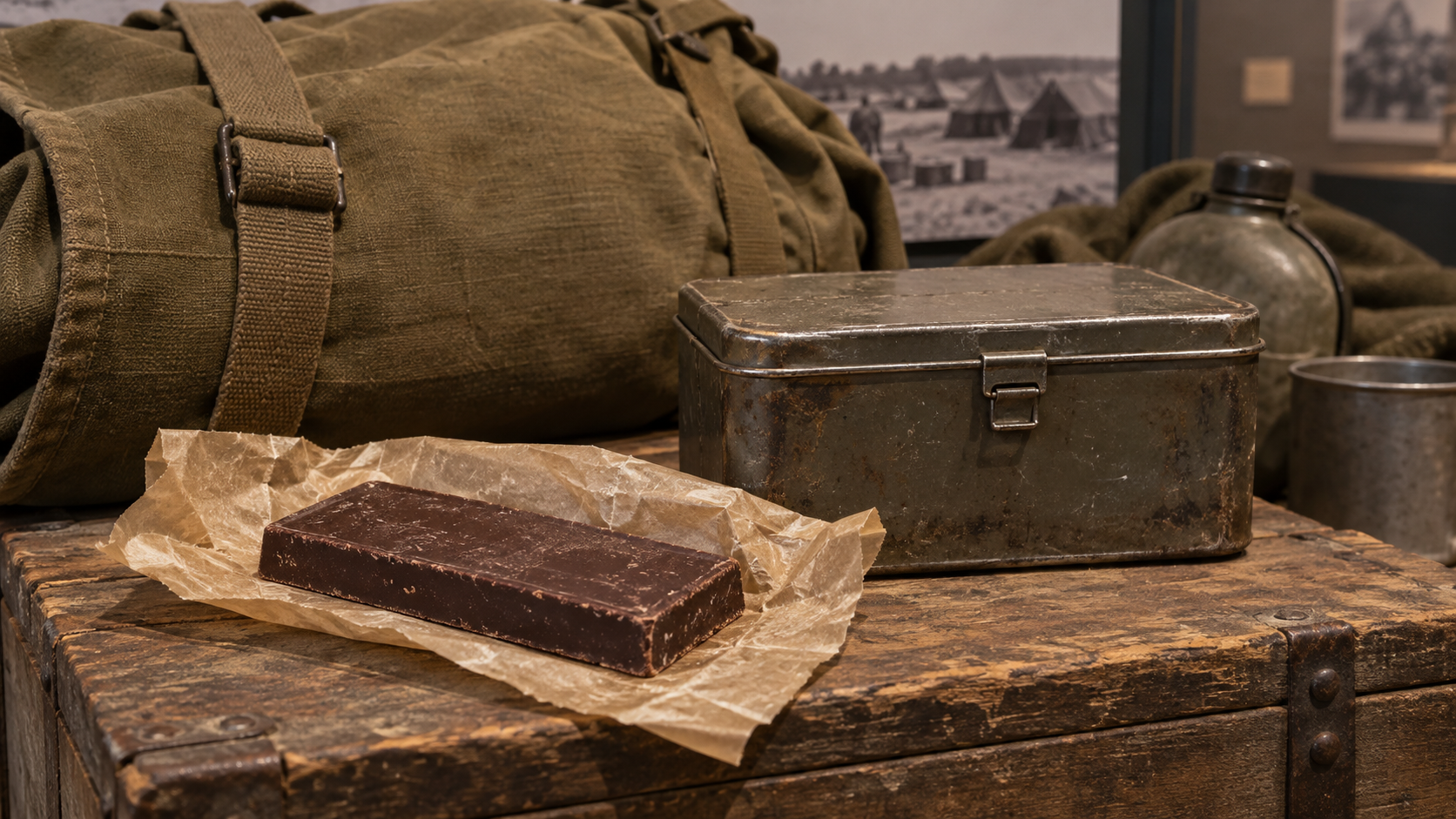

Harvesting ripe cacao pods

Cacao grows in pods on tropical trees. Ripe pods are opened and the seeds, usually called cocoa beans, are removed with their surrounding pulp.
Fermentation and drying
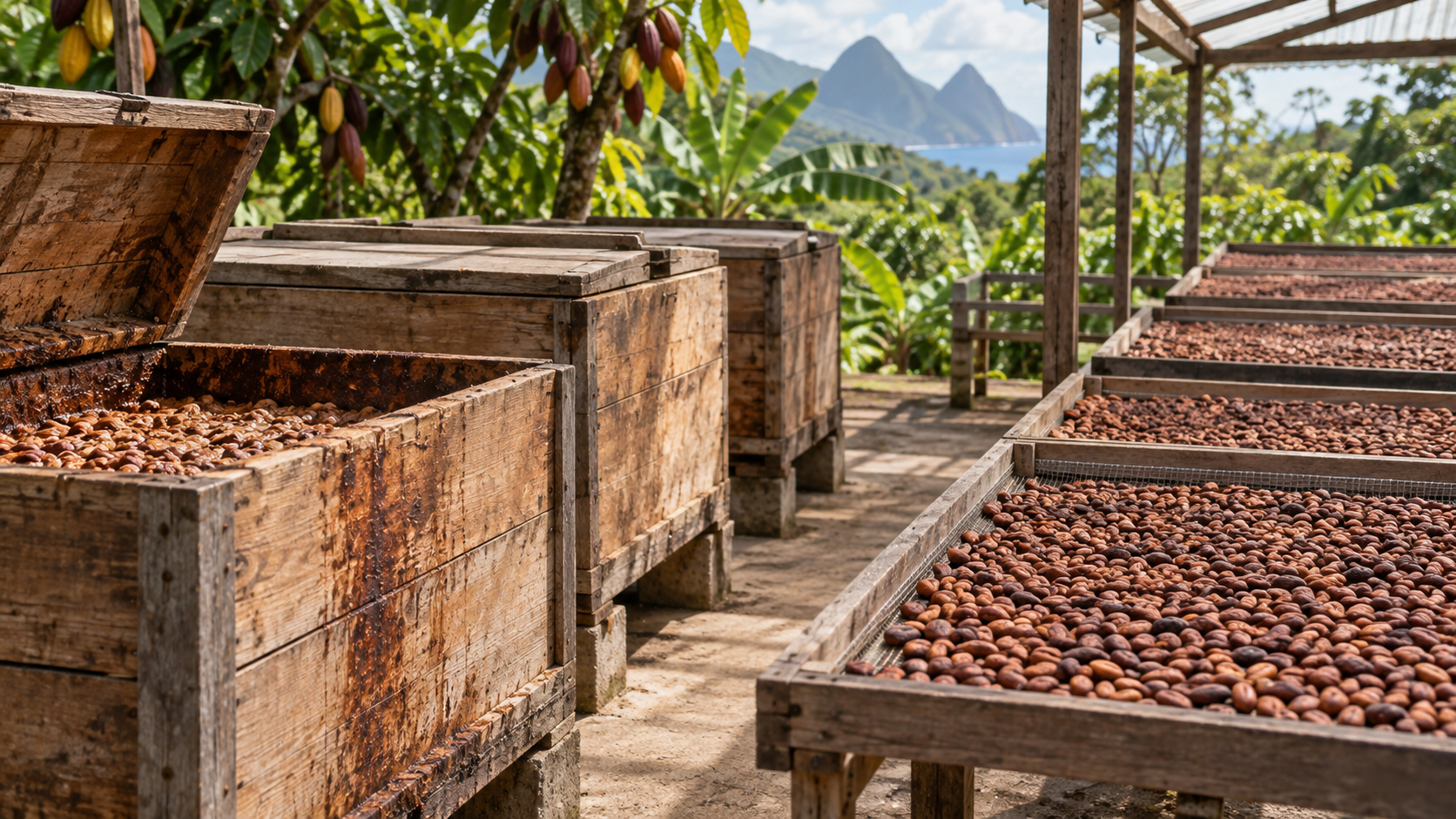
Producers ferment the beans with pulp for several days, then dry them. These stages reduce moisture and help develop the flavour precursors that become recognisable during roasting.
Roasting and winnowing
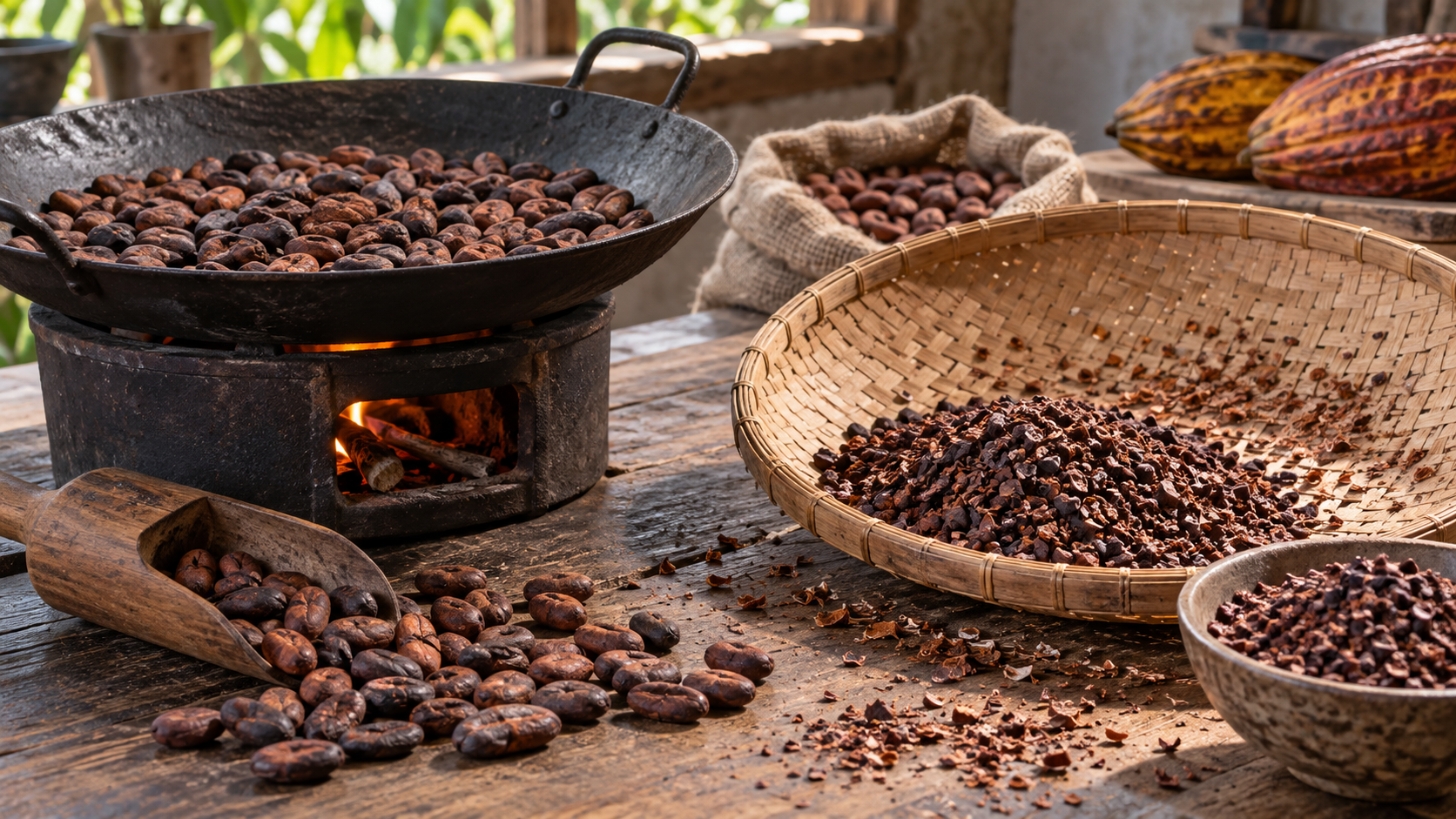
Manufacturers clean and roast the dried beans, with time and temperature adjusted to the desired flavour. The shells are then removed, leaving pieces known as cocoa nibs.
Grinding and refining
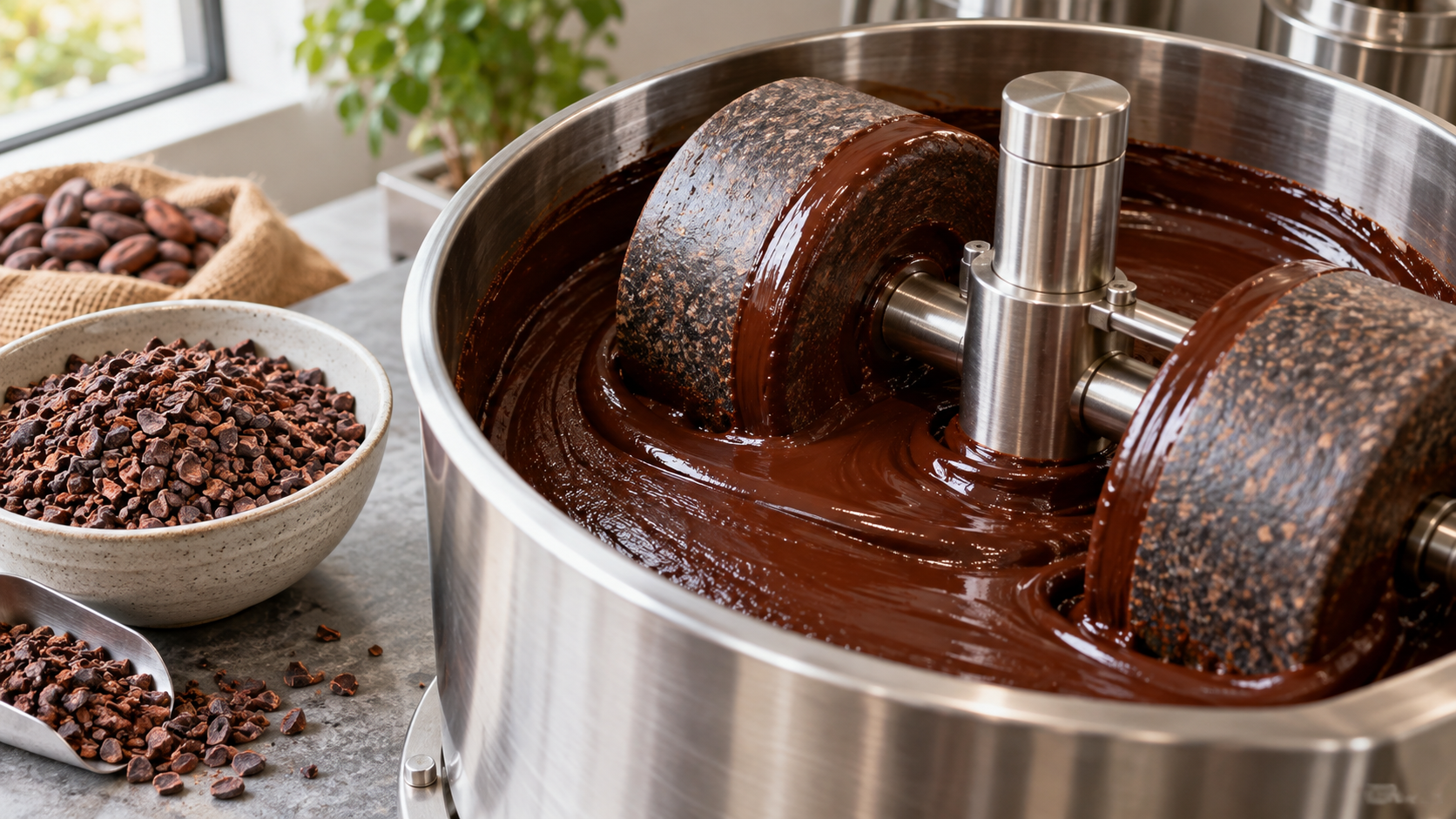
The nibs are ground into cocoa mass. Depending on the recipe, cocoa butter, sugar, milk ingredients and other permitted ingredients are mixed in, then refined to make the particles feel smooth.
Conching and tempering
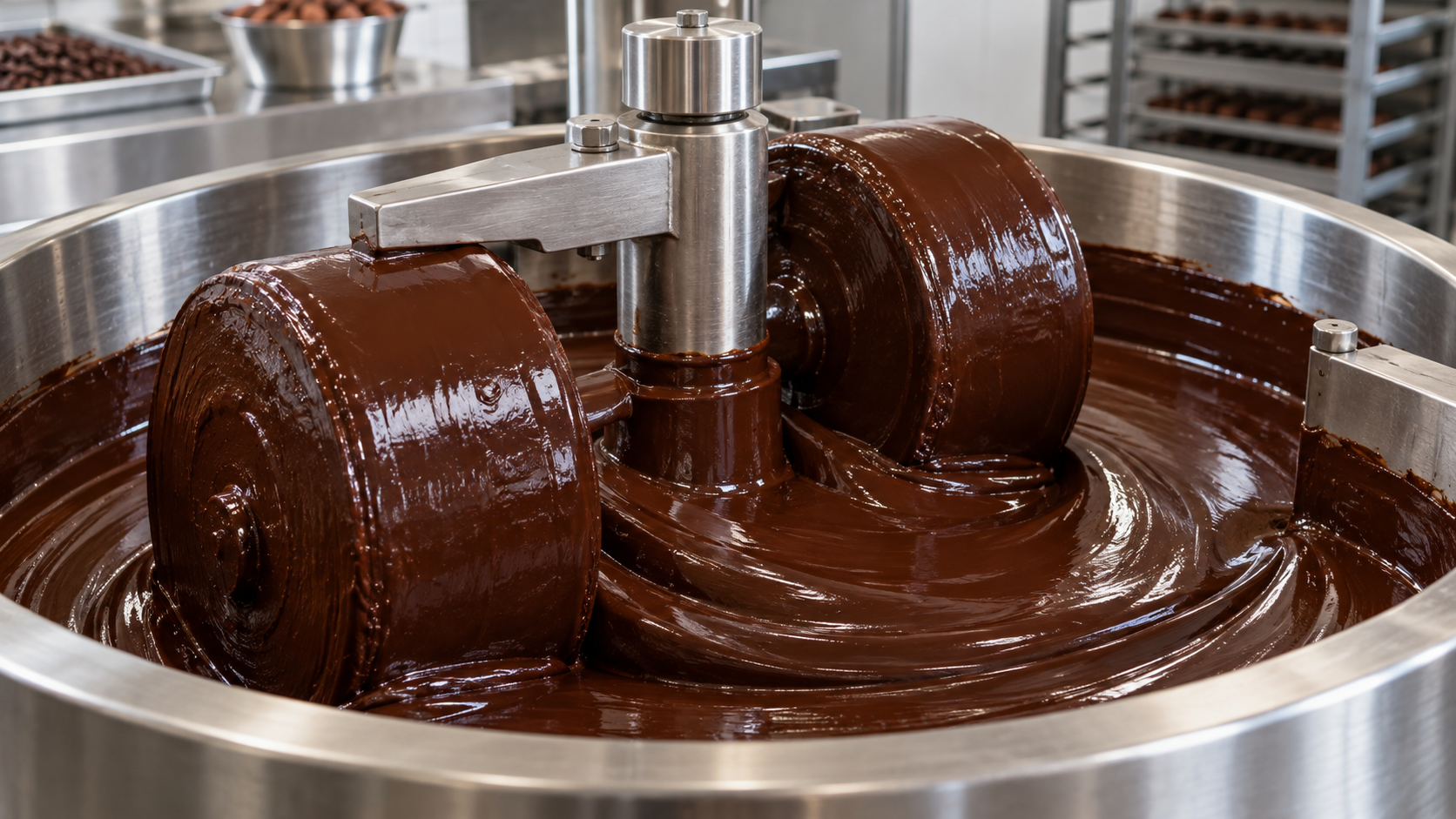
Conching mixes and aerates the chocolate to develop flavour and flow. Tempering then controls cocoa-butter crystals so the finished bar has shine, snap and good release from the mould.
Moulding and packing

Tempered chocolate is deposited into moulds, cooled and checked before wrapping. Exact machinery and sequences vary between factories and smaller bean-to-bar makers.
Frequently asked questions
Can I use chocolate chips?
Sometimes. Chips are designed to hold their shape in baking and may be too thick for smooth dipping or moulding.
Can I replace dark chocolate with milk chocolate?
Only when the recipe allows it. The change affects sweetness, firmness and flow, so ratios may need adjustment.
Why has my chocolate turned pale?
Fat bloom or sugar bloom can follow poor tempering, heat changes or condensation. It is usually a quality issue, but check storage and freshness.
How should chocolate be stored?
Keep it sealed in a cool, dry place away from sunlight, moisture and strong odours.
Which allergens should I check?
Read every label for milk, soya, nuts, gluten and other relevant allergens, including shared-equipment warnings.
What is the safest approach for gifts?
Use clean food-safe packaging and include ingredients, allergens, the preparation date and clear storage guidance.