
Body weight reflects the whole pattern
Weight change is influenced by overall energy intake, activity, sleep, health and many other factors. One food does not determine the result by itself.
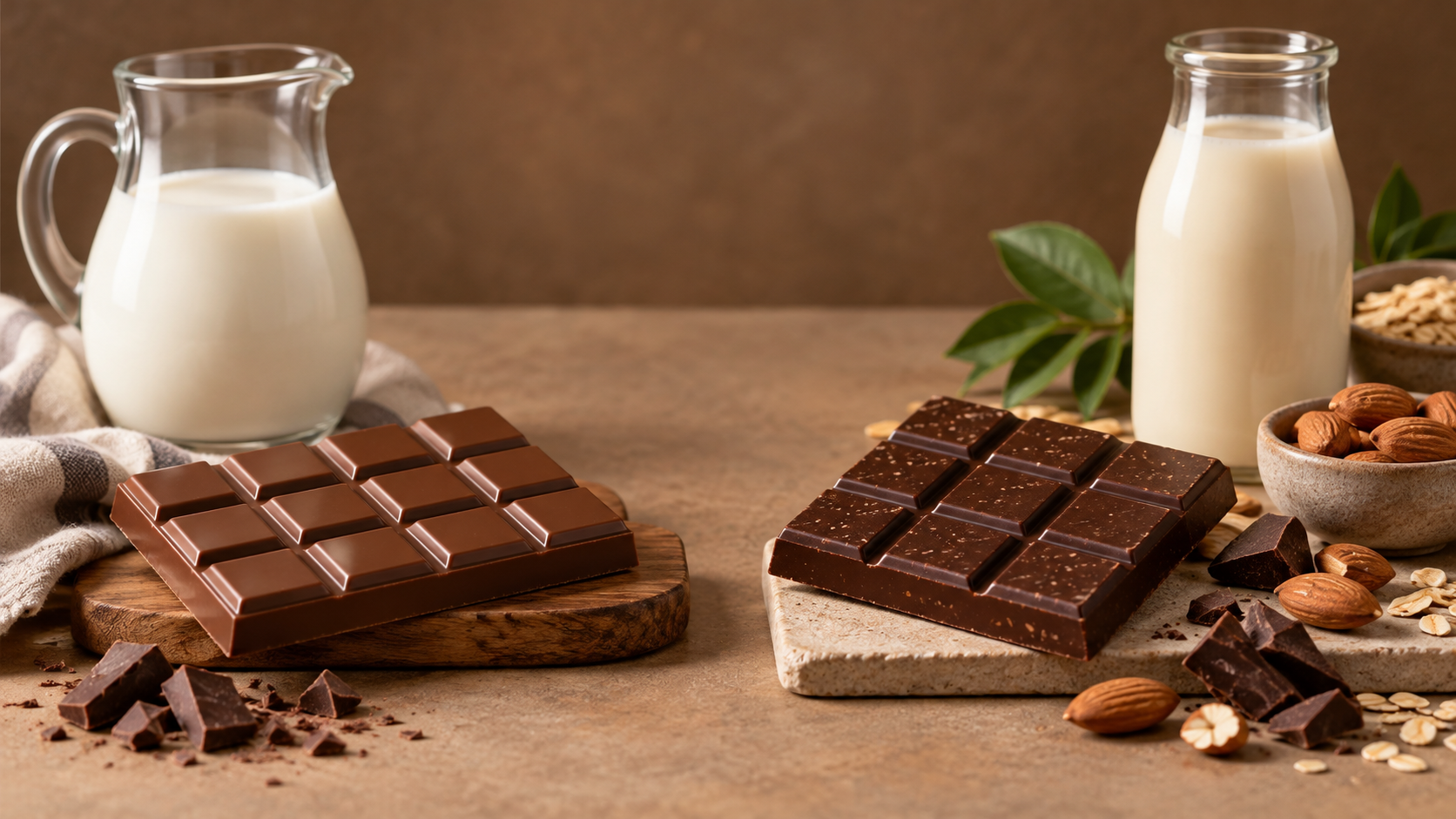
Chocolate varies greatly
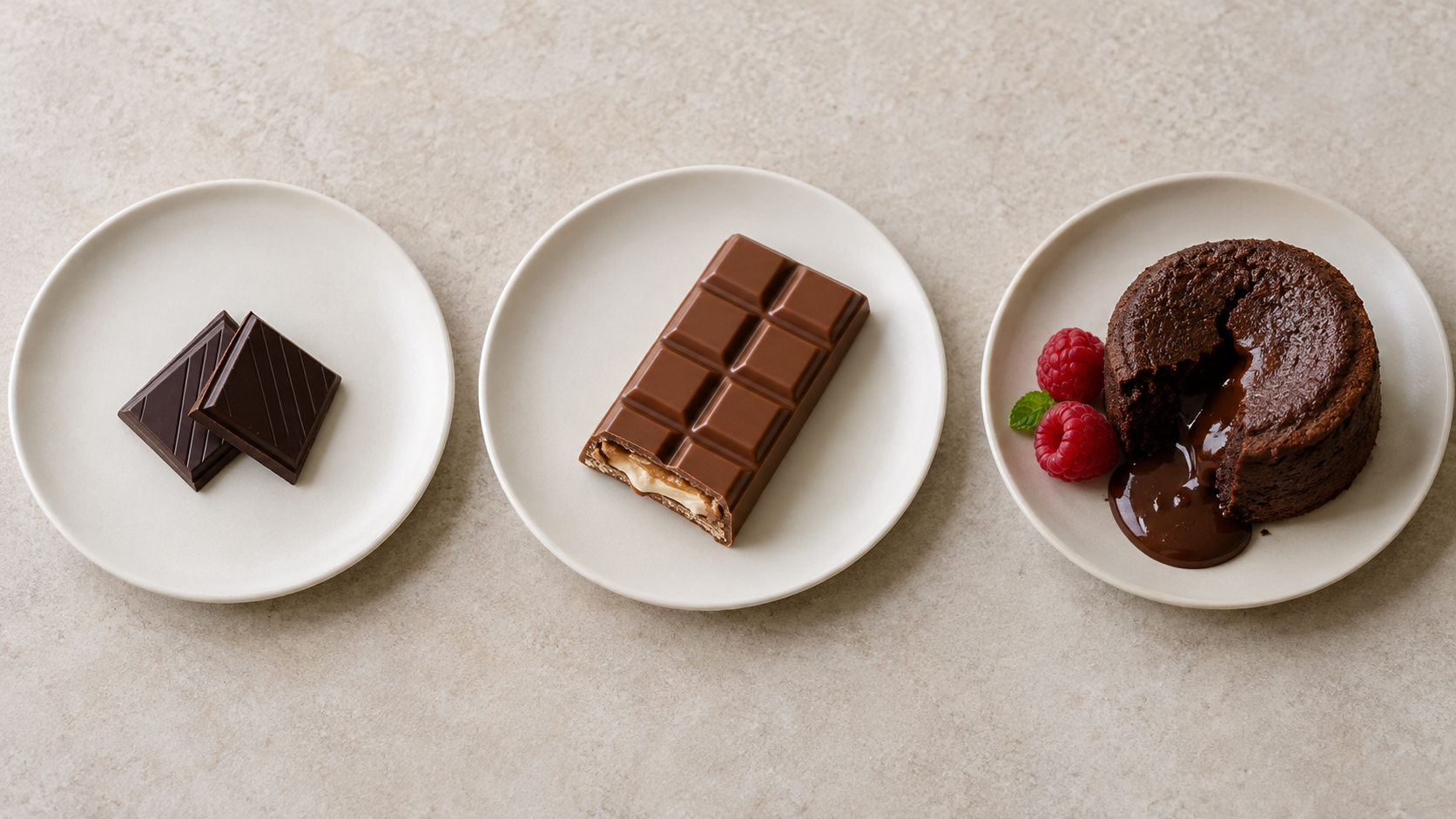
A small dark chocolate square, a filled bar and a large chocolate dessert have very different portions and nutrition. Treating them as one category hides the useful differences.
Portion size is easy to underestimate
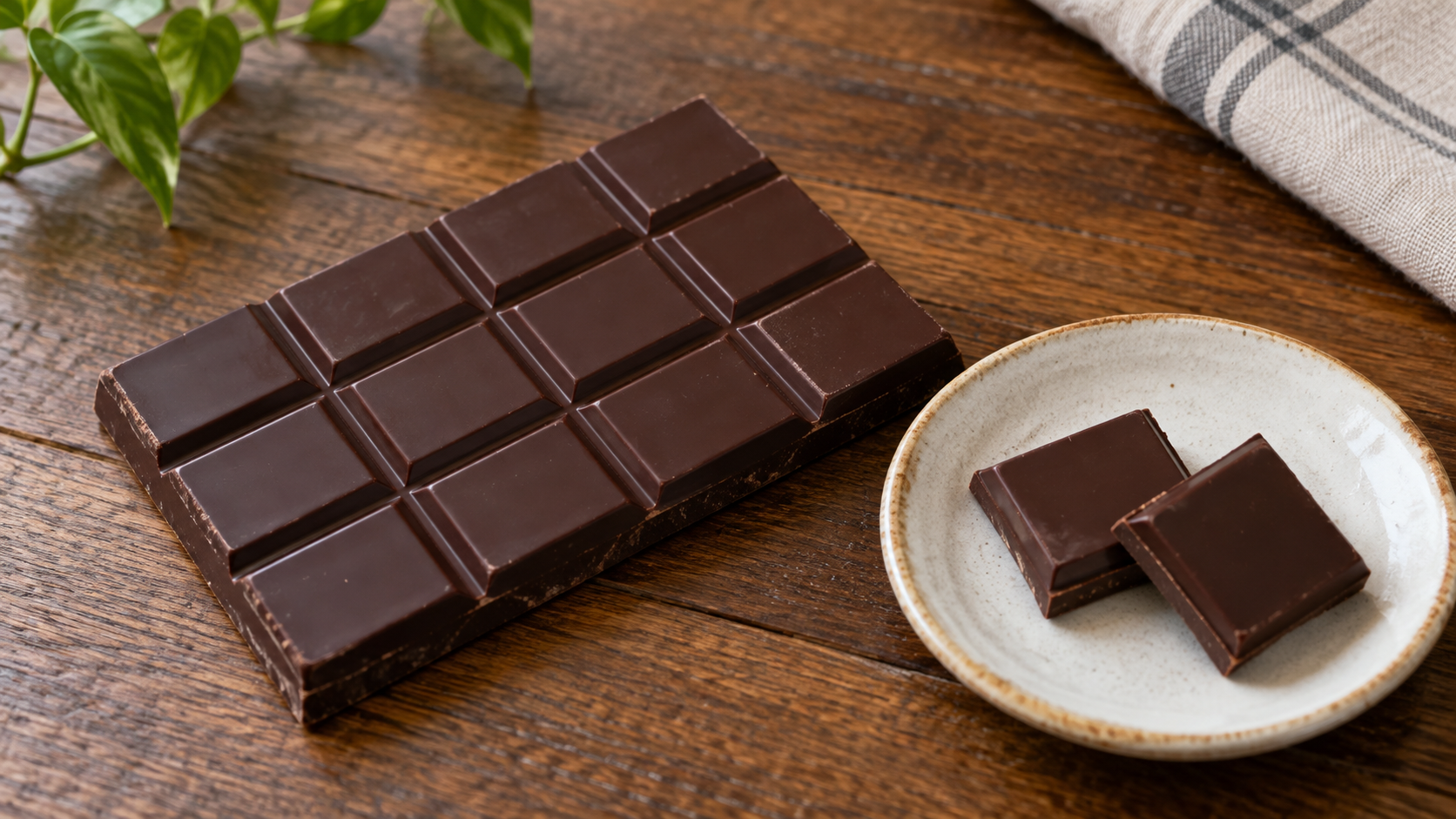
Chocolate is energy-dense, so a few extra pieces can add up without looking like much food. Serving a planned amount is more reliable than eating directly from a large packet.
Dark chocolate is not calorie-free
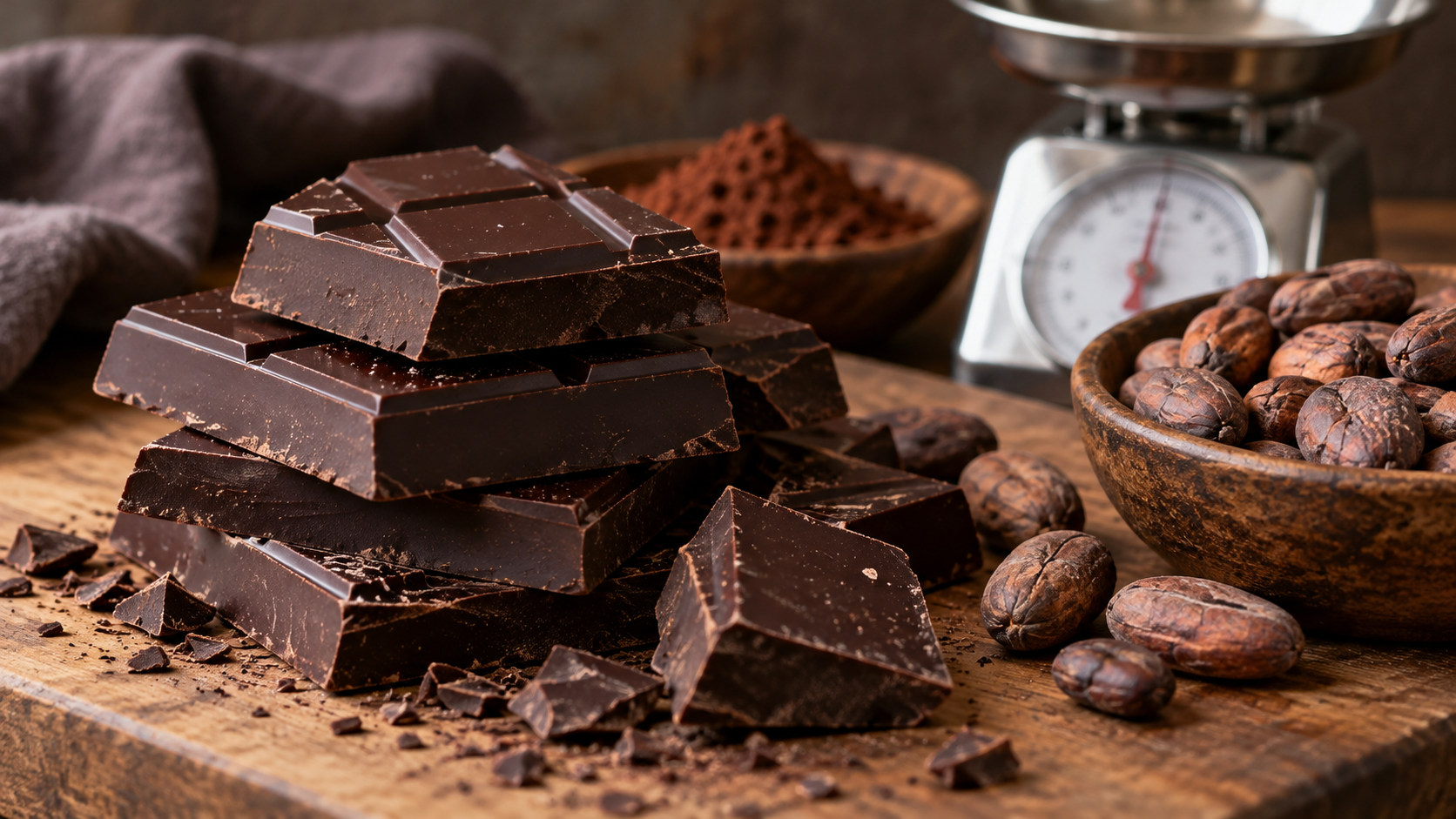
Dark chocolate may contain more cocoa and less sugar than some milk chocolate, but it still contains substantial fat and energy. A high cocoa percentage is not a weight-loss claim.
Restriction can backfire
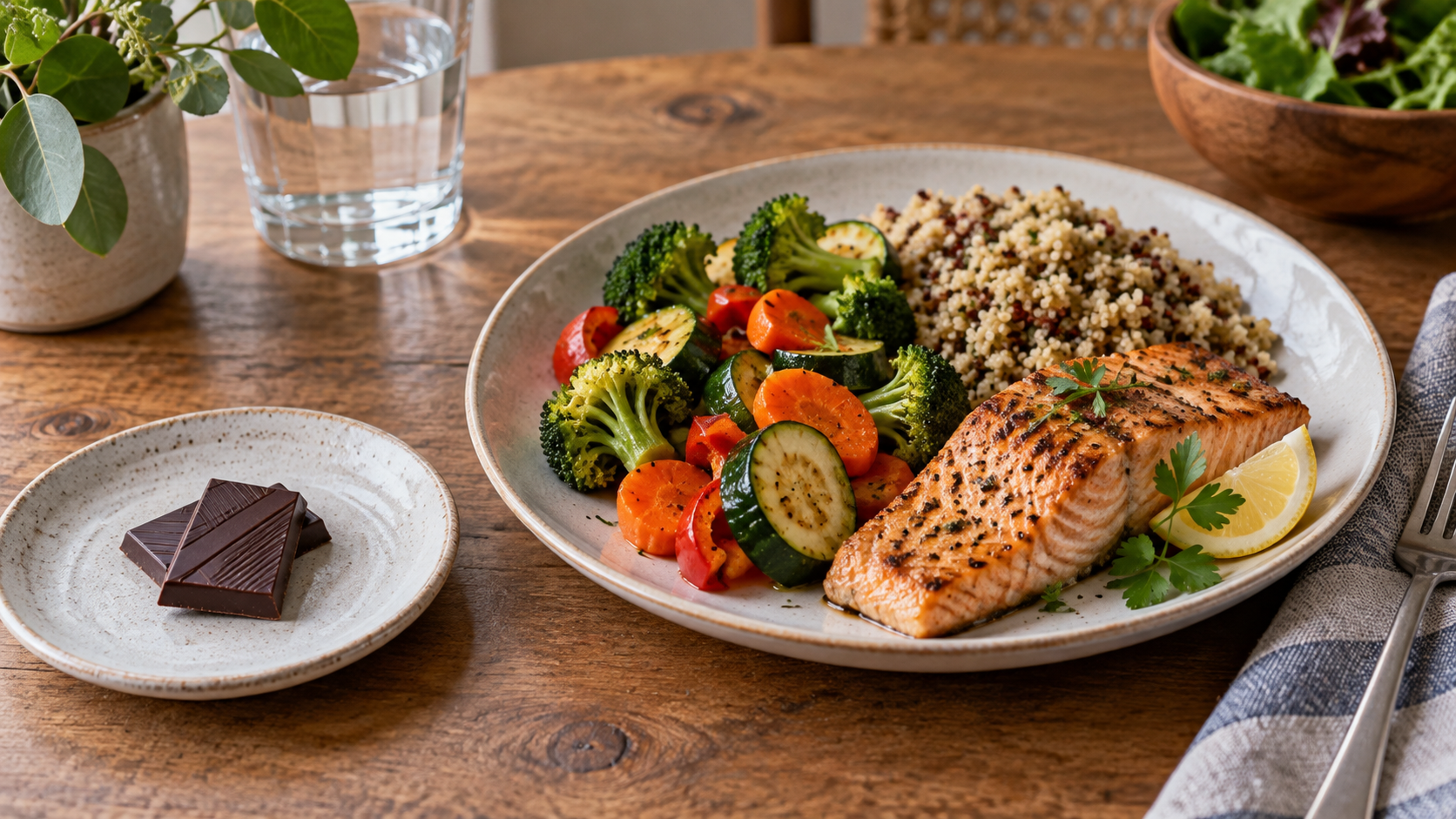
Rigid rules can make some people more preoccupied with a food. A balanced plan can include enjoyable foods in measured portions without labelling them morally good or bad.
Frequently asked questions
Does a cocoa percentage prove quality?
No. It describes part of the recipe, while flavour and quality also depend on the beans, processing, sugar, fat and storage.
Is chocolate a medicine?
No. Cocoa is studied for several compounds, but ordinary chocolate should not replace medical assessment or treatment.
How should chocolate be stored?
Keep it sealed in a cool, dry place away from sunlight, moisture, heat and strong odours.
Are all historical chocolate claims certain?
No. Archaeological, genetic and documentary evidence continues to develop, and practices varied between places and periods.
Can dark chocolate contain milk?
Yes. Recipes and cross-contact differ, so check the ingredient list and allergen statement on the exact product.
What is the best way to compare products?
Compare ingredients, cocoa content, portion, allergens, origin information and price per weight rather than relying on broad marketing words.