

Separate cocoa colour from chocolate

Finished chocolate contains cocoa butter, sugar and often milk, so it stains fabric rather than acting as a reliable dye. Cocoa powder, cocoa husks or a commercial brown textile dye are more practical choices depending on the result required.
Choose fabric and test a swatch
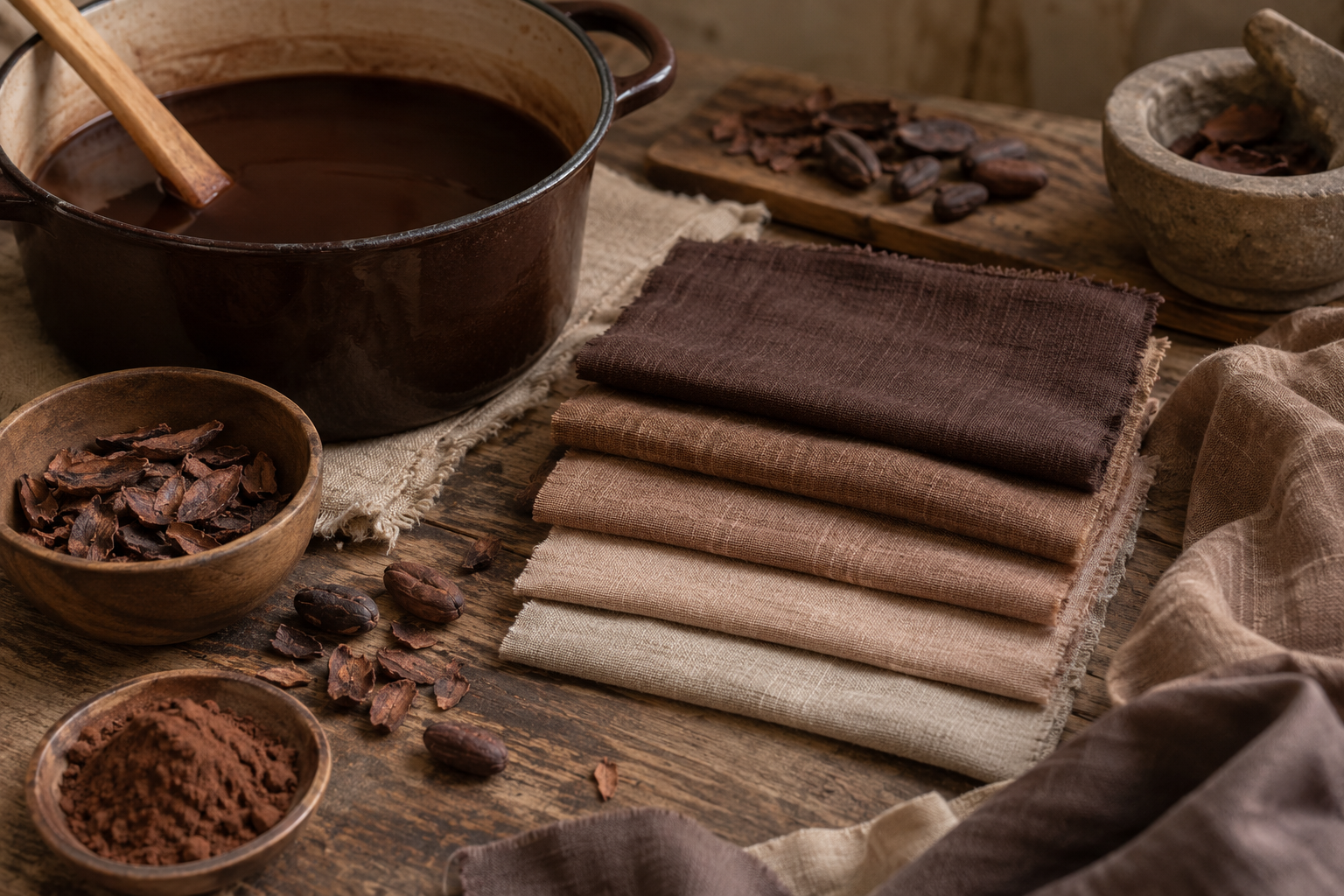
Natural fibres usually accept plant colour better than polyester, but shade and fastness vary. Wash the fabric first and test a hidden swatch; valuable garments and upholstery should go to a textile professional.
Prepare a simple cocoa bath
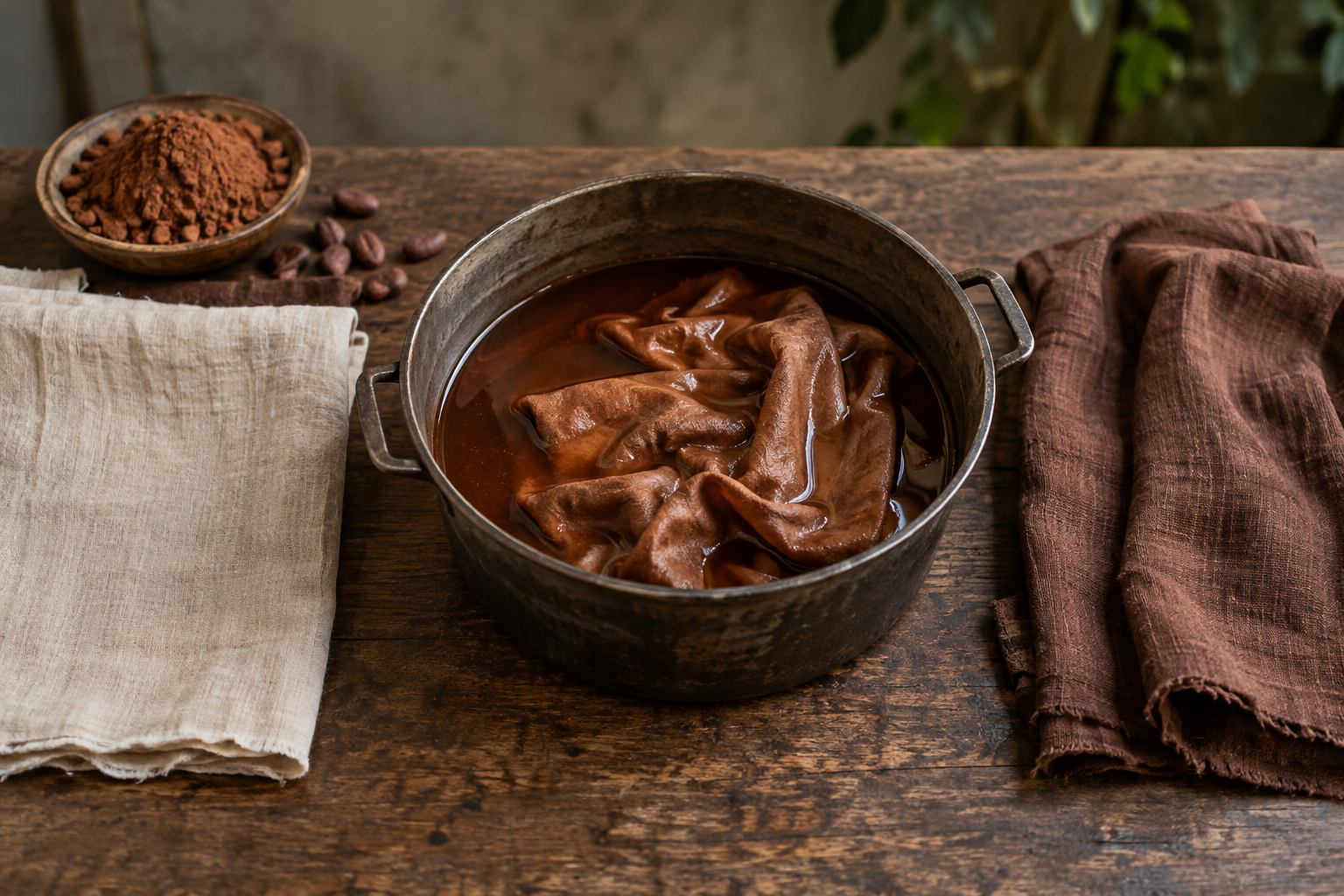
For a craft experiment, simmer cocoa husks or plain cocoa in water, strain the liquid carefully and immerse damp fabric using dedicated utensils. Follow a tested mordant method for the fibre; do not improvise with hazardous metal salts.
Understand fading and washing limits
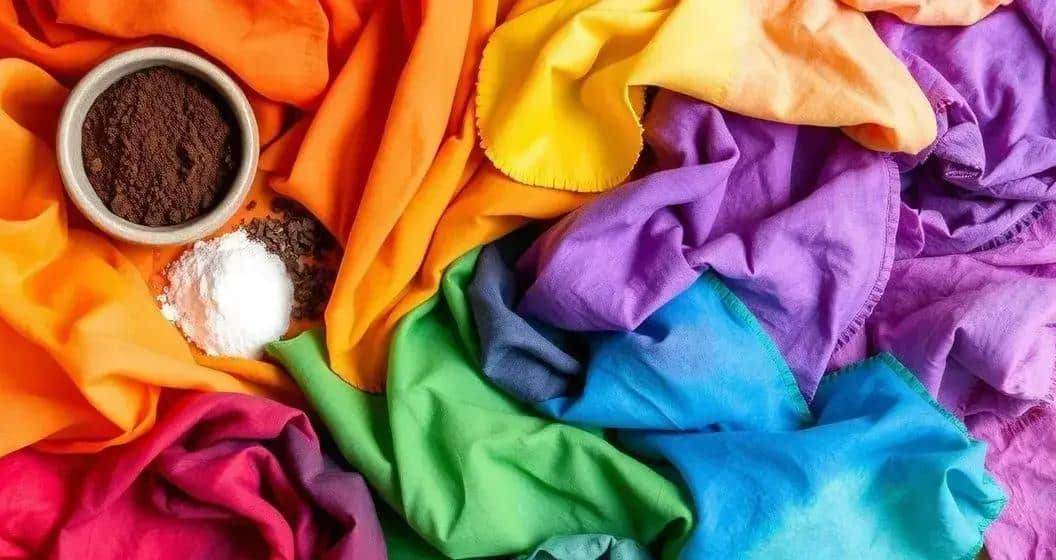
Cocoa tones may be pale, uneven and quick to fade. Rinse until the water is clearer, dry away from strong sun and wash separately in cool water. Record the fibre, quantities, time and treatment if you want to repeat the shade.
Dispose of the bath responsibly
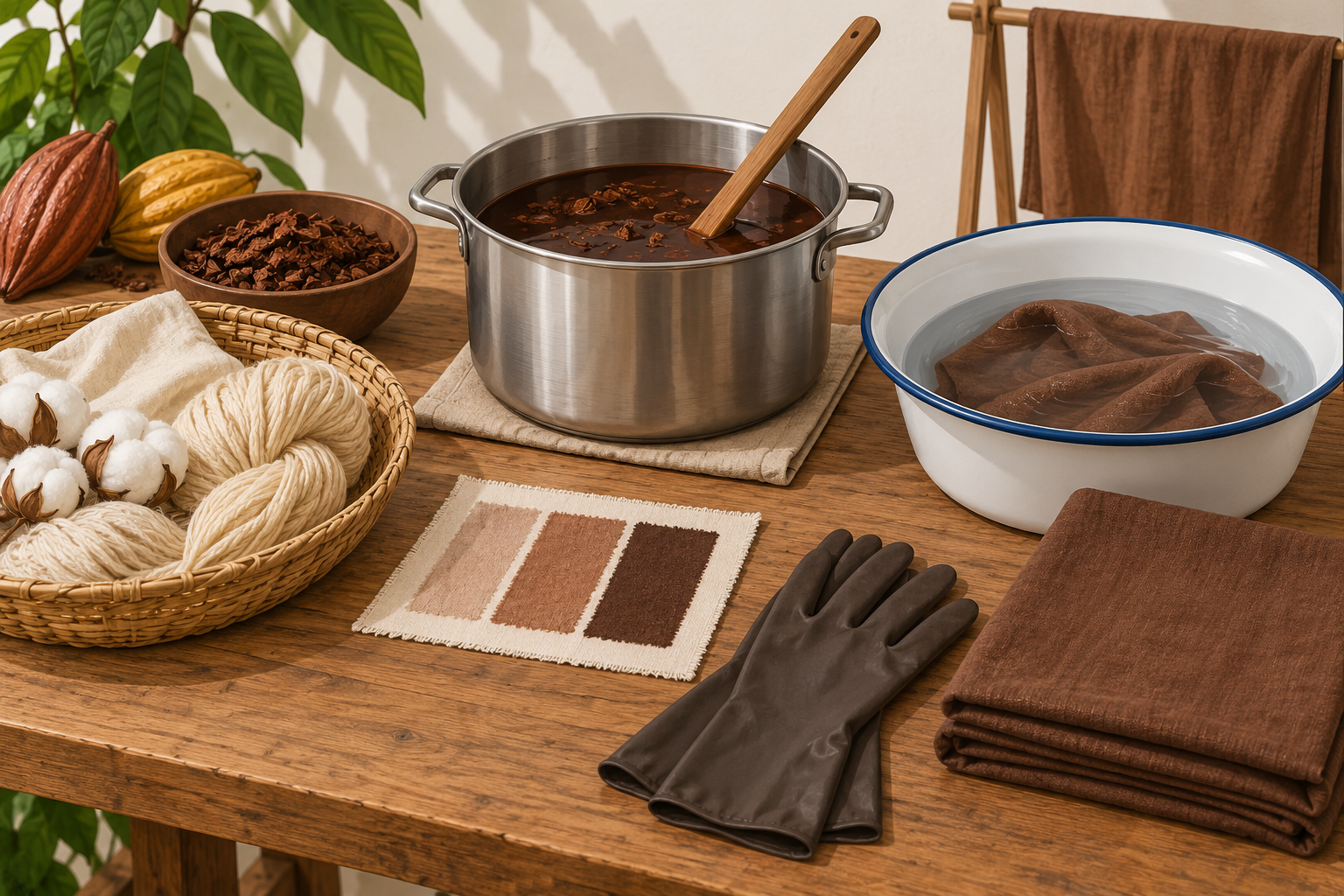
Let the bath cool, strain solids and follow local waste guidance. Do not pour greasy chocolate mixtures down a drain, reuse dye utensils for food or assume a natural ingredient is harmless to every surface or water system.
Frequently asked questions
Why was the original article rewritten?
Unsupported historical, commercial, cultural or safety claims were replaced with cautious practical guidance while preserving the useful subject.
How should a “first” or invention claim be checked?
Use a named contemporary source, archive, patent, catalogue or well-supported specialist history.
Can a gift be assumed safe because it is chocolate?
No. Ingredients, allergens, alcohol, temperature, shelf life and choking risks still need attention.
May craft materials touch chocolate?
Only materials explicitly approved for food contact should touch unwrapped food.
How should storage time be decided?
Use the product label or a validated recipe and process; appearance and smell alone cannot establish safety.
What should be recorded during an adaptation?
Record sources, ingredients, quantities, temperatures, dates, packaging and every change made for a modern British audience.