
Why armies carried chocolate
Chocolate combines energy in a compact form with a flavour associated with comfort. Those qualities made it useful in military supplies, but ordinary confectionery can melt, bloom or be eaten before an emergency. Ration design therefore balances nutrition, storage, transport and morale.
Early ration use
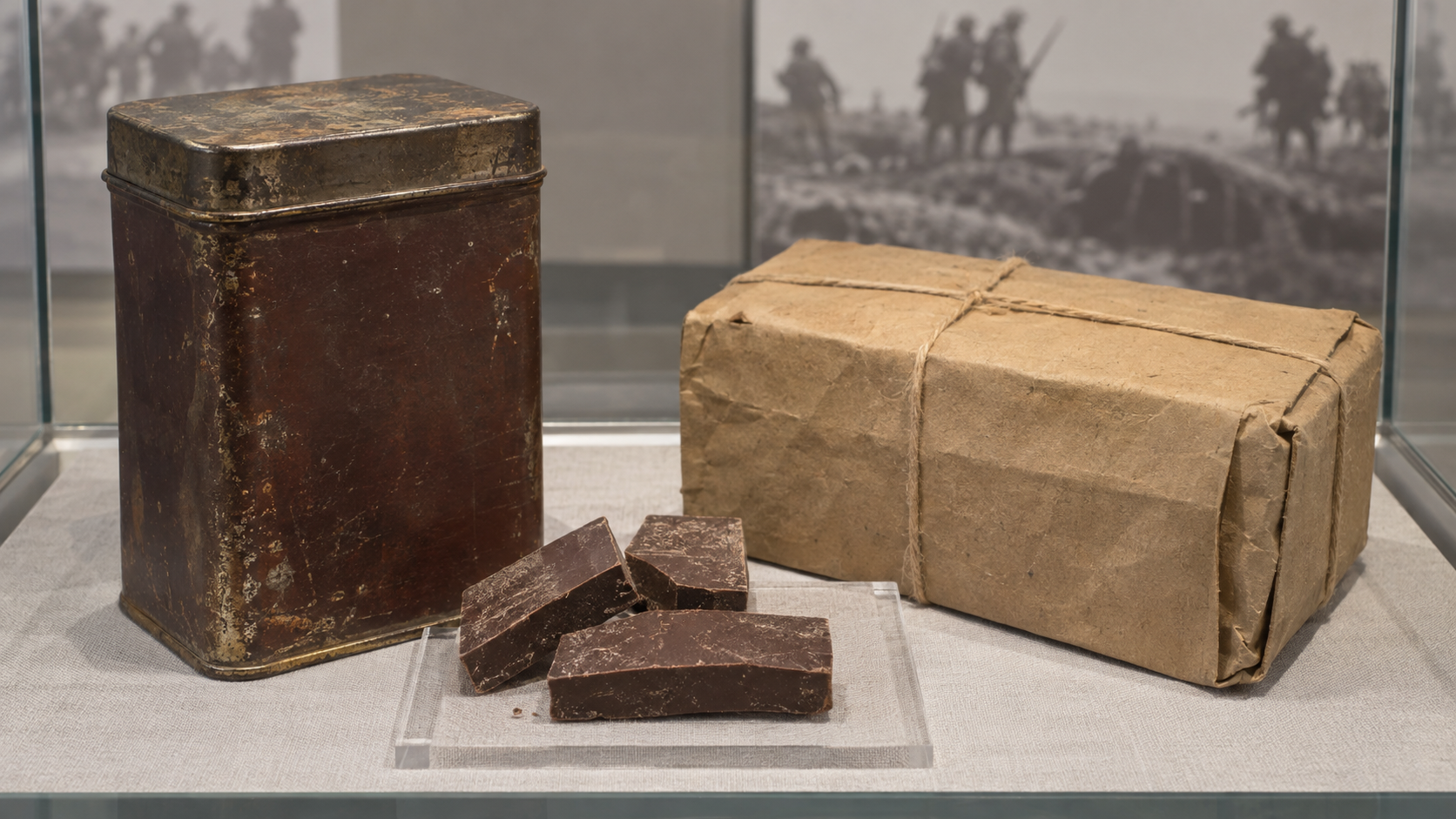
European armed forces used cocoa and chocolate products before the twentieth century, while private companies and relief organisations also sent chocolate to troops. Sources often mix official rations with gifts, so a packet in a soldier’s possession was not necessarily standard issue.
The First World War
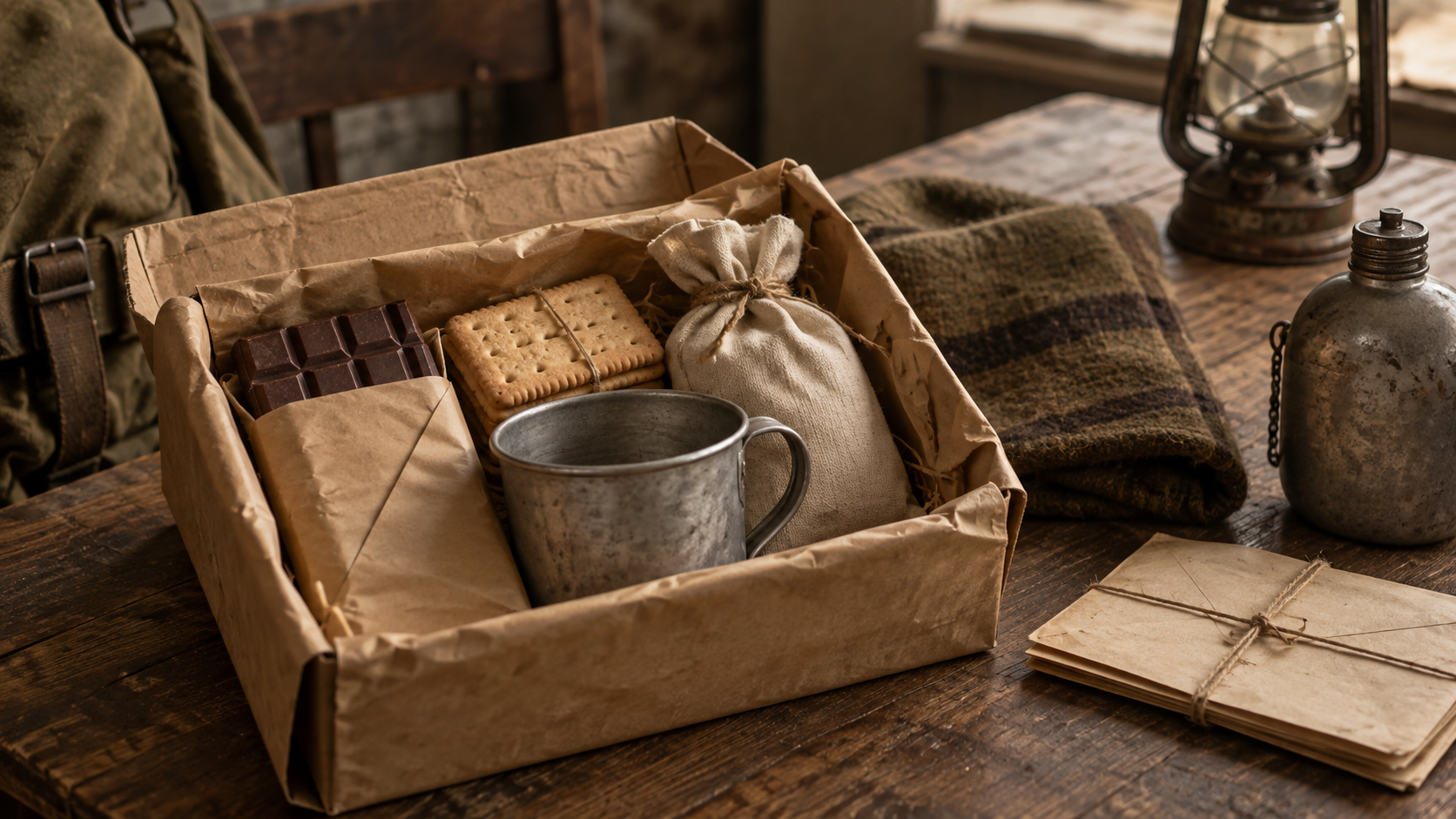
During the First World War, chocolate appeared in parcels and some ration arrangements as a convenient source of calories and a reminder of home. Wartime shortages and shipping constraints affected supply. Brand stories should be checked against military records rather than repeated as universal experience.
Purpose-built Second World War bars
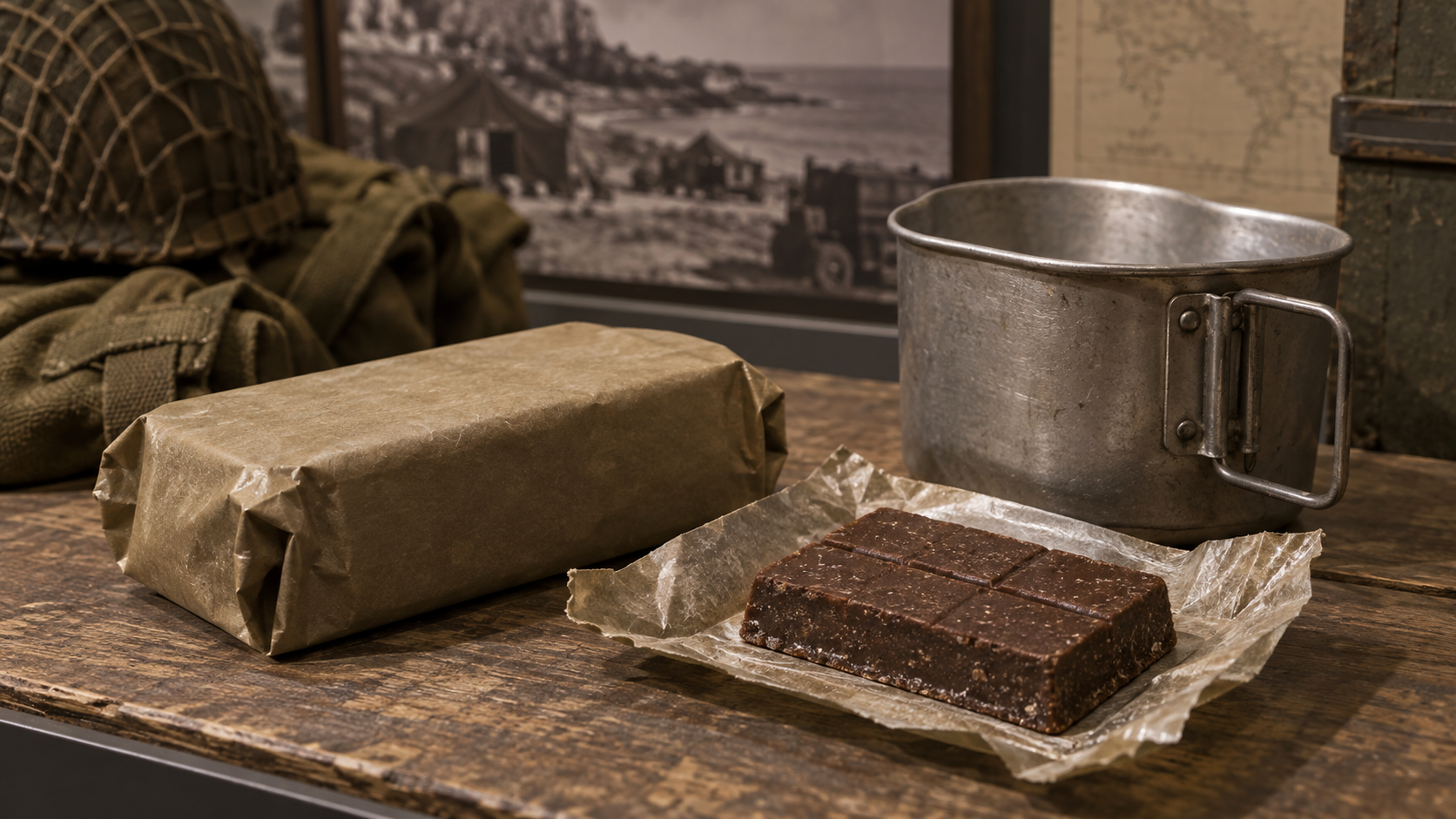
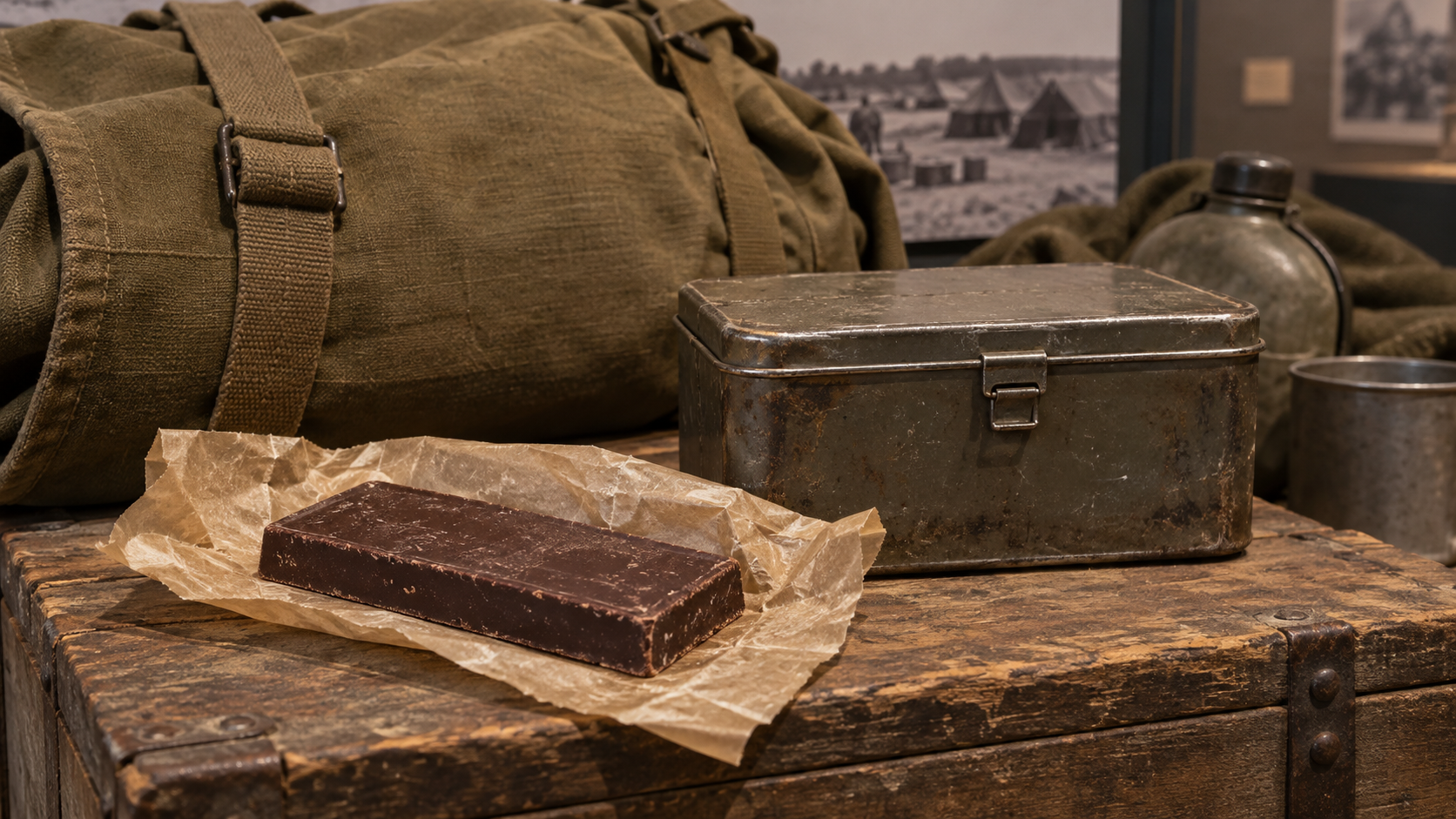
In the Second World War, the United States commissioned compact emergency chocolate, including the D ration associated with Hershey. It was formulated for high energy, heat resistance and limited palatability so it would be saved for emergencies. Other forces used different products and specifications.
Taste versus durability
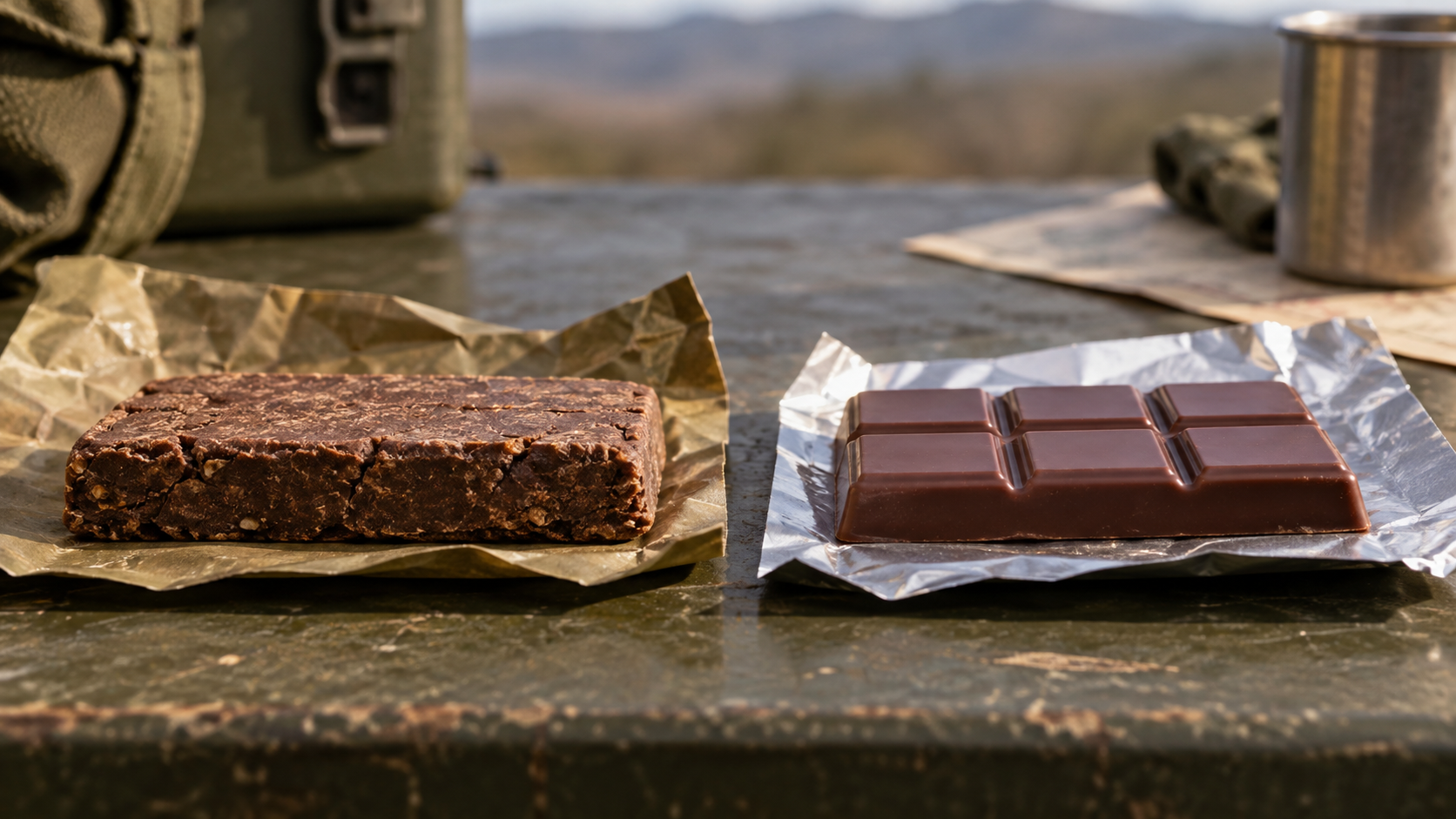
A very tasty bar raises morale but may disappear quickly; a durable emergency bar has a different purpose. Fat composition, packaging and portion size influence heat stability and shelf life. White surface bloom can affect appearance without necessarily making a sealed product unsafe.
Chocolate in modern field rations
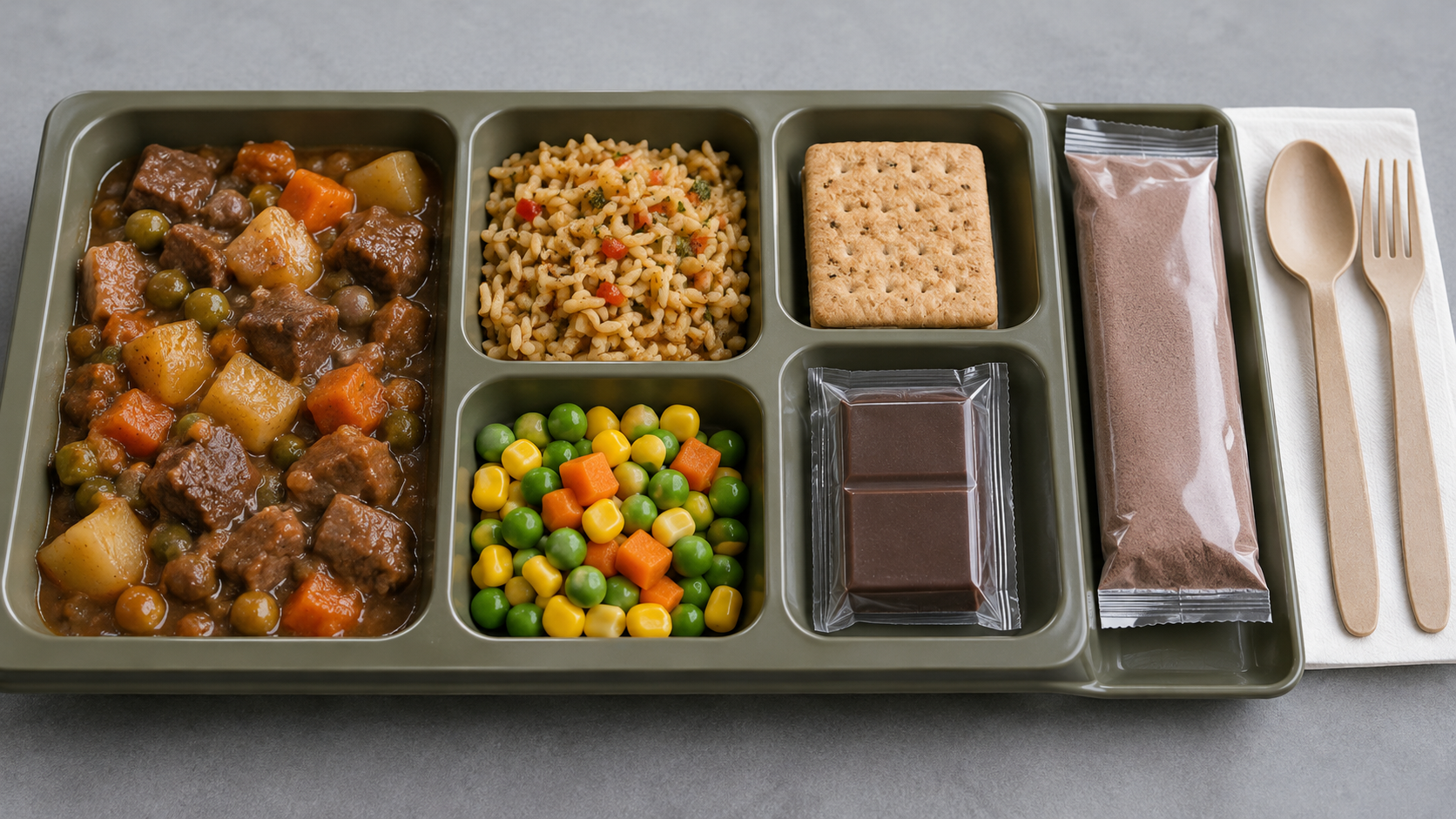
Modern field rations vary by country and mission and may include confectionery, cocoa drinks or specialist energy products. Menus change, so current contents should be verified from official defence sources. Chocolate remains one component of a planned ration, not a complete nutritional solution.
Frequently asked questions
Why was this article rewritten rather than translated literally?
The source needed factual, food-safety or cultural correction, so the English version keeps the useful topic while removing unsupported claims.
Are temperatures and shelf lives universal?
No. Equipment, ingredients and fillings vary; use a tested recipe, manufacturer guidance and appropriate food-safety controls.
Can decorative materials touch food?
Only materials intended for food contact should touch edible products, and flowers or non-food objects need a reliable barrier.
How should allergens be checked?
Read every current ingredient label and consider cross-contact; never infer allergen status from a product name or appearance.
Can a home method be scaled for sale?
Commercial production needs repeatable records, hygiene controls, compliant labelling and validation for the actual process.
Where should historical or language claims be verified?
Use dated archives, official records and qualified language references when a precise claim matters.