
Check what the operator actually offers
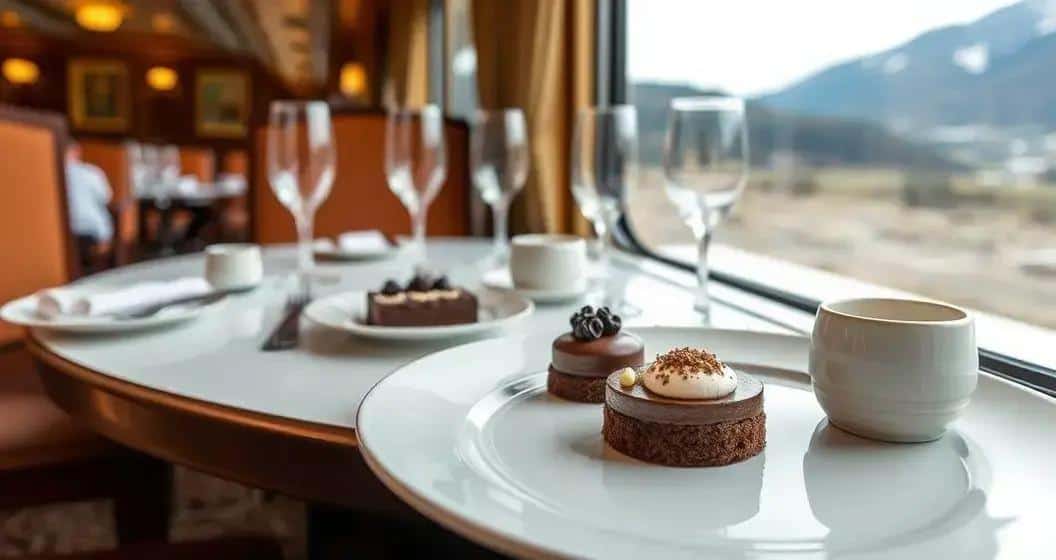
Luxury trains differ widely: some include formal dining, some sell snacks and others allow only food supplied by the operator. Check the current menu and carriage rules before arranging a tasting or bringing your own food.
Choose chocolate for the carriage environment
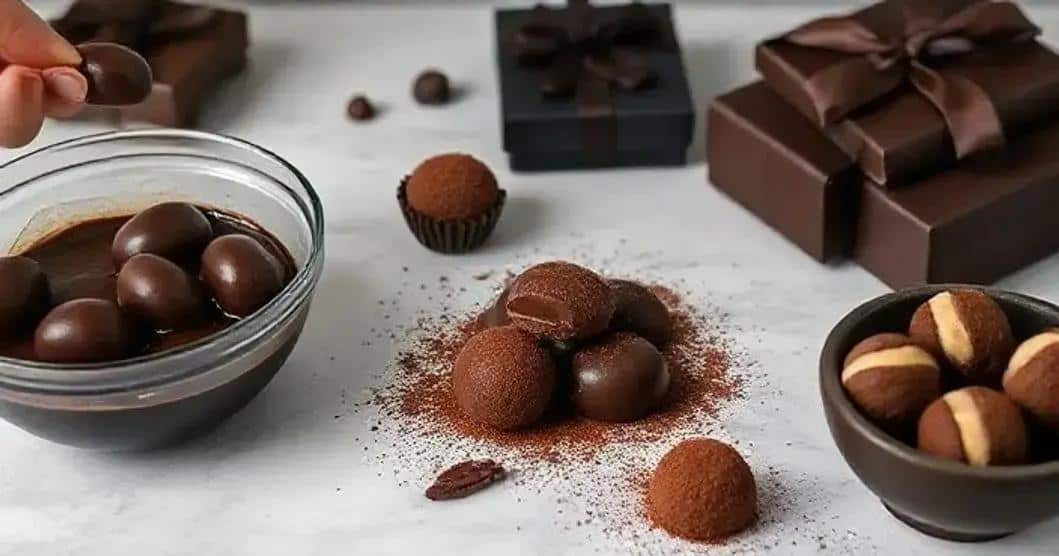
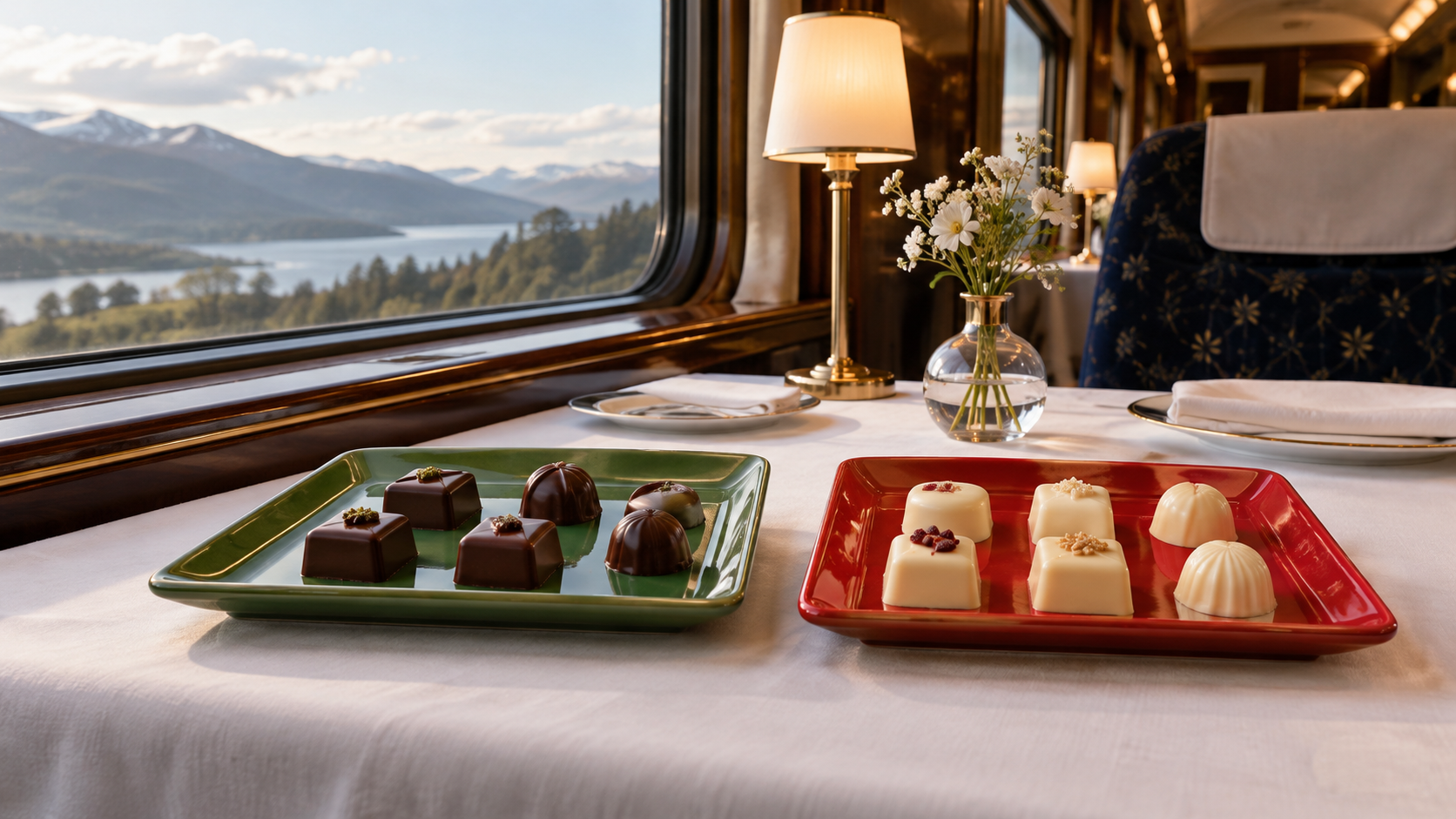
Choose small, cleanly portioned pieces that tolerate normal cabin temperatures. Very soft fillings, strong aromas and fragile decorations are awkward in a moving carriage and may need refrigeration.
Build a short tasting sequence
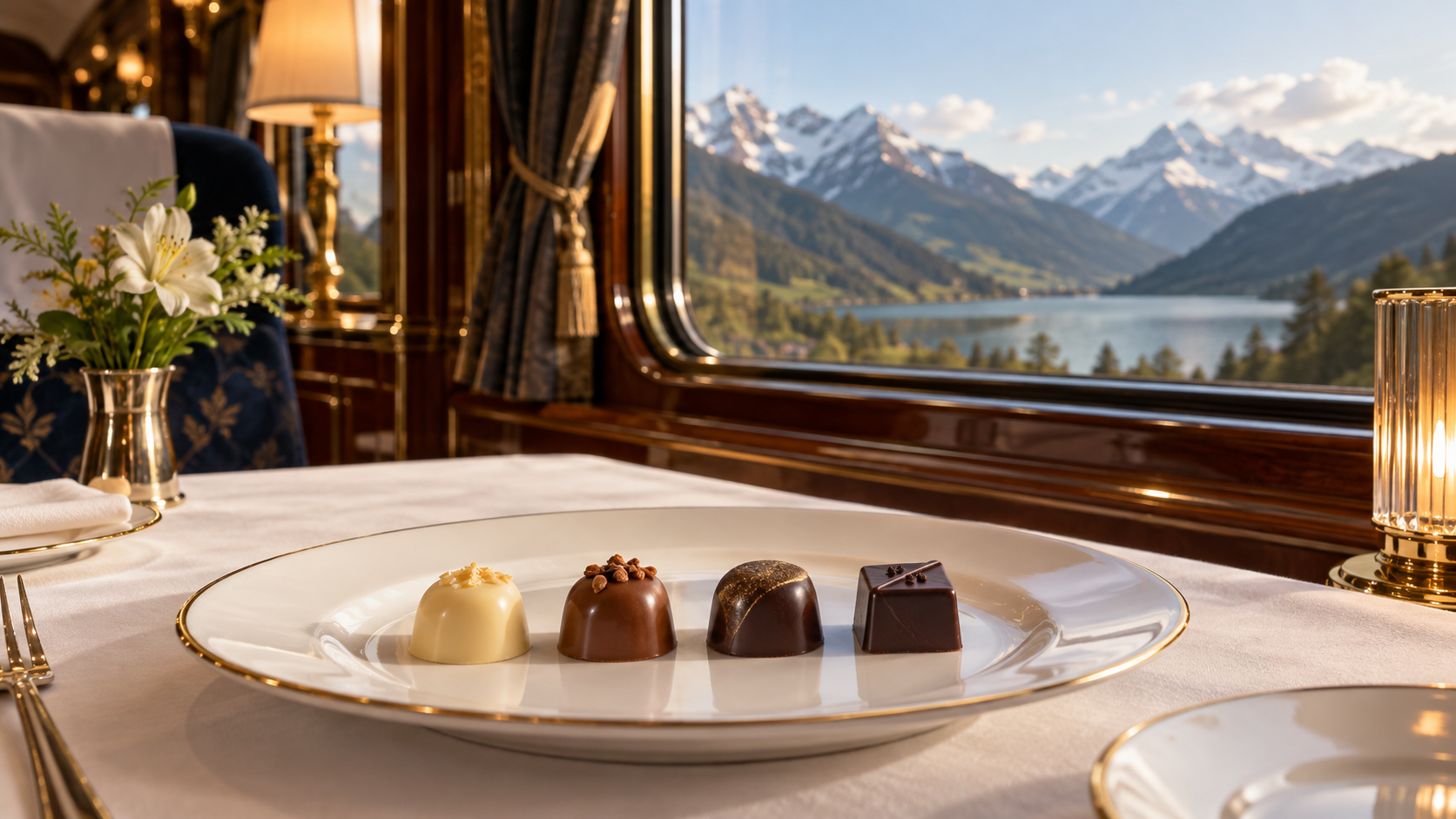
Serve three or four chocolates from lighter to darker or from delicate to intense. Give each piece enough time to warm slightly and let the cocoa flavour develop before moving on.
Pair drinks with restraint
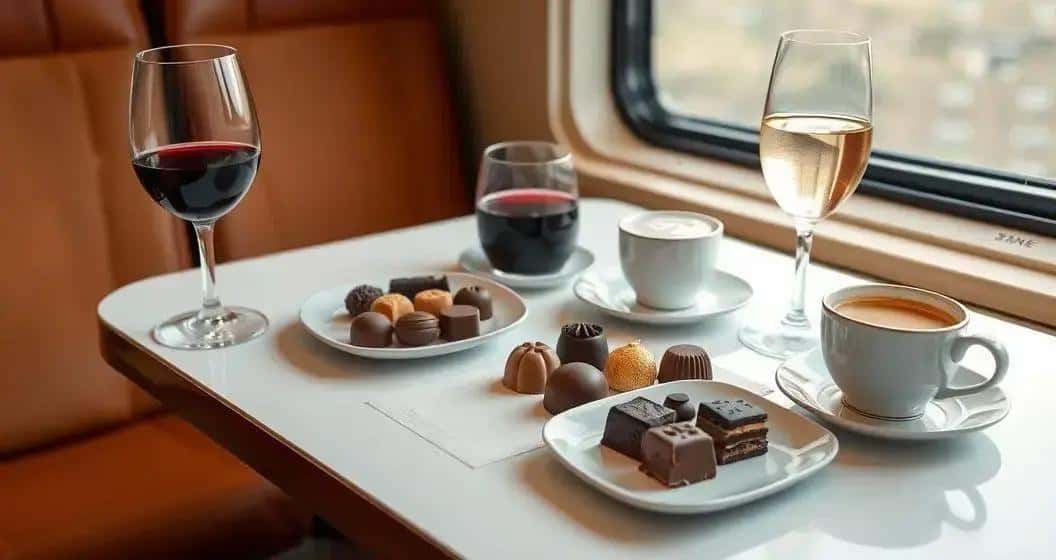
Tea and coffee are practical partners. Wine or spirits should be offered only where licensed and suitable, in modest measures, because alcohol and intense sweetness can obscure rather than improve flavour.
Protect quality during service
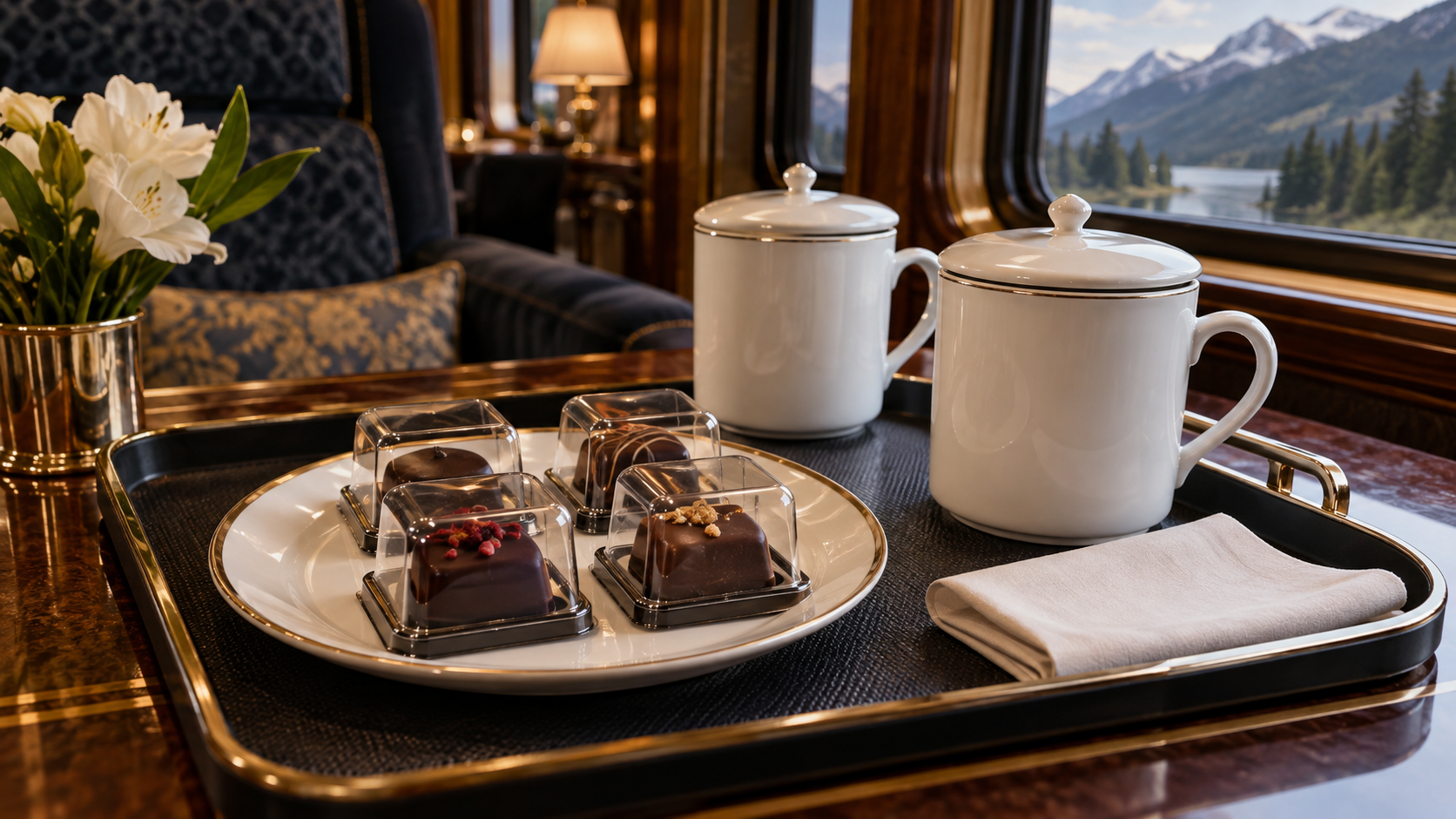
Keep chocolate sealed away from heat, sunlight, perfume and savoury food. Use clean individual portions and stable trays; hot drinks and glassware need particular care while the train is moving.
Respect allergies and fellow passengers
Provide ingredient and allergen information before service. Avoid shared utensils, do not pressure anyone to taste, and keep the experience quiet enough for other passengers to enjoy the journey.
Frequently asked questions
Why was the source rewritten?
Unsupported, oversimplified or potentially unsafe statements were replaced with cautious, useful guidance while preserving the original subject.
How should dates and “first” claims be checked?
Use a named primary source, catalogue record, patent, archive or official competition record that readers can verify.
Can a label or award guarantee ethics or quality?
No. It can be useful evidence within a defined scope, but its rules, date, auditing and limitations still matter.
How should allergens be handled?
Check every current pack, prevent cross-contact and provide accurate ingredient information before food is served or gifted.
Can storage advice be copied from another product?
No. Ingredients, process, packaging, temperature and hygiene determine the safe and acceptable storage period.
What should be recorded during planning?
Record sources, exact products, quantities, dates, temperatures, supplier guidance and any adaptation or assumption.