
Chocolate eggs before enclosed gifts

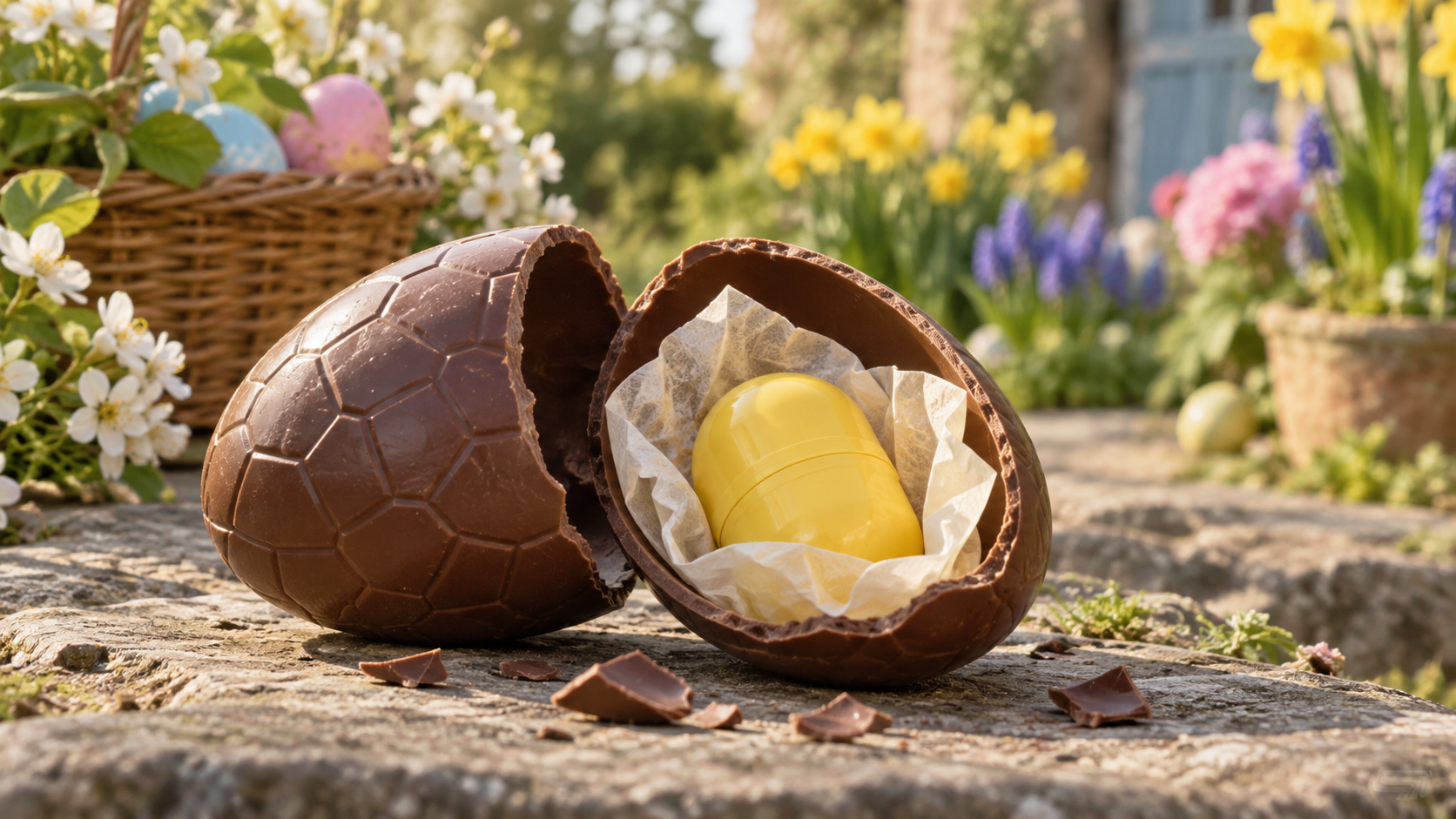
Decorated eggs and egg-shaped gifts long pre-date modern chocolate. Nineteenth-century European chocolate makers began producing hollow eggs as moulding and manufacturing improved. Early products were luxury novelties and did not all contain a toy or prize.
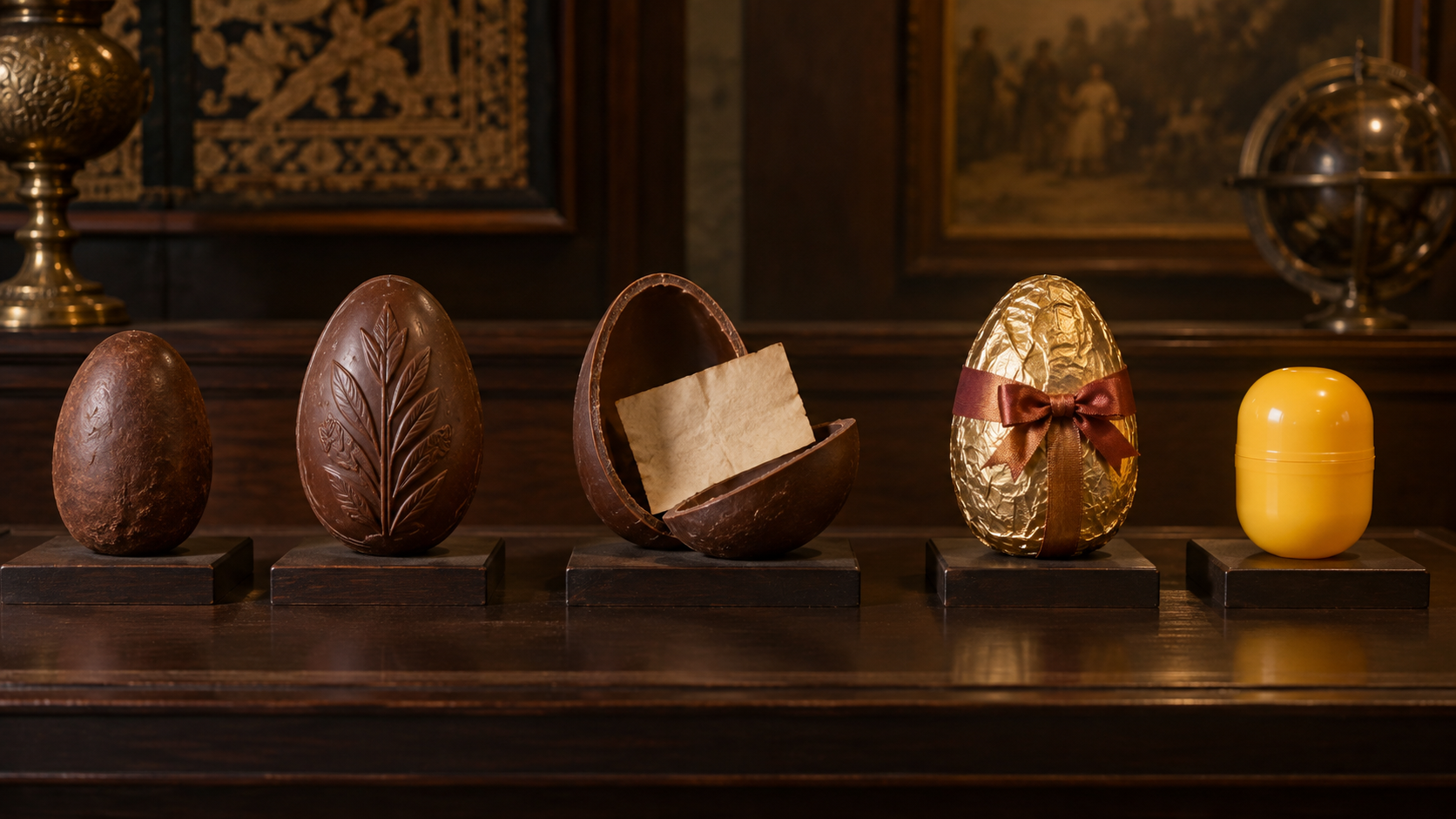
Manufacturers later used the hollow centre for small sweets, messages and toys. Different companies developed their own versions, so the familiar egg-with-surprise format has no single simple origin story. Claims about a precise first example should be checked against dated catalogues or company archives.
Why the idea became popular
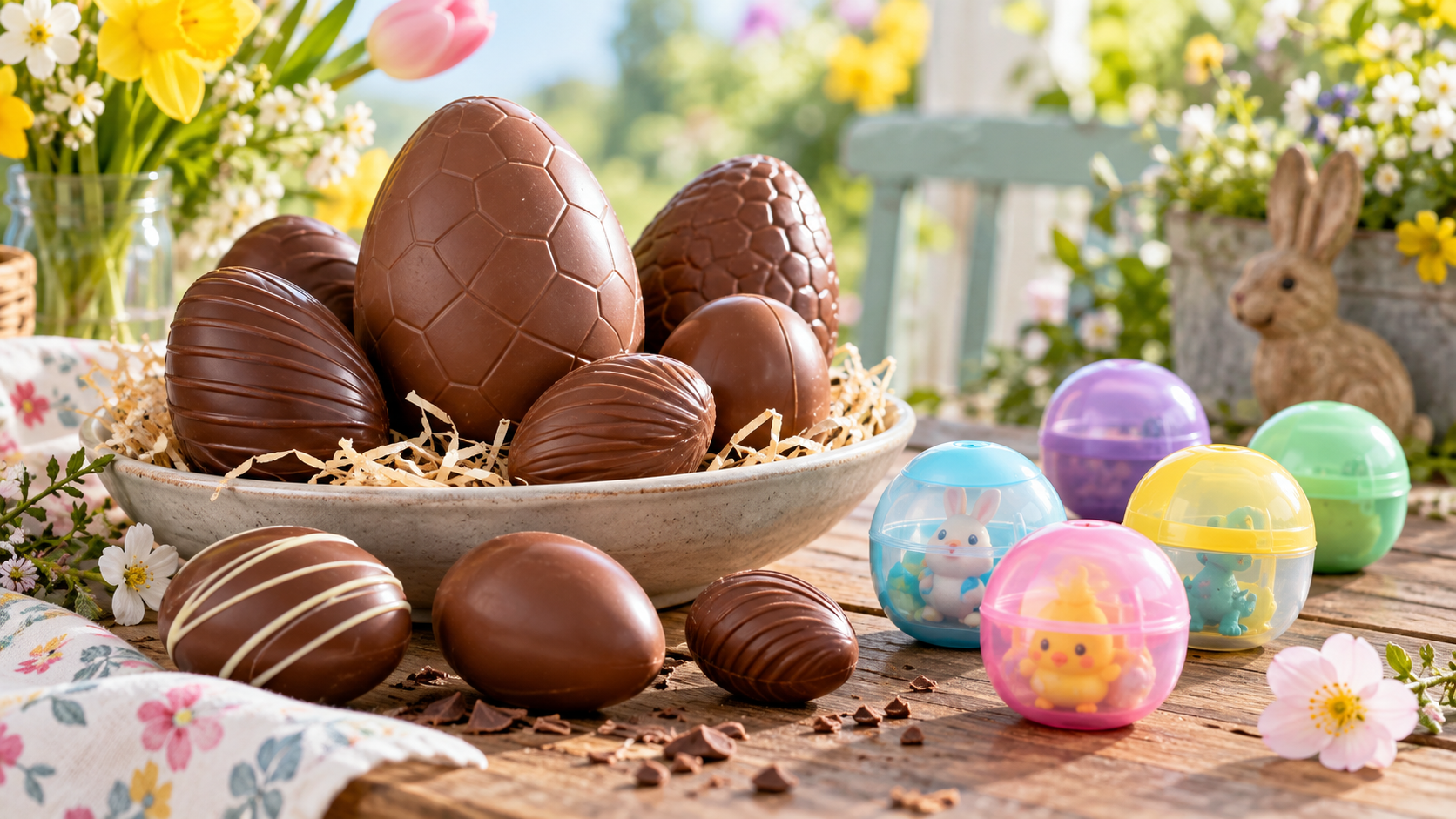
The combination works because opening the shell creates a second moment of discovery. Affordable moulding, foil wrapping and mass distribution helped turn seasonal products into collectables, while advertising encouraged children to seek complete sets.
Safety changed the design
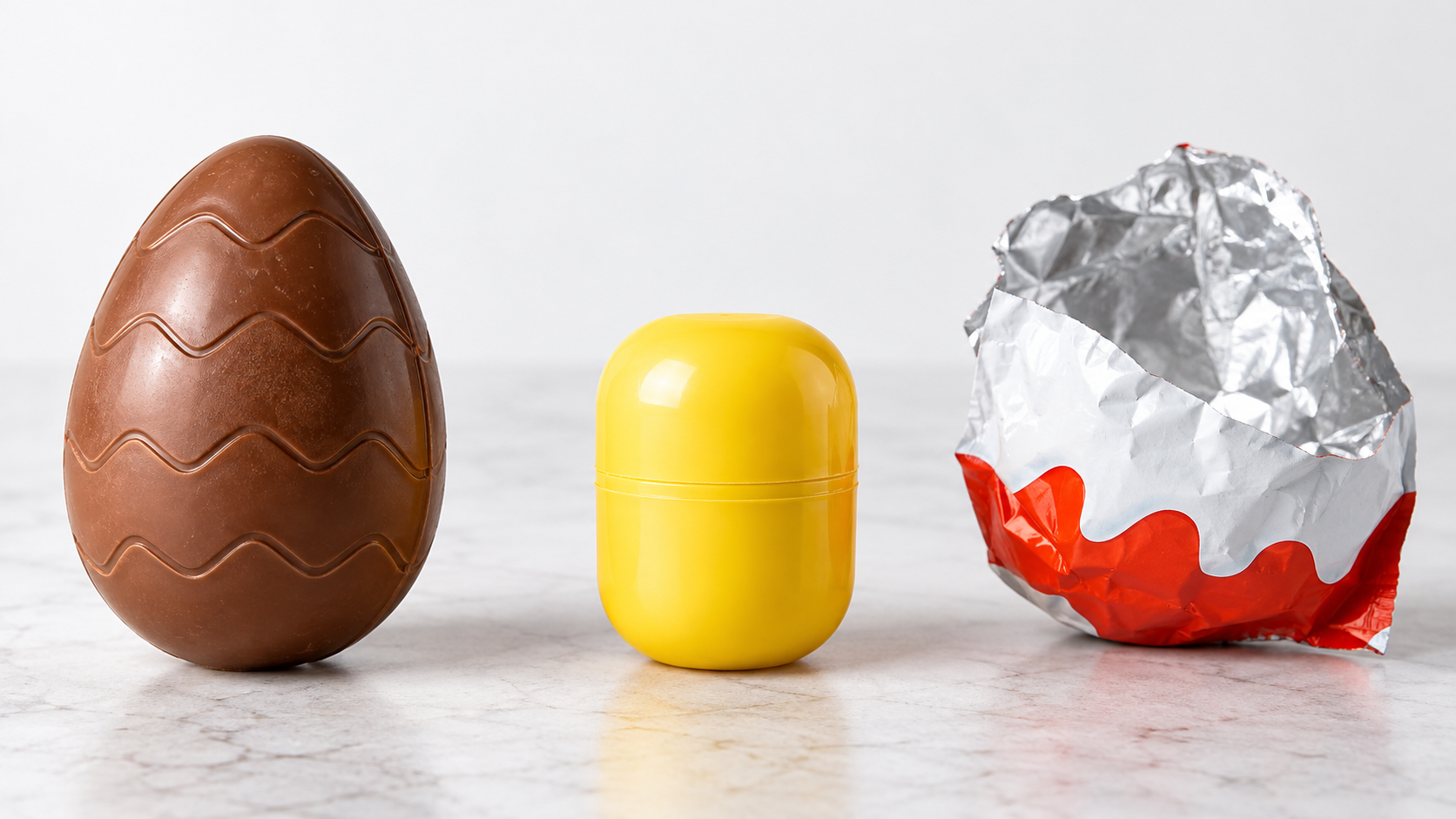
Small parts, unsuitable materials and direct contact between toys and food created safety concerns. Current products must follow the rules of the market where they are sold, including age warnings and packaging that keeps non-food items separate where required. A handmade seller should not place an unwrapped trinket directly inside food.
Collectables and licensed characters

Film, television and game licences expanded the collectable market. The character on the wrapper may be more valuable commercially than the chocolate itself, but licences, labelling and toy compliance still apply. Collectability is not evidence of age, rarity or resale value.
Frequently asked questions
Why was this article rewritten rather than translated literally?
The source needed factual, food-safety or cultural correction, so the English version keeps the useful topic while removing unsupported claims.
Are temperatures and shelf lives universal?
No. Equipment, ingredients and fillings vary; use a tested recipe, manufacturer guidance and appropriate food-safety controls.
Can decorative materials touch food?
Only materials intended for food contact should touch edible products, and flowers or non-food objects need a reliable barrier.
How should allergens be checked?
Read every current ingredient label and consider cross-contact; never infer allergen status from a product name or appearance.
Can a home method be scaled for sale?
Commercial production needs repeatable records, hygiene controls, compliant labelling and validation for the actual process.
Where should historical or language claims be verified?
Use dated archives, official records and qualified language references when a precise claim matters.