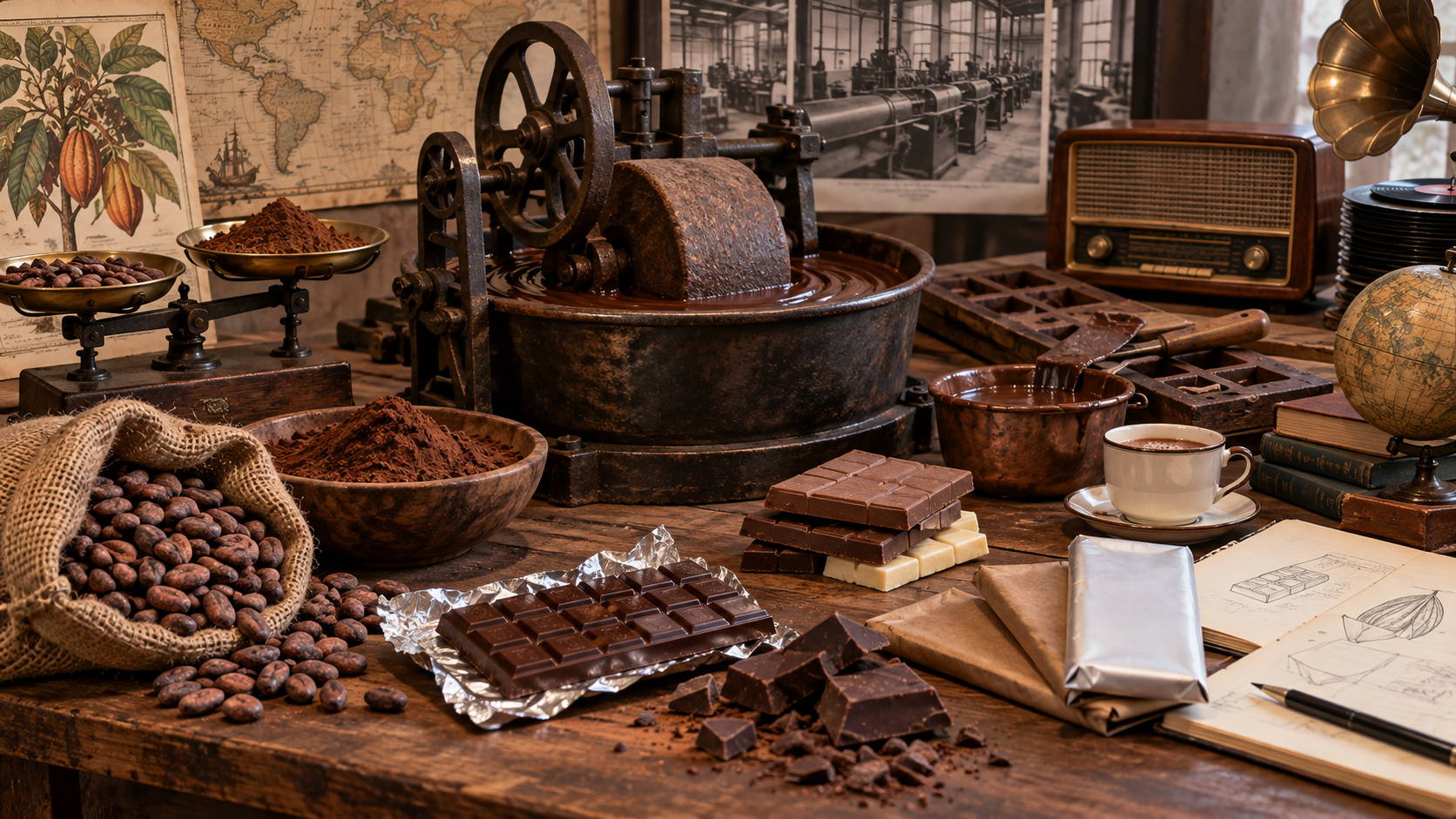

Industrial production created scale
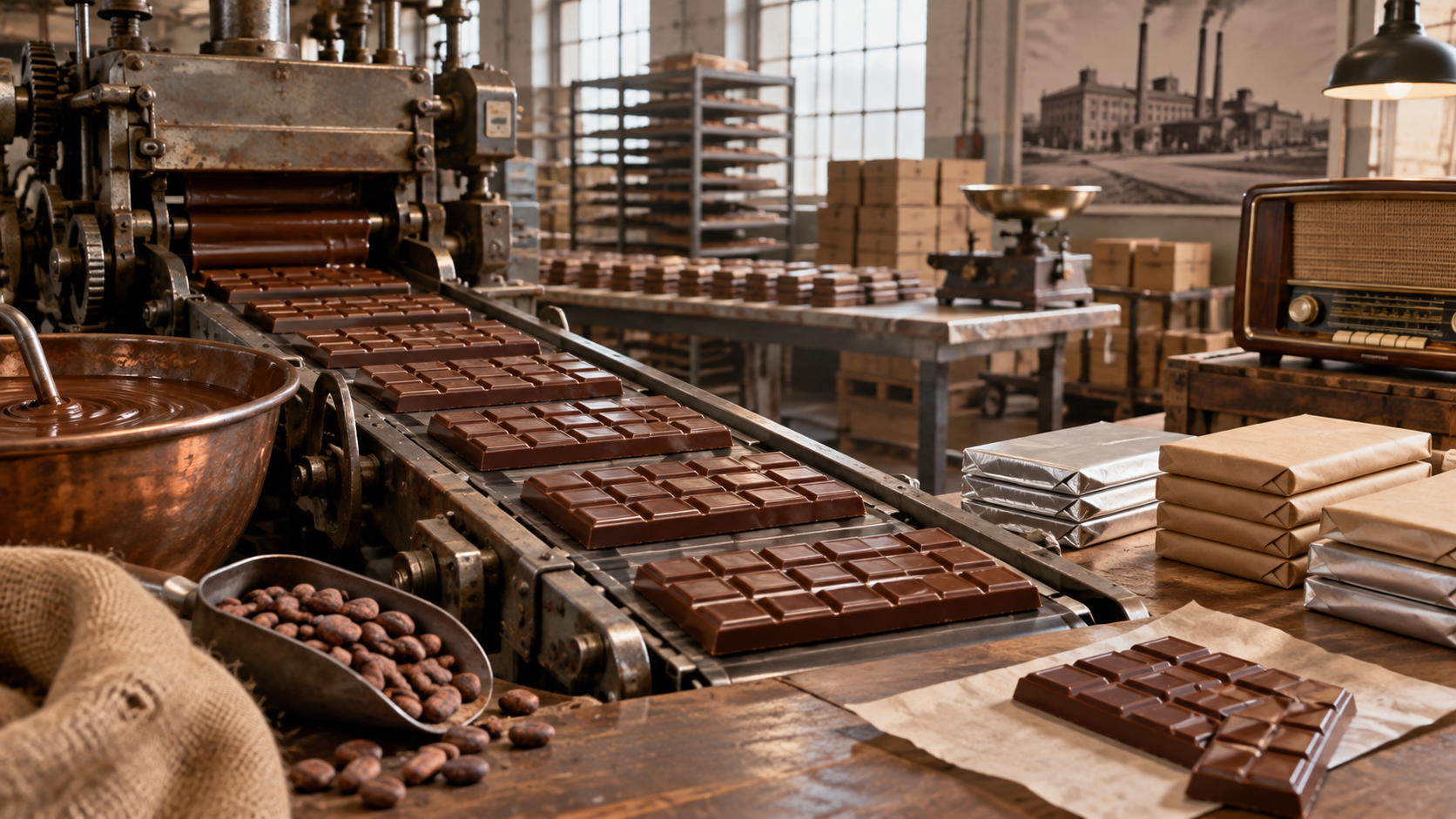
Nineteenth- and twentieth-century machinery helped firms produce consistent cocoa, bars and filled sweets at greater scale. Access to capital, transport and raw materials mattered alongside invention.
Recipes became brand identities
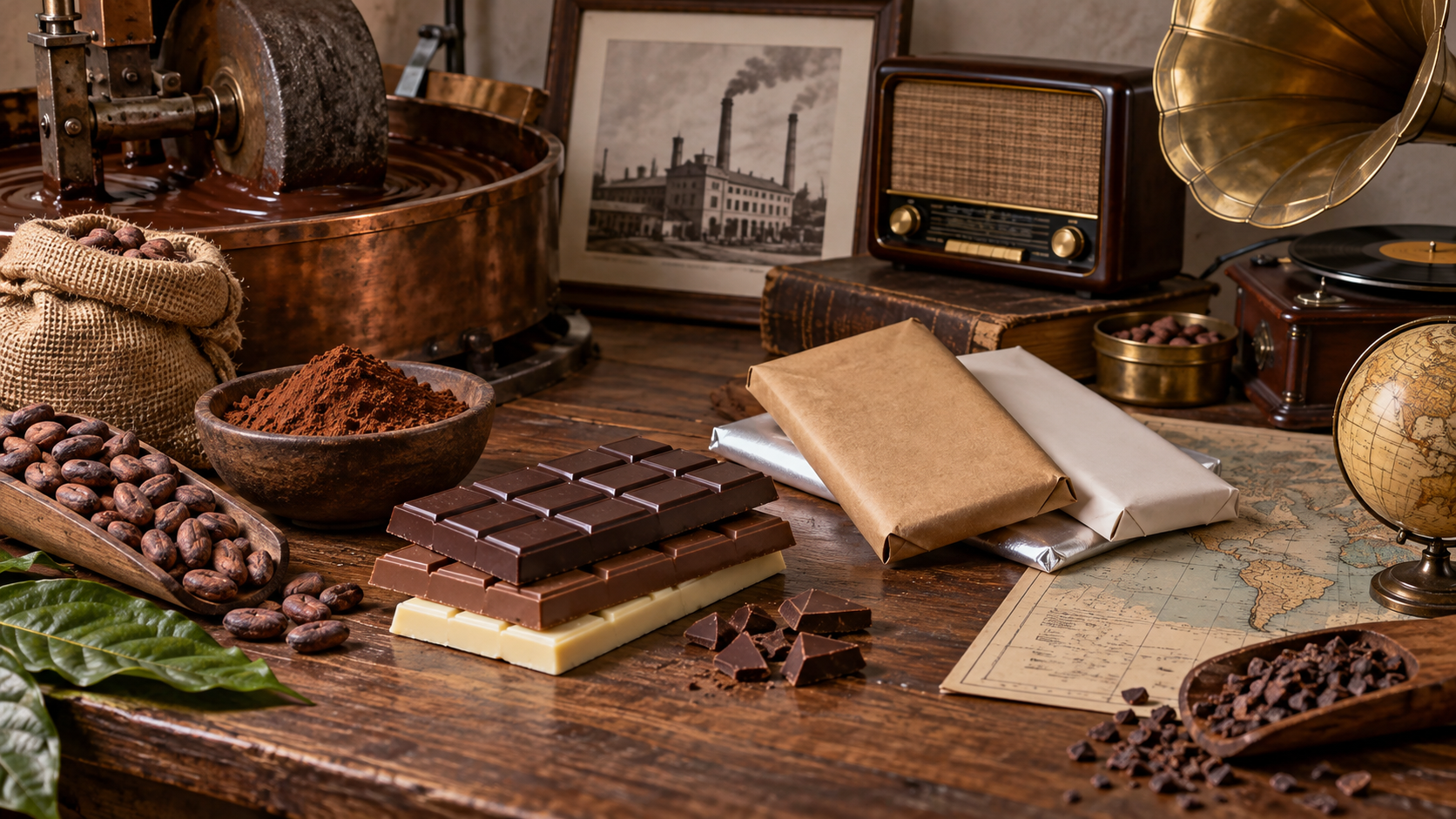
Milk content, texture, fillings and bar shapes became repeatable product identities. Patents and trade secrets sometimes protected methods, while competitors adapted ideas quickly.
Packaging built recognition
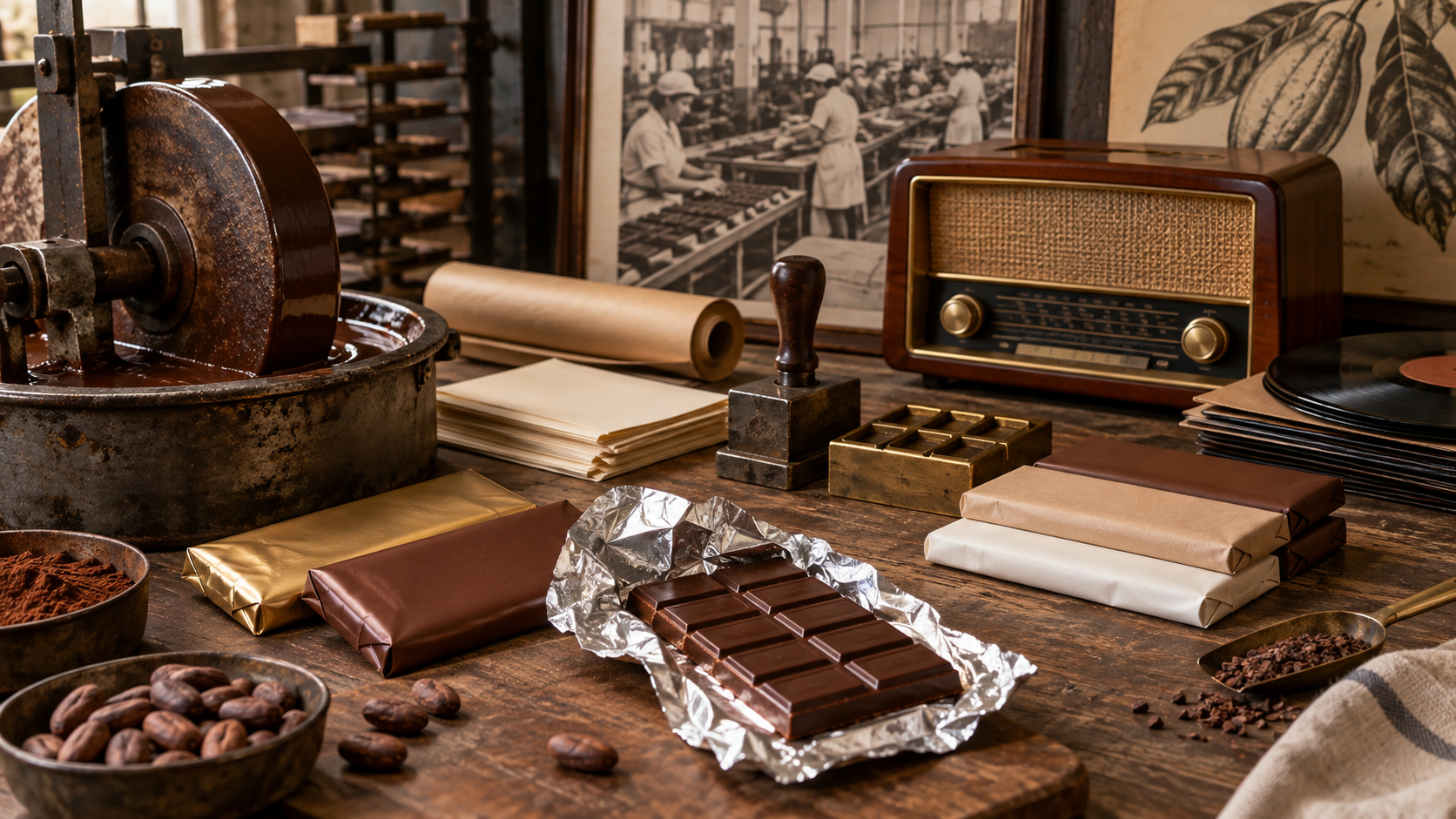
Names, colours and wrappers helped shoppers recognise a bar away from its original factory. Packaging became an important part of trust and distribution.
Advertising shaped memory
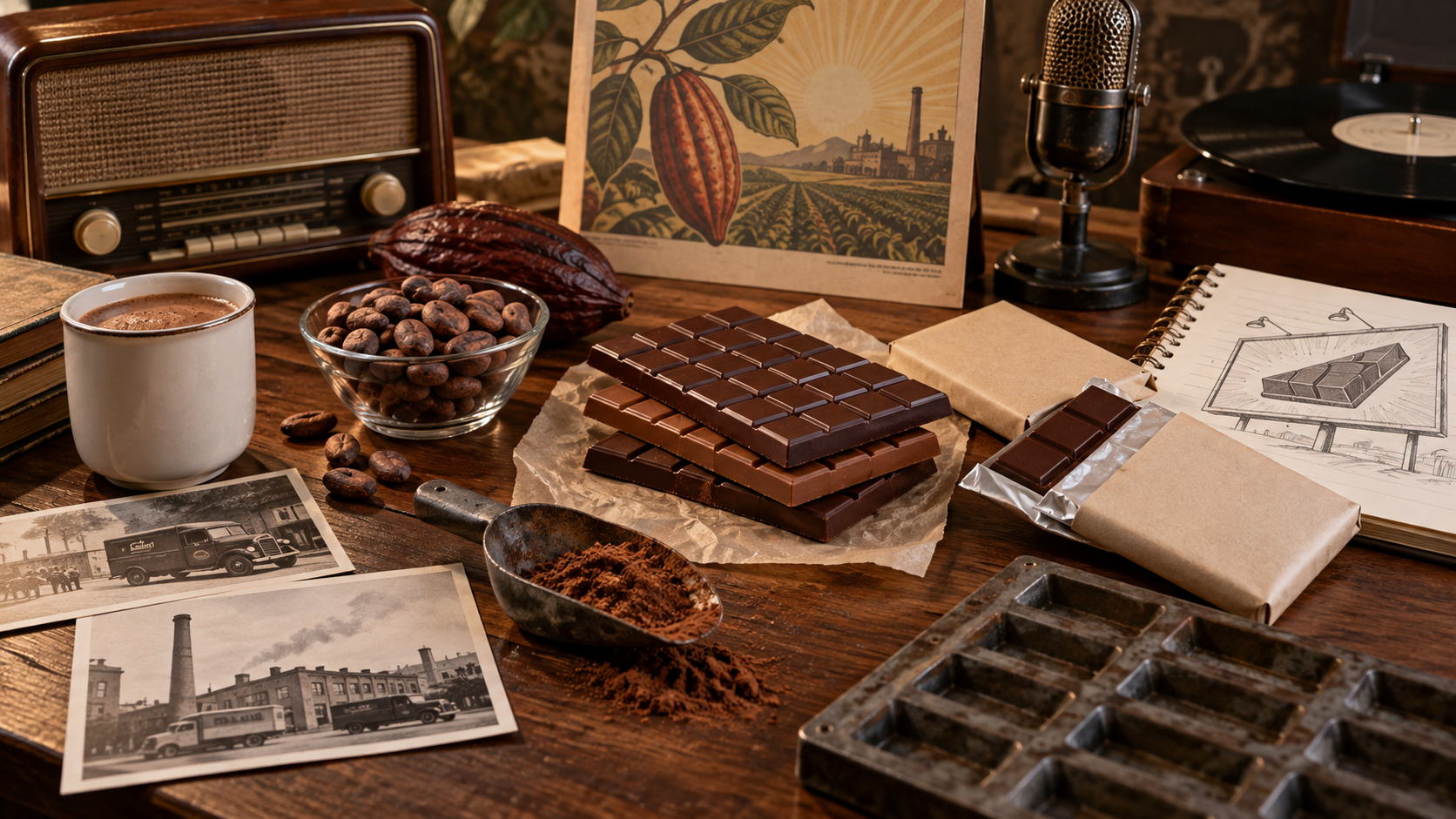
Posters, radio, television and sponsorship connected chocolate with childhood, romance, sport and reward. Familiarity often reflects decades of spending as much as recipe quality.
Companies merged and expanded
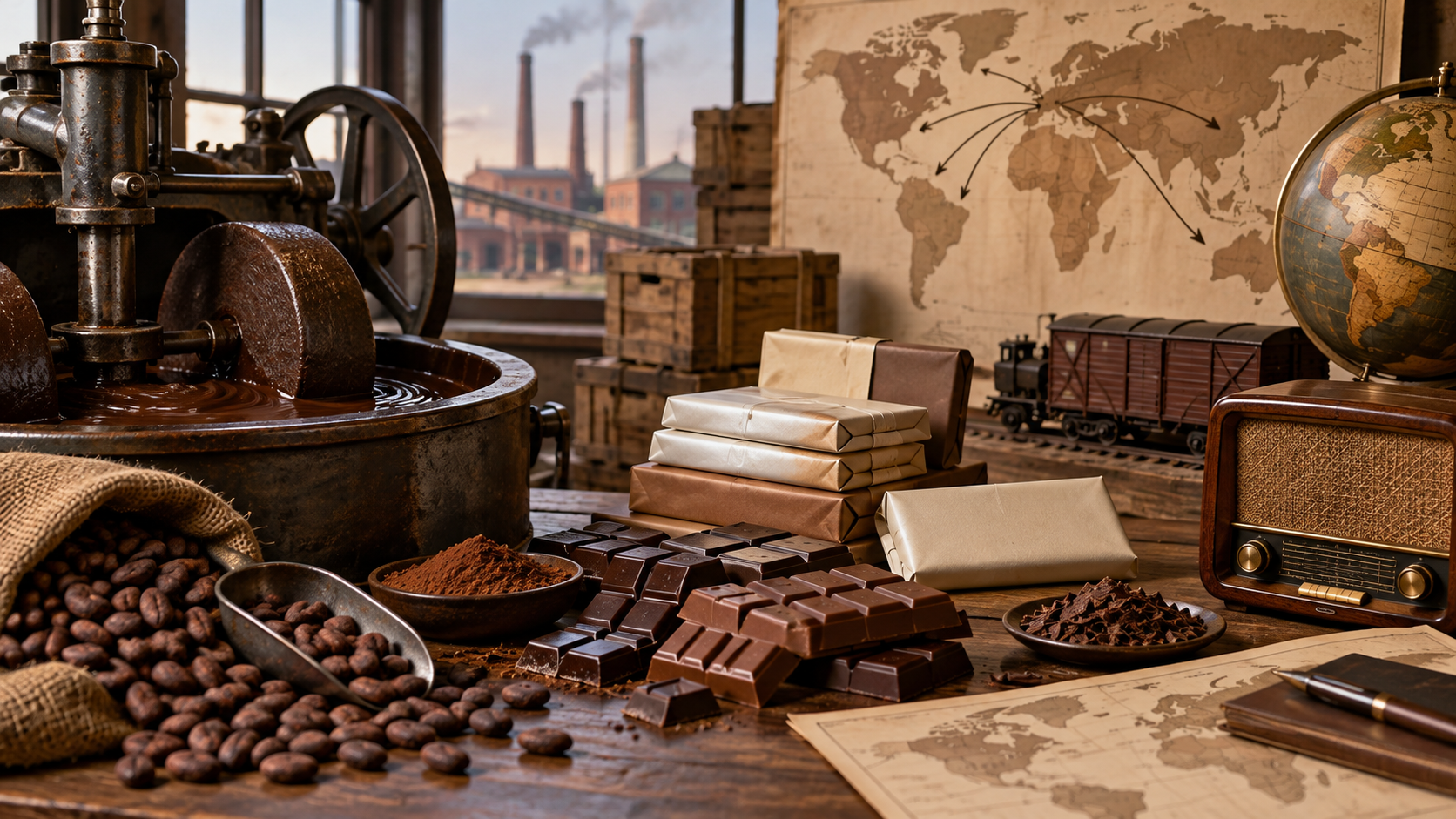
Many well-known labels now belong to larger international groups. Ownership, factories and recipes can change while an older brand name remains.
Frequently asked questions
Does natural mean stimulant-free?
No. Cocoa, coffee, tea and guarana can supply caffeine or related stimulants.
Can chocolate or cocoa treat a health condition?
No. Food may fit a balanced diet, but medical or mental-health concerns need qualified assessment.
Are cultural chocolate traditions the same everywhere?
No. Customs vary by community, period and commercial influence.
How can a historical claim be checked?
Look for a dated primary source, museum, archive or independent history rather than repeating a brand story.
Which label details matter most?
Check the ingredient list, allergens, serving size, caffeine, sugar, dates and storage information.
How should chocolate gifts be planned?
Match the recipient’s tastes and restrictions, protect the product from heat and keep claims modest.