

Cocoa percentage is only one clue
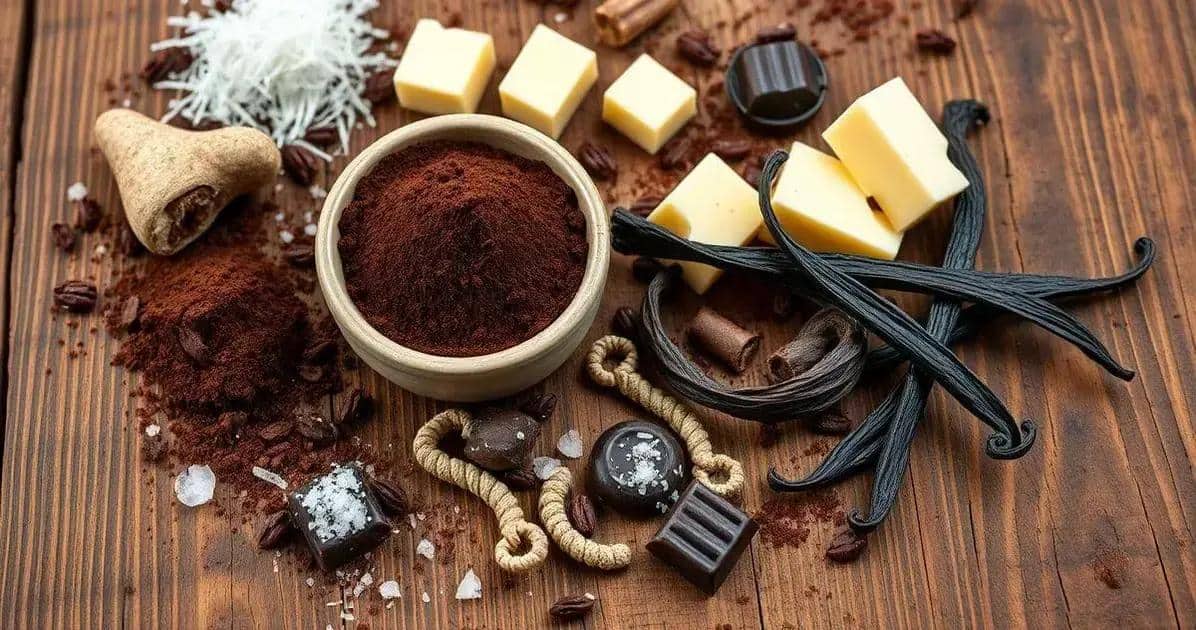
A higher cocoa percentage usually means less room for sugar, but it does not measure flavour quality. Bean origin, roast, processing and added cocoa butter can make two 70% bars taste very different.
Dark does not always mean dairy-free
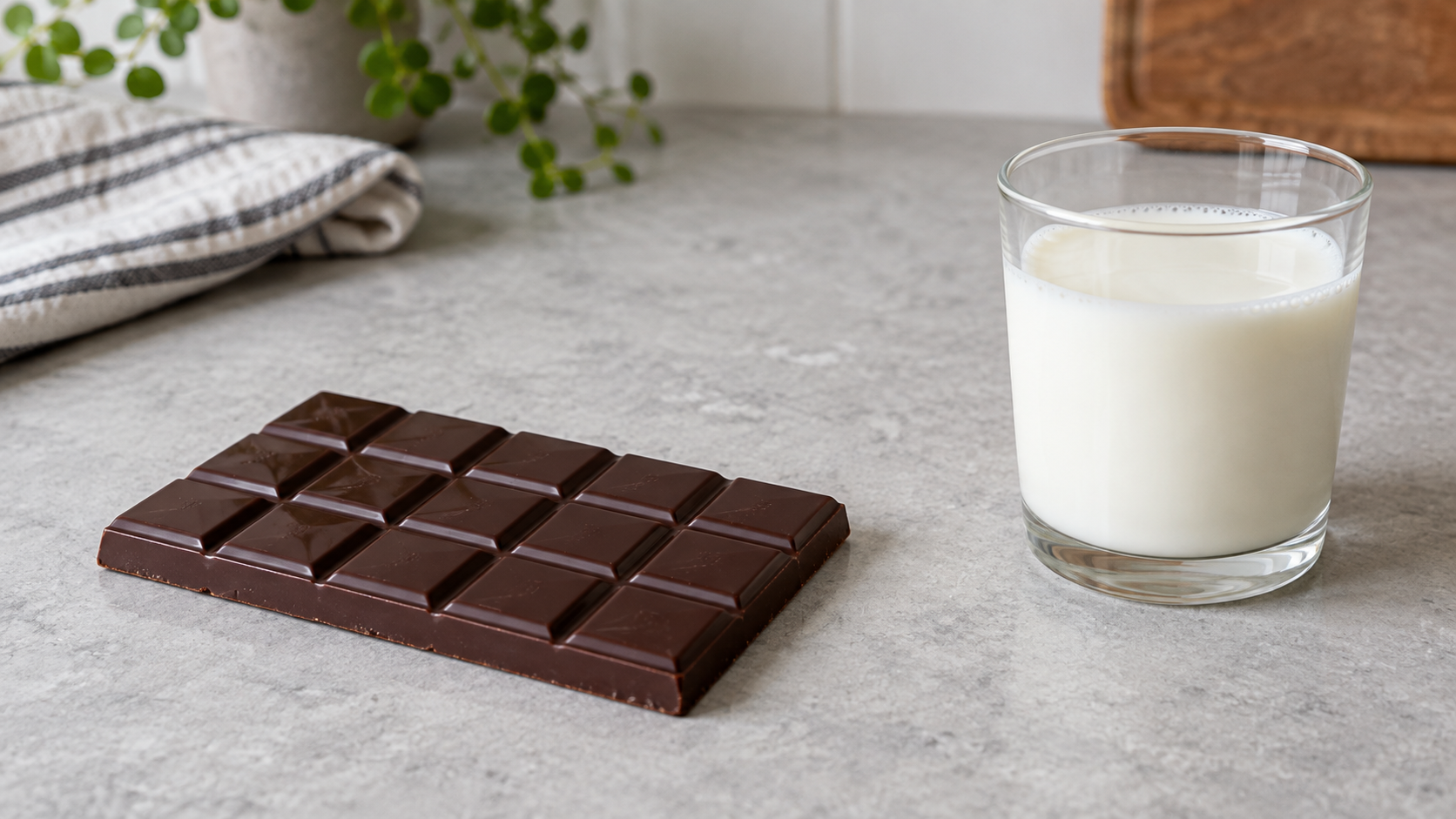
Some dark chocolate is made without milk ingredients, but recipes and factory cross-contact vary. Anyone avoiding milk must read the ingredient and allergen statements on the exact pack.
Bitterness varies by recipe
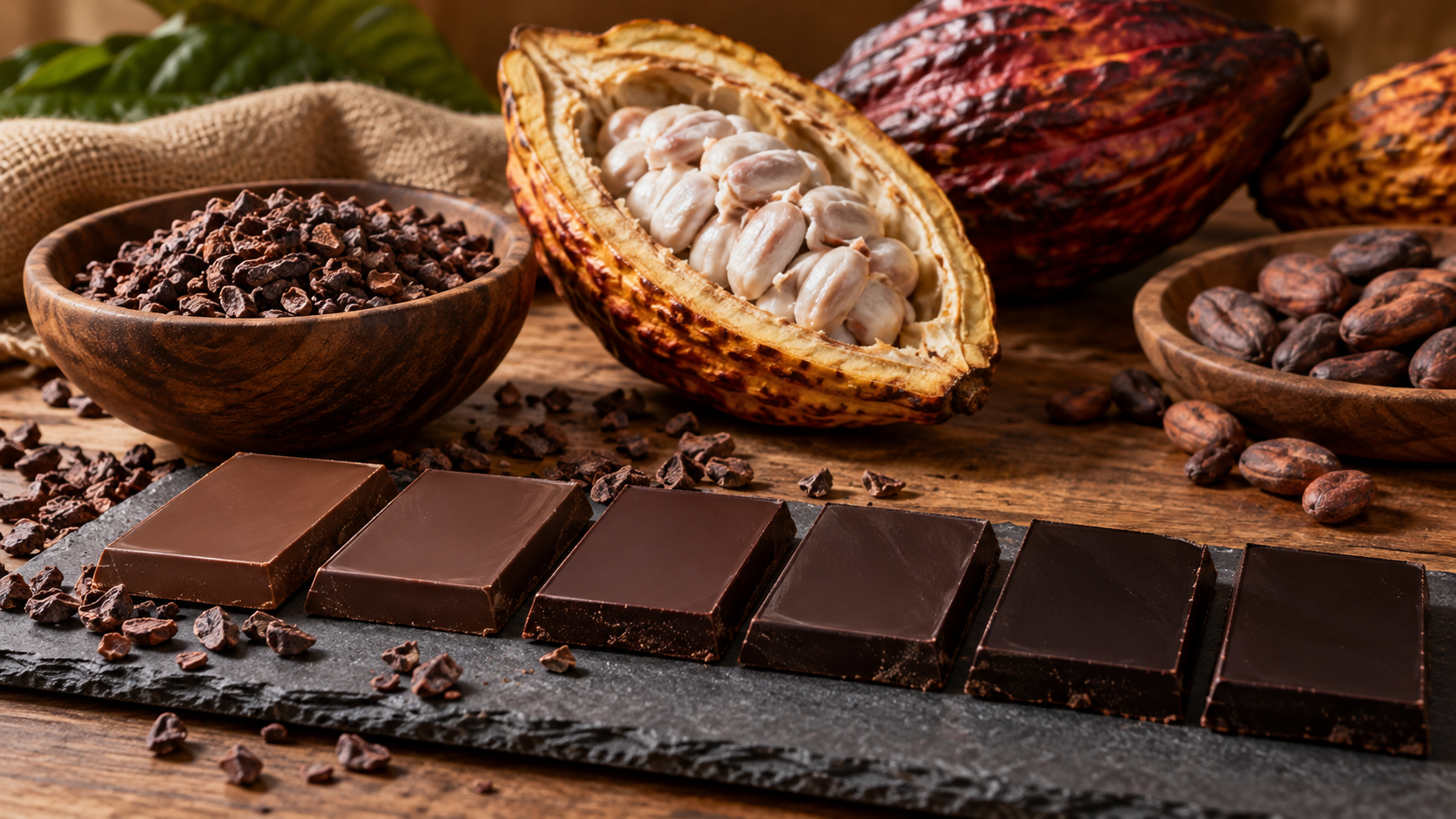
Acidity, roast and sugar balance affect bitterness. A well-balanced lower-percentage bar may taste more intense than a poorly made product with a larger number on the wrapper.
Cocoa butter shapes the melt
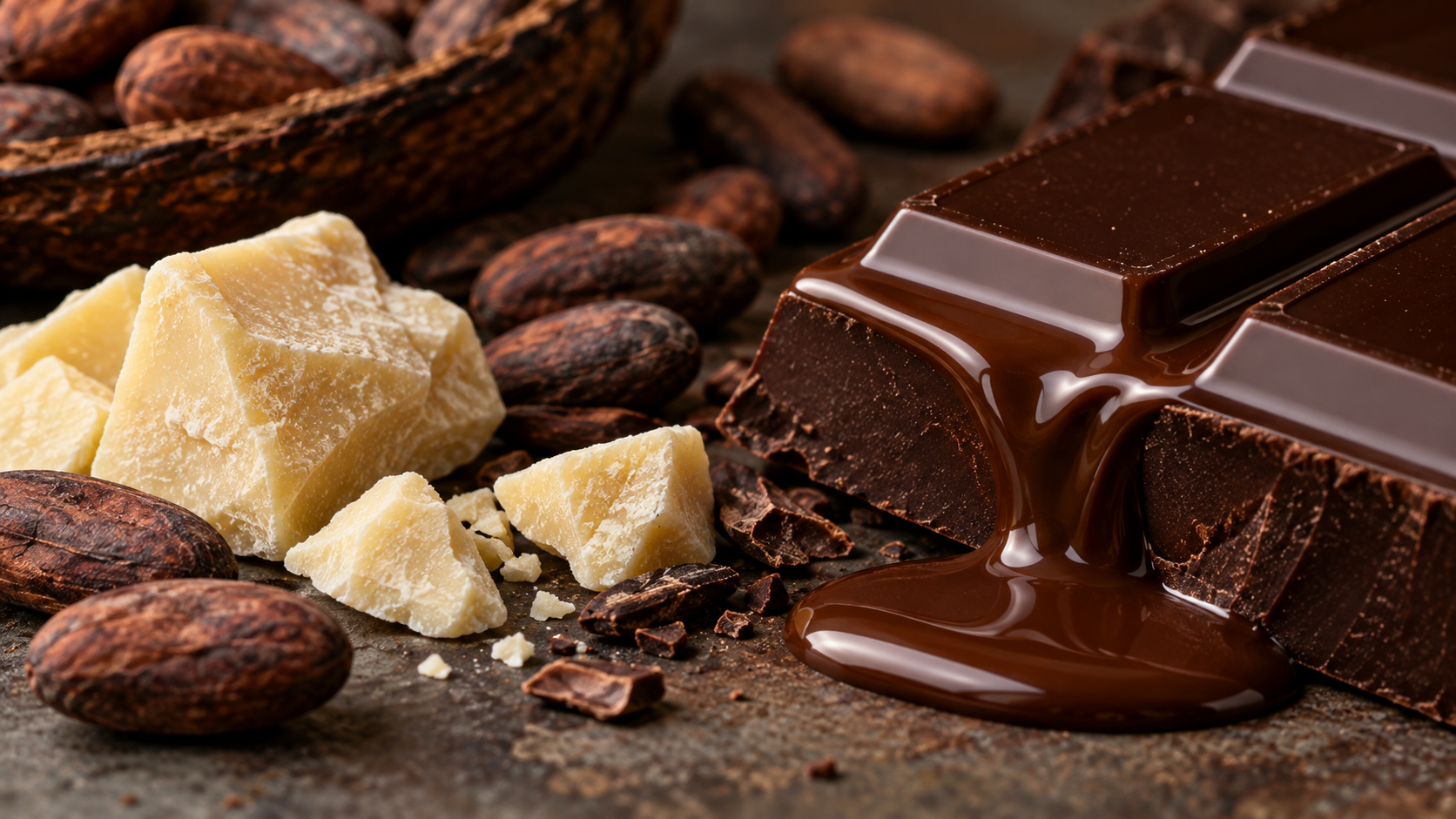
Cocoa butter melts near body temperature and gives chocolate its clean melt. Products using other vegetable fats can behave differently, even when their packaging looks similar.
Storage changes flavour and texture

Heat, light, moisture and strong odours damage chocolate. Keep it sealed in a cool, dry cupboard and avoid repeated temperature swings that can cause bloom.
Portion still matters
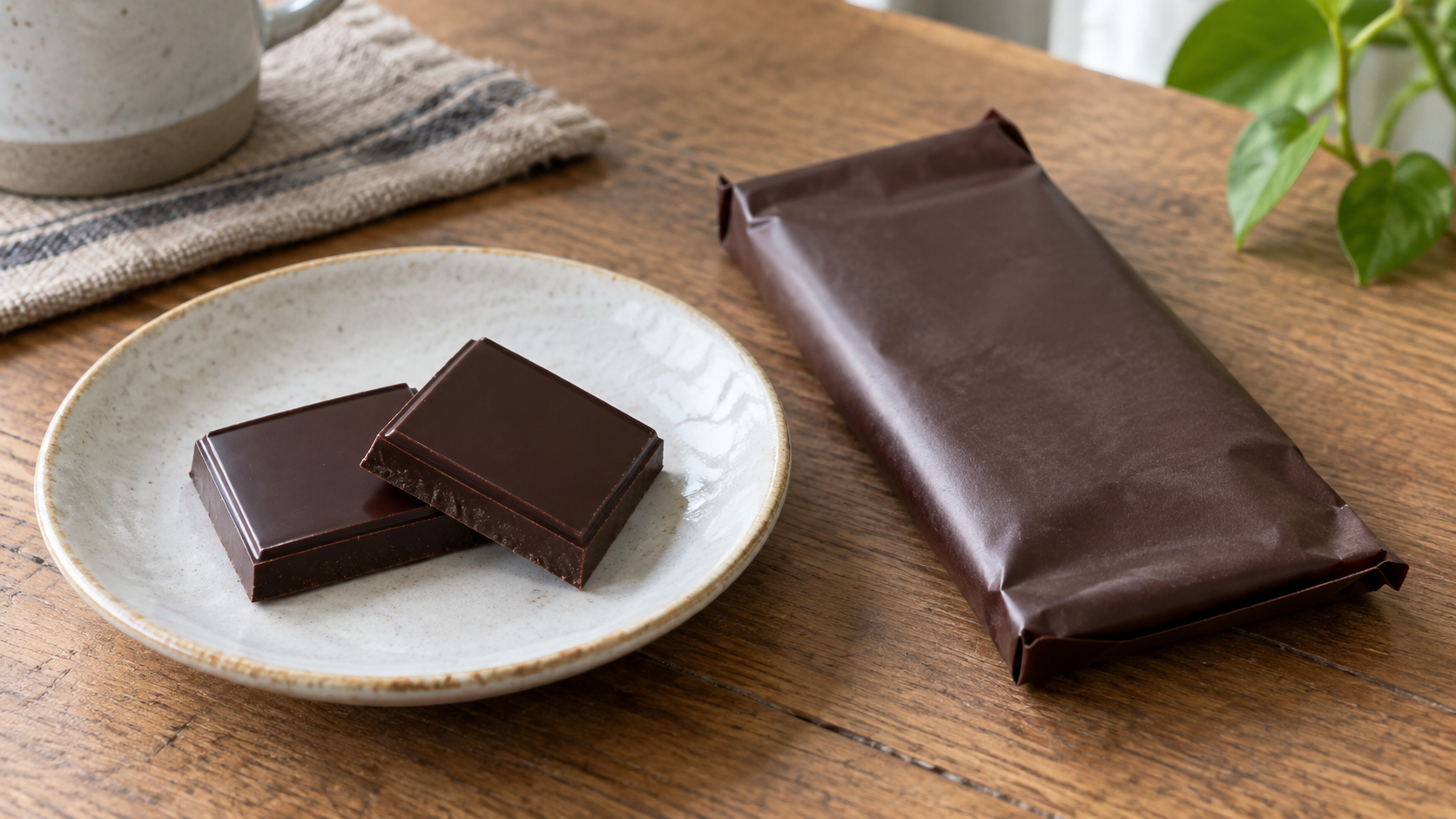
Dark chocolate supplies energy as well as cocoa compounds. Its potential place in a balanced diet does not turn it into a medicine or make large portions advisable.
Frequently asked questions
Does a cocoa percentage prove quality?
No. It describes part of the recipe, while flavour and quality also depend on the beans, processing, sugar, fat and storage.
Is chocolate a medicine?
No. Cocoa is studied for several compounds, but ordinary chocolate should not replace medical assessment or treatment.
How should chocolate be stored?
Keep it sealed in a cool, dry place away from sunlight, moisture, heat and strong odours.
Are all historical chocolate claims certain?
No. Archaeological, genetic and documentary evidence continues to develop, and practices varied between places and periods.
Can dark chocolate contain milk?
Yes. Recipes and cross-contact differ, so check the ingredient list and allergen statement on the exact product.
What is the best way to compare products?
Compare ingredients, cocoa content, portion, allergens, origin information and price per weight rather than relying on broad marketing words.