
What the white coating means

A pale or streaky coating on chocolate is usually bloom. It is a change in the fat or sugar crystals at the surface, rather than mould, and it often affects appearance and texture more than flavour.
Fat bloom and temperature changes

Fat bloom can appear when cocoa butter forms unstable crystals or when filled chocolate is stored too warm. Avoid repeated moves between hot and cold places, and temper couverture chocolate carefully before moulding.
Sugar bloom and moisture
Sugar bloom feels rough or dusty. It develops when condensation dissolves sugar at the surface and the water later evaporates. Keep chocolate dry and let a sealed container reach room temperature before opening it.
Tempering for a stable finish

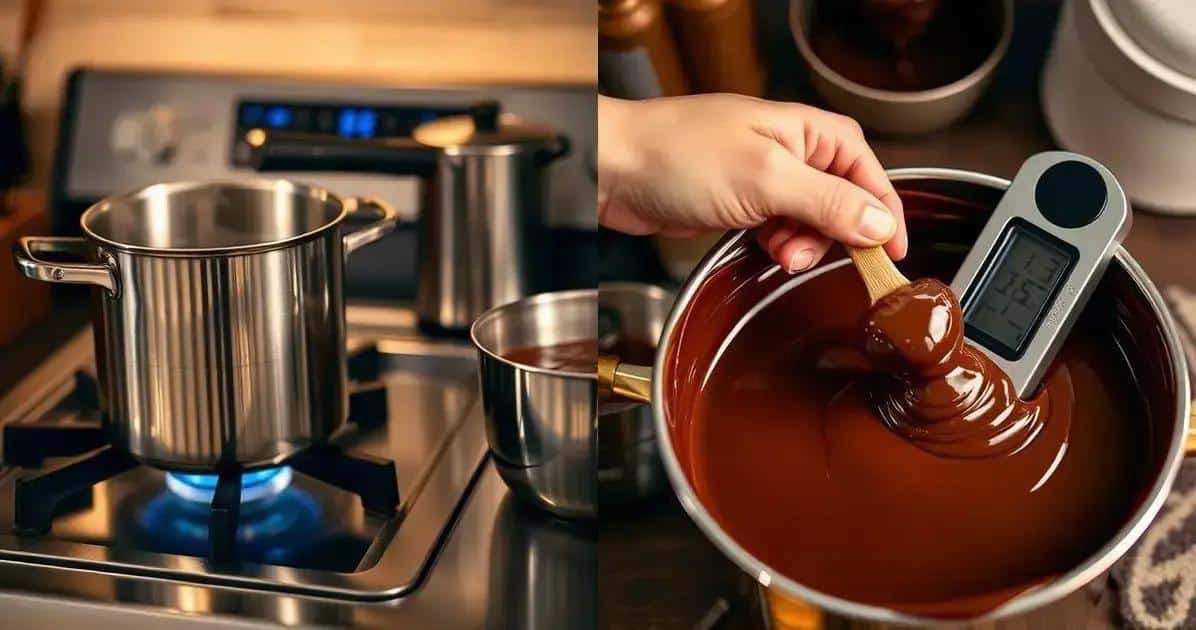
Use the temperature curve recommended for the particular dark, milk or white couverture. A digital thermometer, a clean dry bowl and steady stirring give more reliable results than judging by shine alone.
Cooling and storage
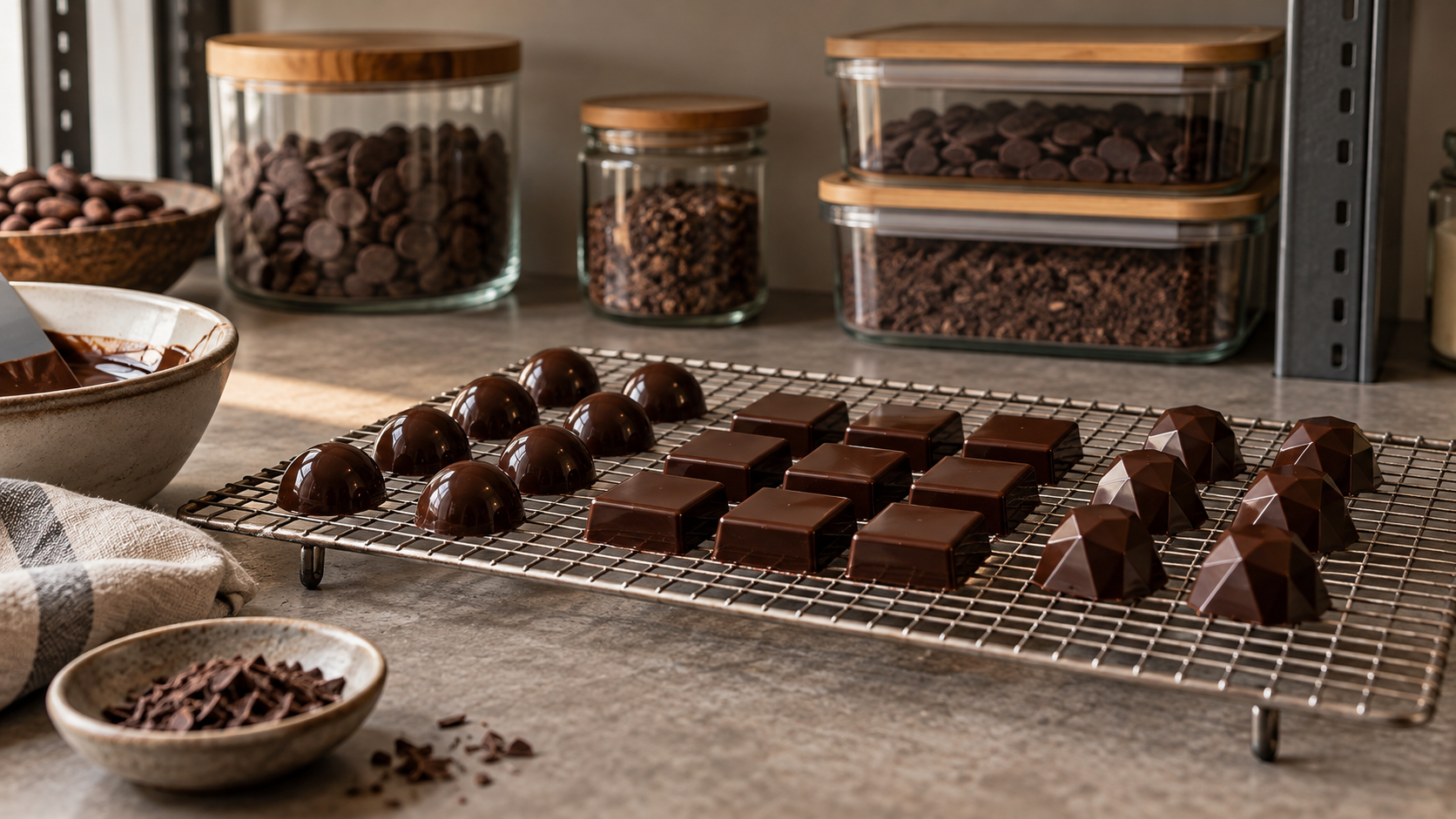
Allow moulded pieces to contract in a cool, dry room. Store them airtight, away from sunlight and strong odours, ideally at a steady 16–20°C if conditions permit.
Can bloomed chocolate still be used?
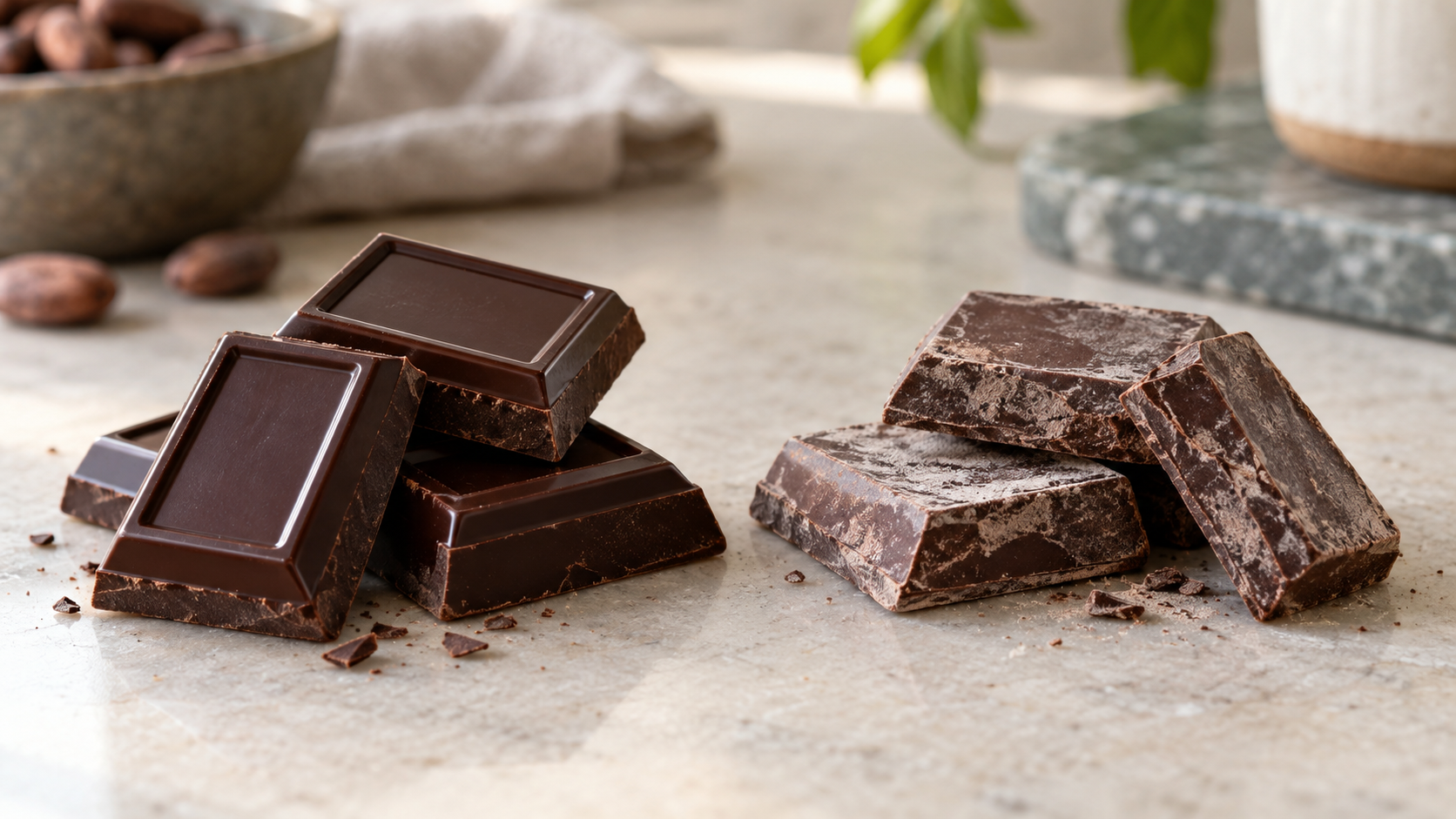
Bloomed chocolate is normally safe when it has been stored correctly and shows no signs of spoilage. It can be melted for baking, but temper it again if a glossy, crisp finish matters.
Frequently asked questions
Can I use supermarket chocolate?
It can work for simple baking and drizzles, but couverture chocolate gives more predictable tempering, shine and snap.
Why did my chocolate become thick or grainy?
Water, steam or overheating may have caused it to seize. Keep every tool dry and melt with gentle heat.
Should chocolate go in the fridge?
Use a cool, dry cupboard when conditions are stable. Refrigerate only when heat or a perishable filling makes it necessary, and keep the container sealed.
How do I avoid fingerprints?
Handle set decorations with clean food-safe gloves, tweezers or a cool palette knife.
Can I prepare decorations ahead?
Yes. Store them airtight between sheets of baking paper in a cool, dark and dry place.
Which allergens should I declare?
Check every product label, particularly for milk, soya, nuts and possible traces from shared manufacturing equipment.