
Dipped biscuits and pretzels
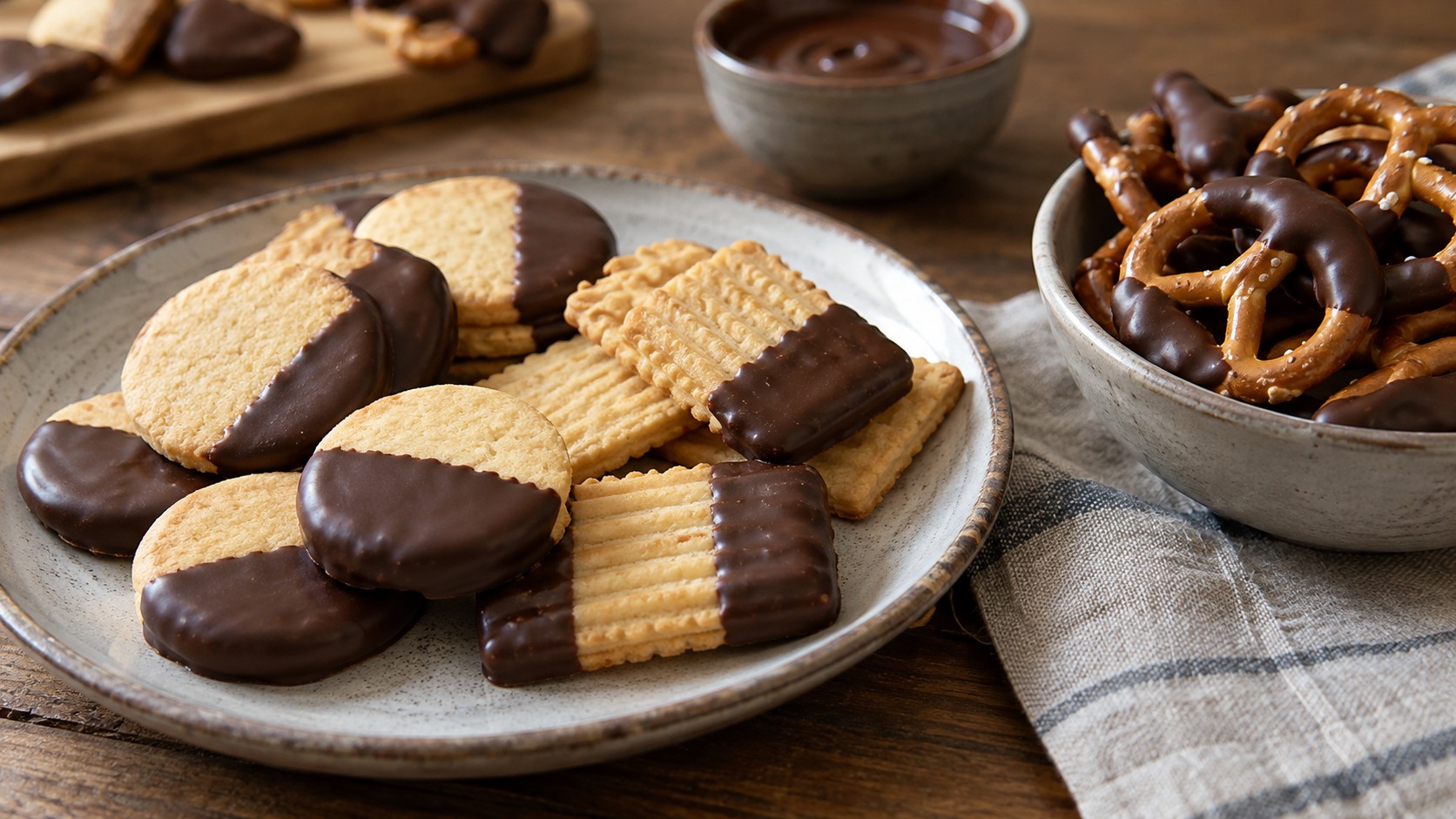
Dry biscuits and pretzels are straightforward for practice. Dip only part of each piece, tap away excess and add dry decorations before the coating sets.
Cake pops and truffle shells
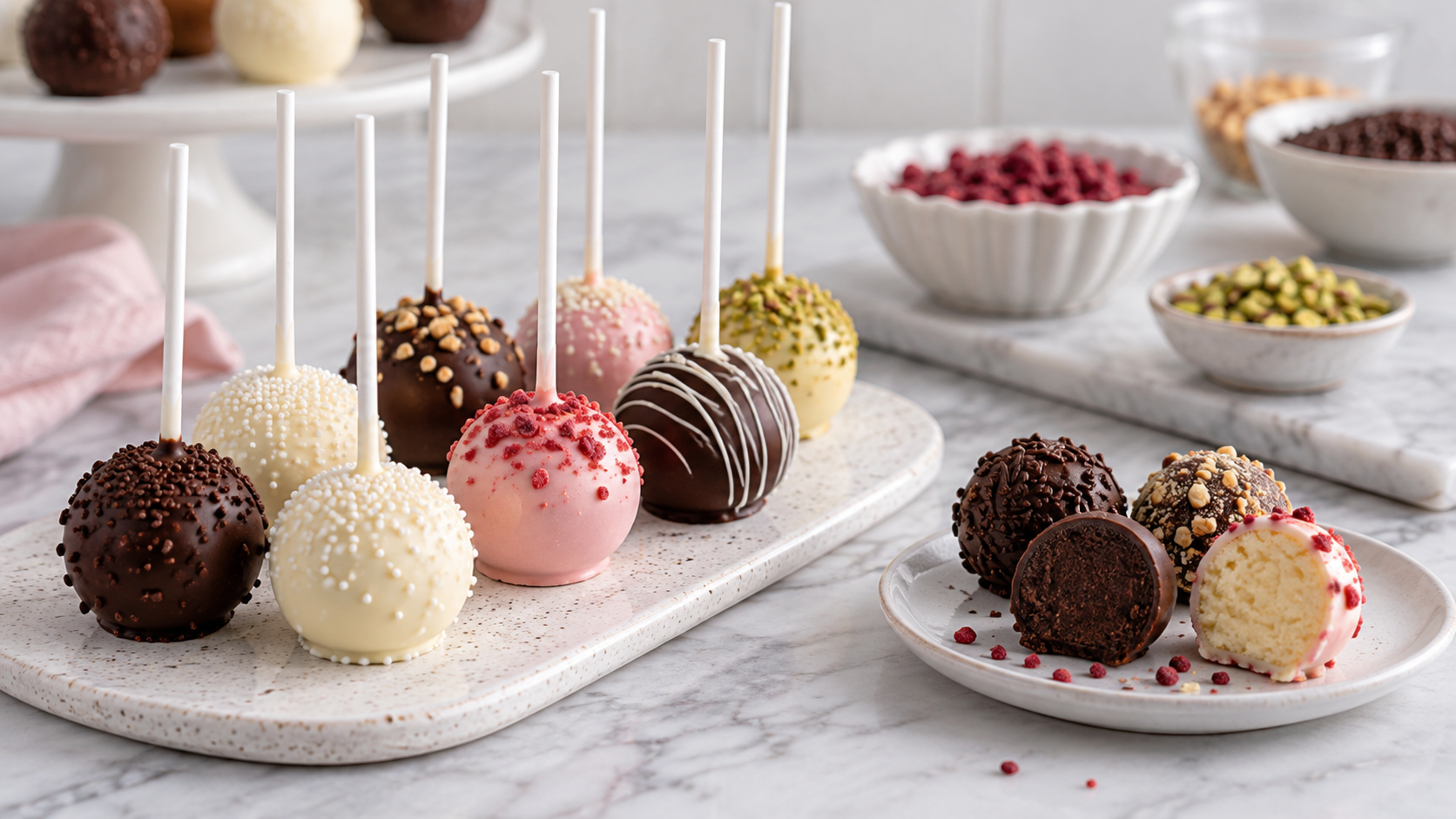
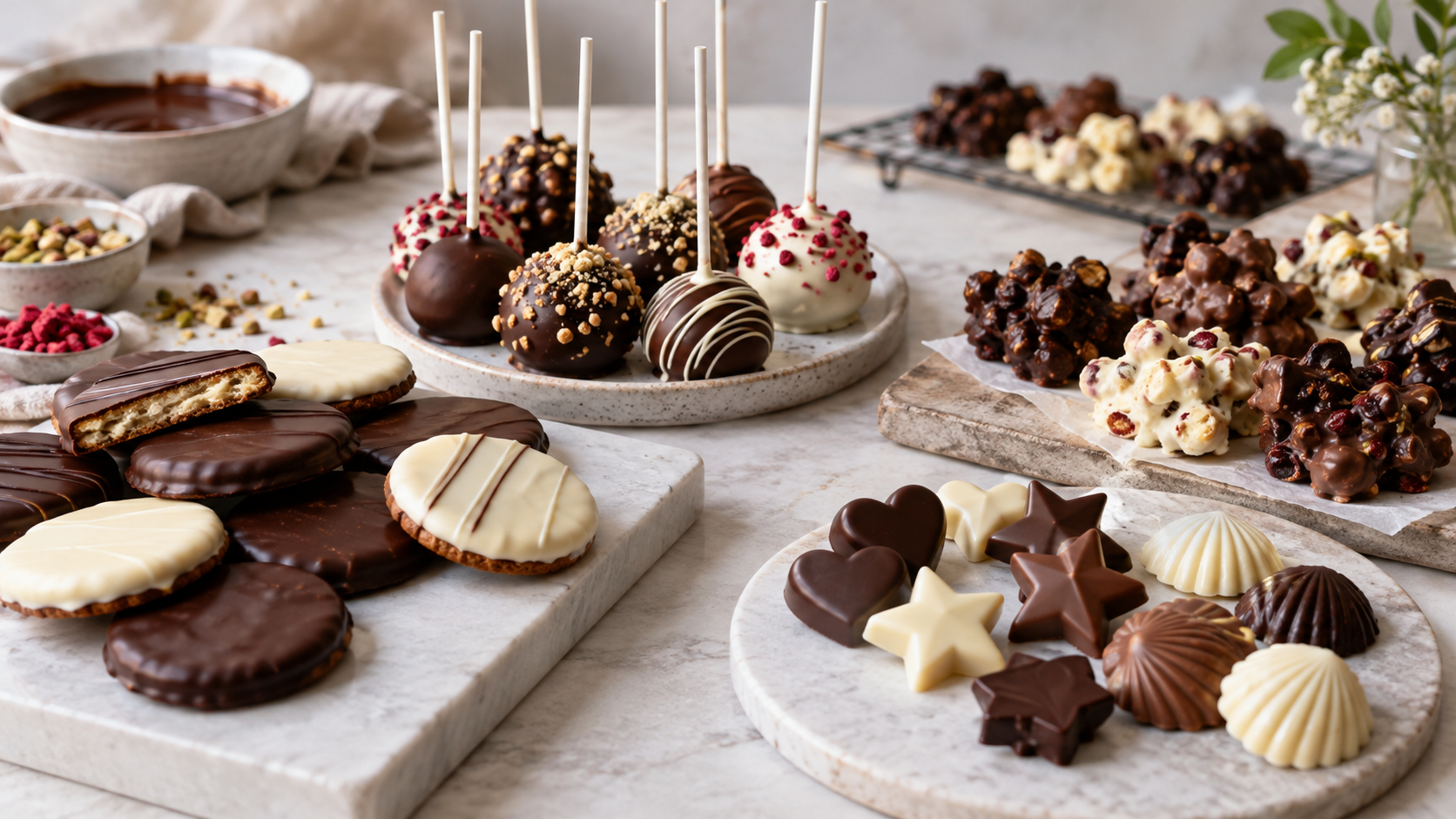
Firm cake pops and chilled, unfrozen truffle centres can be covered quickly. Keep shells thin and store finished pieces according to the cake or ganache inside.
Chocolate bark and clusters
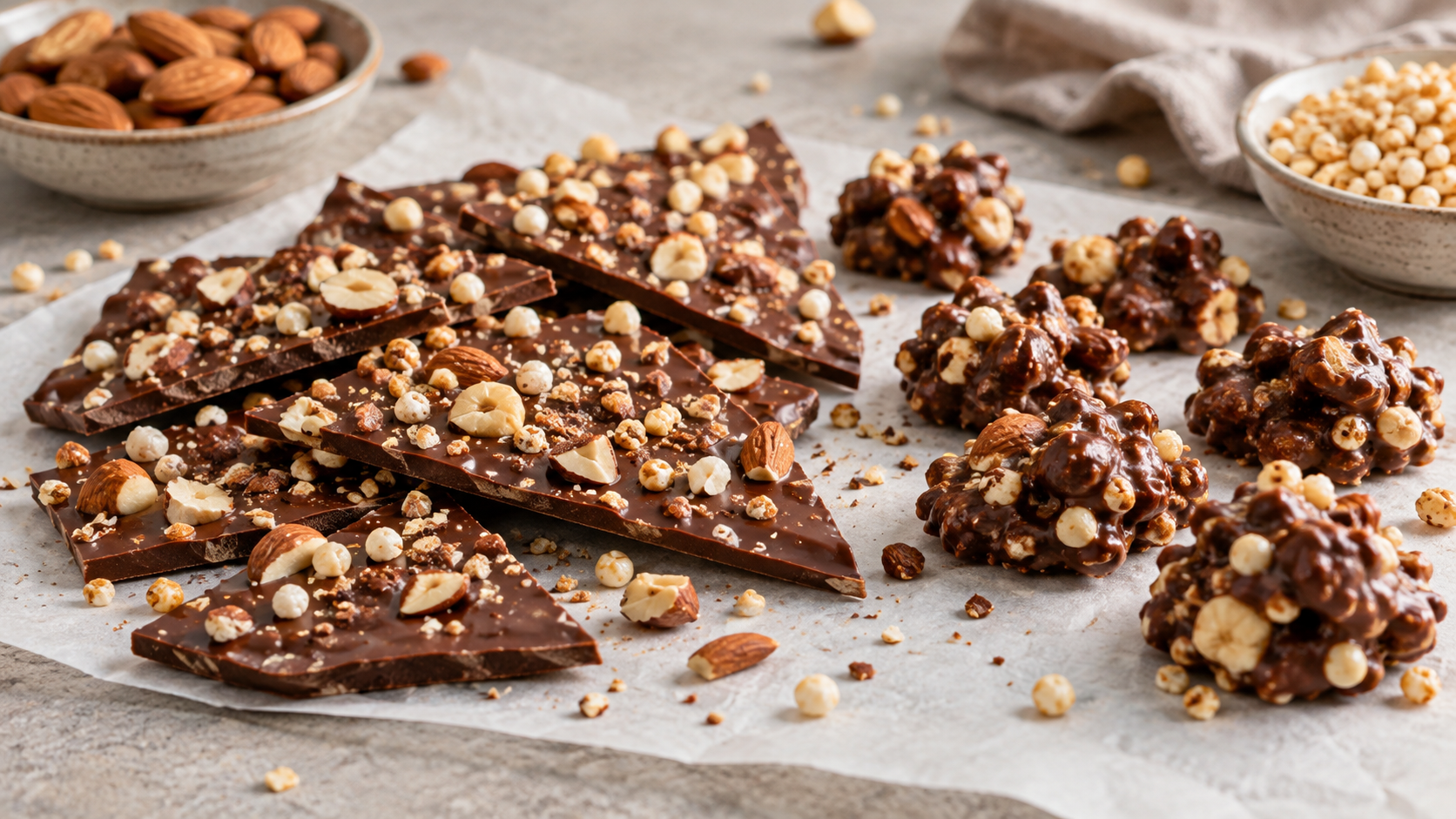
Spread a thin layer on parchment and add toasted nuts, dried fruit or crisp cereal for bark. Small clusters also work, provided every addition is dry and allergens are clearly identified.
Moulded decorations
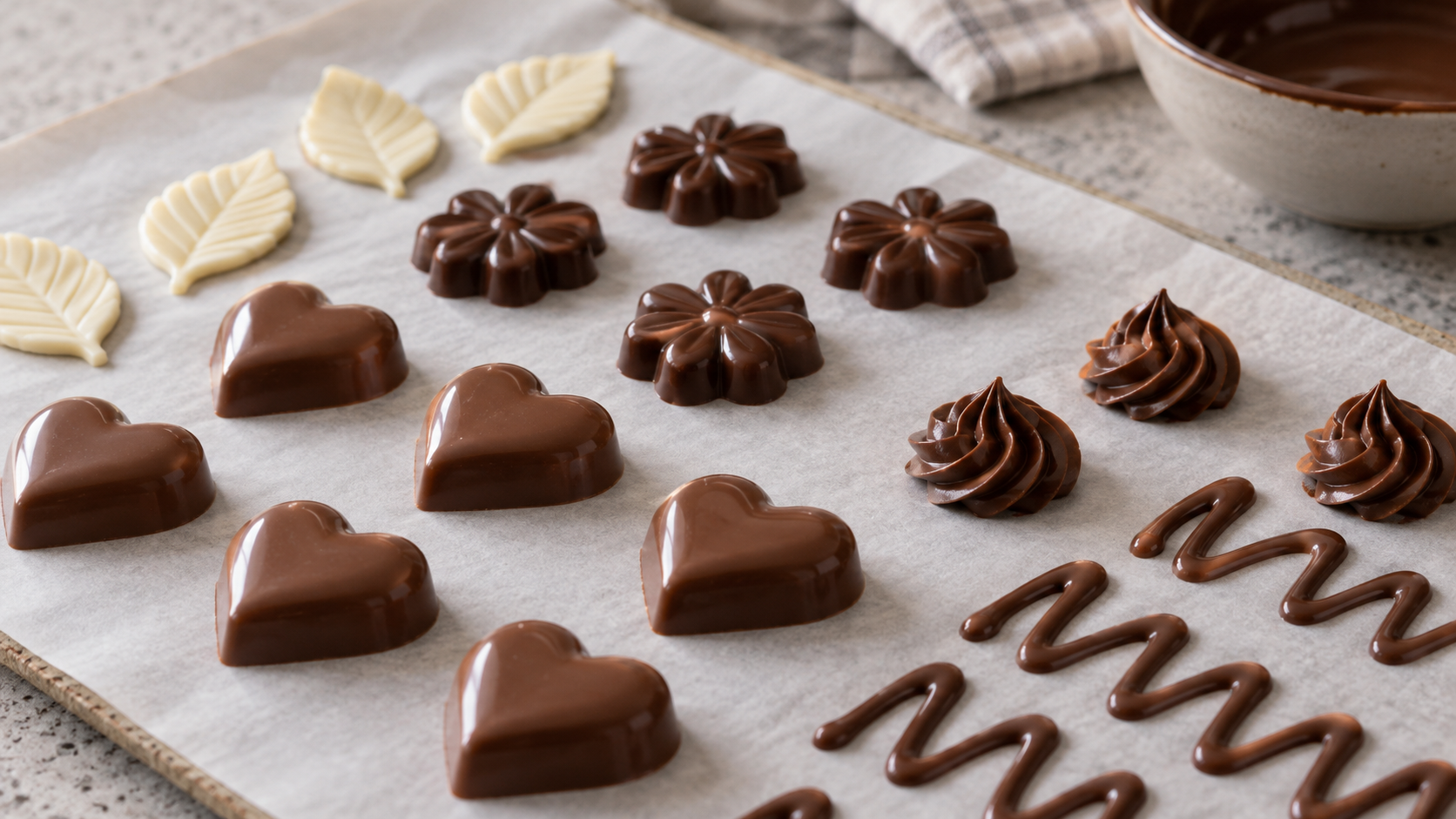
Pipe shapes onto parchment or fill clean dry moulds for simple decorations. Compound coating releases differently across brands, so test one mould before a large run.
Covered fruit for immediate service

Completely dry strawberries or other firm fruit can be dipped for same-day service. Fresh fruit shortens storage life and should not be presented as a long-life product.
Drizzled brownies and traybakes

A fine drizzle adds contrast to brownies, flapjacks or traybakes without a heavy shell. Let baked goods cool fully so the coating sets cleanly.
Plan cost and shelf life before selling
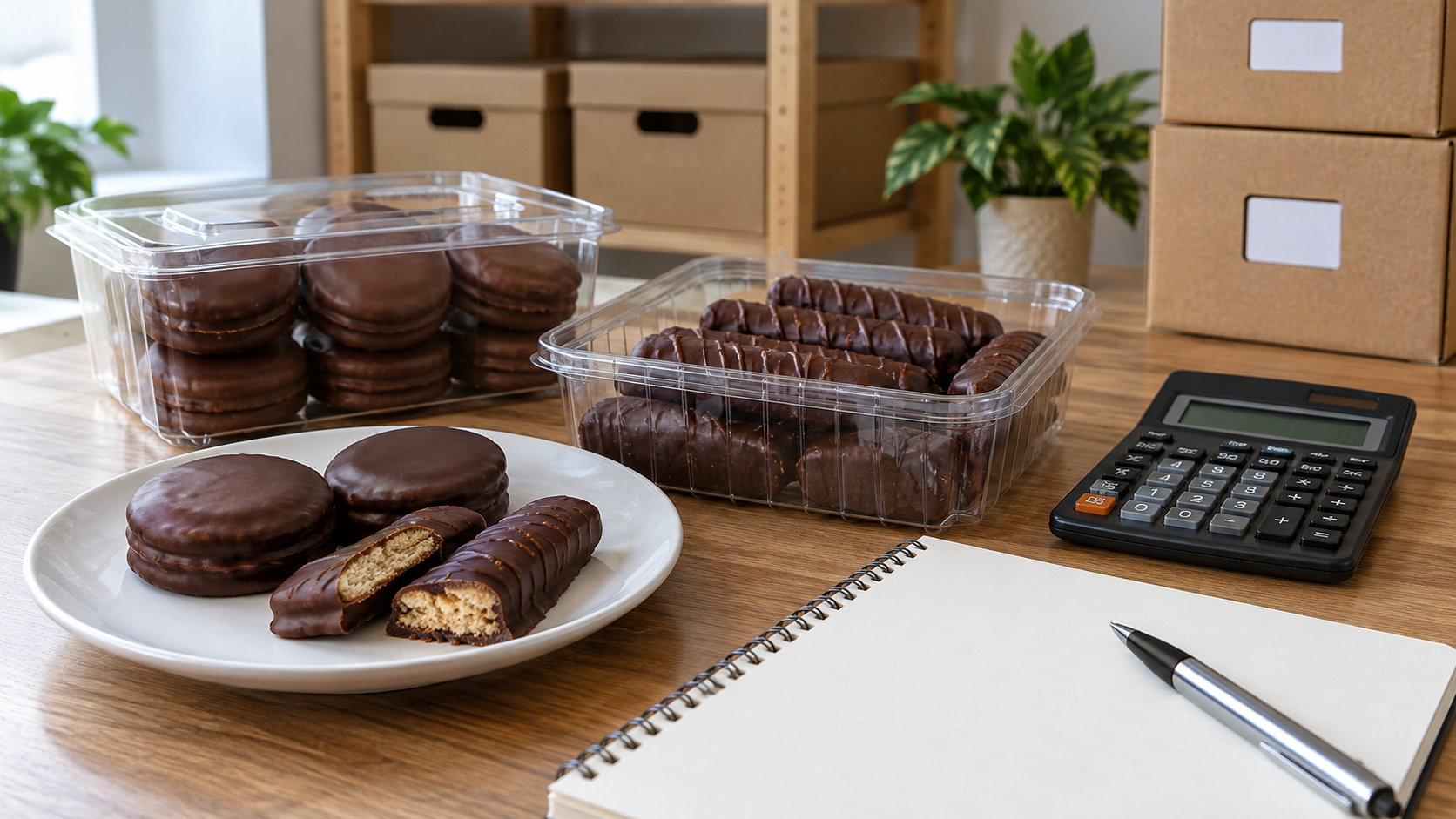
Price ingredients, packaging, labour, waste, fees and refrigeration before selling. Use conservative storage guidance and follow current local registration, hygiene and labelling rules.
Frequently asked questions
Do I need a thermometer?
A thermometer is recommended whenever melting, tempering or holding chocolate within a working range.
Can I substitute one chocolate product for another?
Only when the recipe allows it, because cocoa butter, vegetable fat, sugar and milk change texture and setting.
How do I avoid moisture problems?
Keep tools dry, protect chocolate from steam and let cold closed containers warm gradually before opening.
Which allergens should I check?
Read every label for milk, soya, nuts, gluten and other required allergens, including cross-contact warnings.
Can I sell the finished product?
Follow current local food-business, hygiene, labelling and tax rules and use a defensible storage period.
What should I do before a large batch?
Test one small batch with the actual ingredients, room temperature, packaging and transport conditions.