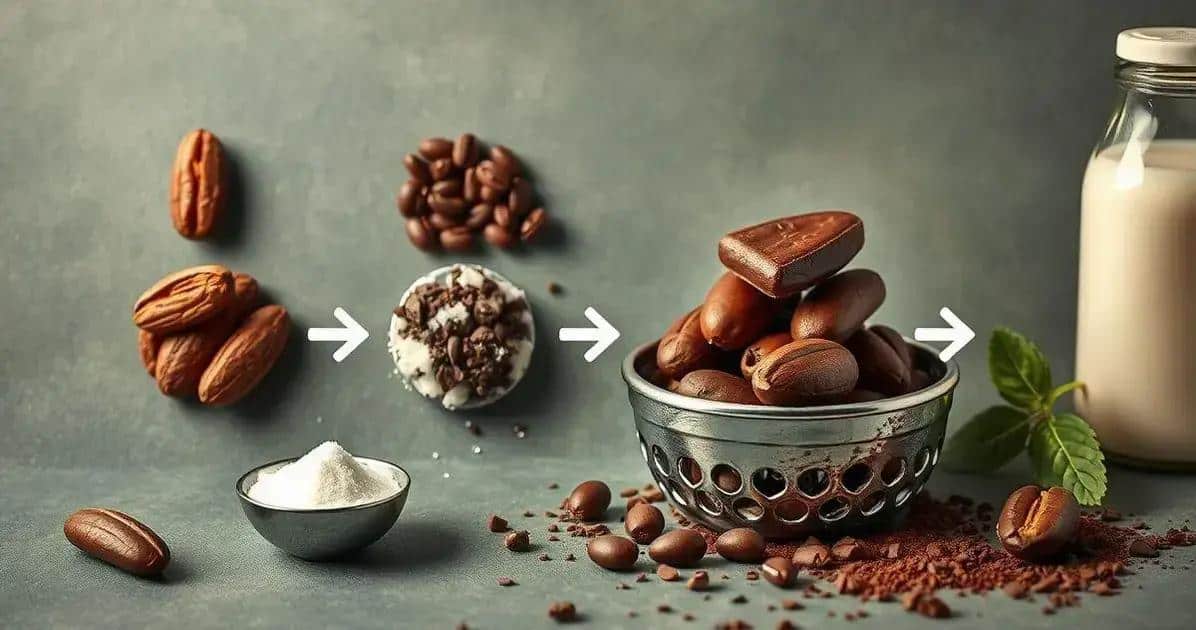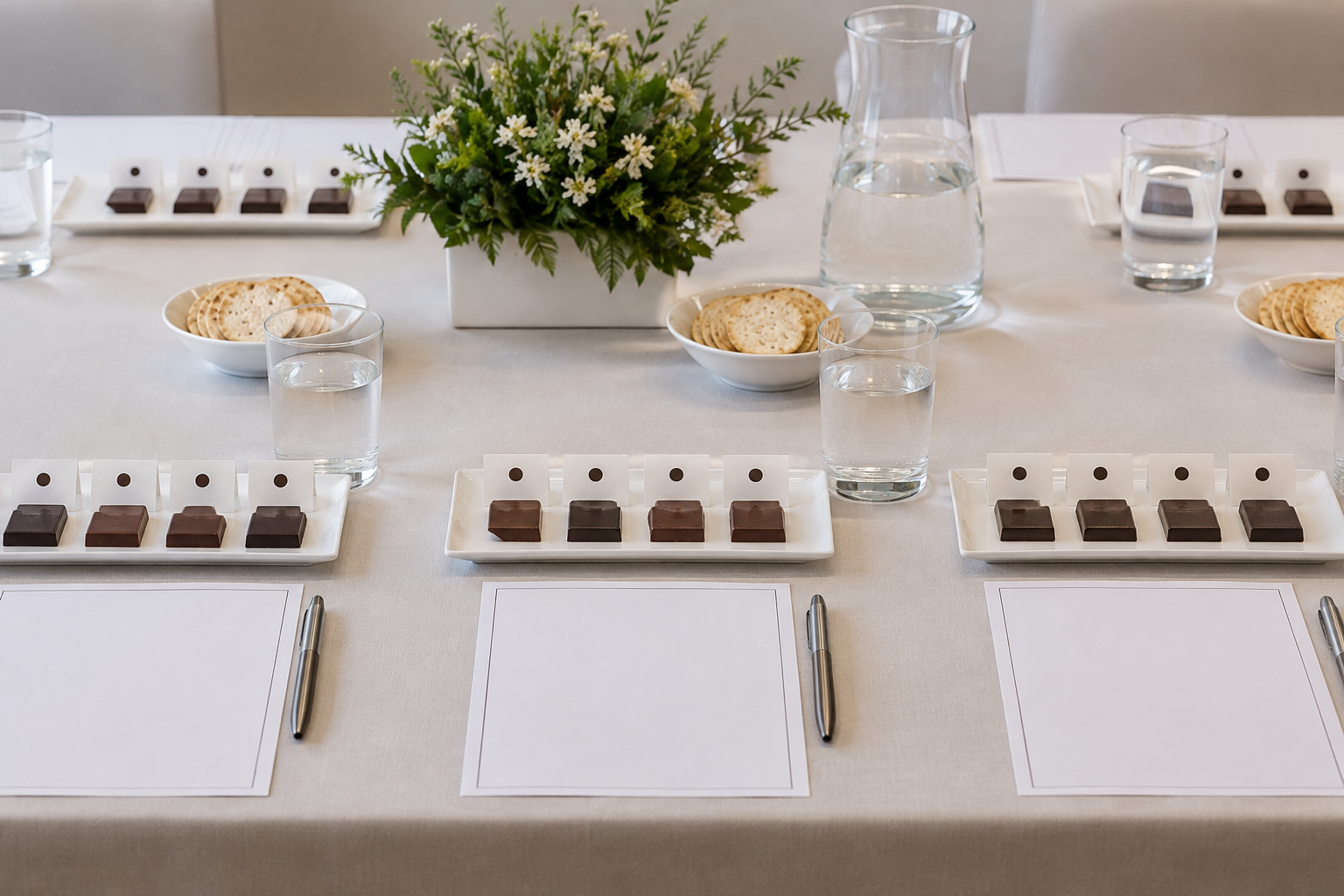

Use accurate job titles
The chocolate sector uses terms such as sensory analyst, chocolate maker, buyer, judge and educator. “Chocolate sommelier” is used by some courses and businesses, but it is not one universally regulated profession or qualification.
Prepare a neutral tasting space
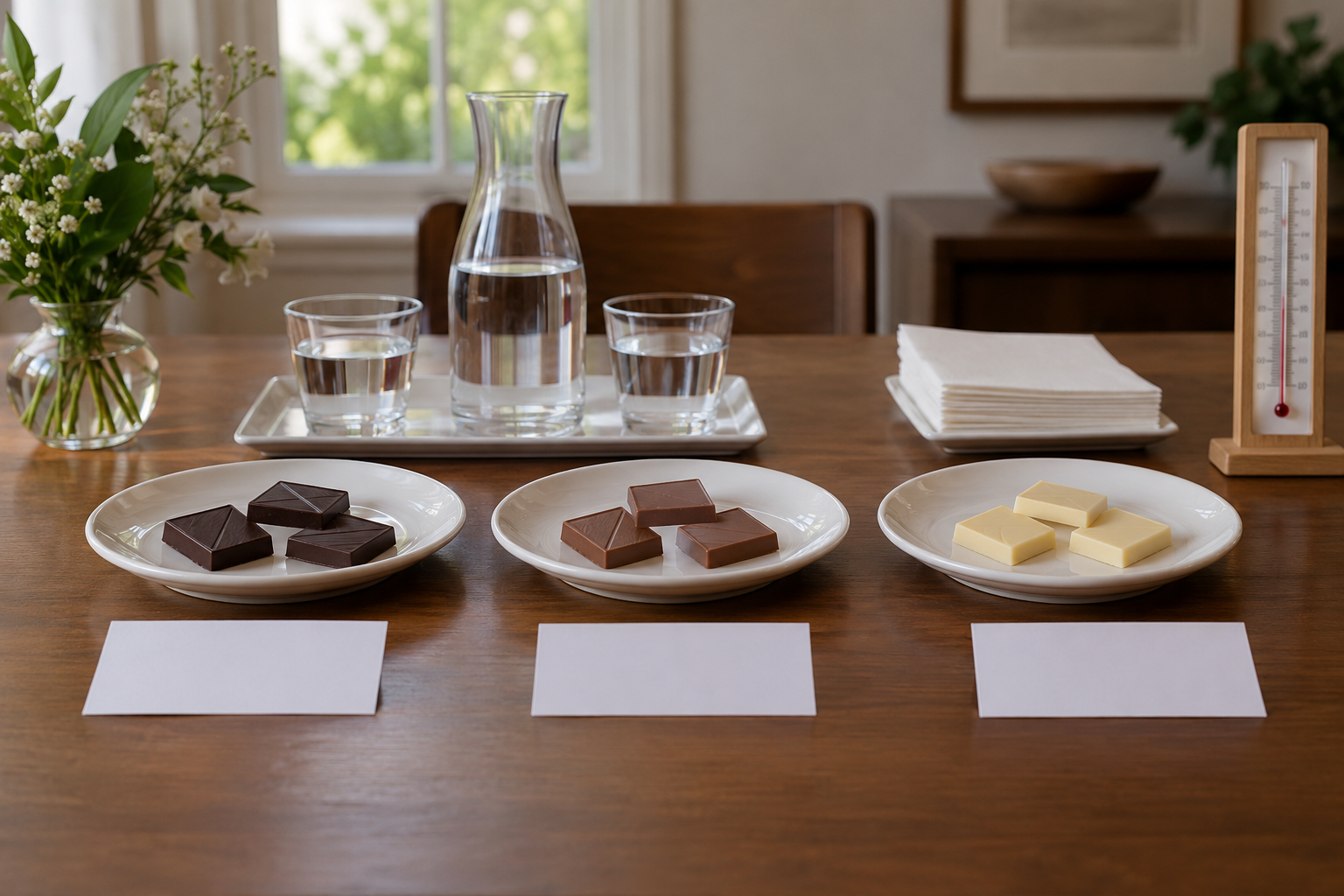
Use a quiet, odour-free room, plain water and samples at a stable room temperature. Strong coffee, perfume, smoking and spicy food can obscure aroma and taste.
Read the chocolate before tasting
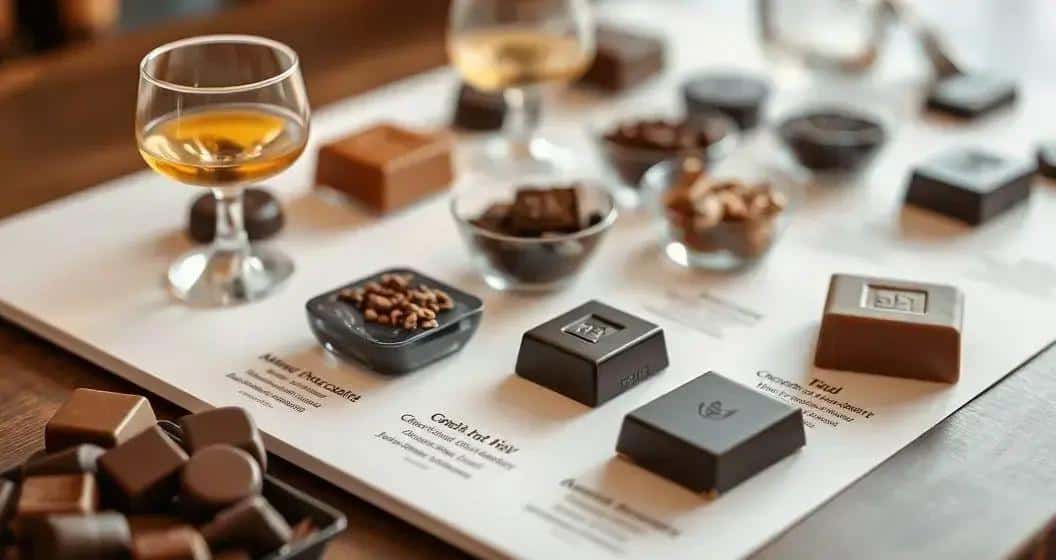
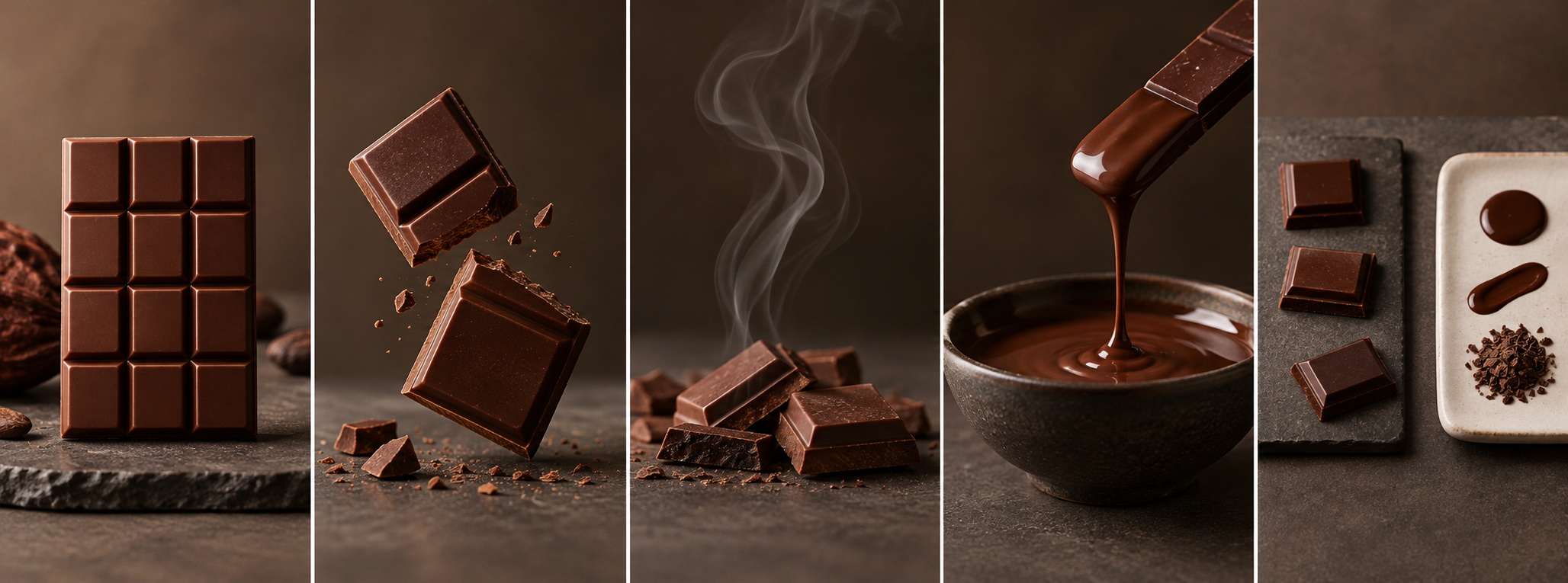
Check the ingredient list, cocoa percentage and origin information where available. Observe colour, surface and snap, but do not treat one visual feature as proof of quality.
Taste in a useful order
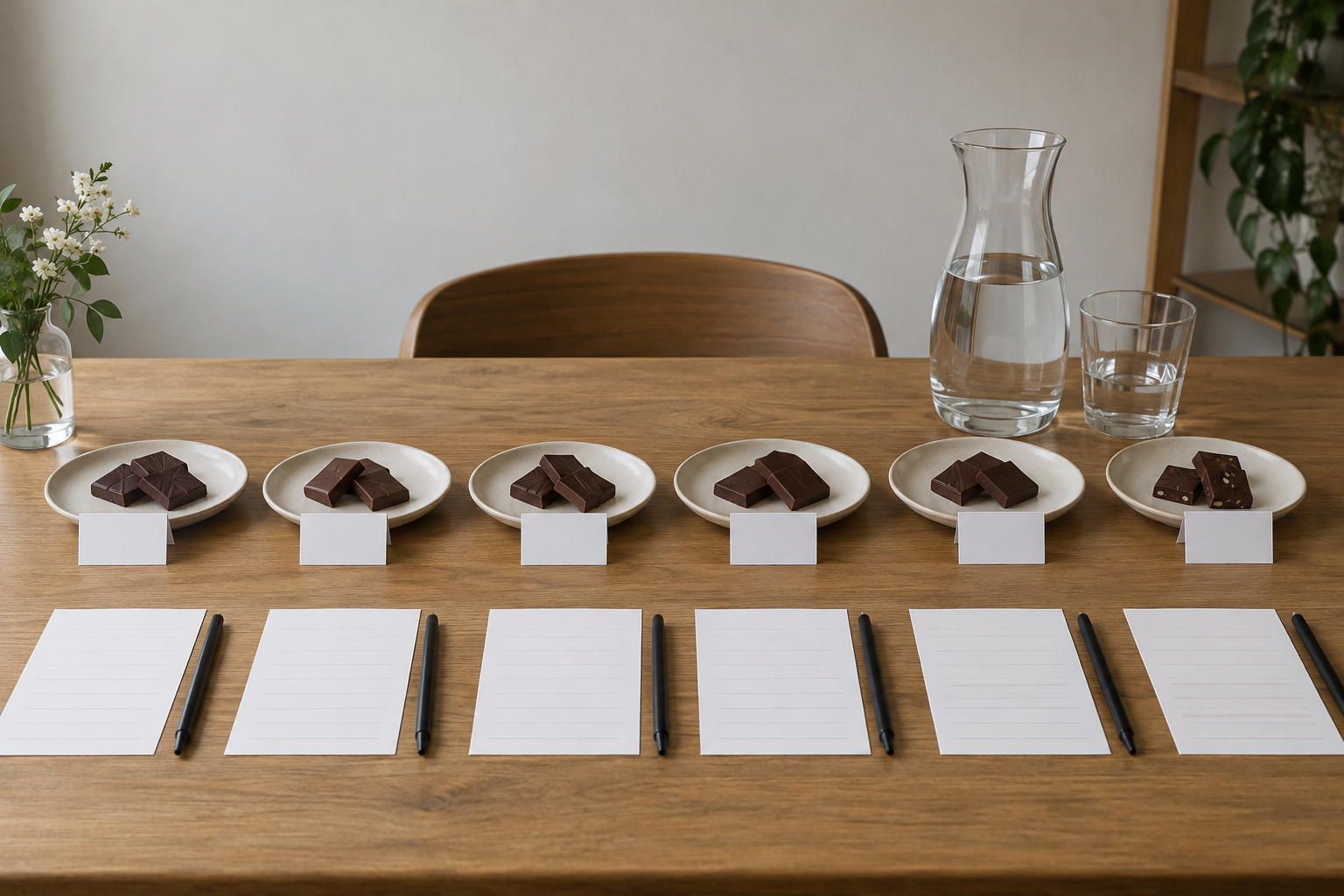
Move from delicate to intense samples and allow time between them. Smell first, let a small piece melt, then note sweetness, acidity, bitterness, aroma, texture and finish without forcing wine-style vocabulary.
Record evidence rather than scores alone
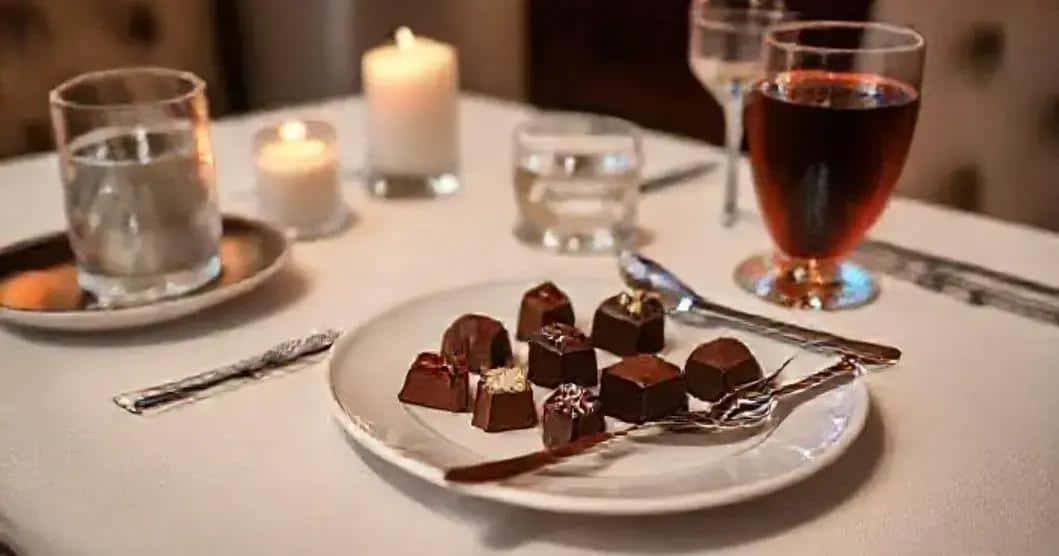
A tasting sheet should capture the sample code, date, temperature and observations. Blind comparison can reduce brand bias; a single score cannot explain why people prefer different styles.
Build expertise responsibly
Training should include cocoa processing, calibration with other tasters, allergen awareness and transparent commercial relationships. Health claims, origin stories and awards still require evidence.
Frequently asked questions
Why was the original article rewritten?
Unsupported historical, commercial, cultural or safety claims were replaced with cautious practical guidance while preserving the useful subject.
How should a famous “first” be checked?
Use named contemporary evidence such as an archive, patent, menu, catalogue or well-supported specialist history.
Can promotional language be treated as evidence?
No. Advertising and event copy can suggest leads, but independent evidence is needed for factual claims.
What should be checked before serving chocolate?
Check ingredients, allergens, storage, temperature, shelf life and cross-contact risks.
Does expensive or limited chocolate guarantee quality?
No. Price and scarcity may reflect many factors; ingredients, traceability, freshness and sensory quality still need assessment.
How should an adaptation be described?
State clearly which details are modern choices and which are supported by historical or technical sources.