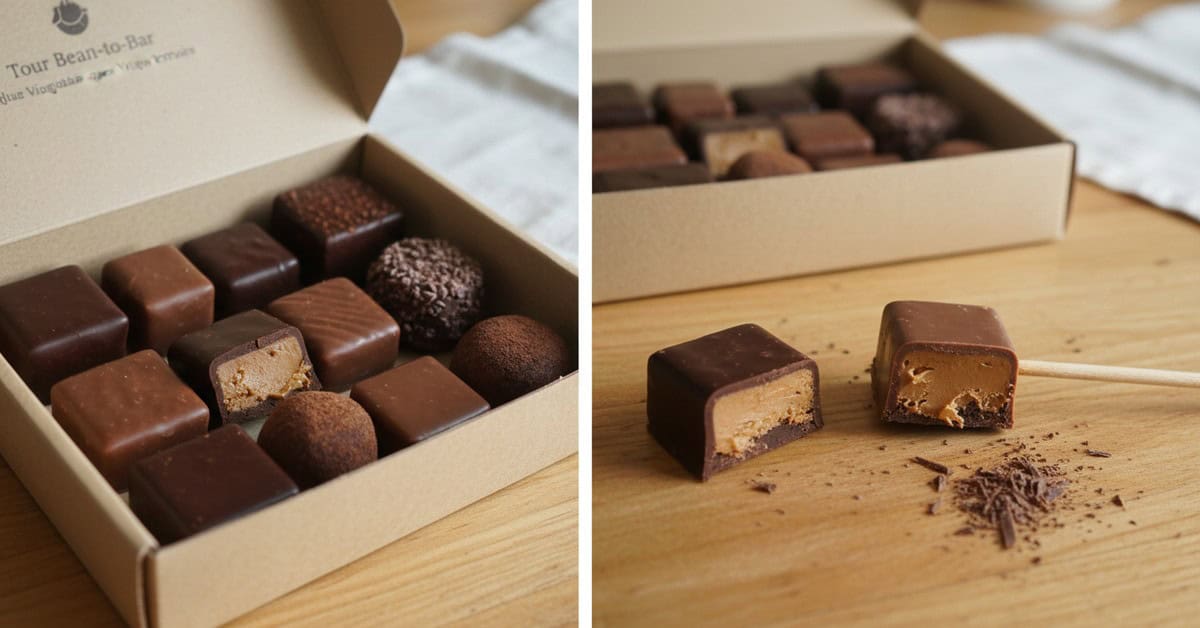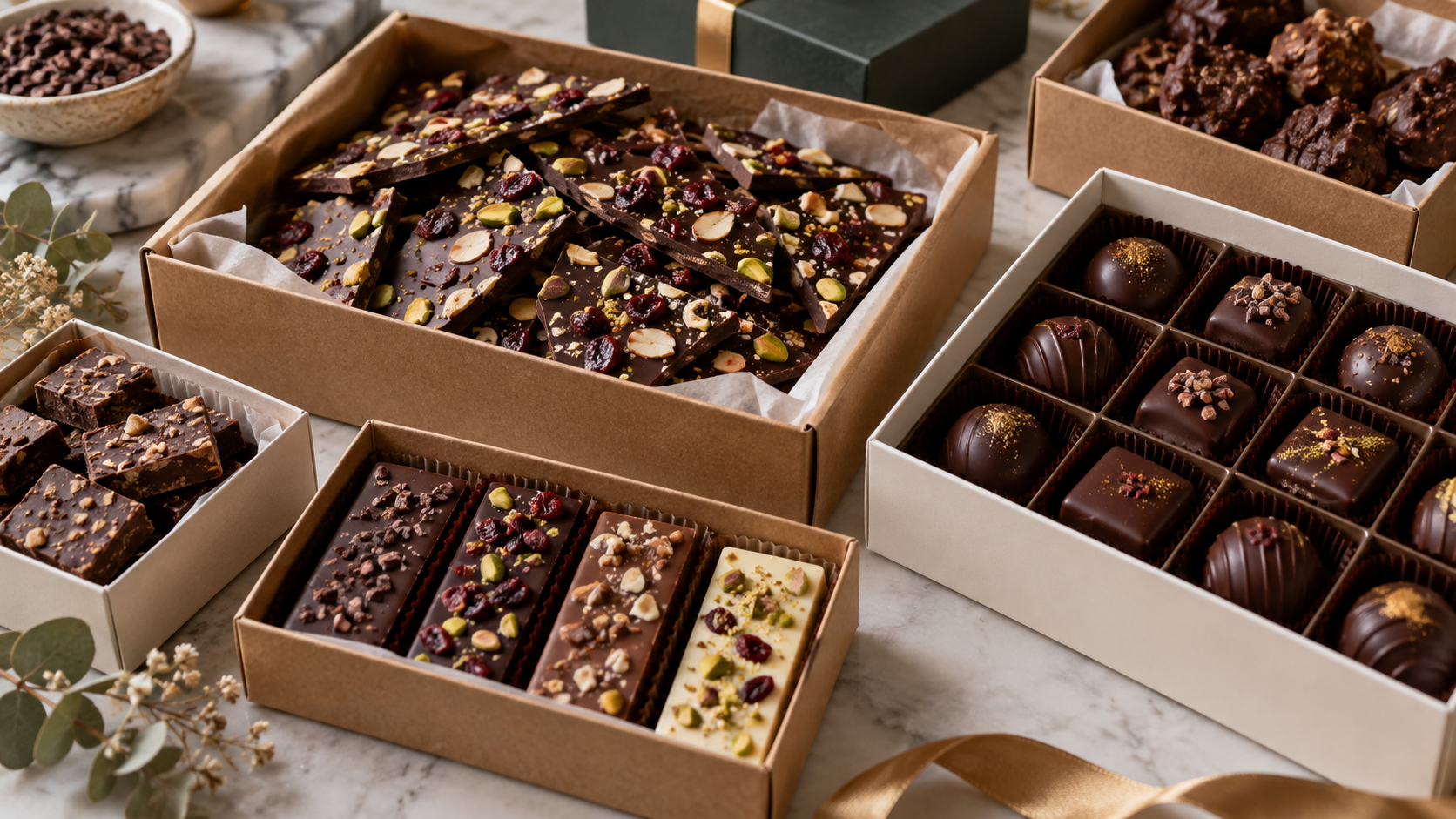

Plan the favour around the event
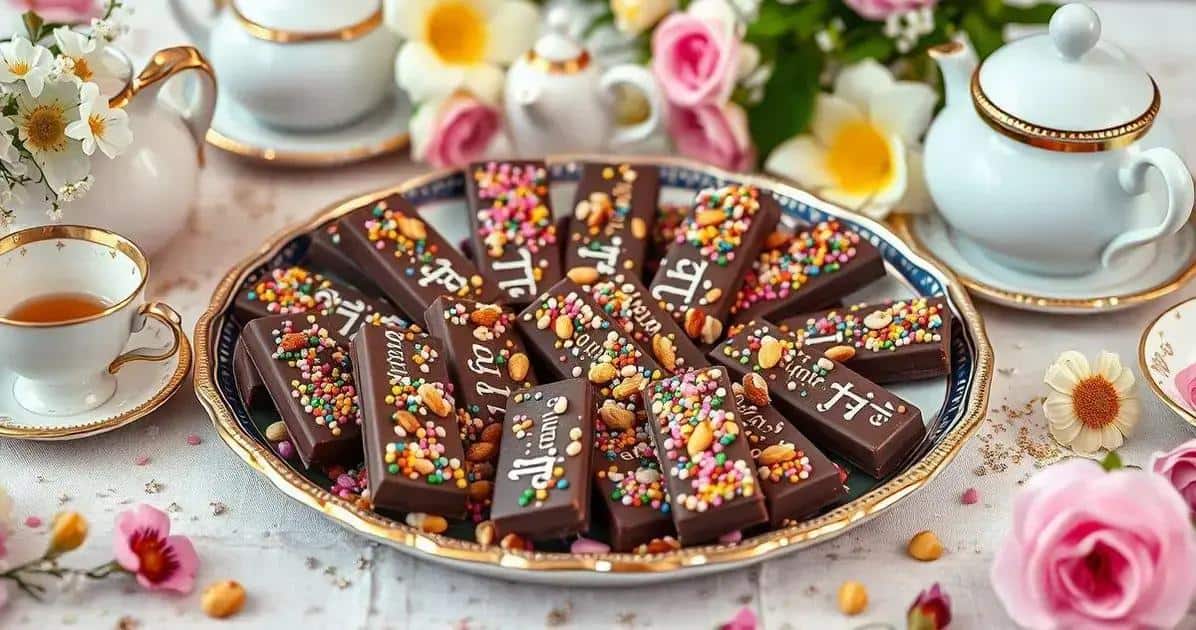
Set the budget, guest count, colour palette and dietary needs before ordering. A simple bar with a neat sleeve is easier to produce consistently than a heavily decorated favour. In the UK, hen party or bridal shower wording can be adapted to the hosts’ preference.
Choose chocolate that travels well
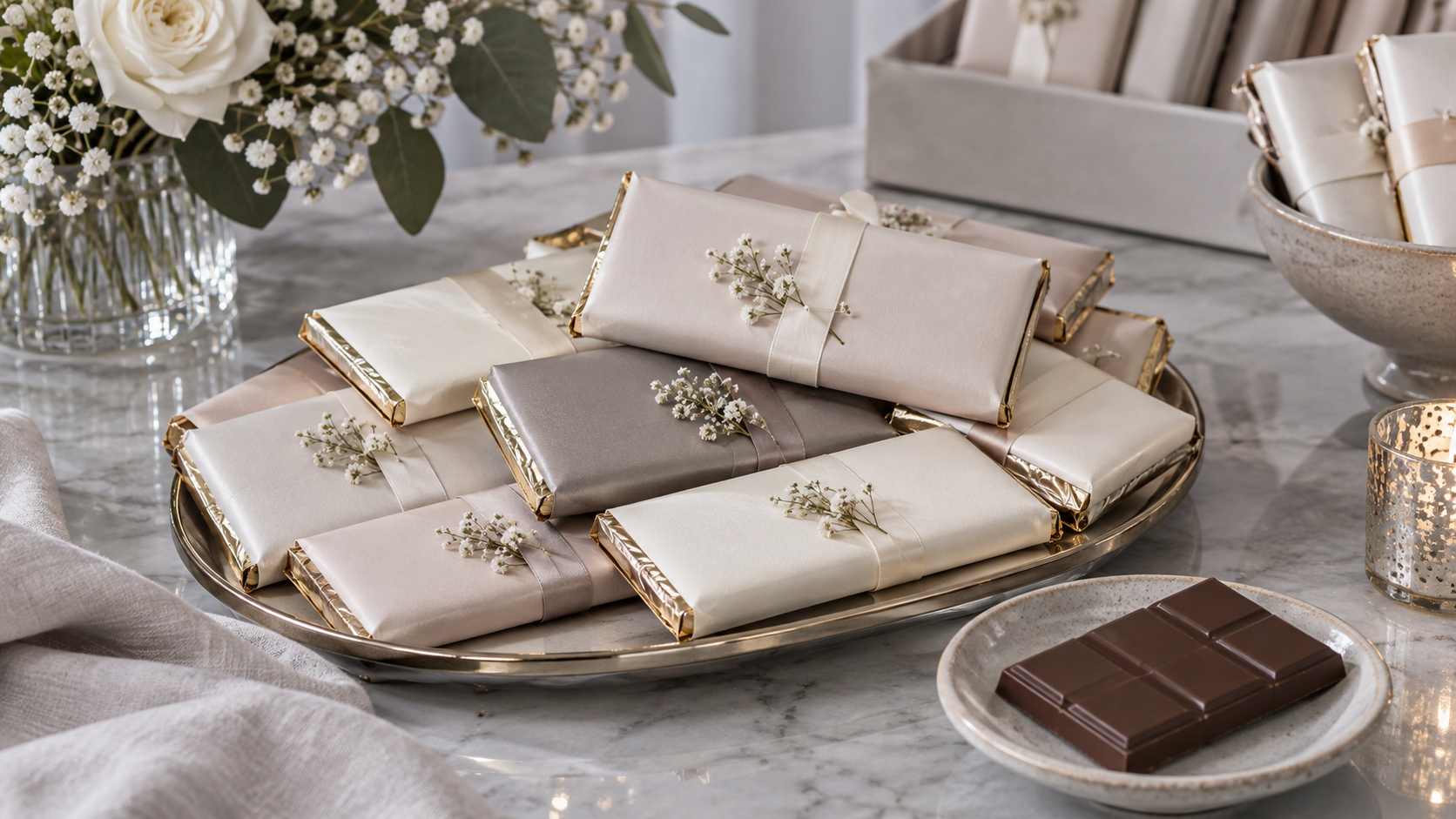
Choose individually wrapped bars that suit the venue temperature and journey. Filled, cream-based or fresh-fruit chocolates have different storage needs. Order a small sample first and check flavour, size and best-before dates.
Create food-safe wrappers

Place any printed sleeve over the manufacturer’s sealed food wrapper. Craft paper, ink, glue, ribbon and metal charms should not touch exposed chocolate. Do not rewrap commercial bars in a way that removes mandatory information.
Personalise without obscuring labels
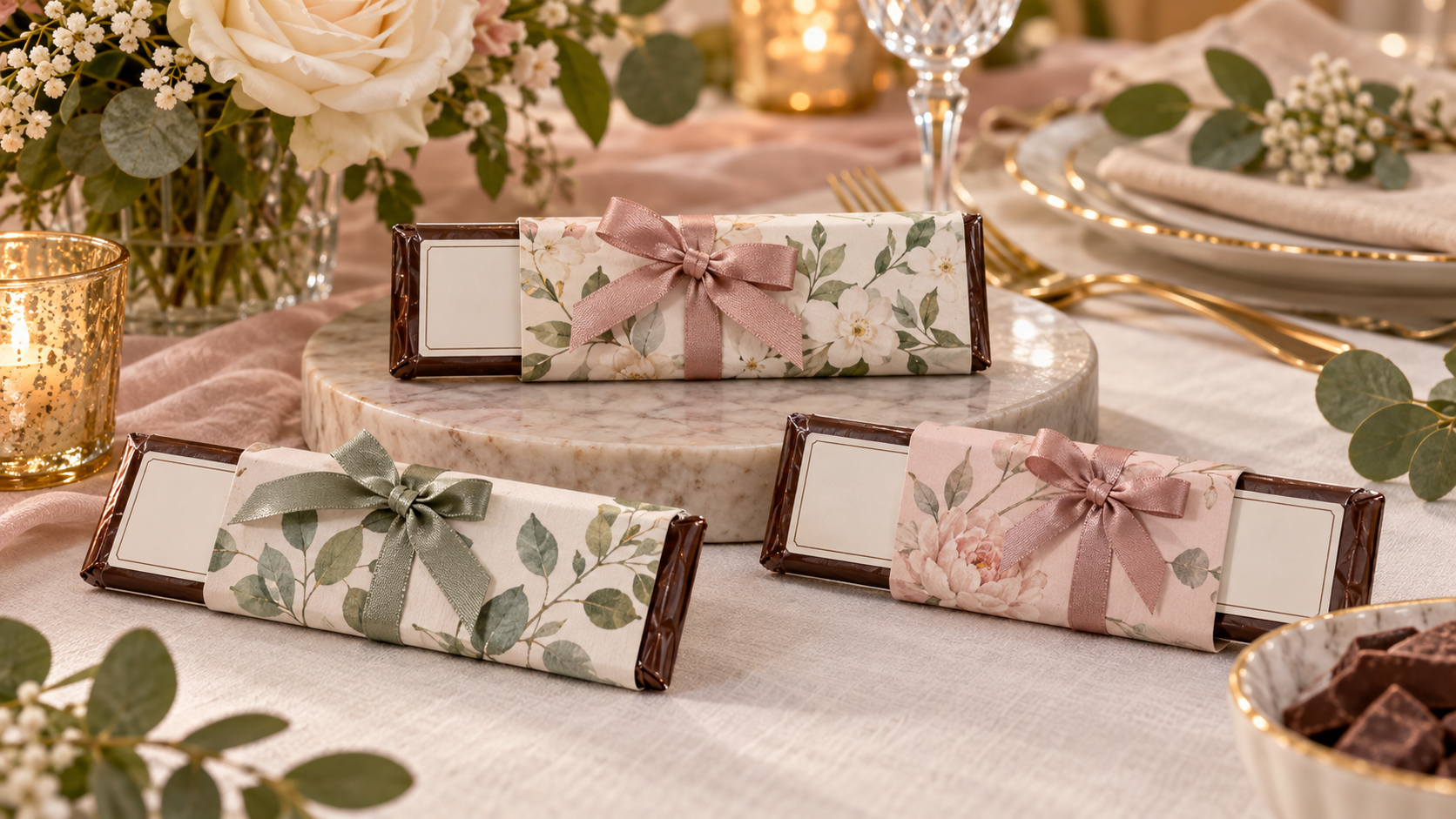
Print names or the event date on an outer sleeve and leave ingredients, allergens, weight, durability date and business details readable. Avoid implying a product is vegan, nut-free or gluten-free unless the evidence supports the claim.
Store and distribute safely

Keep favours cool, dry and away from strong smells. Count and inspect them before transport, carry spares and distribute near the end of a warm event. Guests should be able to take the original label with the bar.
Frequently asked questions
Why was the source not translated word for word?
The topic needed factual, safety, cultural or recipe correction, so the useful idea was rewritten directly in British English.
Can a suggested portion be used for every person?
No. Age, health, allergies, medicines, caffeine tolerance and the rest of the diet can change what is appropriate.
Does heating remove all alcohol or caffeine?
No. Do not assume either substance disappears; label it clearly and use the product only for an appropriate audience.
How should allergens be handled?
Check every current pack, consider cross-contact and keep accurate ingredient information with the finished product.
Can homemade products be sold using this guide alone?
No. Sellers need compliant registration, hygiene, labelling, traceability and validated storage for their actual process.
What should be done when a historical claim is uncertain?
Use qualified archives or primary records and describe uncertainty rather than inventing a precise date or first inventor.