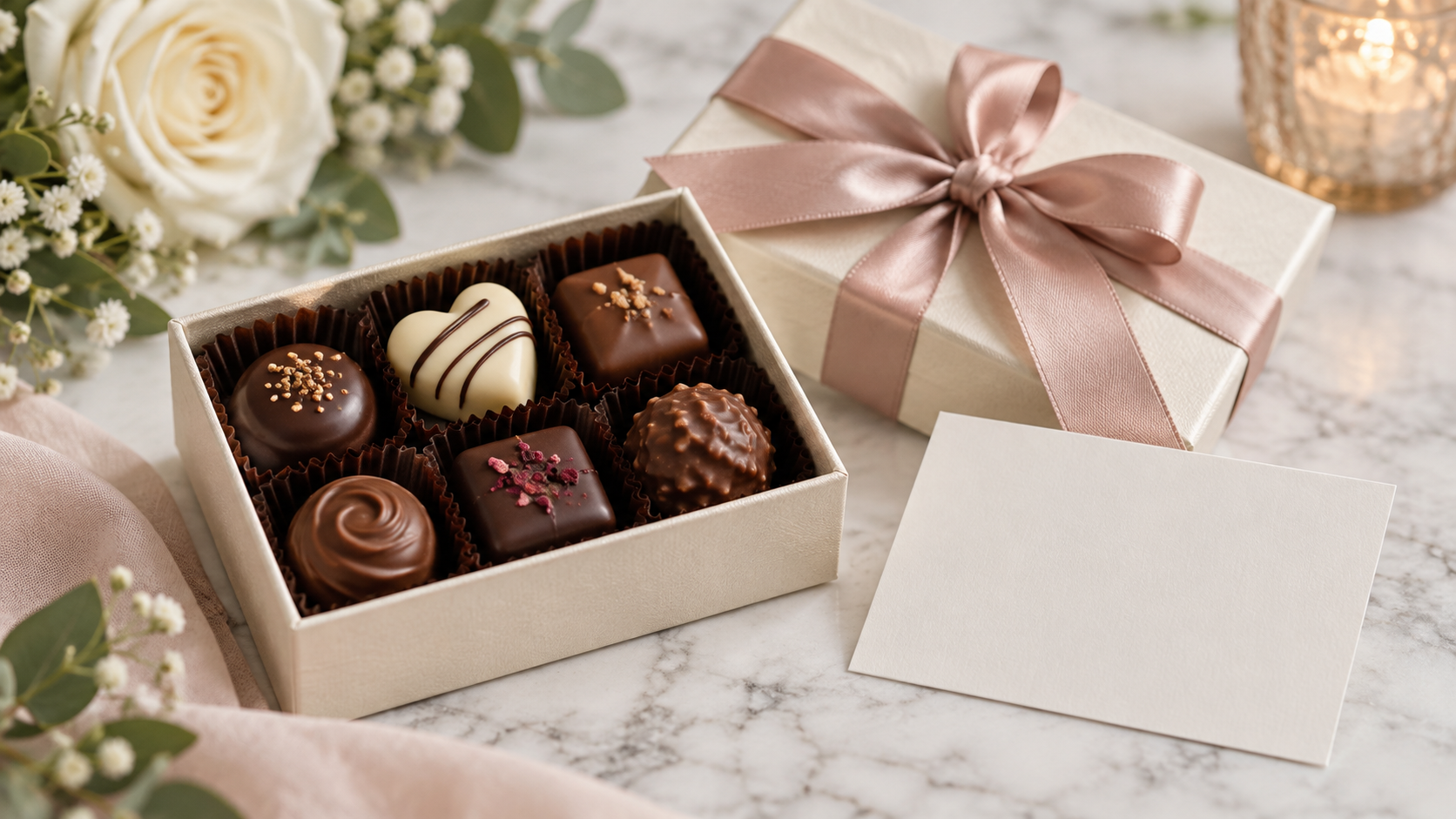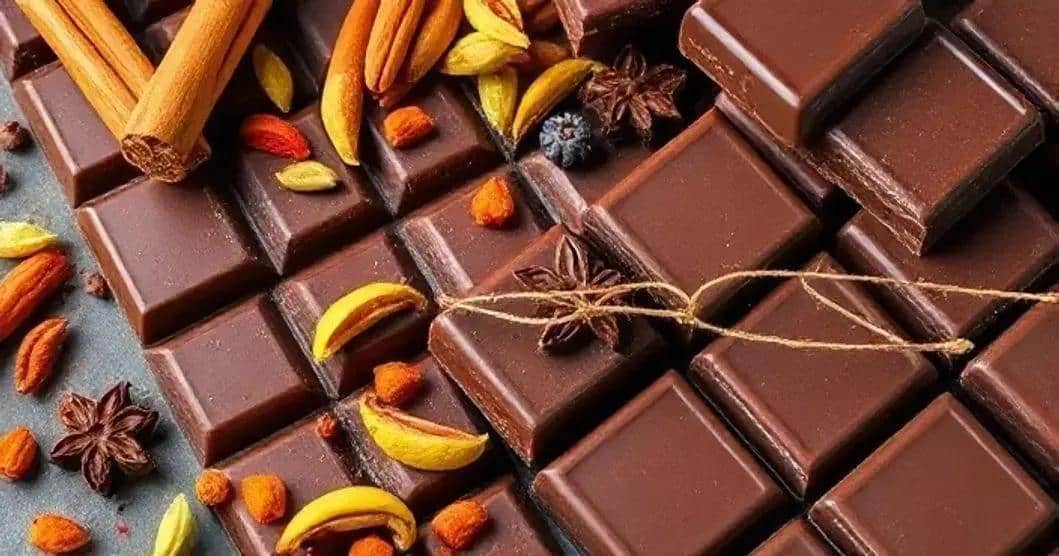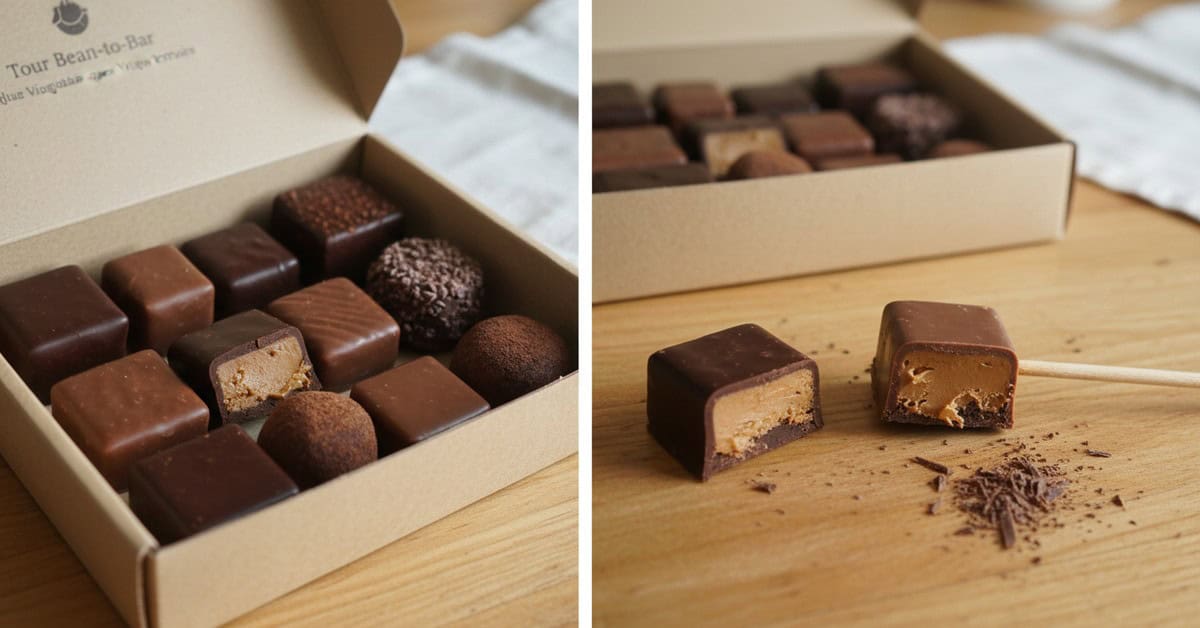

Select bars with traceable information
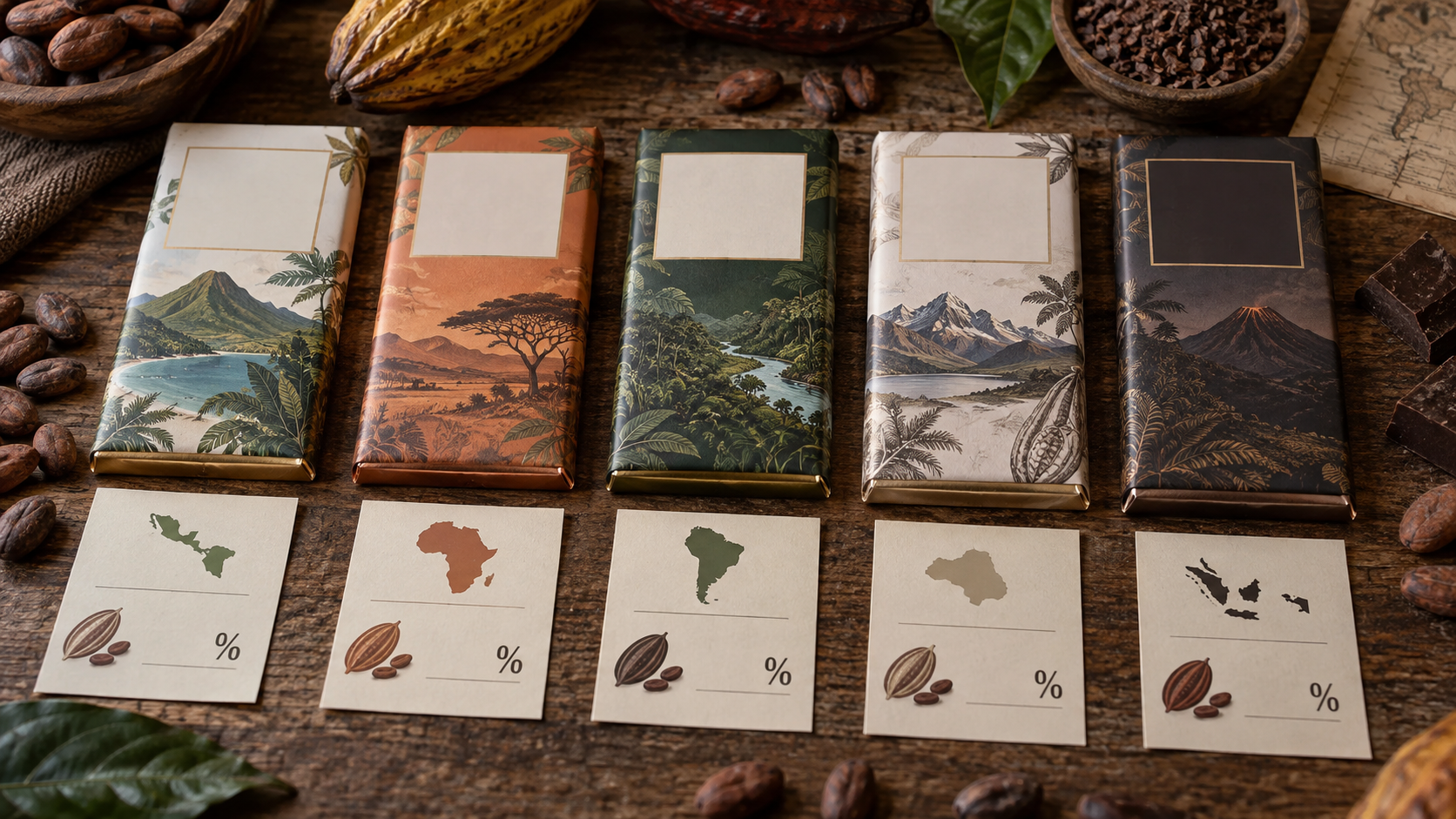
Choose sealed bars that identify maker, cocoa percentage, ingredients, allergens and, where supplied, origin. Do not infer ethical or environmental claims from packaging style.
Compare one variable at a time
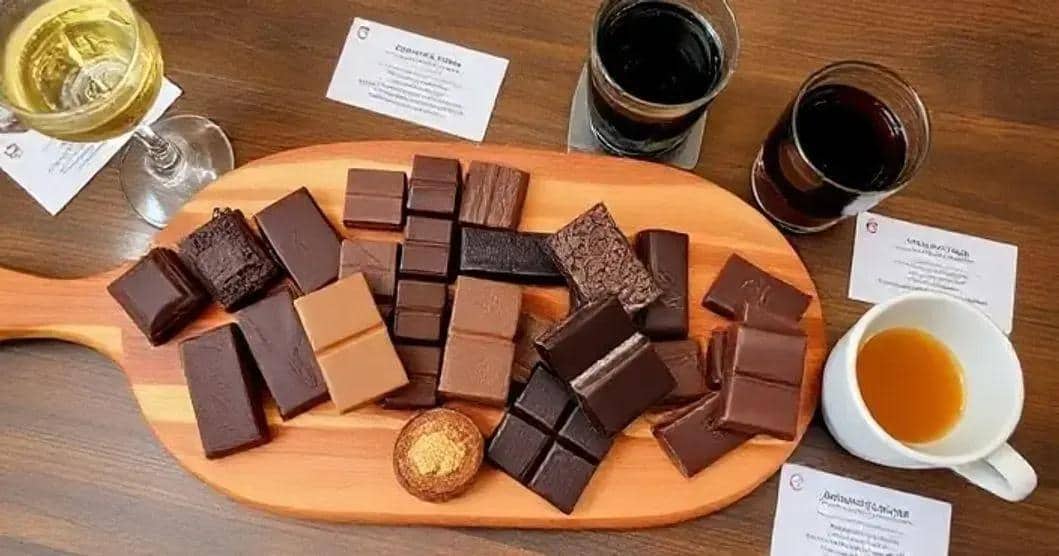
A useful flight might hold cocoa percentage steady while changing origin, or keep origin similar while comparing percentages. Too many variables make conclusions unreliable.
Cut equal tasting portions
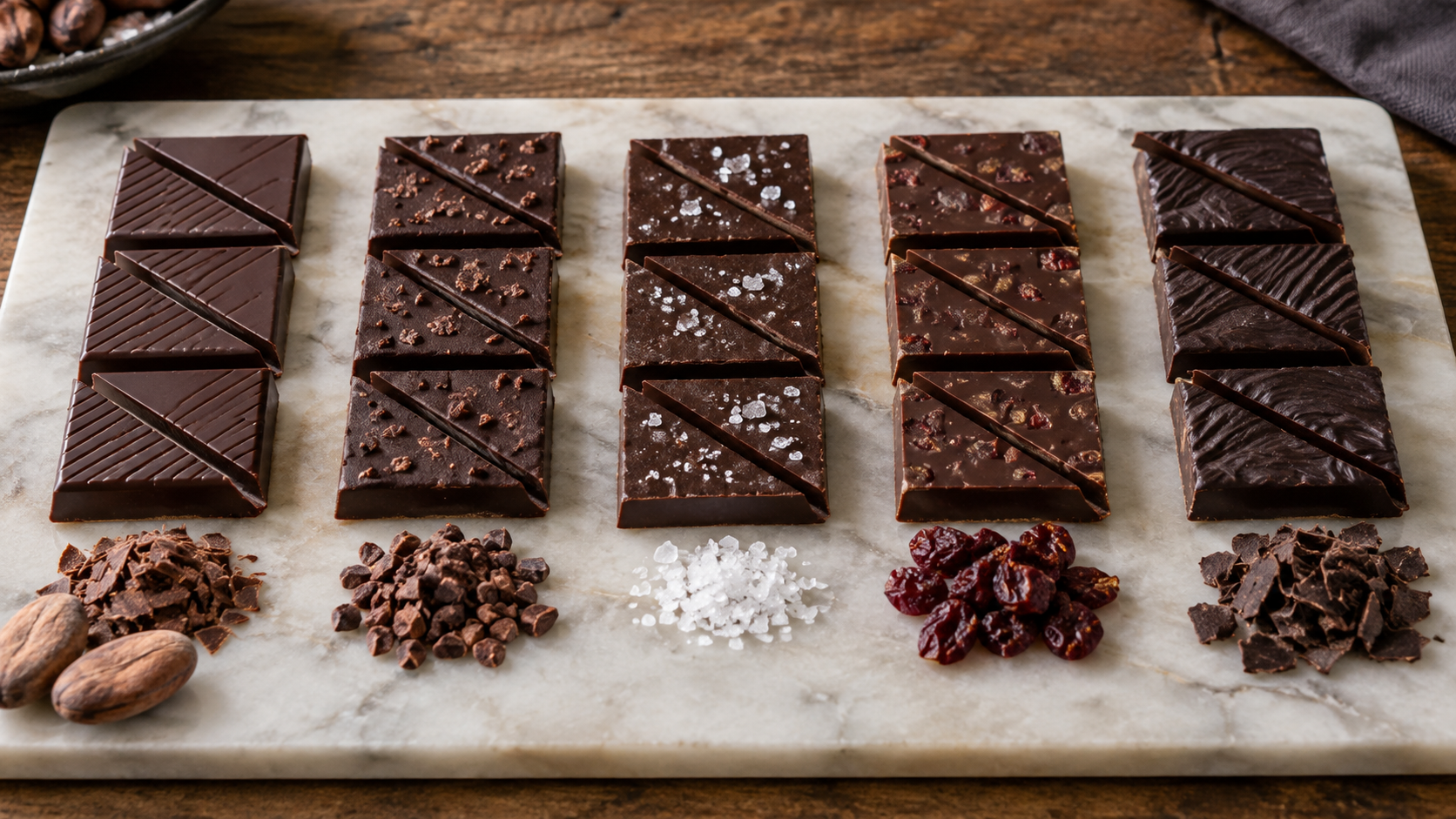
Use a clean dry knife and cut equal pieces. Keep each bar linked to its original wrapper and batch information throughout preparation.
Arrange a neutral tasting order
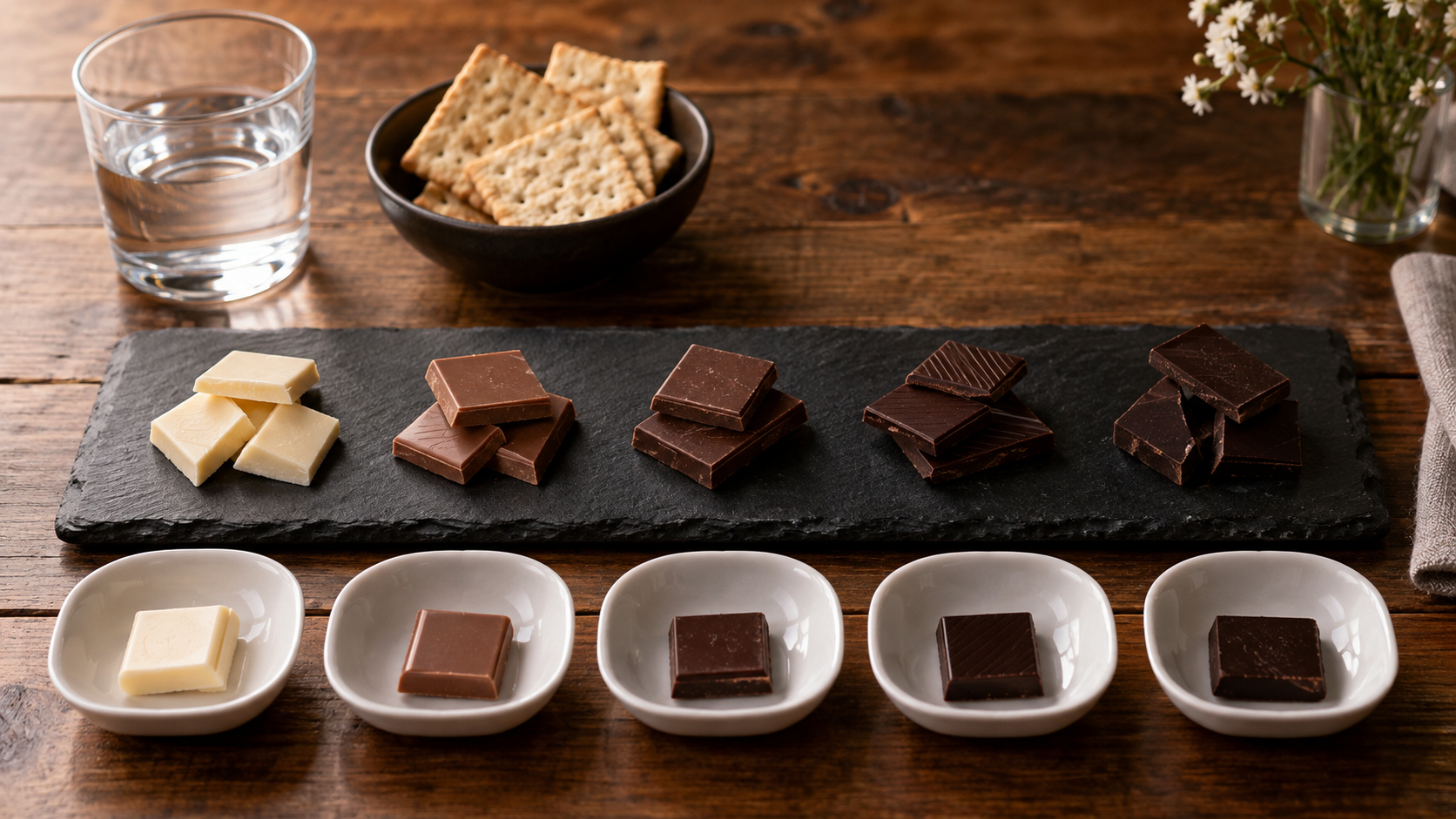
Taste milder bars before darker, heavily roasted or strongly flavoured ones. Use room-temperature water and plain crackers between samples.
Record observations without inventing notes
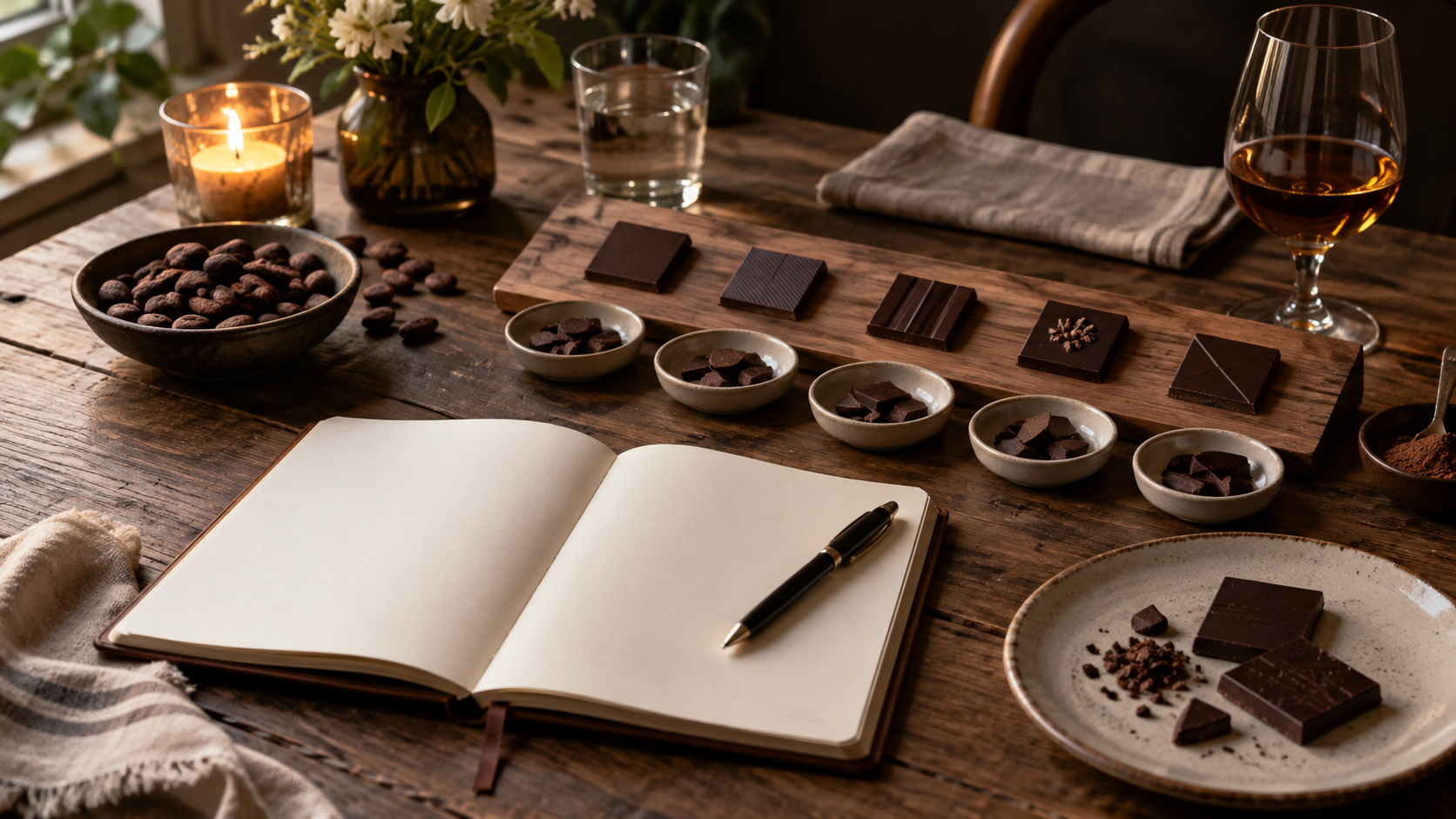
Note aroma, melt, acidity, bitterness, sweetness and texture in your own words. Published flavour notes are suggestions, not facts each person must perceive.
Store and label the box
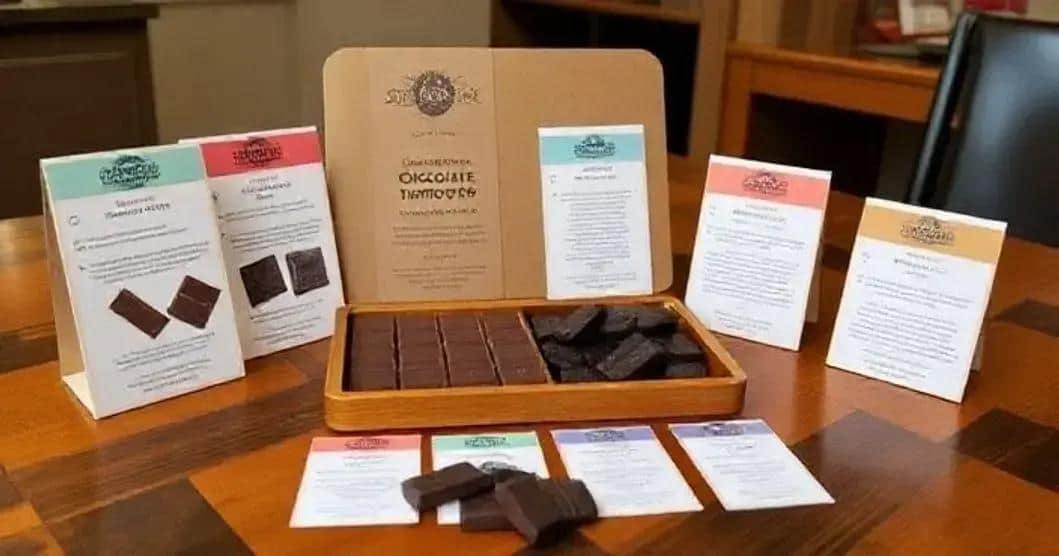
Protect chocolate from heat, odours and humidity. Include an accurate key for ingredients, allergens, origin and percentage, and do not repackage beyond the source shelf life.
Frequently asked questions
Why was the source rewritten?
Unsafe, unsupported or technically unreliable instructions were corrected while preserving the useful subject.
How should allergens be handled?
Check every current pack, prevent cross-contact and keep accurate ingredient information.
Can storage time be copied from another recipe?
No. Validate it for the actual ingredients, hygiene, process and packaging.
Can quantities be changed freely?
Changes to water, fat, sugar, alcohol or acid can alter texture, safety and storage.
Are nutrition or health claims automatic?
No. They require the complete formulation, a defined portion and applicable evidence.
What should be recorded during testing?
Record exact weights, temperatures, times, yield, storage and the result of each controlled trial.