
Choosing suitable colours
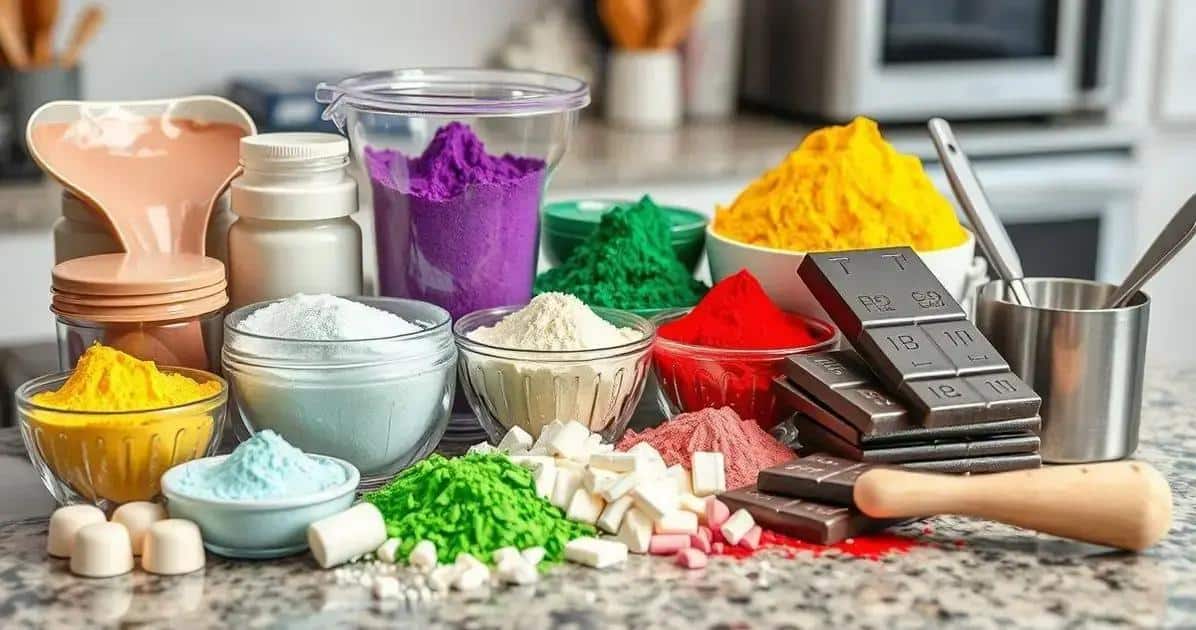
Use oil-based or fat-dispersible colouring made for chocolate. Ordinary water-based liquid colour can make melted chocolate seize, so check the label before starting.
Melting white chocolate gently
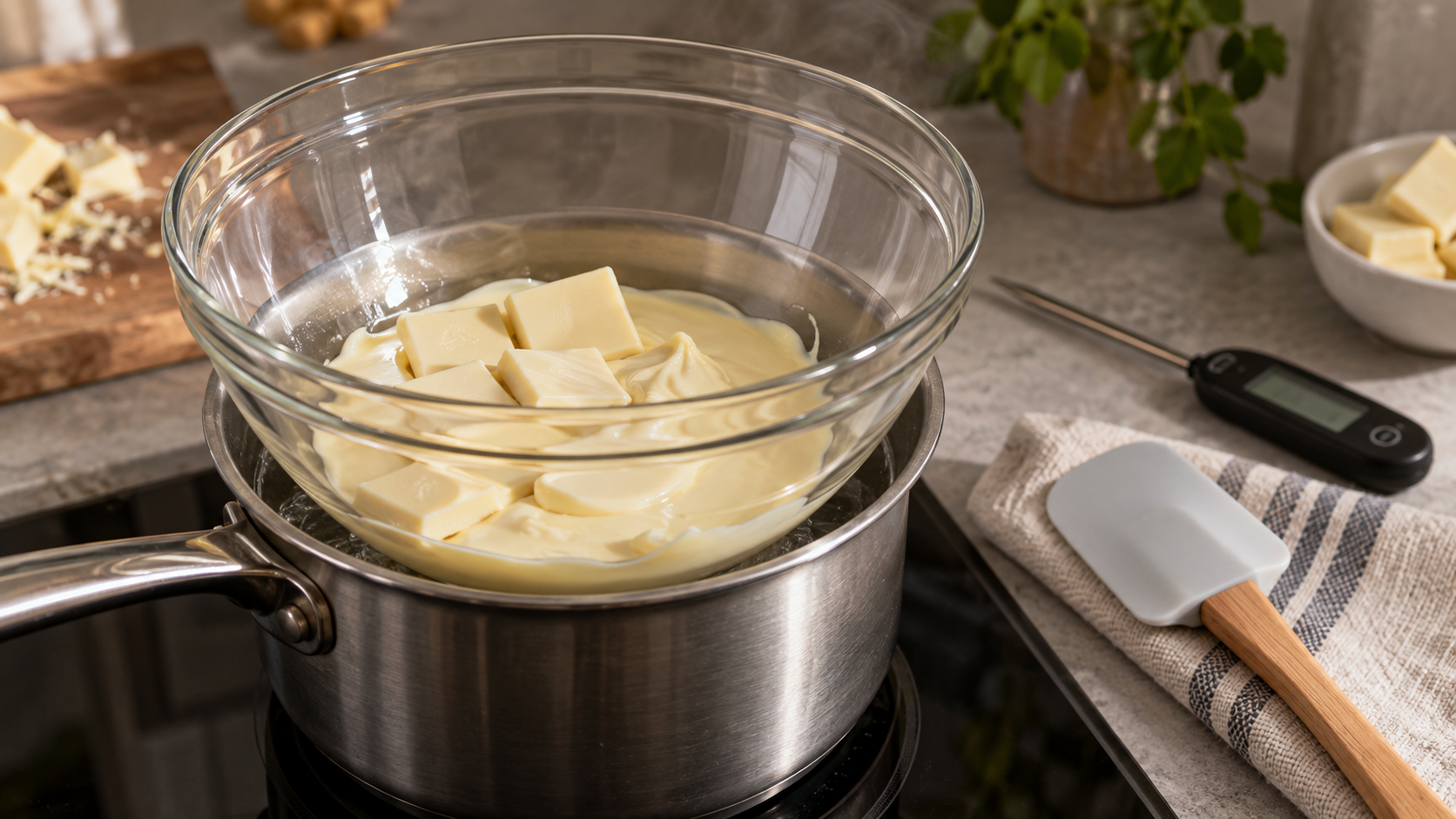
Chop the chocolate evenly and melt it gently in a dry bowl. White chocolate scorches easily; stir frequently and use low heat rather than trying to melt it quickly.
Adding colour without seizing

Warm thick colouring slightly if the manufacturer permits, then add a tiny amount at a time. Stir thoroughly before adding more because the shade often deepens as it disperses.
Creating pastel and deep shades
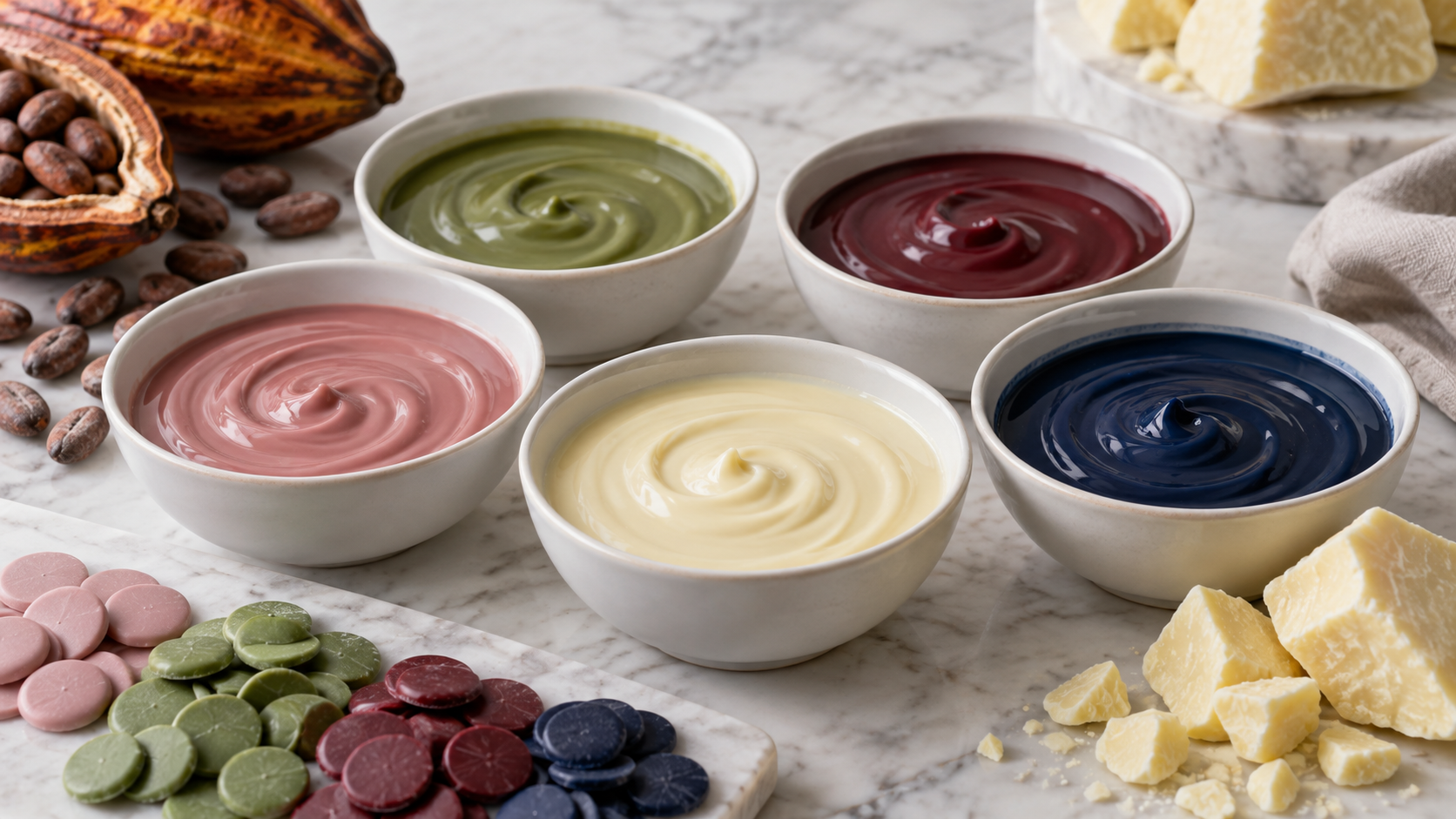
Begin with a toothpick amount for pastels. Strong colours may require concentrated cocoa-butter colour; too much liquid or powder can change texture and taste.
Tempering coloured chocolate

Colouring can alter the tempering curve, particularly when extra cocoa butter is added. Follow the chocolate maker’s temperatures and test a thin swipe before moulding.
Using and storing the finished chocolate
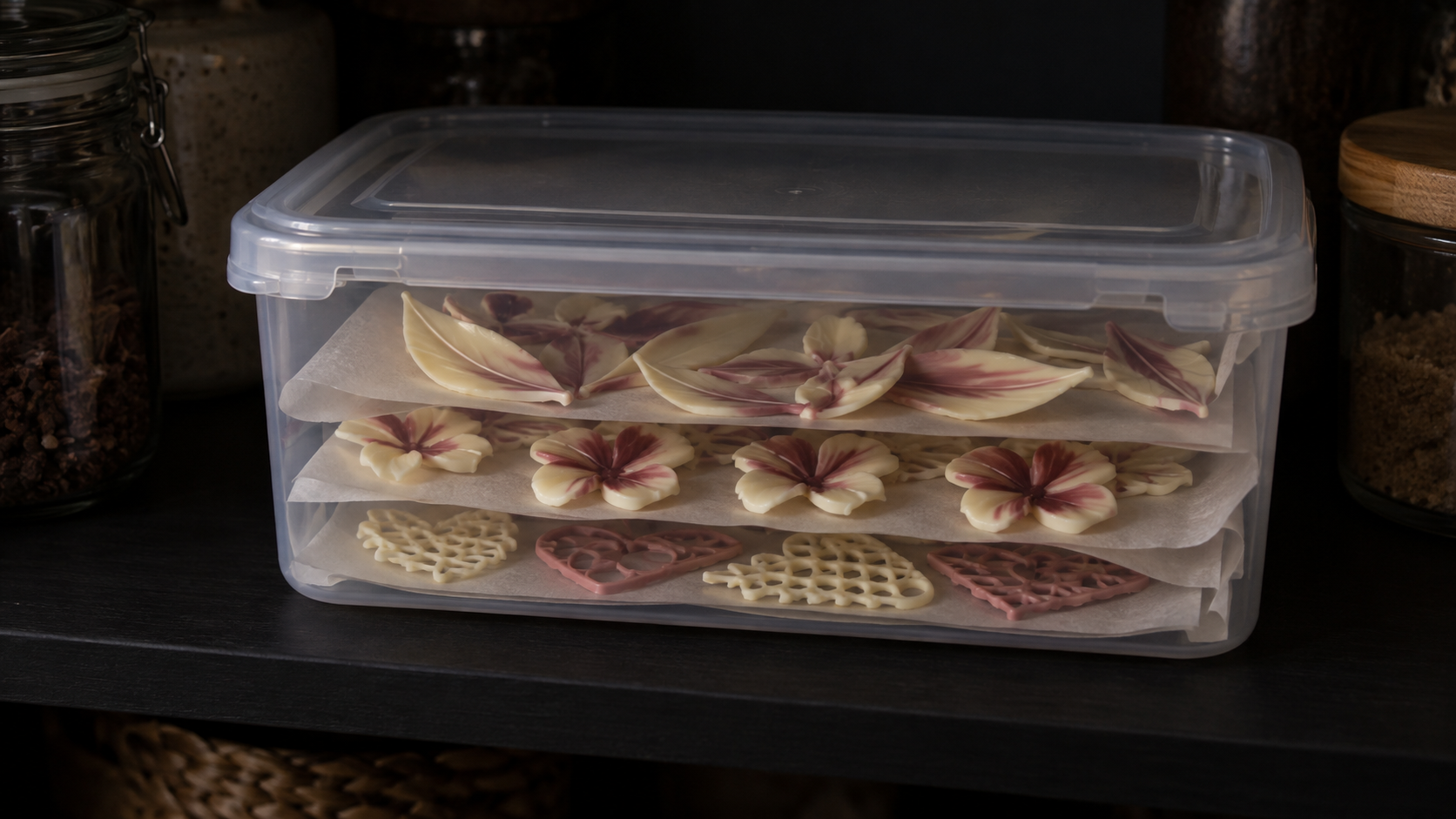
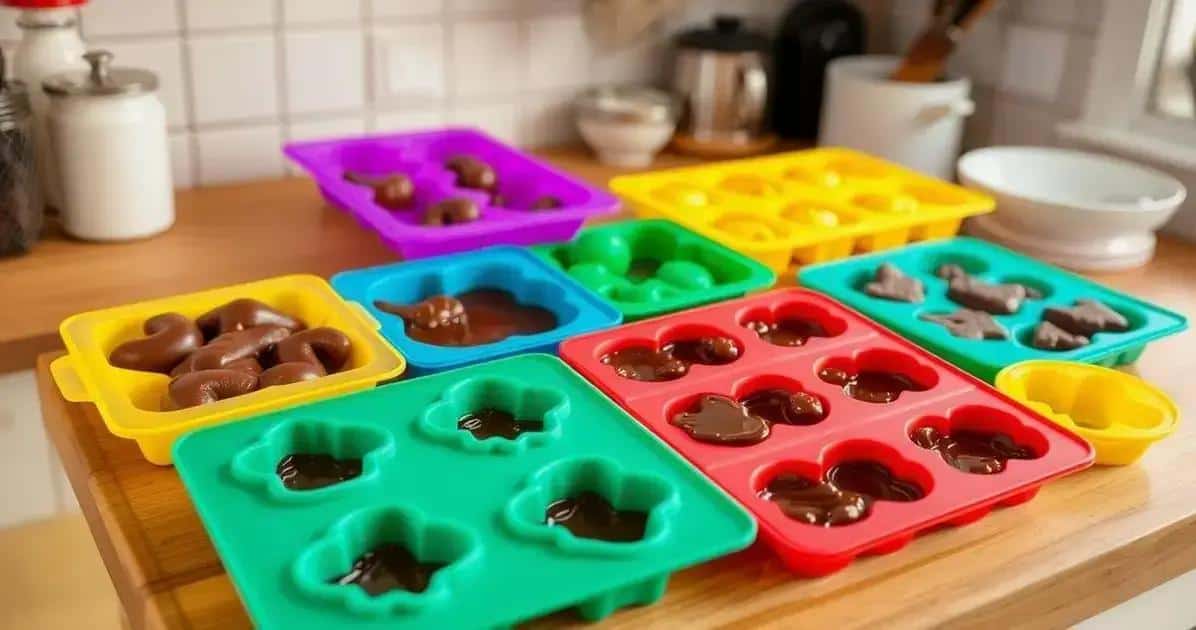
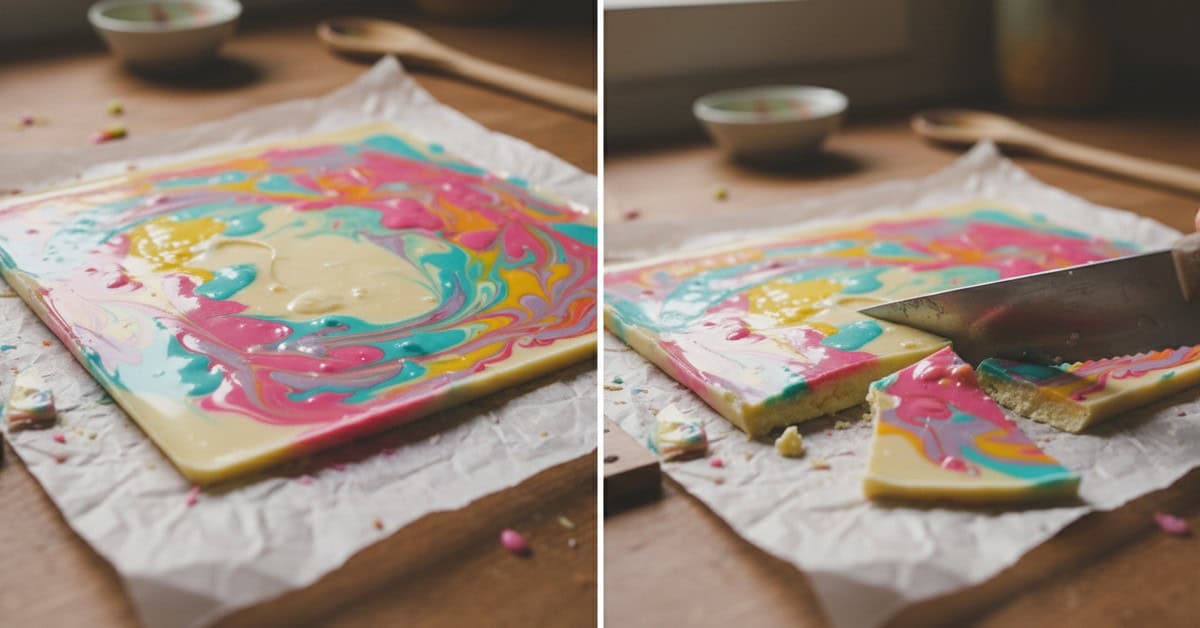
Use coloured chocolate for moulds, splashes, panels or fine piping. Keep finished pieces airtight, cool and dry, and protect pale colours from strong light.
Frequently asked questions
Can I use supermarket chocolate?
It can work for simple baking and drizzles, but couverture chocolate gives more predictable tempering, shine and snap.
Why did my chocolate become thick or grainy?
Water, steam or overheating may have caused it to seize. Keep every tool dry and melt with gentle heat.
Should chocolate go in the fridge?
Use a cool, dry cupboard when conditions are stable. Refrigerate only when heat or a perishable filling makes it necessary, and keep the container sealed.
How do I avoid fingerprints?
Handle set decorations with clean food-safe gloves, tweezers or a cool palette knife.
Can I prepare decorations ahead?
Yes. Store them airtight between sheets of baking paper in a cool, dark and dry place.
Which allergens should I declare?
Check every product label, particularly for milk, soya, nuts and possible traces from shared manufacturing equipment.