
Use fat-soluble colour only
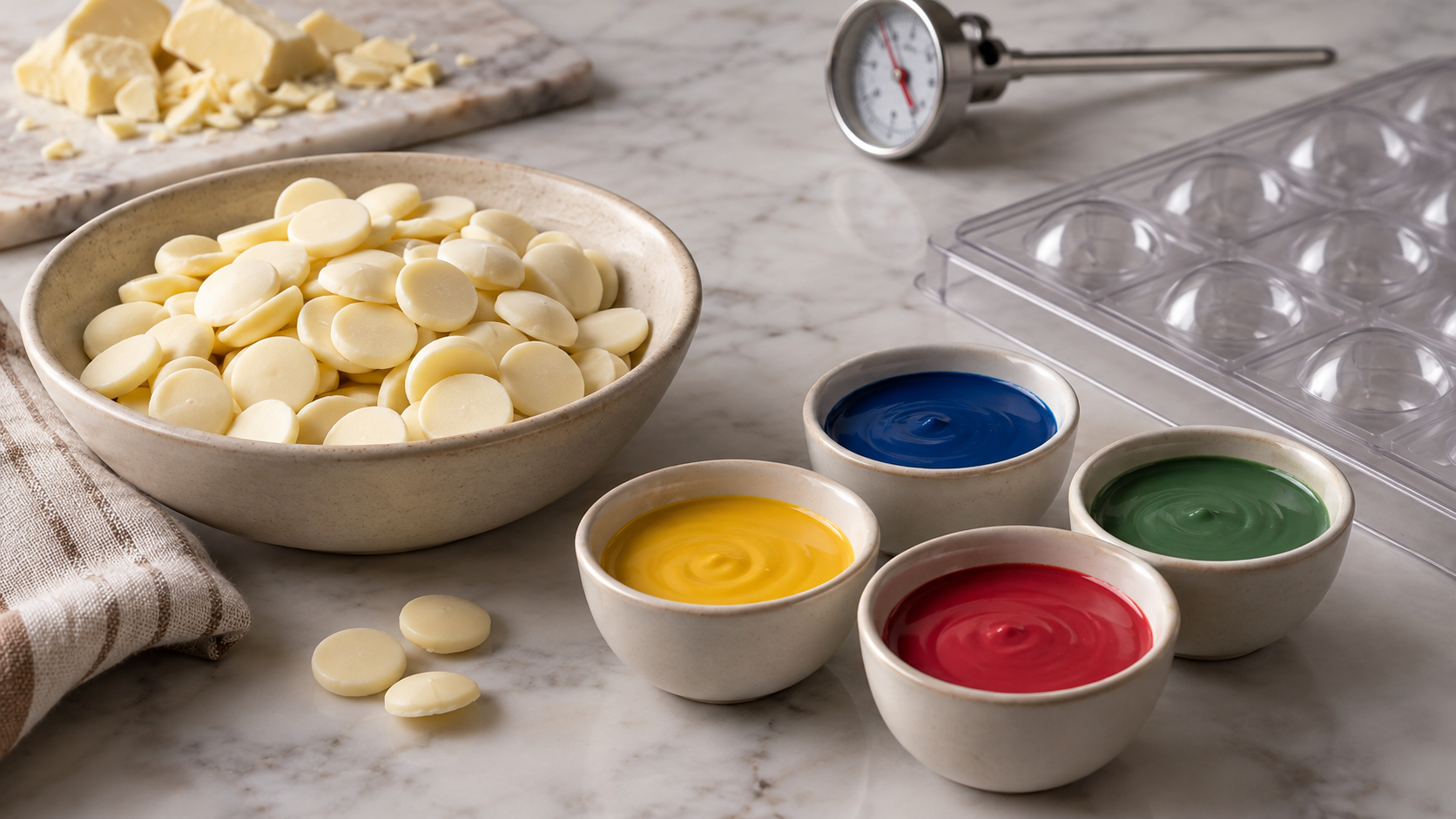
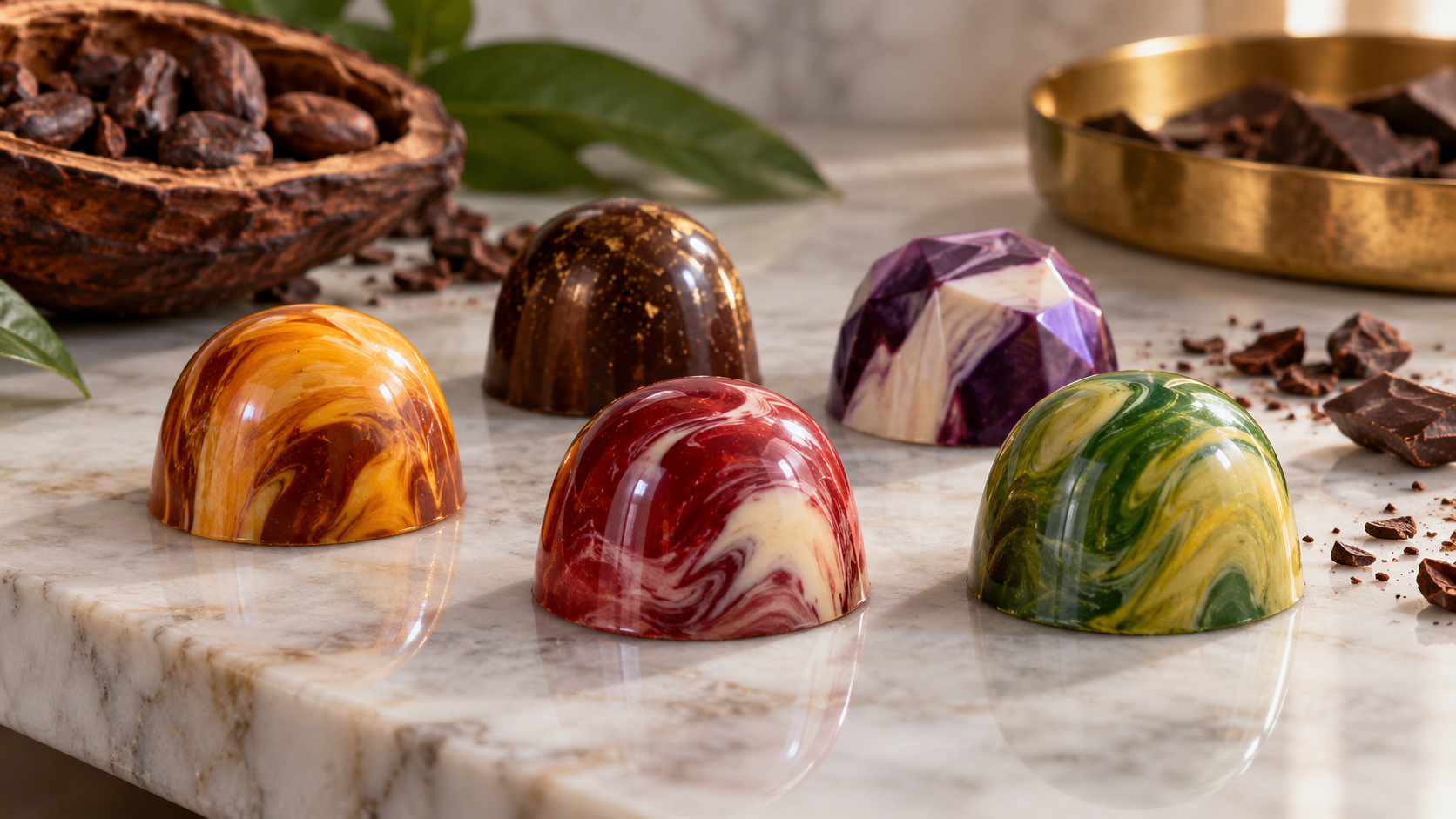
Use colour made specifically for cocoa butter or chocolate. Water-based gel colour can seize chocolate and ordinary craft colour is not food-safe.
Warm coloured cocoa butter gently
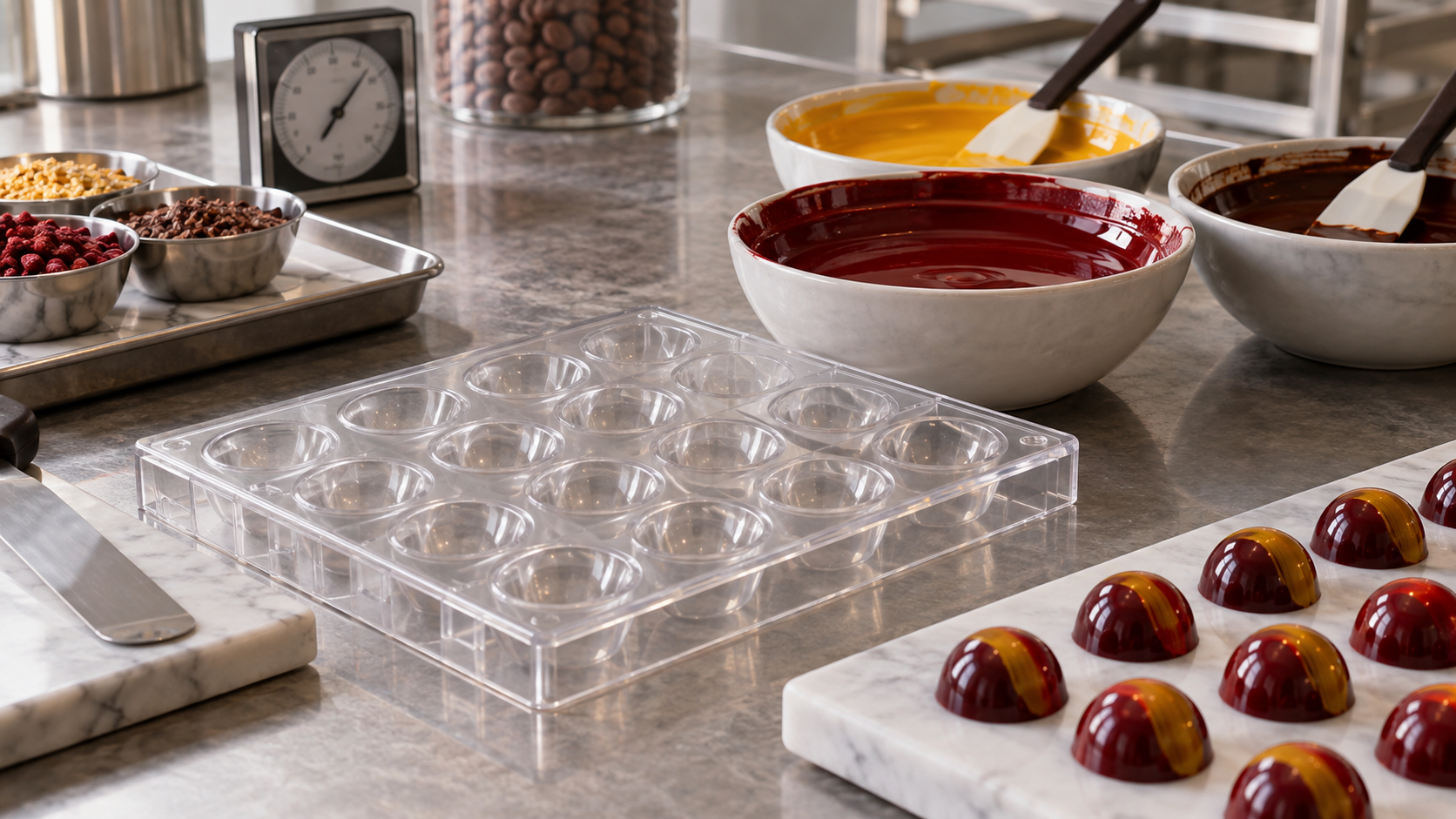
Melt coloured cocoa butter gently and follow its supplier’s working range. Overheating can damage colour and cocoa-butter crystals.
Keep the room and mould dry
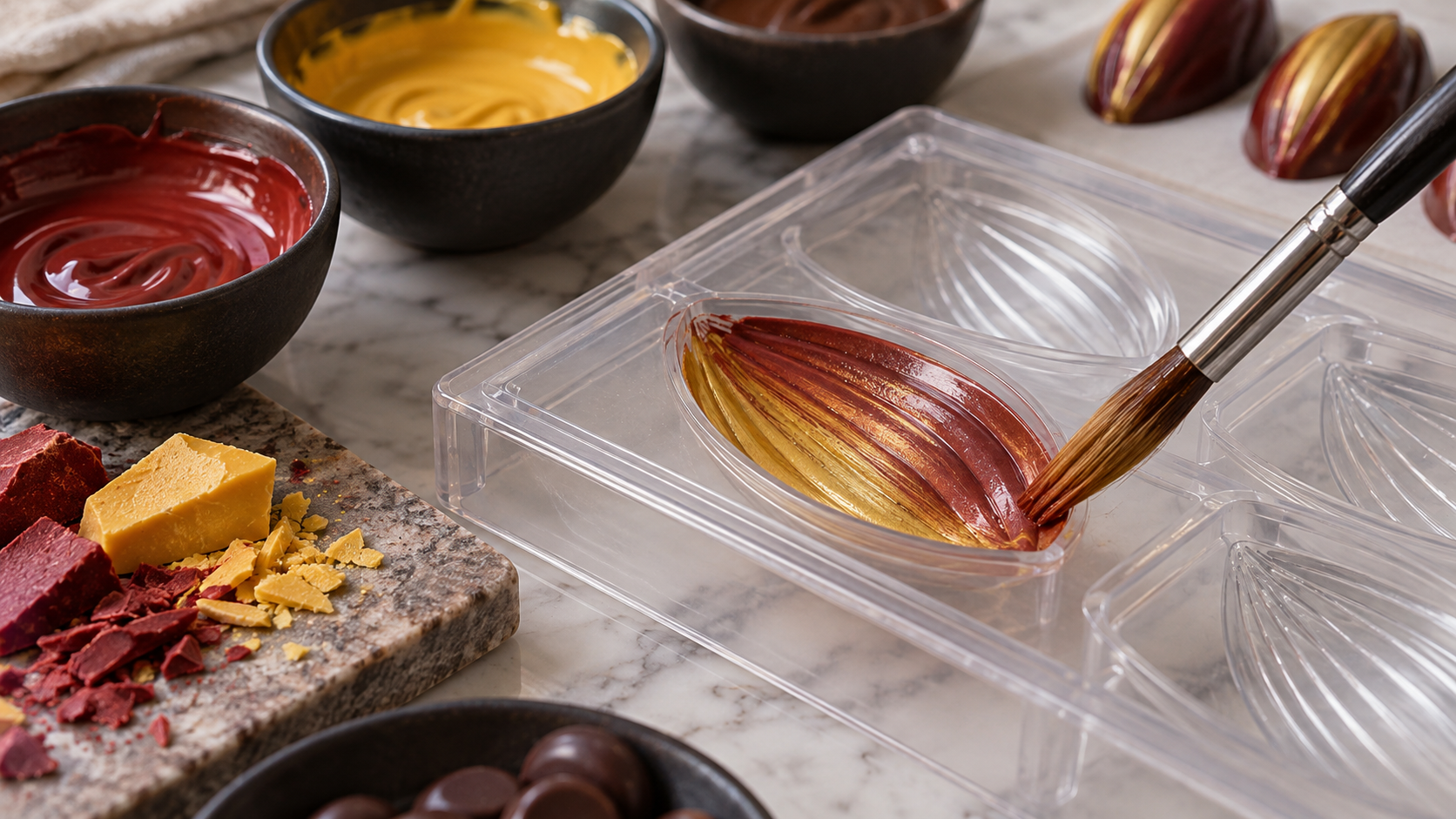
Dry the mould, tools and work surface completely. A humid room or cold mould encourages condensation and dull marks.
Temper the chocolate after colouring
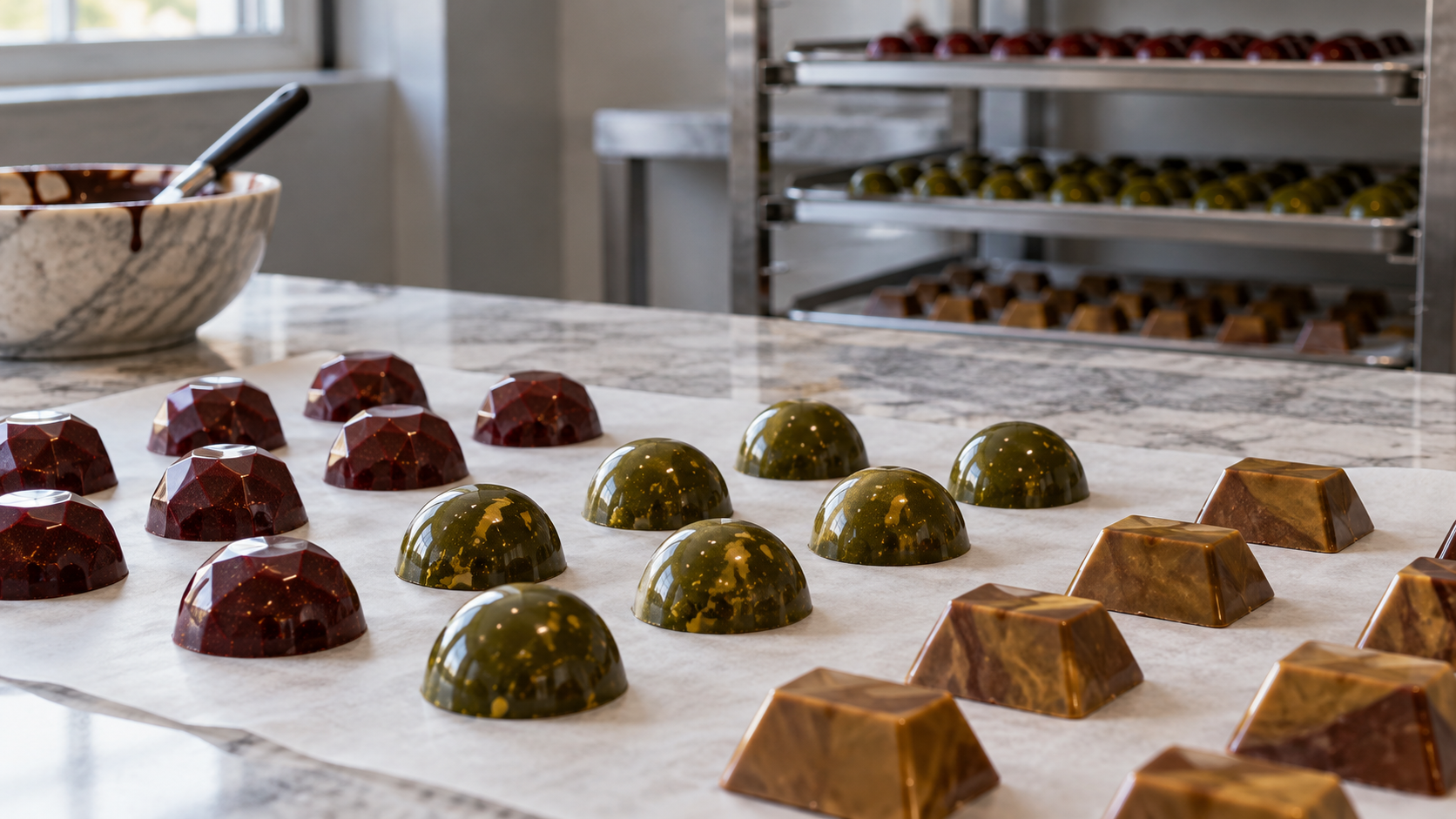
Add a small tested amount of fat-soluble colour, then temper the chocolate to the correct curve. Colour does not replace tempering.
Cool gradually rather than freezing
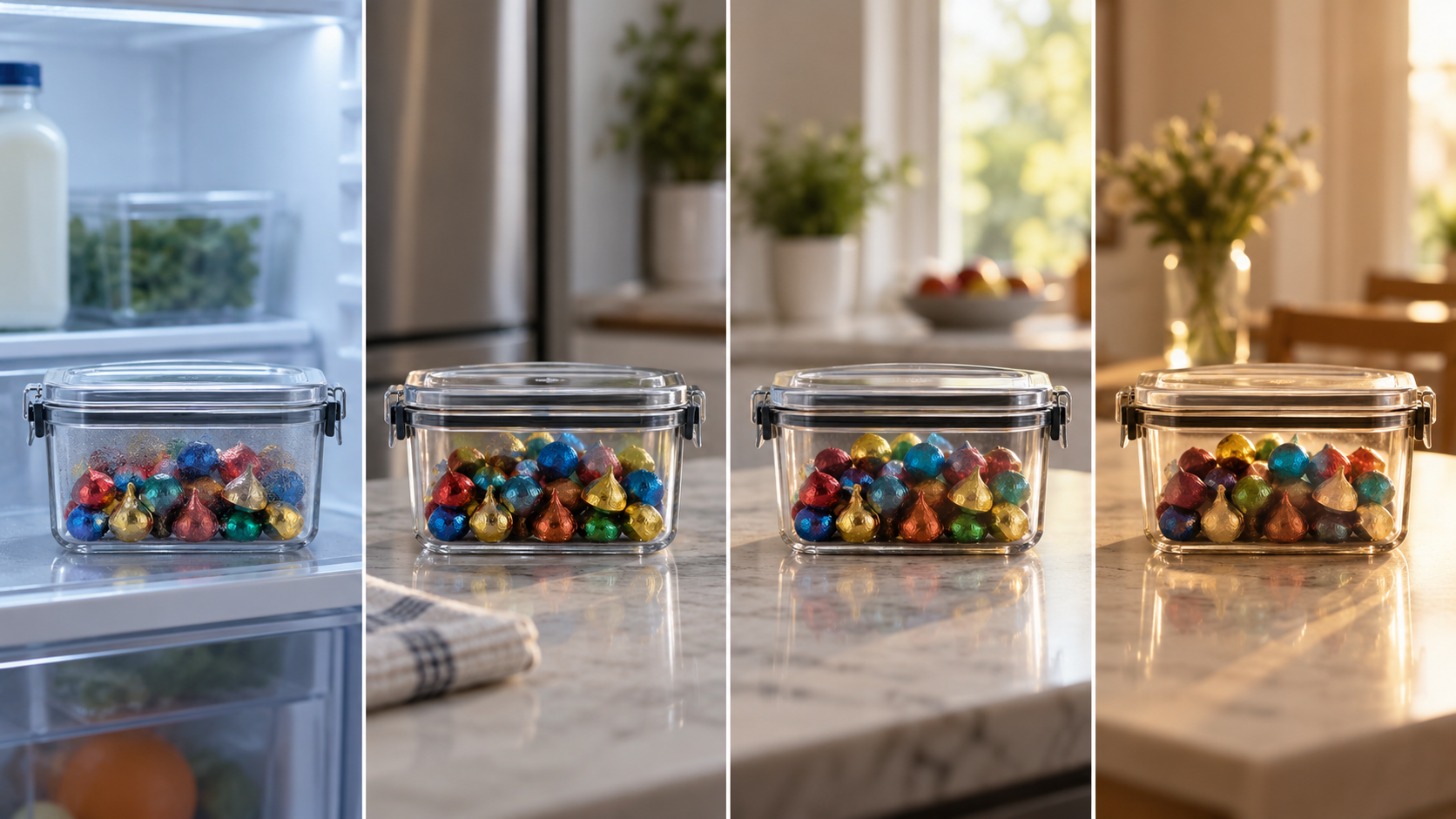
Allow moulded pieces to crystallise in a cool, dry space. A freezer creates a large temperature change and increases condensation risk.
Handle finished pieces at room temperature
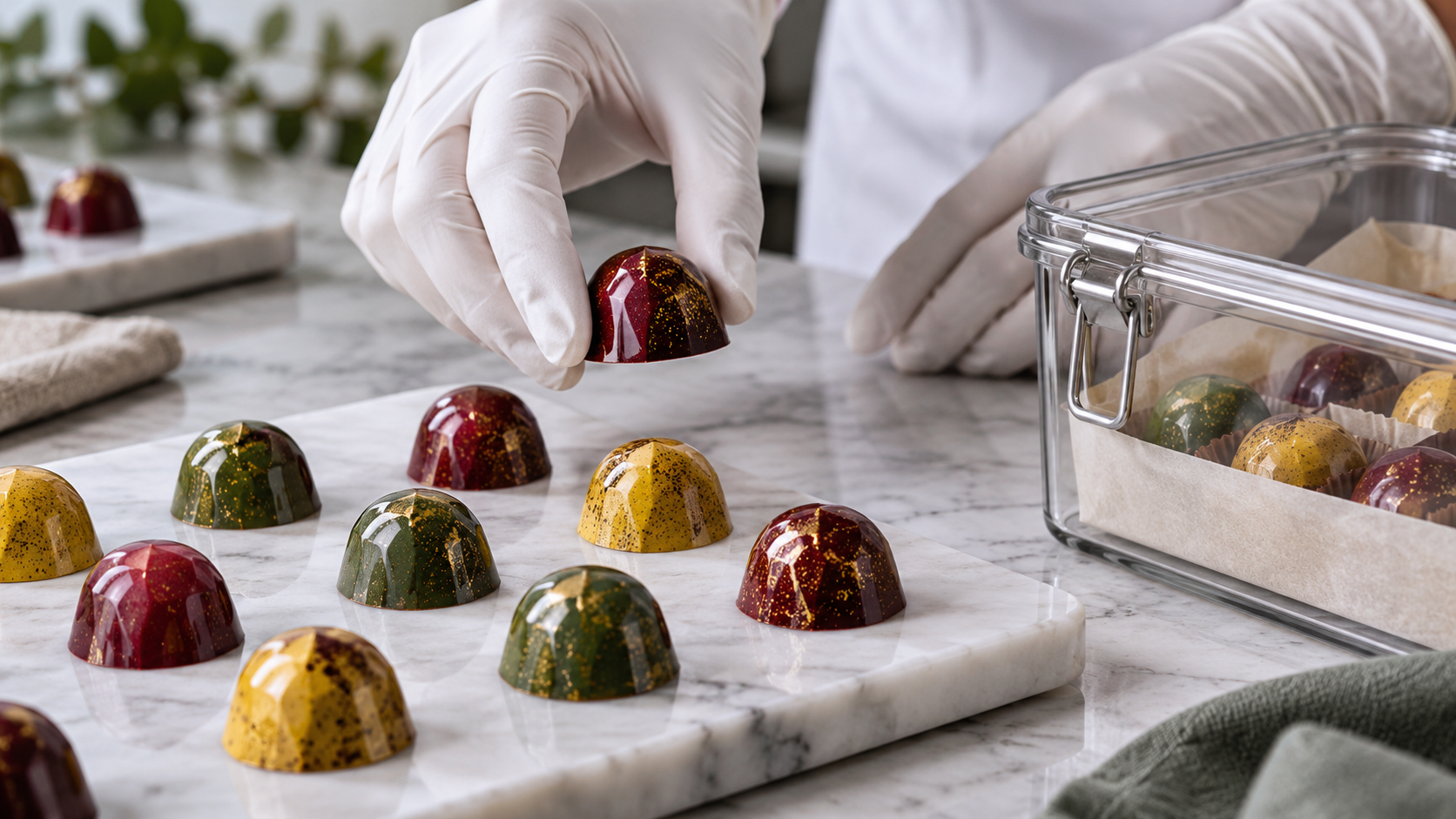
Bring wrapped cold pieces towards room temperature before opening. Handle with clean dry gloves and store airtight away from humidity.
Frequently asked questions
Why was the source rewritten?
Unsafe, unsupported or technically unreliable advice was corrected while preserving the useful subject.
How should allergens be handled?
Check every current pack, prevent cross-contact and provide accurate ingredient information.
Can storage time be copied from another recipe?
No. Validate it for the actual ingredients, hygiene, process, packaging and temperature.
Can quantities be changed freely?
Changes to water, fat, sugar, alcohol or acidity can alter texture, safety and keeping quality.
Are health or nutrition claims automatic?
No. They require the complete formulation, a defined portion and suitable evidence.
What should be recorded during testing?
Record exact weights, temperatures, times, yield, storage and the result of every controlled trial.