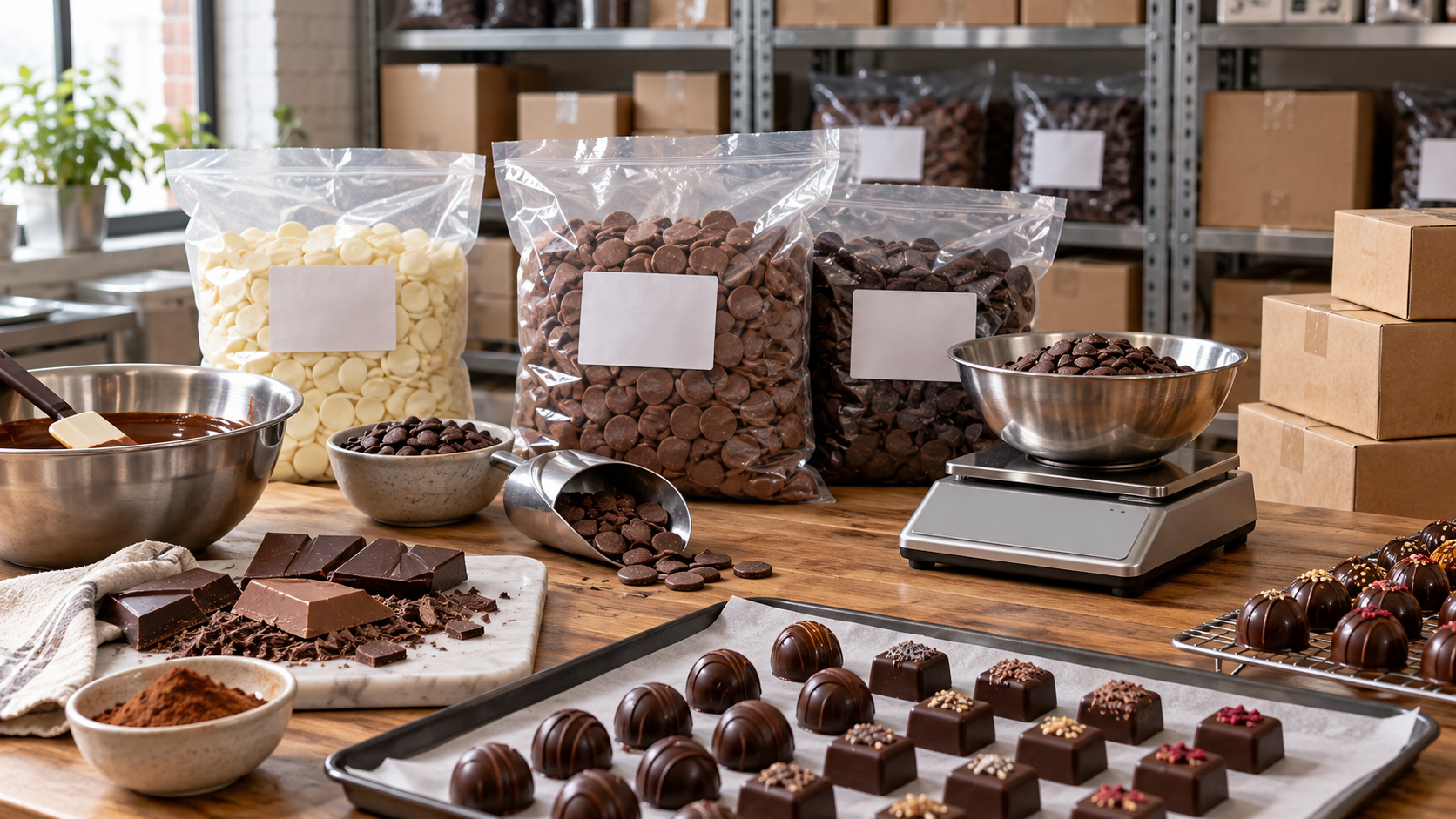

Define the product specification

Specify dark, milk or white chocolate, cocoa percentage, viscosity, format, allergens and intended use before comparing suppliers.
Use traceable suppliers
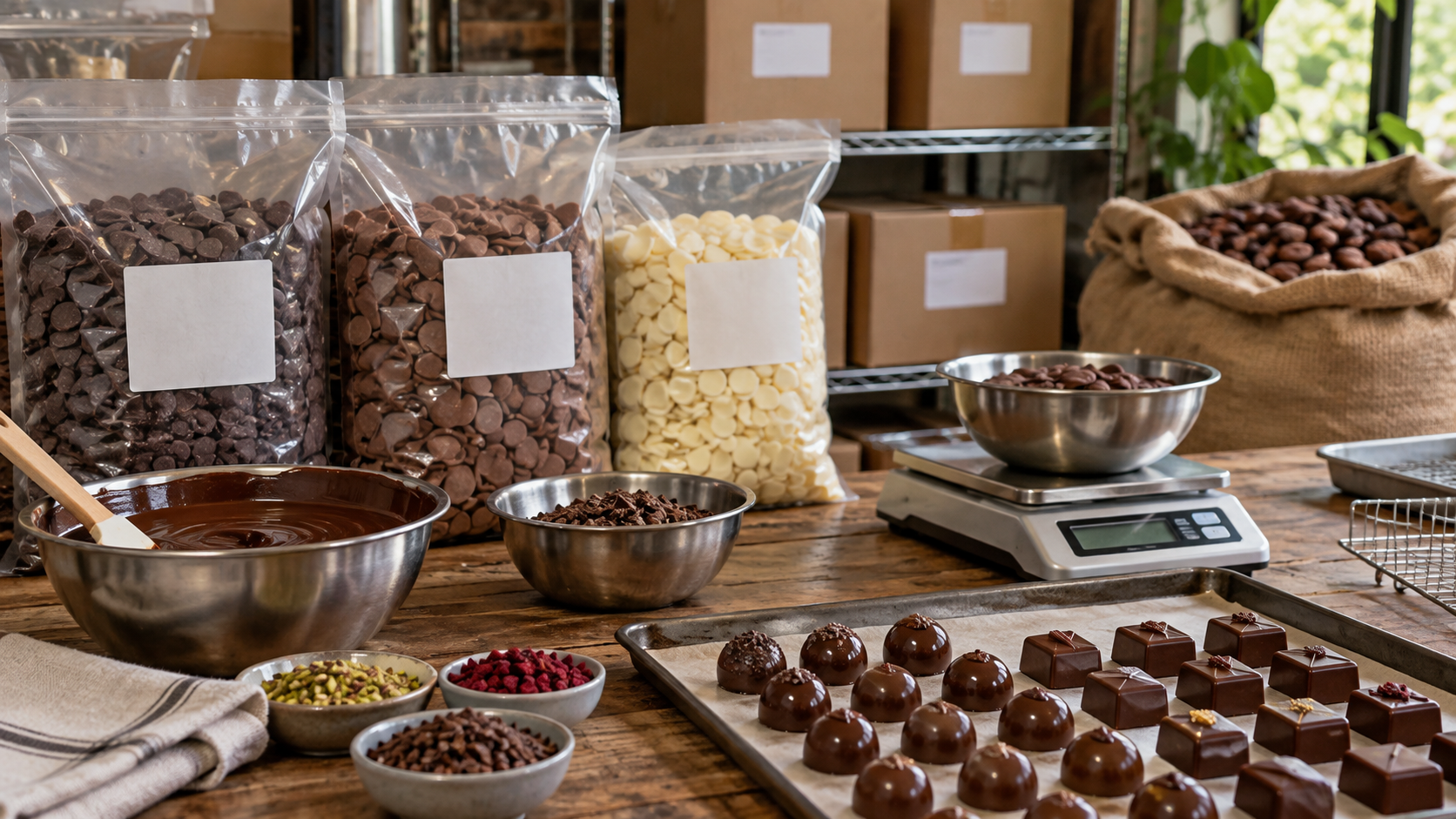
Choose a wholesaler that provides invoices, product specifications, dates, batch details and clear business information.
Compare true delivered cost
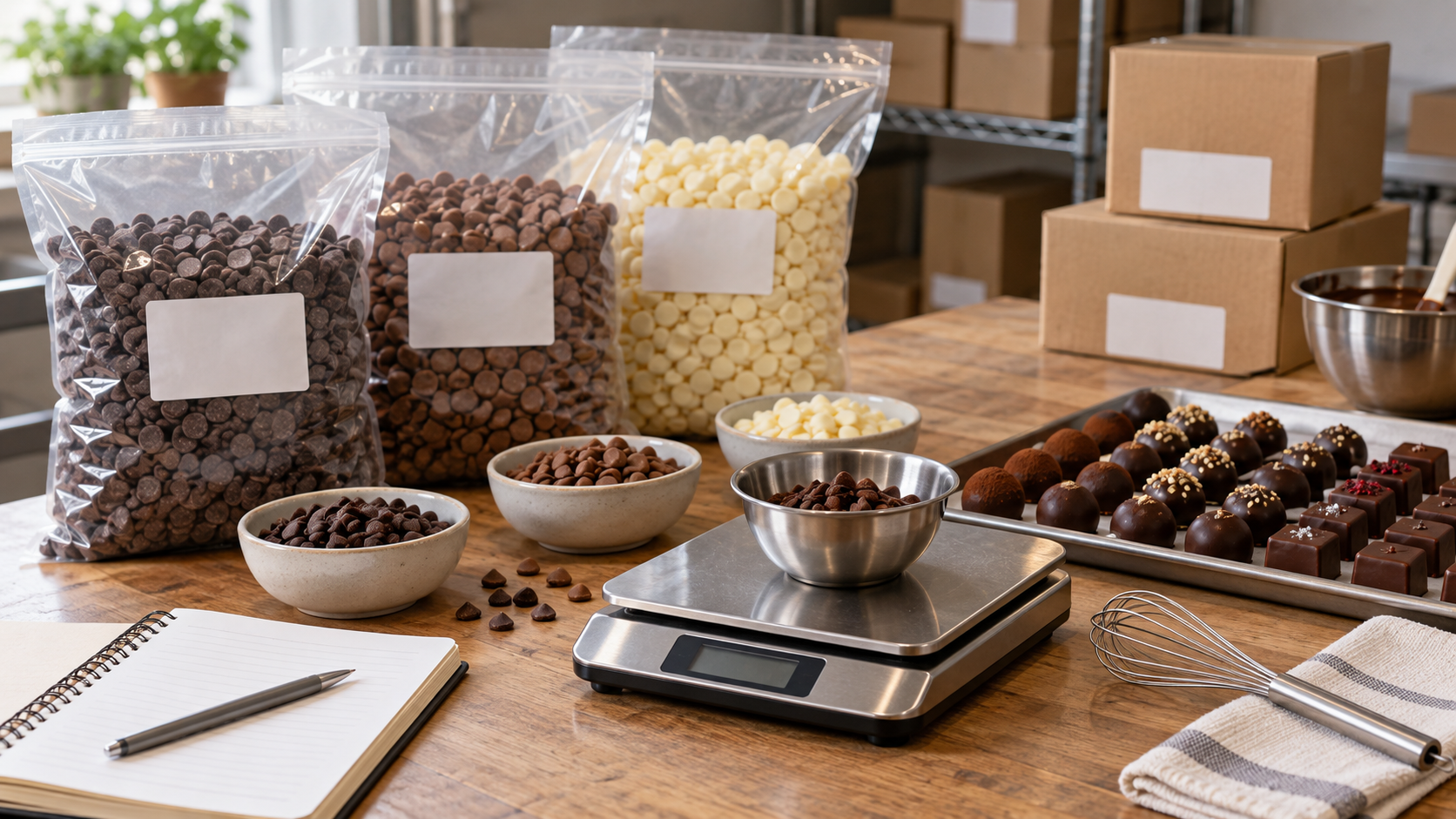
Calculate price per kilogram with VAT status, delivery, minimum order and surcharges. A low unit price may require more stock than the business can use.
Check pack size and storage

Large bags need sealed, cool, dry and odour-free storage. Check that shelf life is long enough for realistic turnover.
Order a trial quantity
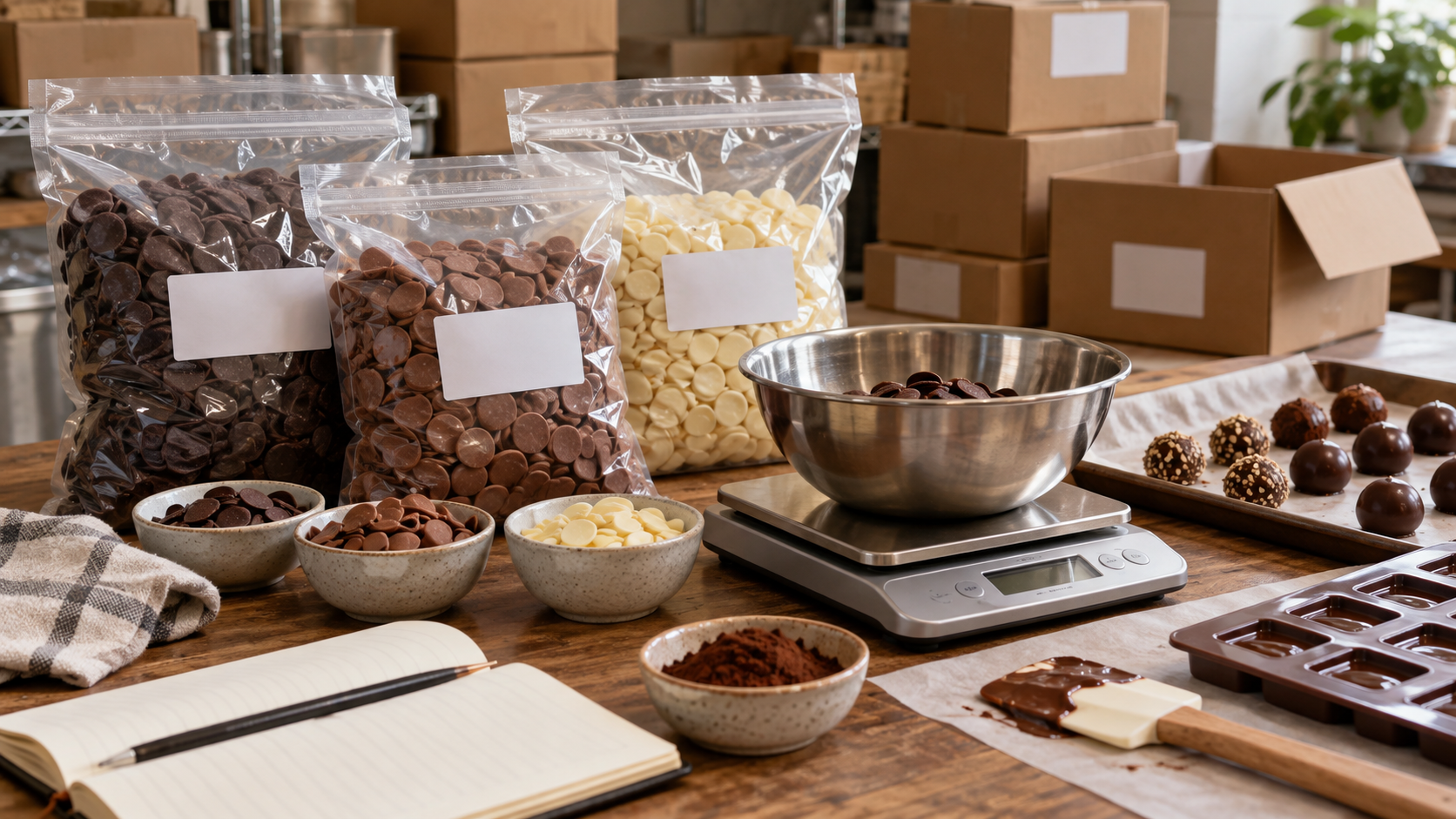
Test one pack for flavour, temper, ganache and mould release before committing to a case or pallet.
Plan stock rotation
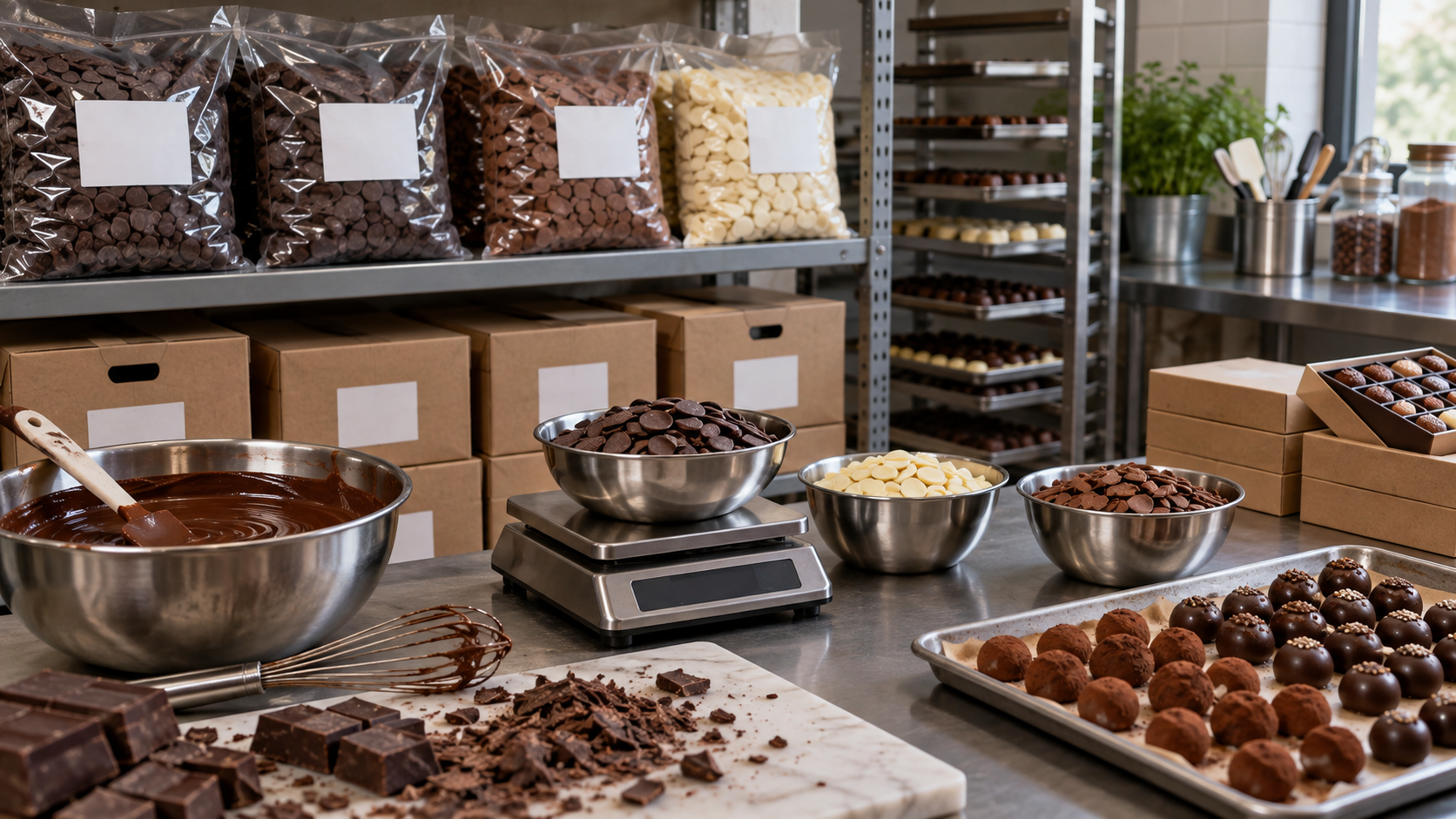
Use first-expired, first-out rotation and record opened dates. Do not mix batches without traceability when producing for sale.
Keep purchase records

Retain invoices, labels, allergen statements and batch codes. Recheck specifications when the supplier or packaging changes.
Frequently asked questions
Can any eating chocolate bar be used for moulding?
No. Check whether it is plain cocoa-butter chocolate and test its fluidity, temper and release.
How should filled chocolate be stored?
Follow the needs of the filling; cream, fruit and custard can require shorter life and refrigeration.
Does melting chocolate make it tempered?
No. Tempering is a controlled crystallisation process used for shine, snap and mould release.
How should wholesale prices be compared?
Compare delivered cost per kilogram, minimum order, storage, waste and usable finished yield.
Which allergens are common in chocolate sweets?
Milk, soya, nuts and gluten are common, but every current ingredient label and cross-contact risk must be checked.
What records should a seller keep?
Keep supplier labels, batch codes, recipes, temperatures, yields, dates, allergen information and customer orders.