
Set realistic expectations for texture
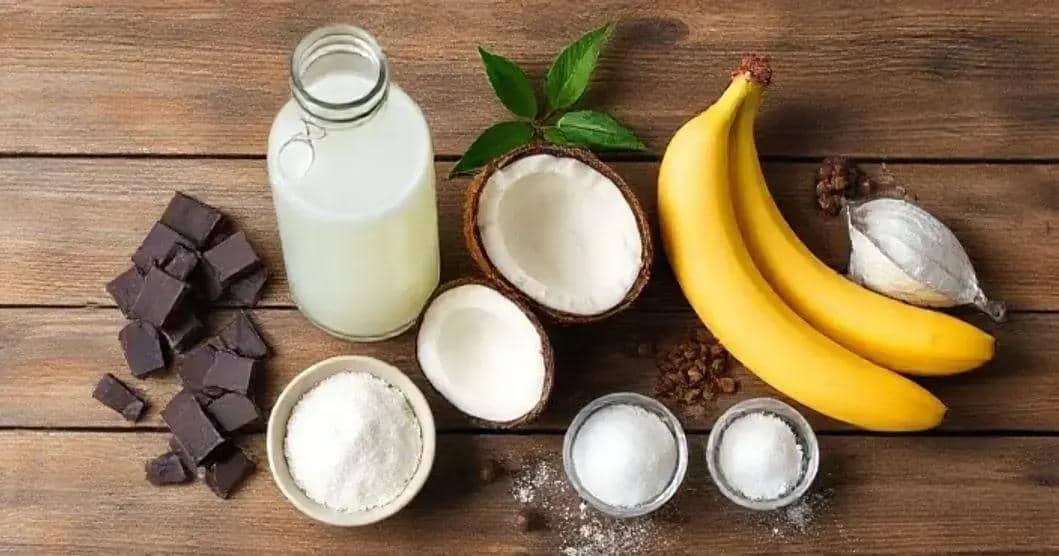
Coconut water is light and mostly water, while chocolate contains fat. They do not naturally form a creamy mixture, and frozen coconut water can become icy. Banana and cocoa make a more stable home recipe than melted chocolate stirred directly into the drink.
Ingredients for six small lollies
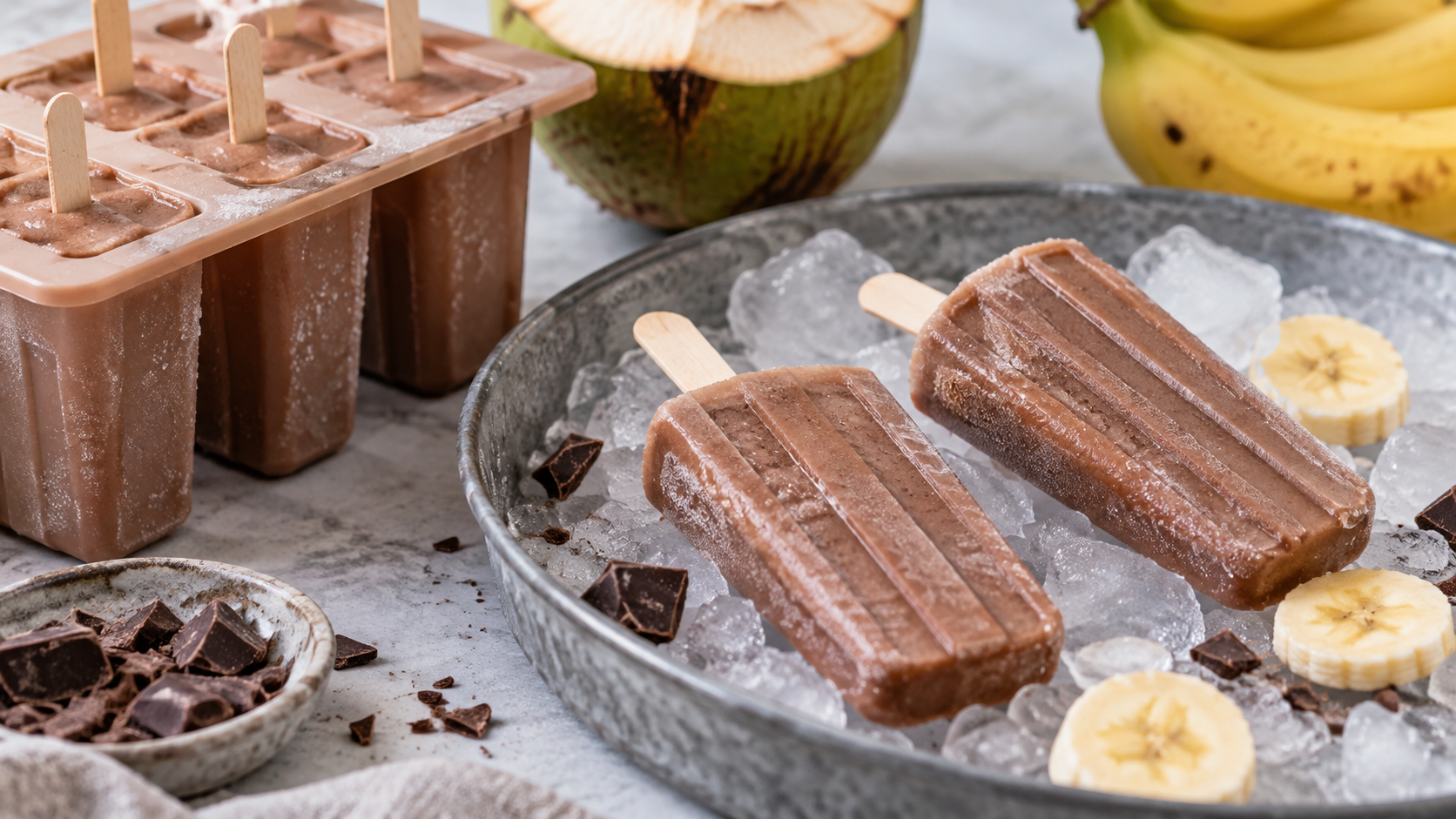
Use 250 ml pasteurised coconut water, one ripe banana, 20 g unsweetened cocoa, 20 to 30 g sugar or maple syrup, half a teaspoon vanilla and a small pinch of salt. Taste the coconut water first because sweetness varies.
Blend a stable mixture
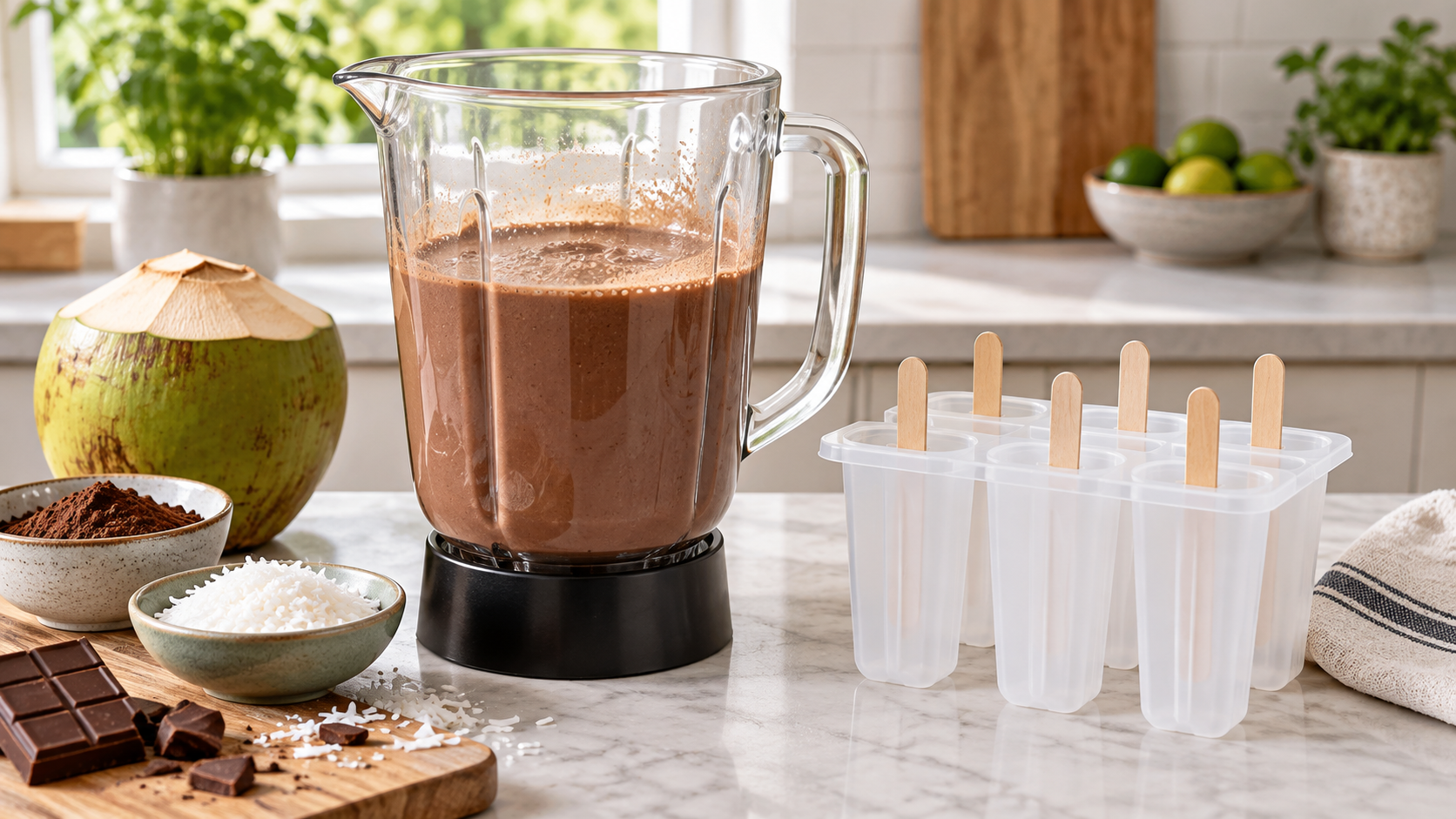
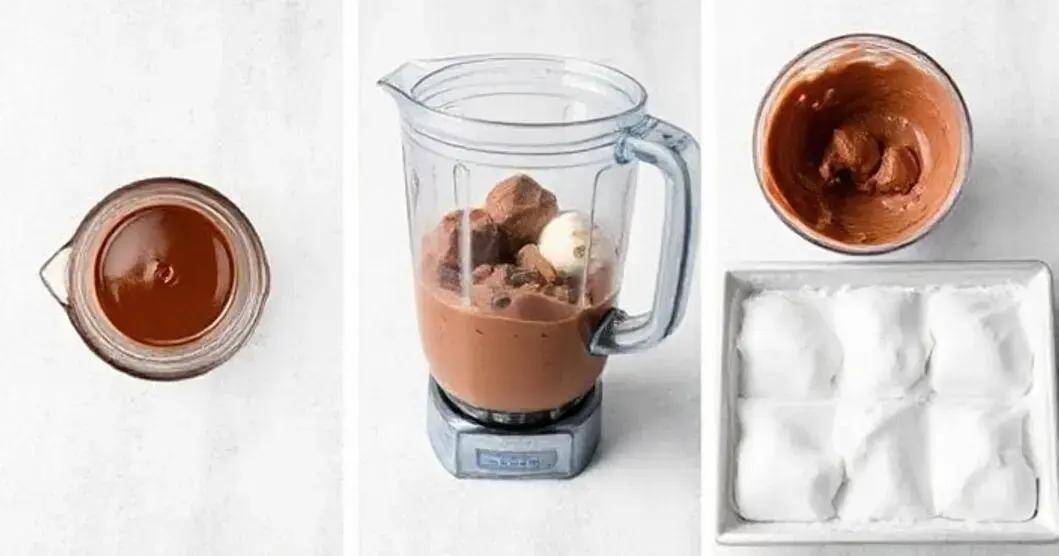
Blend until completely smooth, scrape the jug and blend again. If using a high-speed blender, avoid heating the mixture. Cocoa and banana should be evenly dispersed; do not add chunks of melted chocolate that can harden on contact.
Freeze promptly and safely
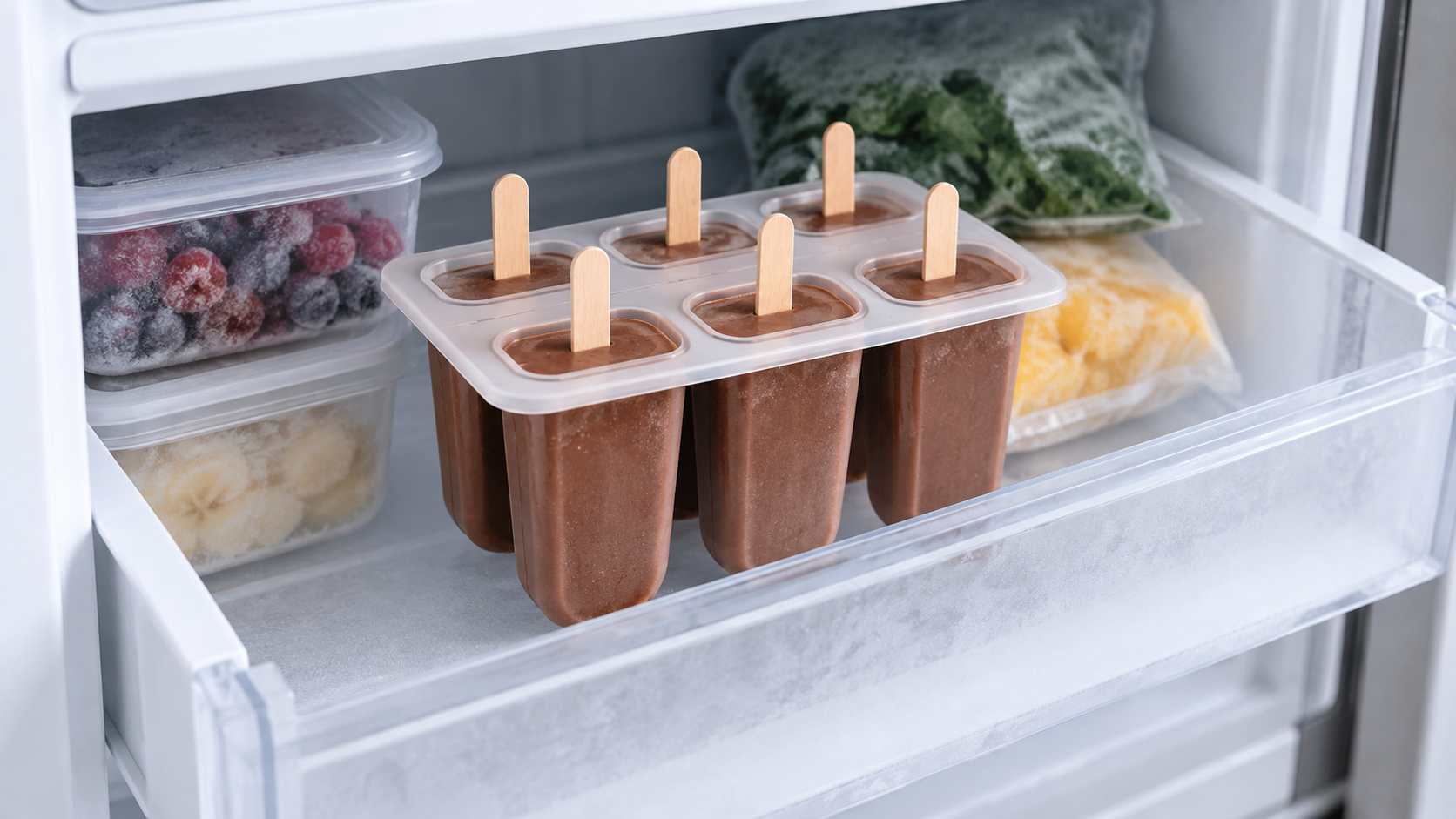
Pour into clean lolly moulds, insert sticks and freeze immediately until solid, usually at least six hours. A freezer preserves the mixture but does not correct poor hygiene, so use clean equipment and fresh ingredients.
Unmould and serve
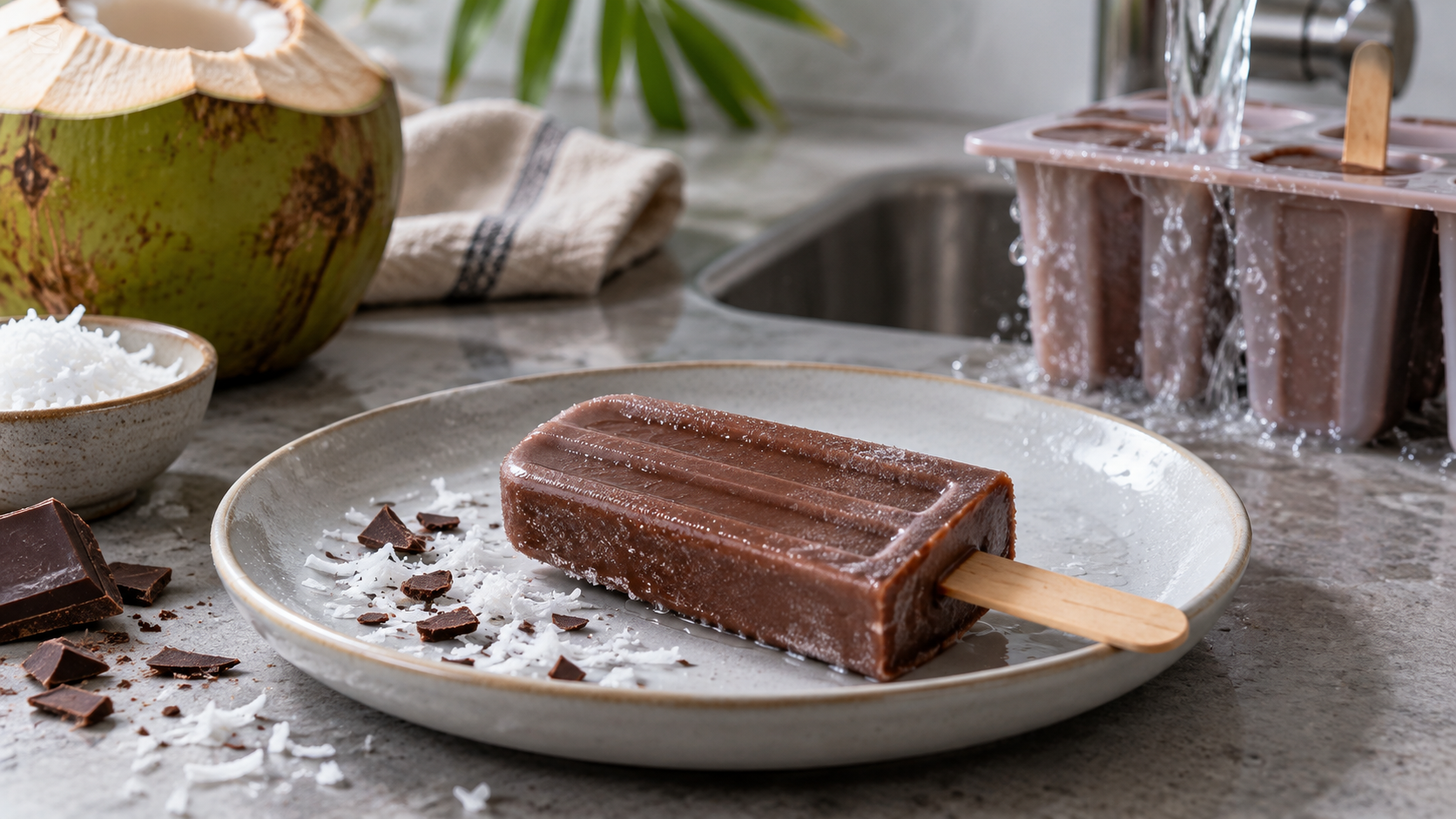
Warm the outside of the mould briefly under cool-to-lukewarm water and pull gently. Serve at once. Coconut and cocoa products can have cross-contact warnings; the recipe is only dairy-free when every ingredient and the preparation area support that claim.
Frequently asked questions
Why was the original article not translated word for word?
It contained an unsafe, unsupported or technically unreliable point, so the useful subject was rebuilt directly in British English.
Can ingredient quantities be changed freely?
Small tests are safer. Changes to water, fat, sugar or protein can alter texture, setting and storage.
How should allergens be handled?
Read every current pack, prevent cross-contact and keep accurate ingredient information with the finished food.
Can a storage period be copied from another recipe?
No. Storage and shelf life need to match the actual ingredients, process, hygiene and packaging.
Do chocolate temperatures stay the same for every brand?
No. Chocolate type and formulation differ, so the manufacturer’s tempering guidance takes priority.
Are nutrition or hydration claims appropriate here?
Only when supported by the complete recipe and applicable rules. These guides describe preparation rather than medical or performance benefits.