
Brew coffee for a cold drink
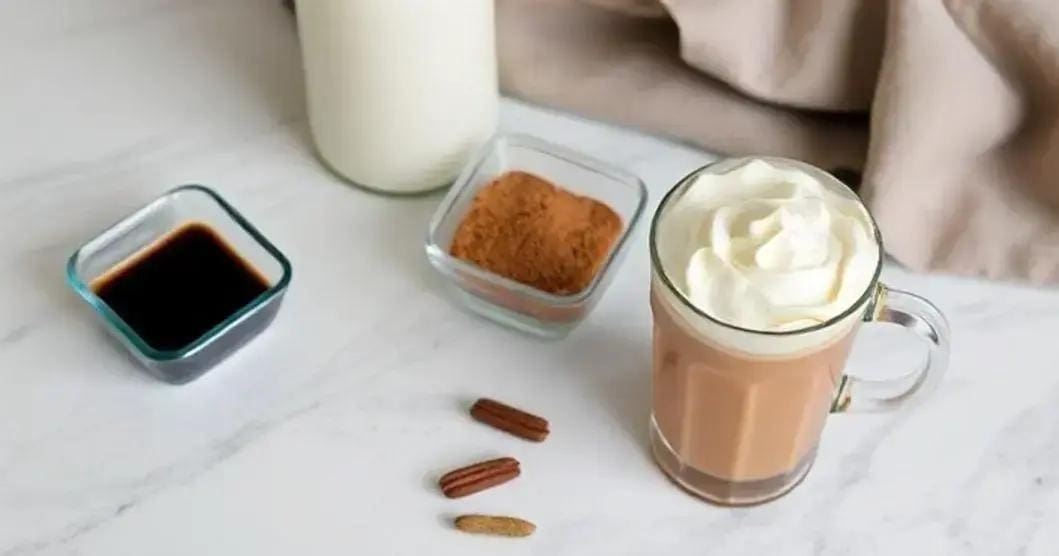
Brew a strong espresso or filter coffee, because ice and milk soften the flavour. Use fresh coffee and cool it quickly rather than leaving a warm pot at room temperature for hours.
Use cardamom sparingly
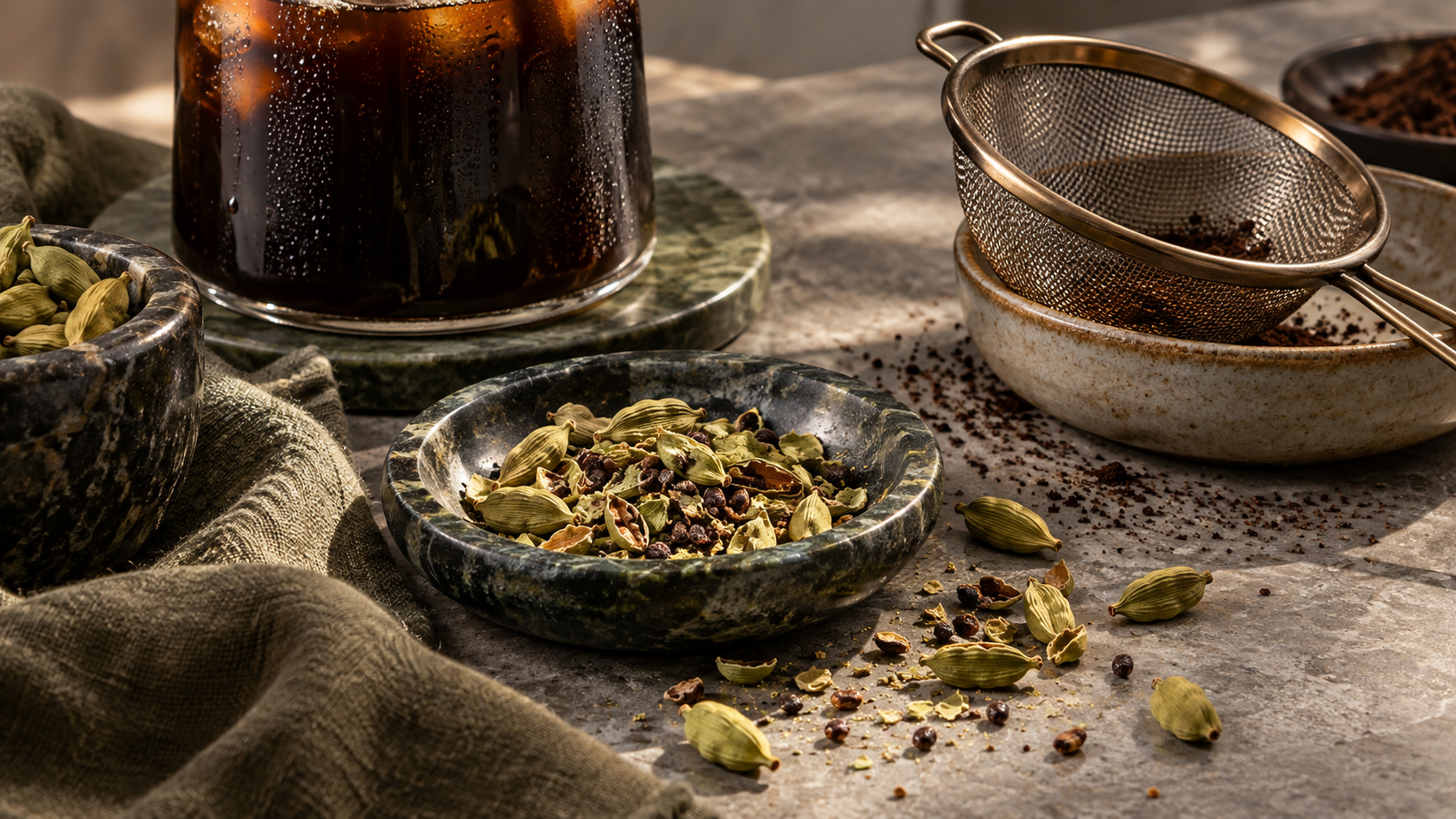
Freshly crushed green cardamom seeds give a clean citrus-spice aroma. Begin with one or two pods for two drinks, then strain. A full teaspoon of ground cardamom can dominate and leave a gritty texture.
Make a smooth cocoa base
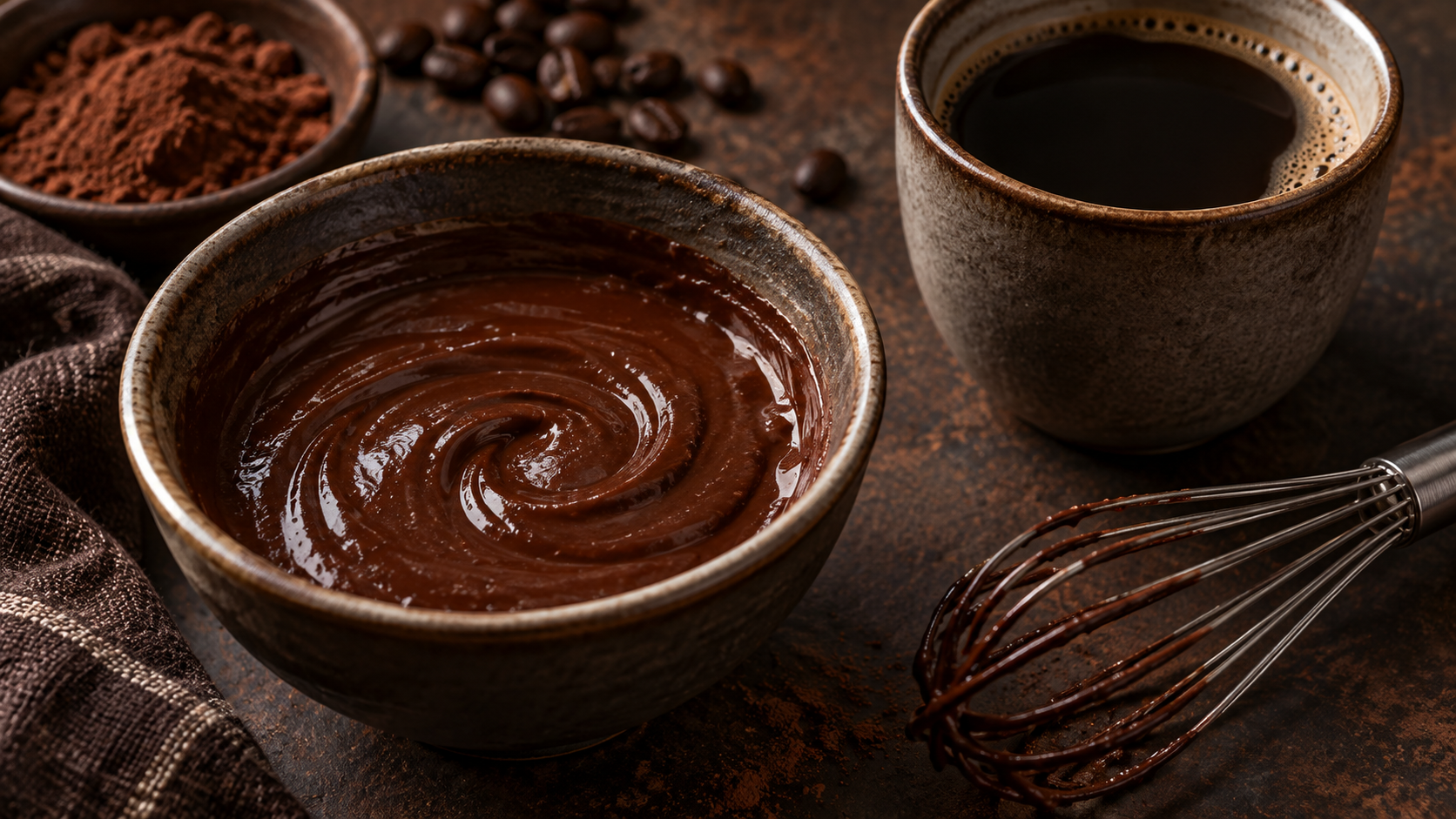
Whisk 10 g cocoa and 15 g sugar with a small amount of hot coffee until smooth, then add the remaining coffee. Cocoa powder does not dissolve cleanly when tipped straight into cold milk.
Cool before adding ice
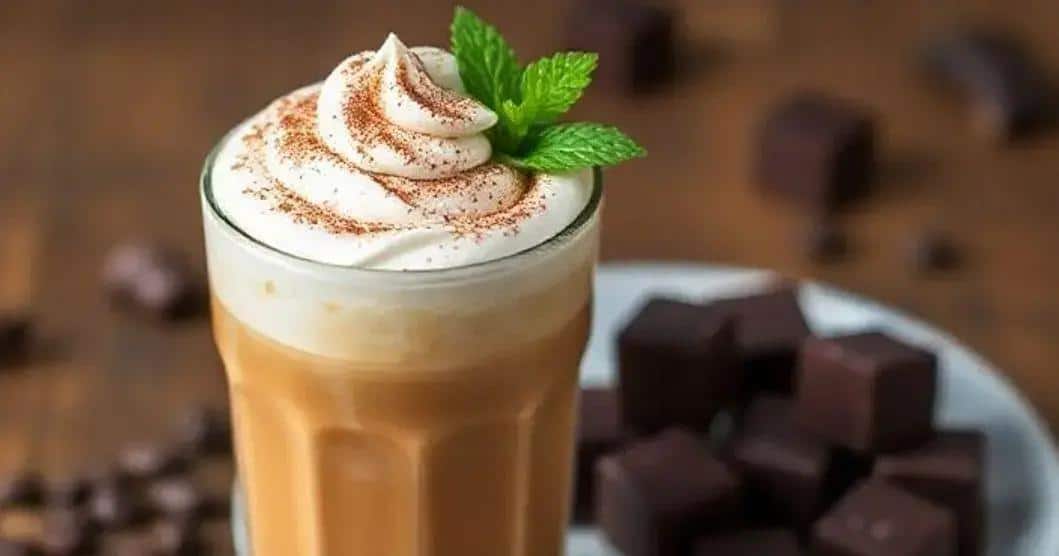
Pour the coffee mixture into a shallow heatproof container, cool it rapidly and refrigerate. Do not pour very hot liquid into an ordinary glass full of ice, because thermal shock can break the glass.
Assemble without excess dilution
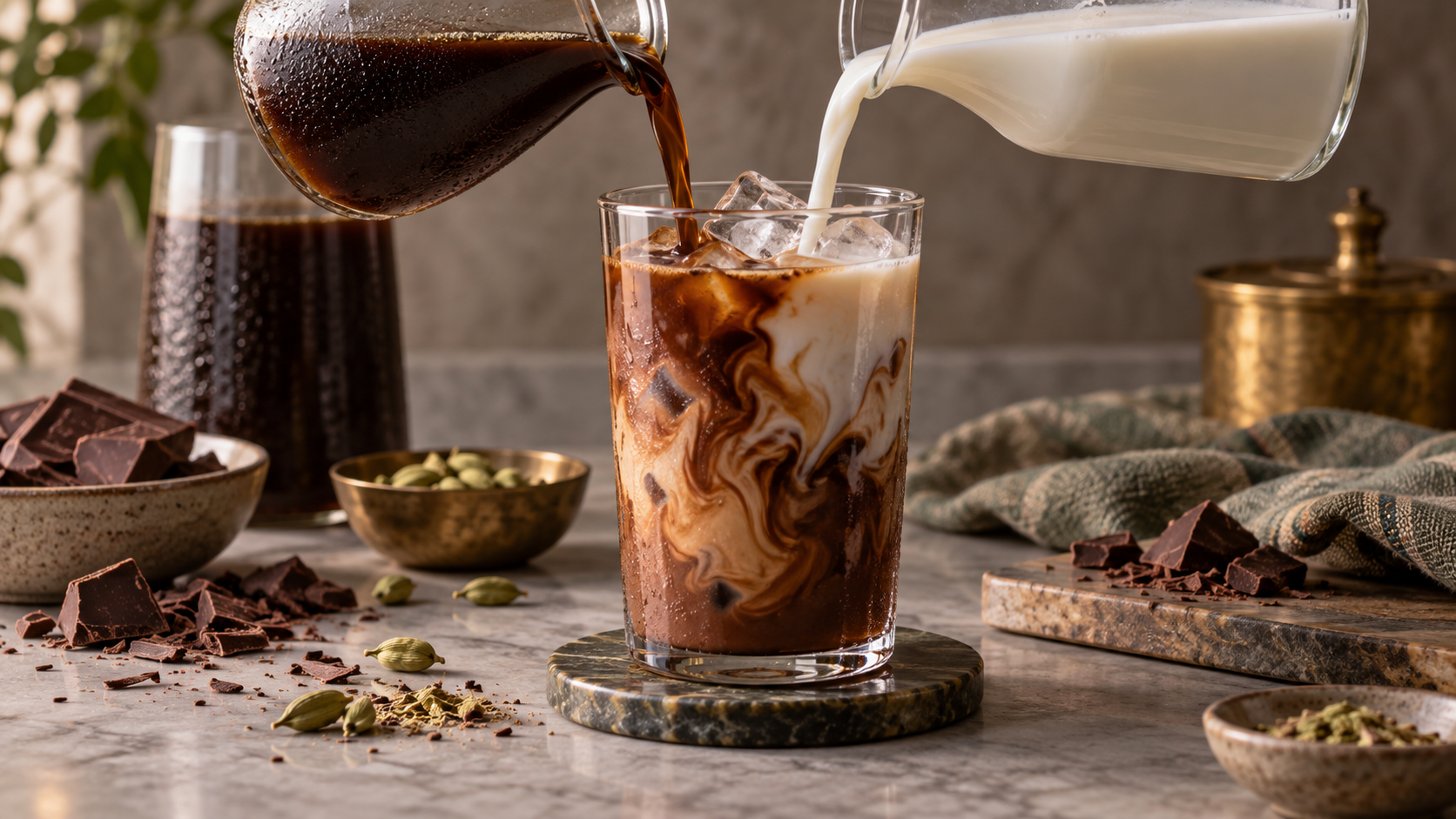
For each drink, fill a sturdy glass with ice, add 80 ml cold coffee mixture and 100 ml cold milk, then stir. Foam cold milk separately if a lighter top is wanted. Serve immediately.
Adjust for caffeine and allergens
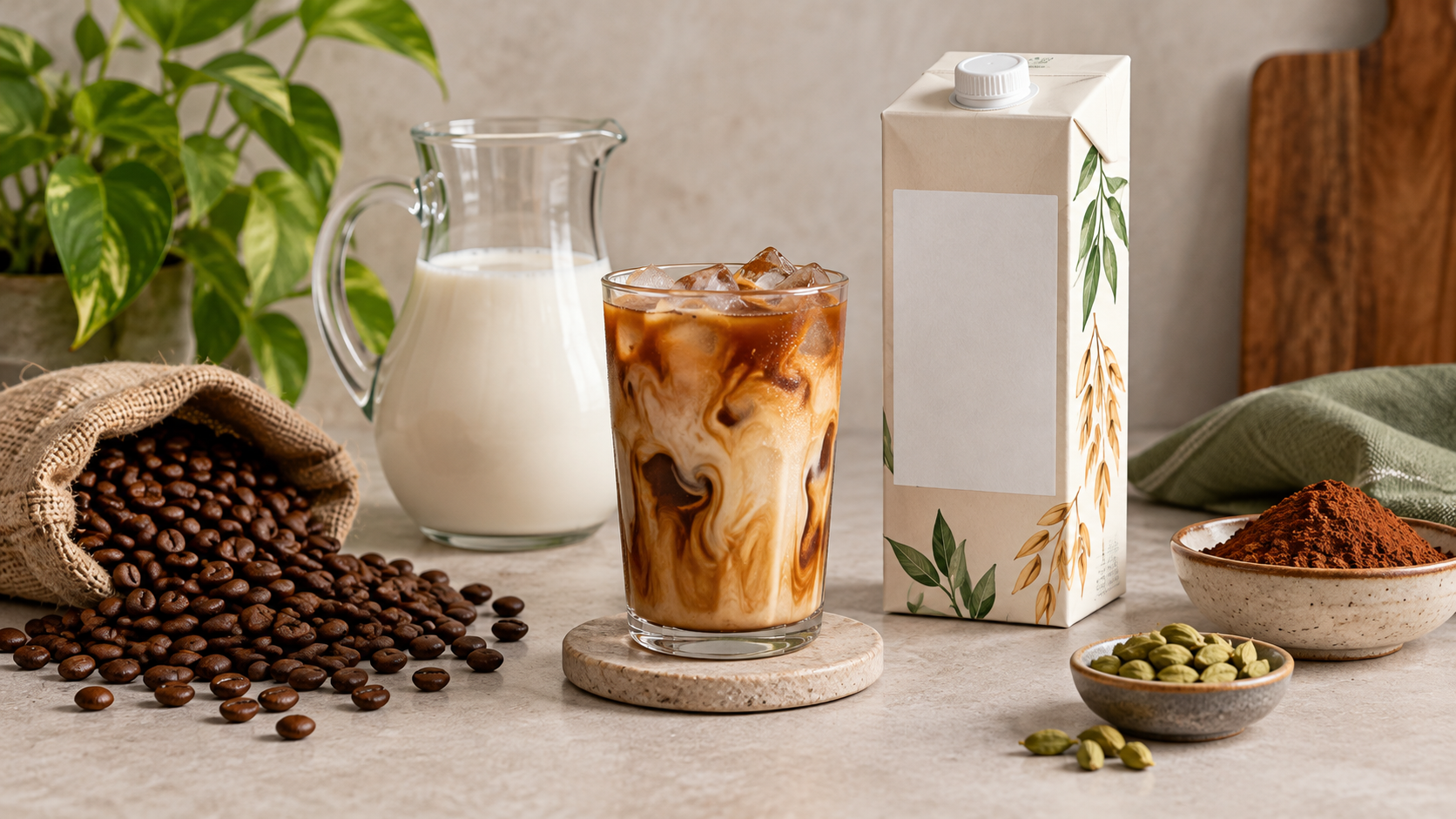
The drink contains caffeine and milk unless suitable alternatives are used. Plant drinks vary in allergens and stability. Cardamom adds flavour, not a proven health benefit at culinary quantities.
Serve with a suitable accompaniment
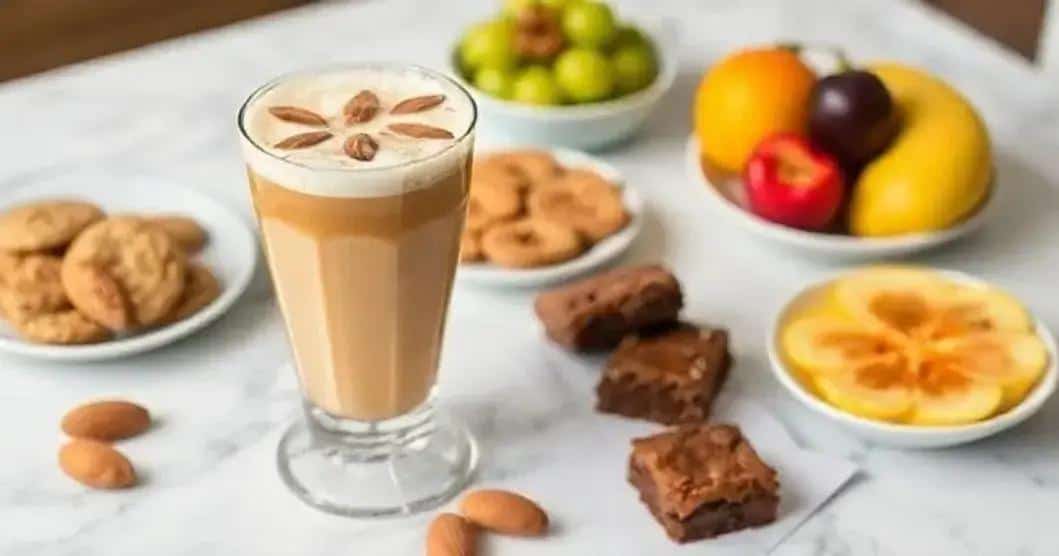
Serve with a small plain biscuit or piece of chocolate rather than a heavy garnish. Check nuts, milk, gluten and soya in accompaniments, especially when serving guests.
Frequently asked questions
Why was the original article not translated word for word?
It contained an unsafe, unsupported or technically unreliable point, so the useful subject was rebuilt directly in British English.
Can ingredient quantities be changed freely?
Small tests are safer. Changes to water, fat, sugar or protein can alter texture, setting and storage.
How should allergens be handled?
Read every current pack, prevent cross-contact and keep accurate ingredient information with the finished food.
Can a storage period be copied from another recipe?
No. Storage and shelf life need to match the actual ingredients, process, hygiene and packaging.
Do chocolate temperatures stay the same for every brand?
No. Chocolate type and formulation differ, so the manufacturer’s tempering guidance takes priority.
Are nutrition or hydration claims appropriate here?
Only when supported by the complete recipe and applicable rules. These guides describe preparation rather than medical or performance benefits.