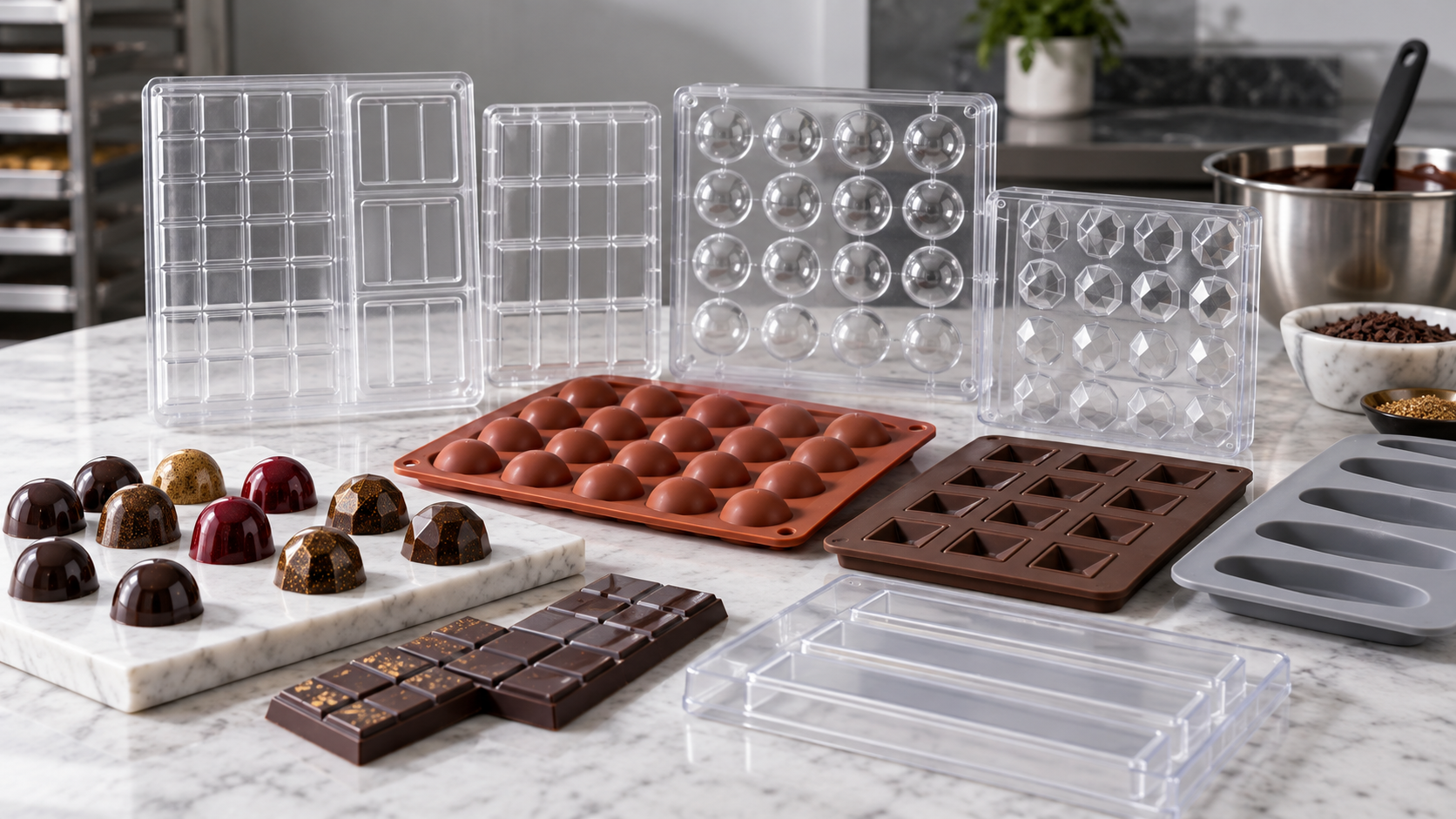

Match the material to the job

Rigid polycarbonate, flexible plastic, silicone and metal moulds behave differently. Choose by the required surface, detail, production volume and demoulding method rather than assuming one material suits every product.
Why polycarbonate gives shine
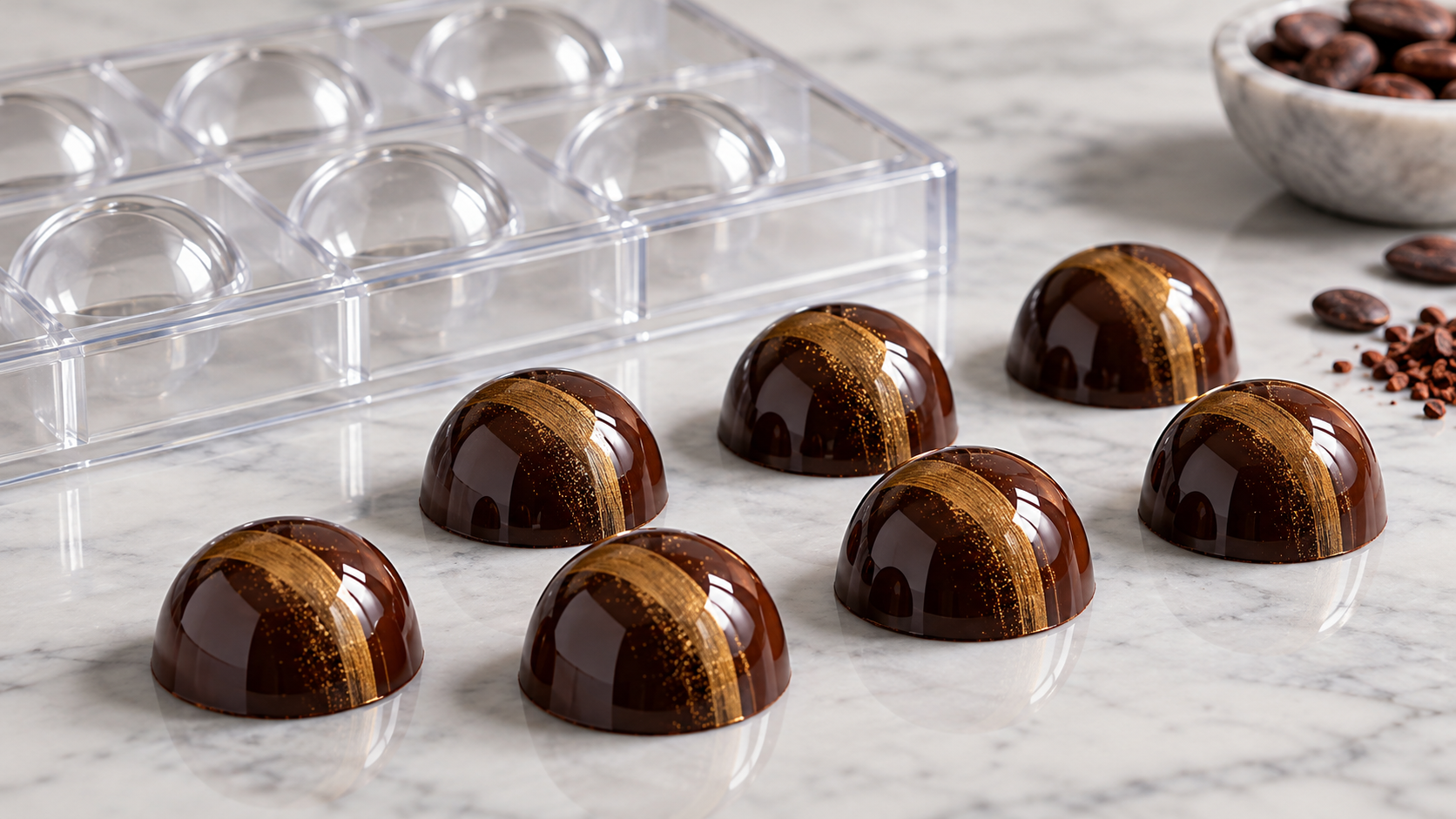
Professional polycarbonate moulds have smooth rigid cavities that reproduce a glossy surface when the chocolate is correctly tempered. Their stiffness also helps chocolate contract and release, but scratches remain visible on finished pieces.
Silicone and flexible moulds
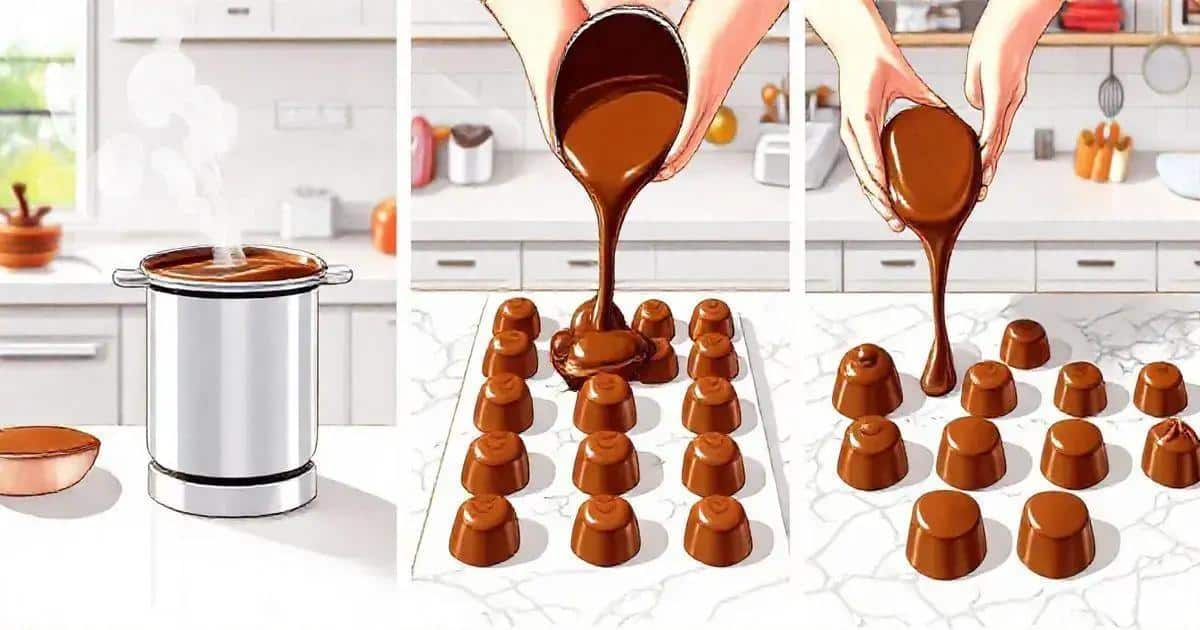
Silicone releases complex shapes easily and tolerates some temperature variation, though the finish can be less mirror-like. Thin flexible plastic is economical for limited use but can distort. Follow the maker’s food-contact and temperature guidance.
Digital design and prototyping
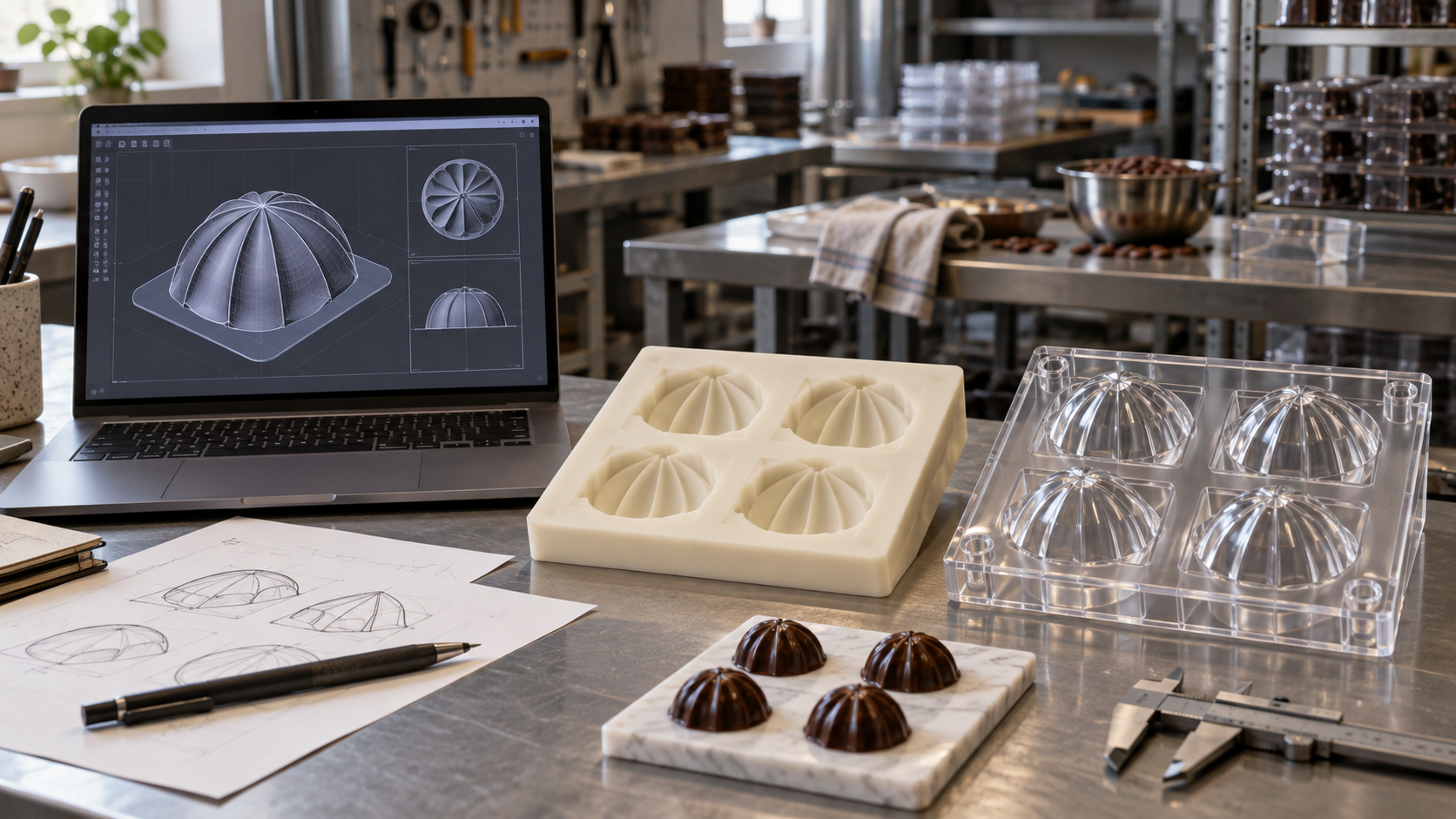
Computer-aided design and machining can create precise masters, repeated cavities and custom shapes. Food-safe production still requires suitable materials, smooth surfaces and manufacturing controls; a hobby 3D print is not automatically safe for direct food contact.
Temperature and temper still matter
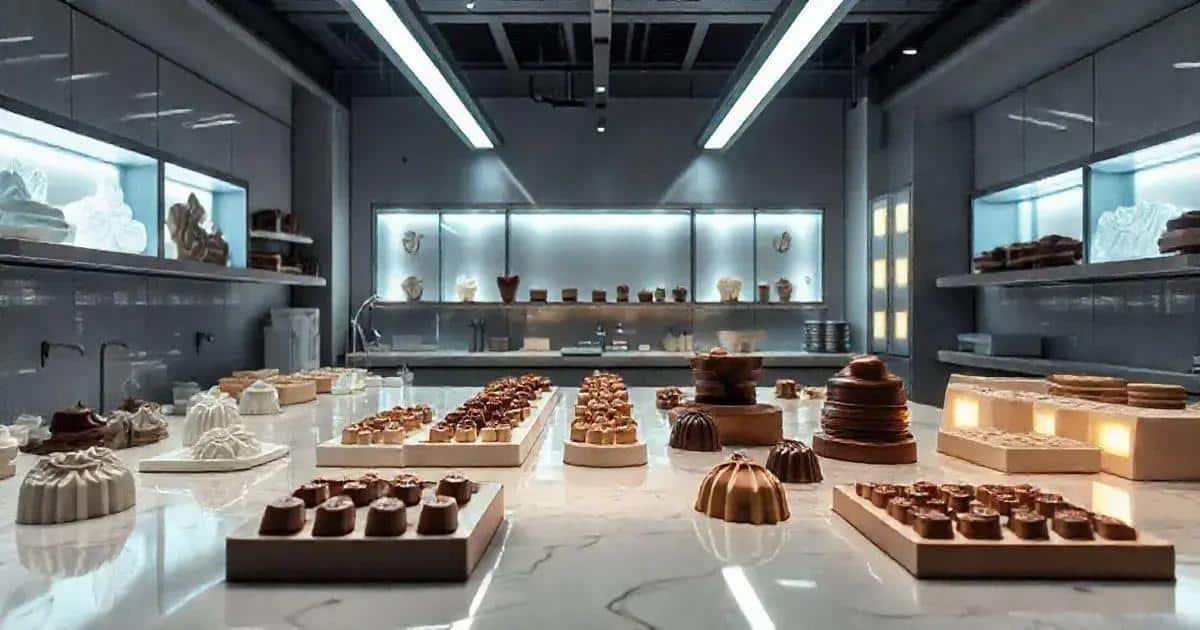
A sophisticated mould cannot correct unstable temper, wet tools or poor cooling. Mould and room temperature influence crystallisation. Test a small run and record chocolate type, working temperature and release time.
Care extends mould life
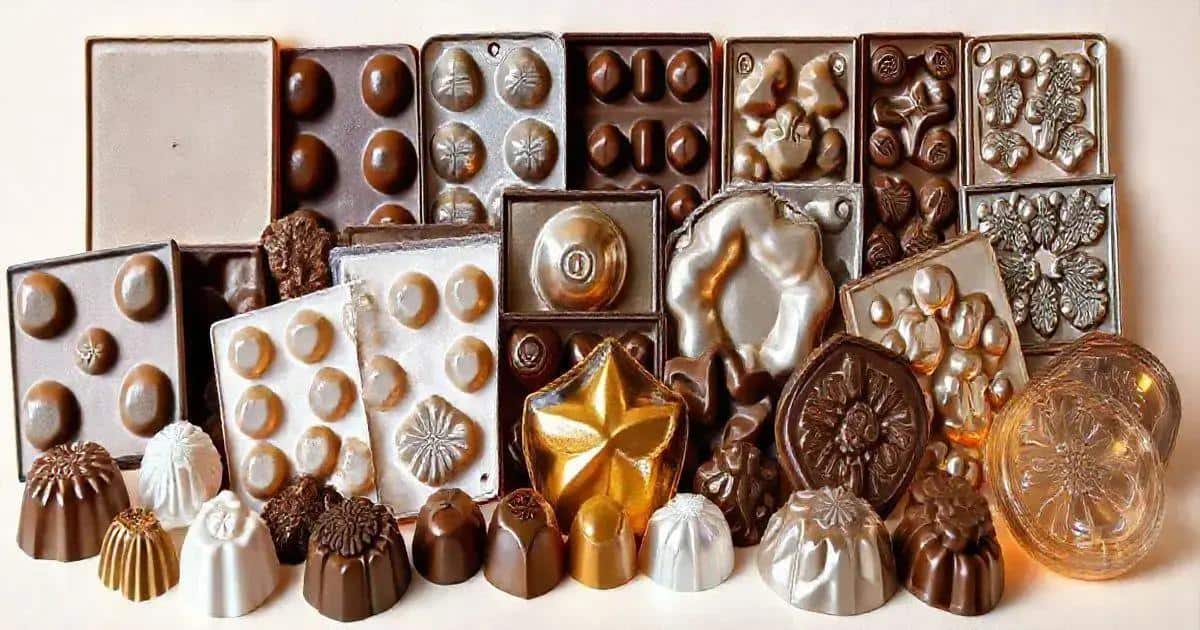
Remove chocolate gently and wash only as the manufacturer directs. Avoid abrasive pads and very hot dishwashers unless approved. Dry completely, store away from dust and stack without rubbing cavity surfaces.
Frequently asked questions
Why was the source rewritten rather than translated literally?
It needed recipe, historical, cultural or safety correction, so the useful topic was rebuilt directly in British English.
Can alcohol or caffeine be ignored in a small sweet?
No. Identify it clearly and keep the product for an appropriate audience.
How should allergens be handled?
Check every current pack, consider cross-contact and keep accurate ingredient information with the finished food.
Can a storage period be copied from another recipe?
No. Validate storage and shelf life for the actual ingredients, process and packaging.
Are custom moulds automatically food-safe?
No. Materials, manufacture, surface finish and intended food contact all need confirmation.
How should cultural or historical claims be checked?
Use primary records, cultural institutions and community sources, and state uncertainty instead of inventing a link.