
Why chocolate suited space food
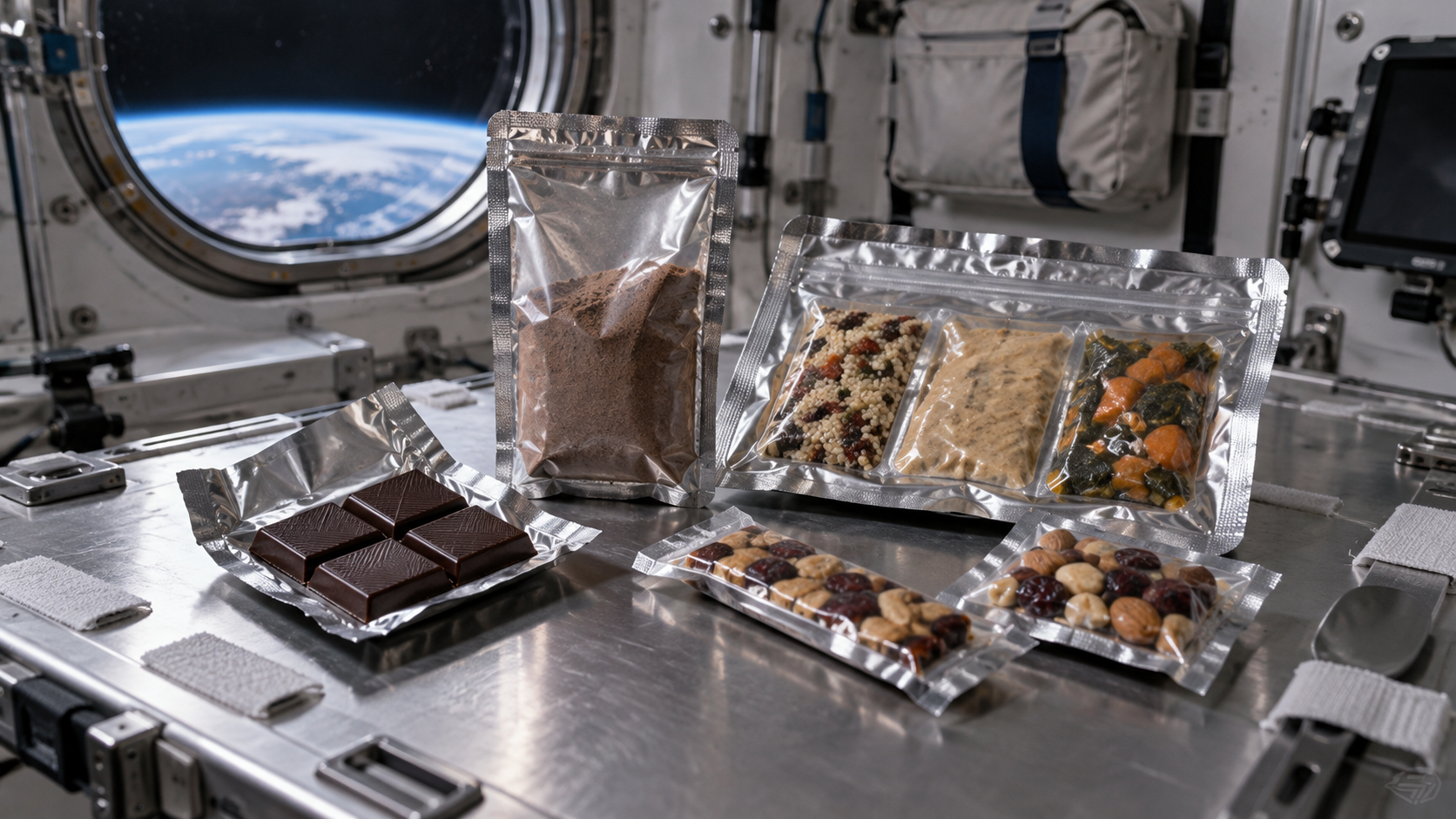
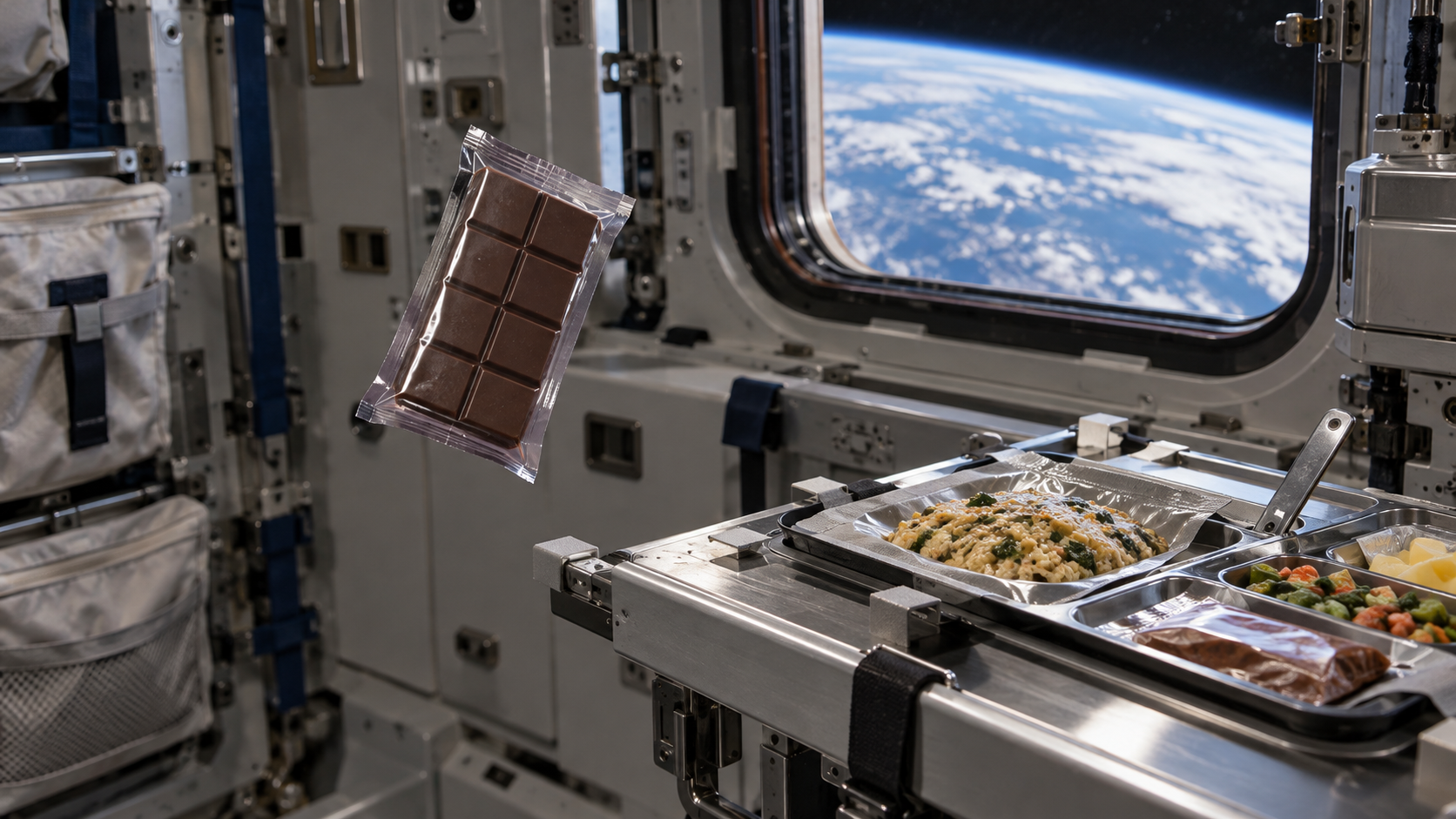
Chocolate is compact, energy-dense and familiar, which can make it useful in a tightly planned food system. It is still only one food: space diets are designed around nutrition, storage, preparation, waste and mission length.
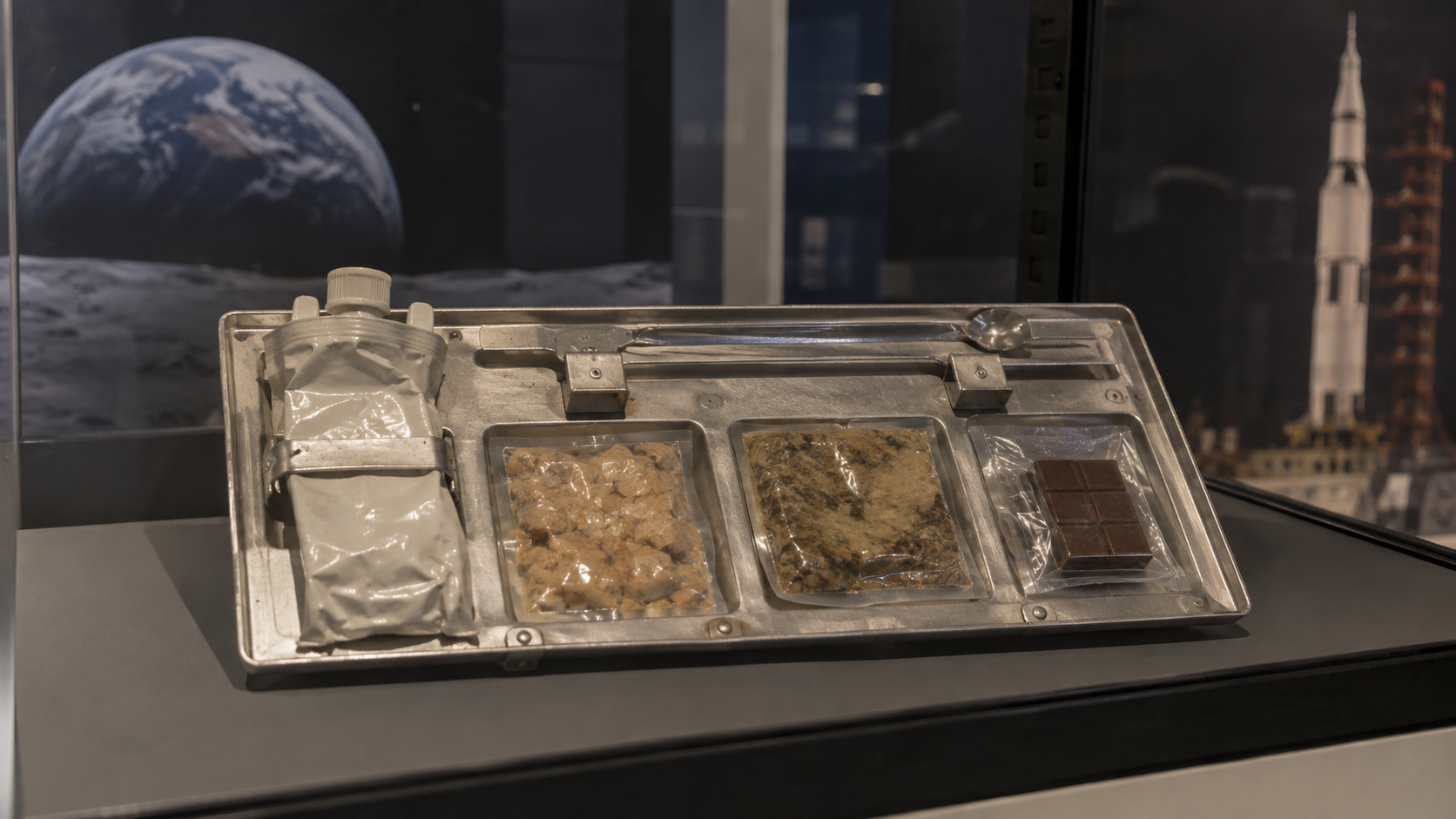
Chocolate and cocoa products have appeared on crew menus during the space age, but exact items differ by agency, mission and astronaut preference. A claim that a particular bar was first should be checked against an official manifest or archive.
Packaging matters in microgravity
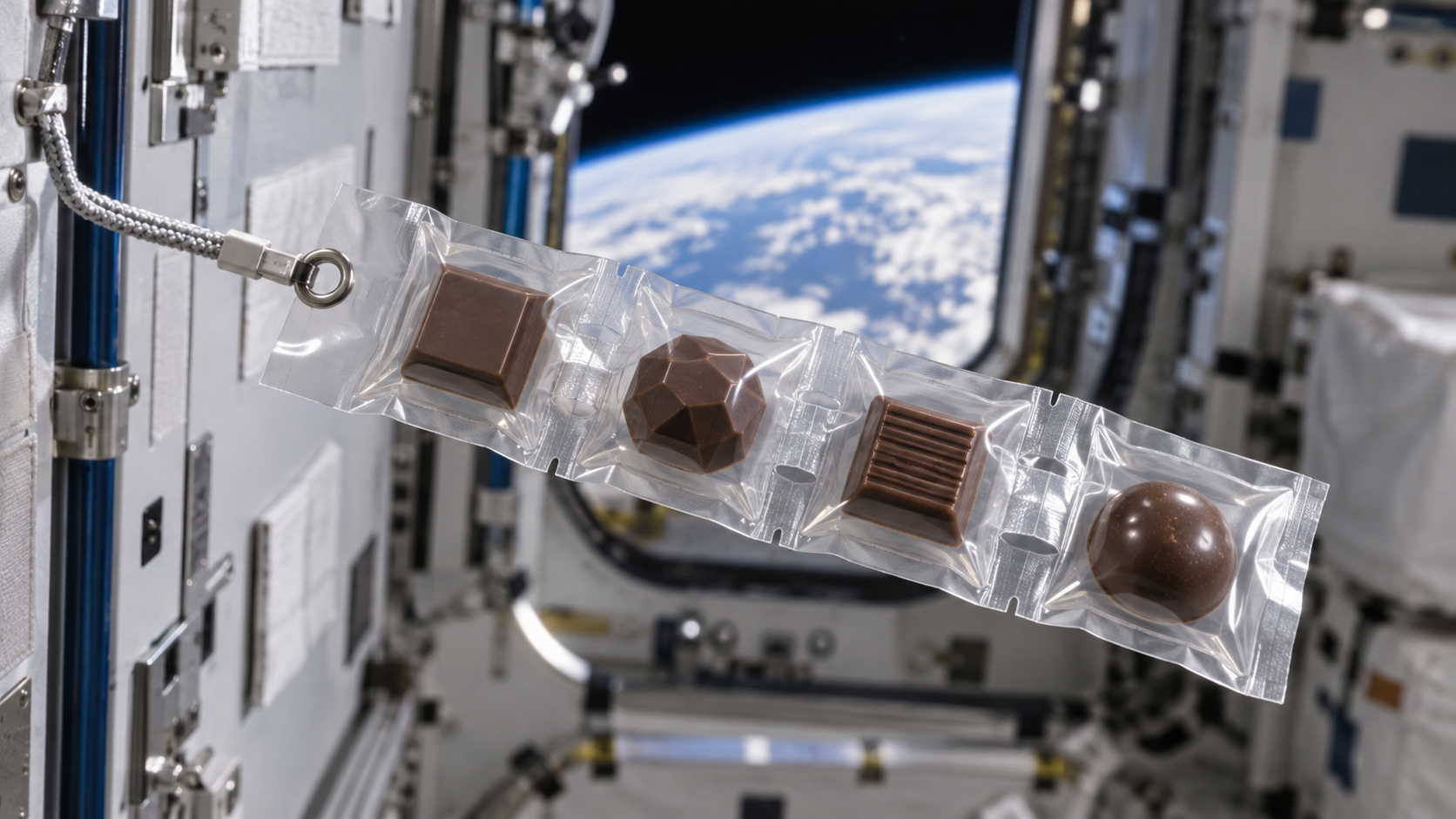
Food must remain contained so pieces, wrappers and droplets do not float into equipment. Bite-sized portions and secure packaging are more practical than loose flakes. Engineers also consider oxygen safety, waste volume and easy opening.
Heat, crumbs and texture
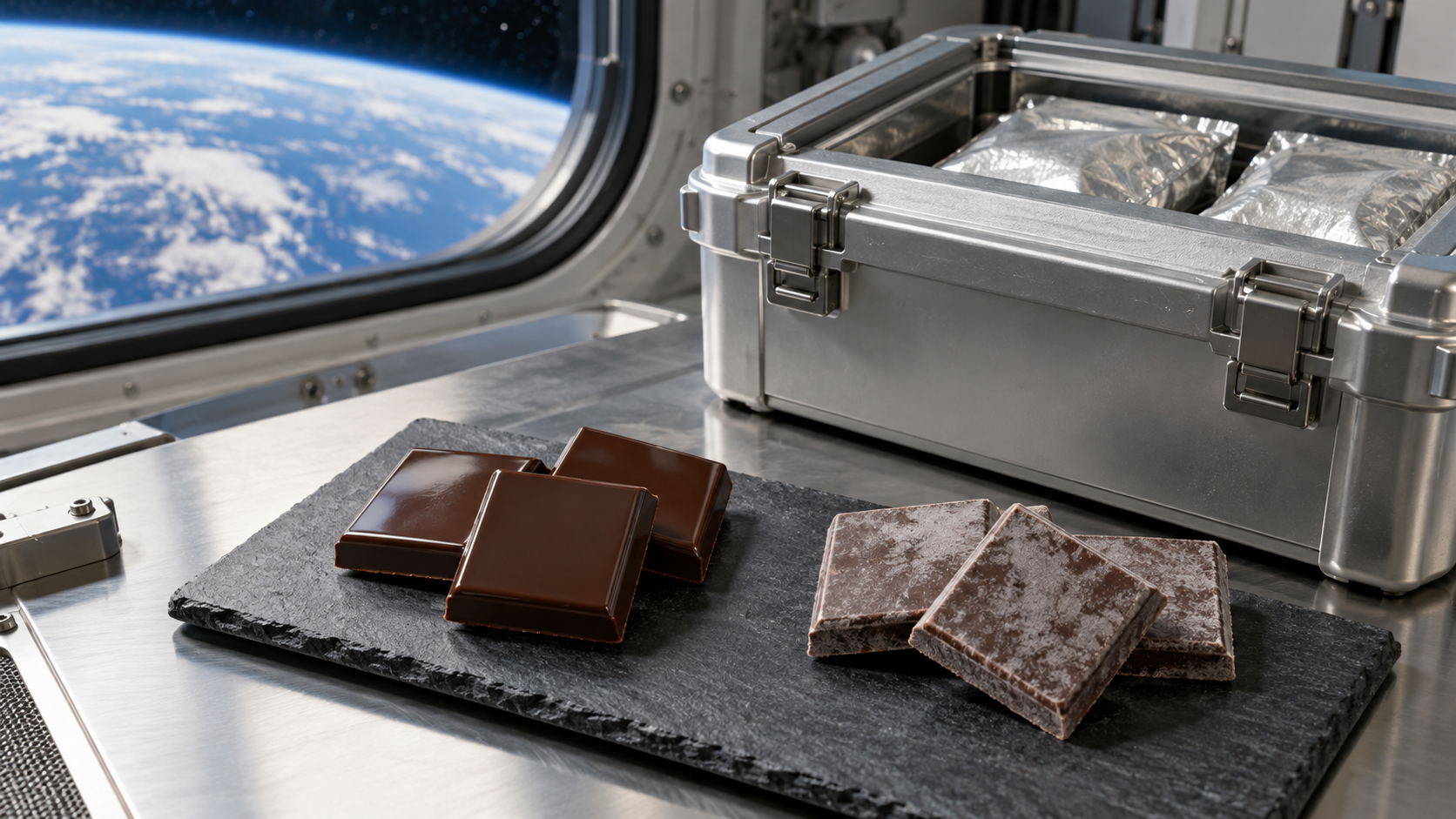
Cabin conditions and storage can change chocolate texture. Crumbs or small inclusions need control, while temperature swings may cause bloom. A pale surface can be a quality issue without proving the sealed food is unsafe.
Chocolate as a morale food
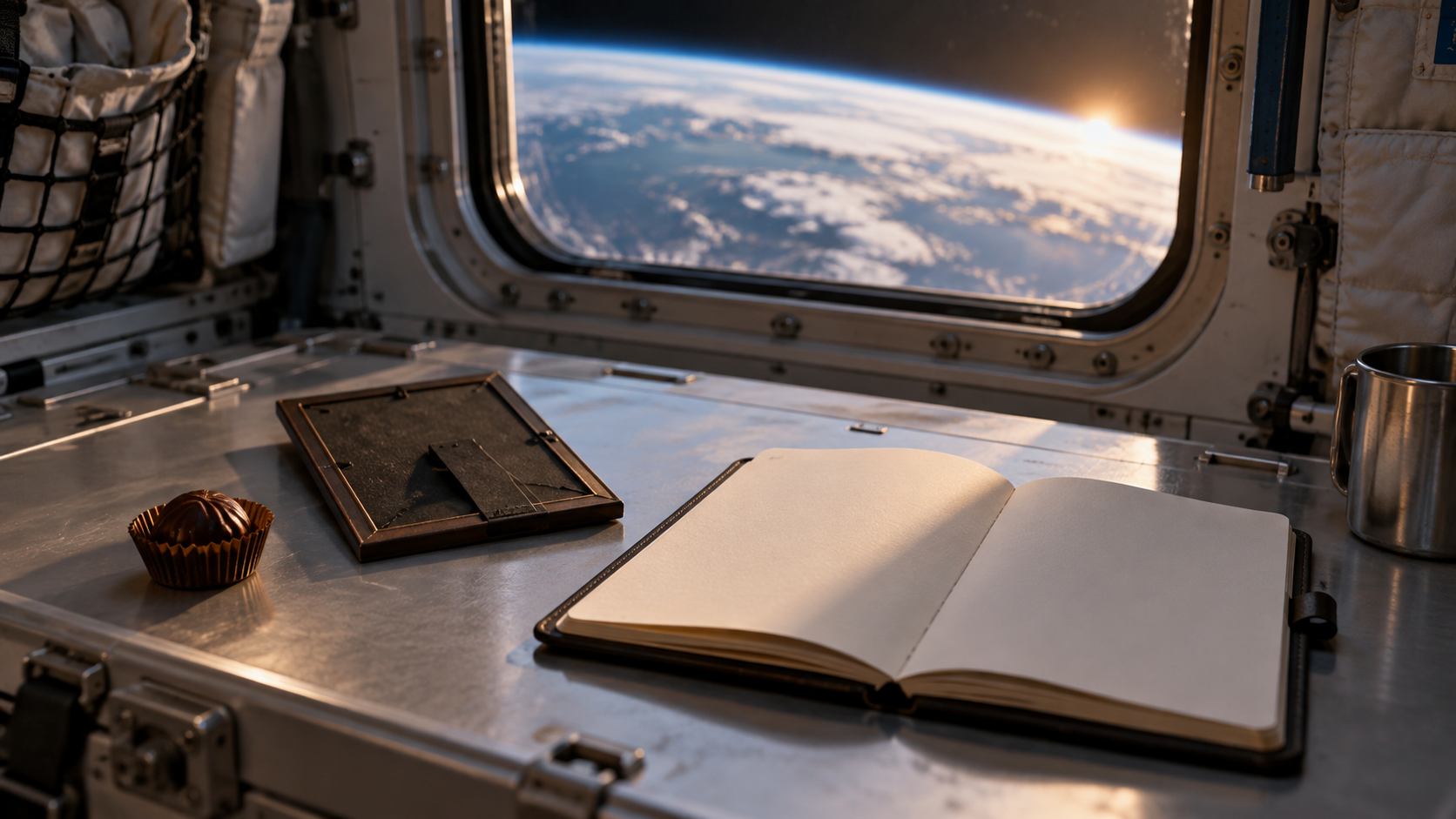
Familiar flavours can offer variety and comfort during demanding work. That psychological role should not be confused with an instant energy or performance claim; total meals, sleep and medical planning matter far more.
What astronauts actually eat changes
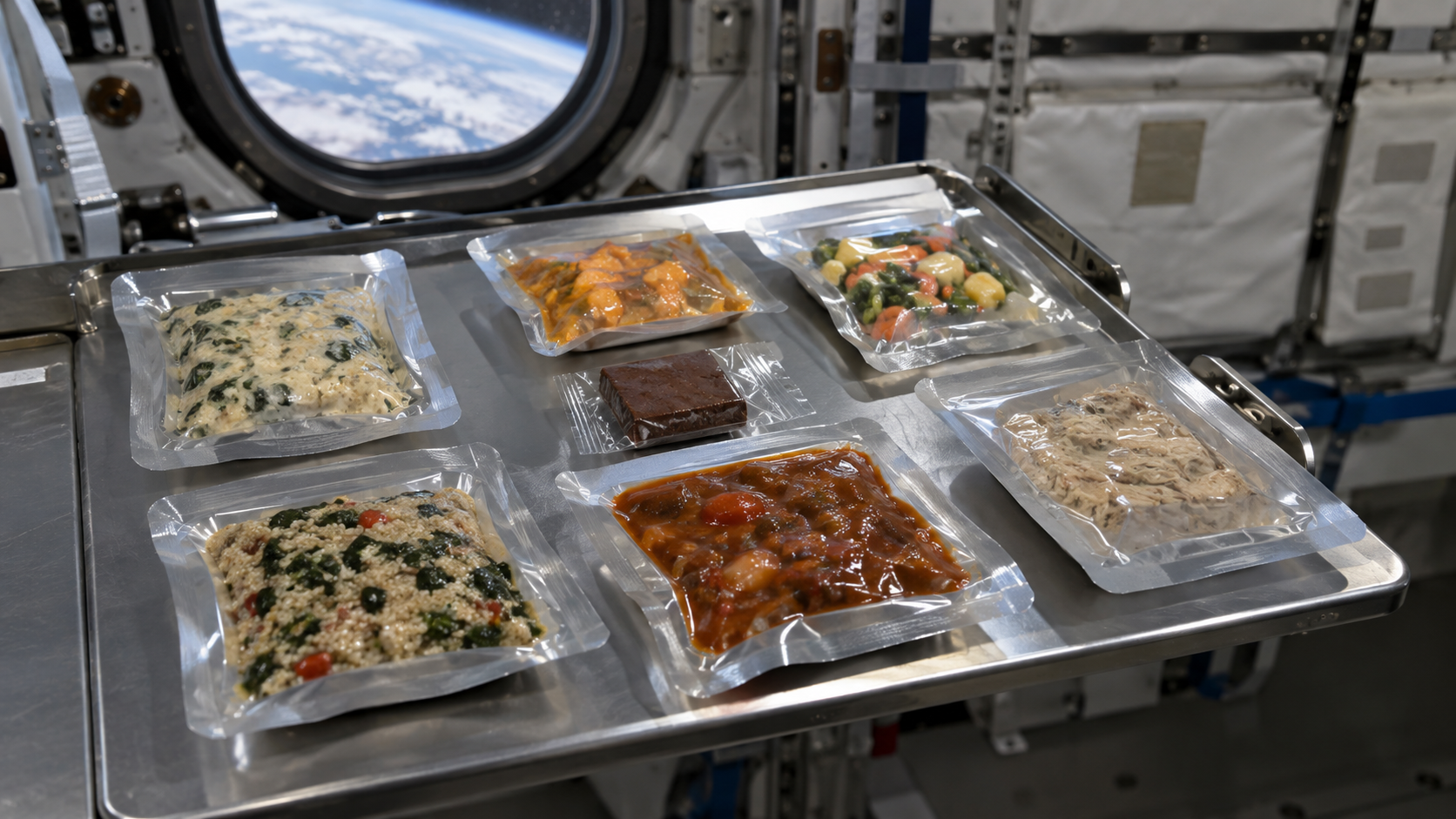
Menus evolve with mission hardware, resupply and crew composition. Some items are standard, others are preference packs or special occasions. Current examples need confirmation from the relevant space agency.
Separate evidence from publicity
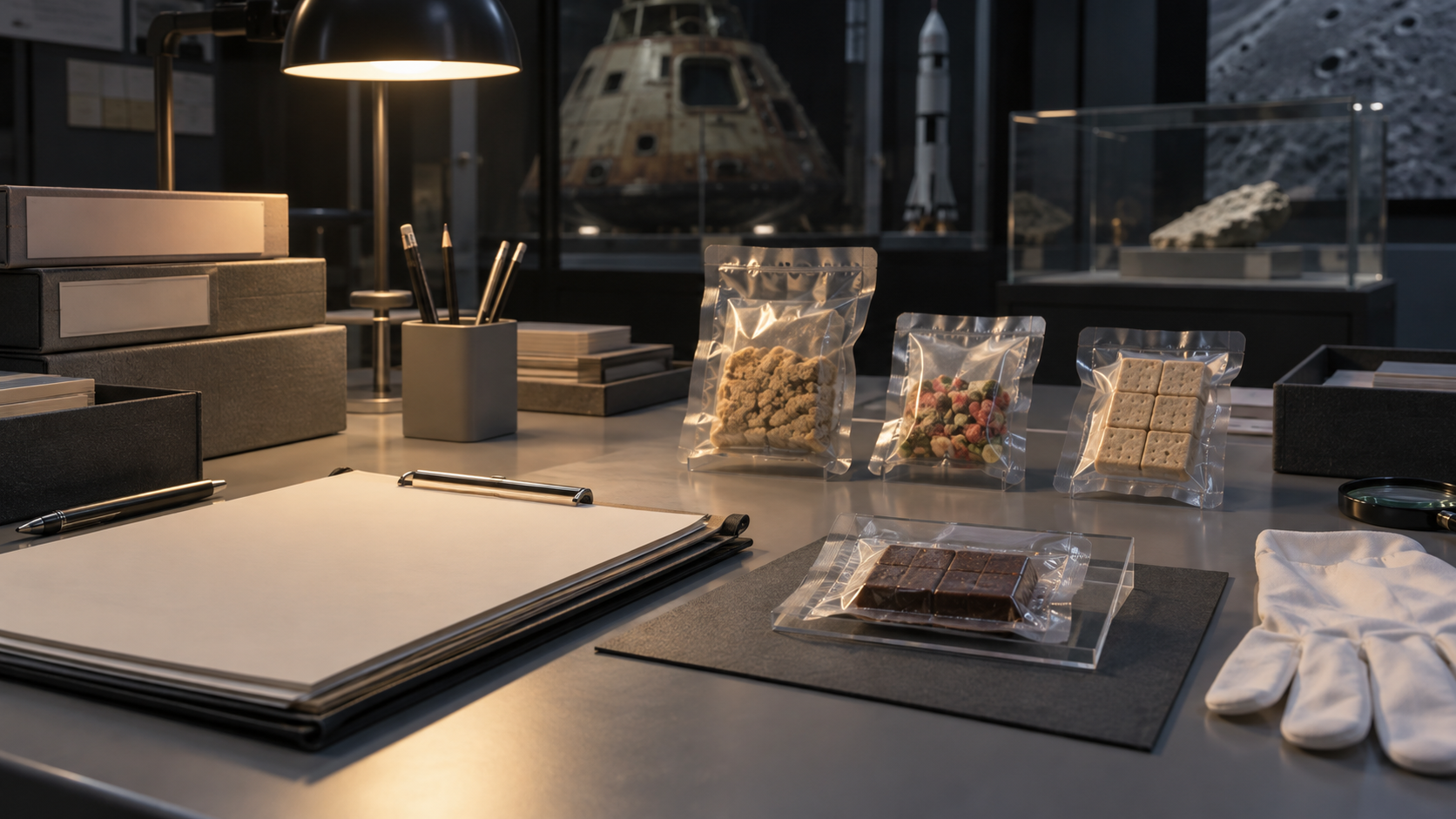
Brand campaigns often simplify the story. Reliable evidence includes official menus, manifests, museum holdings and interviews linked to a named mission. If the record is incomplete, describe the uncertainty rather than inventing a neat milestone.
Frequently asked questions
Why was the source rewritten rather than translated literally?
It needed factual, recipe or safety correction, so the useful topic was rebuilt directly in British English.
Can alcohol be assumed to cook away?
No. Label it clearly and keep the product for an appropriate adult audience.
Are vegan products automatically allergen-free?
No. Check every ingredient and cross-contact statement for soya, nuts, gluten and other allergens.
Can the stated storage time be guaranteed?
No. Ingredients and handling vary; use a validated shelf life for the actual recipe and process.
May decorative or workshop materials touch food?
Only materials intended for food contact should touch edible products.
How should historical firsts be described?
Use primary records where possible and state uncertainty rather than inventing a precise first.