
Use a tested ganache formula
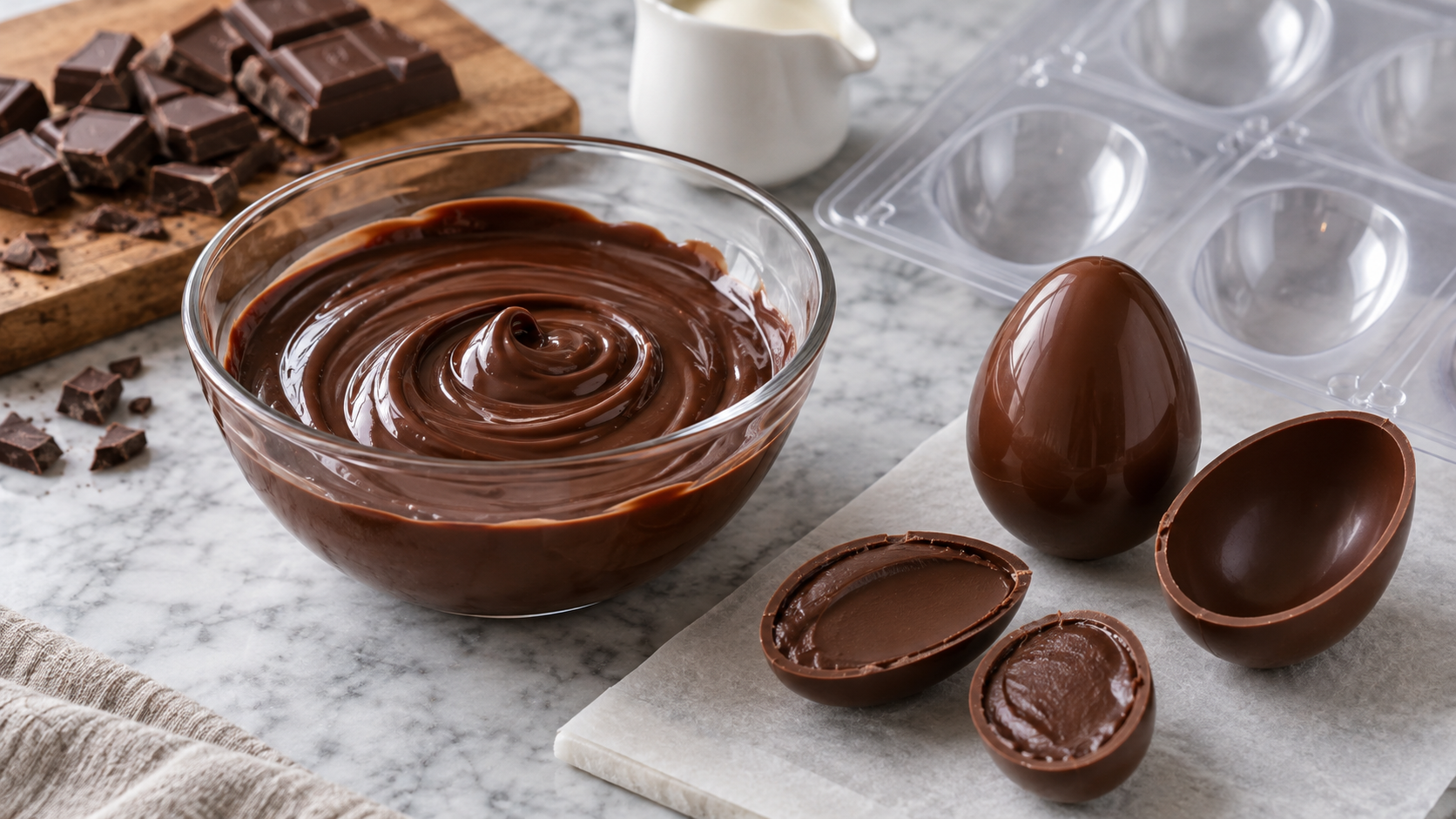
Dark, milk and white chocolate need different cream ratios. Use a formula designed for a moulded filling rather than improvising from a cake topping.
Prepare the mould
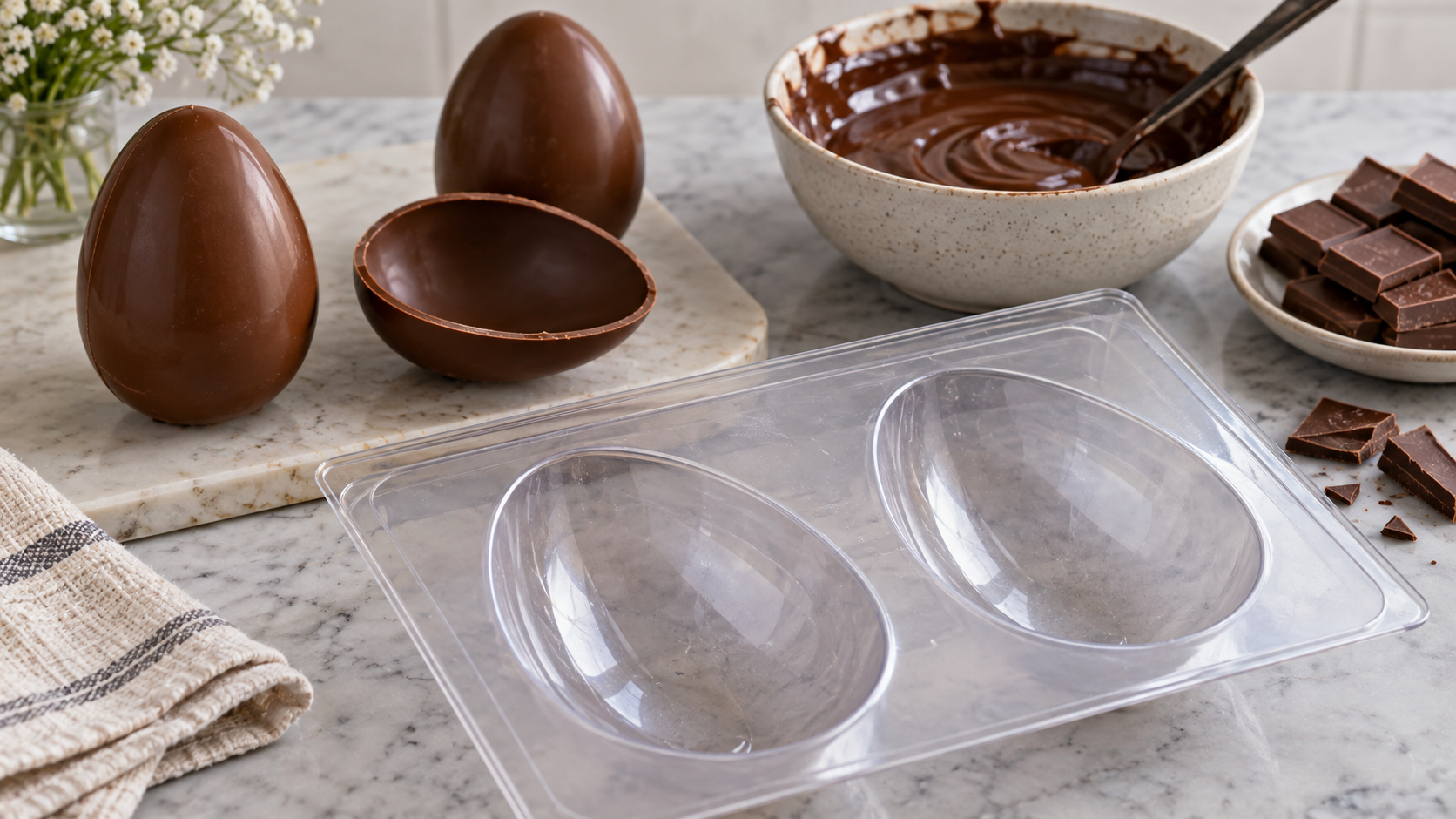
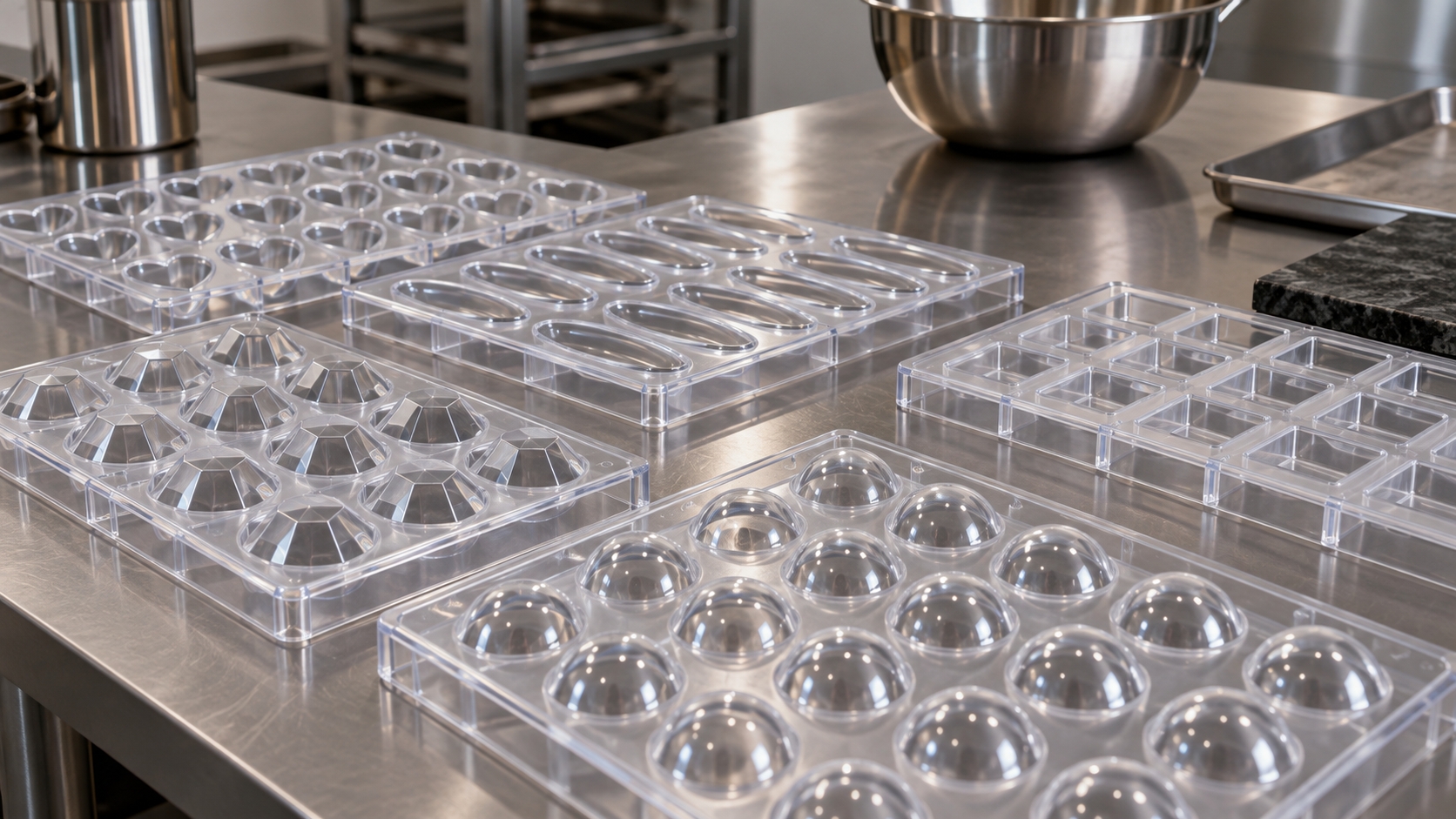
Clean, polish and dry the mould. Even tiny water droplets can mark or seize the chocolate.
Temper and cast the shell
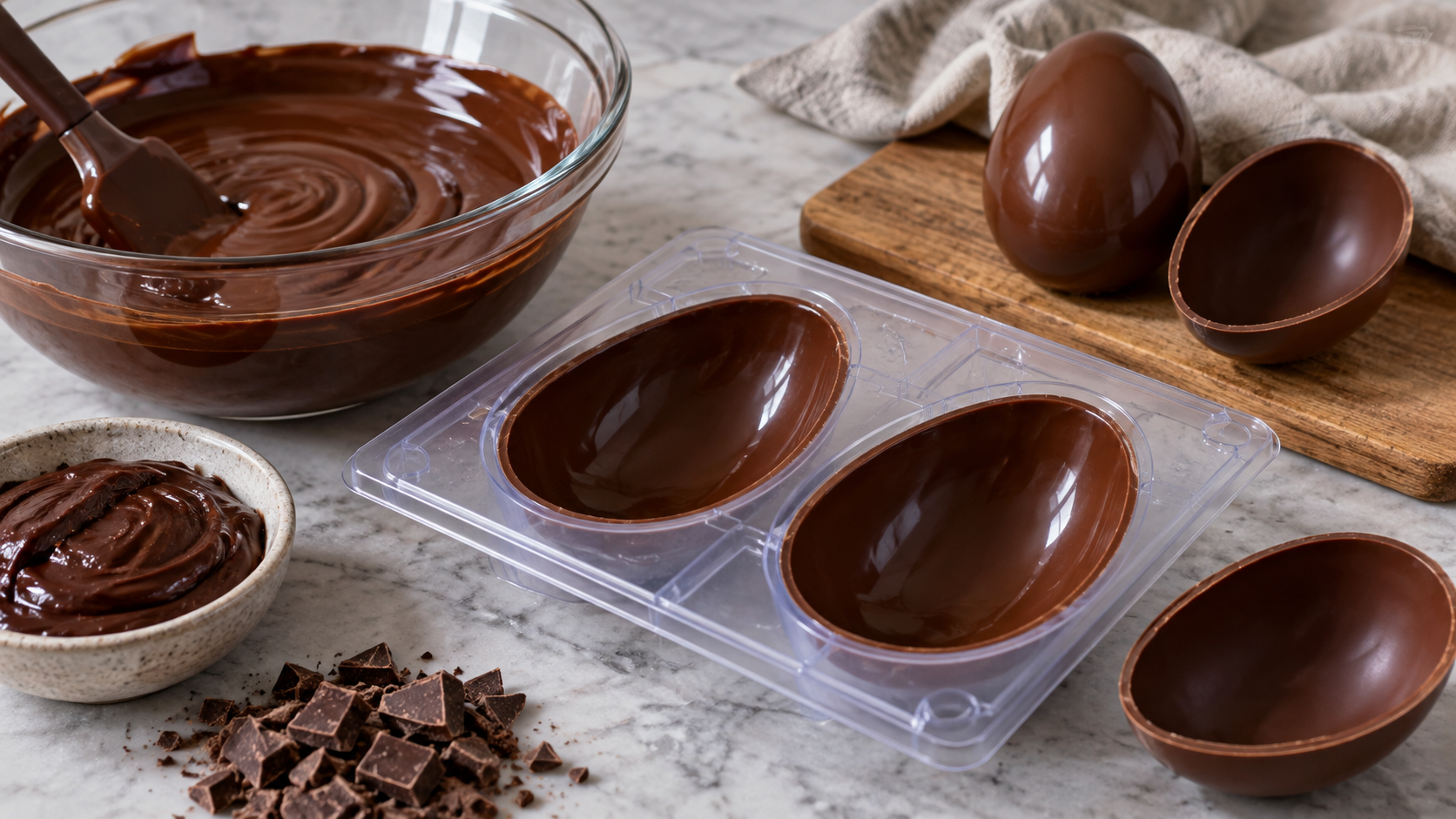
Temper suitable chocolate, fill and drain the mould, then scrape it clean. Let the shell crystallise enough to support the filling.
Cool the filling correctly

Make a smooth emulsion and cool it to the temperature specified by the recipe. Warm ganache melts the shell and traps condensation.
Seal only when ready
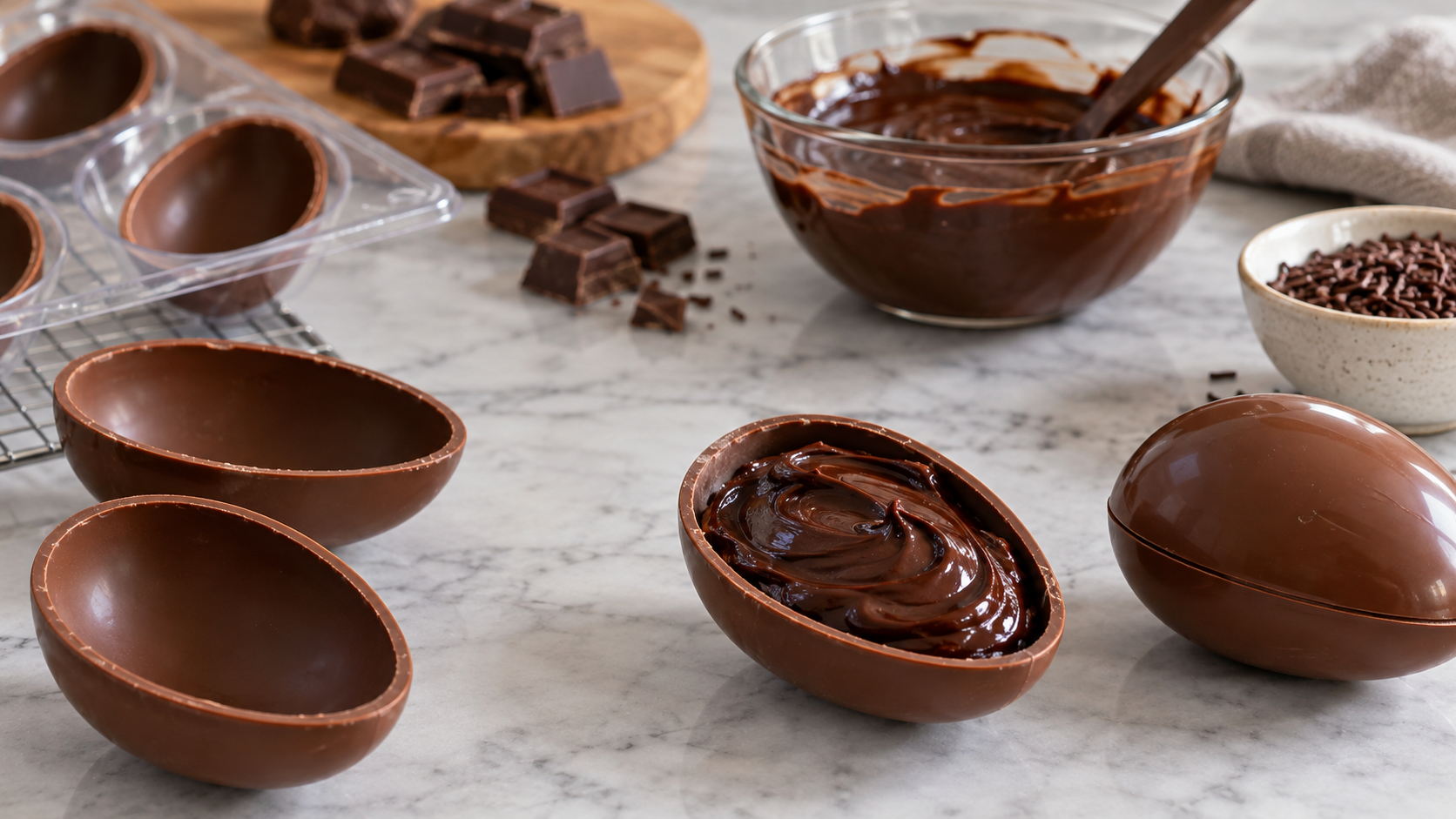
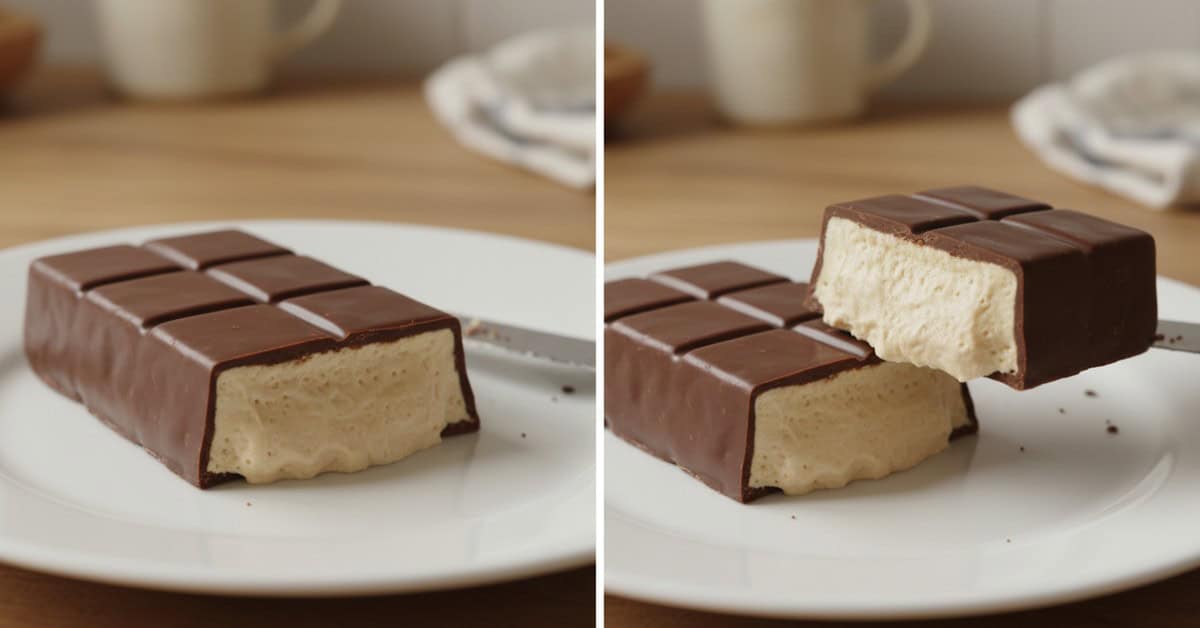
Pipe below the rim, keep the edges clean and let the surface form as directed before sealing with tempered chocolate.
Set a realistic shelf life
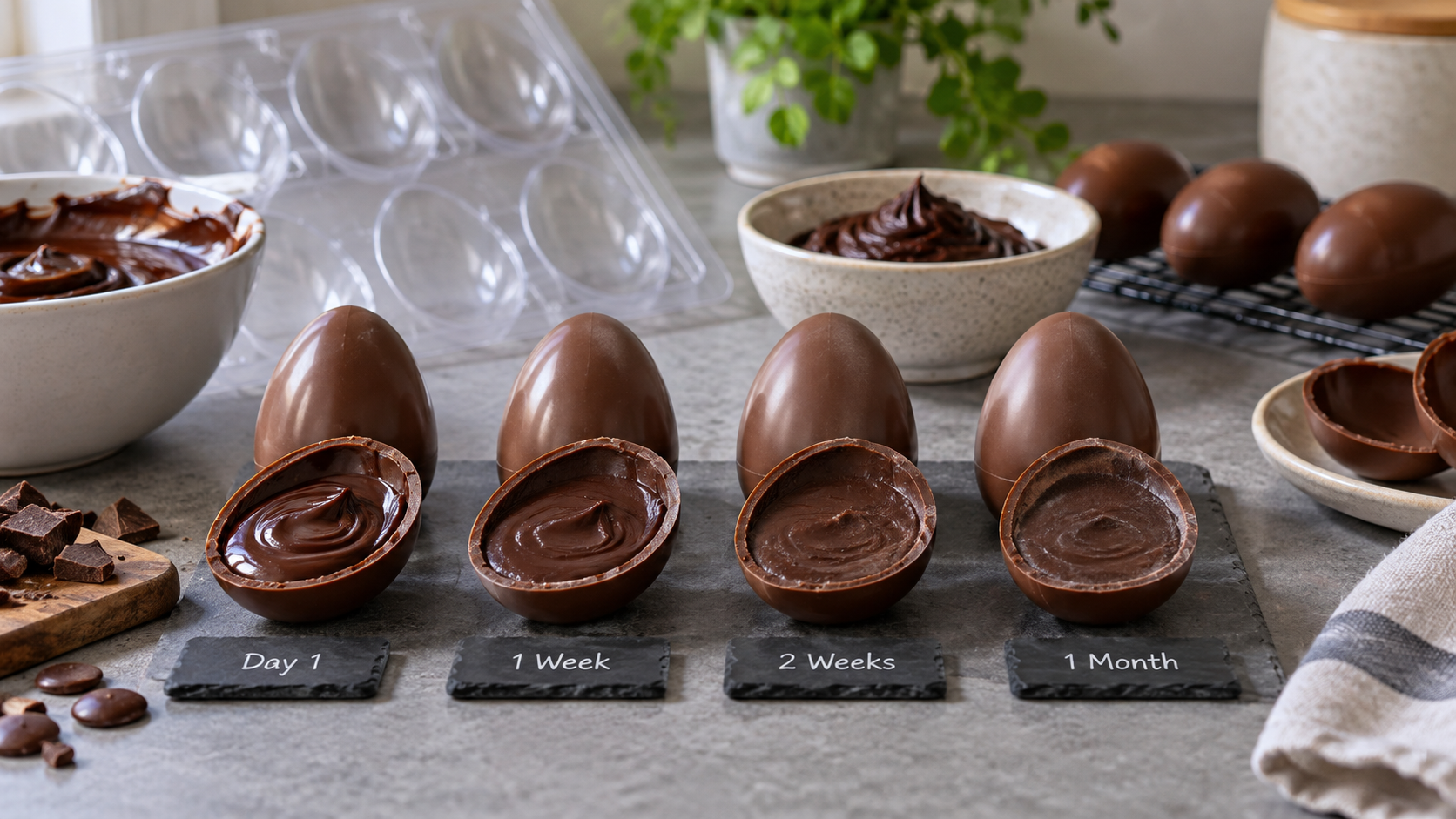
Cream ganache limits storage. Establish shelf life with a validated recipe and appropriate testing; do not assume a filled bar keeps like plain chocolate.
Frequently asked questions
Can any eating chocolate bar be used for moulding?
No. Check whether it is plain cocoa-butter chocolate and test its fluidity, temper and release.
How should filled chocolate be stored?
Follow the needs of the filling; cream, fruit and custard can require shorter life and refrigeration.
Does melting chocolate make it tempered?
No. Tempering is a controlled crystallisation process used for shine, snap and mould release.
How should wholesale prices be compared?
Compare delivered cost per kilogram, minimum order, storage, waste and usable finished yield.
Which allergens are common in chocolate sweets?
Milk, soya, nuts and gluten are common, but every current ingredient label and cross-contact risk must be checked.
What records should a seller keep?
Keep supplier labels, batch codes, recipes, temperatures, yields, dates, allergen information and customer orders.