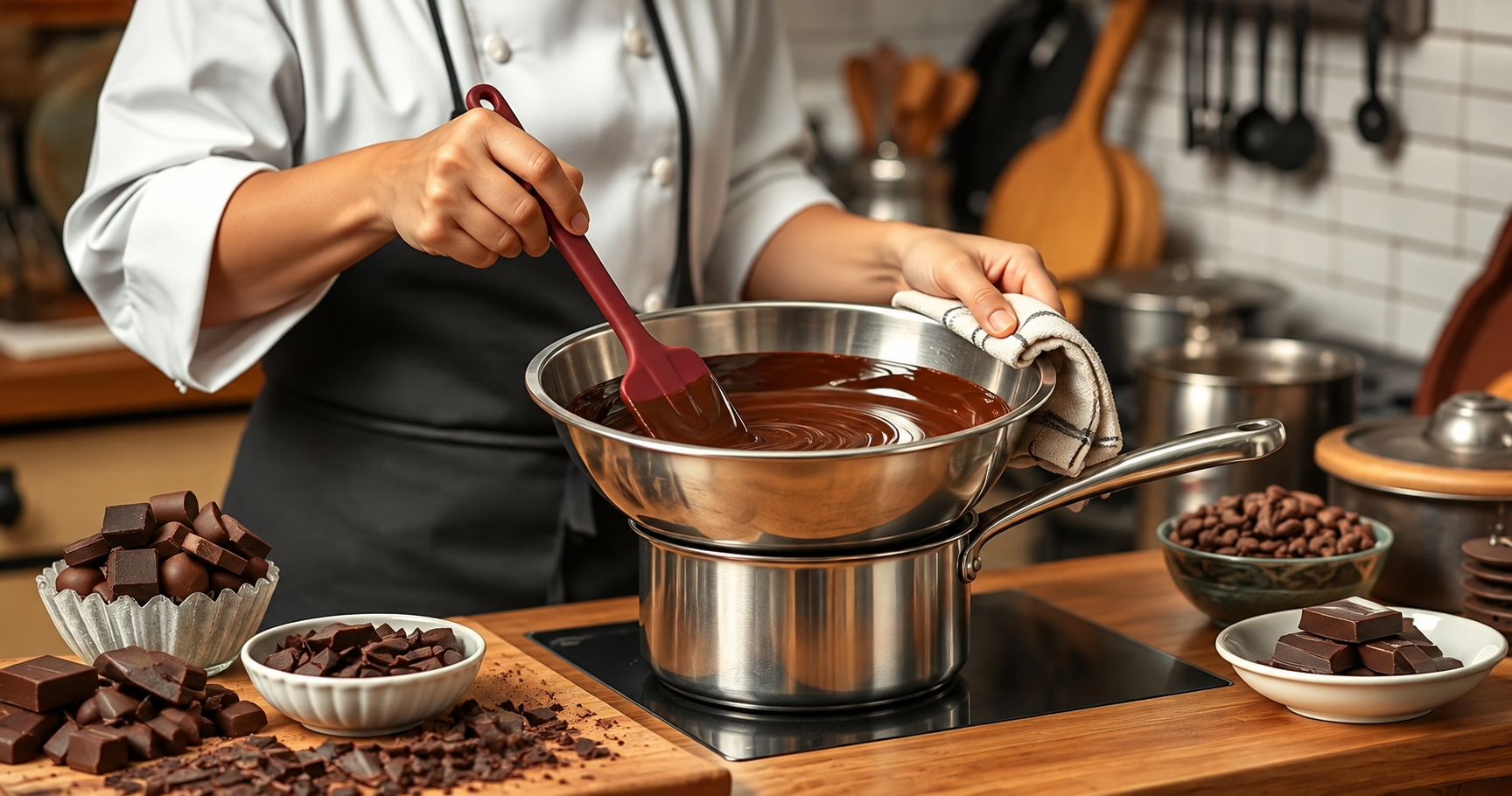

Why tempering changes the finish
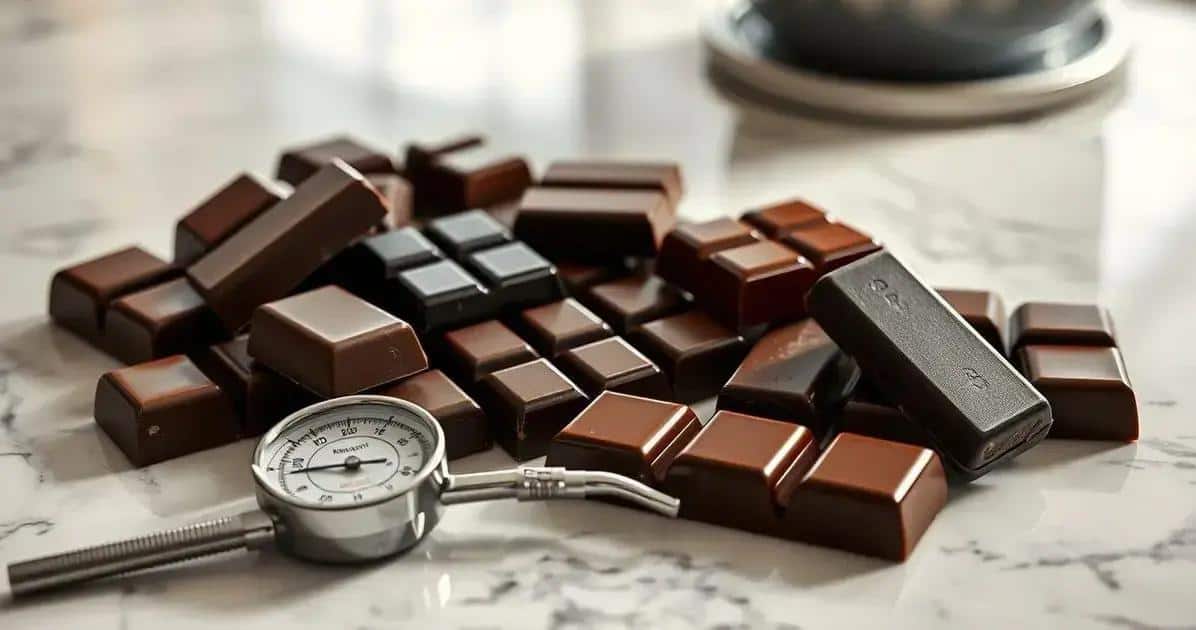
Cocoa butter can form several crystal structures. Tempering encourages the stable form that gives chocolate an even shine, clean snap and contraction from moulds.
Use the seeding method
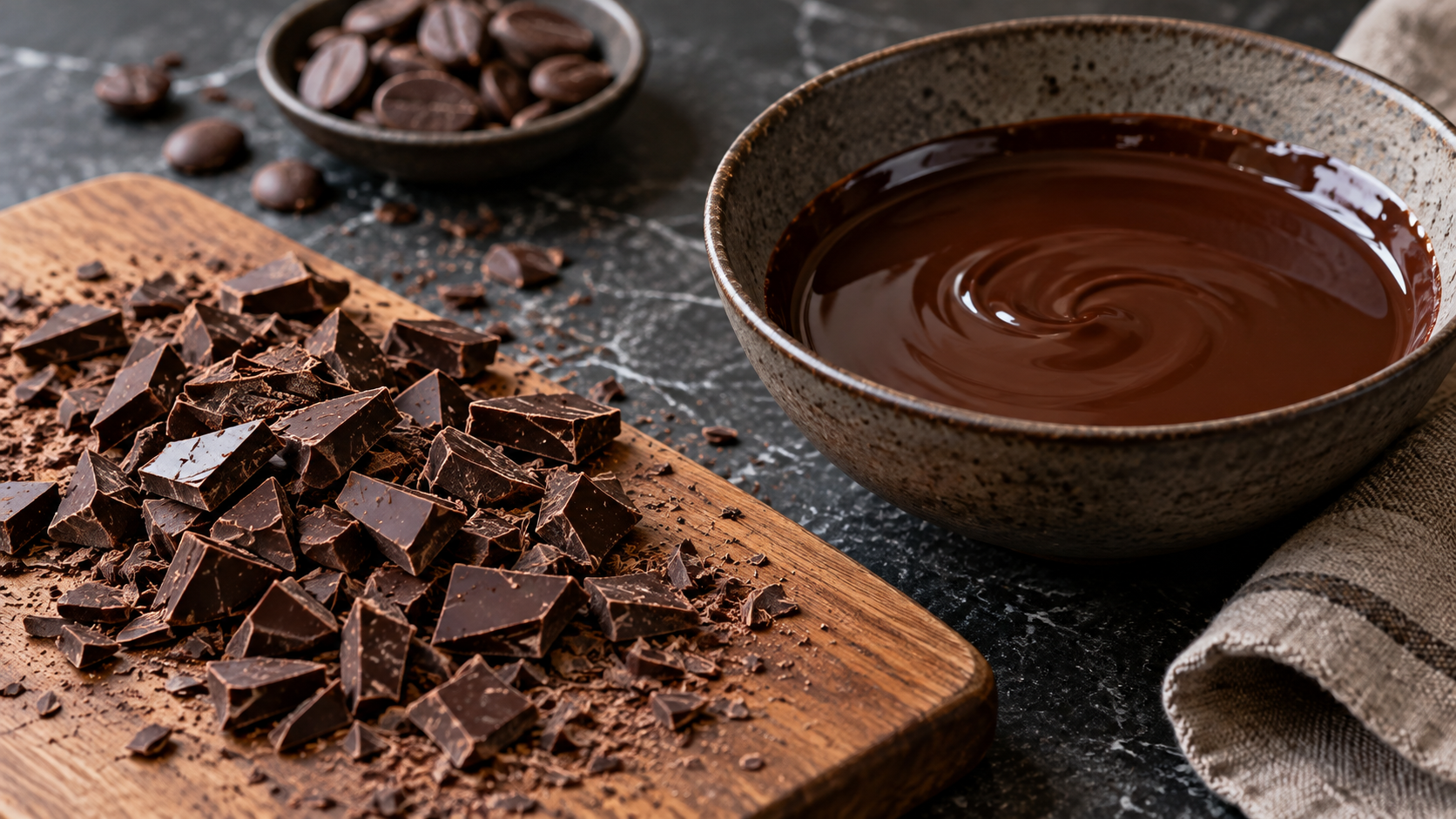
Melt the chocolate fully, then stir in finely chopped tempered chocolate while cooling. The seed provides stable crystals; remove any unmelted pieces before reheating to the working range.
Control the three temperature stages
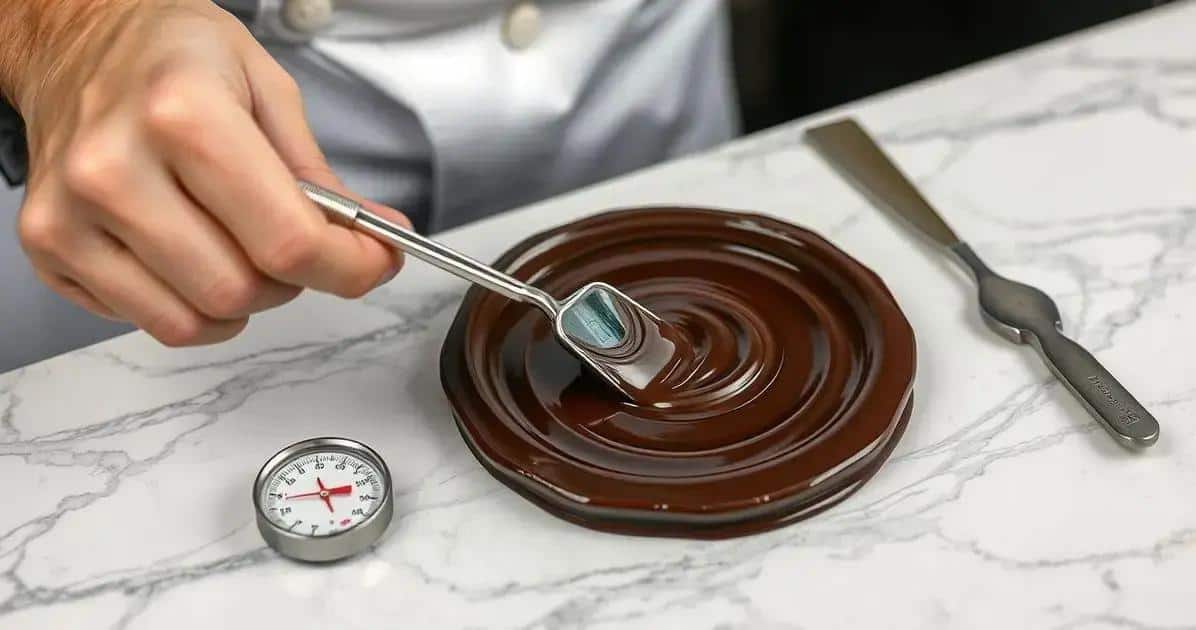
The melt, cooling and working temperatures depend on the chocolate type and manufacturer. Use an accurate thermometer and record what works in your room instead of relying only on touch.
Test the temper

Spread a thin smear on parchment or a palette knife. In a suitable room it should begin setting within a few minutes, look even and release cleanly.
Fix chocolate that falls out of temper
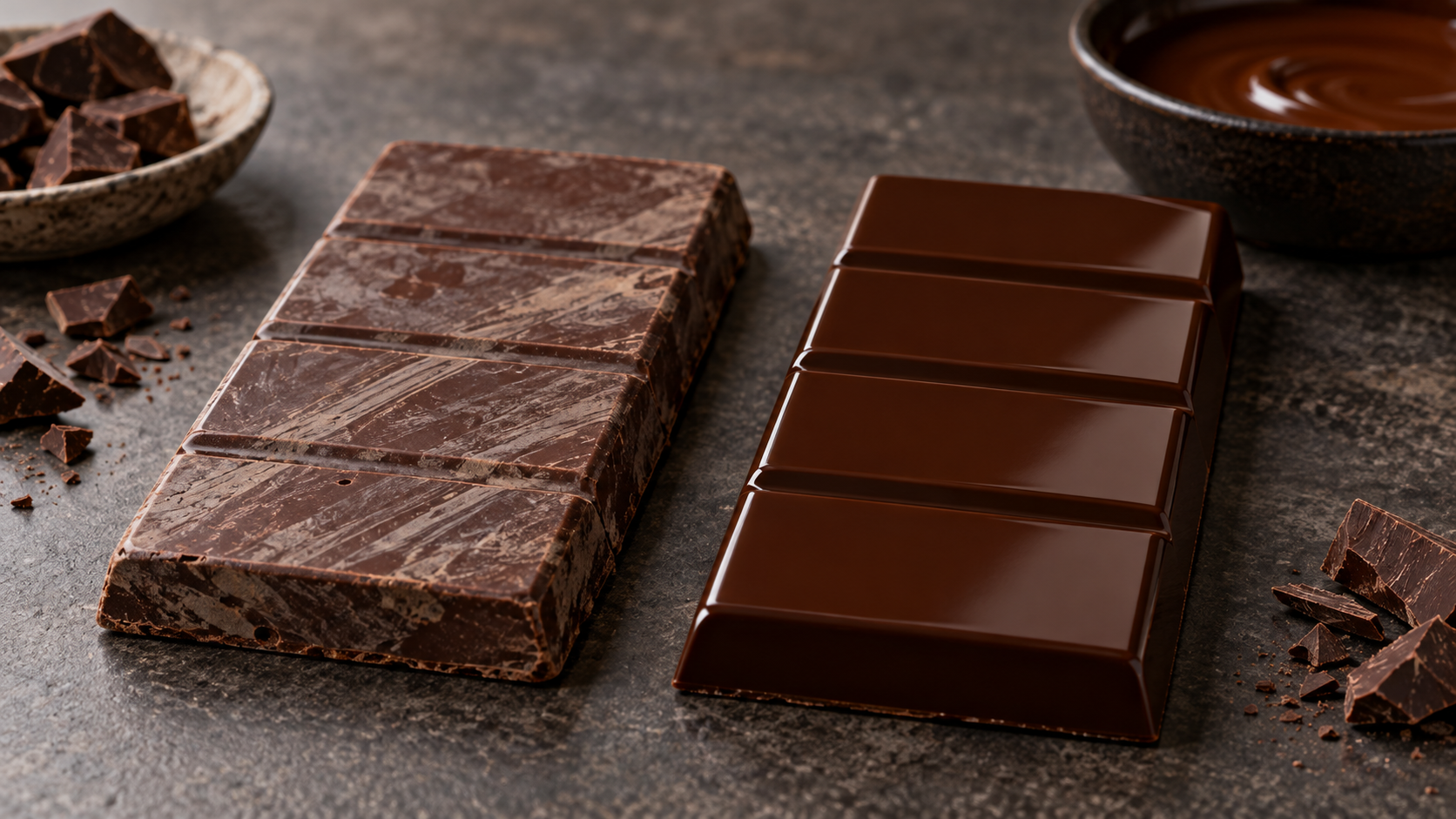
If chocolate becomes too warm, thickens unpredictably or sets streaky, repeat the tempering cycle. Do not try to hide a failed temper with extra heat or unrelated fat.
Frequently asked questions
Do I need a thermometer?
A thermometer is recommended whenever melting, tempering or holding chocolate within a working range.
Can I substitute one chocolate product for another?
Only when the recipe allows it, because cocoa butter, vegetable fat, sugar and milk change texture and setting.
How do I avoid moisture problems?
Keep tools dry, protect chocolate from steam and let cold closed containers warm gradually before opening.
Which allergens should I check?
Read every label for milk, soya, nuts, gluten and other required allergens, including cross-contact warnings.
Can I sell the finished product?
Follow current local food-business, hygiene, labelling and tax rules and use a defensible storage period.
What should I do before a large batch?
Test one small batch with the actual ingredients, room temperature, packaging and transport conditions.