
Understand what the product is
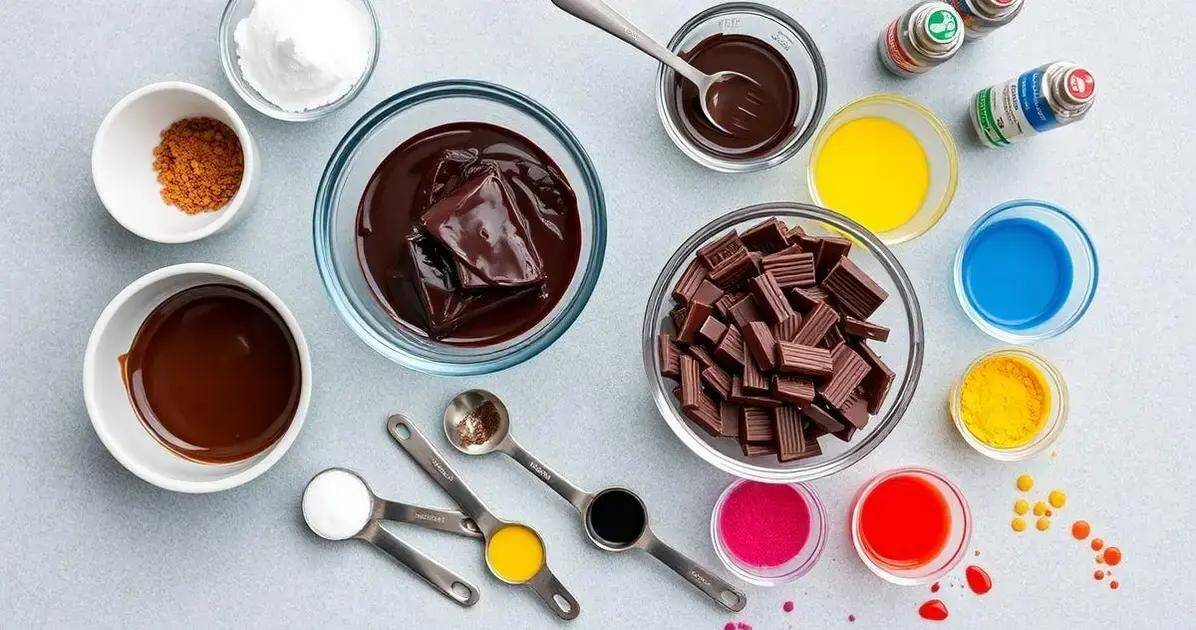
Compound coating replaces some or all cocoa butter with other vegetable fats. It is sold for convenient dipping and decorating, but its flavour and melting sensation differ from couverture chocolate.
Know why tempering is not required
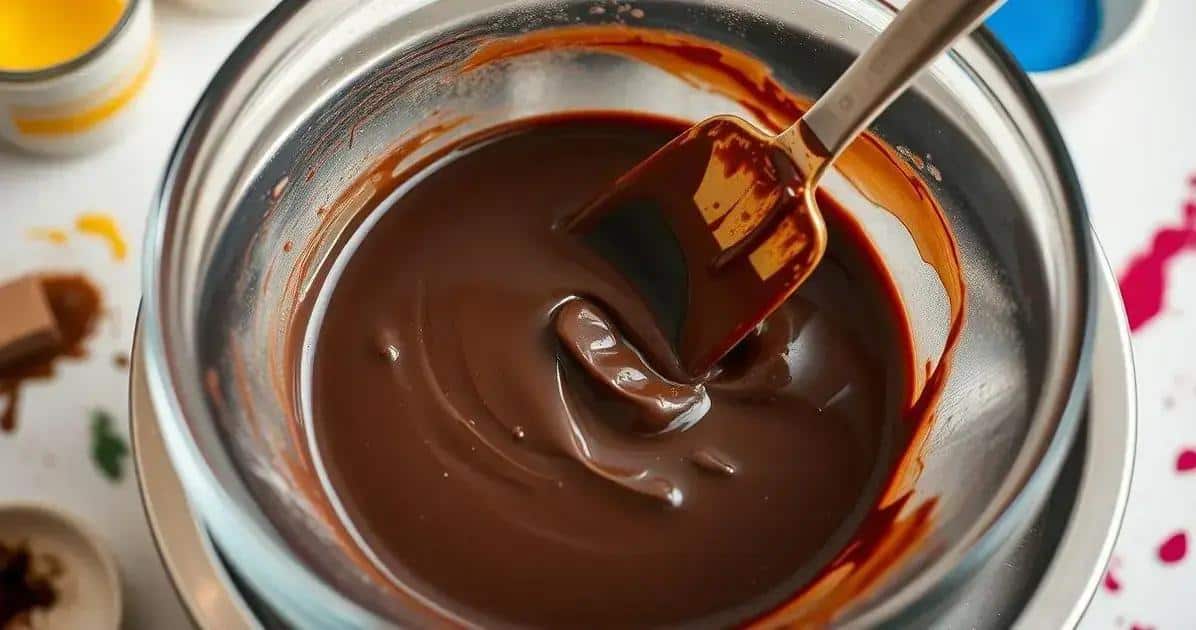
The alternative fat system normally sets without the controlled crystallisation used for cocoa-butter chocolate. You still need to melt it gently and stay within the temperature stated on the packet.
Gather simple equipment
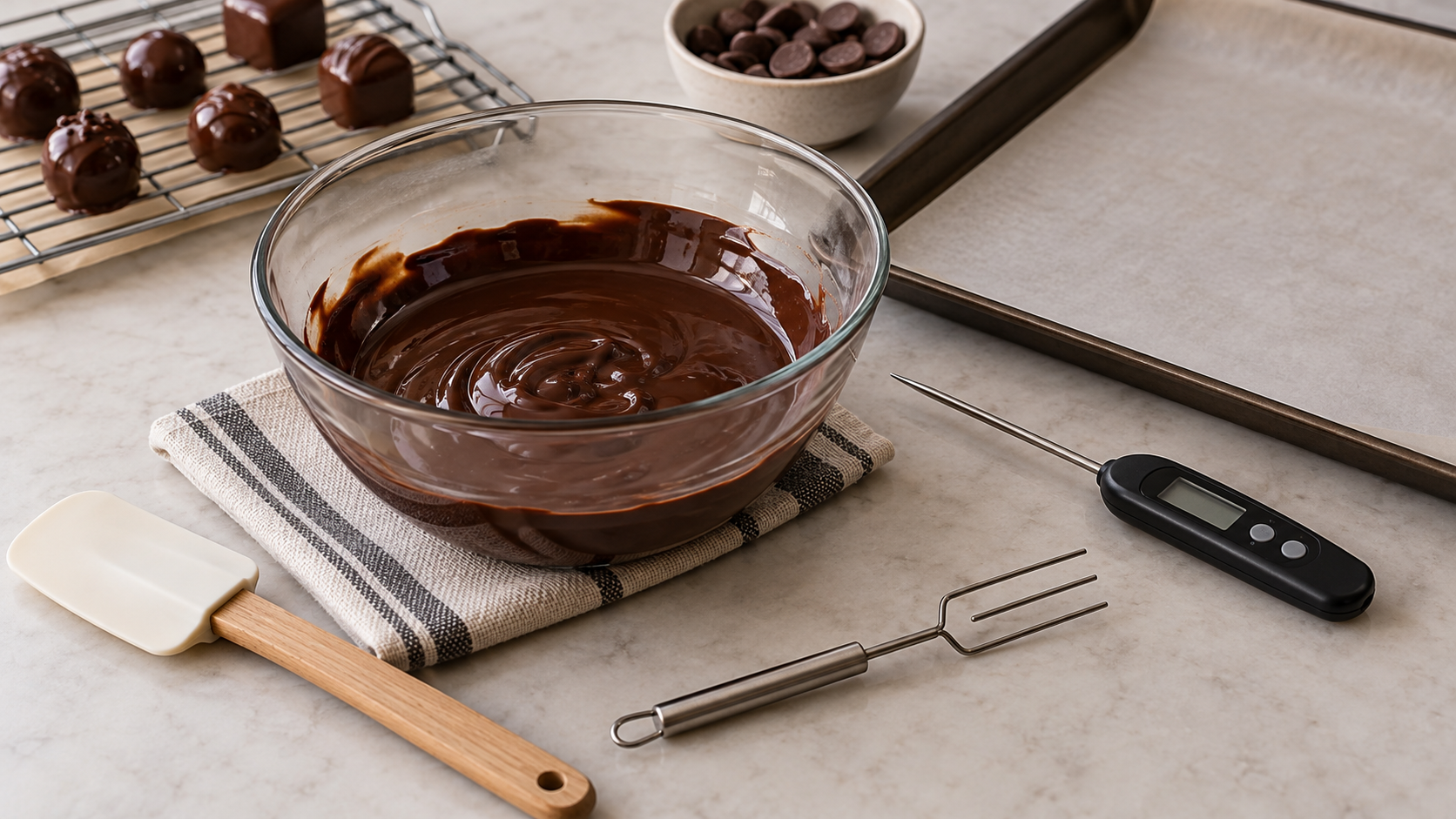
A dry heatproof bowl, silicone spatula, dipping fork, thermometer and clean parchment are enough for a first project. Keep all equipment free from water and crumbs.
Practise on an easy item
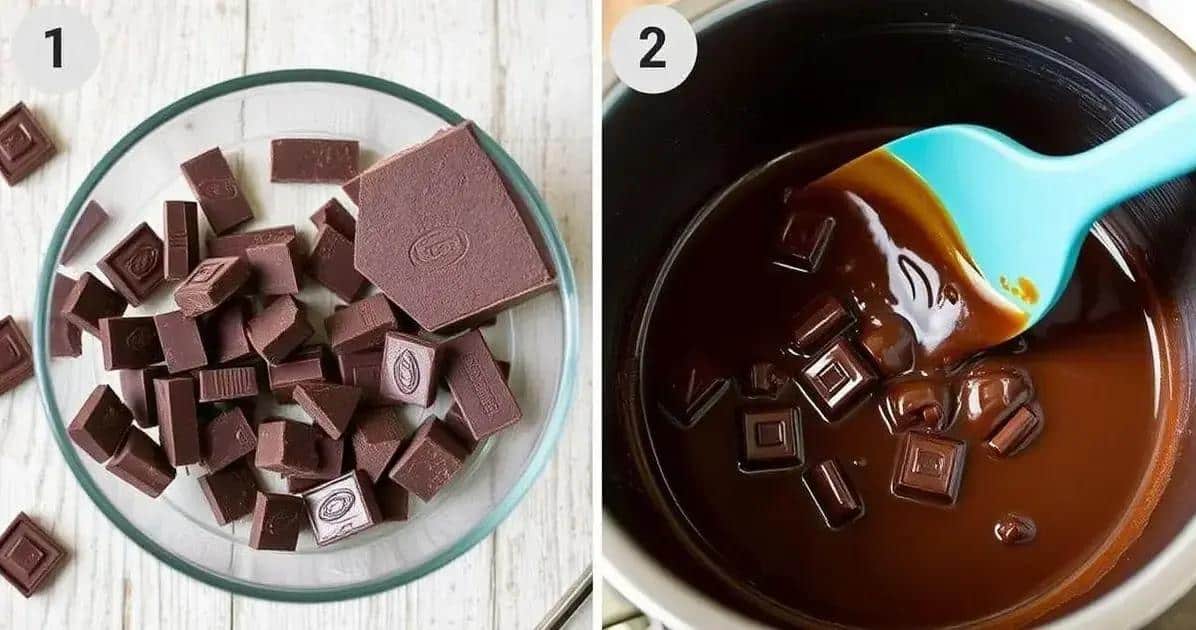
Start with biscuits or firm cake pops rather than delicate filled chocolates. Melt a small batch, coat one test piece and check the thickness and set before continuing.
Check flavour, labels and storage
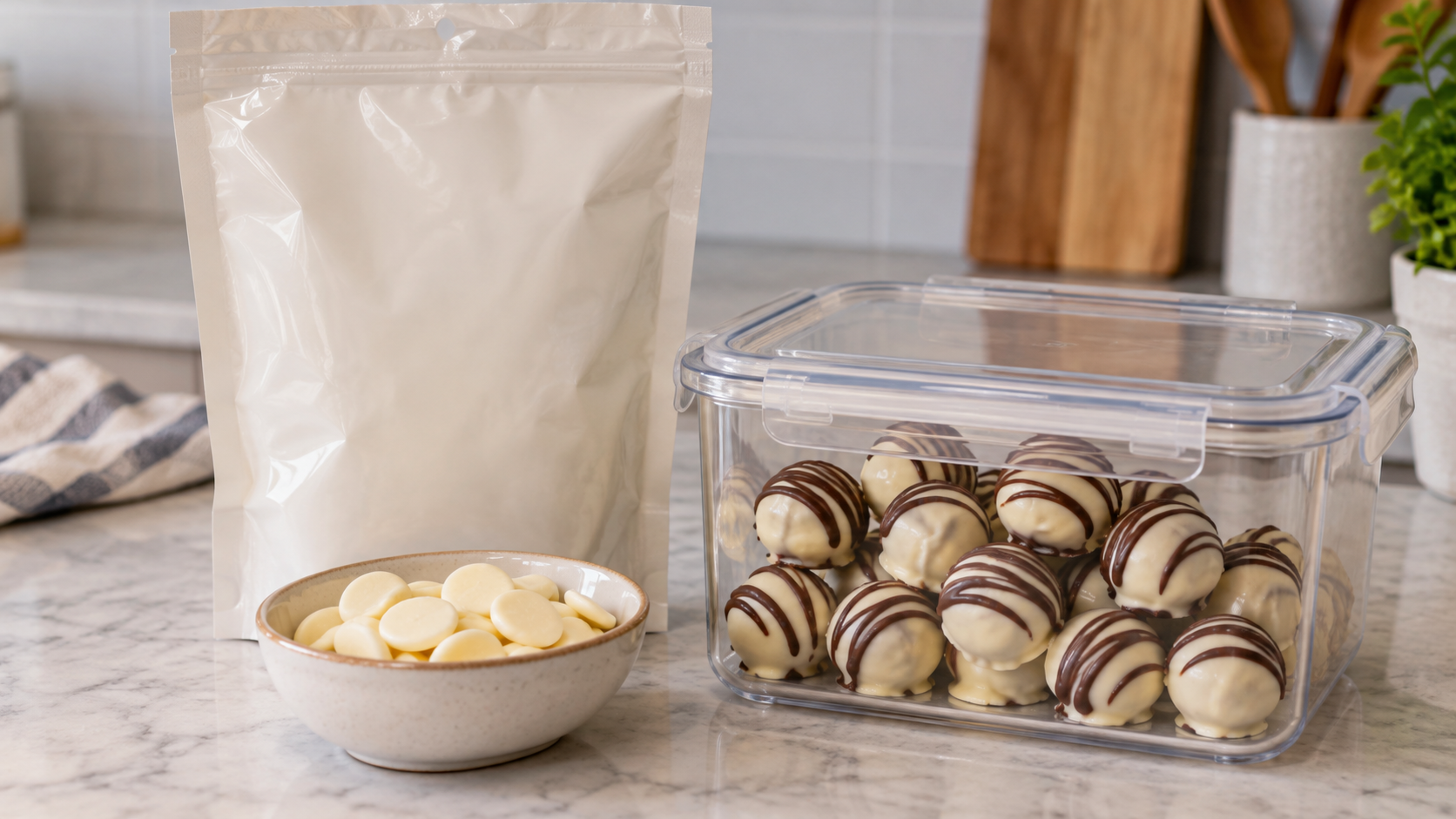
Read the legal product name, ingredients and allergen statement. Store unopened coating cool and dry, and let the filling determine whether finished sweets need refrigeration.
Frequently asked questions
Do I need a thermometer?
A thermometer is recommended whenever melting, tempering or holding chocolate within a working range.
Can I substitute one chocolate product for another?
Only when the recipe allows it, because cocoa butter, vegetable fat, sugar and milk change texture and setting.
How do I avoid moisture problems?
Keep tools dry, protect chocolate from steam and let cold closed containers warm gradually before opening.
Which allergens should I check?
Read every label for milk, soya, nuts, gluten and other required allergens, including cross-contact warnings.
Can I sell the finished product?
Follow current local food-business, hygiene, labelling and tax rules and use a defensible storage period.
What should I do before a large batch?
Test one small batch with the actual ingredients, room temperature, packaging and transport conditions.