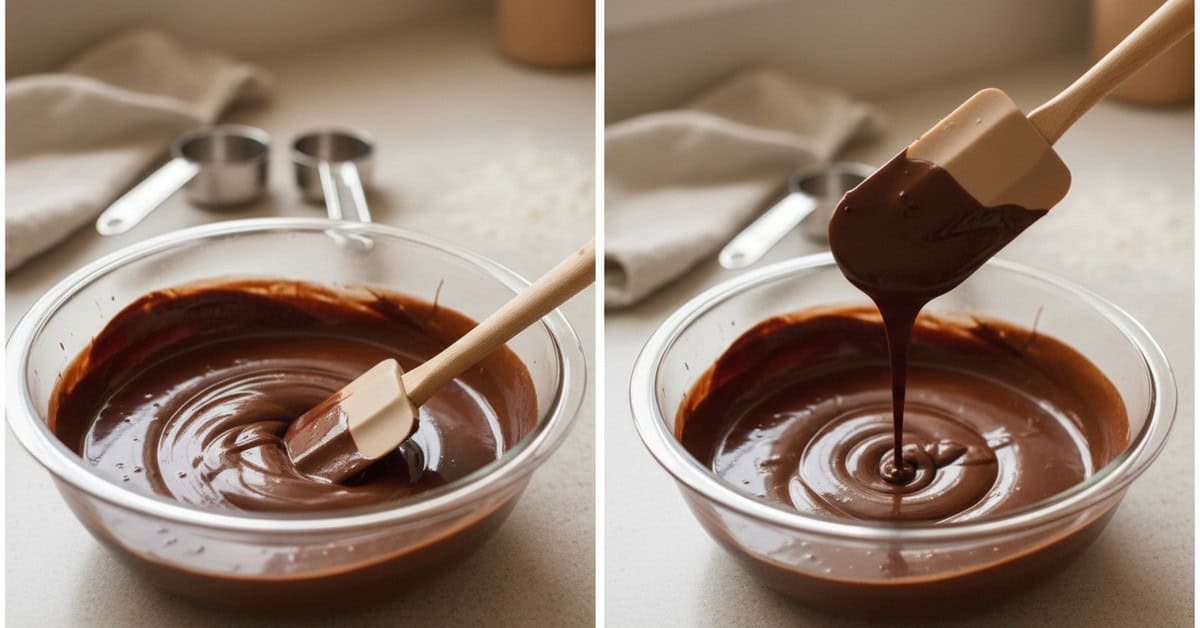

Keep water out of melted chocolate

Plain melted chocolate is sensitive to water. Fresh juice, watery extracts and steam can make it seize, so choose an ingredient suited to fat-based confectionery.
Use oil-soluble flavours
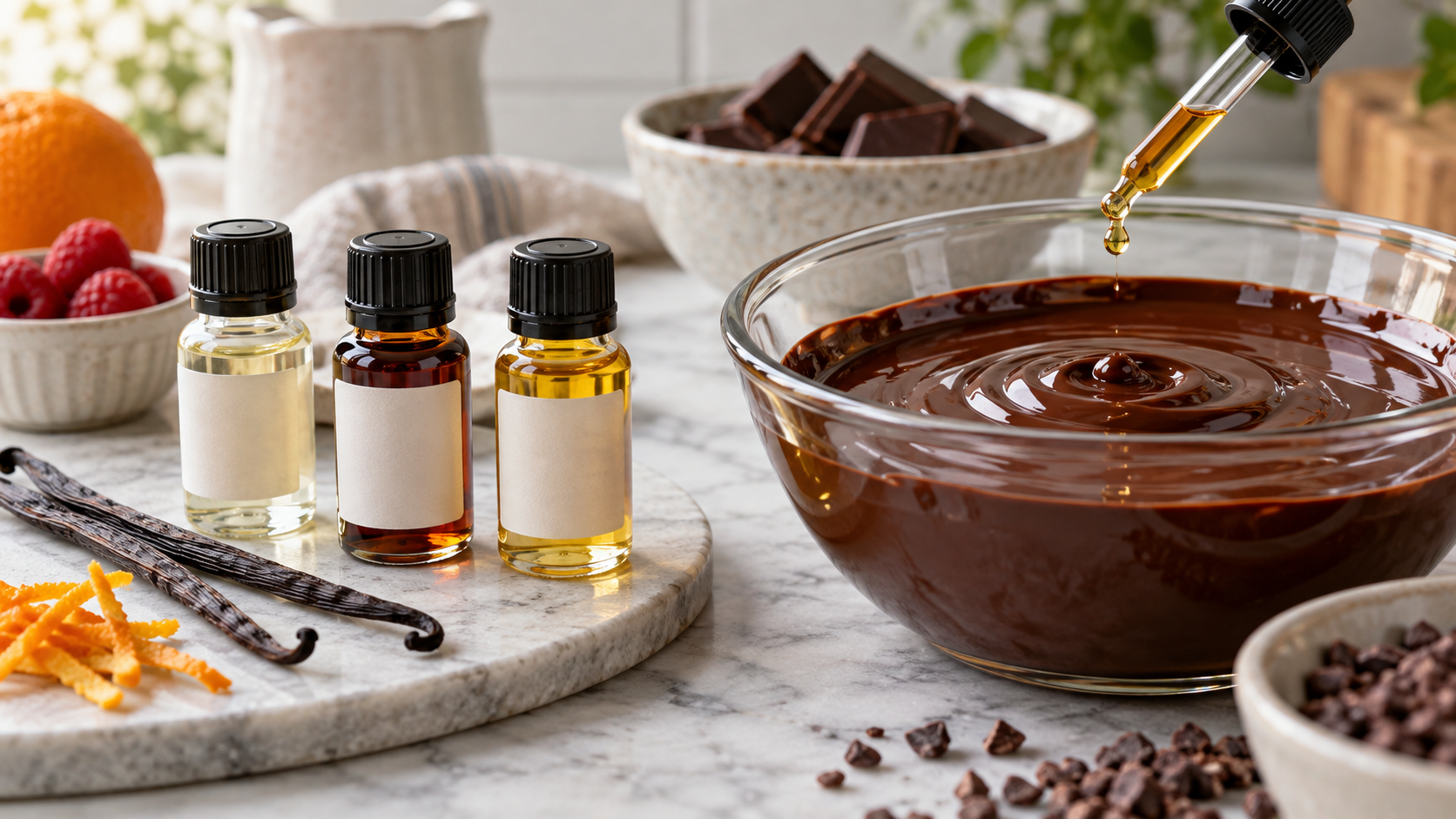
Use concentrated oil-soluble flavourings specifically labelled for food and chocolate. Start with the manufacturer’s minimum guidance, mix thoroughly and taste a small set sample before adding more.
Add dry spices carefully
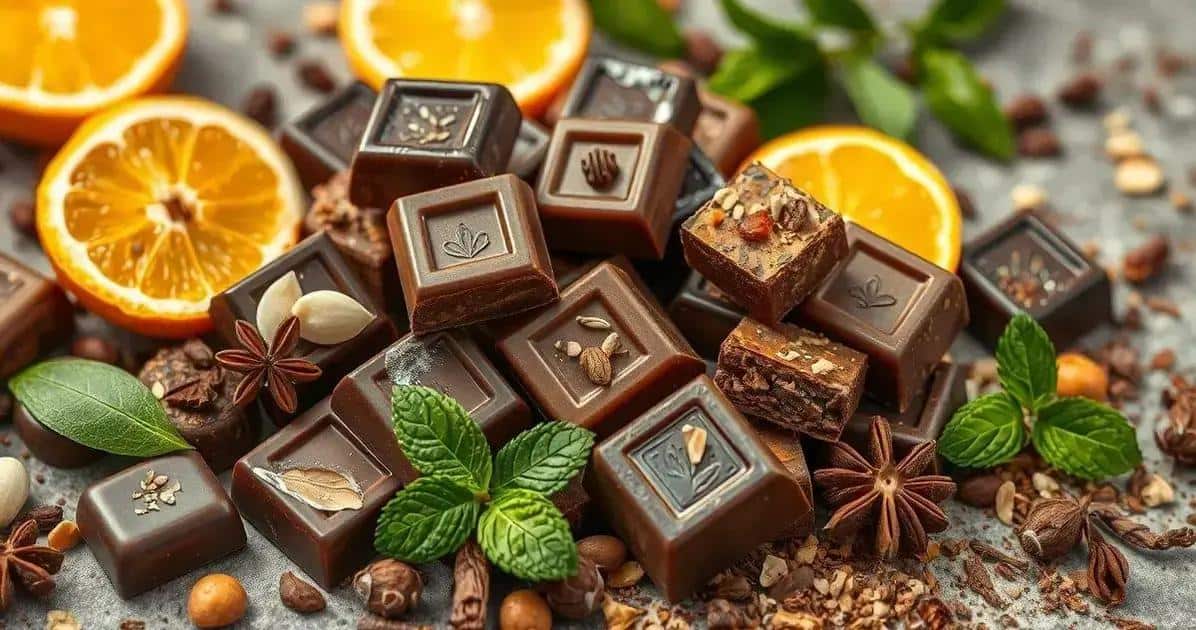
Finely ground cinnamon, cardamom or chilli can be sieved into chocolate in small quantities. Too much dry powder thickens the mixture and can leave a gritty texture.
Work with citrus safely
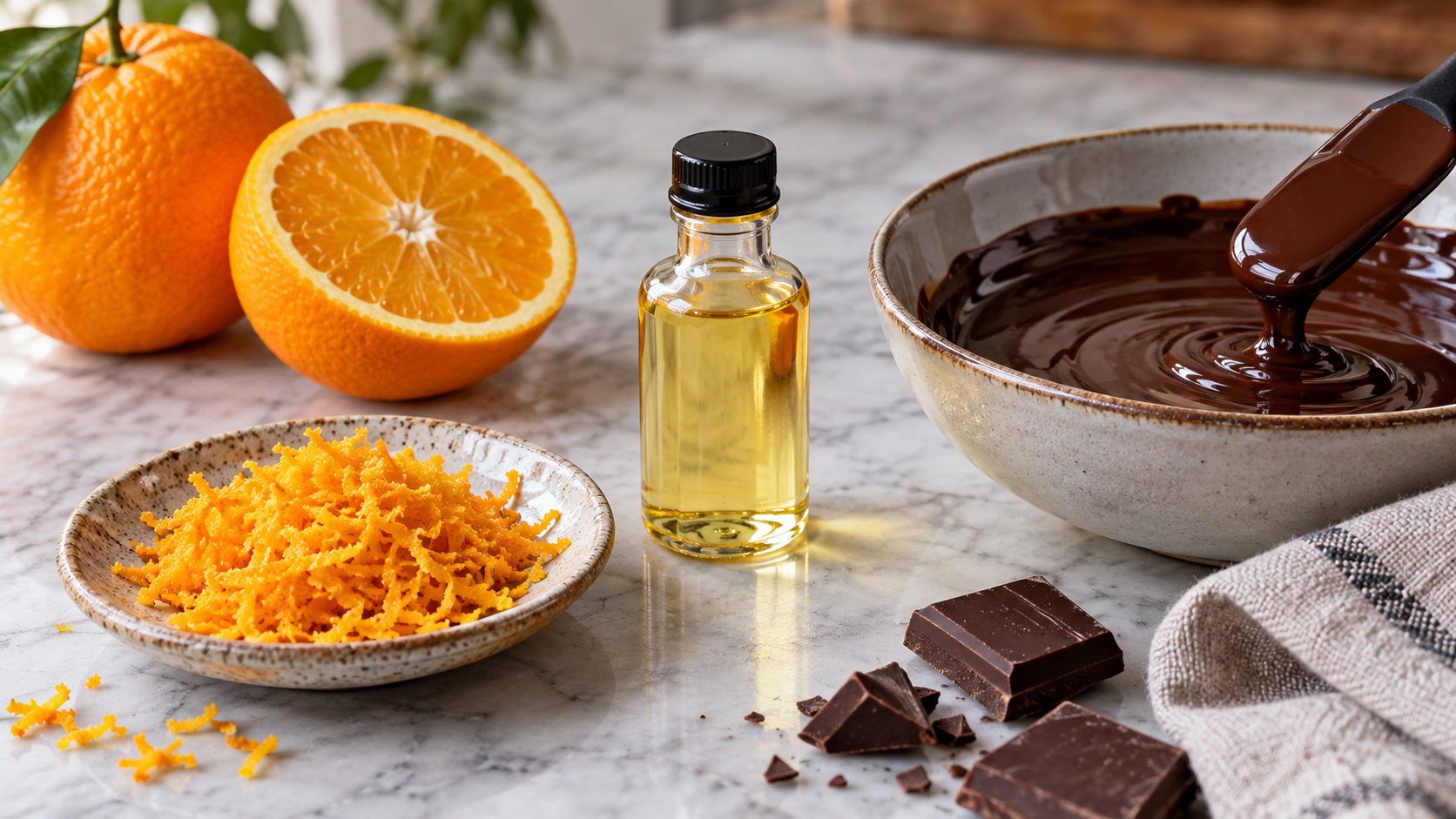
Use finely grated, completely dry zest only in products intended for prompt consumption, or use an appropriate food-grade citrus oil. Fresh peel introduces moisture and shortens predictability.
Flavour ganache separately
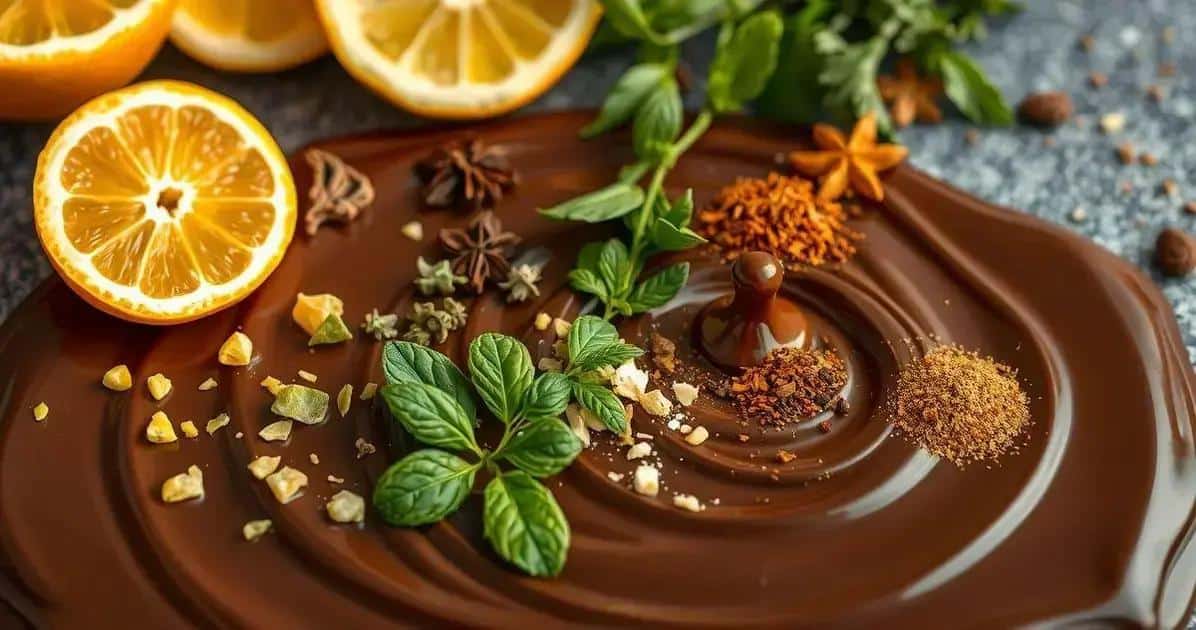
Water-based ingredients are easier to incorporate into a ganache because the cream-and-chocolate emulsion is designed to contain water. Follow a tested ratio and store the finished filling according to its perishable ingredients.
Frequently asked questions
Can I use chocolate chips?
Sometimes. Chips are designed to hold their shape in baking and may be too thick for smooth dipping or moulding.
Can I replace dark chocolate with milk chocolate?
Only when the recipe allows it. The change affects sweetness, firmness and flow, so ratios may need adjustment.
Why has my chocolate turned pale?
Fat bloom or sugar bloom can follow poor tempering, heat changes or condensation. It is usually a quality issue, but check storage and freshness.
How should chocolate be stored?
Keep it sealed in a cool, dry place away from sunlight, moisture and strong odours.
Which allergens should I check?
Read every label for milk, soya, nuts, gluten and other relevant allergens, including shared-equipment warnings.
What is the safest approach for gifts?
Use clean food-safe packaging and include ingredients, allergens, the preparation date and clear storage guidance.