
Prepare the shell
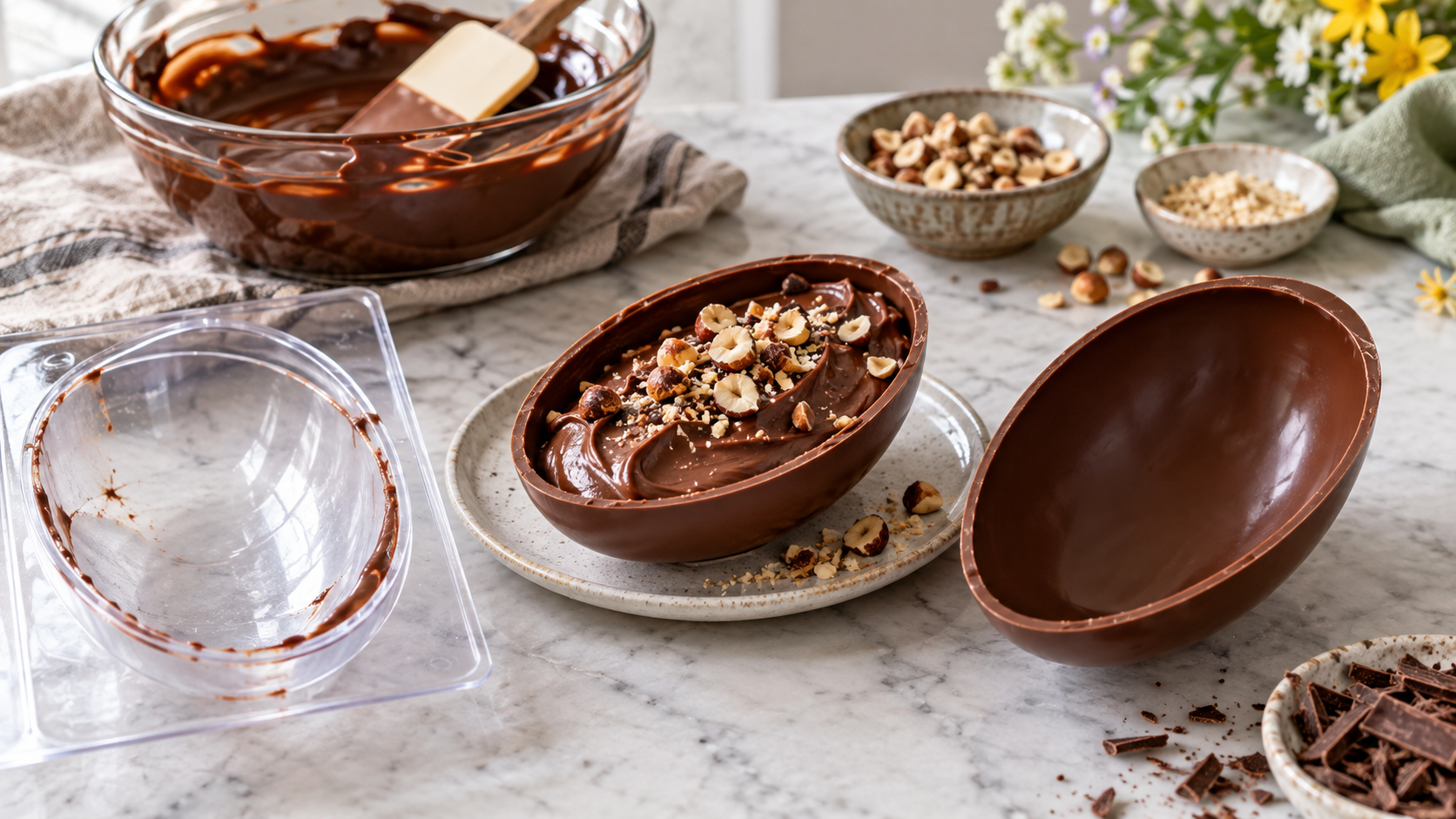
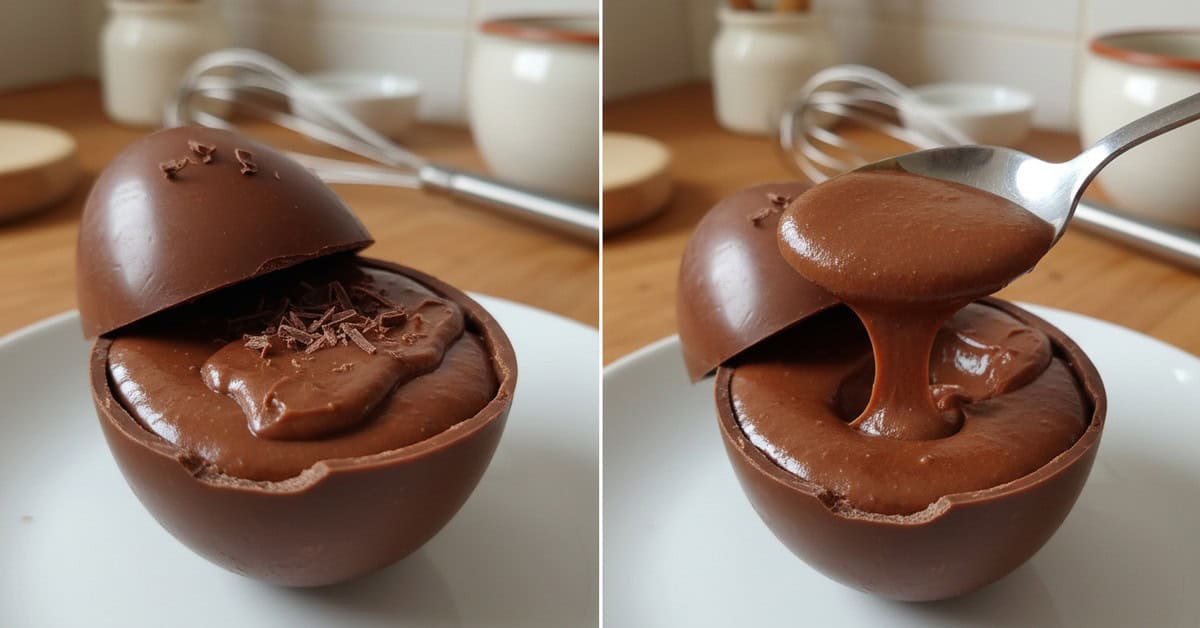
Temper suitable chocolate and brush or spread an even layer inside a clean, completely dry egg mould. Allow it to crystallise, then add another thin layer around weak edges before releasing it.
Choose a safe filling
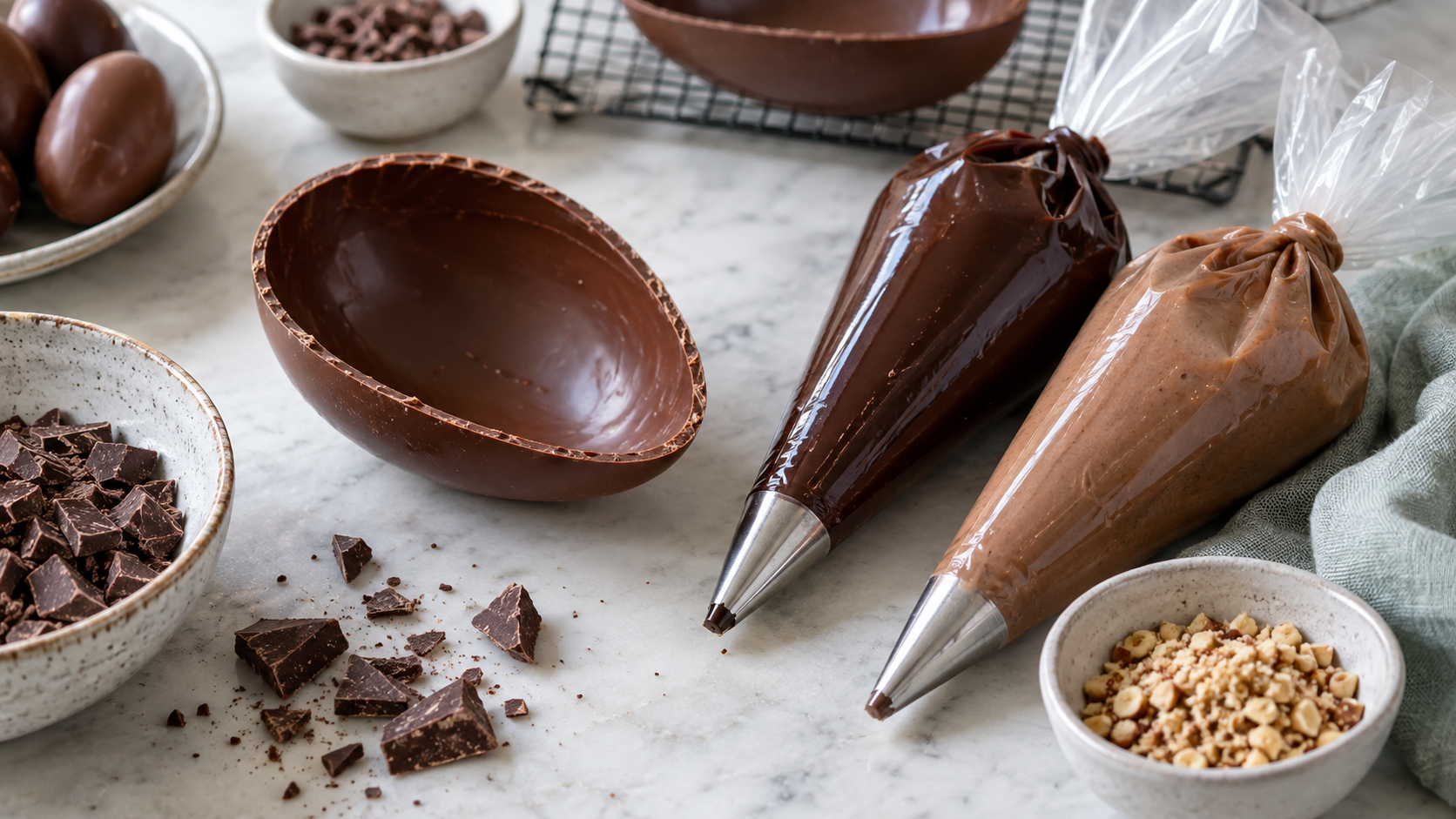
Use a filling whose storage needs you understand. Fresh cream, cream cheese, custard and cut fruit require refrigeration and prompt consumption.
Build neat layers
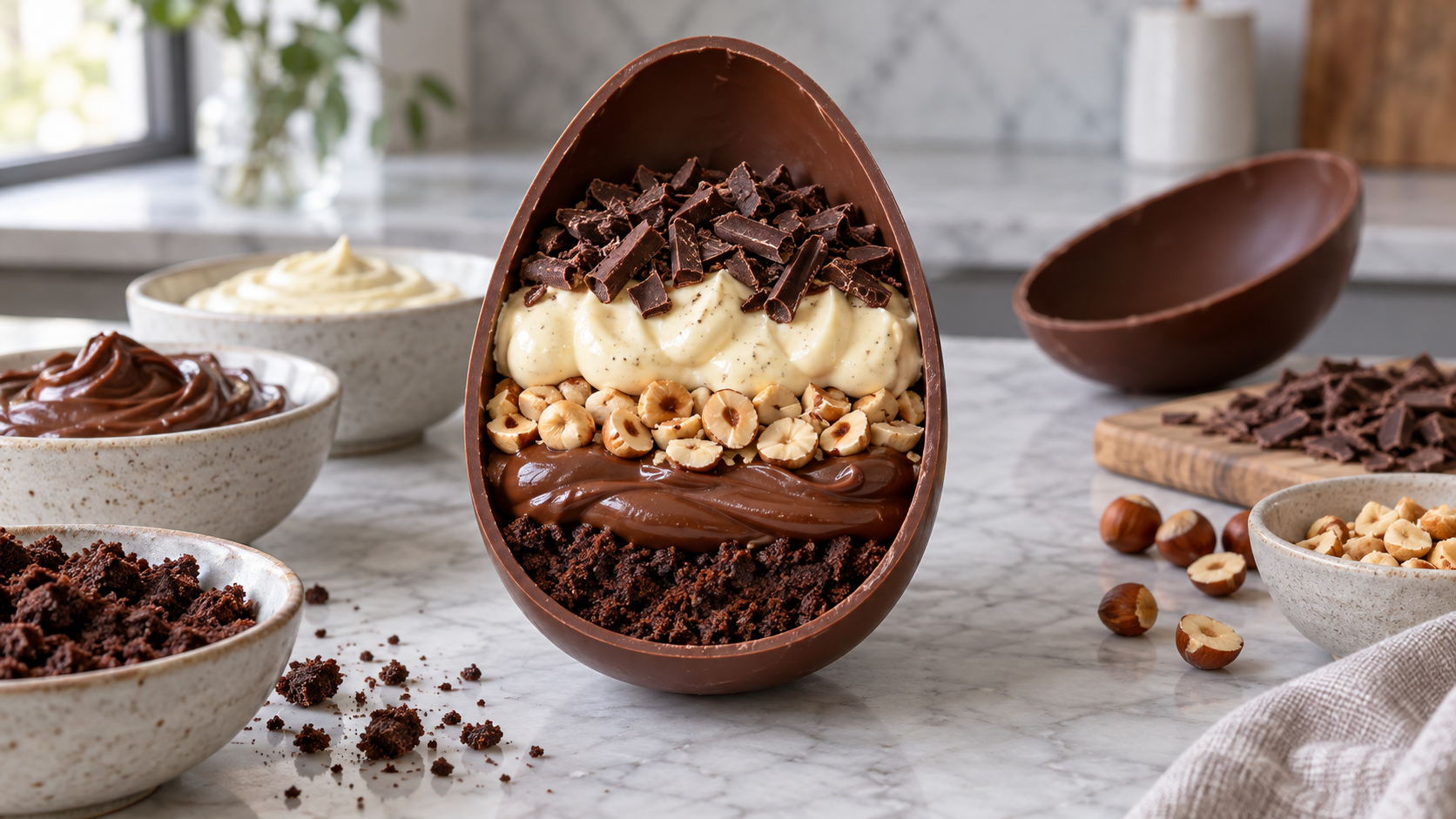
Pipe cooled filling into the shell without overfilling it. Add cake or biscuit only if the texture will remain pleasant during the planned storage time.
Decorate and personalise
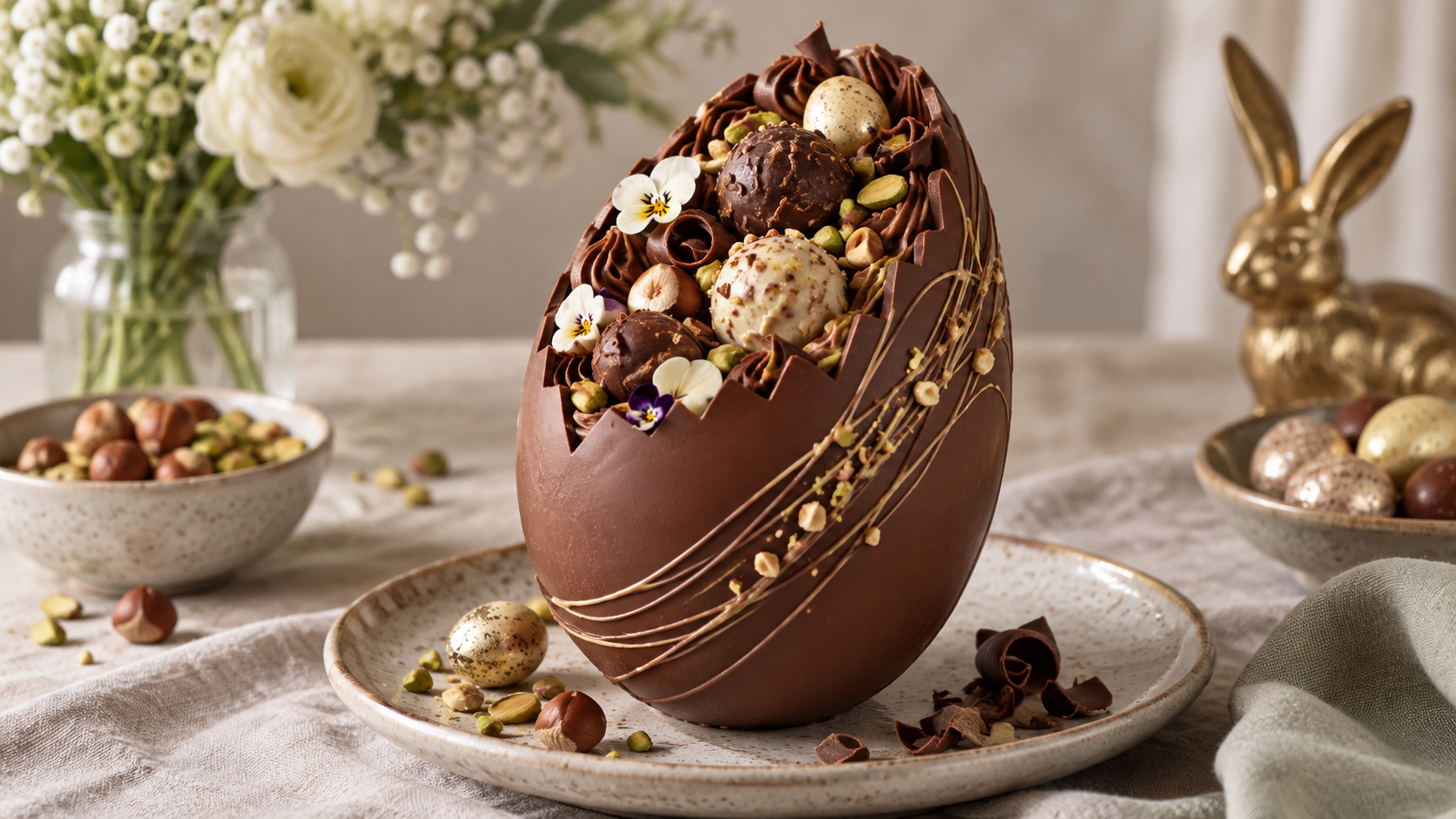
Use tempered chocolate, dry sprinkles or a removable paper topper for decoration. Keep messages and non-food decorations away from exposed filling.
Pack and store

Place the half egg in a food-safe tray inside a rigid box. Label ingredients, allergens, preparation date and refrigeration instructions, and keep it cold during transport.
Frequently asked questions
Can I substitute one chocolate for another?
Only when the recipe allows it. Cocoa solids, cocoa butter, milk and sugar change texture as well as flavour.
Why should I weigh chocolate?
Weight gives repeatable ratios for baking, ganache, fillings and coatings, while cup measures vary with piece size.
How should chocolate be melted?
Use gentle heat, stir frequently and keep water and steam away from the bowl.
How should finished chocolate be stored?
Keep plain chocolate cool and dry; refrigerate desserts and fillings that contain perishable ingredients.
Which allergens should I check?
Check every ingredient for milk, soya, nuts, gluten and other relevant allergens, including shared-equipment warnings.
Can I give it as a homemade gift?
Yes, with clean food-safe packaging and clear ingredient, allergen, date and storage information.