
Melt chocolate gently in a bowl over hot water, stir regularly and finish with residual heat where possible. Keep moisture out and avoid overheating for a smooth result ready for your chosen recipe.
Chocolate can go from smooth to scorched if it receives too much heat. A bain-marie gives you a gentler way to melt it, but it still needs attention. Prepare your equipment first, chop the chocolate evenly and stay nearby while it melts.
Chocolate and equipment
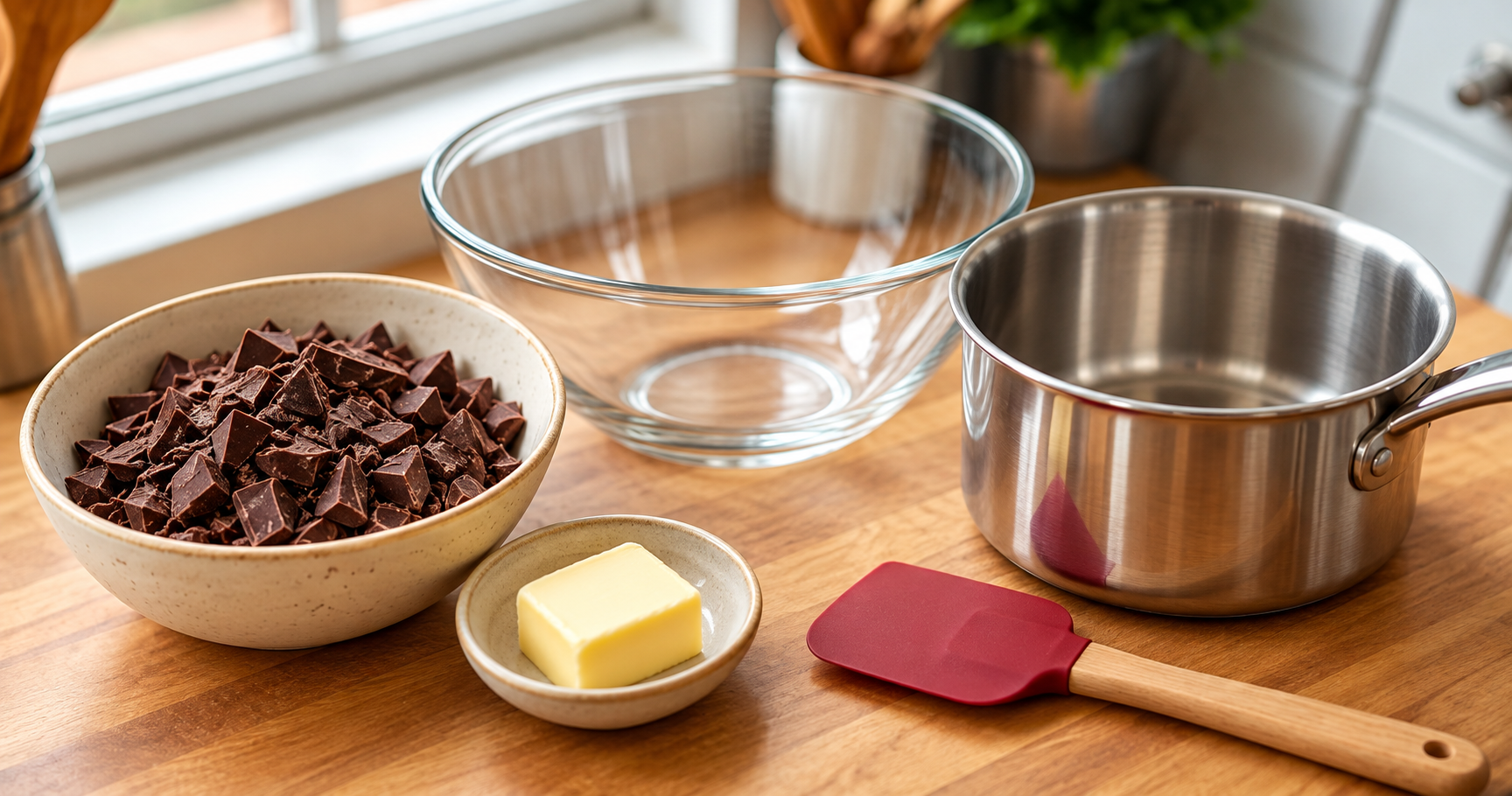
- 300 g dark or milk chocolate, in a bar or suitable drops.
- 10 g butter, optional, only for a preparation where a softer chocolate mixture is wanted.
- Water for the bain-marie, kept separate from the chocolate.
- A saucepan and a heatproof glass or stainless-steel bowl that sits securely above the water without touching it.
- A clean, dry spatula, for stirring.
Butter is not needed simply to melt chocolate. Adding it changes the mixture, so leave it out when your recipe calls for plain chocolate for tempering or a firm moulded finish. Choose chocolate suited to the use you have in mind.
How to melt chocolate without burning it
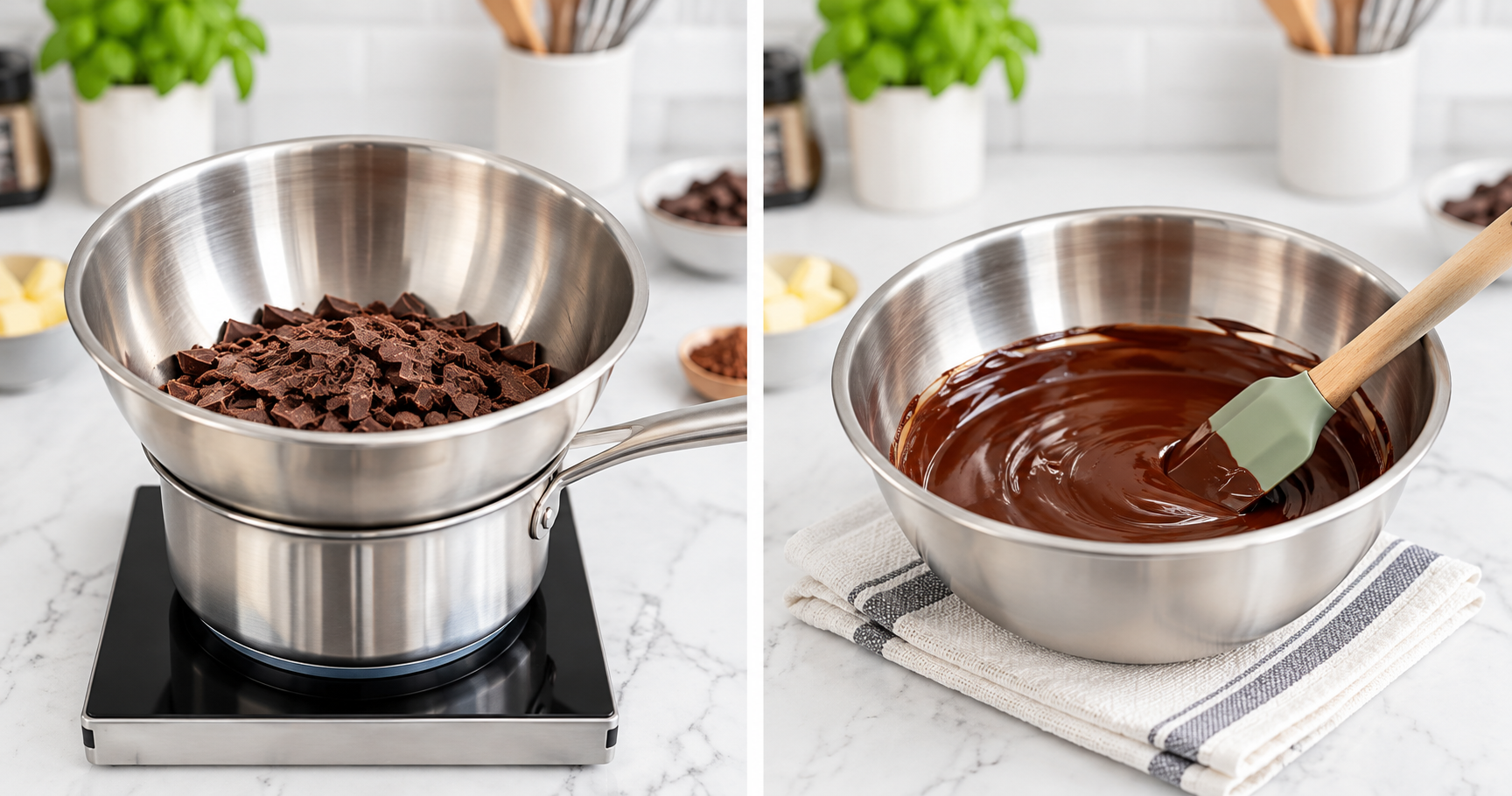
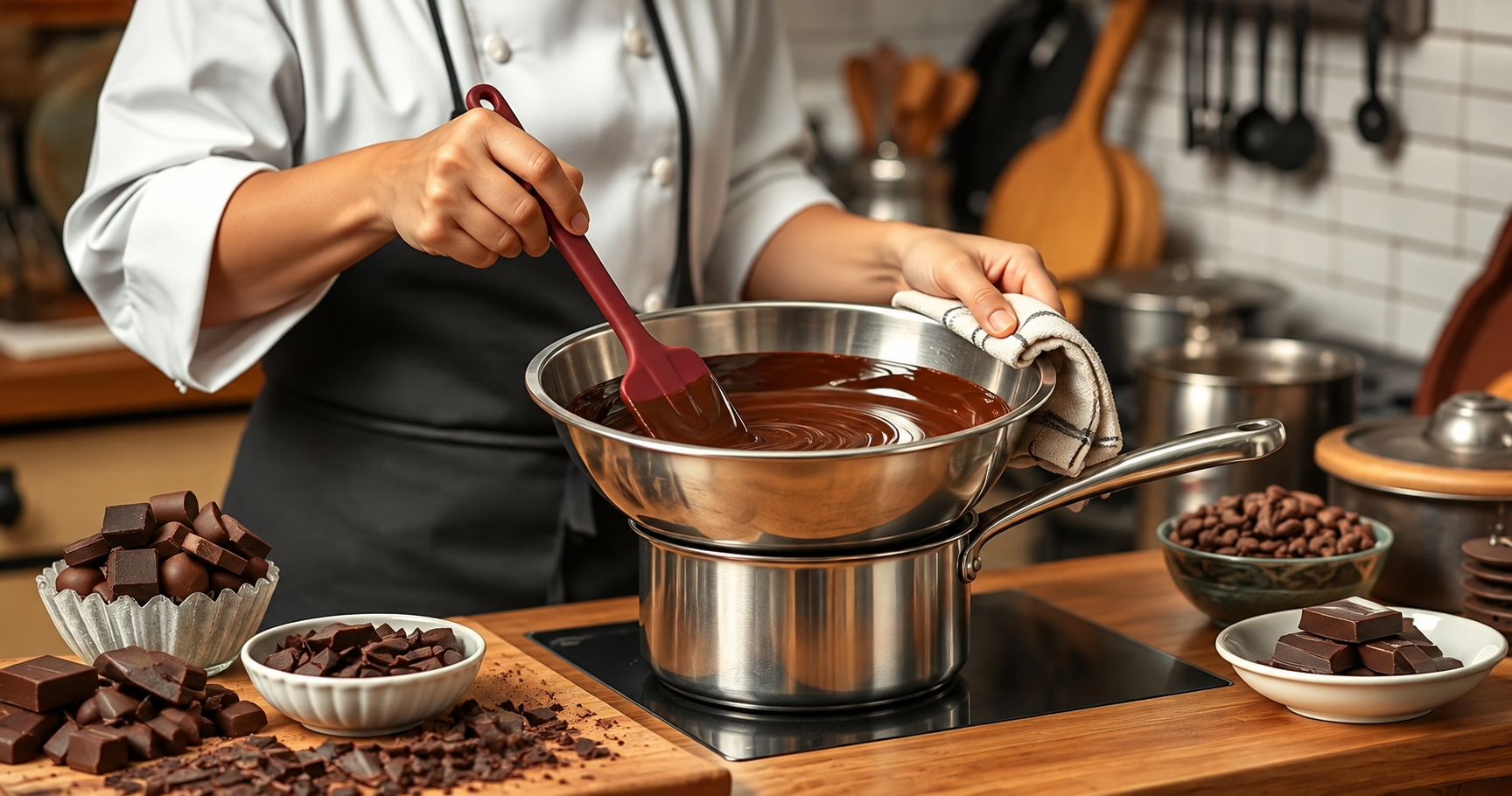
- Prepare the bain-marie. Heat water gently in the saucepan. It should be hot rather than boiling vigorously. Check that the bowl fits securely and its base stays above the water.
- Chop the chocolate. Break a bar into small, fairly even pieces. Suitable chocolate drops can go straight into the bowl.
- Set the bowl in place. Put the chocolate in the dry heatproof bowl and position it over the water. Keep splashes and excess steam away from the chocolate.
- Stir as it melts. Use a dry spatula to move the chocolate around the bowl so the heat is distributed evenly. Keep the heat gentle.
- Finish away from the heat where possible. When only a few small pieces remain, lift the bowl away carefully and continue stirring. The residual heat may be enough to melt them. If more heat is needed, return briefly to the bain-marie and watch closely.
- Add the optional butter only if appropriate. Stir the 10 g butter into the melted chocolate until combined if you are making the softer mixture described above. Otherwise keep the chocolate plain and continue with your chosen recipe.
Dry the outside of the bowl before pouring if water has collected there, so it cannot drip into the chocolate. Melting is one stage of preparation; it is not the same as tempering.
Understanding the chocolate you are melting
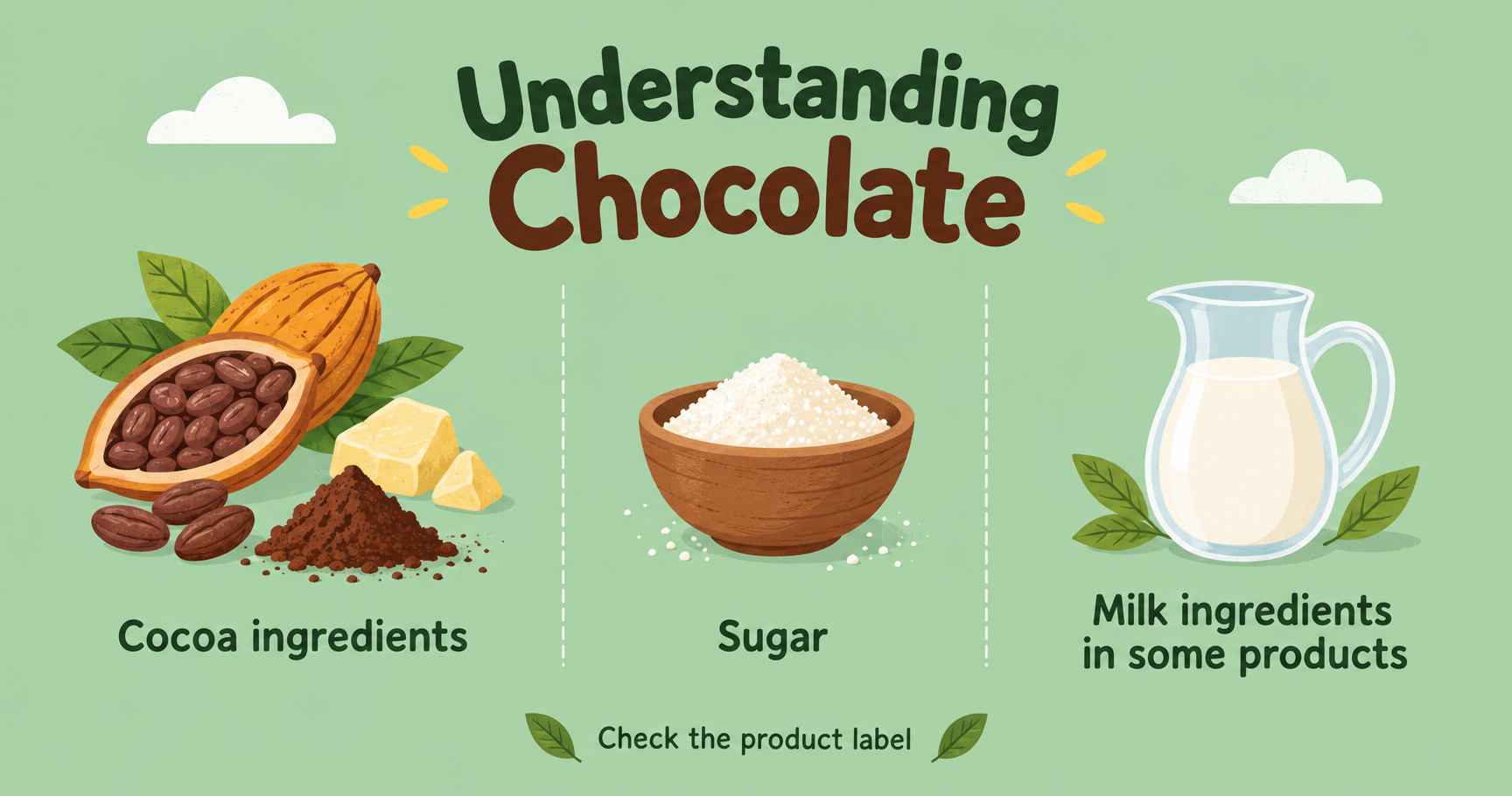
Chocolate begins with cocoa beans, which go through processing before becoming the chocolate used in the kitchen. Cocoa solids, cocoa butter, sugar and, in some products, milk ingredients contribute to its flavour and behaviour.
Dark and milk chocolate have different formulations, and white chocolate contains cocoa butter without the non-fat cocoa solids that give dark chocolate its colour. Product instructions are more useful than assuming every bar will melt or set in exactly the same way.
For firm moulded chocolates or a crisp coating, follow the manufacturer’s tempering method after melting. Callebaut’s tempering tutorials explain how controlled crystallisation affects the finished chocolate.
Practical tips for gentle melting
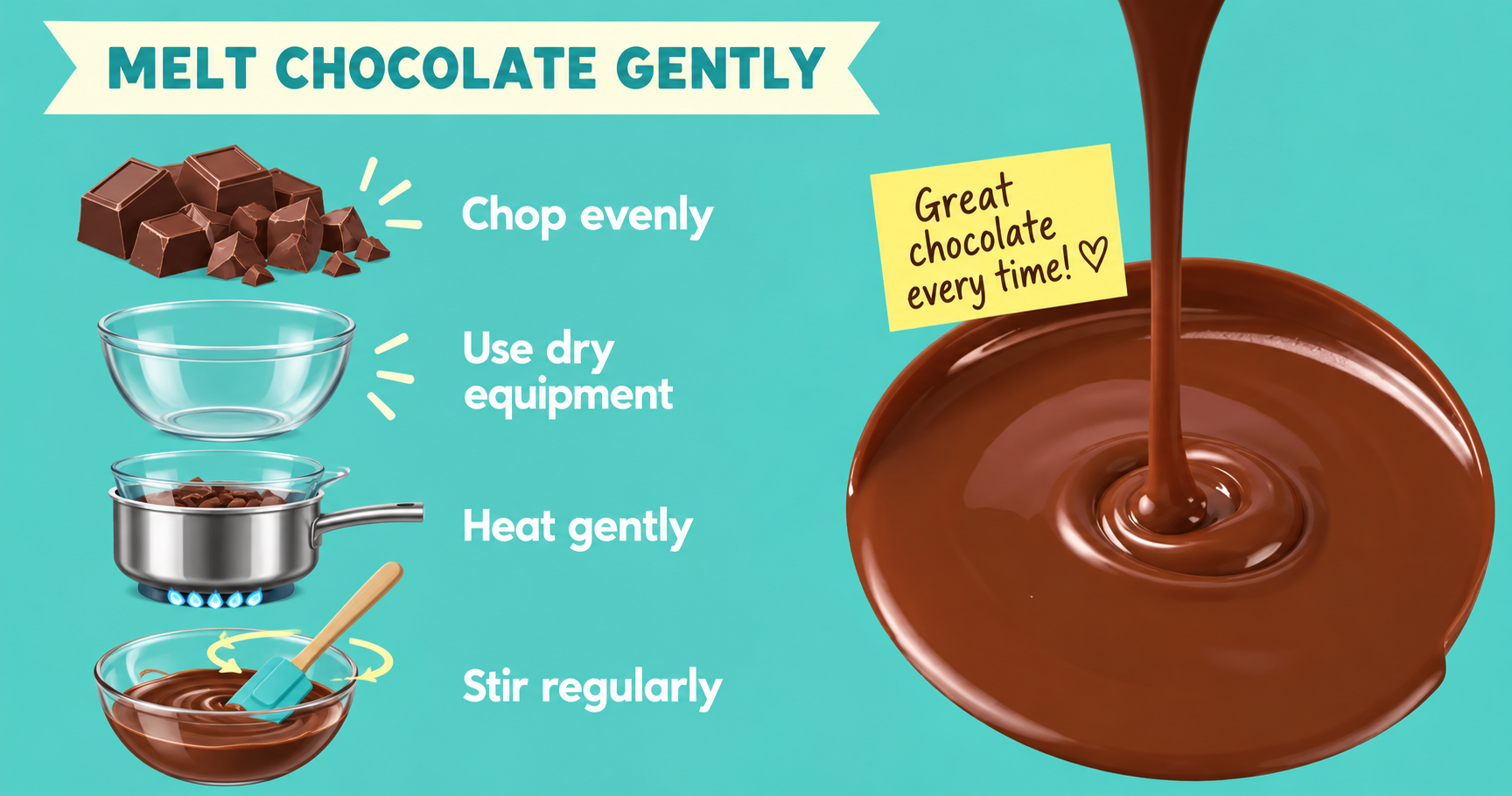
- Use indirect heat carefully. A bowl over hot water reduces direct contact with a hot pan, but it does not make overheating impossible.
- Keep pieces similar in size. Large chunks take longer to melt while smaller pieces around them may already be hot.
- Stir regularly. Moving the chocolate helps spread the heat and lets you judge when it is almost melted.
- Keep equipment dry. Water entering plain melted chocolate can make it seize and become thick or grainy.
- Use residual heat. Remove the bowl when a few small pieces remain and see whether stirring will finish the job.
- Watch the product guidance. Avoid applying one melting temperature to every type of chocolate.
If using a microwave instead, use a microwave-safe bowl, low power and short bursts of about 20–30 seconds to begin with. Stir between bursts and shorten them as the chocolate melts. Never put a stainless-steel bowl in the microwave.
Ideas for using melted chocolate
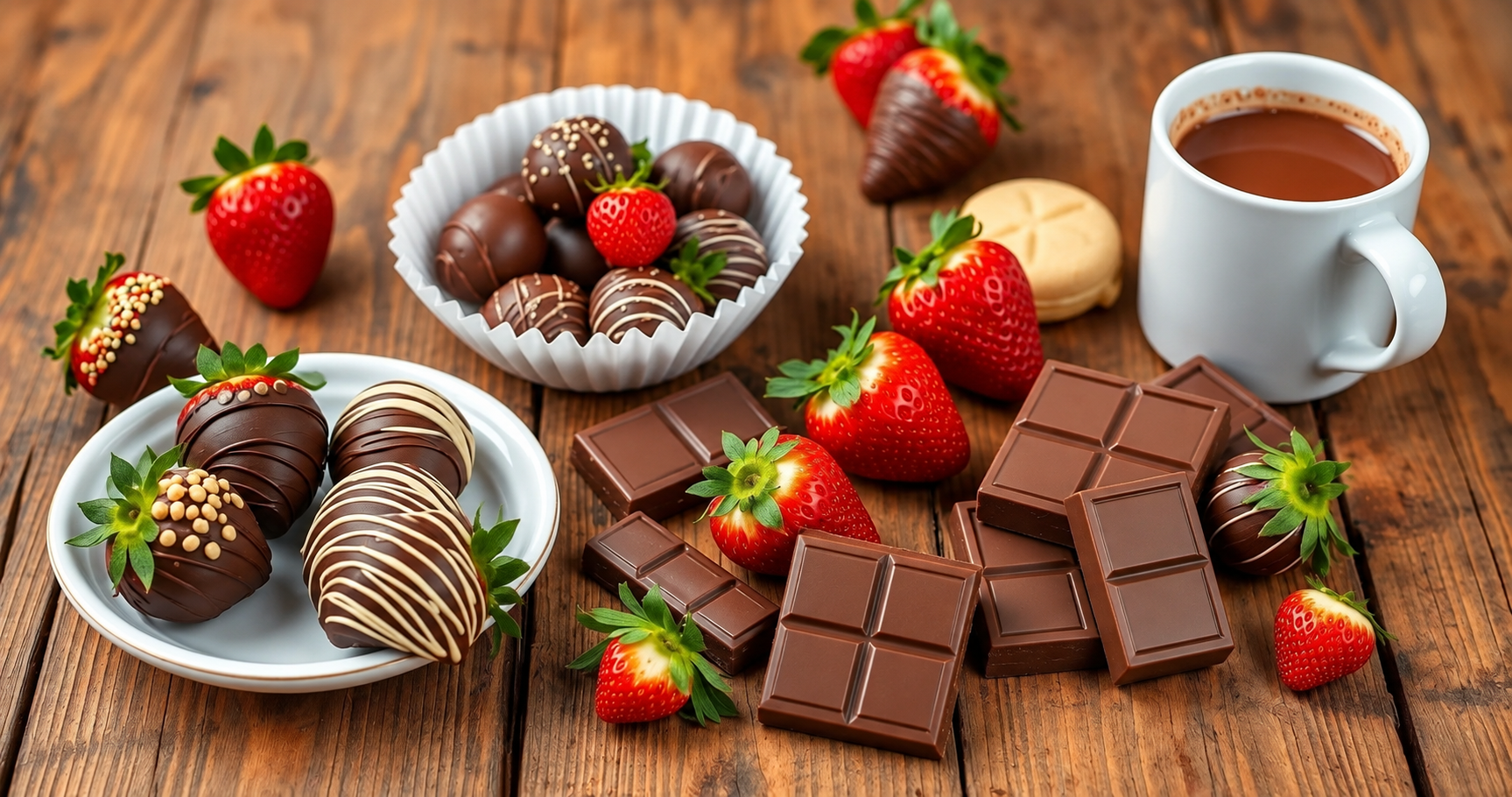
Chocolate-dipped strawberries
Dip washed and thoroughly dried strawberries in chocolate prepared for coating, then rest them on baking parchment. Contrasting chocolate details can add decoration. Follow suitable storage guidance for the fresh fruit.
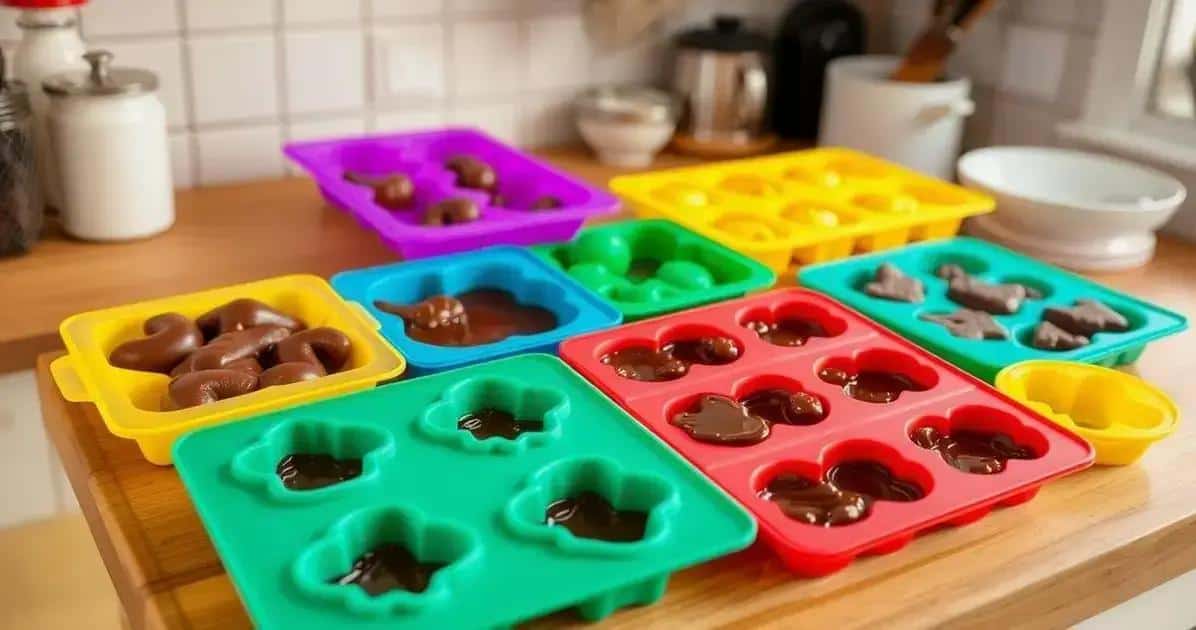
Moulded chocolates
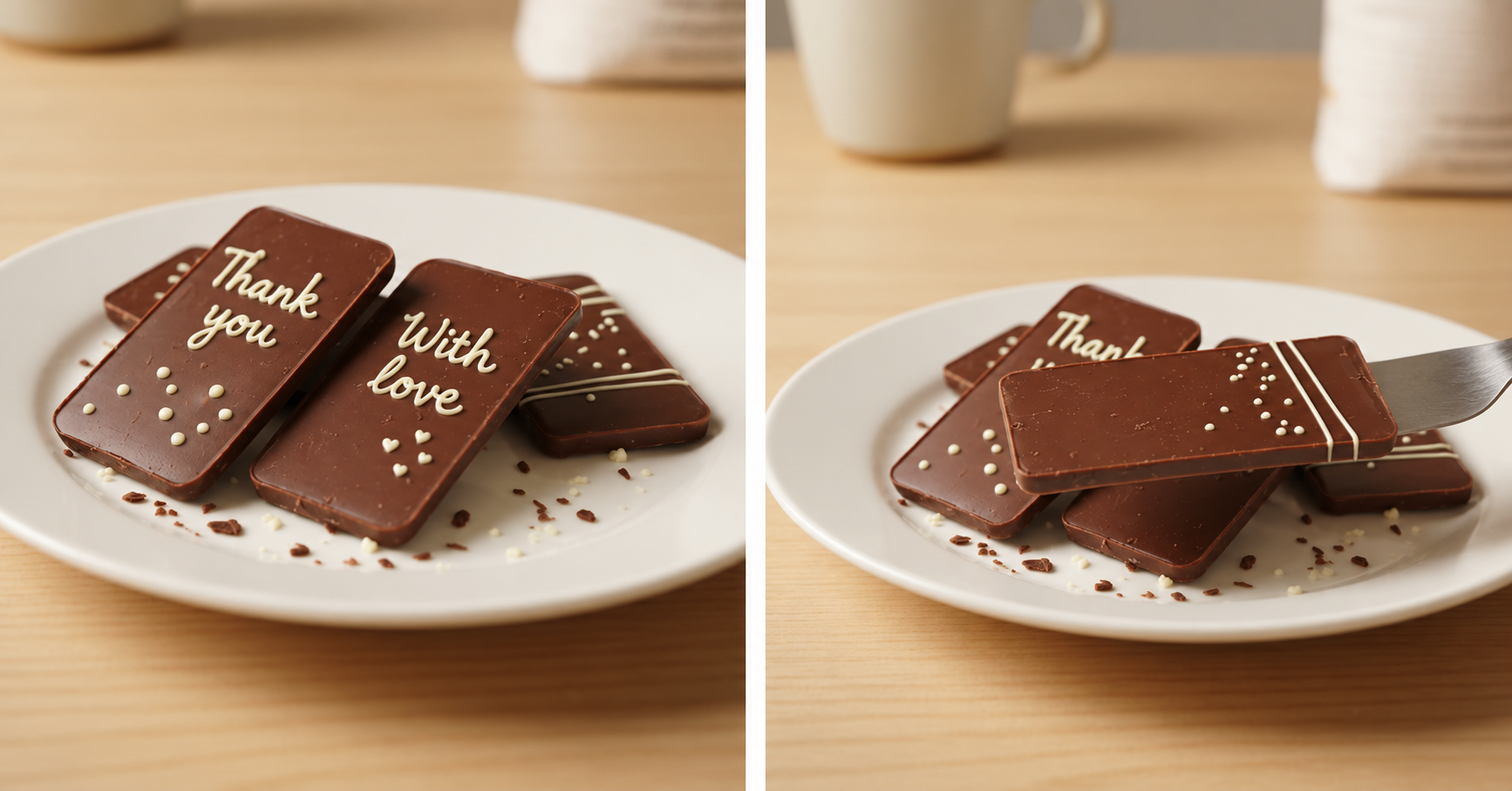
Use an appropriate tempering and moulding method for the chocolate. Filled versions need a complete recipe for the shell, filling and sealing stages, with storage suited to the filling.
Hot chocolate
Melt chocolate into hot milk for a warm drink, following the quantities in your chosen recipe. Cinnamon and a little whipped cream can provide a finishing touch.
Chocolate bars with added texture
Nuts, dried fruit or suitable ready-to-eat cereal ingredients can add texture to a chocolate bar. Prepare the chocolate for the desired finish and use a suitable mould or lined tin.
Chocolate pancakes
Use melted chocolate as a filling for cooked pancakes or drizzle it over them with fruit. Let the pancake recipe determine the cooking method rather than adding chocolate to an uncooked centre and guessing the timing.
Ready for the next stage
Gentle heat and a dry bowl make a useful starting point for many chocolate preparations. Find more ideas at Receitas da Bella.
Frequently asked questions
What is a good way to melt chocolate?
A dry heatproof bowl over gently heated water gives you controlled, indirect heat. Stir regularly and keep water and excess steam out of the chocolate.
Can I use a microwave?
Yes. Use a microwave-safe bowl and short bursts at low power, stirring between them. Reduce the heating time as the chocolate melts.
How can I stop it becoming grainy?
Keep the bowl and utensils dry, prevent water entering plain chocolate and avoid excessive heat. These address common causes, although a damaged mixture may not be recoverable for its intended use.
Which chocolate can I melt?
Dark, milk and white chocolate can all be melted. Choose a product suitable for the recipe and follow its handling instructions, especially for heat-sensitive white chocolate.
What if the chocolate burns?
Remove it from the heat. Butter or cream cannot remove a burnt flavour; badly scorched chocolate needs replacing rather than disguising it in the recipe.
What can I make with melted chocolate?
Ideas include dipped fruit, moulded chocolates, hot chocolate, bars with nuts or dried fruit, and pancake fillings. Each preparation may require further steps beyond melting.