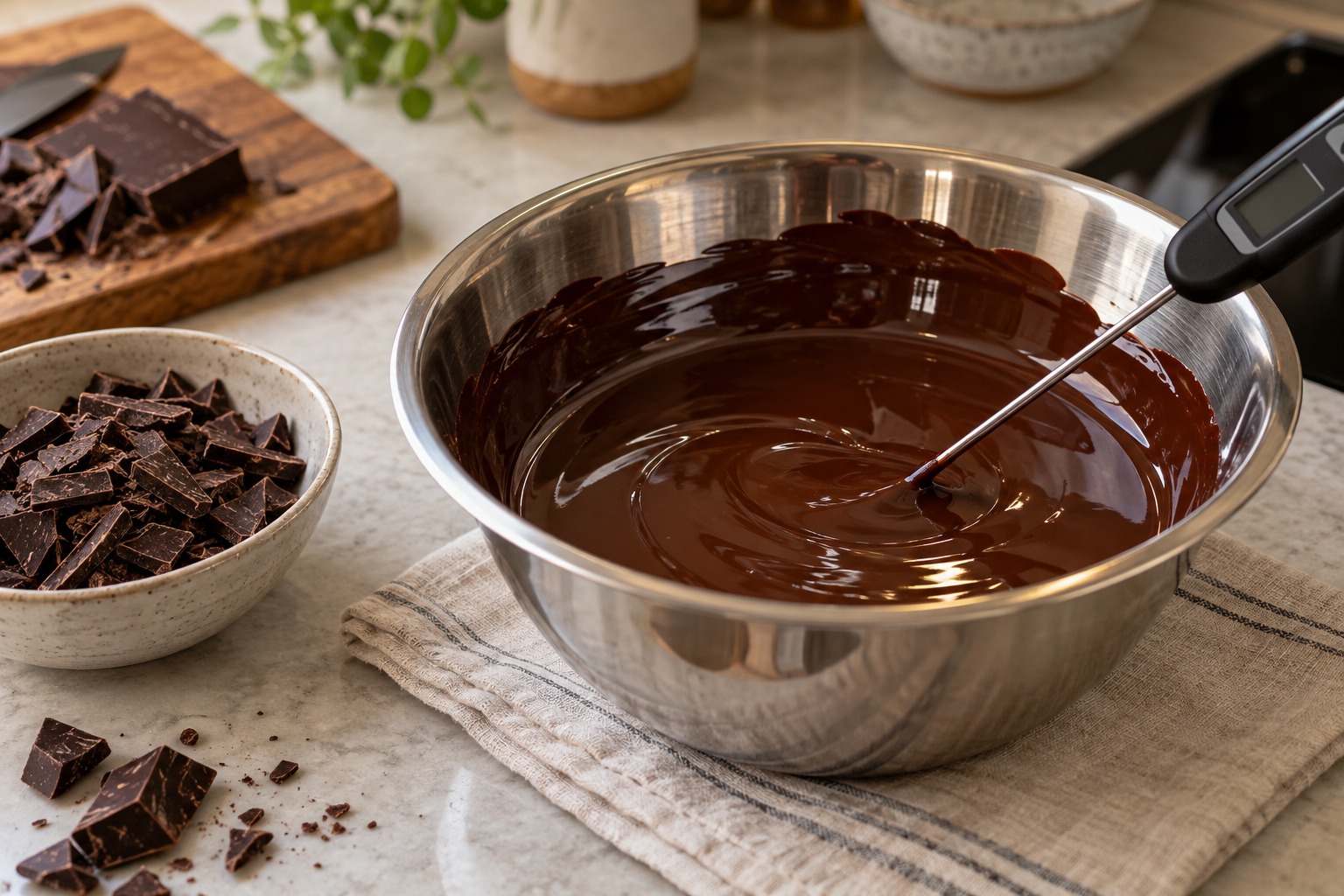

Temper and test the chocolate first
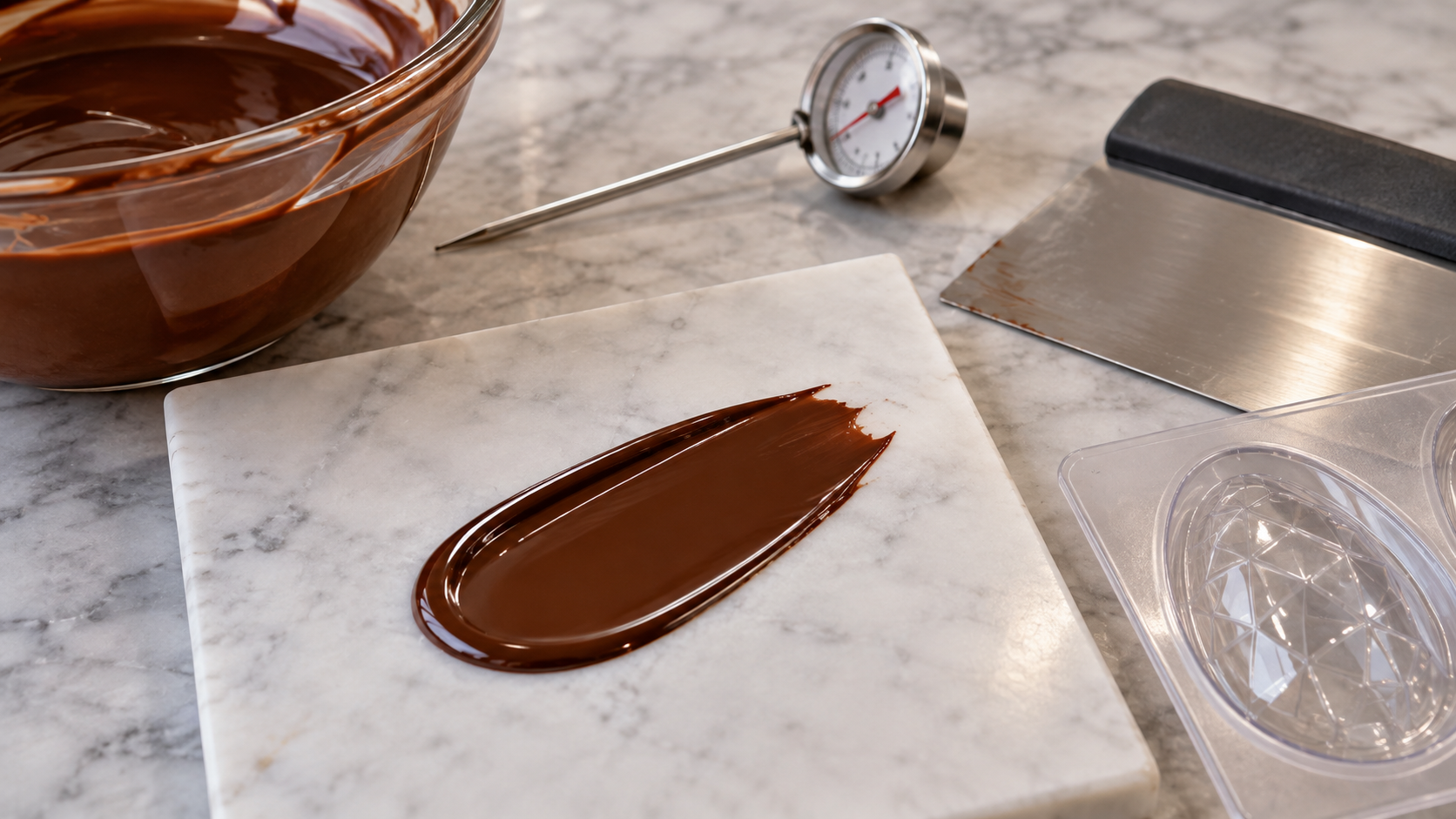
A thin shell needs stable temper. Follow the chocolate maker’s temperature range and test a smear before filling the mould; shiny packaging cannot compensate for poor crystallisation.
Prepare a clean dry mould
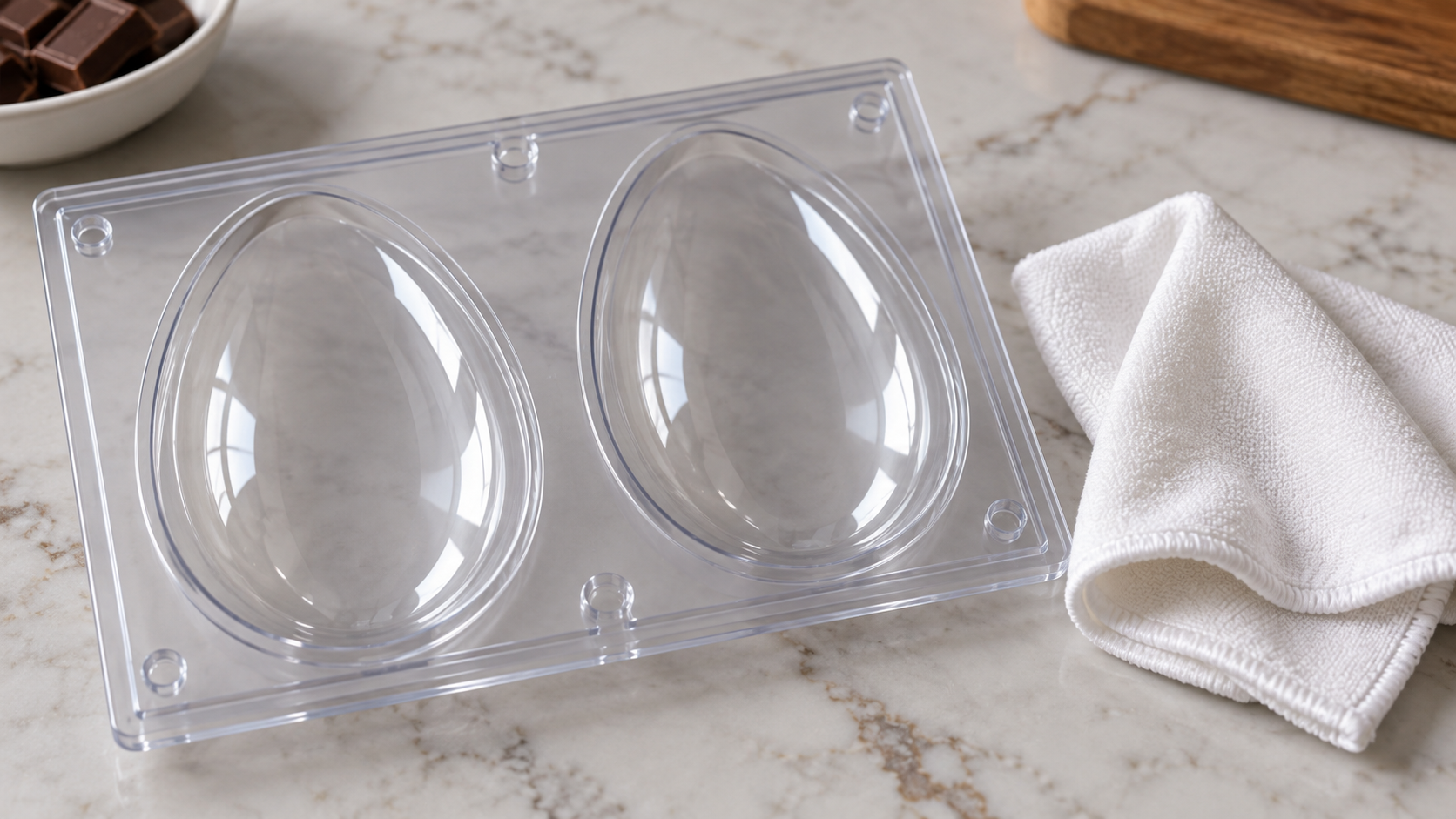
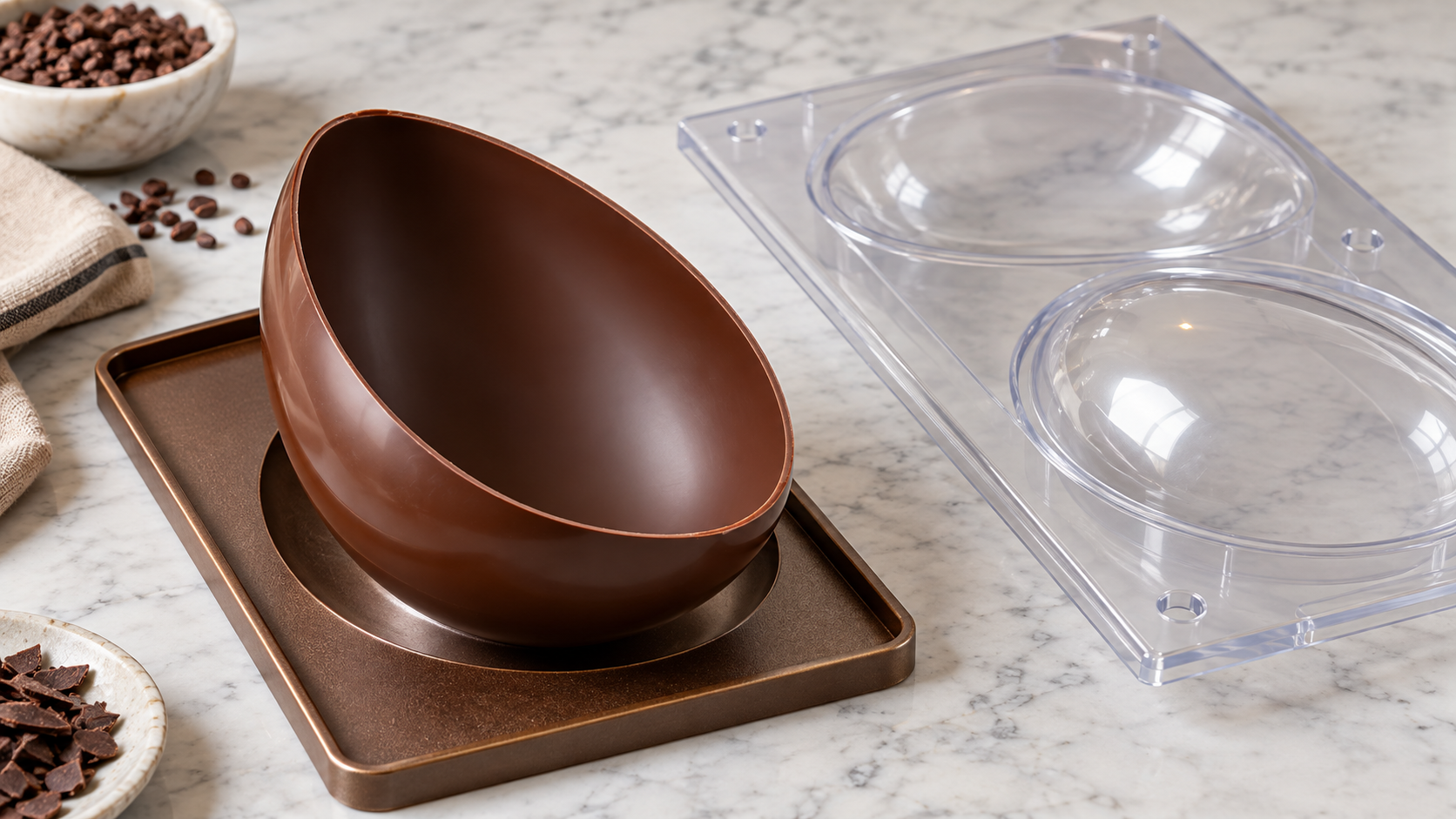
Polish a suitable rigid mould with a soft lint-free material. It must be dry and near the recommended working temperature. Scratches and water marks transfer to the shell.
Build even thickness
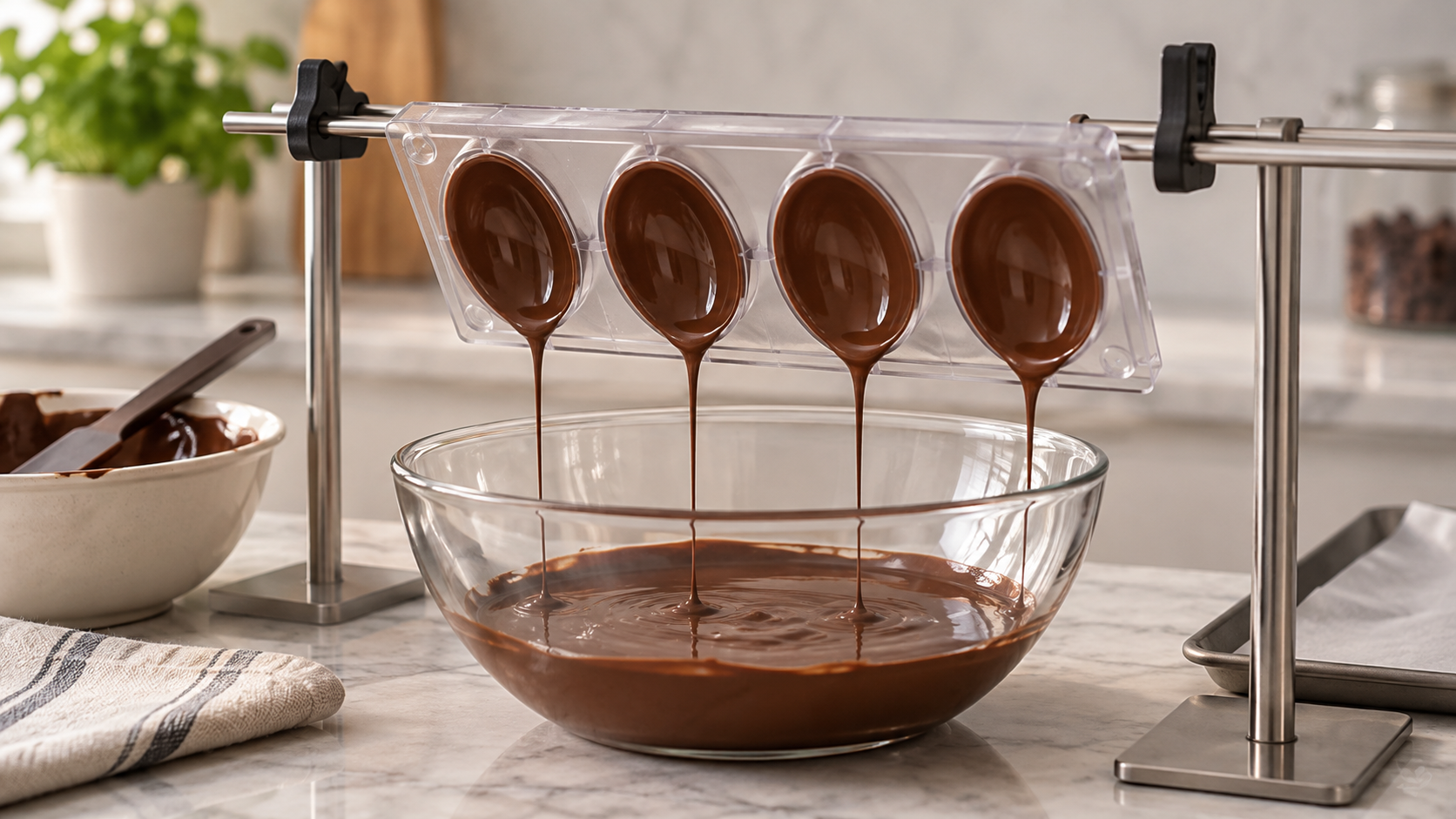
Fill, tap out bubbles, invert to drain and scrape the edge clean. Rotate the mould as chocolate sets. If the first layer is too thin, add a second controlled layer at the rim rather than random patches.
Cool without thermal shock
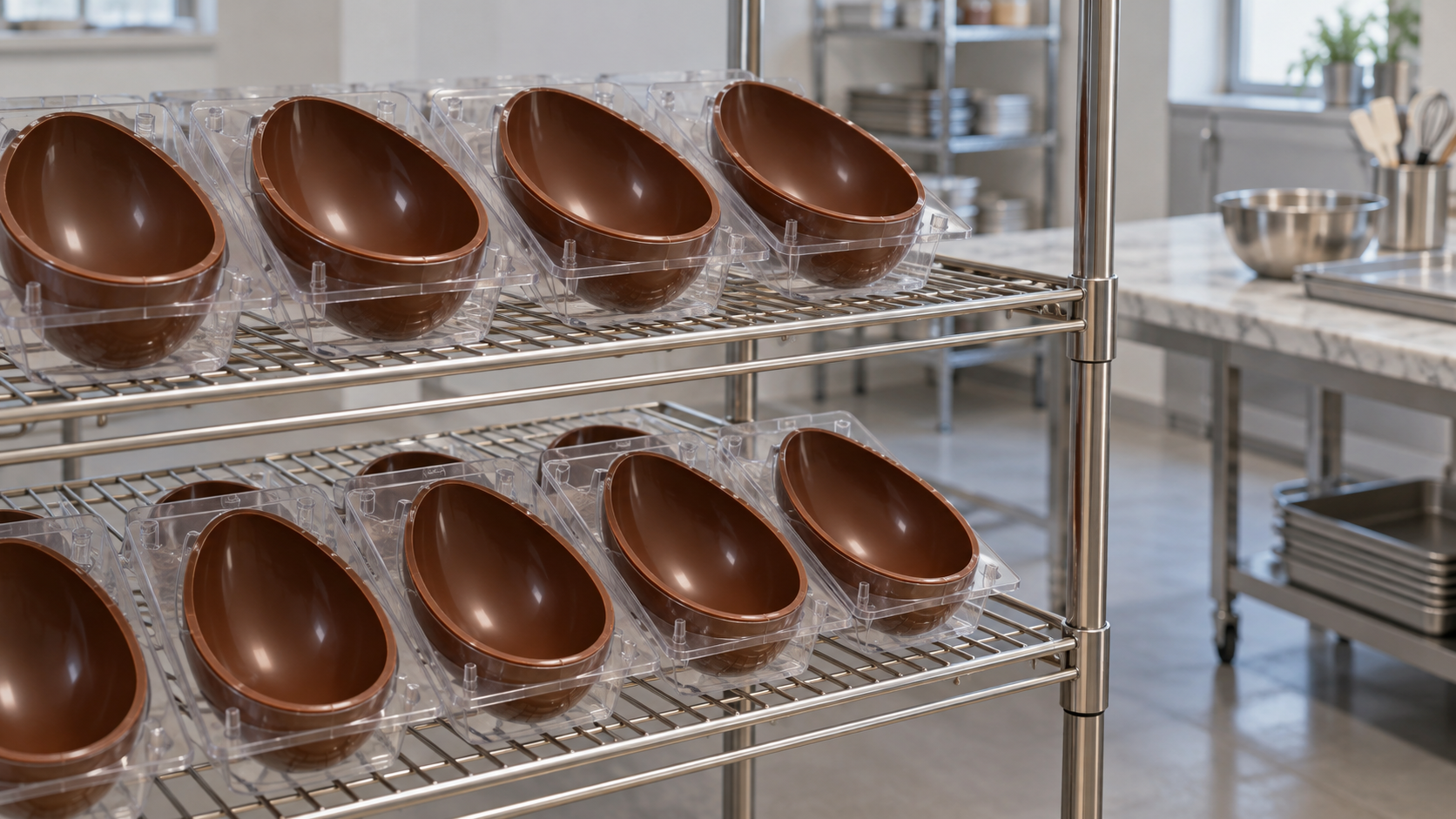
Let the shell crystallise in a cool stable room. Extreme refrigeration contracts the surface too quickly and can cause condensation or cracks. Release only when the chocolate has pulled cleanly from the mould.
Join halves without weakening them
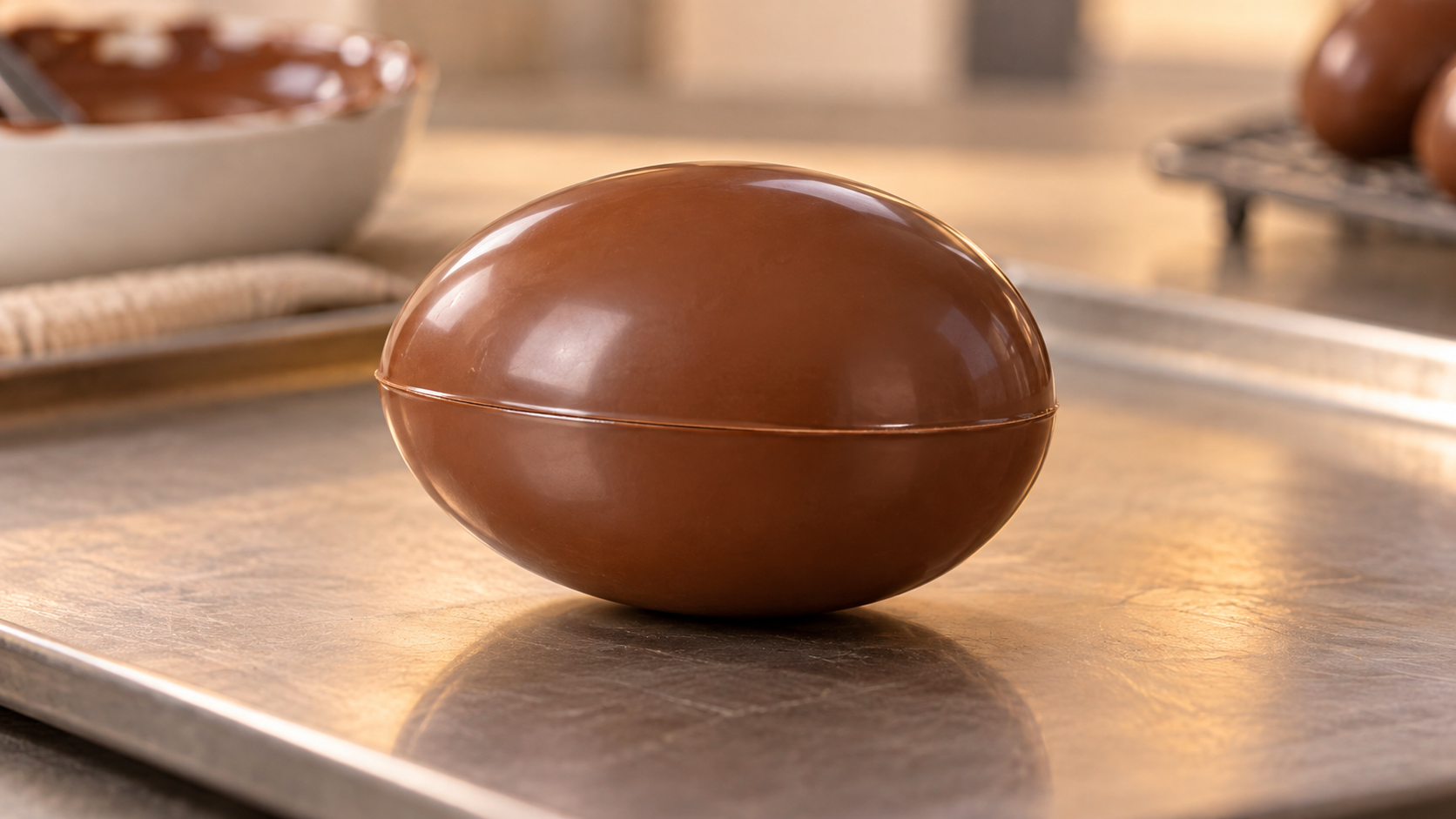
Warm a flat metal tray slightly and touch each rim briefly to level it, then join the halves. Excess heat makes a weak seam. Wear food-safe gloves to limit fingerprints.
Pack and store carefully
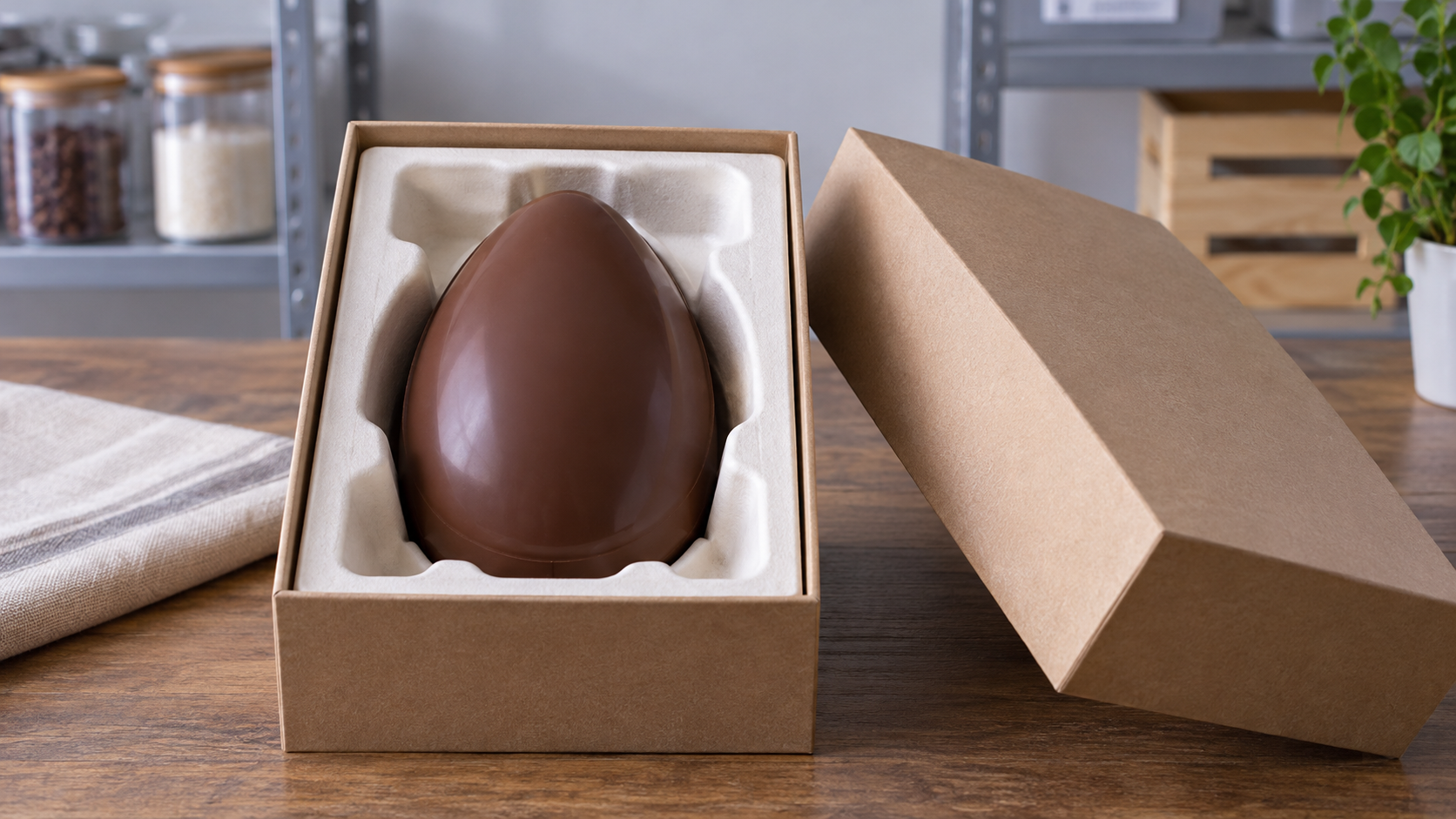
Support the egg in a fitted tray and rigid box. Store cool and dry away from odours and temperature swings. Declare ingredients and allergens and protect fragile shells during transport.
Frequently asked questions
Why was the source rewritten?
Unsafe, unsupported or technically unreliable claims were corrected while preserving the useful subject.
How should allergens be handled?
Check every current pack, prevent cross-contact and keep accurate ingredient information.
Can storage time be copied from another recipe?
No. Validate it for the actual ingredients, process, hygiene and packaging.
Are nutrition claims automatic?
No. They require the complete formulation, a defined portion and applicable evidence.
Can quantities be changed freely?
Changes to water, fat, sugar or protein can alter texture, safety and setting.
Should manufacturer guidance be followed?
Yes, especially for chocolate tempering, protein powders and specialist ingredients.