
Use purchased ruby chocolate accurately
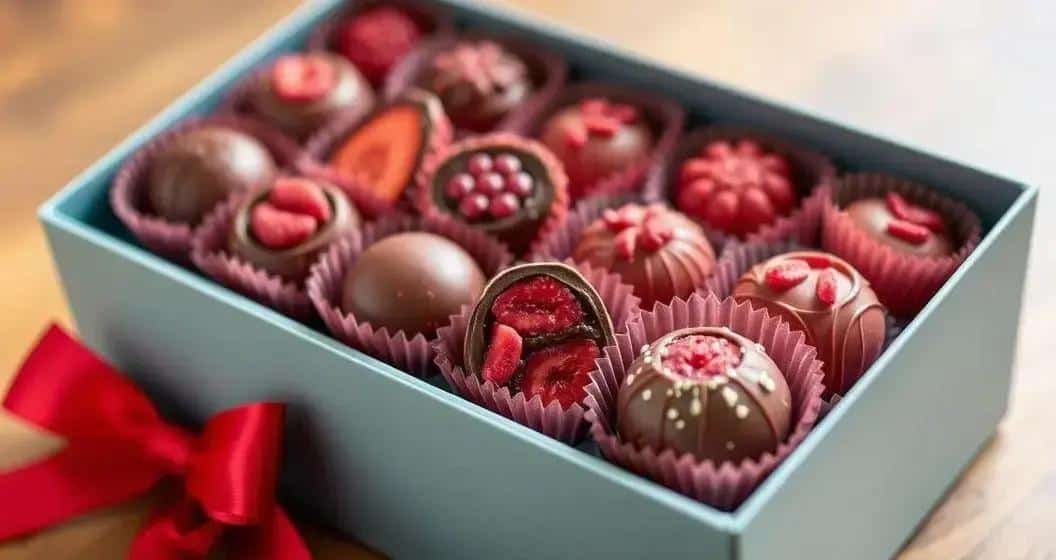
Ruby chocolate is a manufactured chocolate category. Use a purchased product and retain its ingredient and allergen information; pink white chocolate is a different confection.
Choose a low-moisture berry element
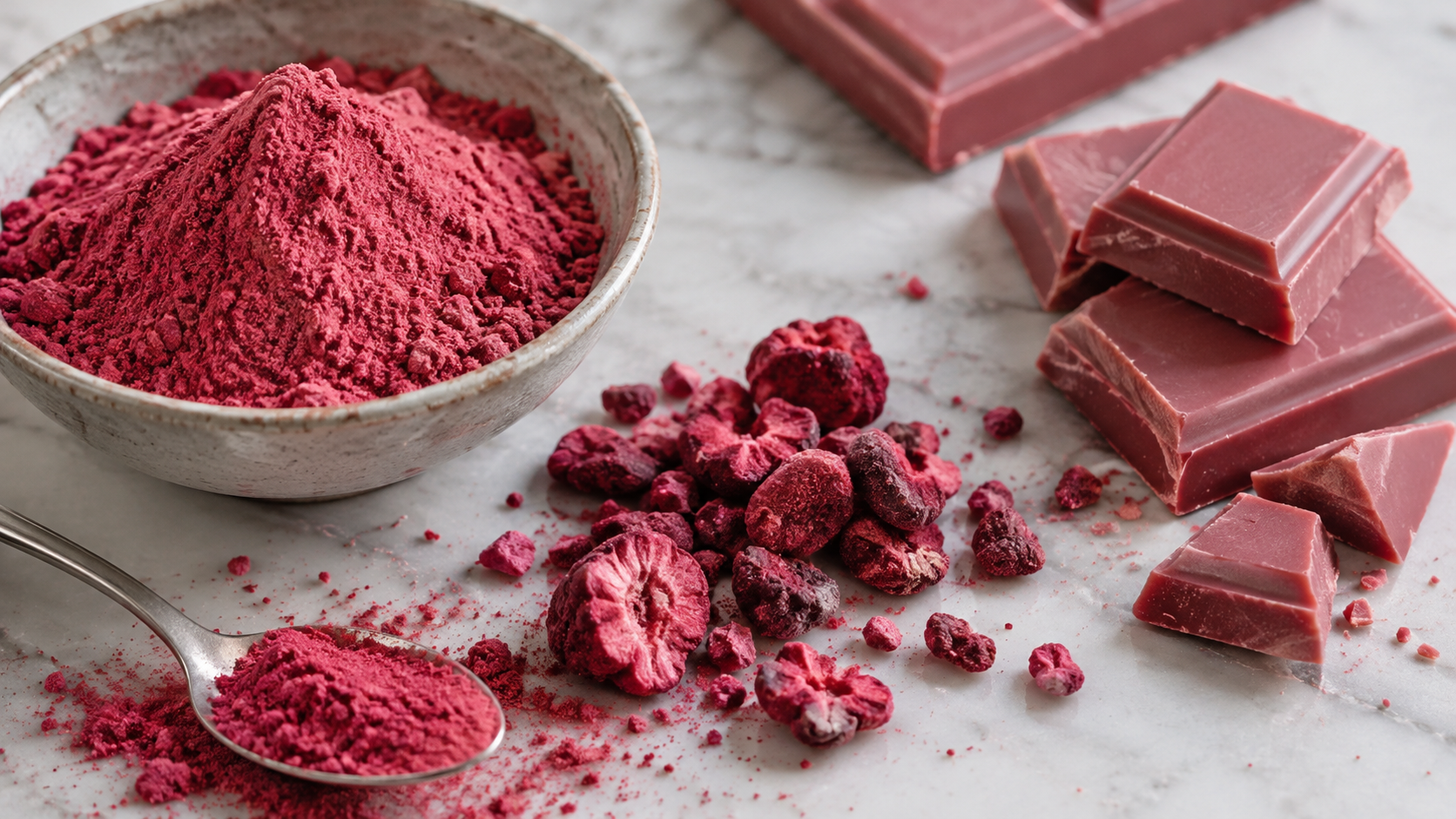
Freeze-dried berry powder, crisp berry pieces or a tested berry ganache gives flavour with controlled moisture. Fresh fruit inside a shell requires specific shelf-life validation.
Temper to the maker’s curve
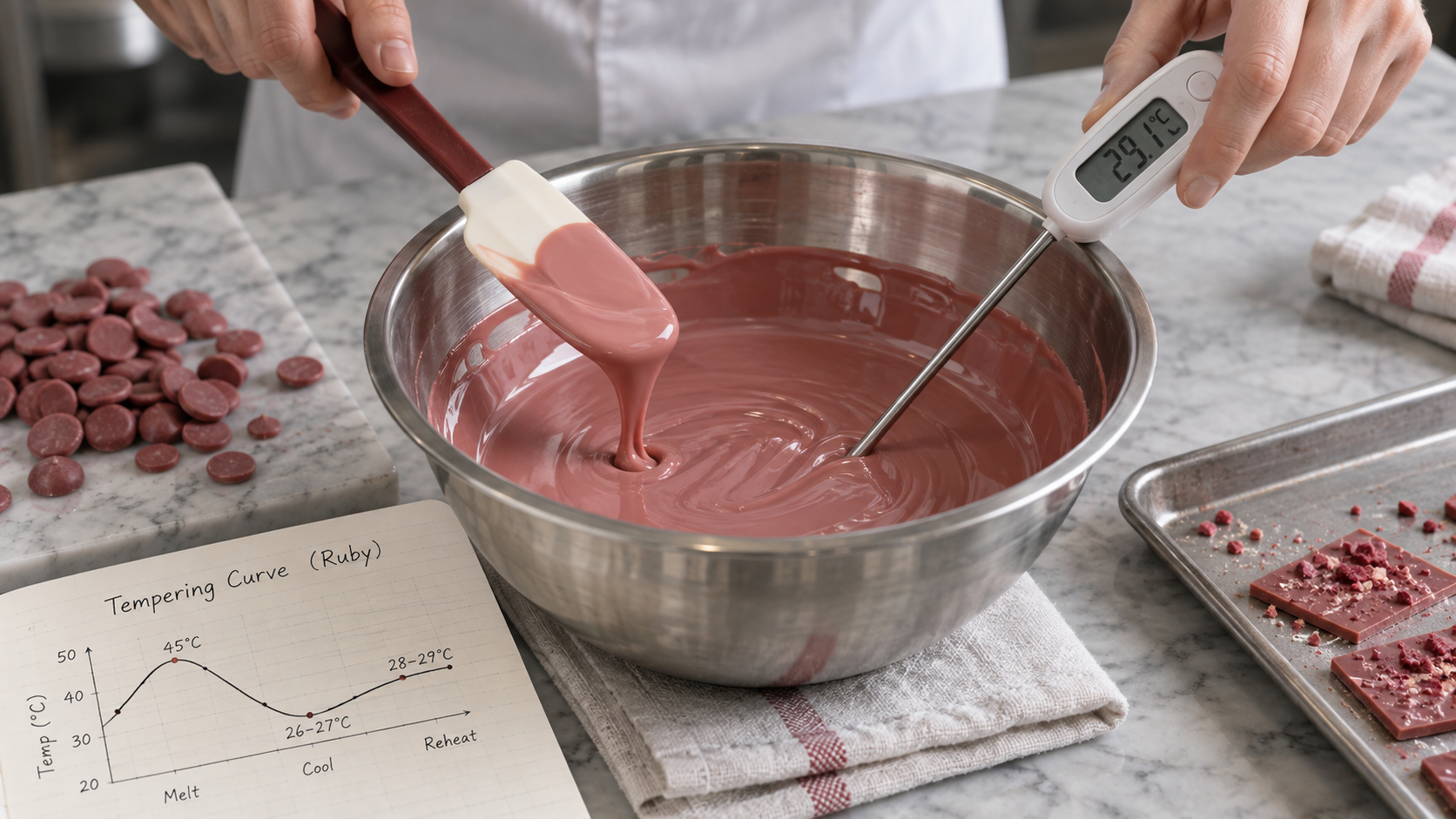
Follow the ruby chocolate manufacturer’s tempering temperatures because its formulation can behave differently from dark, milk or white chocolate.
Build clean moulded shells

Polish and dry the mould, fill it with tempered chocolate, tap out bubbles and drain the excess. Scrape the surface clean and let the shell begin to crystallise.
Fill without weakening the chocolate
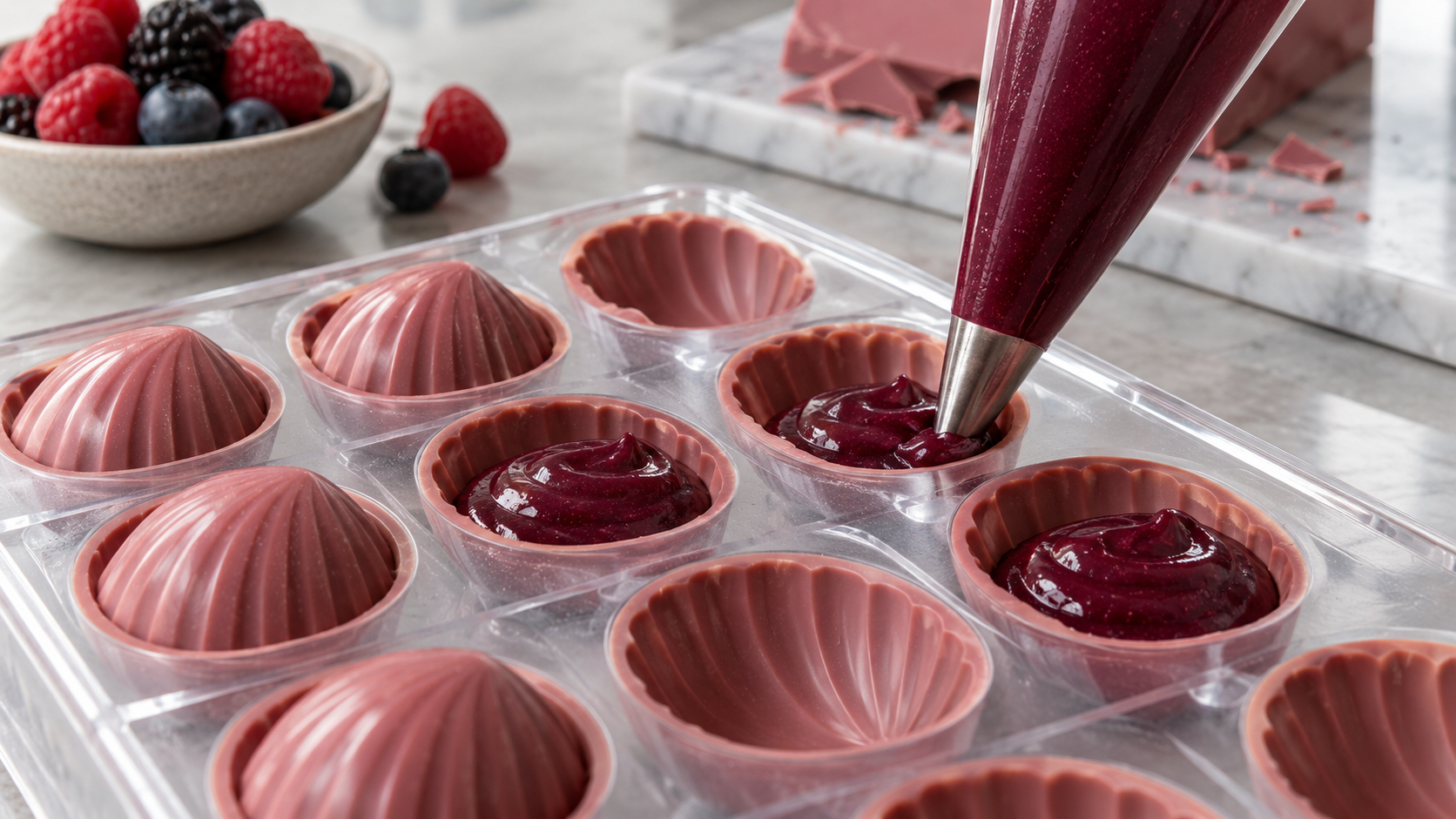
Pipe cool filling below the rim and keep the sealing edge clean. Acidic or watery filling can thicken chocolate, soften the shell and shorten storage.
Close, pack and label
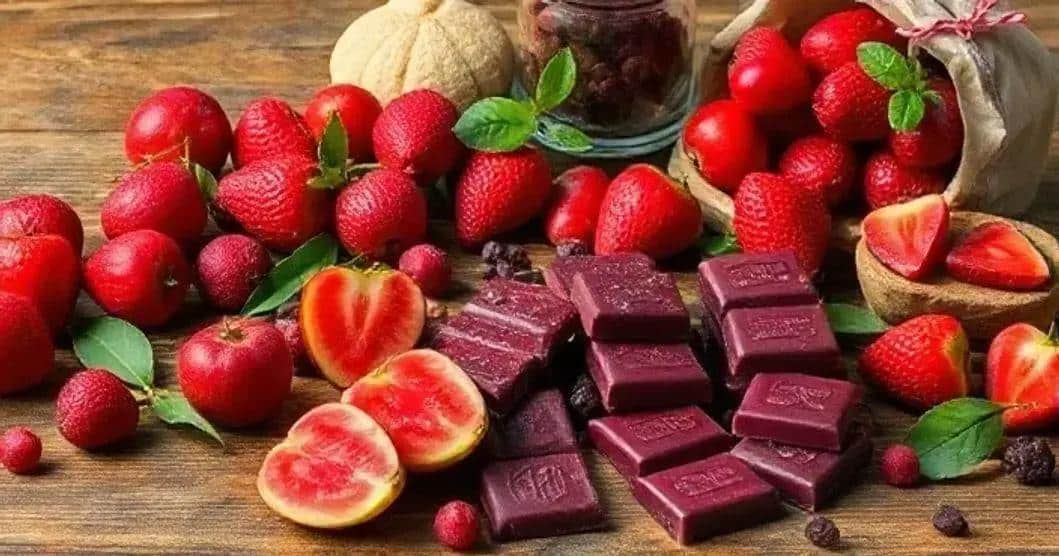
Seal with tempered chocolate and release only when fully crystallised. Use food-safe cases and declare milk, soya, berries and other allergens accurately.
Protect the box from heat and moisture

Keep the finished box cool and dry. Condensation marks tempered chocolate, softens berry pieces and damages paper cases.
Frequently asked questions
Why was the source rewritten?
Unsafe, unsupported or technically unreliable instructions were corrected while preserving the useful subject.
How should allergens be handled?
Check every current pack, prevent cross-contact and keep accurate ingredient information.
Can storage time be copied from another recipe?
No. Validate it for the actual ingredients, hygiene, process and packaging.
Can quantities be changed freely?
Changes to water, fat, sugar, alcohol or acid can alter texture, safety and storage.
Are nutrition or health claims automatic?
No. They require the complete formulation, a defined portion and applicable evidence.
What should be recorded during testing?
Record exact weights, temperatures, times, yield, storage and the result of each controlled trial.