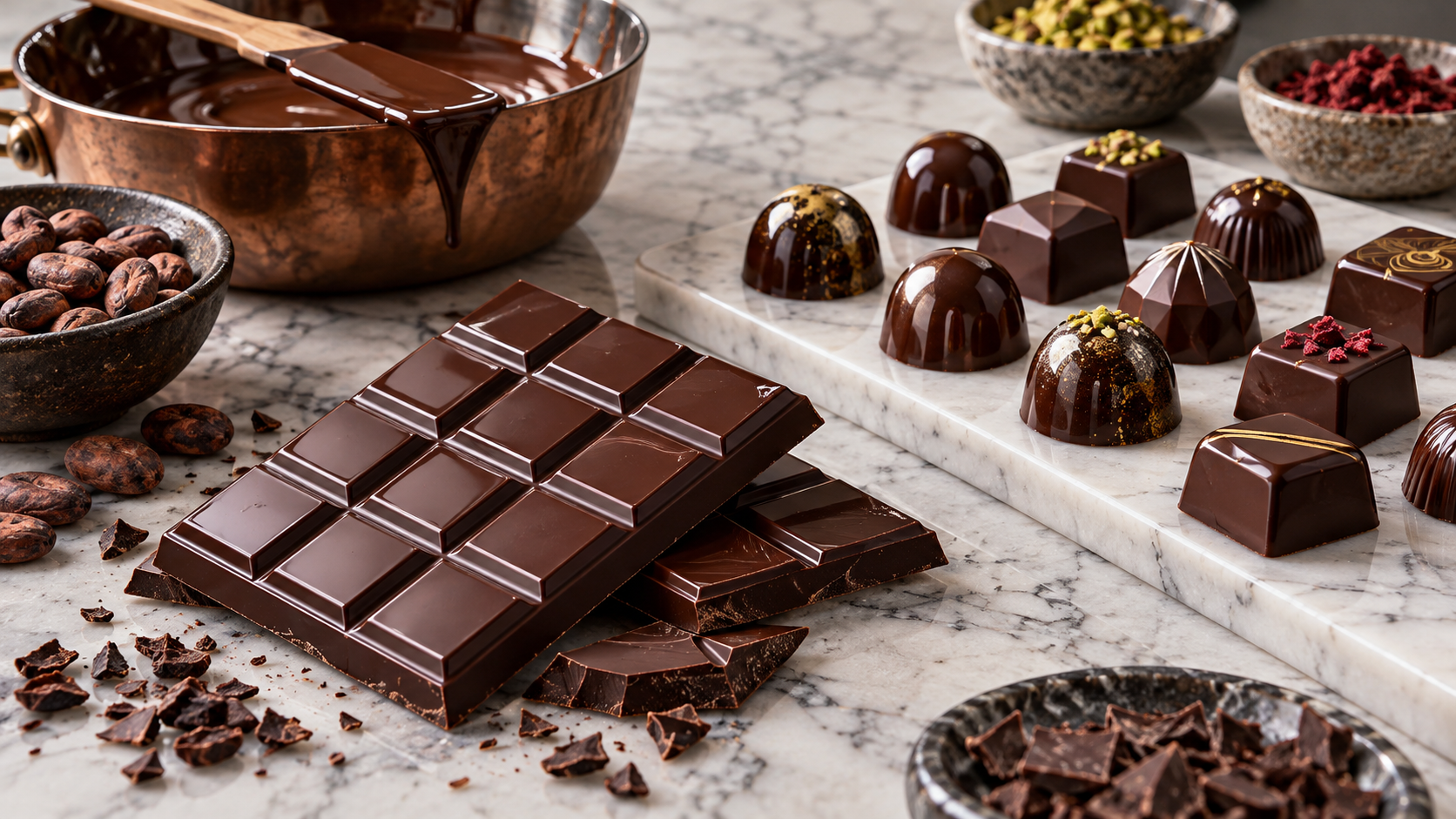

Choose couverture for the job

Couverture contains cocoa butter and is designed for fluid coating and moulding when properly tempered. Check cocoa percentage, viscosity indicators, allergens and the manufacturer’s temperature guidance.
Melt without scorching

Chop blocks evenly or use callets. Melt slowly with short microwave intervals or gentle indirect heat, keeping every tool dry and stirring often to distribute warmth.
Create stable seed crystals
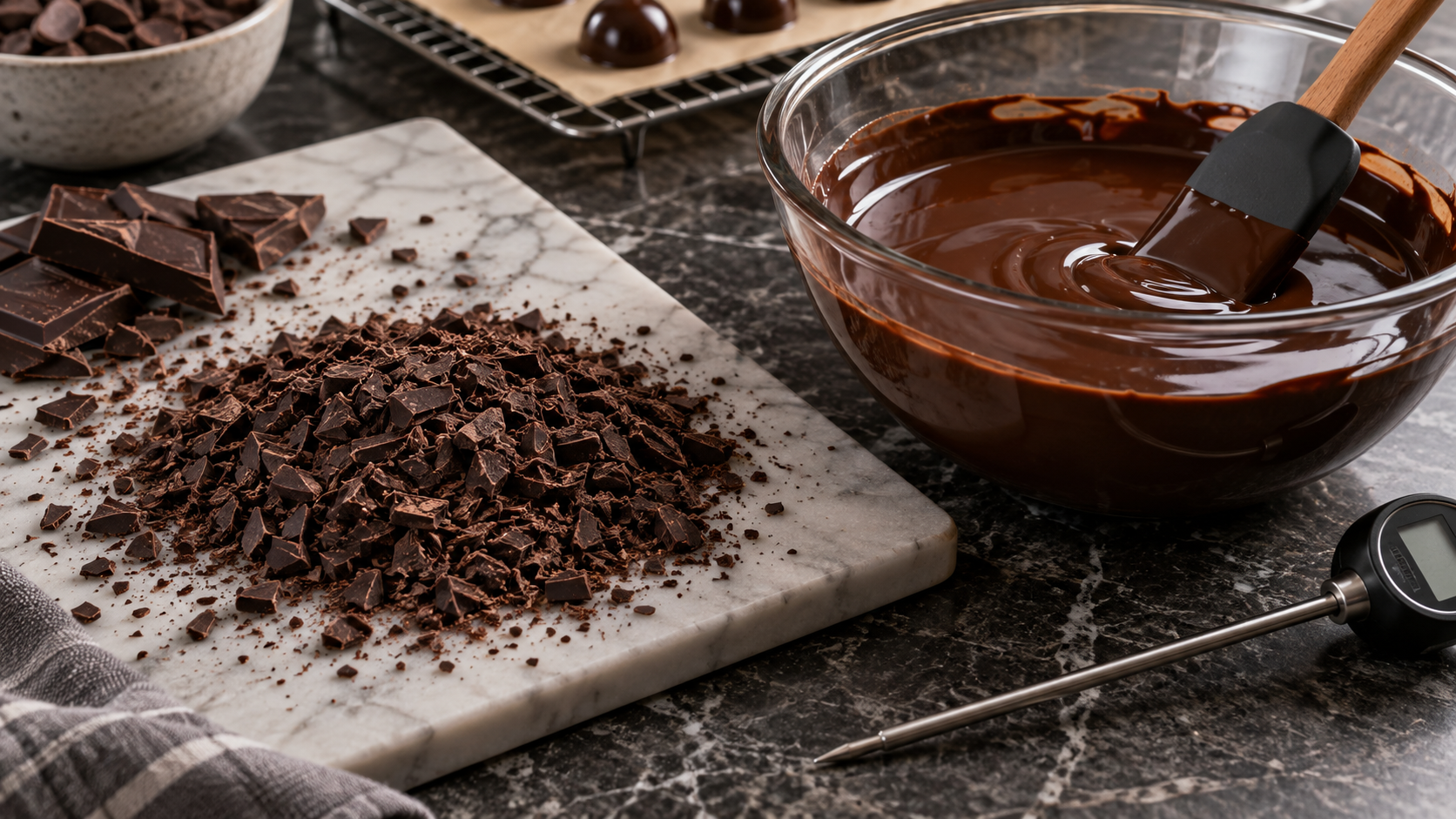
Cool the melted chocolate while stirring and add finely chopped tempered chocolate as seed, or use another reliable tempering method. Exact temperatures differ for dark, milk and white chocolate.
Return to the working range
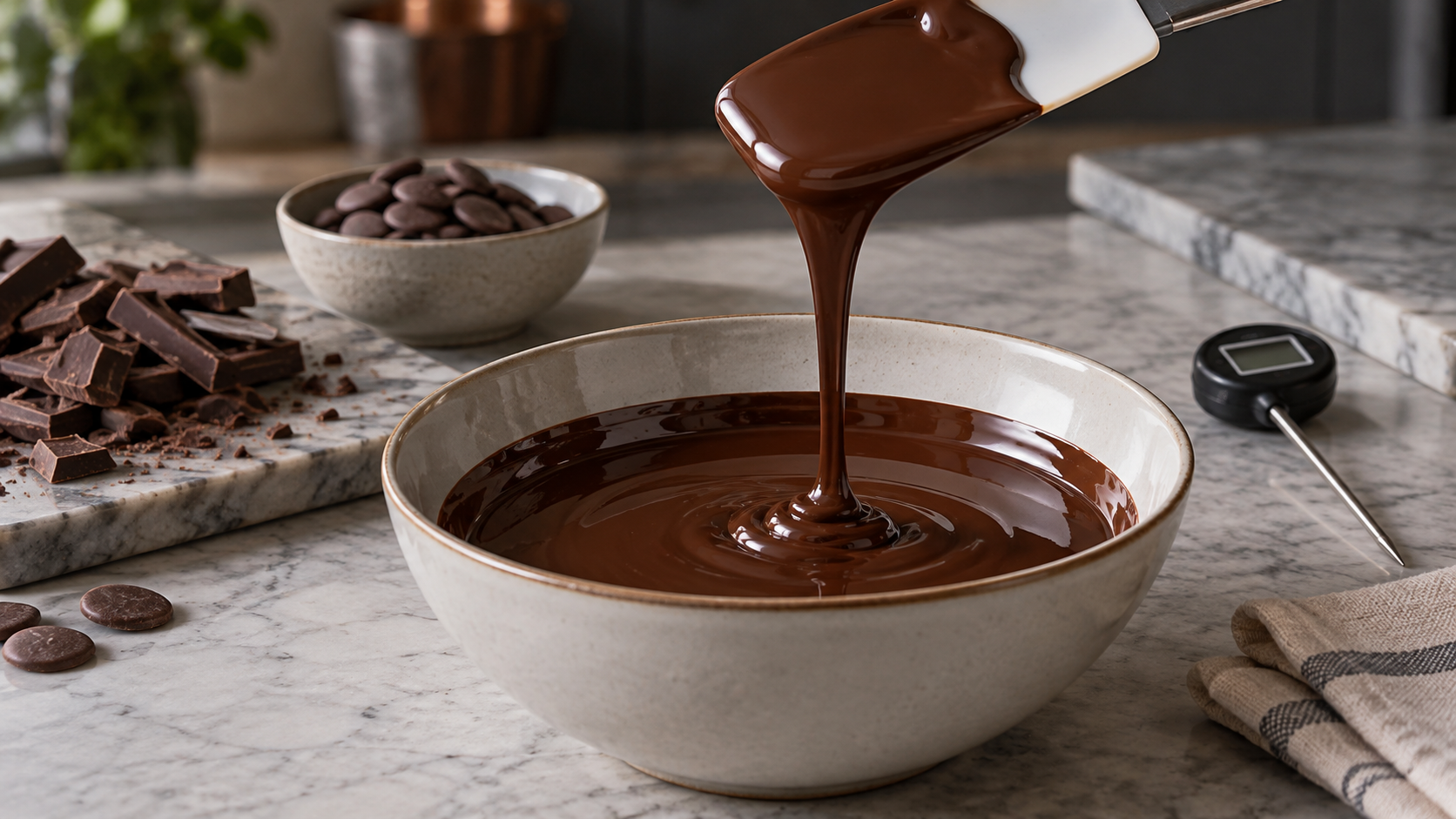
Warm the chocolate gently to its working range without destroying the stable crystals you have created. Test a thin smear before filling expensive moulds.
Fill clean dry moulds
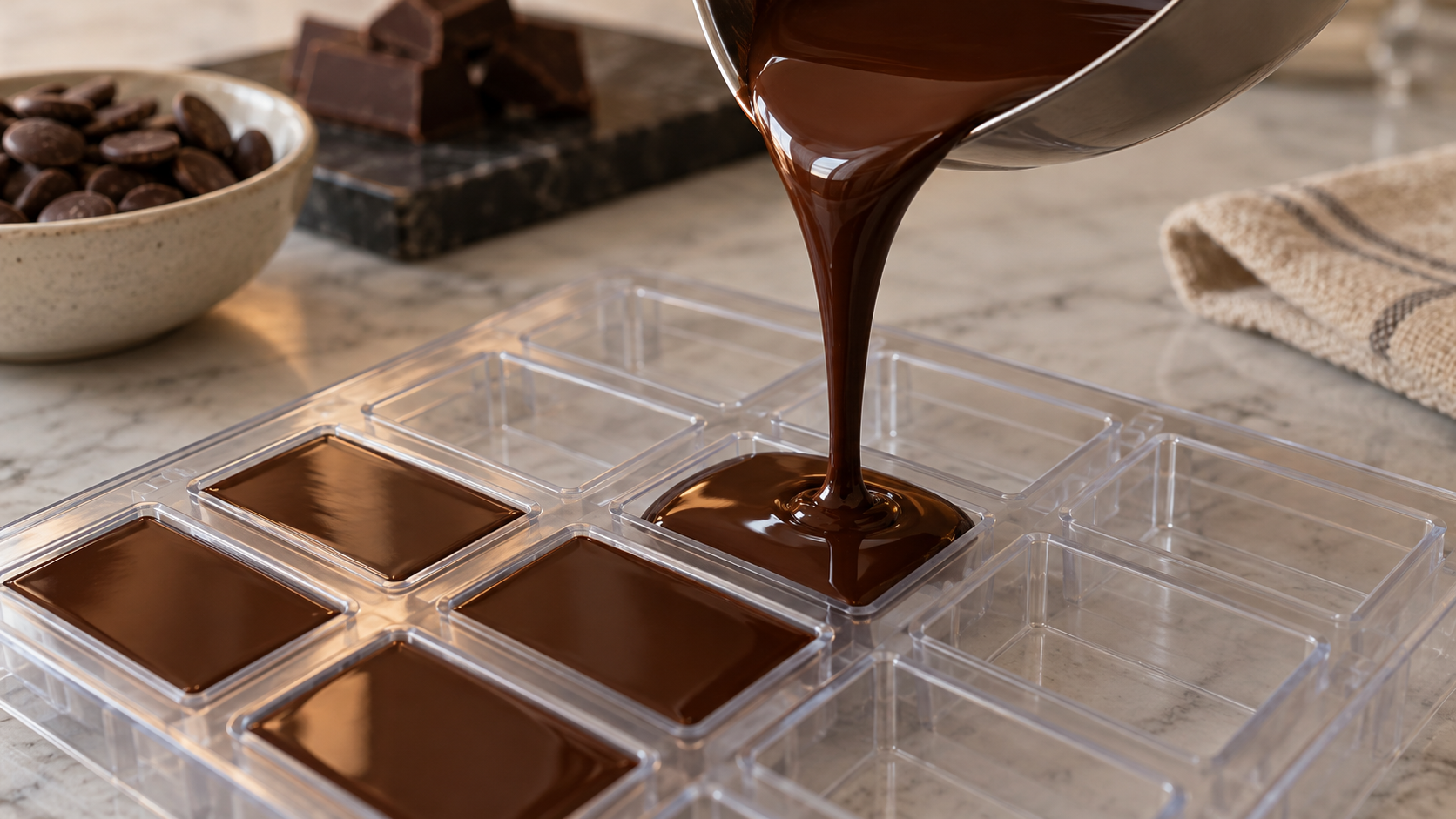
Polish clean moulds with a lint-free material and ensure they are completely dry. Fill, tap out air bubbles and scrape the surface clean for level backs.
Release only when crystallised

Let the chocolate crystallise in a cool stable room. It should contract slightly and release without force; sticking or streaks can indicate poor temper or unsuitable temperature.
Store away from heat and moisture

Protect finished pieces from sunlight, odours, humidity and large temperature swings. Refrigeration can cause condensation unless the recipe and environment are controlled.
Frequently asked questions
Do I need a thermometer?
A thermometer is recommended whenever melting, tempering or holding chocolate within a working range.
Can I substitute one chocolate product for another?
Only when the recipe allows it, because cocoa butter, vegetable fat, sugar and milk change texture and setting.
How do I avoid moisture problems?
Keep tools dry, protect chocolate from steam and let cold closed containers warm gradually before opening.
Which allergens should I check?
Read every label for milk, soya, nuts, gluten and other required allergens, including cross-contact warnings.
Can I sell the finished product?
Follow current local food-business, hygiene, labelling and tax rules and use a defensible storage period.
What should I do before a large batch?
Test one small batch with the actual ingredients, room temperature, packaging and transport conditions.