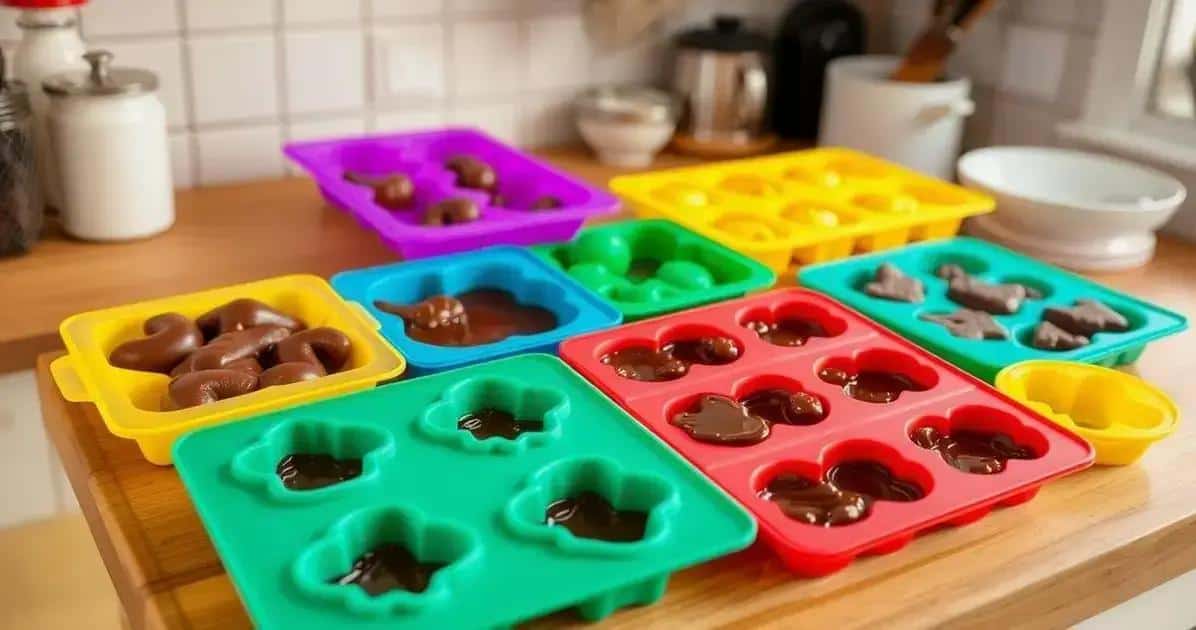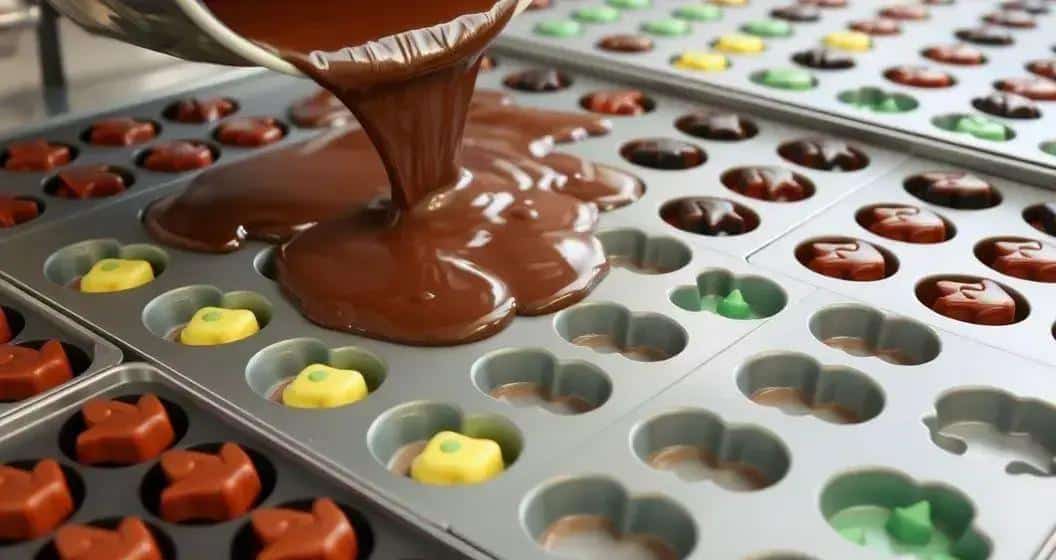

Confirm the chocolate and batch size
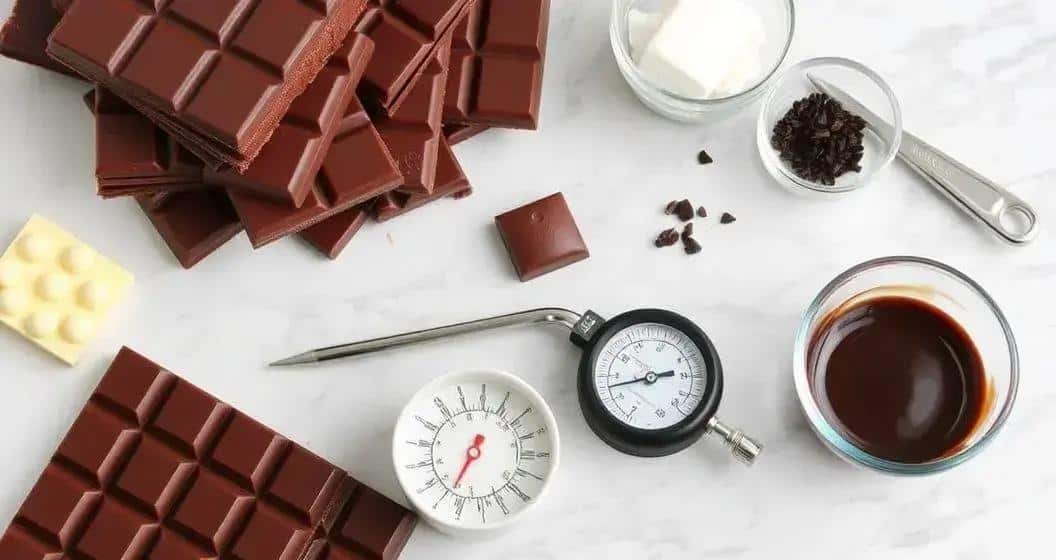
Tempering curves depend on dark, milk or white chocolate and on the manufacturer’s formulation. Record the exact product, lot, batch weight and recommended temperatures.
Use a dry temperature-controlled setup
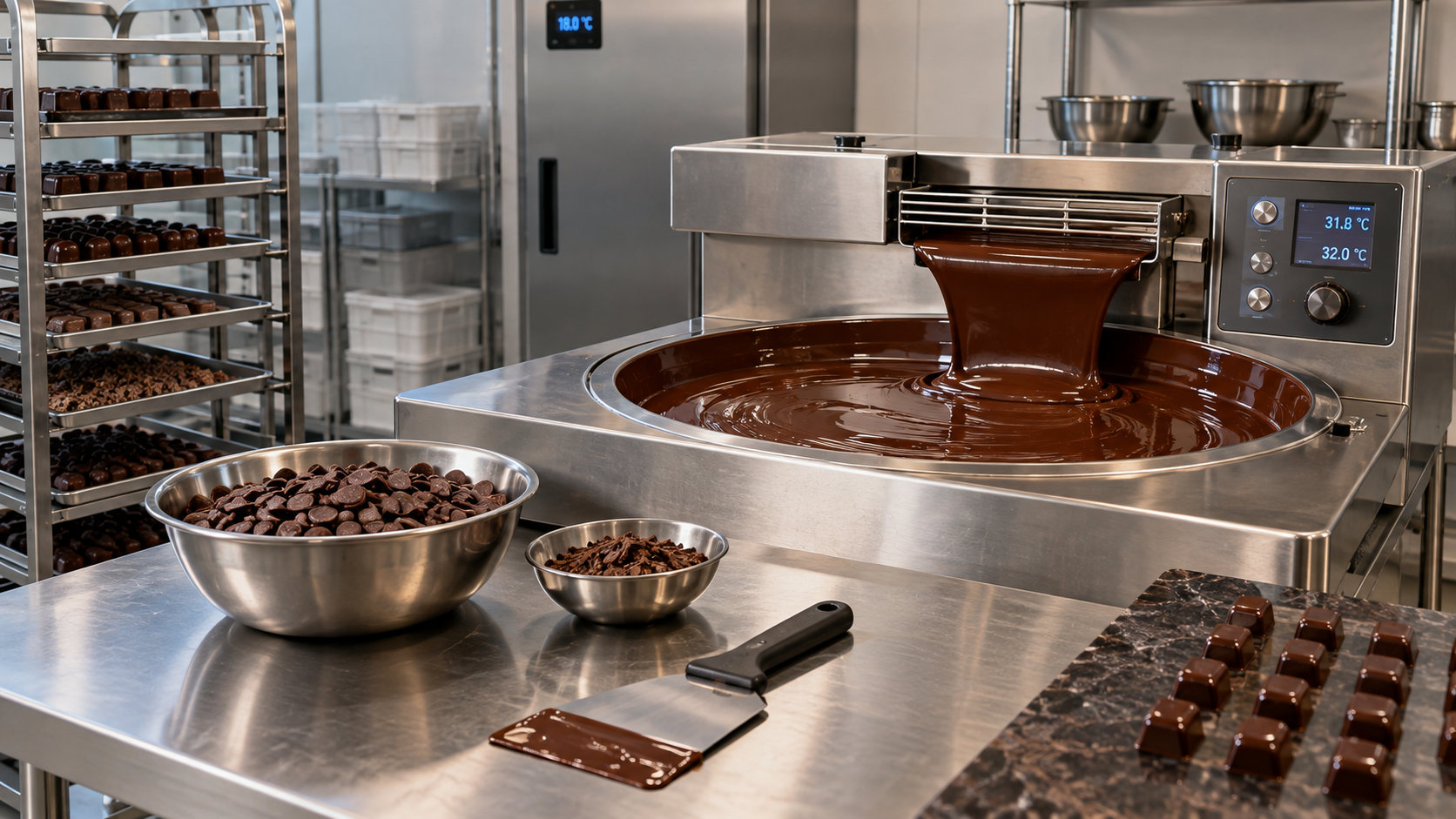
Use a clean dry melter or bowl, reliable thermometer, scraper and enough working space. Water, steam and condensation can seize an entire batch.
Melt all stable crystals first
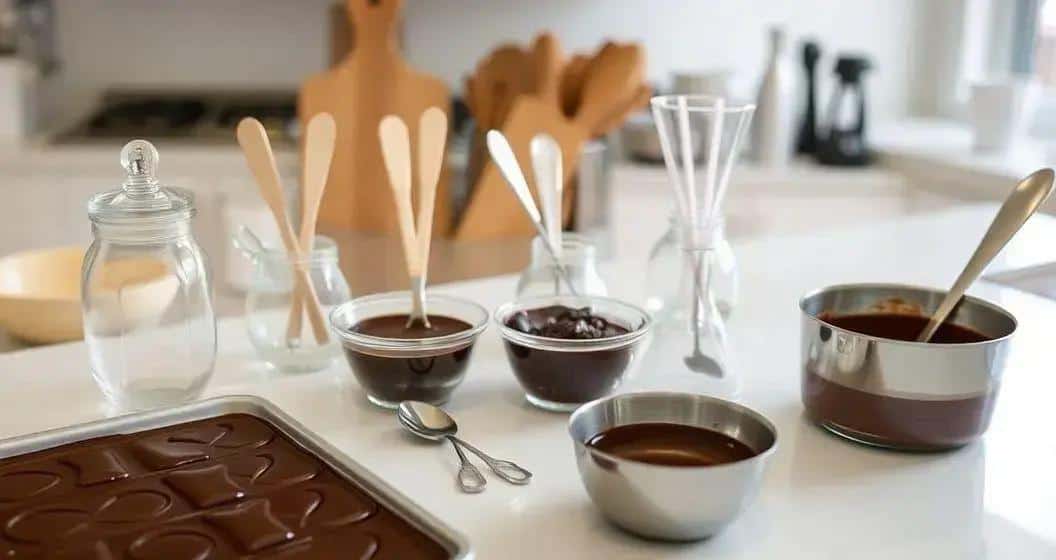
Melt the chocolate to the top of its specified curve so unstable crystals are removed. Stir slowly and evenly without whipping in air.
Seed with correctly tempered chocolate
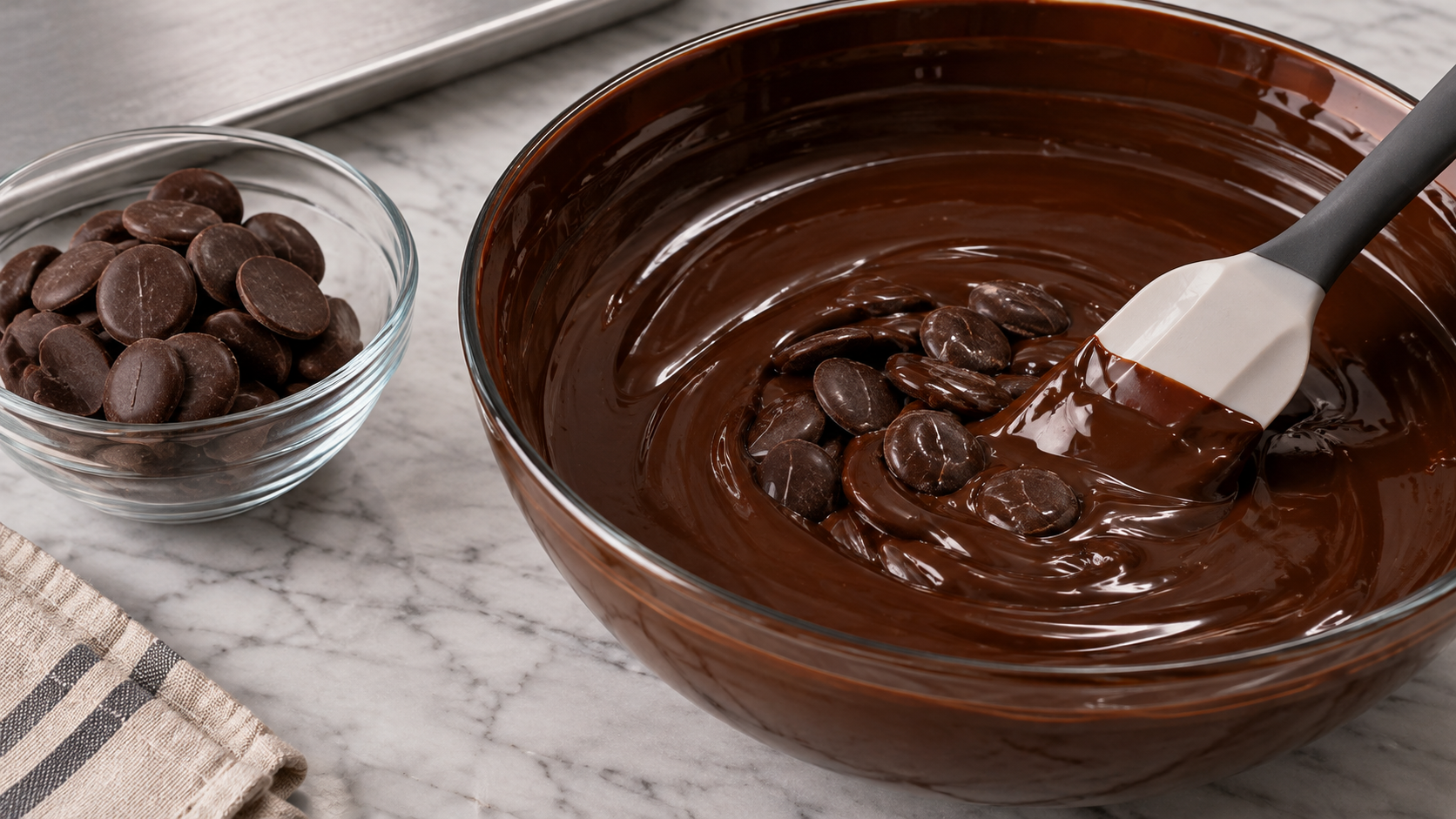
Cool by adding measured finely chopped tempered chocolate, stirring until it melts and the batch reaches its crystallisation range. Remove unmelted seed before production.
Test crystallisation before production
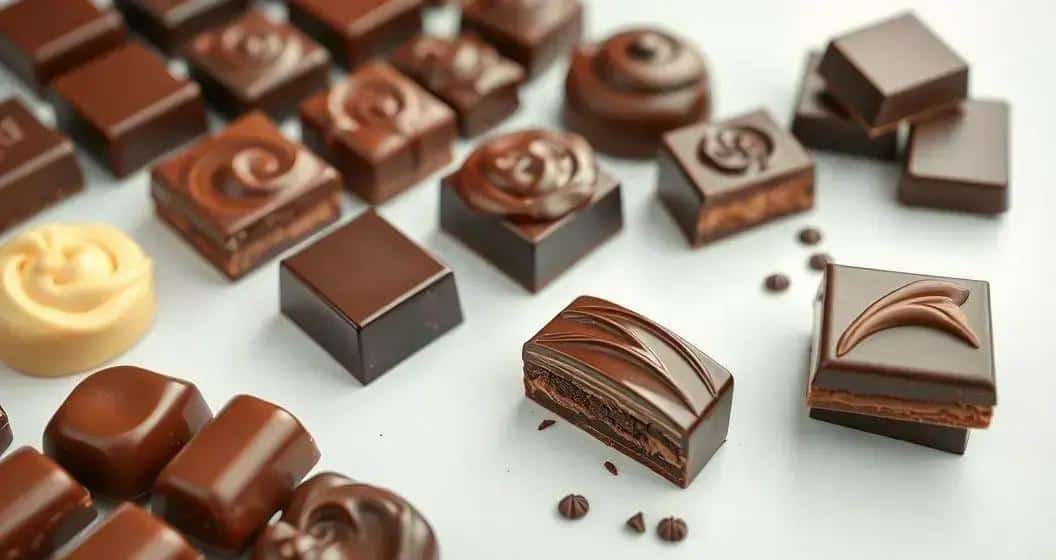
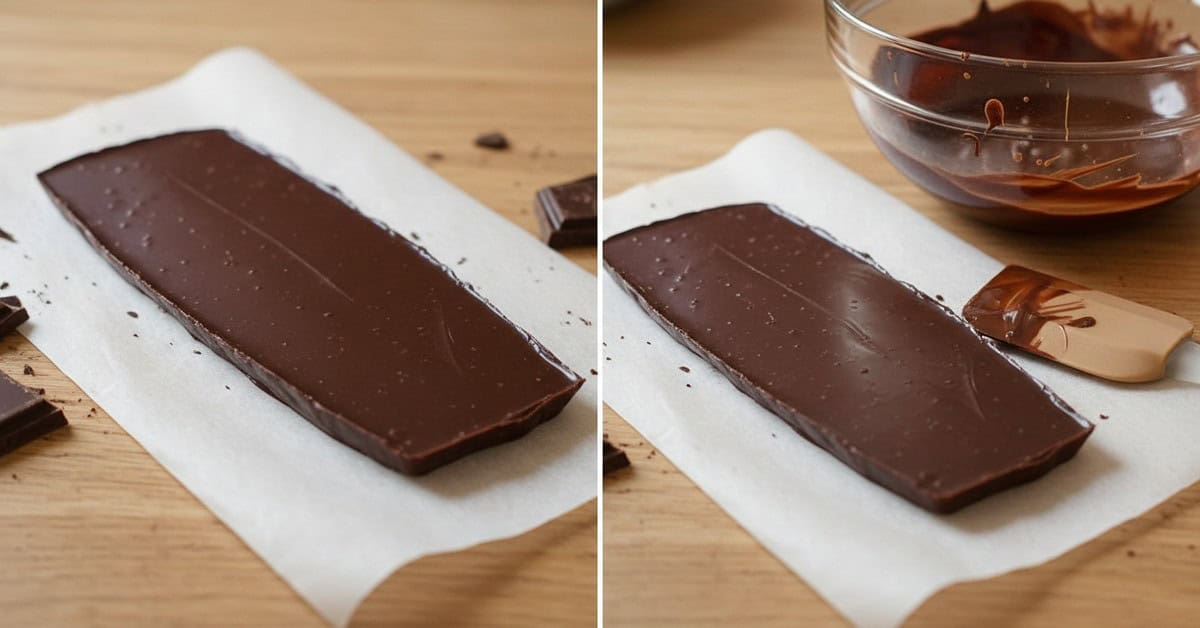
Spread a thin test on paper or a scraper. It should begin to set evenly with gloss and no streaks before moulding a full batch.
Maintain working temperature and flow
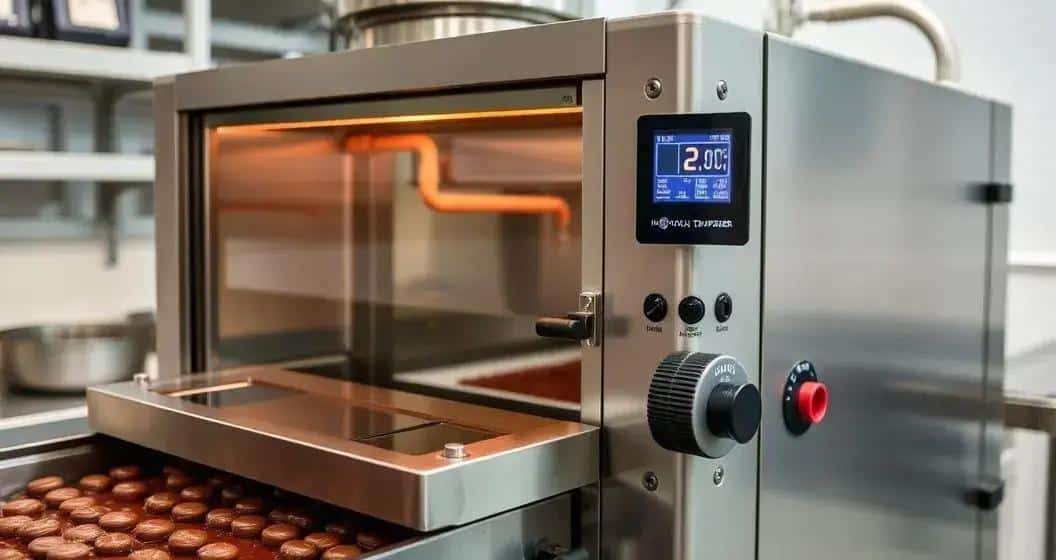
Hold chocolate within its working range and stir regularly. Warm in small controlled increments; thick chocolate may reflect temperature, formulation or over-crystallisation, so do not add random oil.
Frequently asked questions
Why was the source rewritten?
Unsafe, unsupported or technically unreliable instructions were corrected while preserving the useful subject.
How should allergens be handled?
Check every current pack, prevent cross-contact and keep accurate ingredient information.
Can storage time be copied from another recipe?
No. Validate it for the actual ingredients, hygiene, process and packaging.
Can quantities be changed freely?
Changes to water, fat, sugar, alcohol or acid can alter texture, safety and storage.
Are nutrition or health claims automatic?
No. They require the complete formulation, a defined portion and evidence under the applicable rules.
What should be recorded during testing?
Record exact weights, temperatures, times, yield, storage and the result of each controlled trial.