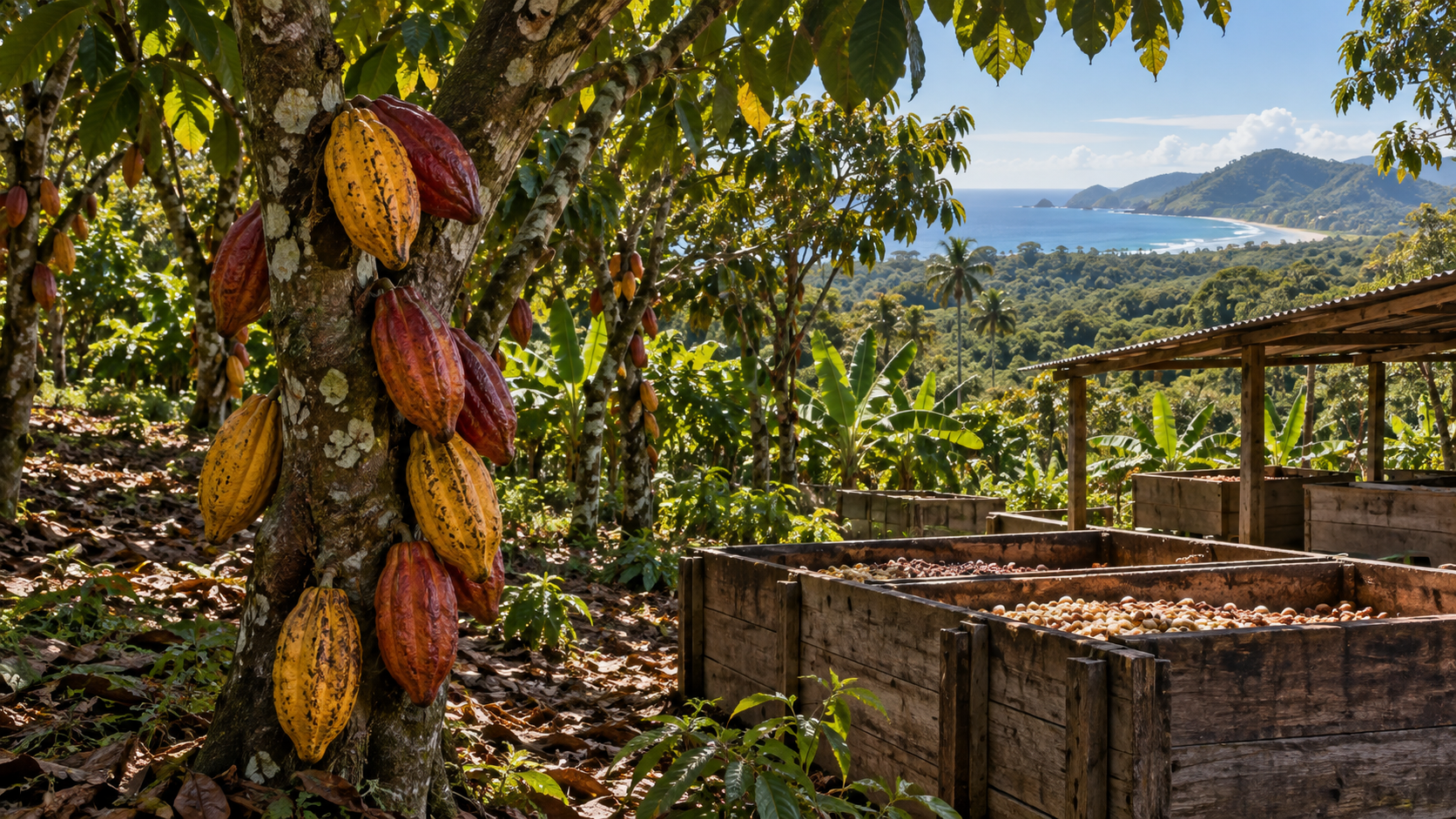

What happens after harvest
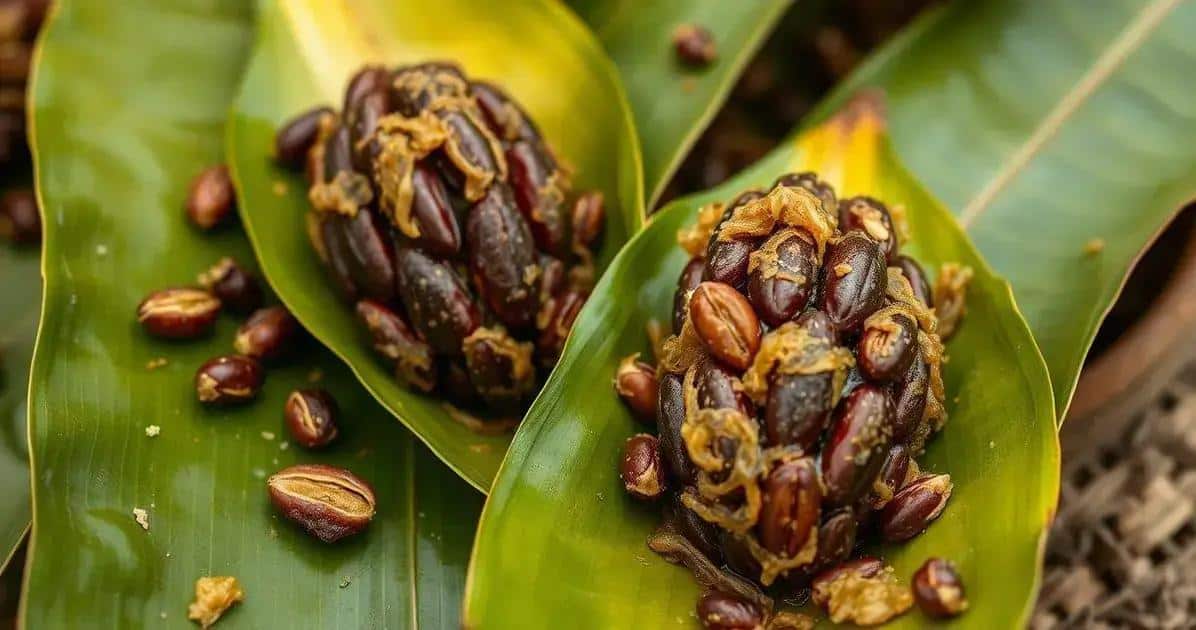
Fresh cocoa beans taste little like finished chocolate. Fermentation changes the pulp and triggers reactions inside the seed that create flavour precursors for roasting.
Opening the pods
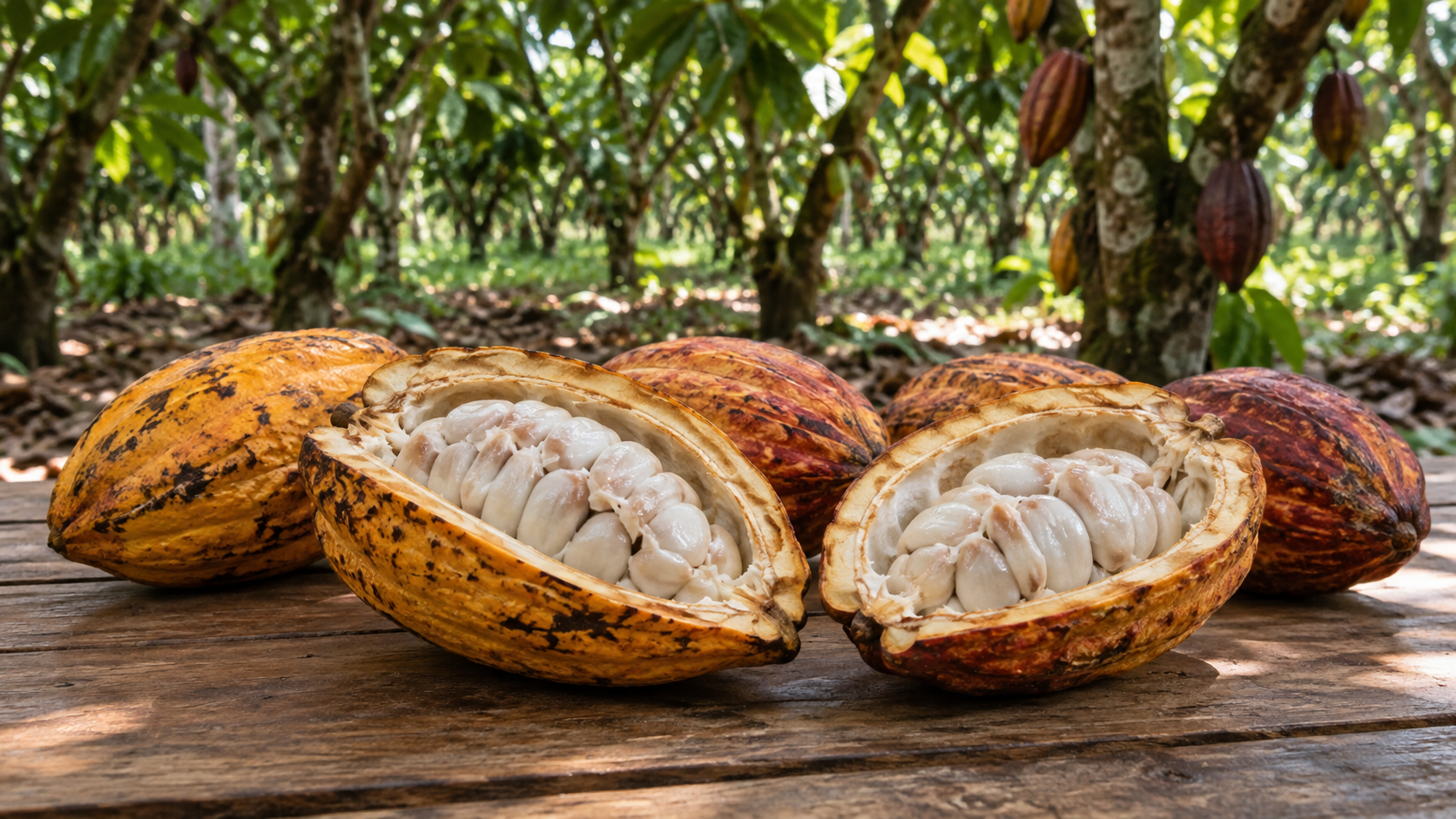
Ripe pods are opened without damaging the beans. The wet beans and their sweet white pulp are collected promptly and kept free from soil, damaged fruit and foreign material.
Building the fermentation mass
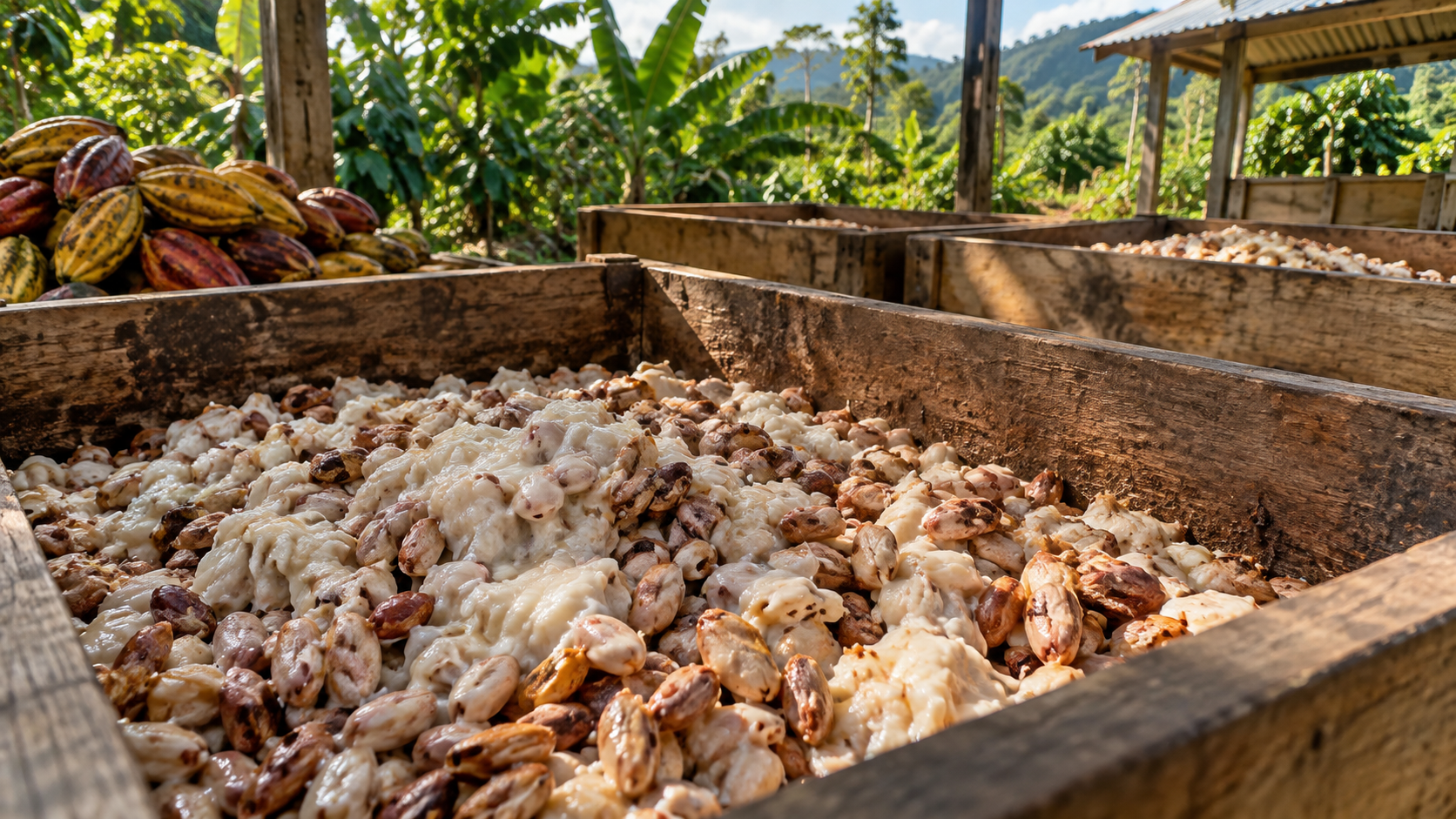
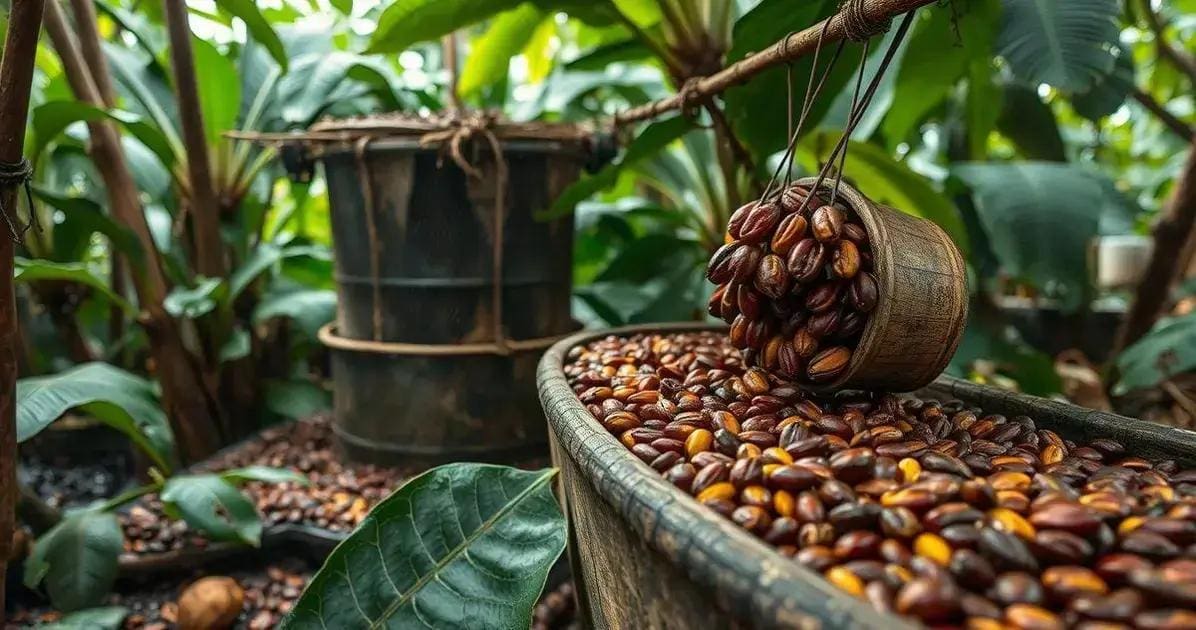
Producers ferment the mass in boxes, baskets or covered heaps. Yeasts first convert pulp sugars, followed by bacteria that raise acidity and temperature as air becomes available.
Turning and monitoring
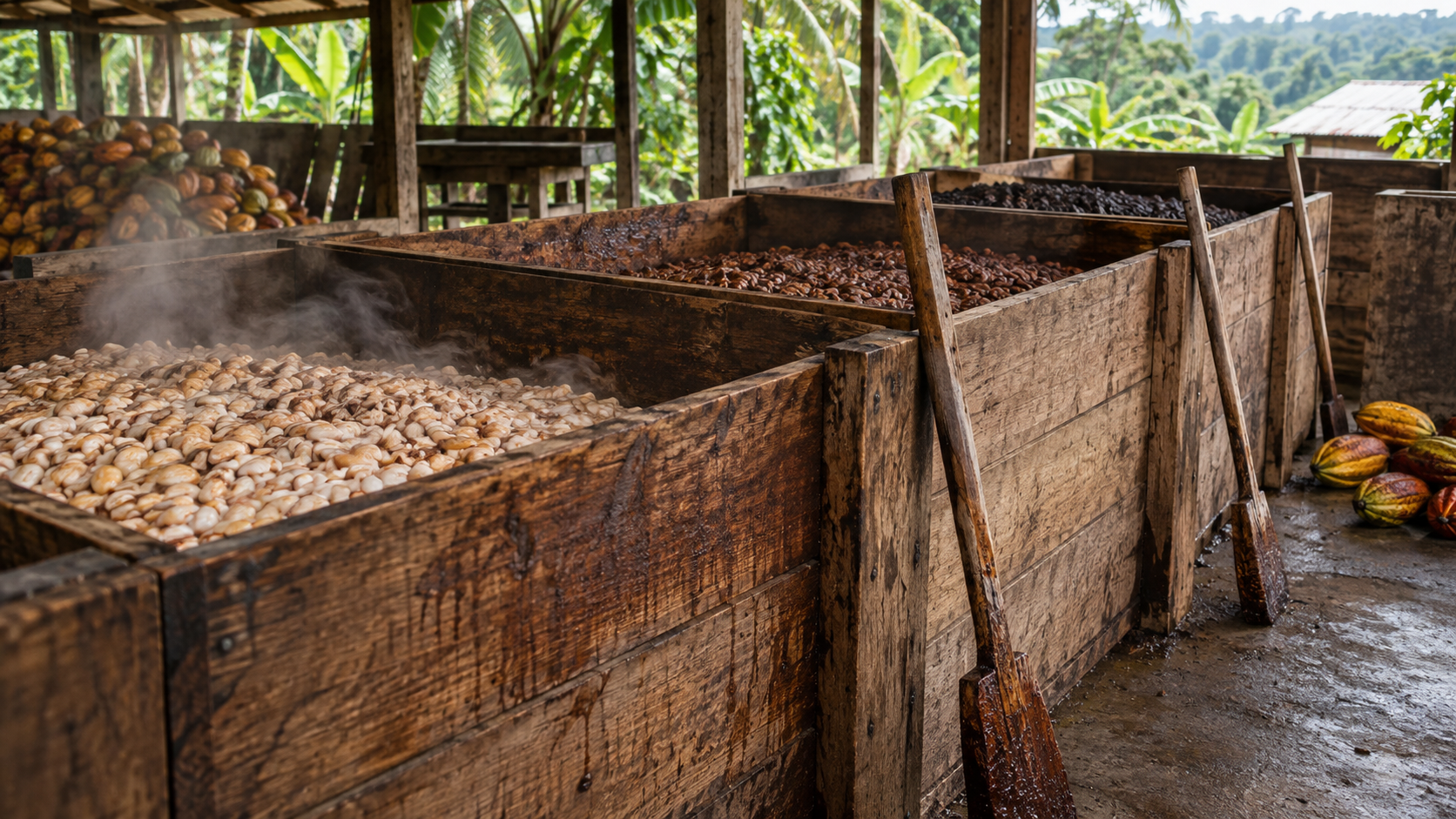
The beans are turned according to the local process so oxygen and heat are distributed more evenly. Fermentation commonly lasts several days, but the correct time depends on variety, climate and batch conditions.
Drying the beans
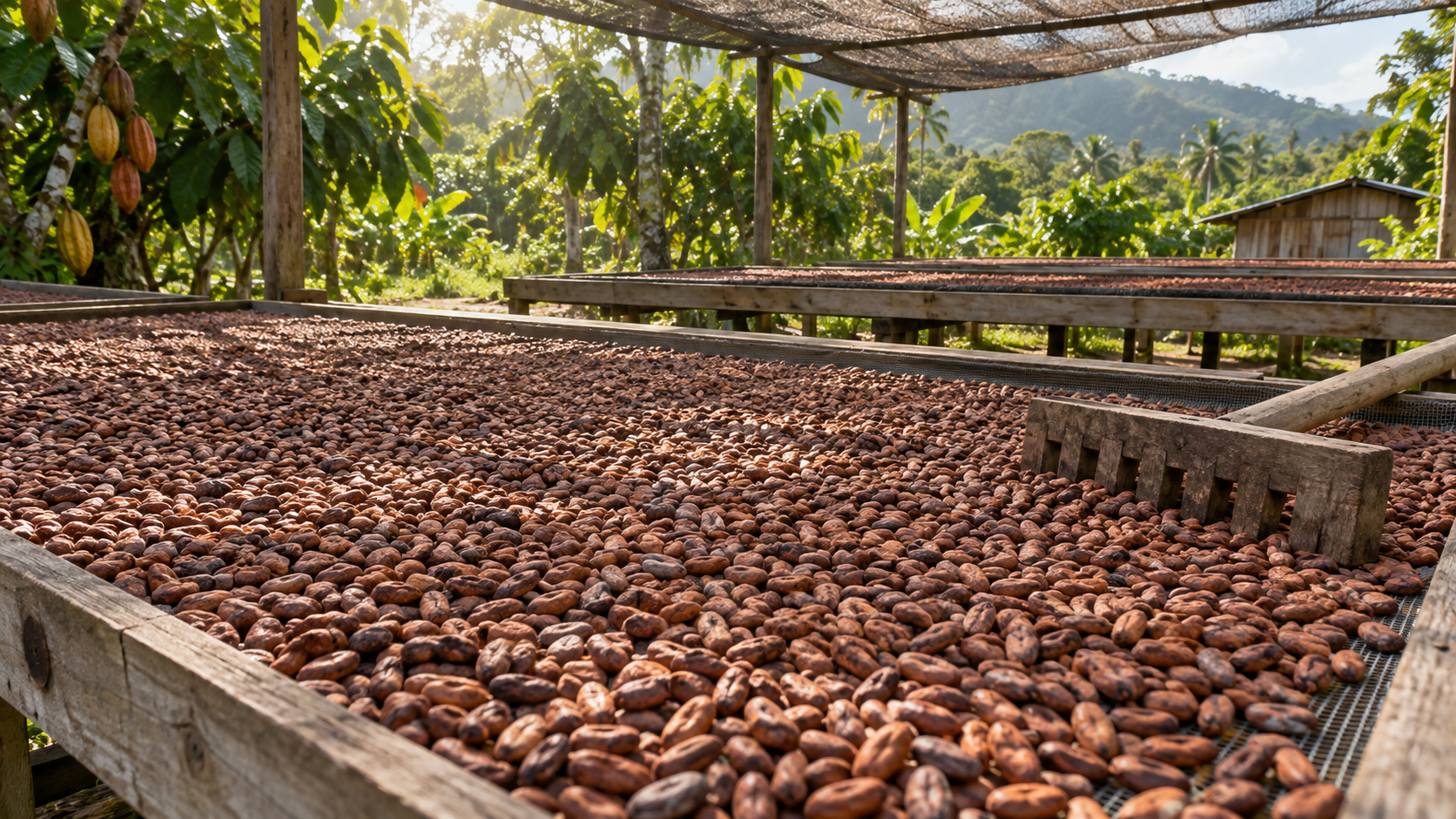
After fermentation, beans are spread in thin layers and dried gradually, often in the sun. Regular turning helps reduce moisture evenly and limits mould growth.
Why careful control matters
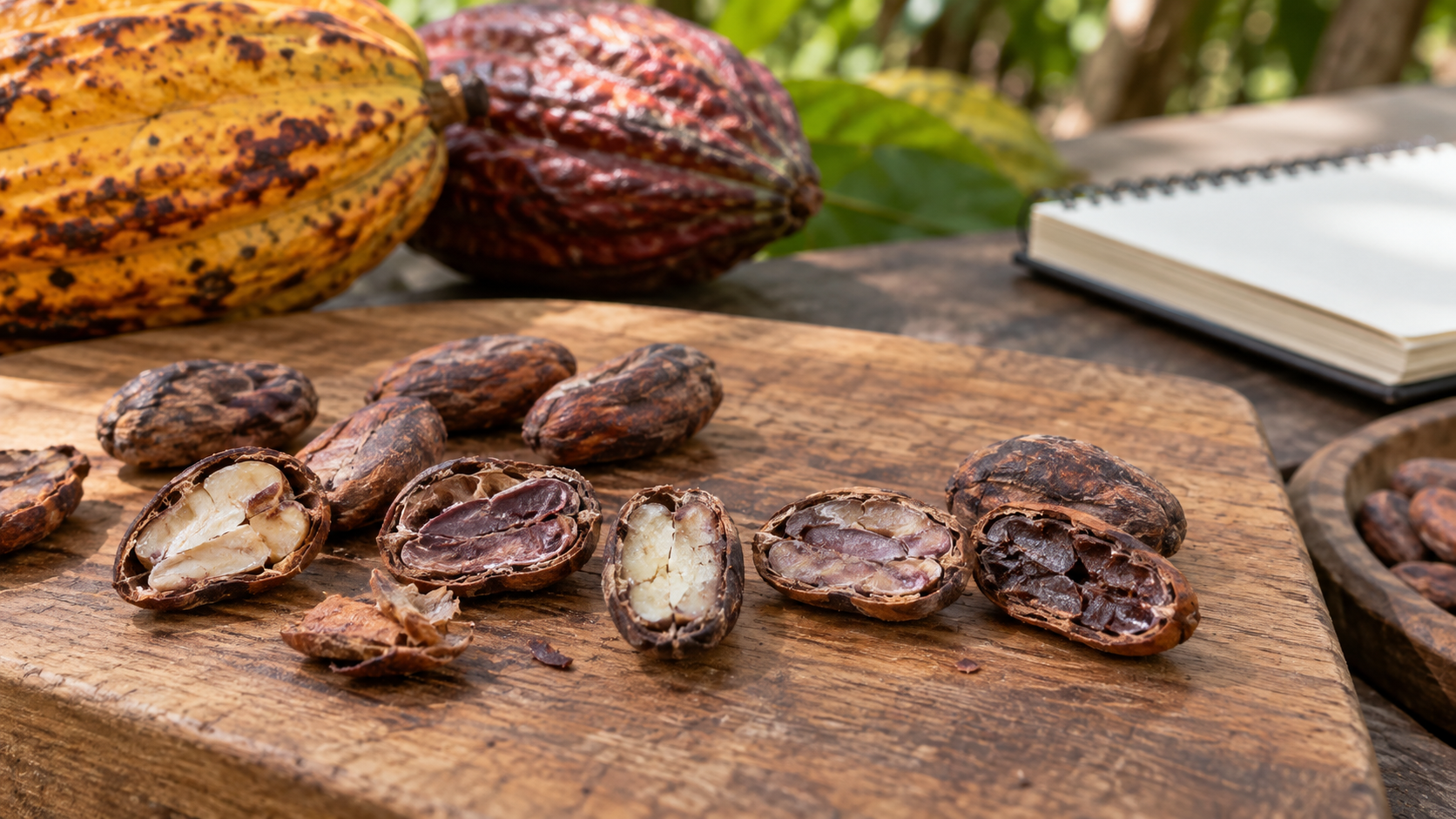
Under-fermented beans can taste harsh and flat, while excessive or poorly managed fermentation can create unwanted flavours. Skilled producers judge temperature, aroma, colour and cut tests rather than relying only on a clock.
From beans to chocolate
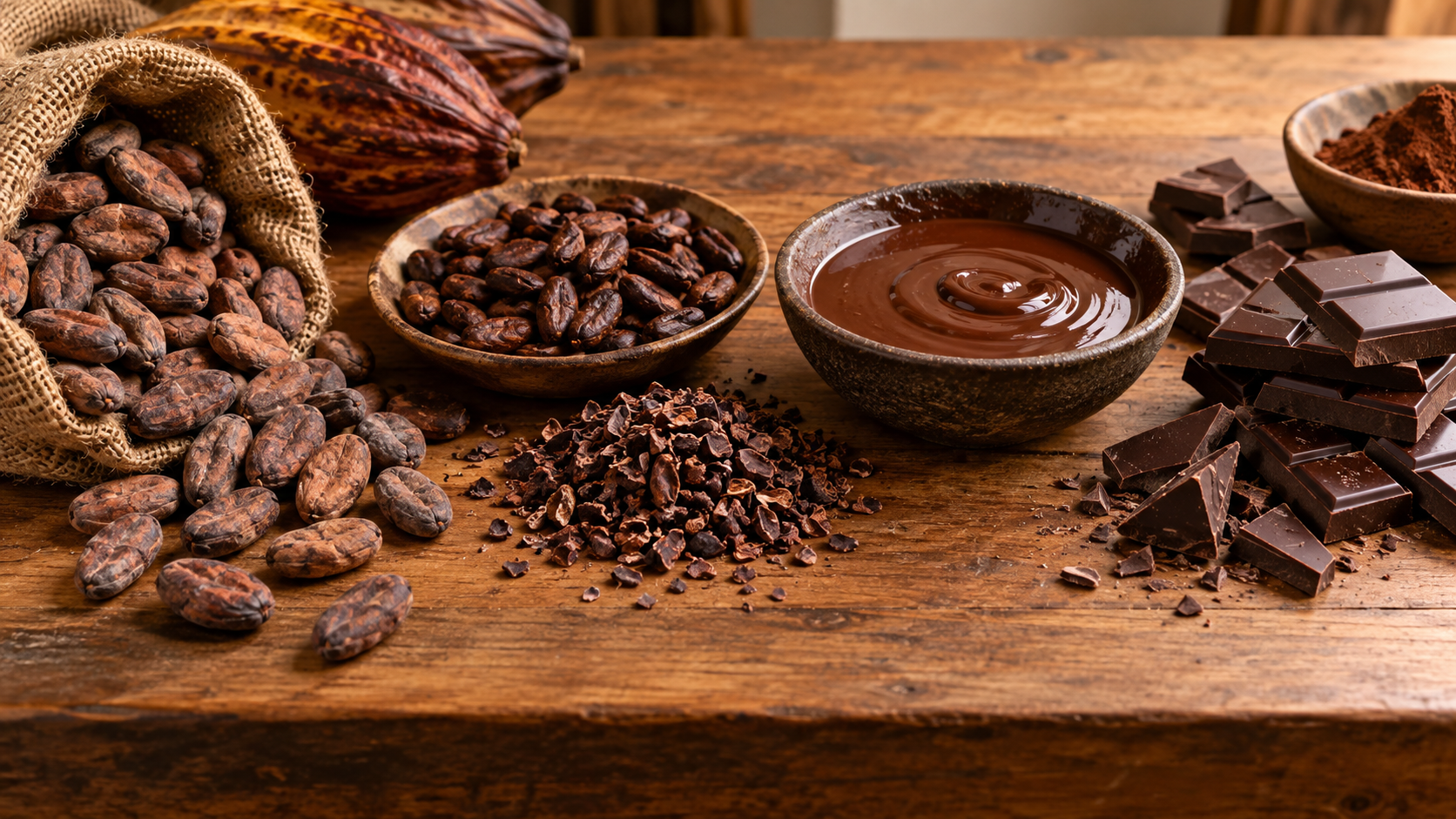
Roasting later transforms the precursors formed during fermentation into familiar cocoa aromas. Fermentation, drying and roasting therefore work together to shape the final flavour.
Frequently asked questions
Can I prepare it ahead?
Yes. Follow the chilling and storage guidance in the method and add crisp decorations shortly before serving.
Can I change the chocolate?
Yes, but cocoa percentage changes sweetness, flow and firmness, so test a small quantity first.
How should it be stored?
Keep plain chocolate cool and dry, and refrigerate desserts containing cream, milk or cut fruit.
Can I reduce the sugar?
A modest reduction may work in some recipes, although sugar also affects texture and structure.
Which allergens should I check?
Check every label for milk, gluten, soya, eggs, nuts and any other allergens relevant to the ingredients used.
What gives the most reliable result?
Measure accurately, control temperature and use the visual texture cues described in each step.