
Balance the three chocolates
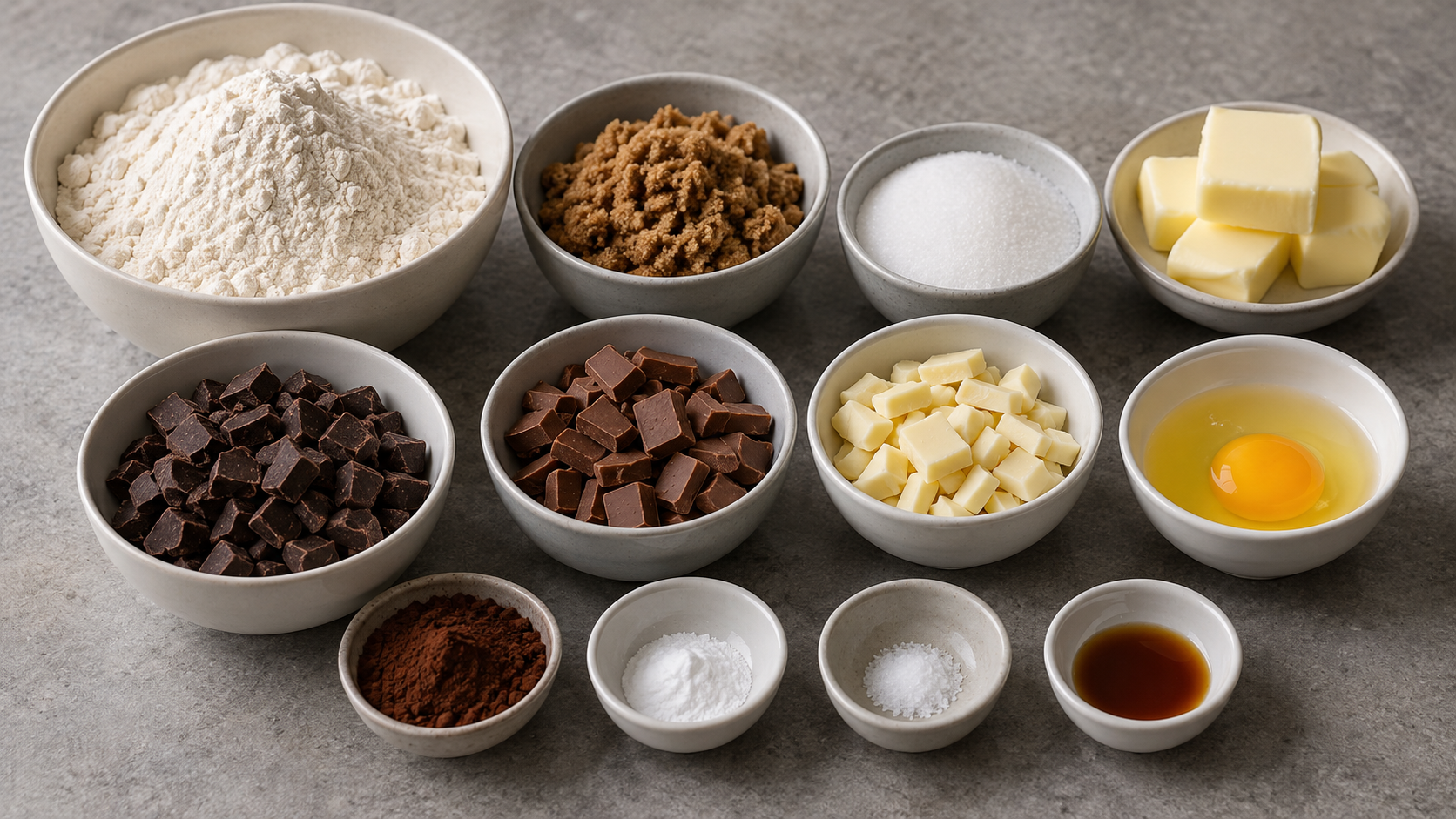
Dark, milk and white chocolate create contrast, but equal large quantities can make the cookie excessively sweet and greasy. Use measured pieces and keep some for the surface.
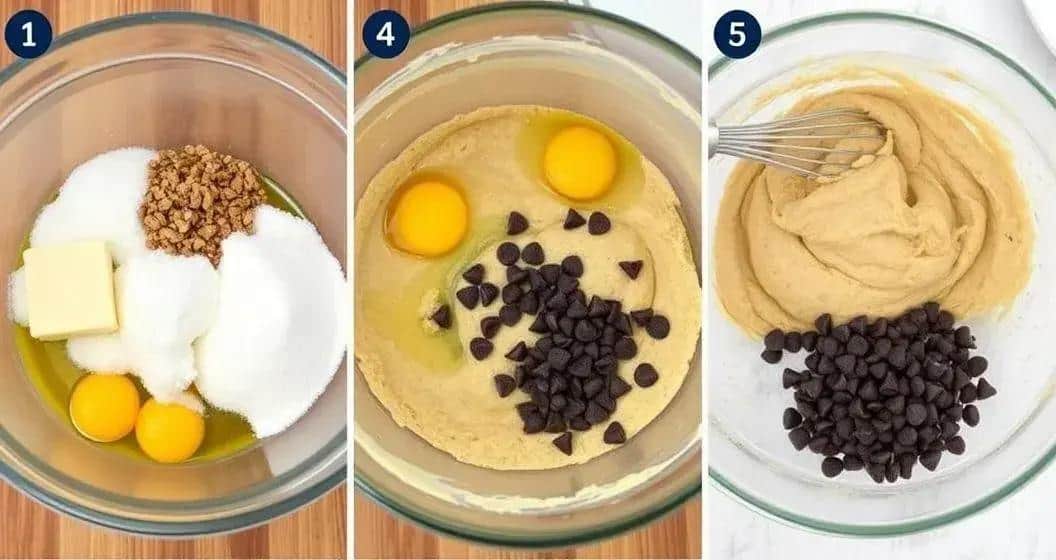
Use 250 g plain flour, 30 g cocoa, 170 g butter, 140 g brown sugar, 80 g caster sugar, one egg, raising agent, salt and 180 g mixed chocolate pieces.
Cream butter and sugars properly
Beat softened butter and sugars until evenly combined, then add the egg and vanilla. Scrape the bowl so no unmixed butter remains.
Mix without overworking
Fold in sifted dry ingredients only until no flour pockets remain, then add most of the chocolate. Overmixing makes the cookie tough.
Shape for even baking
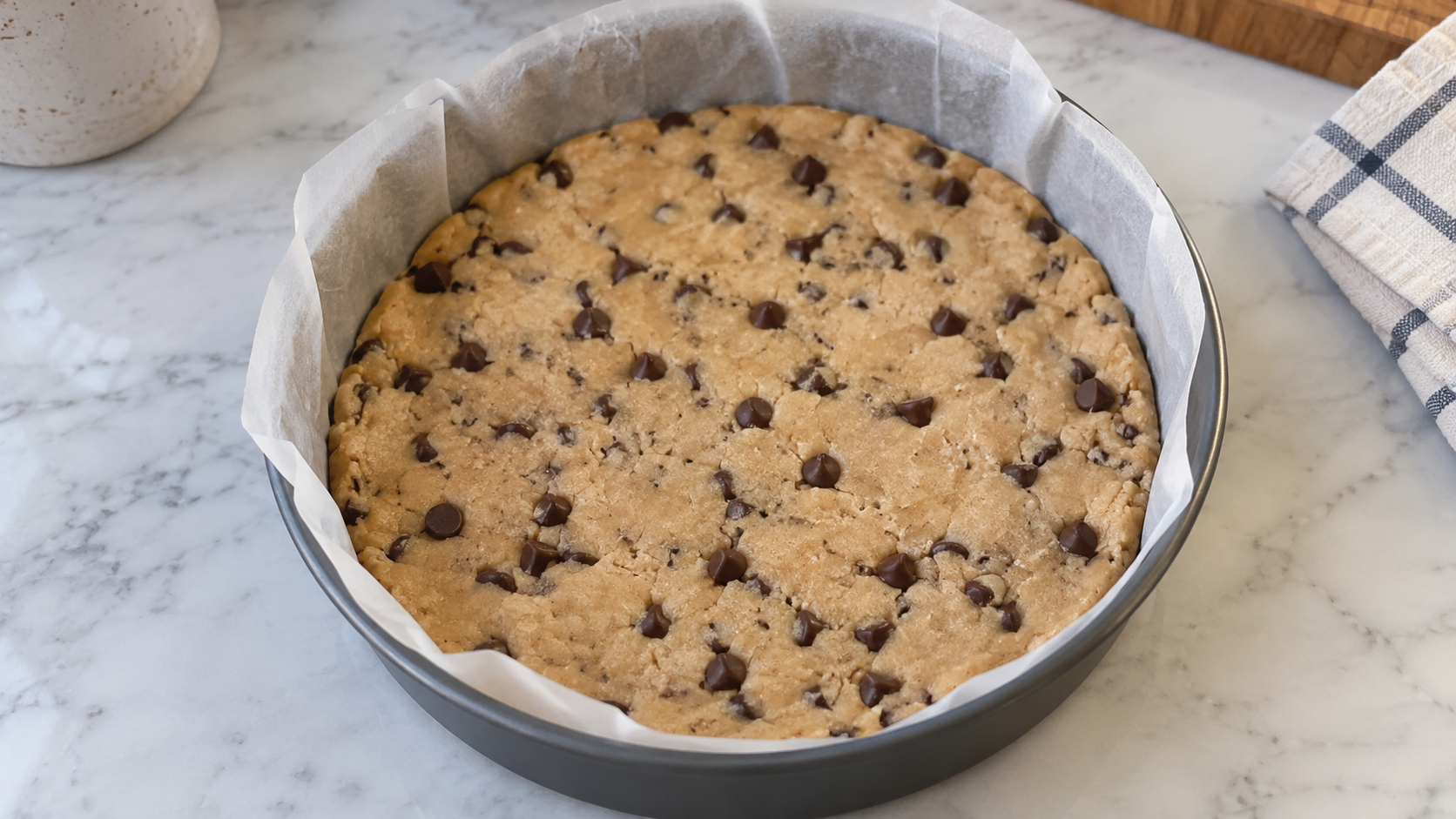
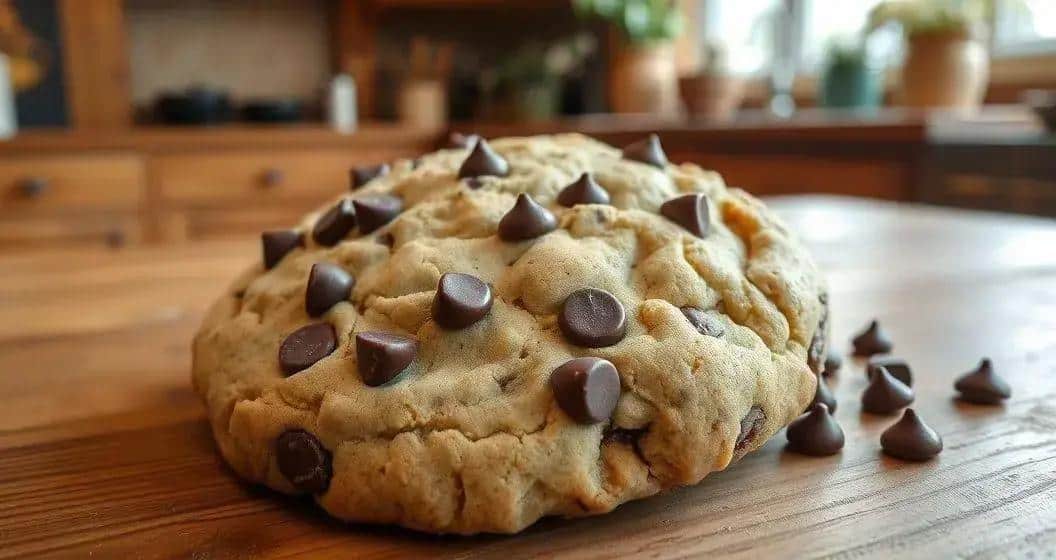
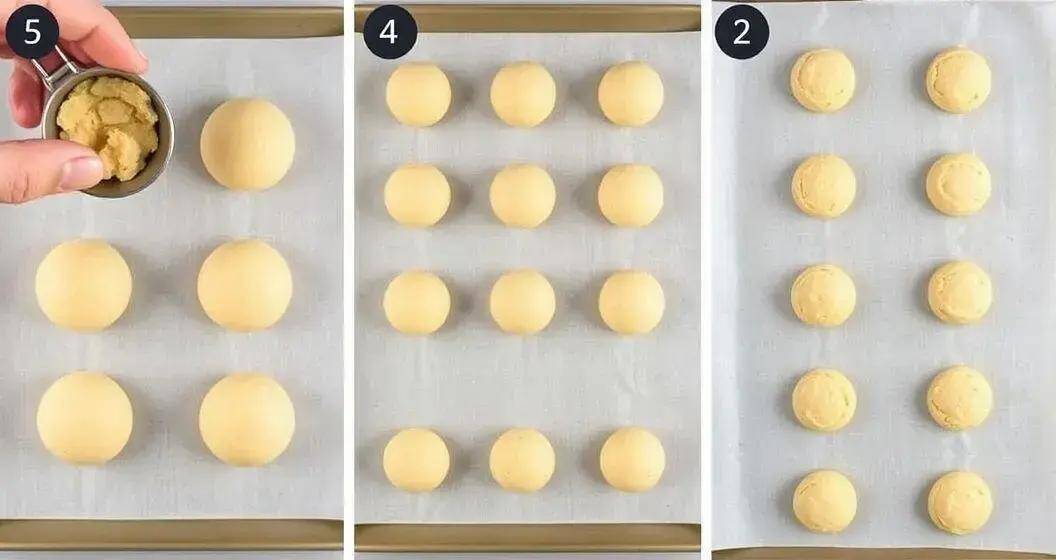
Press into a lined 24 cm tin or shape a thick even disc. Leave a small margin for spread and distribute the reserved chocolate across the top.
Bake until the centre is set
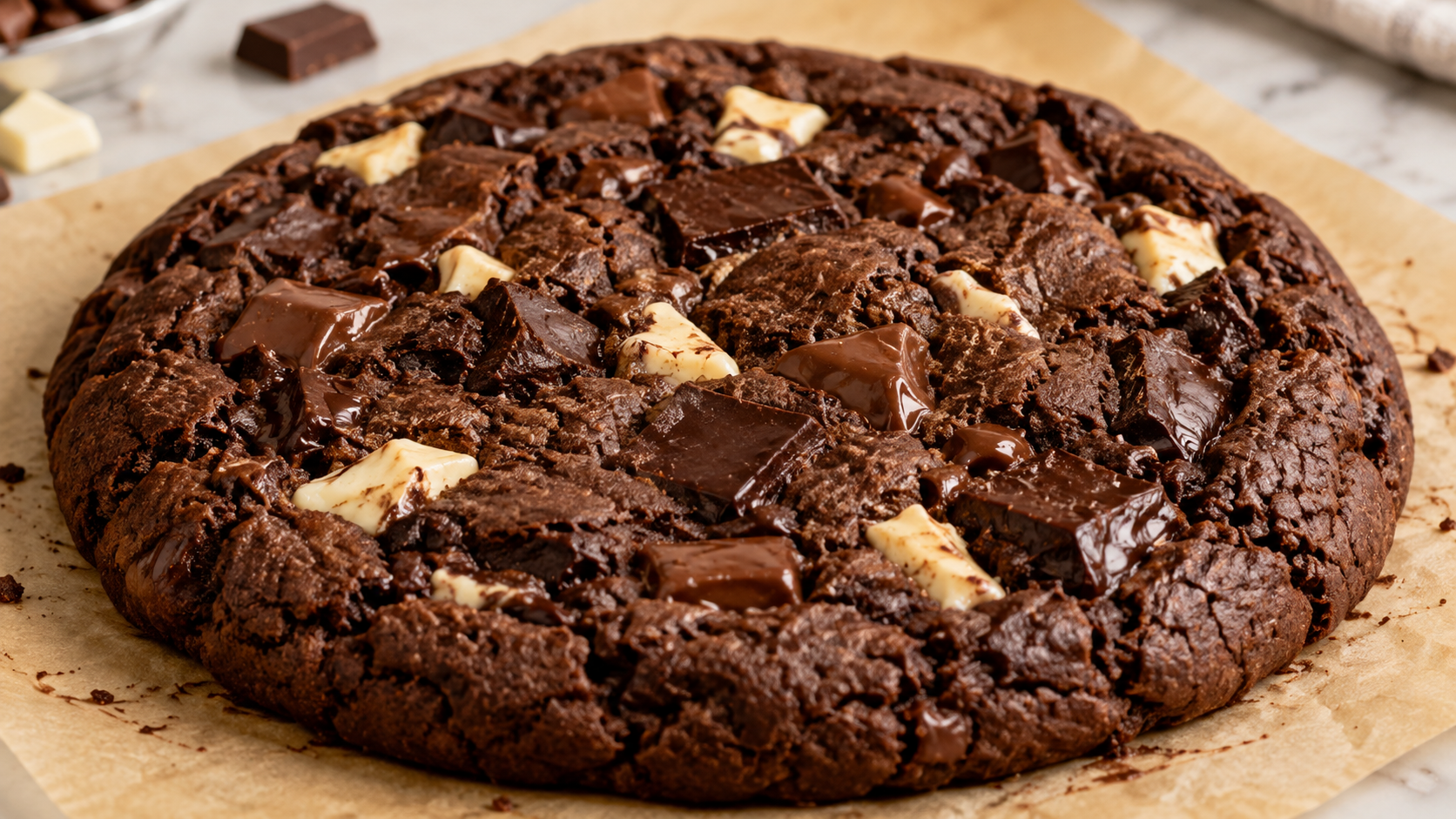
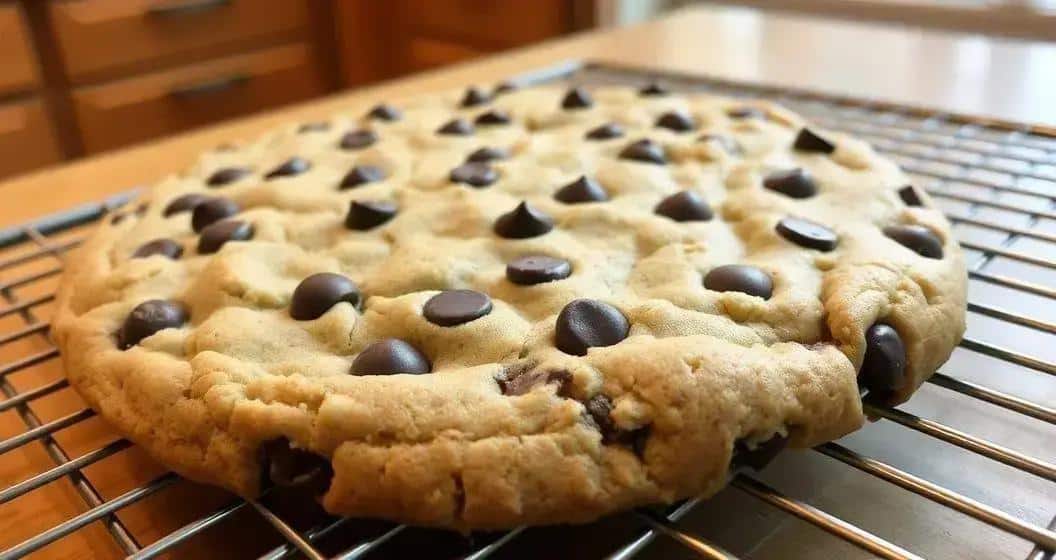
Bake at 180°C, or 160°C fan, until the edge is firm and the centre no longer looks wet. The cookie continues setting as it cools.
Cool before slicing
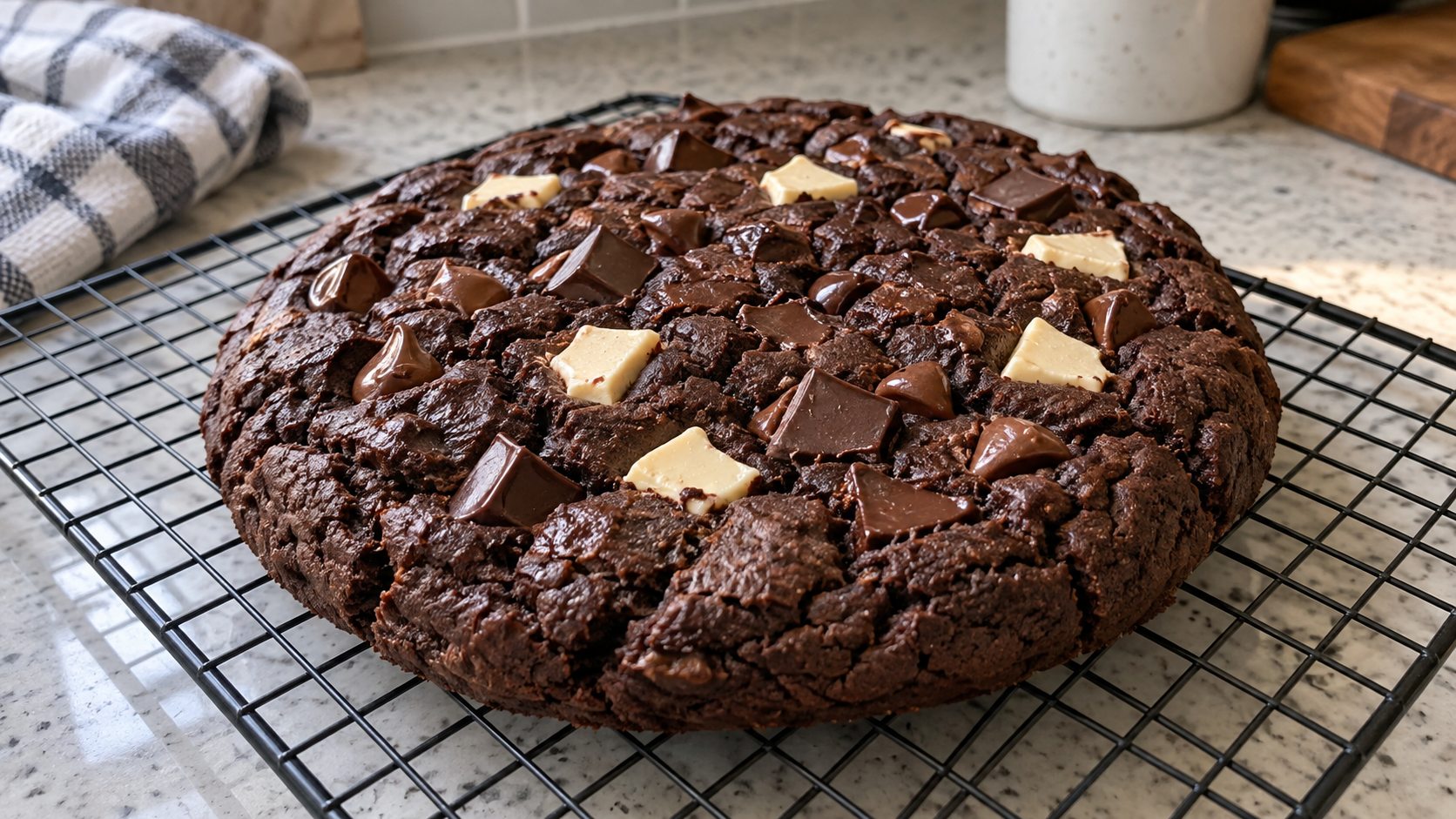
Cool in the tin before moving or cutting. Declare milk, egg, gluten and soya as applicable, and keep portions away from heat.
Frequently asked questions
Why was the source rewritten?
Unsafe, unsupported or technically unreliable instructions were corrected while preserving the useful subject.
How should allergens be handled?
Check every current pack, prevent cross-contact and keep accurate ingredient information.
Can storage time be copied from another recipe?
No. Validate it for the actual ingredients, hygiene, process and packaging.
Can quantities be changed freely?
Changes to water, fat, sugar, alcohol or acid can alter texture, safety and storage.
Are nutrition or health claims automatic?
No. They require the complete formulation, a defined portion and applicable evidence.
What should be recorded during testing?
Record exact weights, temperatures, times, yield, storage and the result of each controlled trial.