
Make simple curls and shards
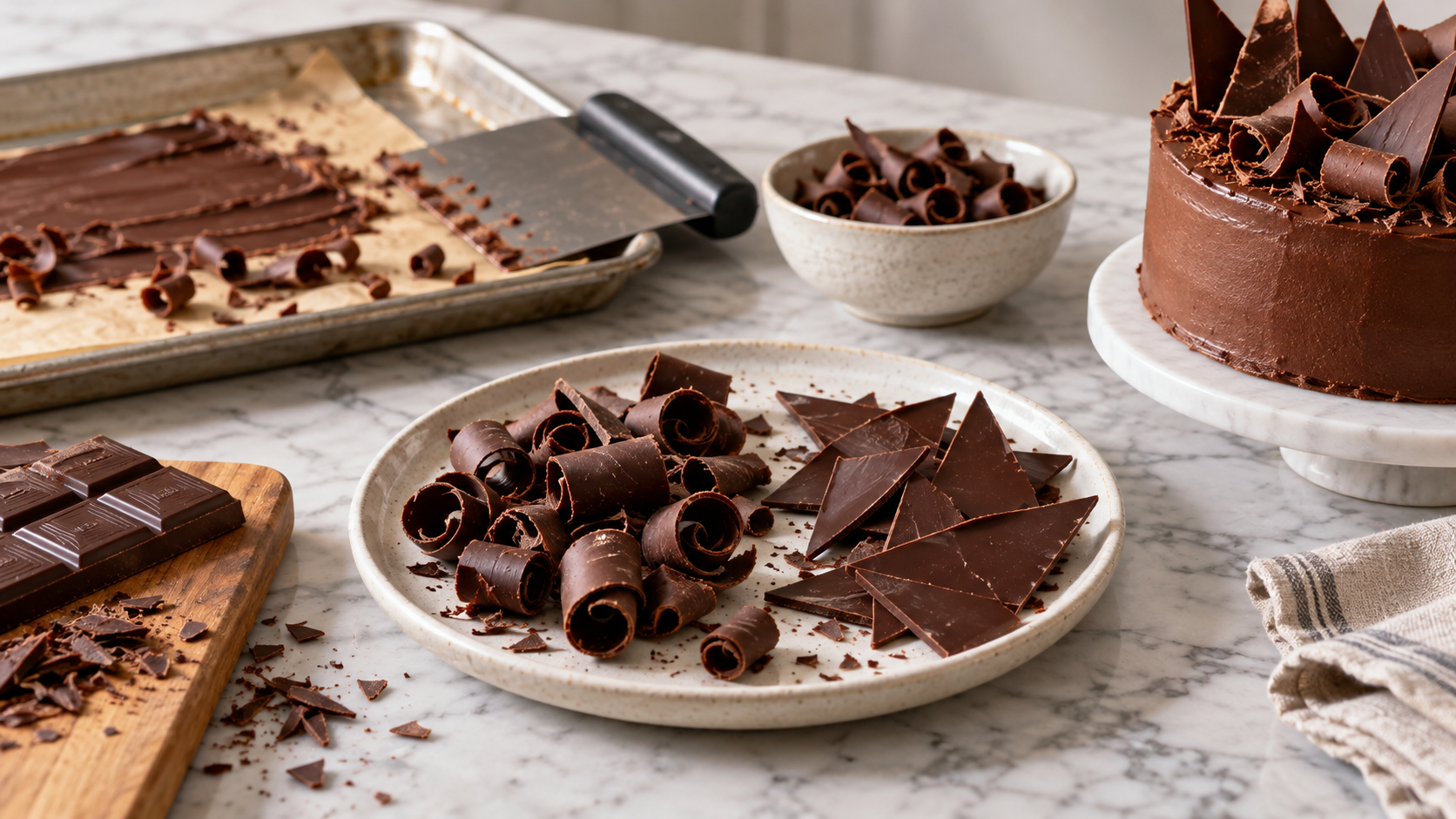
For curls, bring a plain bar to a workable room temperature and draw a peeler along the edge. For shards, spread tempered chocolate thinly and break it after setting.
Create a controlled drip
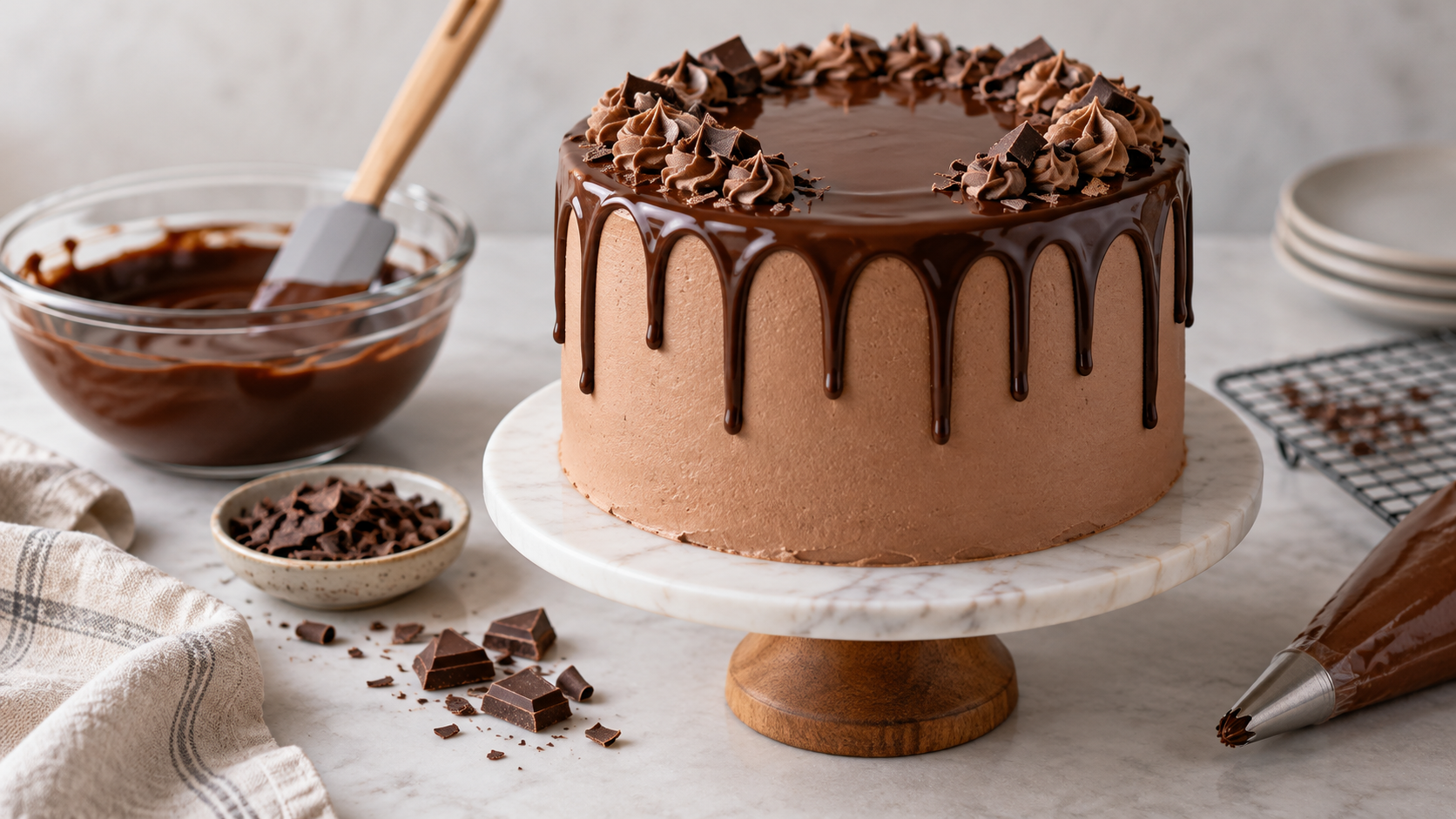
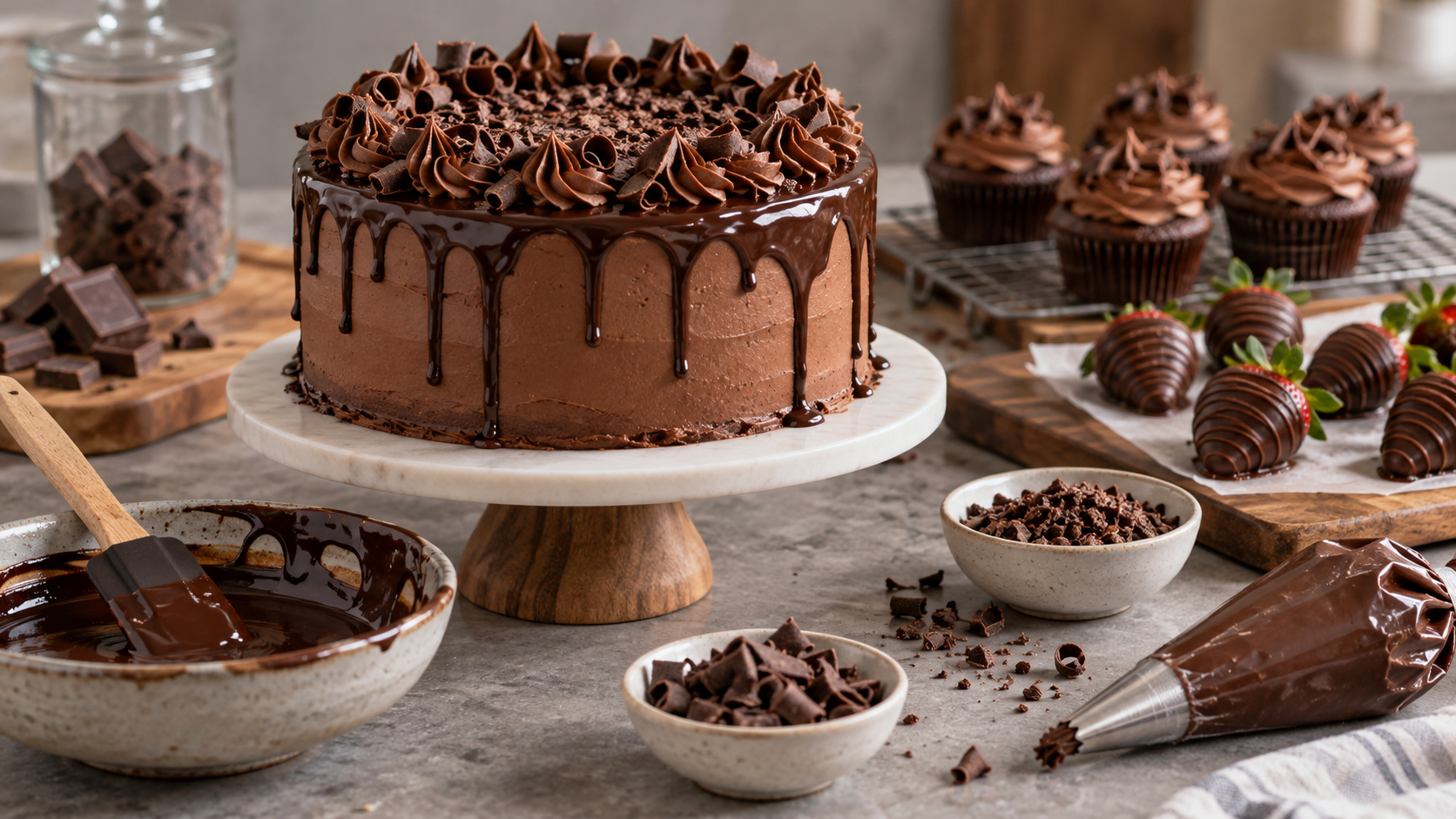
Use a ganache ratio suited to the cake temperature and desired flow. Test one drip before covering the whole edge.
Use grated chocolate well
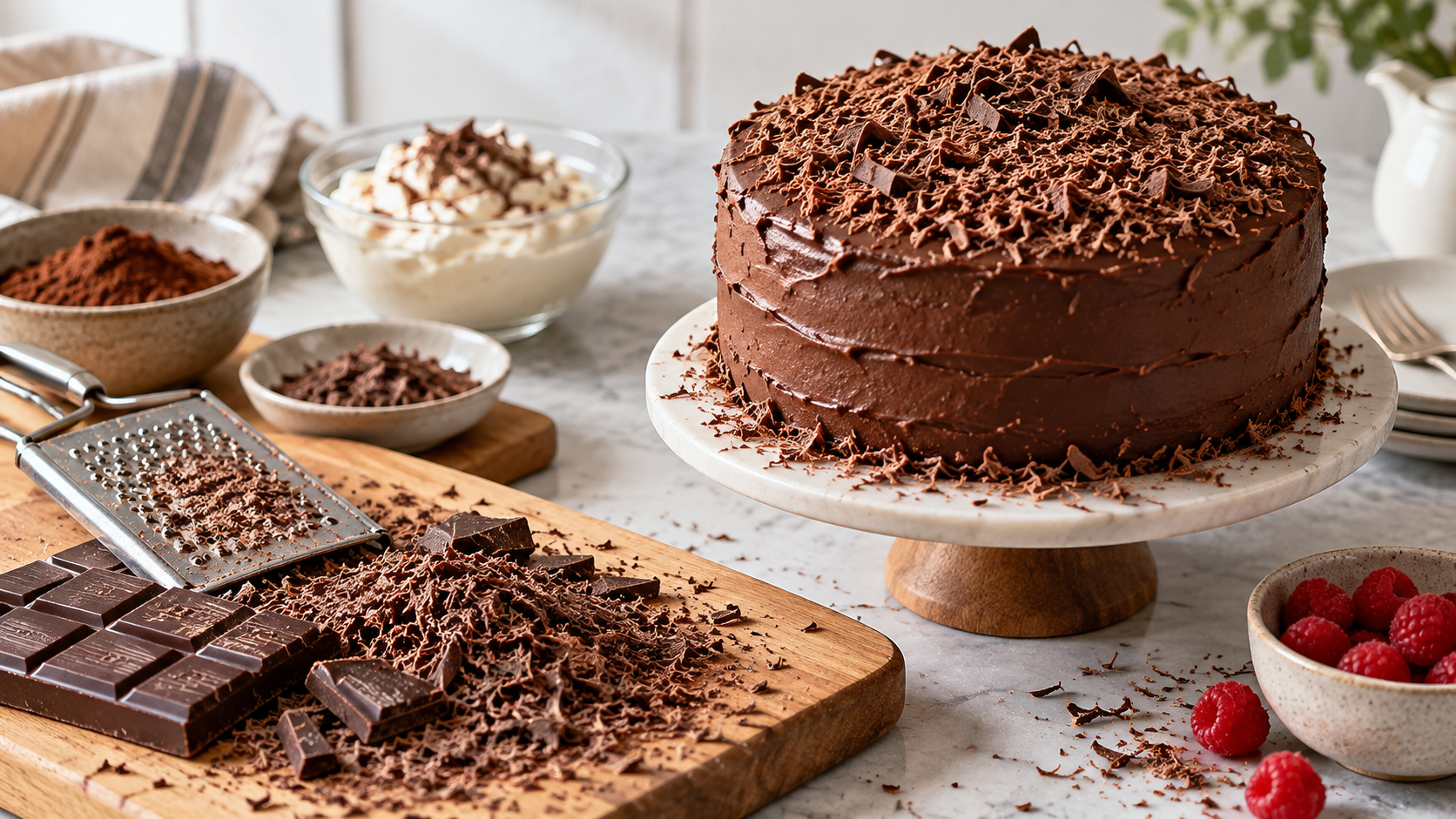
Grate chilled chocolate over cream, tiramisu or mousse shortly before service. Fine shavings melt quickly on warm or wet surfaces.
Build a chocolate collar
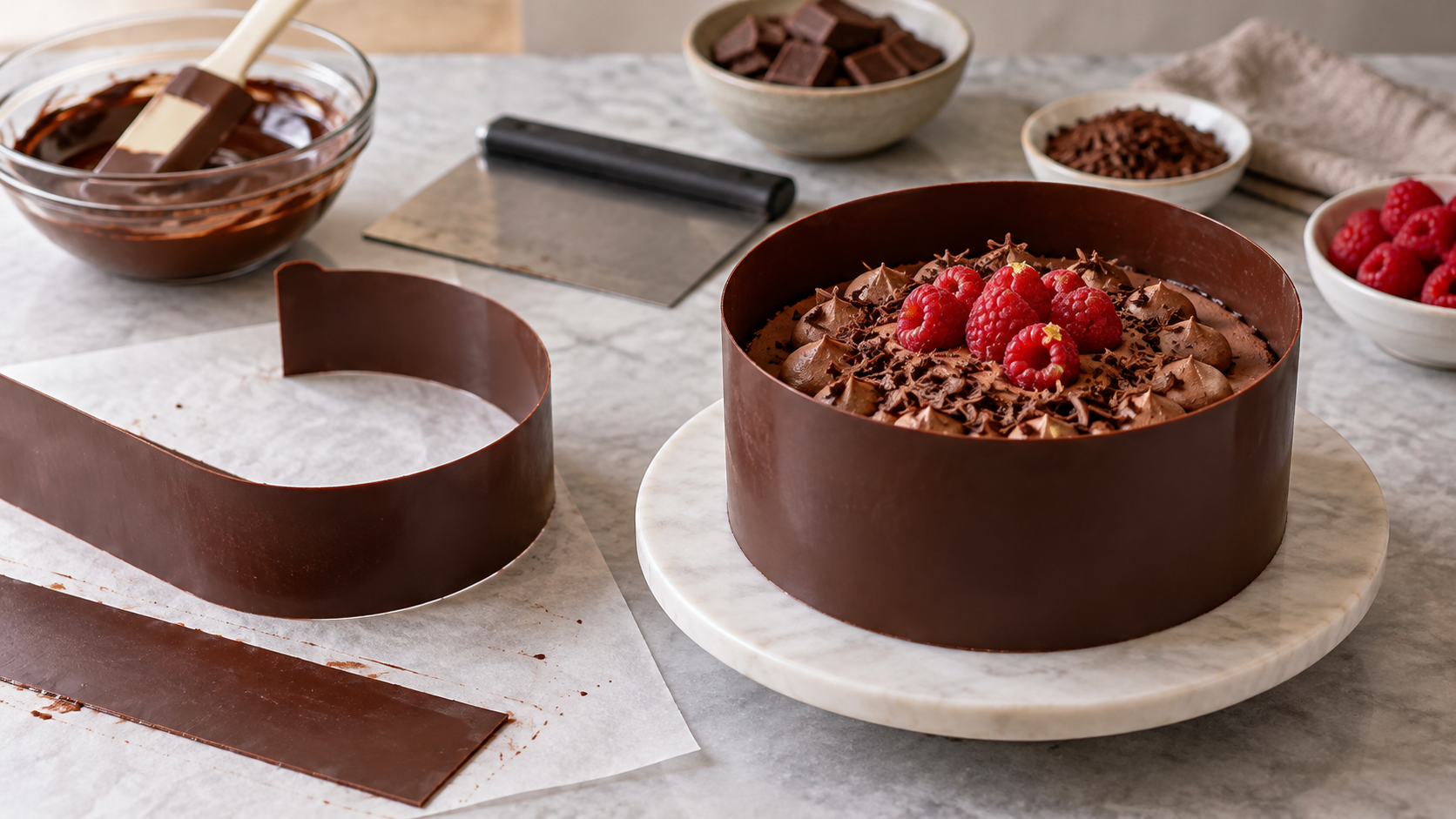
Spread tempered chocolate on acetate, wrap it around a cool cake and remove the acetate after setting. Avoid condensation.
Add dipped decorations
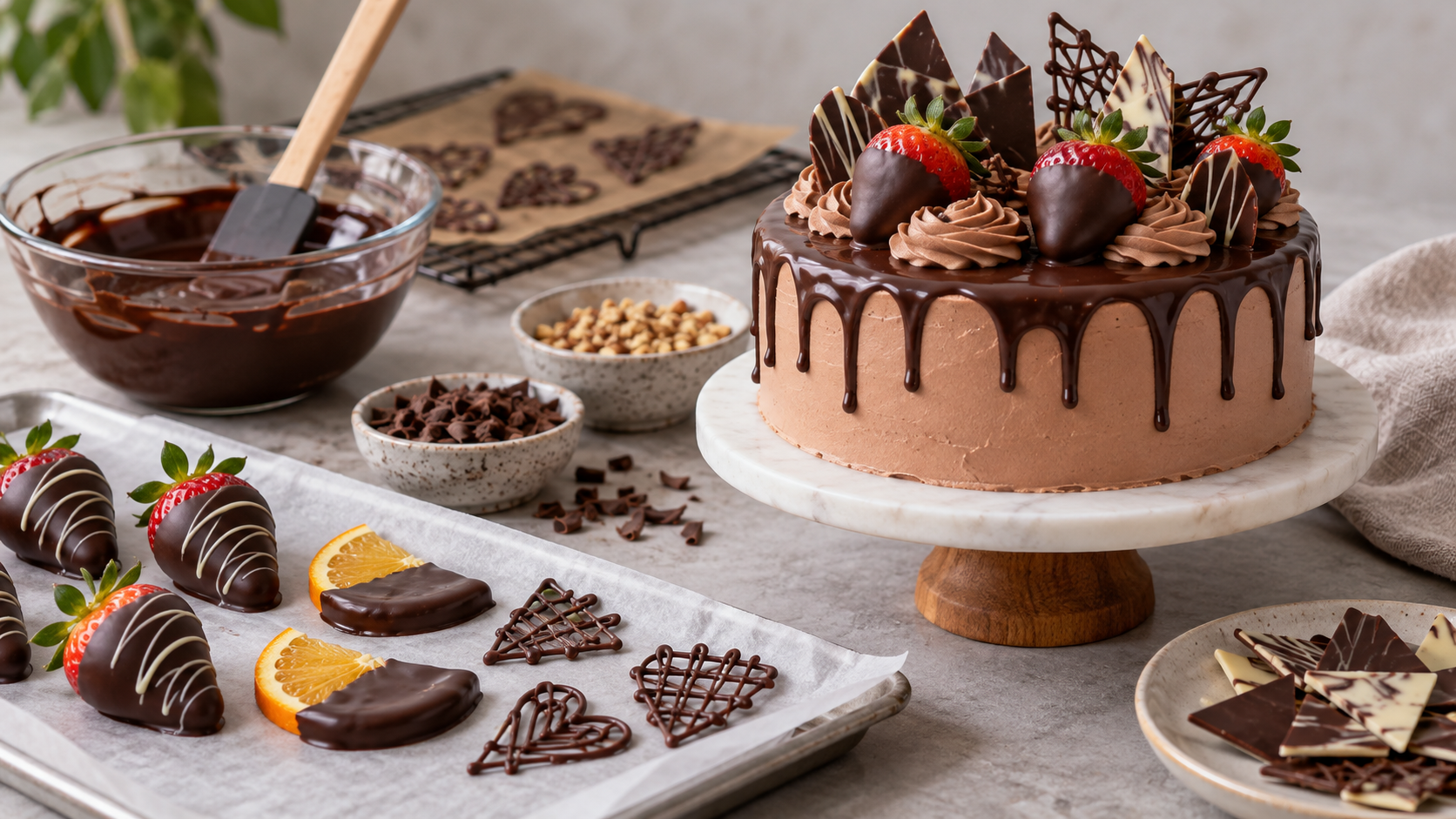
Dip completely dry biscuits, nuts or fruit for prompt service. Fresh fruit shortens storage life and introduces moisture.
Balance flavour and texture
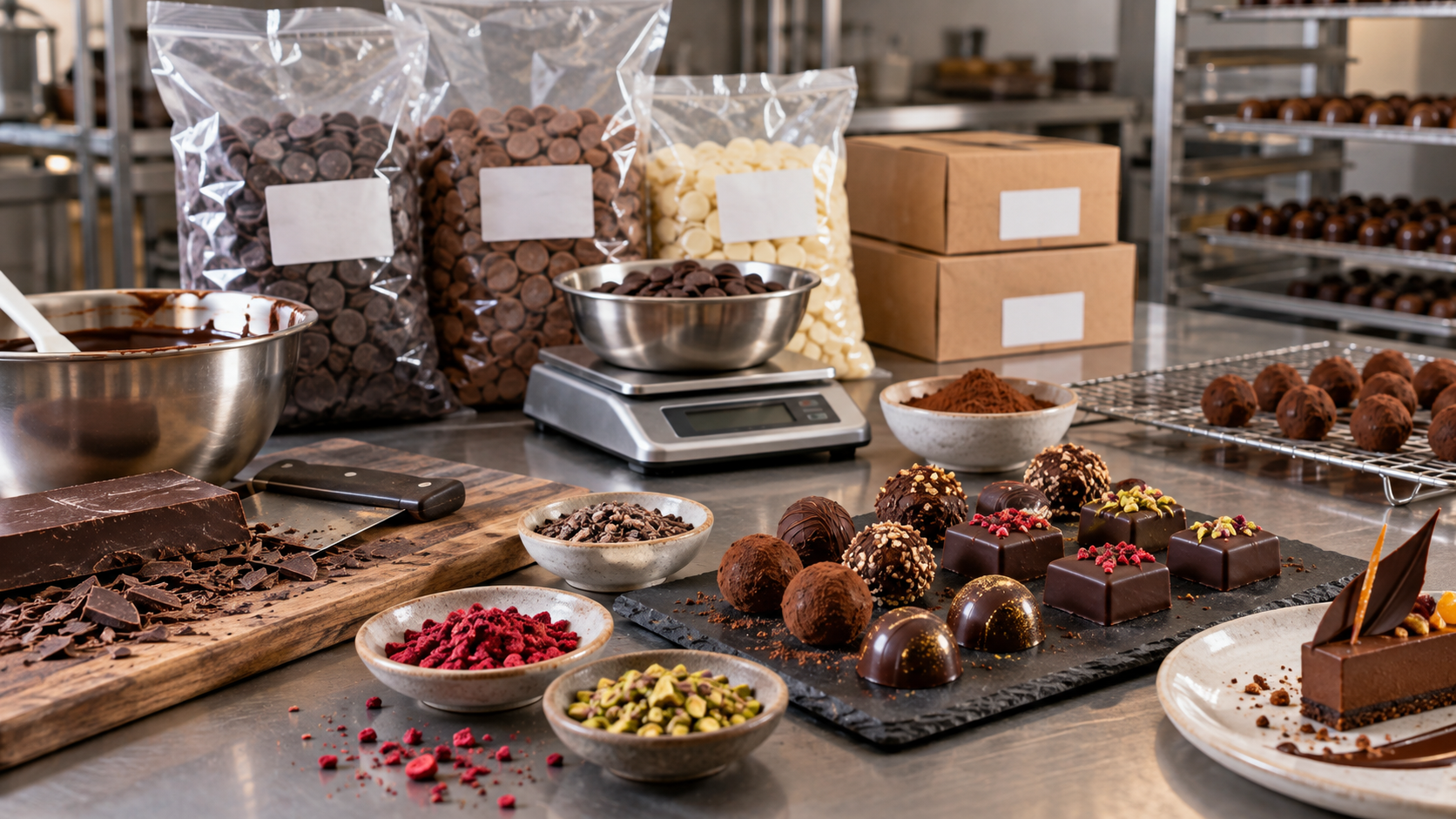
Decorations should add a complementary taste and an easy bite, not only height. Avoid thick pieces that are difficult to cut.
Store decorations correctly

Keep finished pieces cool, dry and protected from odours. Refrigerate only when the cake or filling requires it and manage condensation.
Frequently asked questions
Can any eating chocolate bar be used for moulding?
No. Check whether it is plain cocoa-butter chocolate and test its fluidity, temper and release.
How should filled chocolate be stored?
Follow the needs of the filling; cream, fruit and custard can require shorter life and refrigeration.
Does melting chocolate make it tempered?
No. Tempering is a controlled crystallisation process used for shine, snap and mould release.
How should wholesale prices be compared?
Compare delivered cost per kilogram, minimum order, storage, waste and usable finished yield.
Which allergens are common in chocolate sweets?
Milk, soya, nuts and gluten are common, but every current ingredient label and cross-contact risk must be checked.
What records should a seller keep?
Keep supplier labels, batch codes, recipes, temperatures, yields, dates, allergen information and customer orders.