
Ingredients for a medium dish
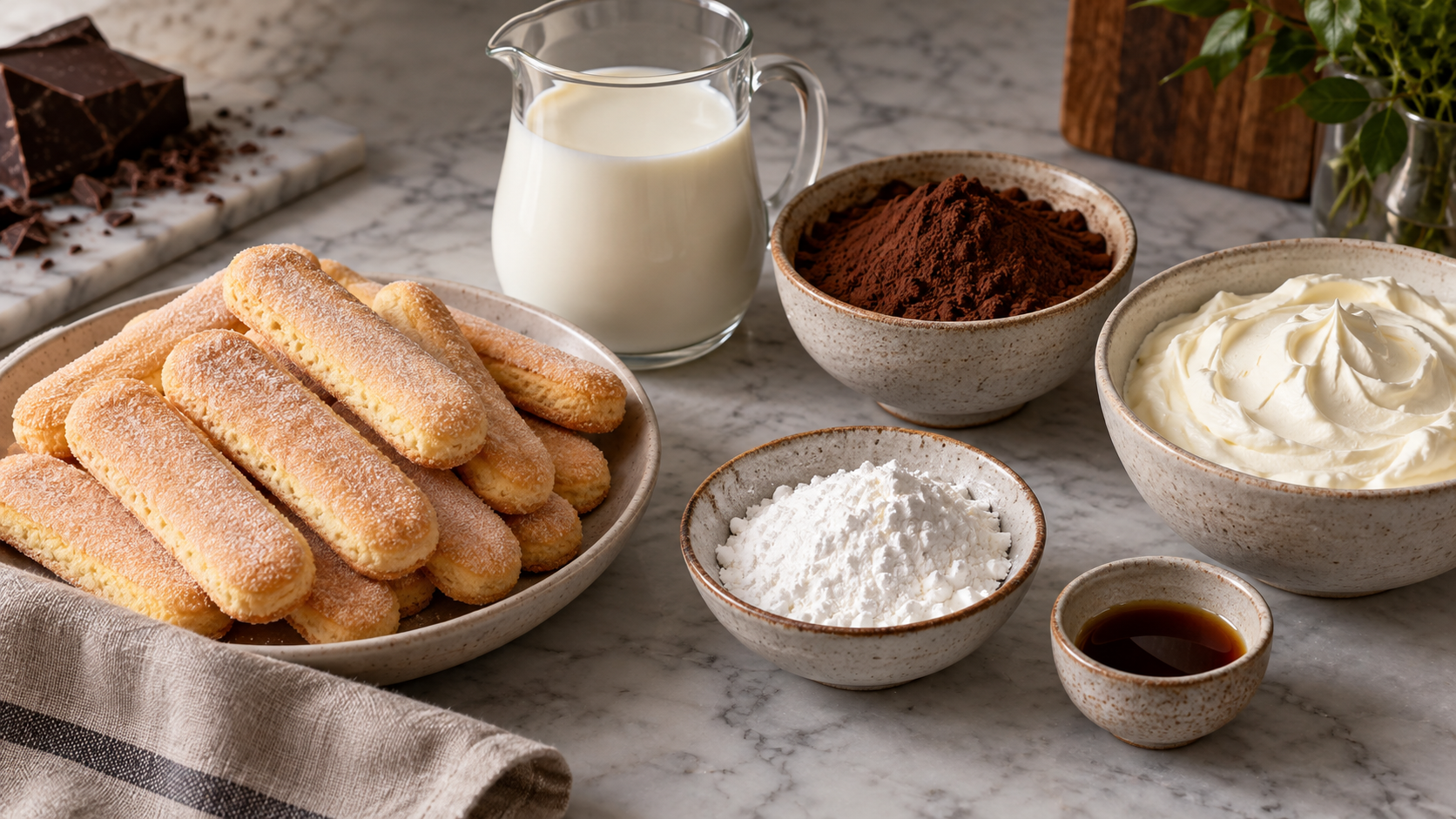
Use 500 ml whole milk, 40 g cocoa, 80 g sugar, 35 g cornflour, one teaspoon vanilla, 200 ml double cream and about 200 g sponge fingers. Check the biscuits for egg, gluten and other allergens.
Cook the cocoa custard
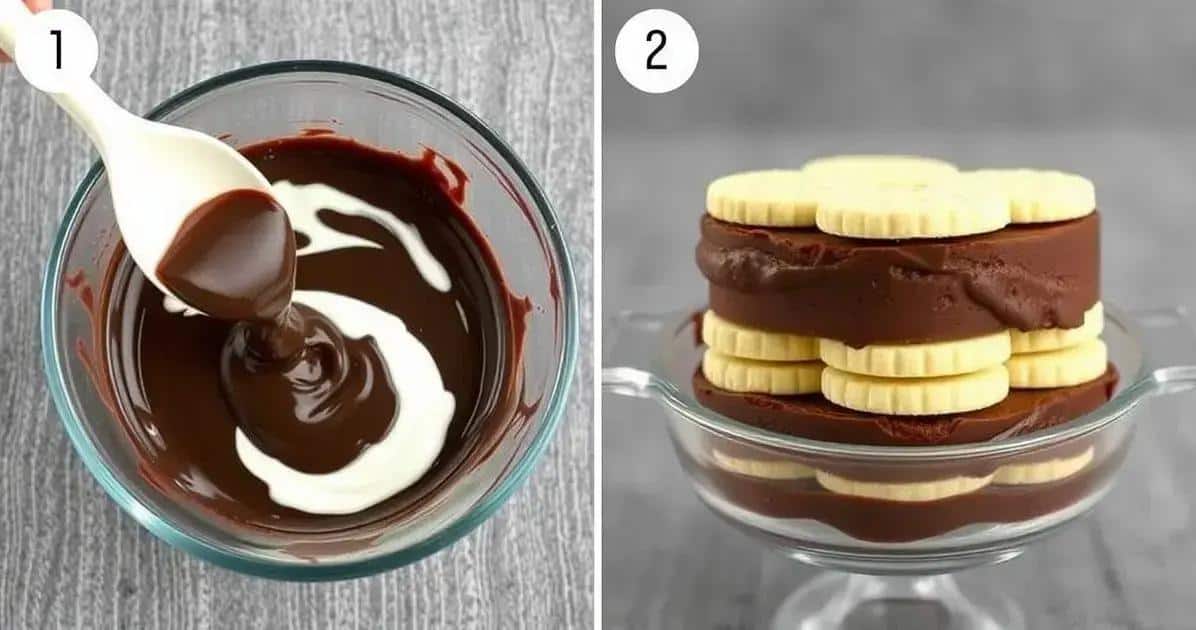
Whisk milk, cocoa, sugar and cornflour while cold. Cook over medium heat, stirring constantly, until it bubbles and thickens. Continue briefly as the cornflour recipe directs, then remove from the heat and add vanilla.
Prepare the biscuit layer
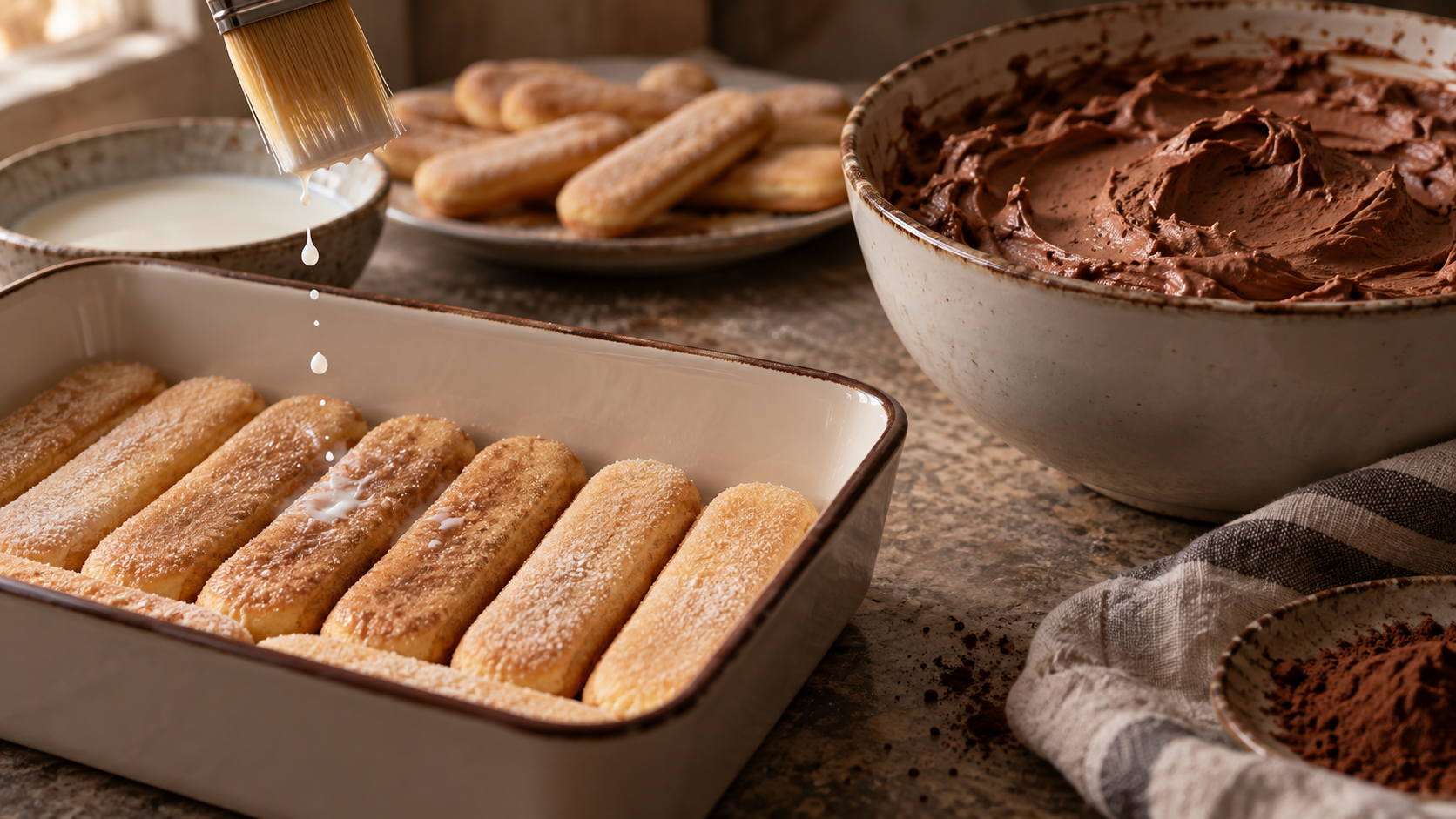
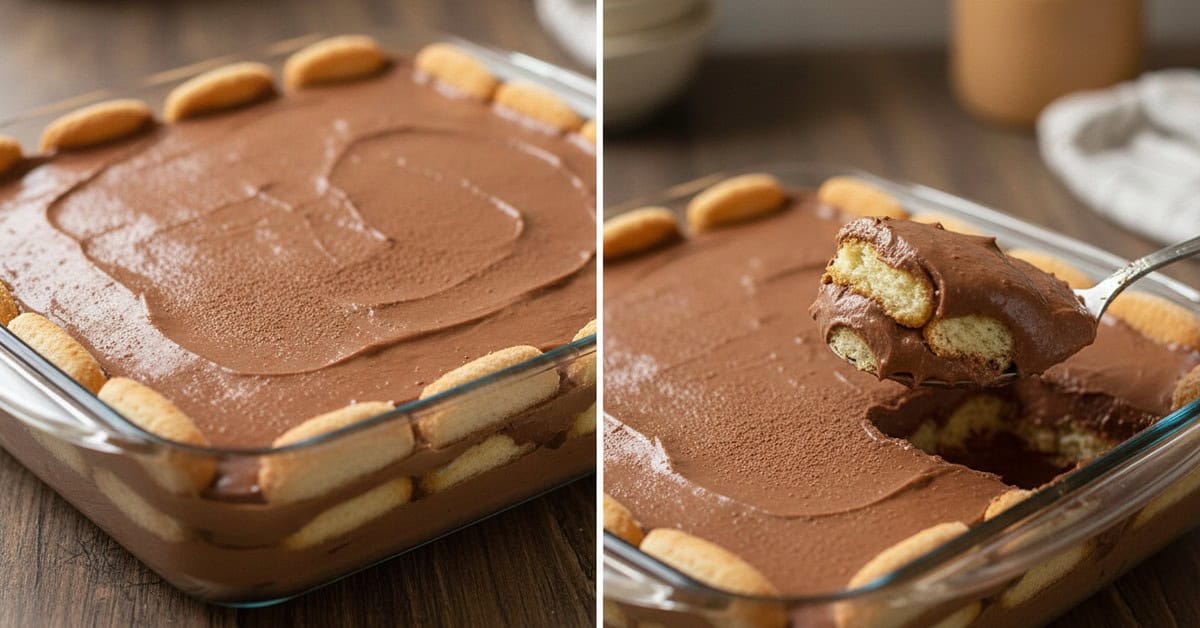
Cool the custard with the surface covered. Whip the cream to soft peaks and fold it into the cold custard for a lighter filling. Dip each sponge finger very briefly in milk; soaking makes the dessert collapse.
Assemble even layers
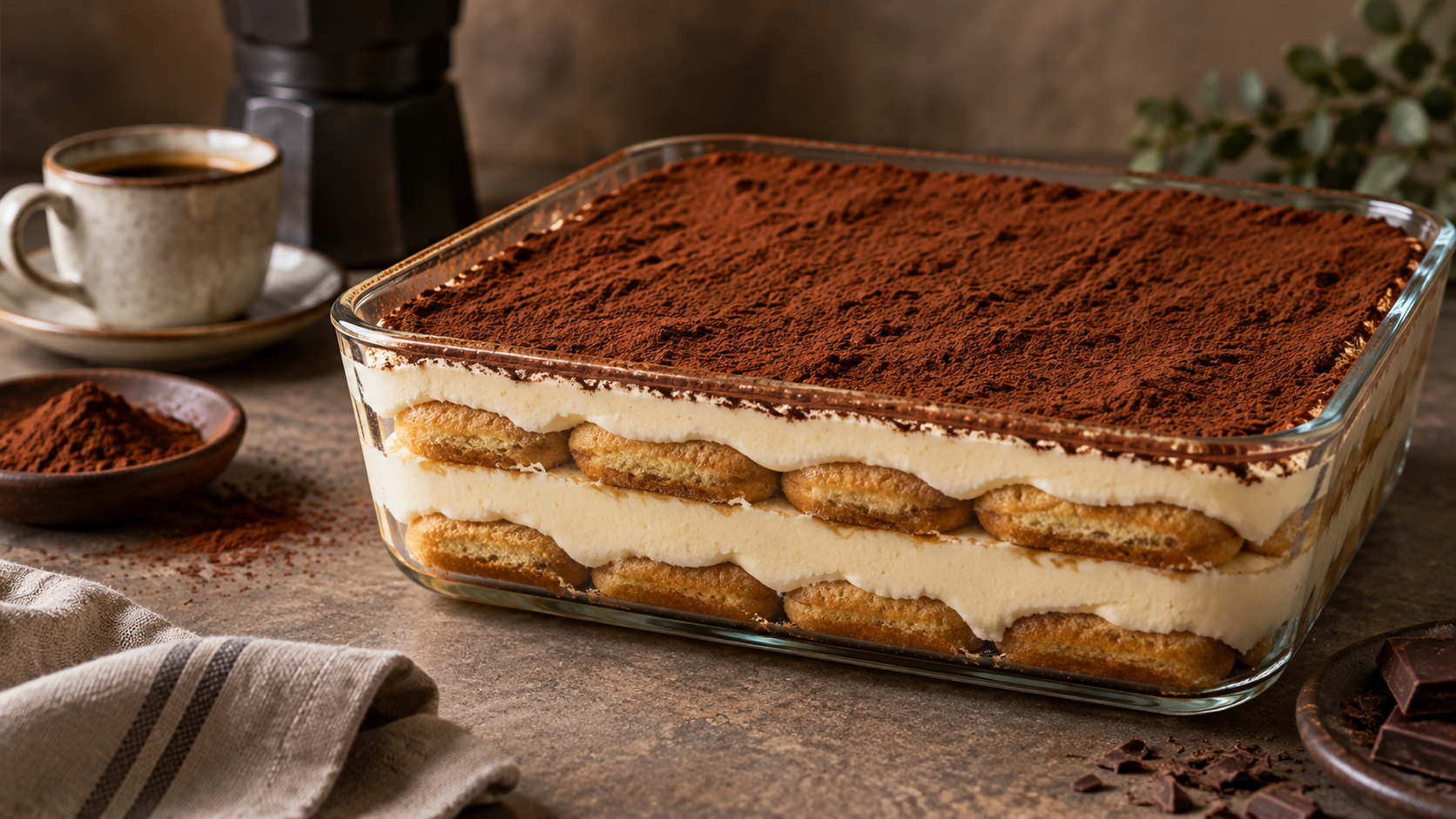
Place one biscuit layer in a clean dish, spread with cocoa cream and repeat. Finish with cream and a light cocoa dusting. Keep layers level so each portion contains biscuit and filling.
Chill until sliceable
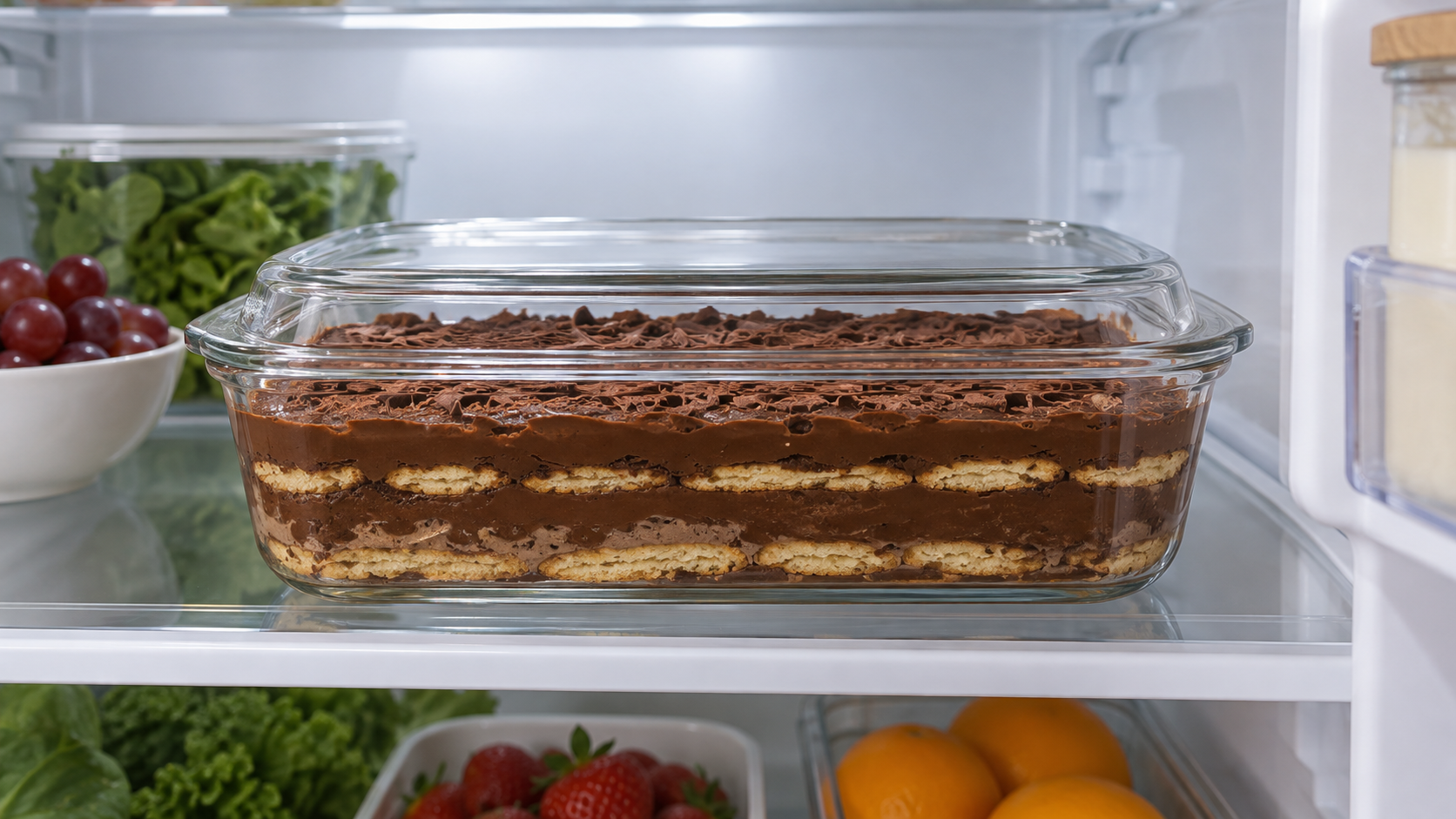
Cover and refrigerate for at least four hours, preferably overnight. Chilling hydrates the biscuits and firms the cream. Do not leave the dairy dessert at room temperature for extended periods.
Serve and store safely
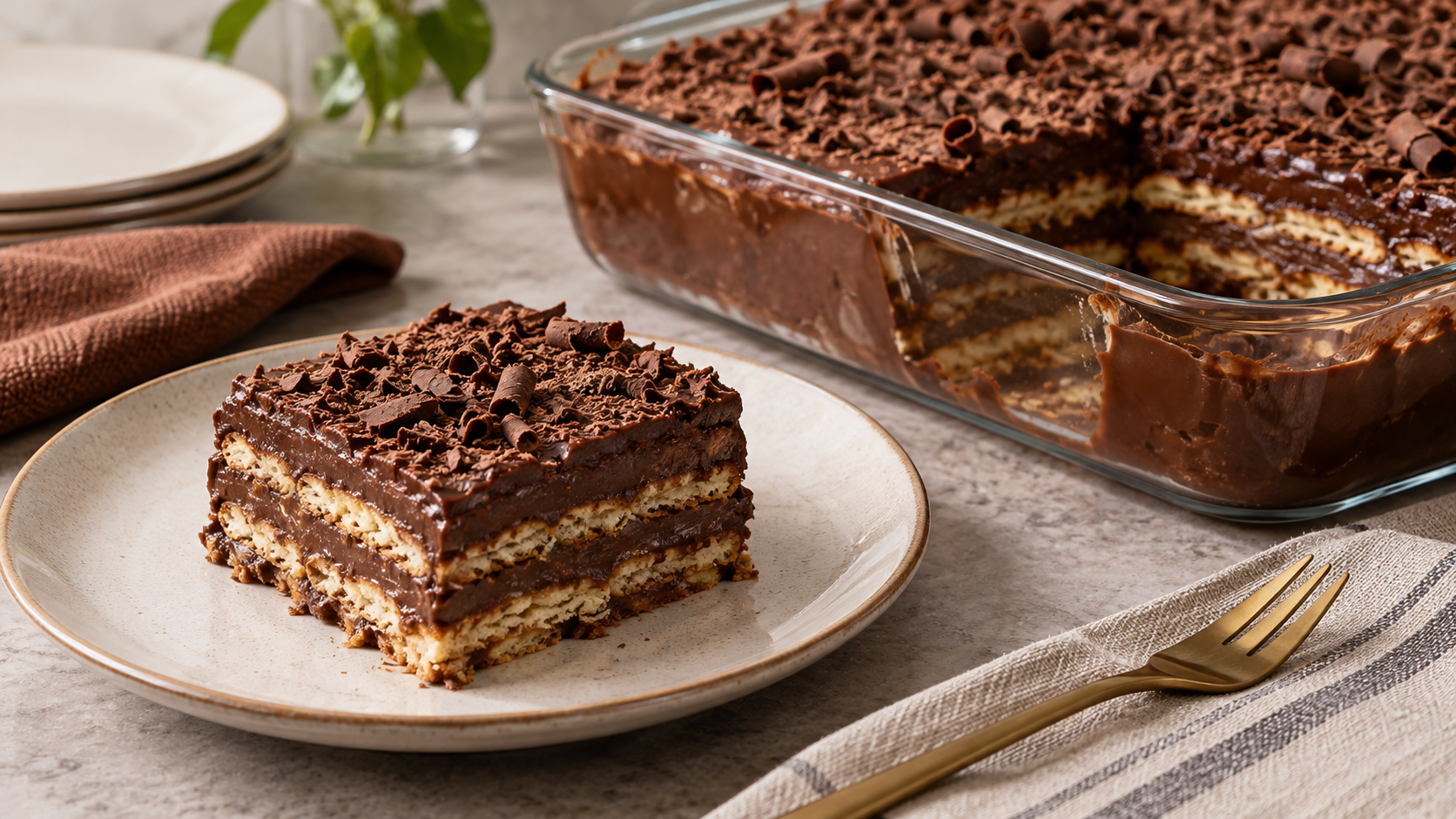
Cut with a clean knife and return leftovers to the fridge promptly. The dessert contains milk, egg and gluten in the usual recipe. Use the shortest storage guidance from the ingredients and do not claim a shelf life without testing.
Frequently asked questions
Why was the source rewritten rather than translated literally?
It needed factual, recipe or safety correction, so the useful topic was rebuilt directly in British English.
Can alcohol be assumed to cook away?
No. Label it clearly and keep the product for an appropriate adult audience.
Are vegan products automatically allergen-free?
No. Check every ingredient and cross-contact statement for soya, nuts, gluten and other allergens.
Can the stated storage time be guaranteed?
No. Ingredients and handling vary; use a validated shelf life for the actual recipe and process.
May decorative or workshop materials touch food?
Only materials intended for food contact should touch edible products.
How should historical firsts be described?
Use primary records where possible and state uncertainty rather than inventing a precise first.