
Choose an edible tool theme
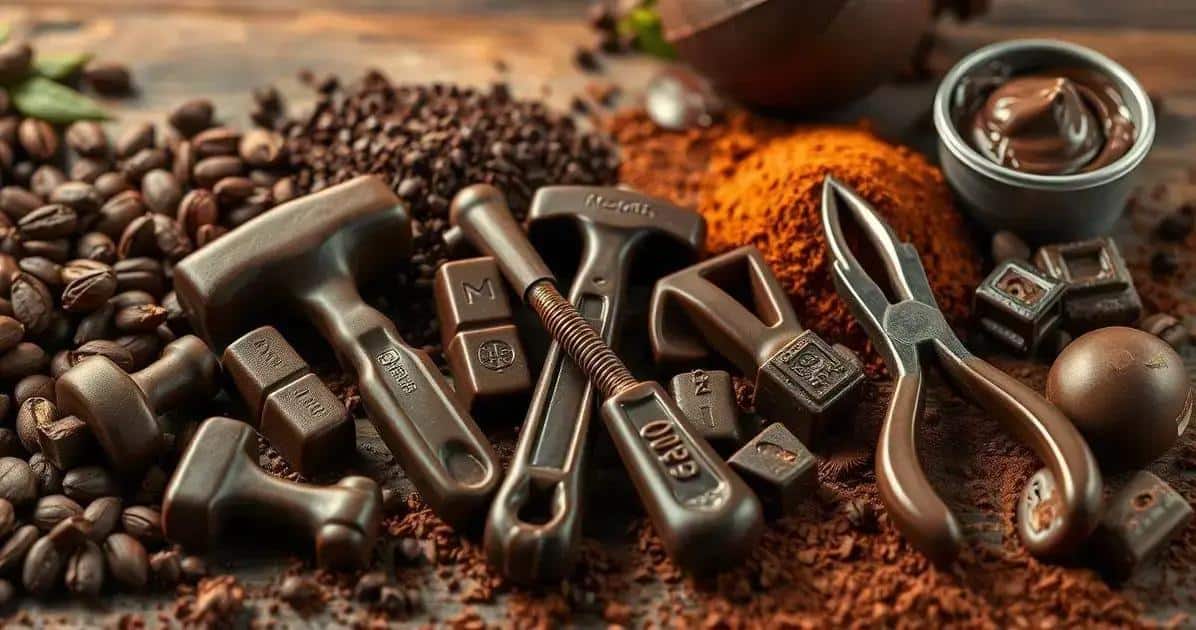
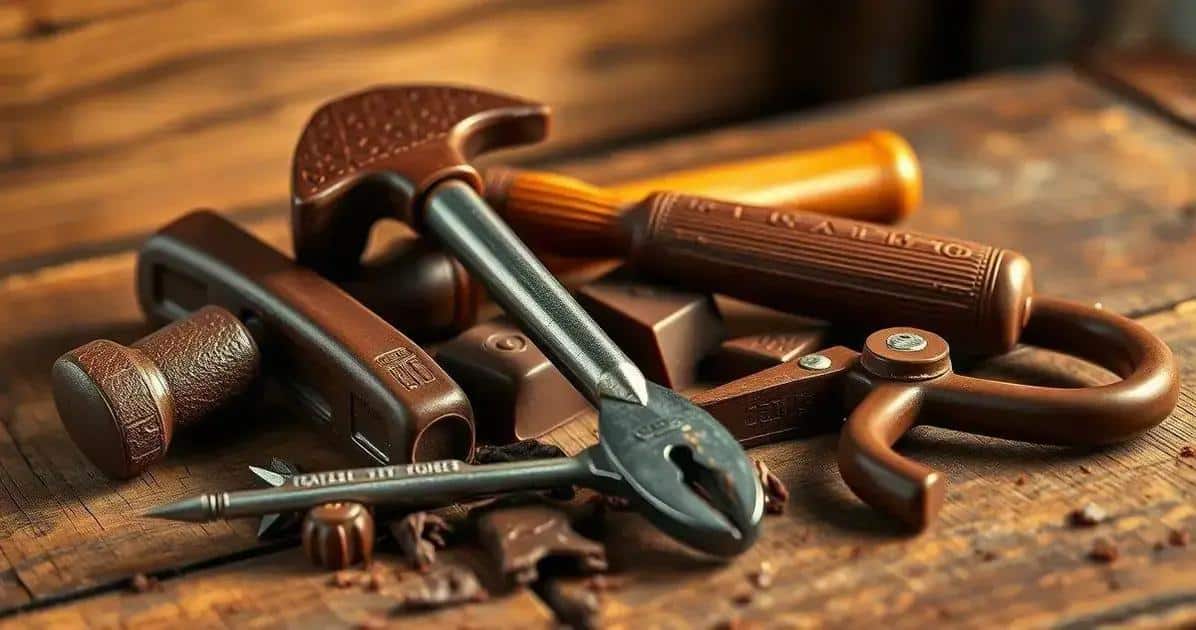
Chocolate spanners, hammers and screwdrivers can make a playful gift for a DIY fan. Keep the shapes clearly confectionery rather than realistic enough to be confused with actual tools around children.
Use moulds made for food
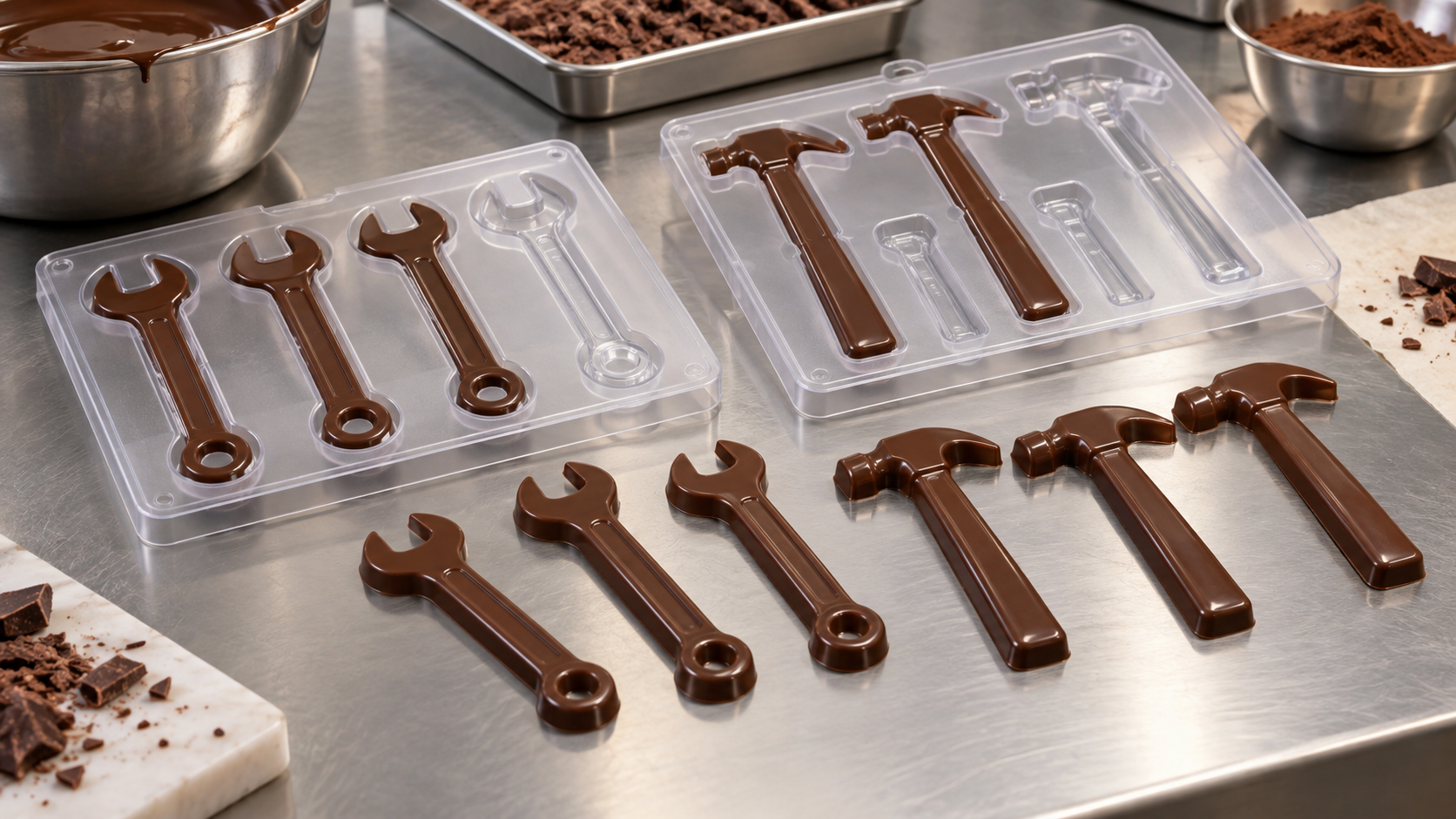
Use clean food-grade moulds designed for chocolate. Hardware trays, workshop silicone and 3D-printing materials are not automatically food-safe. Inspect cavities for damage and keep moulds away from real tool storage.
Select chocolate that releases cleanly
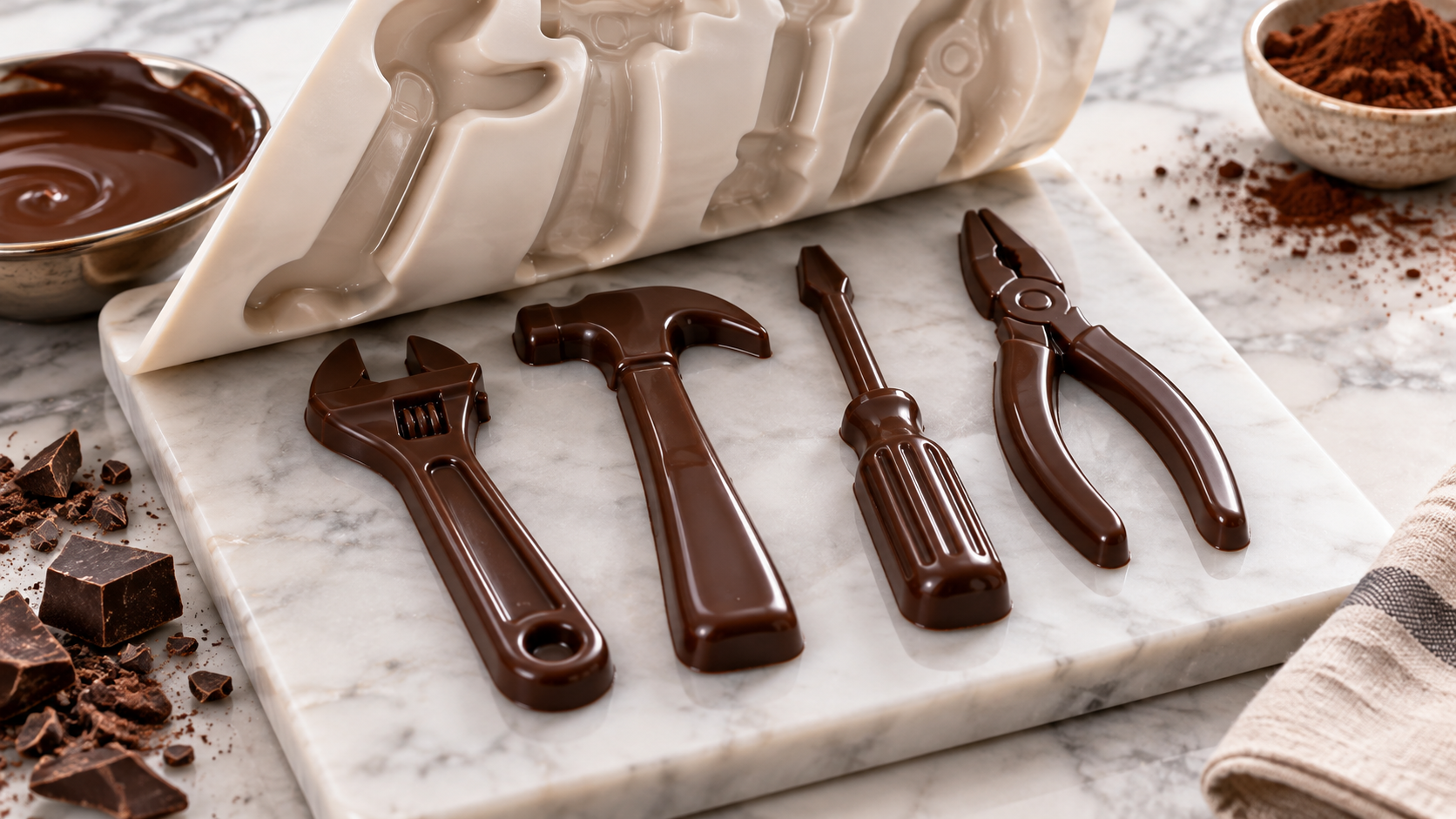
Tempered couverture usually gives the best shine, snap and release. Compound coating follows different instructions. Test one piece before filling every cavity and avoid thick sections that are difficult to bite.
Build a protected presentation
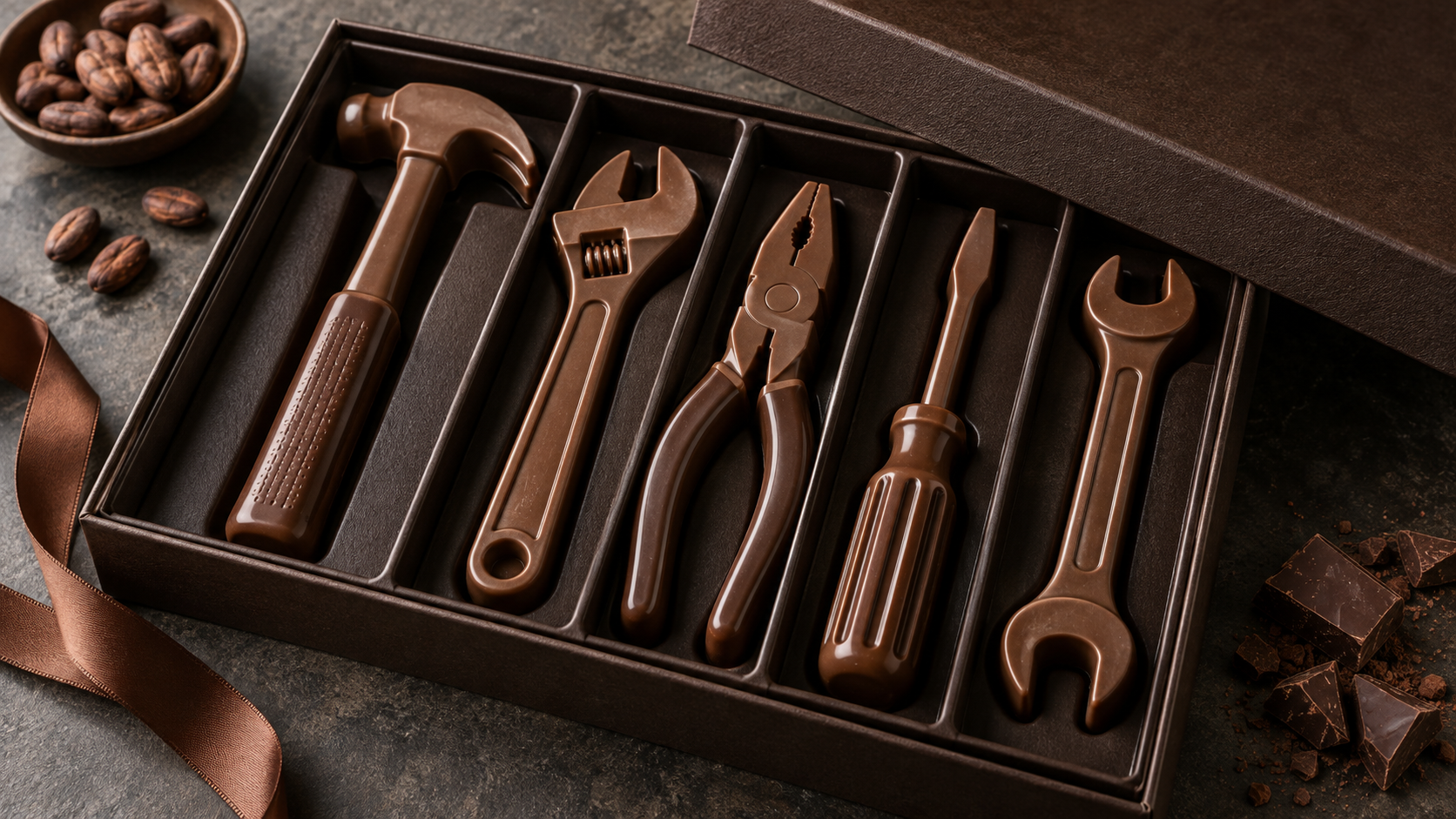
Use a food-safe tray with each piece supported so thin handles do not break. A rigid outer box matters more than heavy decorative material. Keep direct-contact surfaces free from ink, glue and metallic craft dust.
Keep non-food tools separate
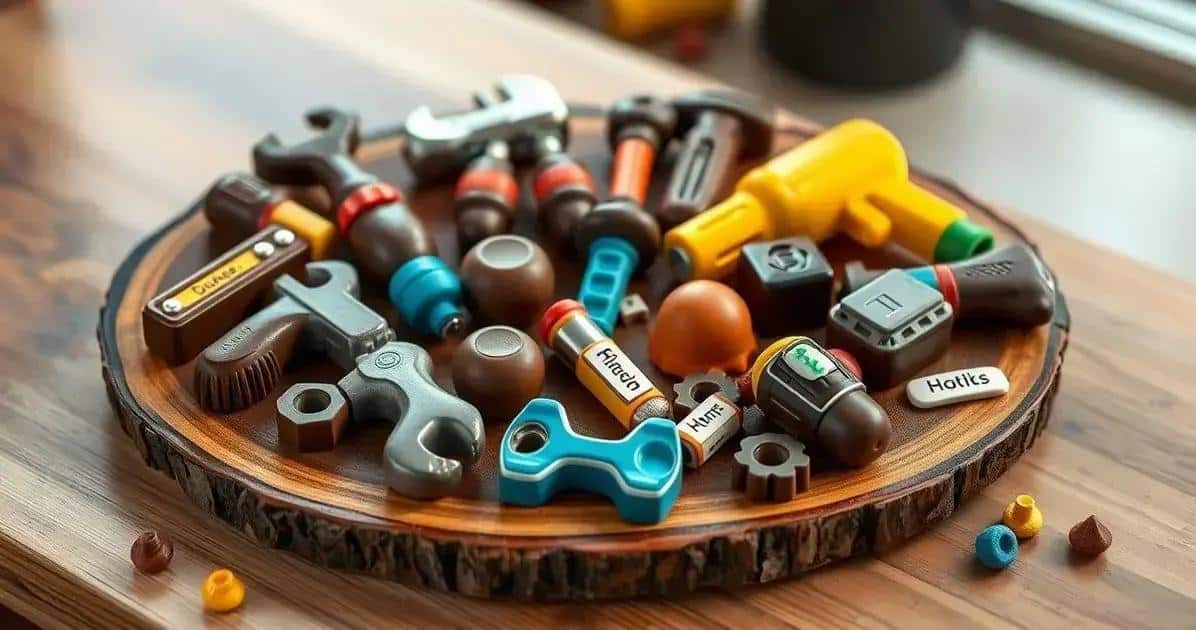
If the gift includes a real tape measure or small accessory, seal it in a separate compartment. Grease, coatings, small parts and sharp edges must never contact the chocolate. Make the non-edible item obvious.
Label and transport the gift
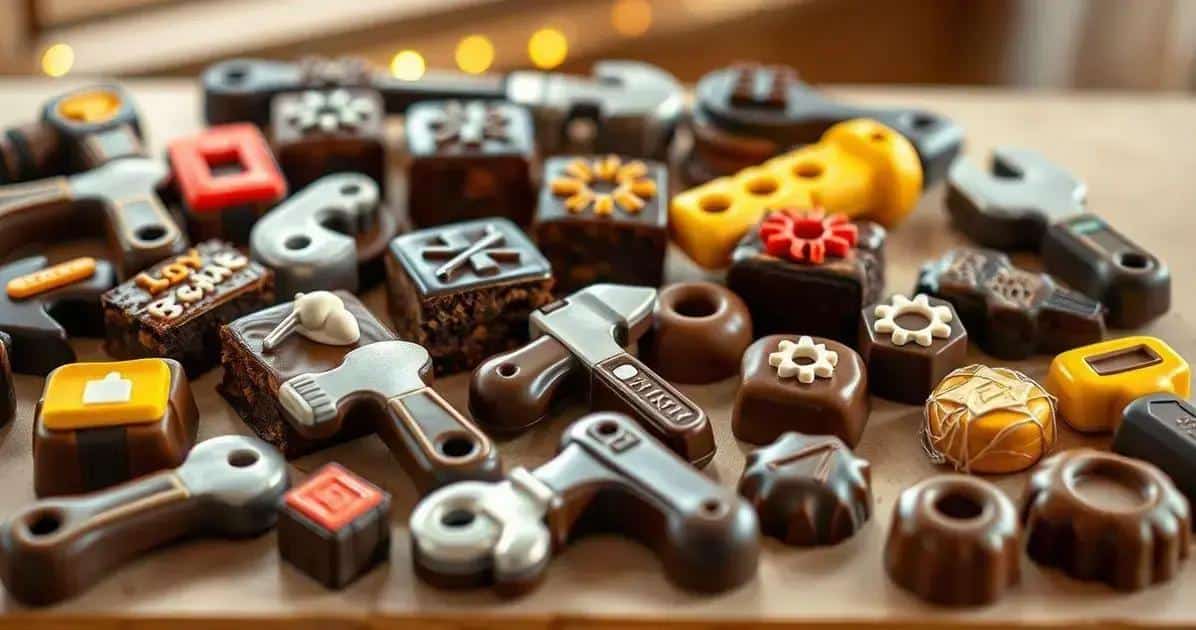
List ingredients, allergens, weight, storage and durability information. Transport flat and cool. Explain that every chocolate shape is edible and every separately packed real tool is not.
Frequently asked questions
Why was the source rewritten rather than translated literally?
It needed factual, recipe or safety correction, so the useful topic was rebuilt directly in British English.
Can alcohol be assumed to cook away?
No. Label it clearly and keep the product for an appropriate adult audience.
Are vegan products automatically allergen-free?
No. Check every ingredient and cross-contact statement for soya, nuts, gluten and other allergens.
Can the stated storage time be guaranteed?
No. Ingredients and handling vary; use a validated shelf life for the actual recipe and process.
May decorative or workshop materials touch food?
Only materials intended for food contact should touch edible products.
How should historical firsts be described?
Use primary records where possible and state uncertainty rather than inventing a precise first.