
Chocolate lace ingredients
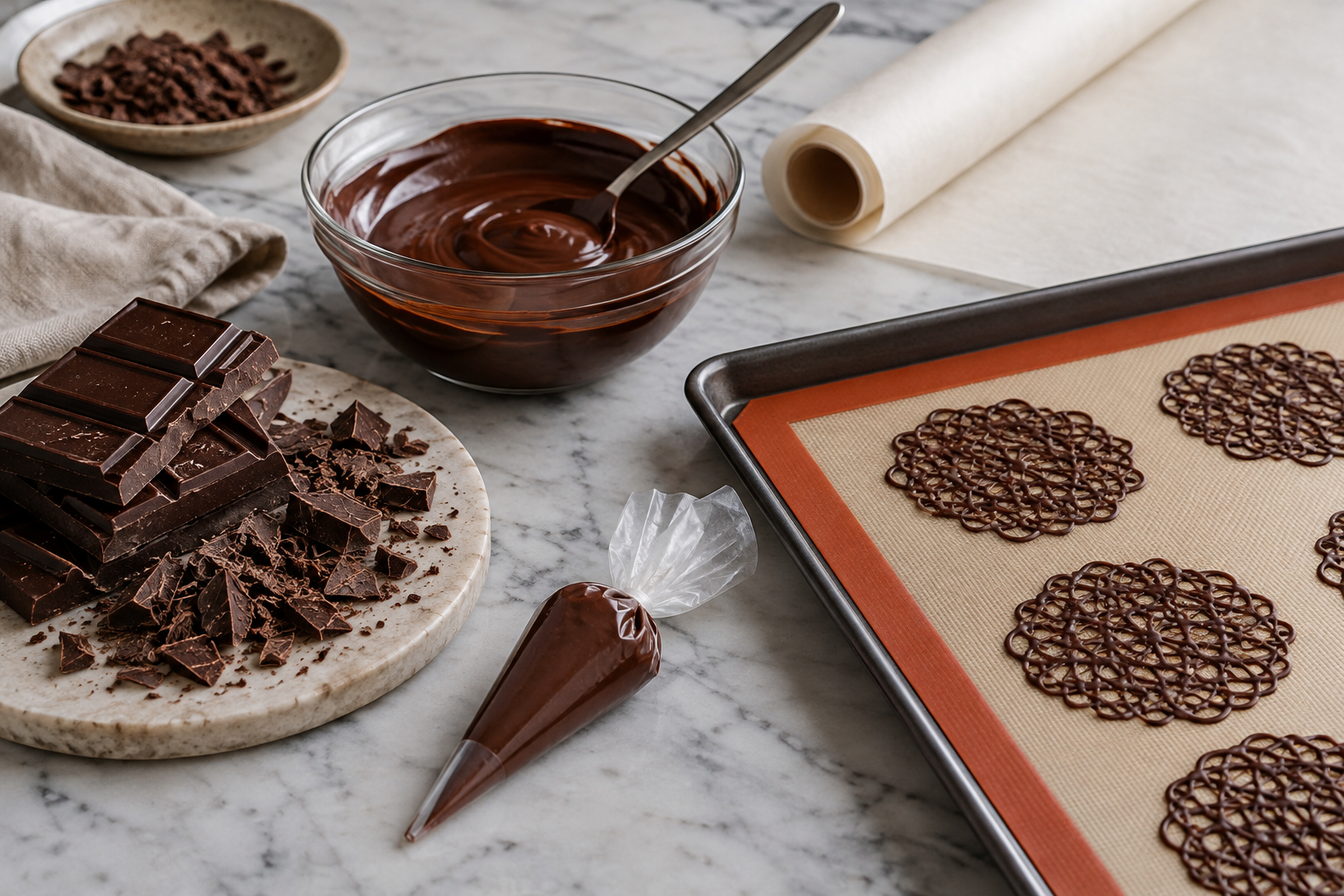
Use 200g couverture chocolate, baking paper or a silicone mat and a small piping bag. Avoid adding butter because it softens fine lines and weakens the finished decoration.
Preparing the piping surface
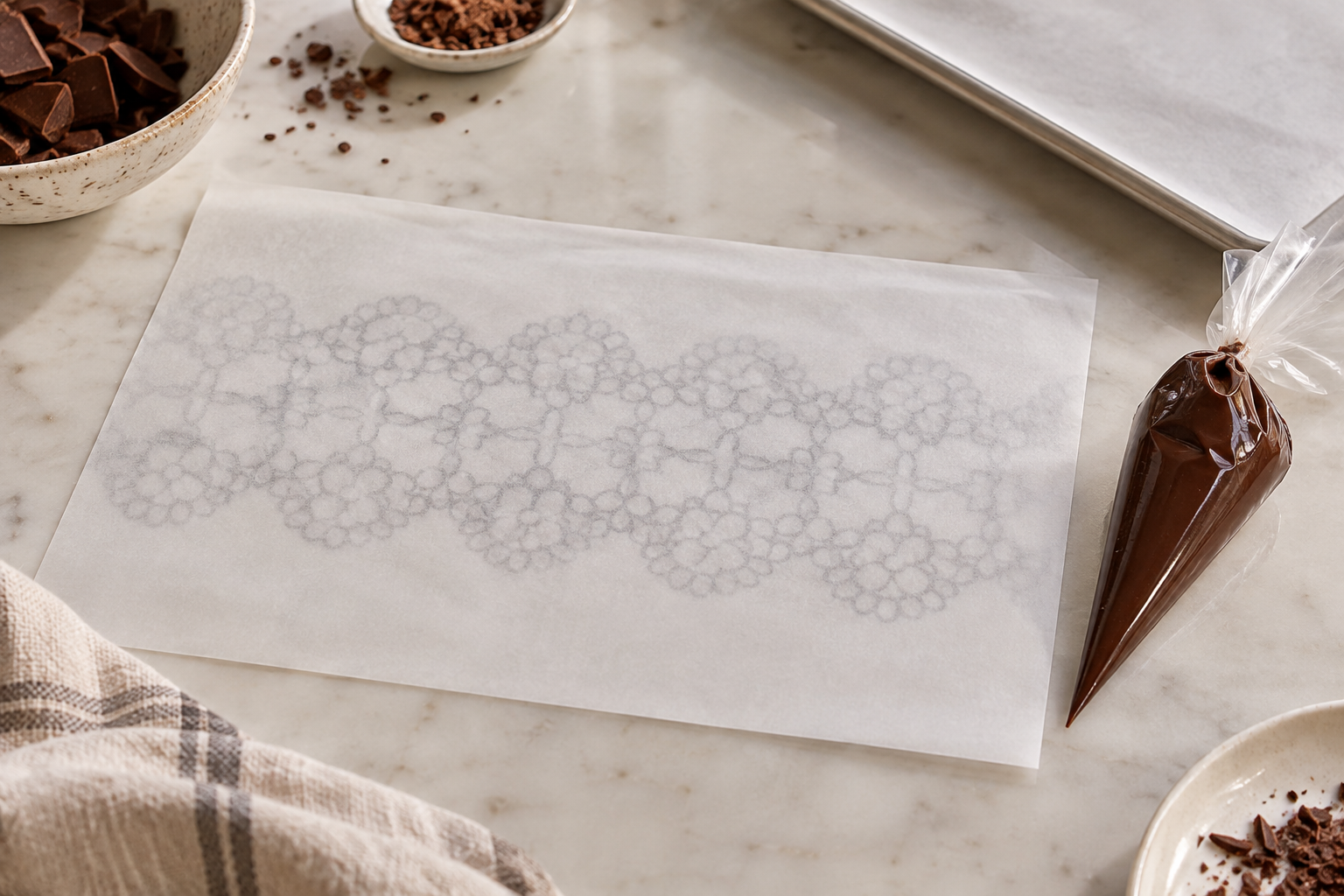
Draw or print a simple pattern and place it beneath the baking paper. Use connected lines so the lace forms one strong piece rather than separate fragments.
Tempering and piping
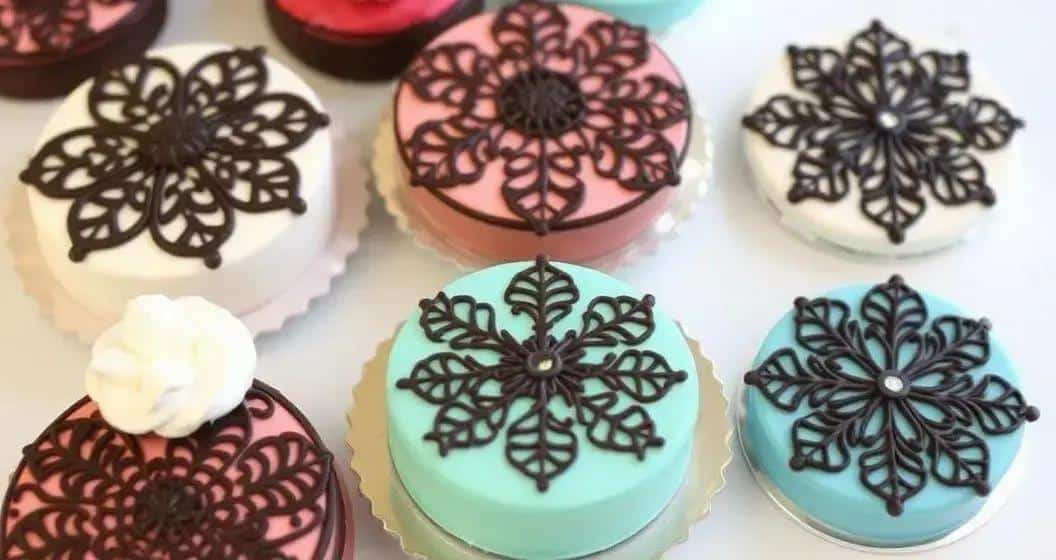
Temper the chocolate according to its type, fill the bag and pipe thin, continuous lines over the guide. Reinforce the joins without making the whole pattern heavy.
Setting and releasing
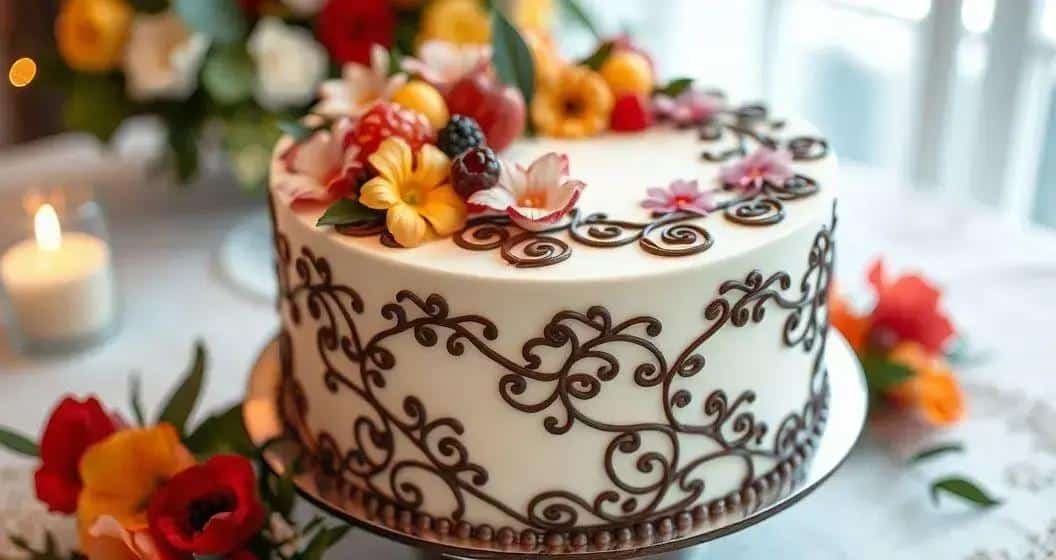
Leave to set at cool room temperature until firm. Peel the paper away from the chocolate, supporting delicate sections with a flat hand.
Decorating cakes
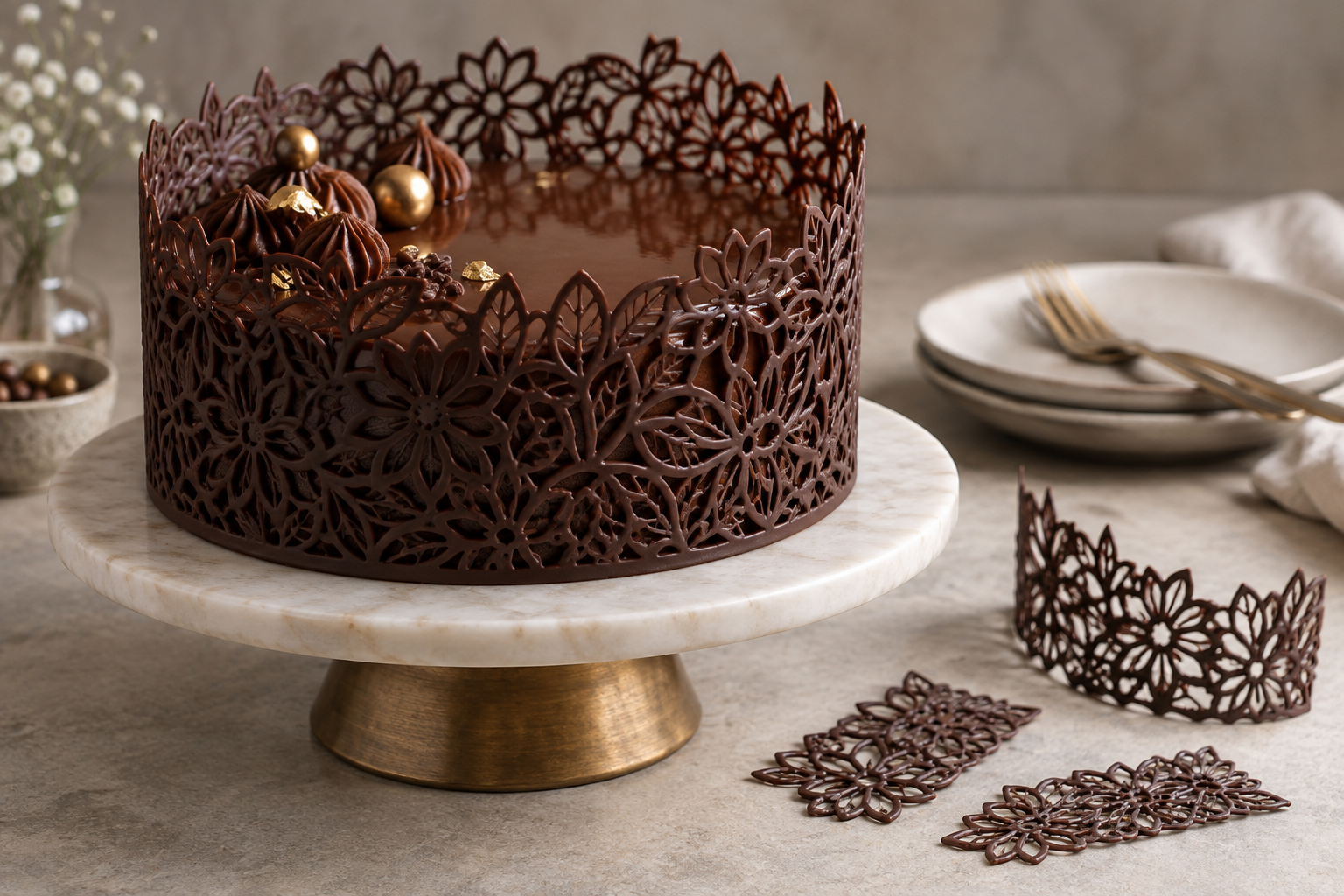
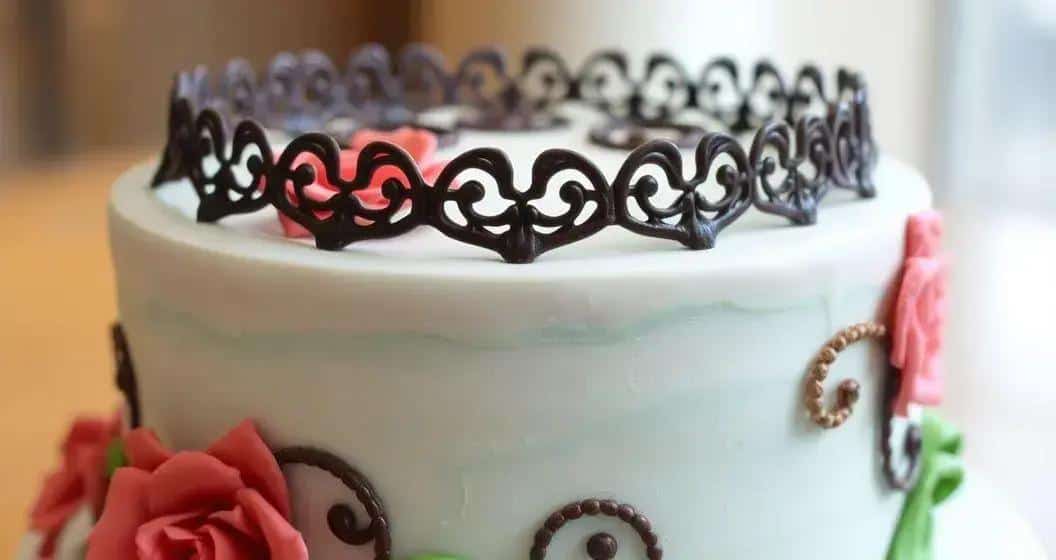
Place the lace on a dry ganache or buttercream surface shortly before serving. Moist fillings and condensation can soften the pattern.
Storage and common mistakes
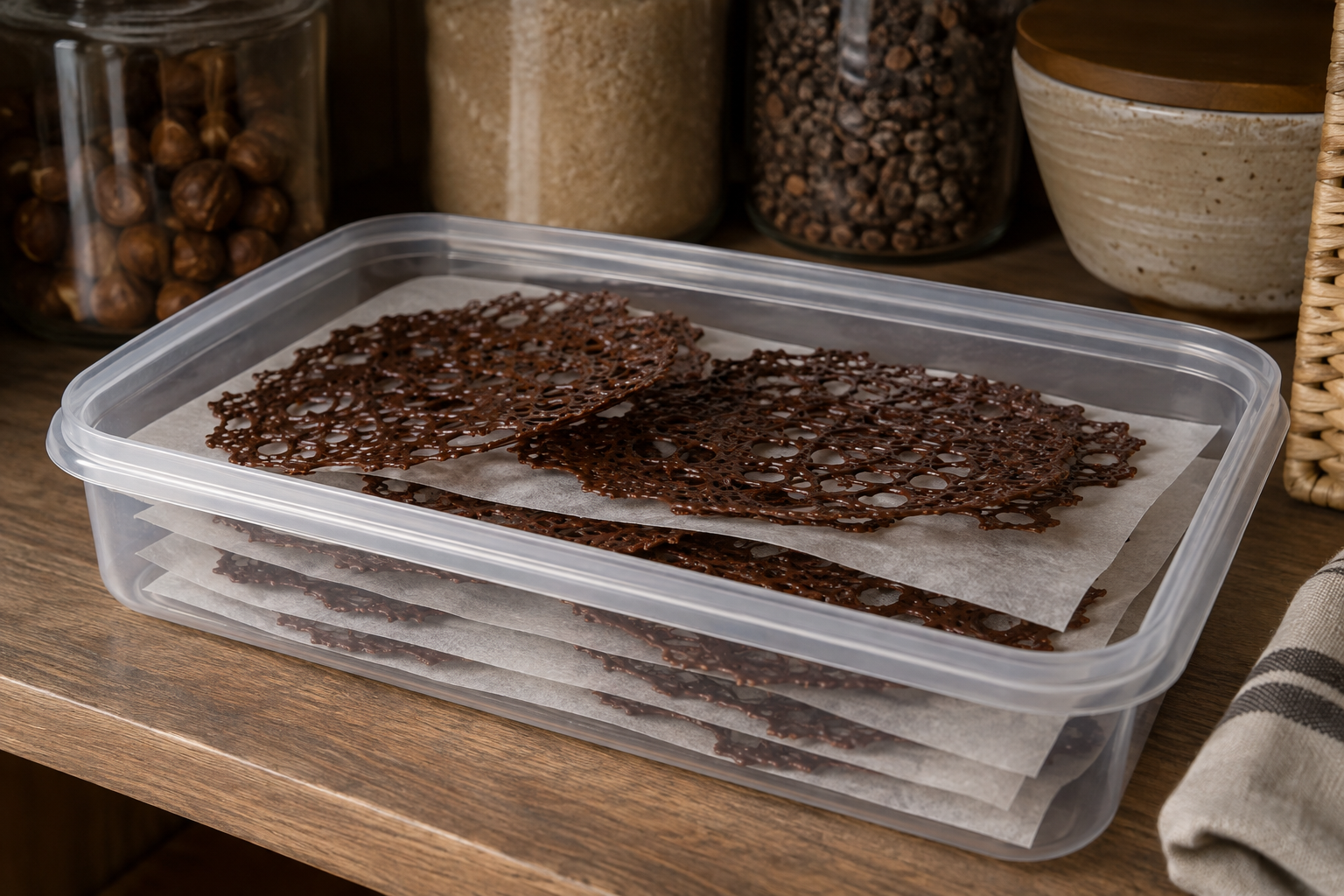
Store flat in an airtight container in a cool, dry place, separated by baking paper. If it snaps, pipe thicker joins on the next piece.
Frequently asked questions
Can it be prepared ahead?
Yes. Prepare stable components ahead and follow the chilling or storage guidance in the method.
Can I use another type of chocolate?
Yes, but cocoa percentage changes sweetness, firmness and flavour, so adjust one element at a time.
How should it be stored?
Keep plain chocolate cool and dry, and refrigerate anything containing cream, eggs or fresh fruit.
Can I reduce the sugar?
A modest reduction is usually possible, although sweetness and texture should be tested together.
Which allergens should I check?
Check every label for milk, soya, gluten, eggs, nuts and any other ingredient relevant to the recipe.
How do I get the best result?
Measure accurately, keep chocolate away from water and use the visual texture cues in every step.