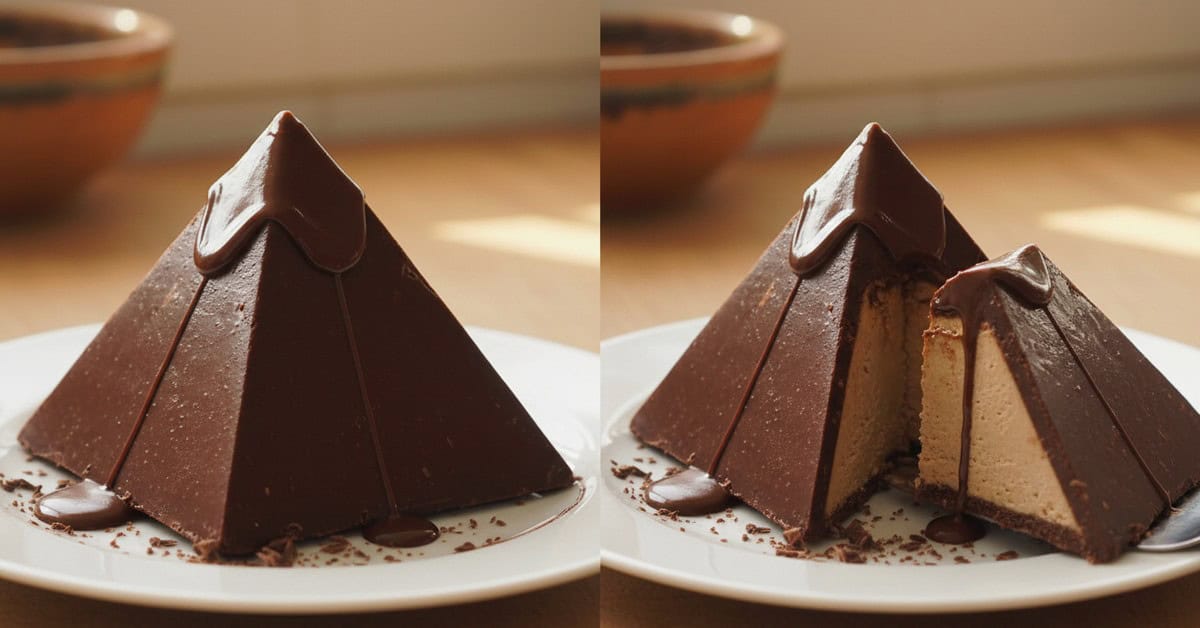

Use a food-safe support structure
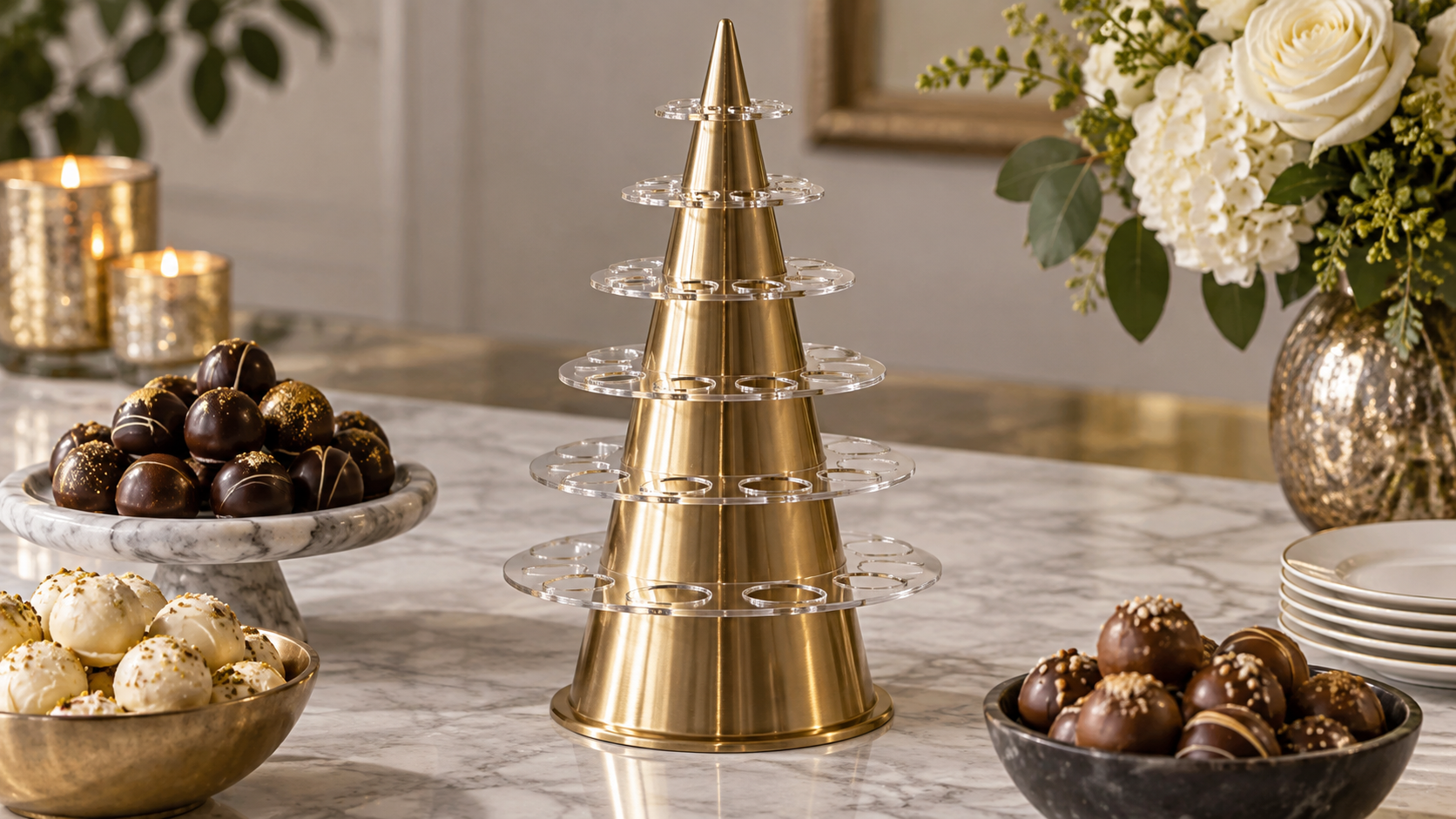
Build the height with a reusable food-safe cone or tiered stand rather than a solid mass of chocolate. The support must be stable, washable and intended for contact with food.
Choose uniform wrapped or cased chocolates

Use chocolates of similar size in paper cases or individual food-safe wrappers. Fresh fruit and unwrapped nuts introduce moisture, allergens and a shorter display life.
Plan the base before stacking

Place the widest tier on a level board and test the stand empty. Keep the centre of gravity low and leave room around the display so guests do not pull pieces from underneath.

Use food-safe melted chocolate to attach removable cases, or purpose-made food picks only where they cannot remain hidden in a serving. Avoid craft glue and exposed wooden skewers.
Protect the display from heat
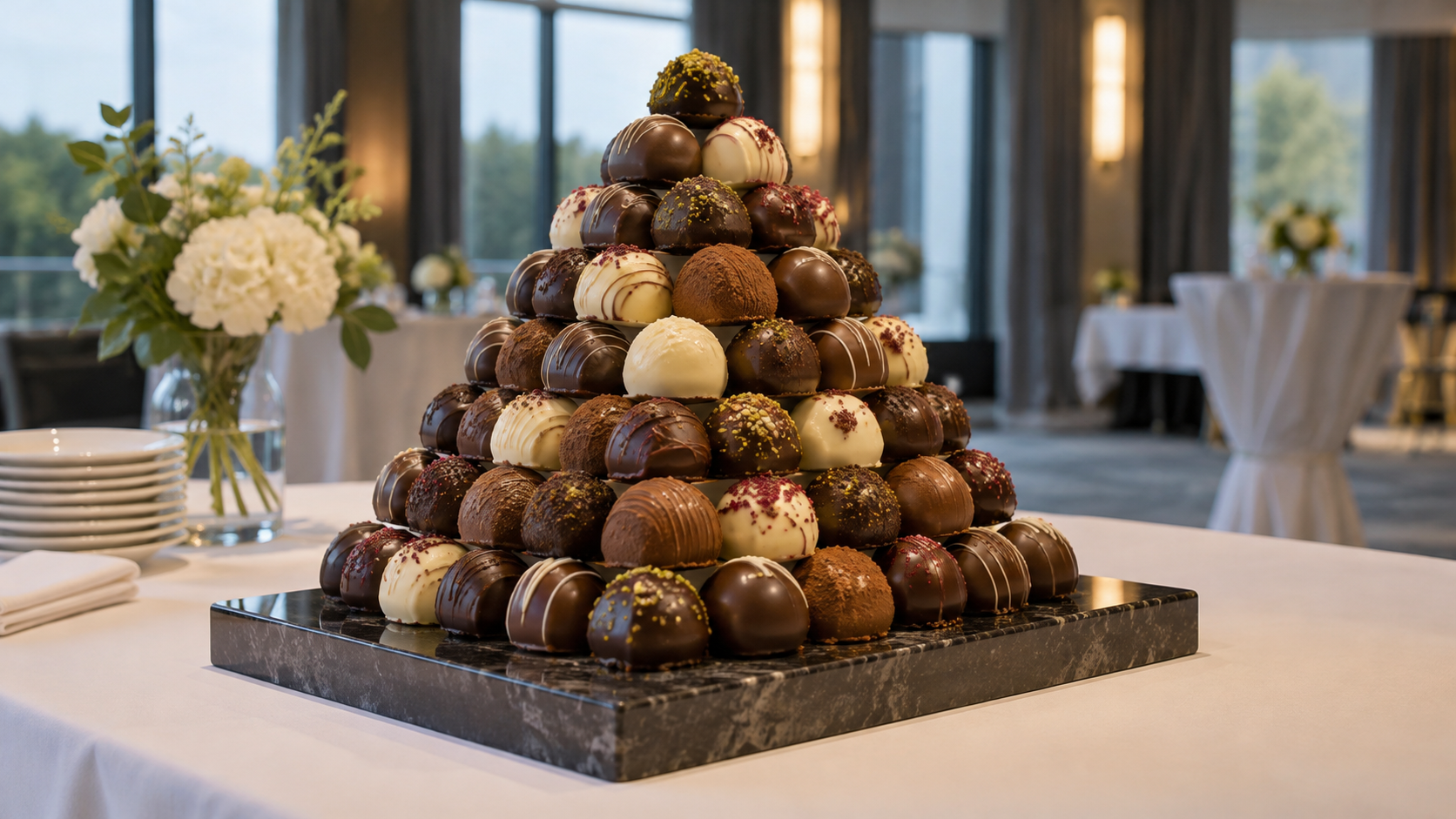
Assemble in a cool, dry room away from sunlight and warm lamps. Chocolate bloom is cosmetic, but softening can make the structure collapse.
Label allergens and serve safely

Provide ingredient and allergen information for every variety. Serve from the outside and top, replace any handled loose sweets and dismantle the display before it becomes unstable.
Frequently asked questions
Why was the source rewritten?
Unsafe, unsupported or technically unreliable instructions were corrected while preserving the useful subject.
How should allergens be handled?
Check every current pack, prevent cross-contact and keep accurate ingredient information.
Can storage time be copied from another recipe?
No. Validate it for the actual ingredients, hygiene, process and packaging.
Can quantities be changed freely?
Changes to water, fat, sugar, alcohol or acid can alter texture, safety and storage.
Are nutrition or health claims automatic?
No. They require the complete formulation, a defined portion and applicable evidence.
What should be recorded during testing?
Record exact weights, temperatures, times, yield, storage and the result of each controlled trial.