
Identify the product before choosing temperatures
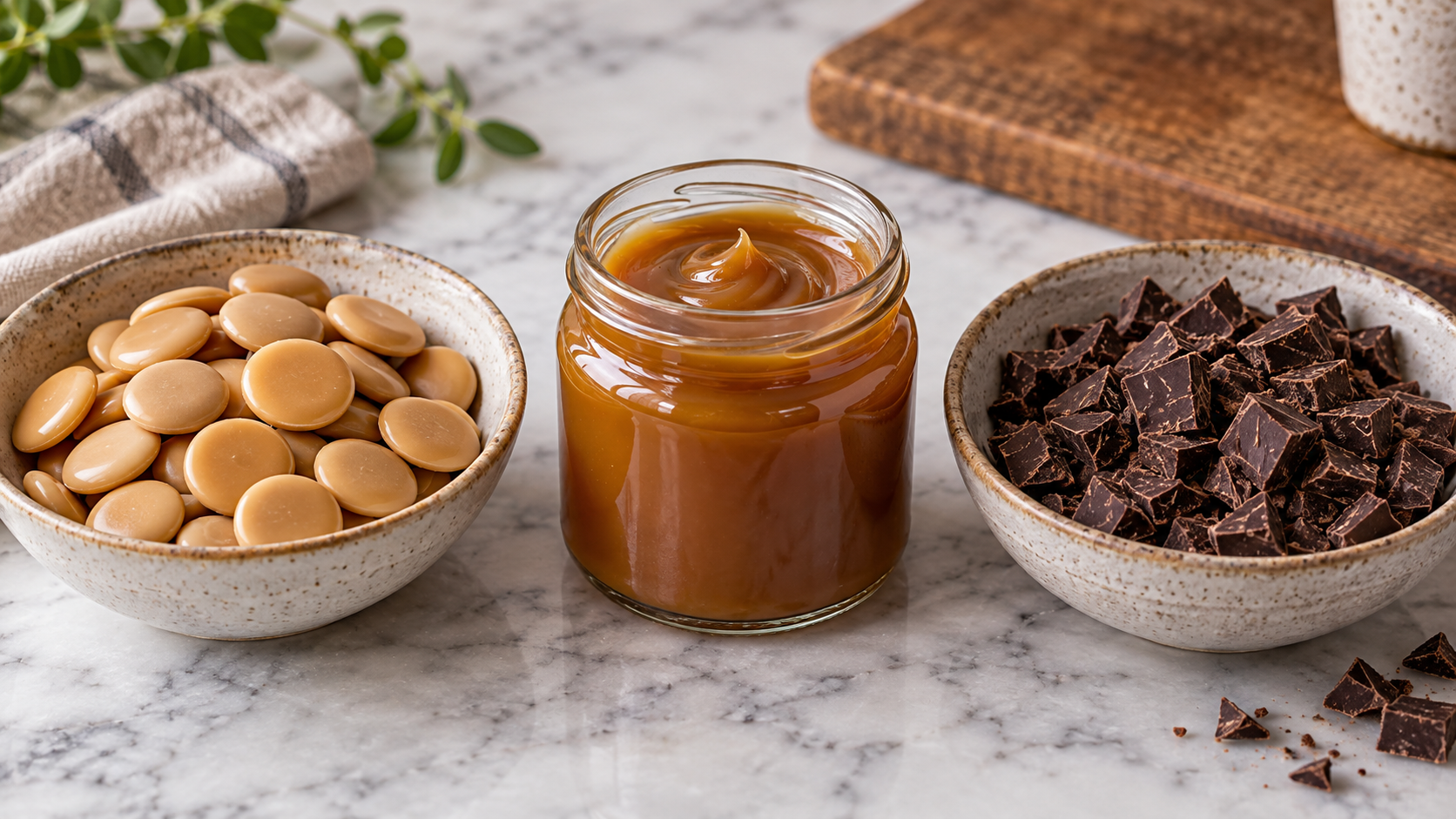
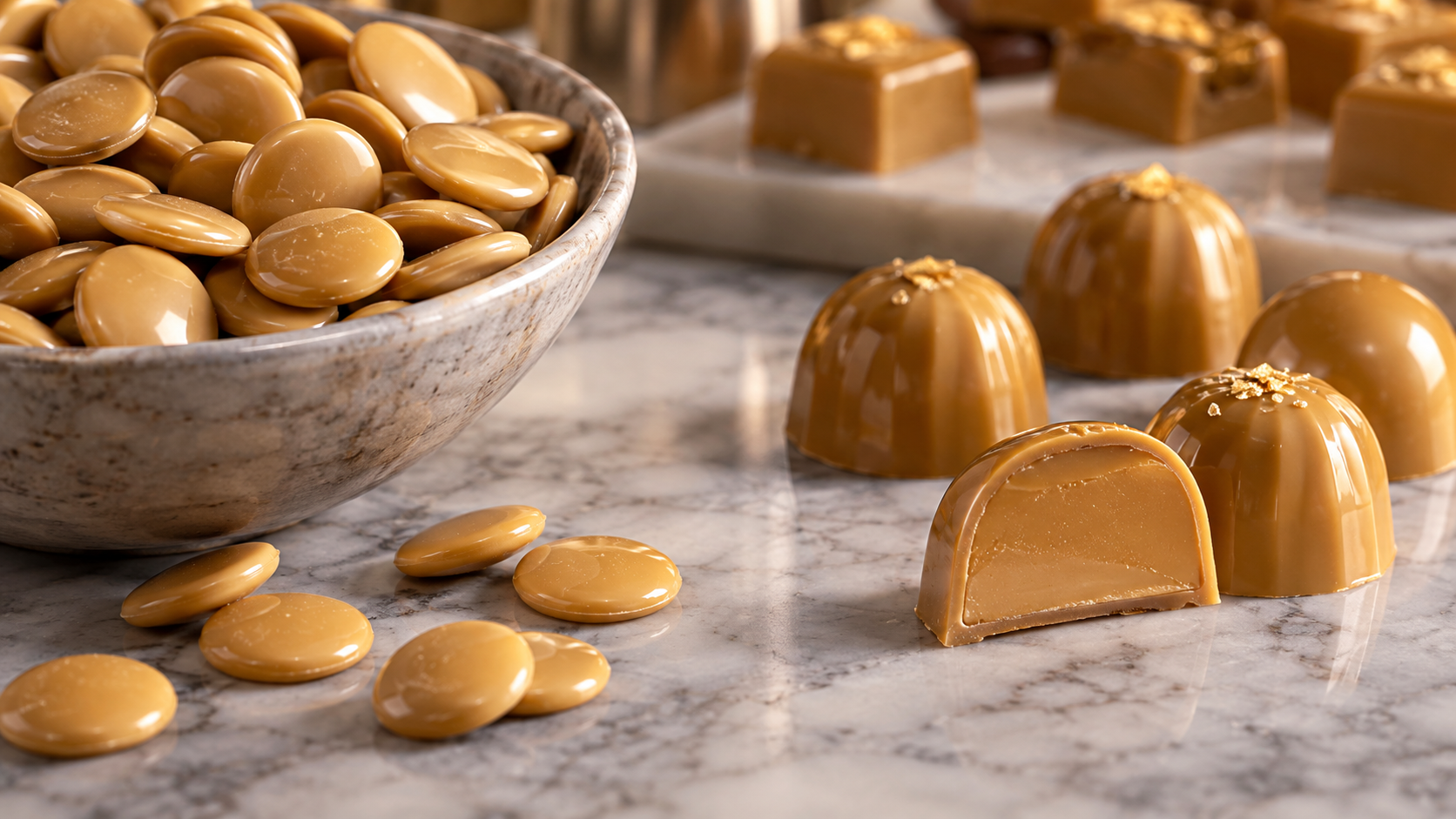
Caramelised white chocolate couverture is still chocolate, but brands differ in cocoa-butter content and recommended working range. Follow the manufacturer’s tempering curve rather than copying dark-chocolate temperatures.
Melt gently and keep water away
Chop the chocolate evenly and melt it in a clean dry bowl using short microwave intervals or a bain-marie whose steam cannot enter the bowl. Overheating changes flavour and damages temper; even a small amount of water can make it seize.
Use the seed method
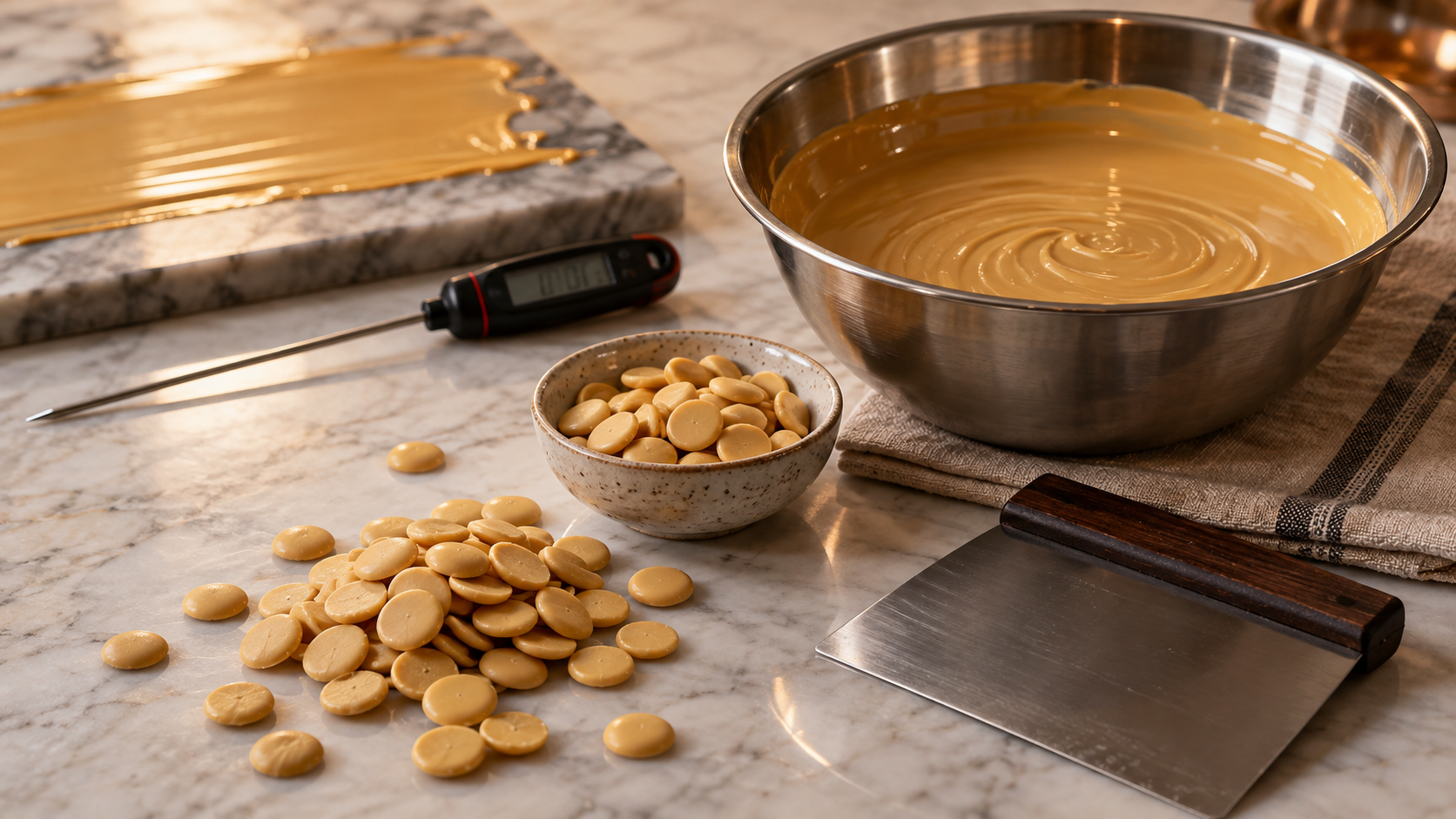
Melt about three quarters of the chocolate to the temperature on its pack, then add finely chopped tempered chocolate a little at a time while stirring. Cool to the stated crystallisation range and gently rewarm to the working temperature if needed.
Test crystallisation before moulding
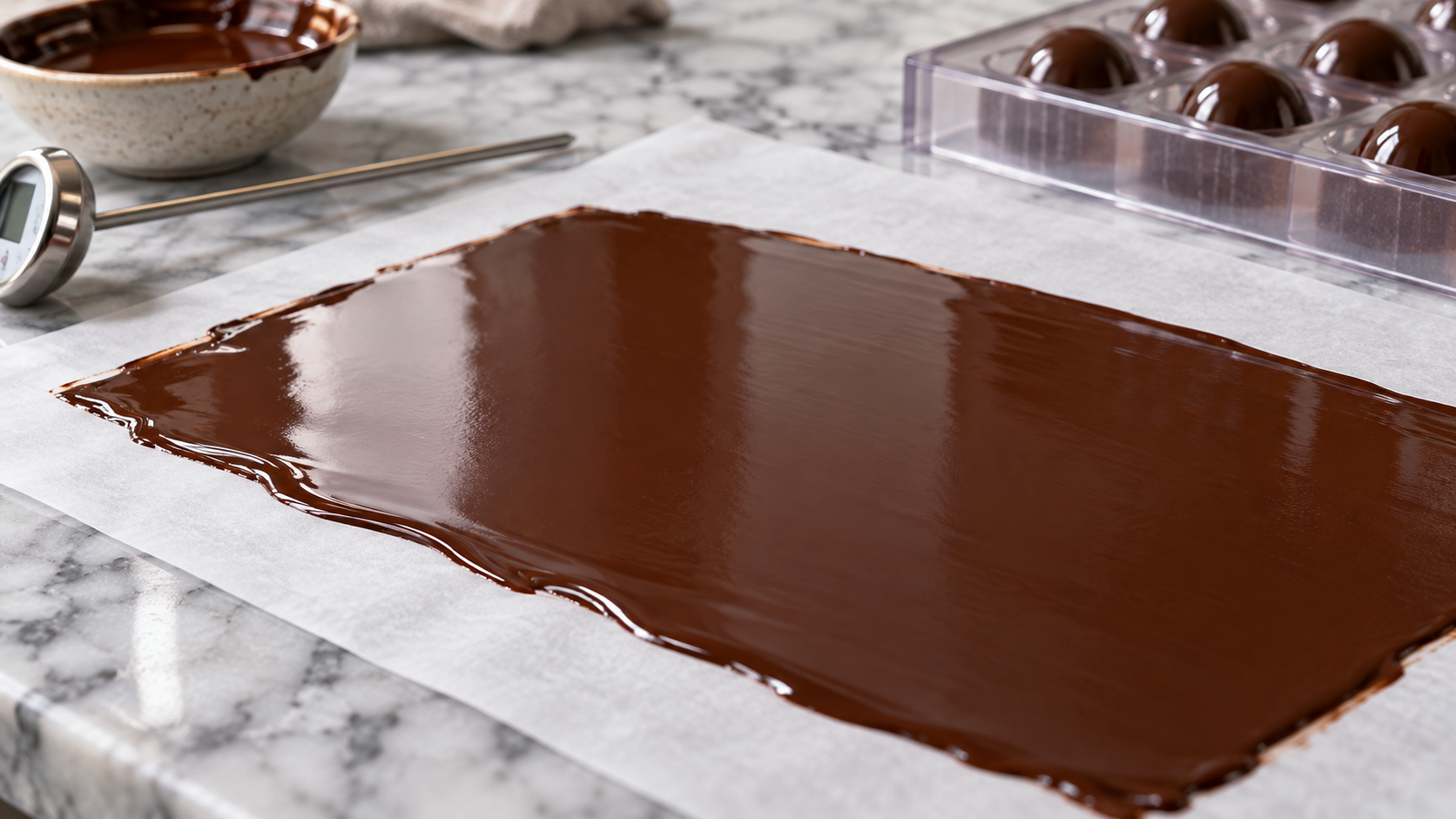
Spread a thin smear on baking paper or the edge of a scraper. It should set evenly, without streaks, within a few minutes at a suitable room temperature. A thermometer and a test are more reliable than appearance in the bowl.
Troubleshoot dull or thick chocolate
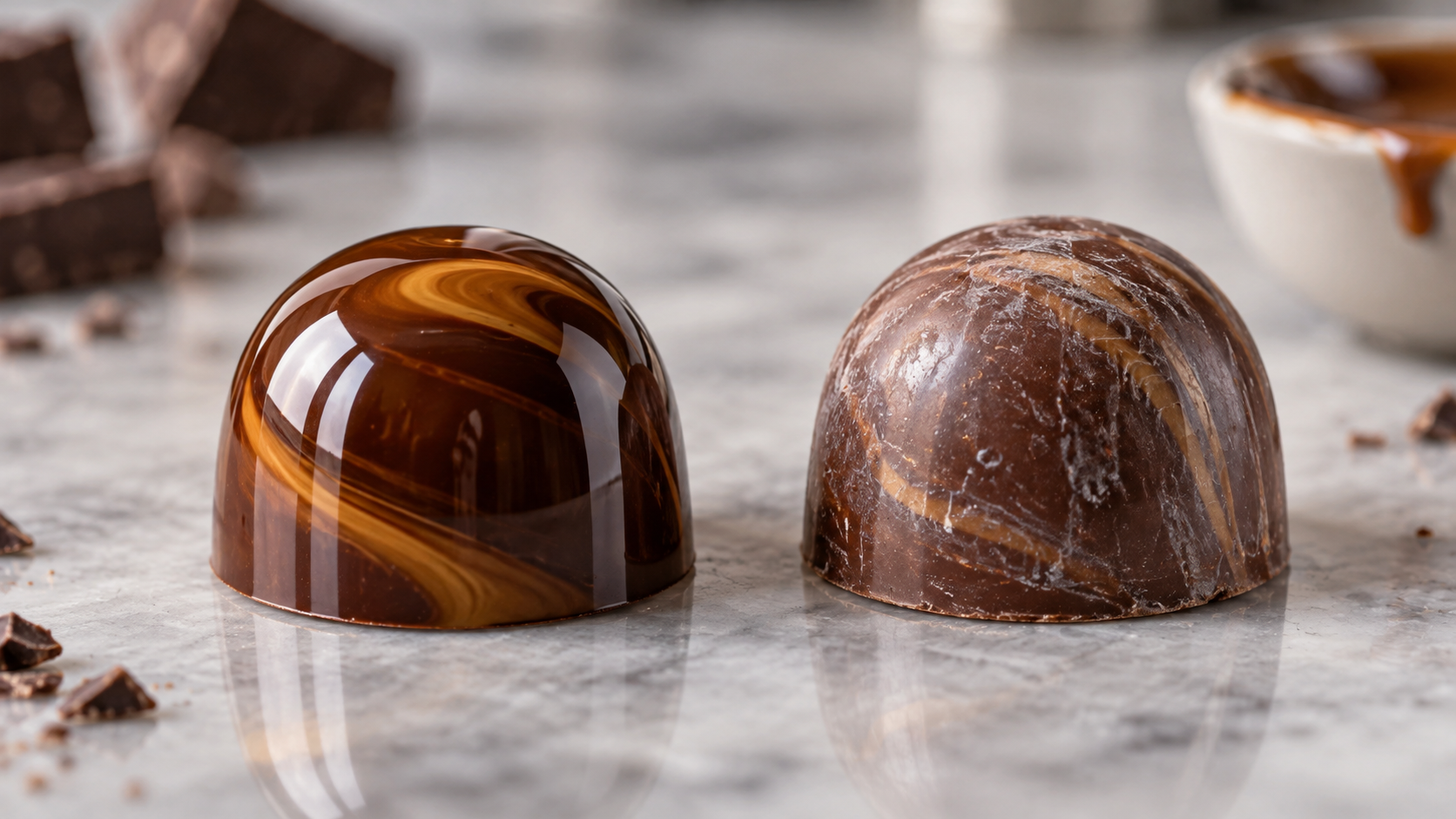
Dull finish, slow setting and soft release usually indicate poor temper or unsuitable room conditions. Excess thickness can come from over-crystallisation; brief controlled warming may correct it. Do not add ordinary butter or water to couverture intended for moulding.
Store the finished pieces correctly
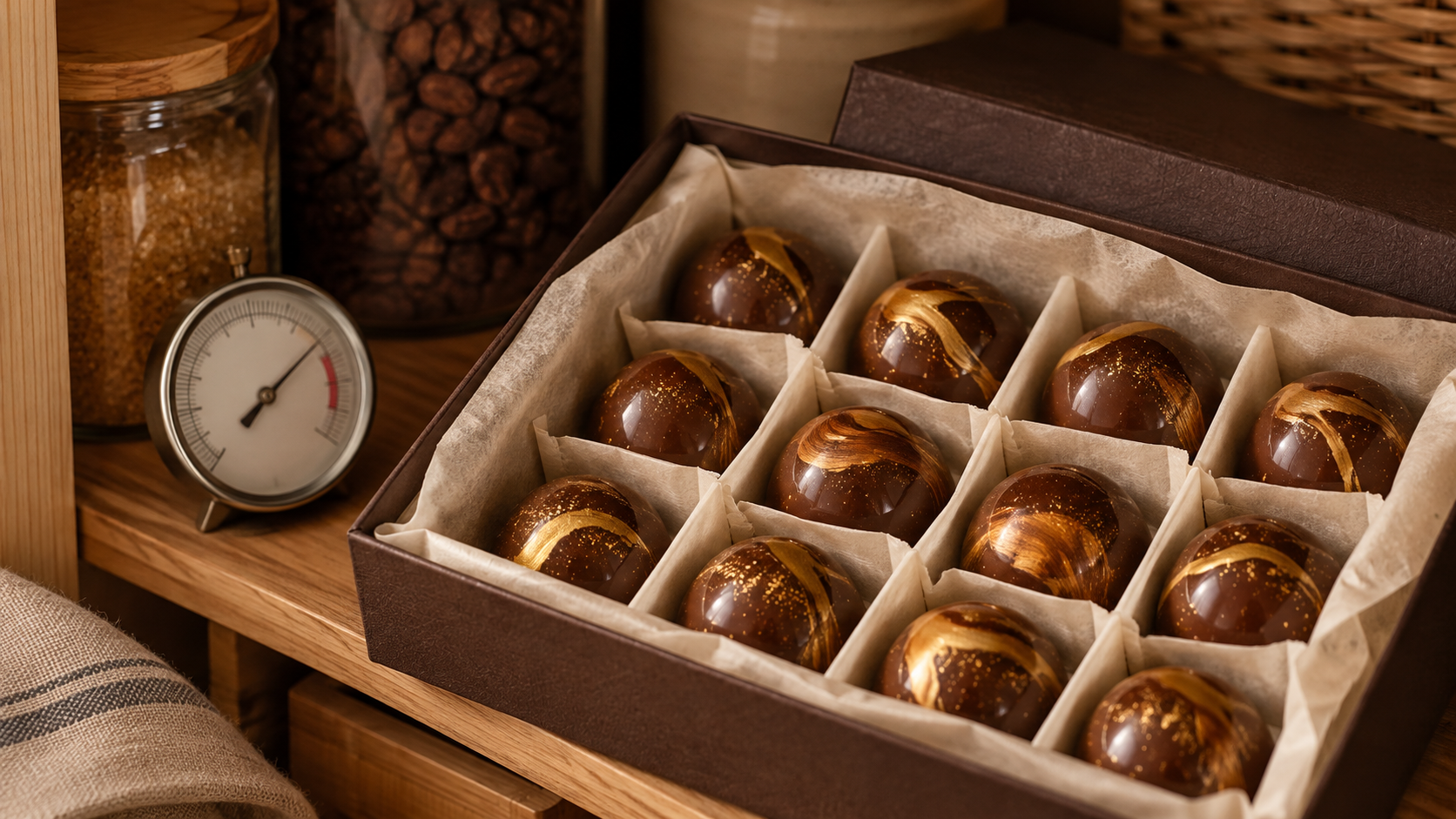
Let moulded pieces contract fully before release. Store them cool, dry and away from strong odours, with stable temperature to limit bloom. Refrigeration can cause condensation unless carefully controlled.
Know when the recipe is caramel ganache instead
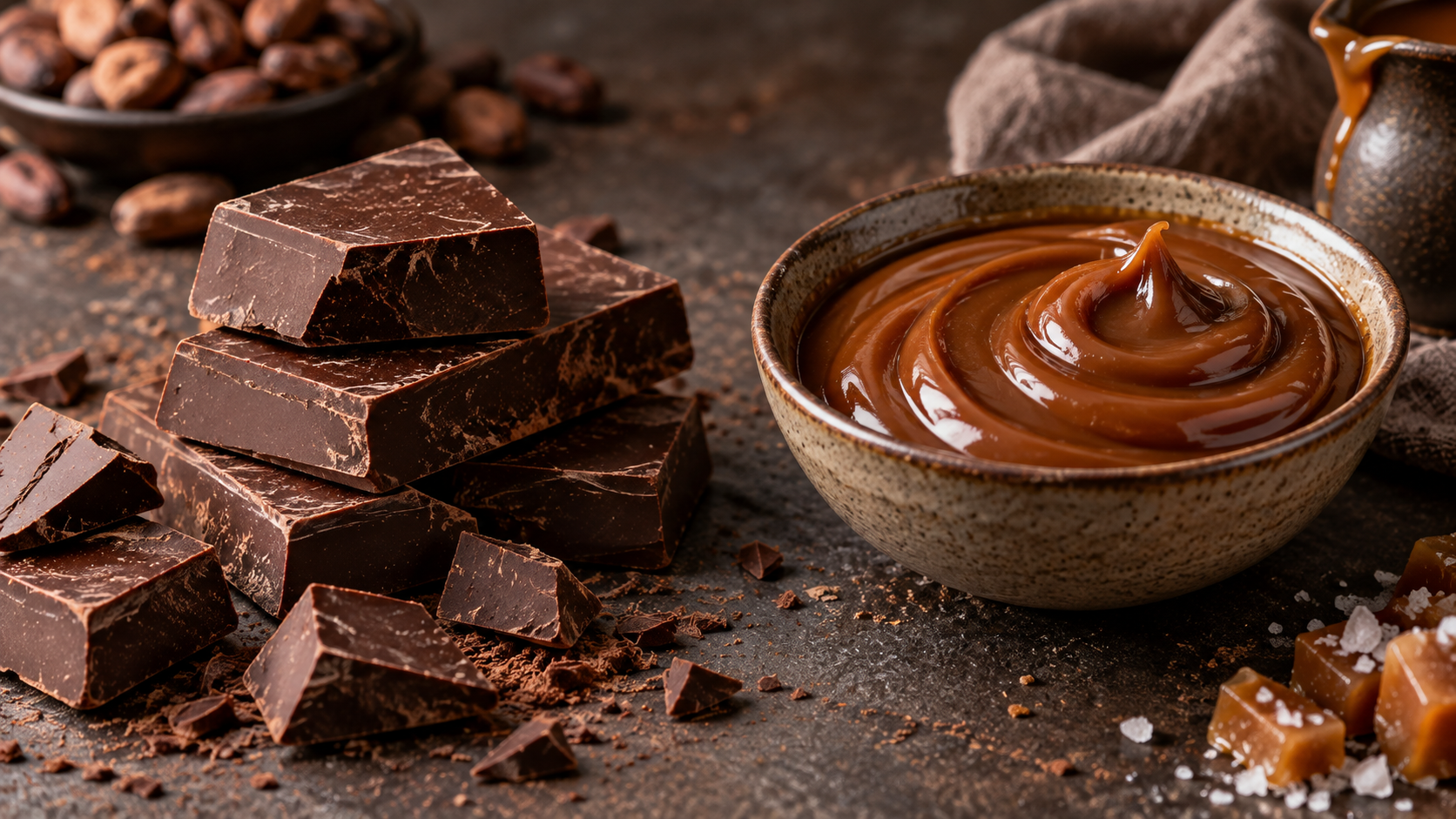
A mixture of caramel, cream, butter and chocolate is a ganache or sauce, not caramelised chocolate couverture. It cannot be tempered like a solid chocolate shell and needs its own refrigerated storage and tested shelf life.
Frequently asked questions
Why was the original article not translated word for word?
It contained an unsafe, unsupported or technically unreliable point, so the useful subject was rebuilt directly in British English.
Can ingredient quantities be changed freely?
Small tests are safer. Changes to water, fat, sugar or protein can alter texture, setting and storage.
How should allergens be handled?
Read every current pack, prevent cross-contact and keep accurate ingredient information with the finished food.
Can a storage period be copied from another recipe?
No. Storage and shelf life need to match the actual ingredients, process, hygiene and packaging.
Do chocolate temperatures stay the same for every brand?
No. Chocolate type and formulation differ, so the manufacturer’s tempering guidance takes priority.
Are nutrition or hydration claims appropriate here?
Only when supported by the complete recipe and applicable rules. These guides describe preparation rather than medical or performance benefits.