
A word with a debated route
Many modern forms ultimately relate to words carried from Mesoamerica through Spanish, but linguists debate the exact path and source form. It is safer to describe a shared history than to present one neat etymology as settled fact.
Close European relatives
English chocolate, Spanish chocolate, Portuguese chocolate, French chocolat, Italian cioccolato and German Schokolade are visibly related, yet spelling and grammatical gender differ. Similar appearance does not guarantee identical pronunciation.
Twenty useful forms
Common modern forms include Dutch chocolade, Danish chokolade, Norwegian sjokolade, Swedish choklad, Finnish suklaa, Polish czekolada, Czech čokoláda, Romanian ciocolată, Turkish çikolata, Indonesian cokelat, Swahili chokoleti, Russian шоколад, Arabic شوكولاتة and Japanese チョコレート. Regional usage and inflection can vary.
Writing systems and transliteration
Russian, Arabic and Japanese use different scripts, and Latin-letter versions are transliterations rather than the native spelling. Fonts, reading direction and line breaking need proper support; copying characters into artwork without language review can introduce errors.
Pronunciation still changes

Borrowed words adapt to local sound systems. Stress, vowel length and consonants can change even where spelling looks familiar. A recorded native-language dictionary is more reliable for pronunciation than reading the word as English.
Use the right word on packaging
For international packaging, use a professional translator and follow the destination market’s food-labelling rules. Product names, ingredient lists and claims may need different wording. A decorative multilingual title is not a compliant translation.
Language is not an allergen guide
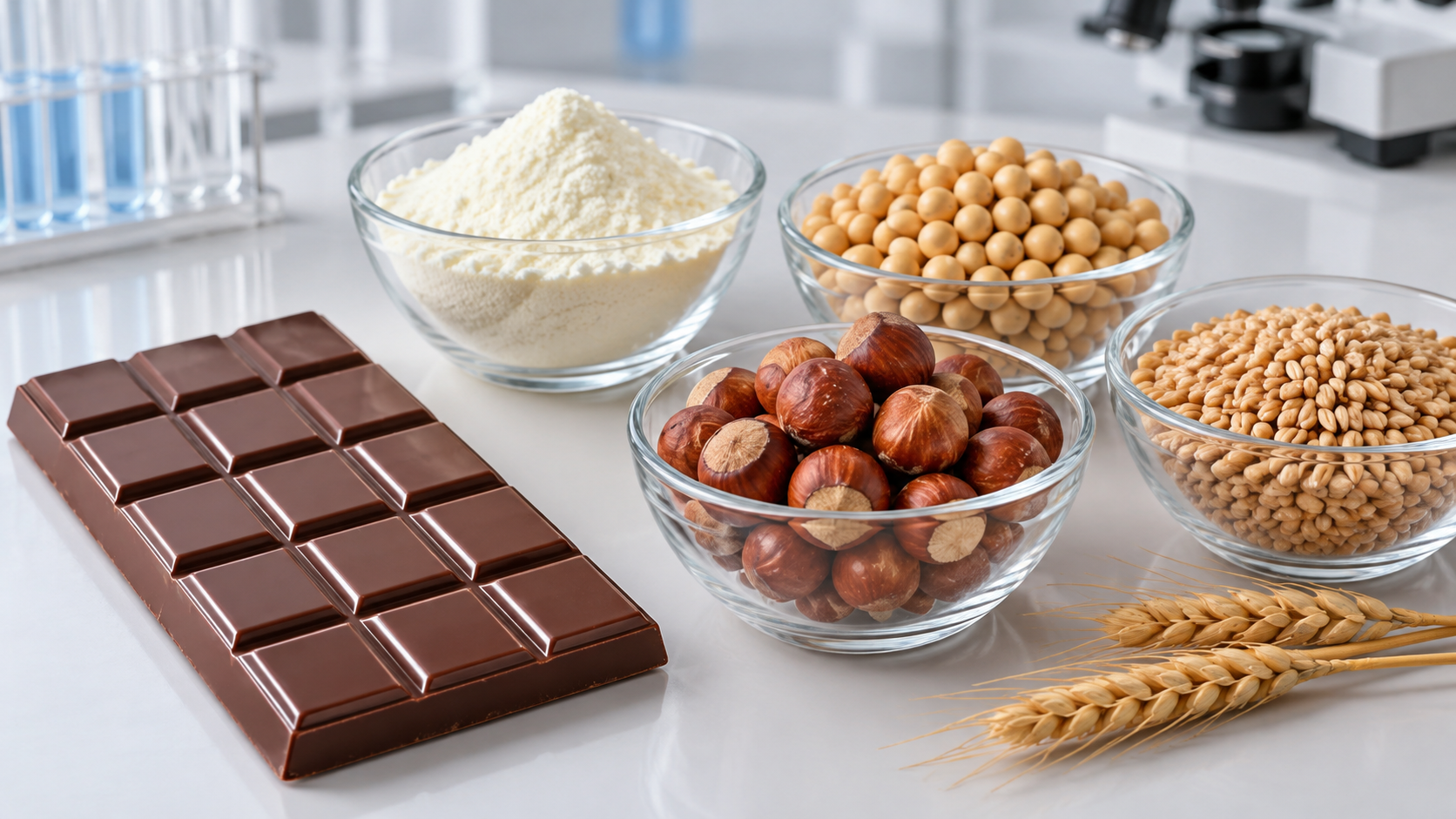
Recognising the word chocolate does not reveal milk, nuts, soya or other ingredients. Consumers should read a legally suitable ingredient and allergen statement in a language they understand. Recipes and manufacturing standards also differ between countries.
Frequently asked questions
Why was this article rewritten rather than translated literally?
The source needed factual, food-safety or cultural correction, so the English version keeps the useful topic while removing unsupported claims.
Are temperatures and shelf lives universal?
No. Equipment, ingredients and fillings vary; use a tested recipe, manufacturer guidance and appropriate food-safety controls.
Can decorative materials touch food?
Only materials intended for food contact should touch edible products, and flowers or non-food objects need a reliable barrier.
How should allergens be checked?
Read every current ingredient label and consider cross-contact; never infer allergen status from a product name or appearance.
Can a home method be scaled for sale?
Commercial production needs repeatable records, hygiene controls, compliant labelling and validation for the actual process.
Where should historical or language claims be verified?
Use dated archives, official records and qualified language references when a precise claim matters.