
Choose the audience and purpose
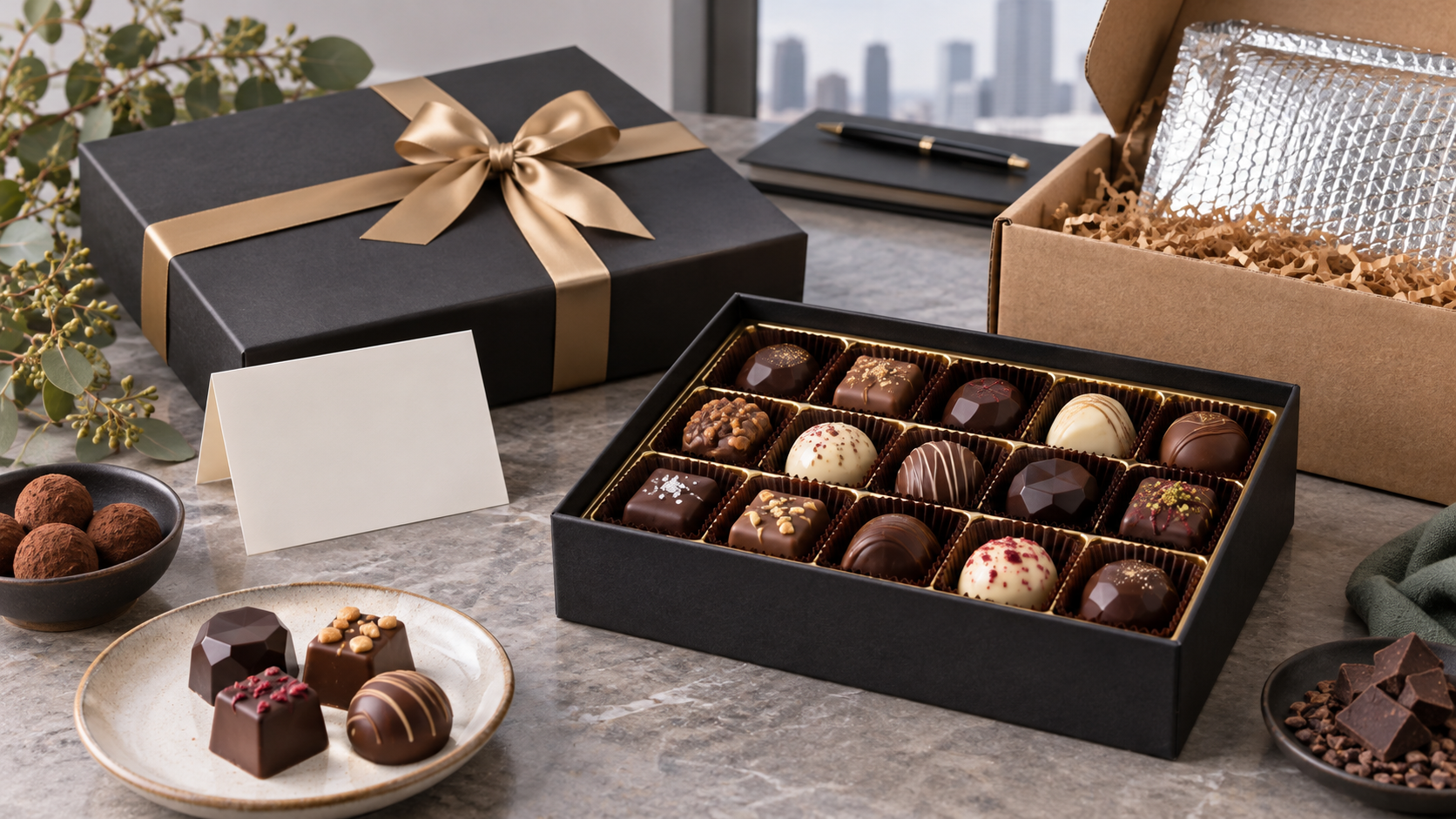
Decide whether the box is a client thank-you, staff gift or event item and whether alcohol, nuts or other ingredients are appropriate for that audience.
Select a practical assortment
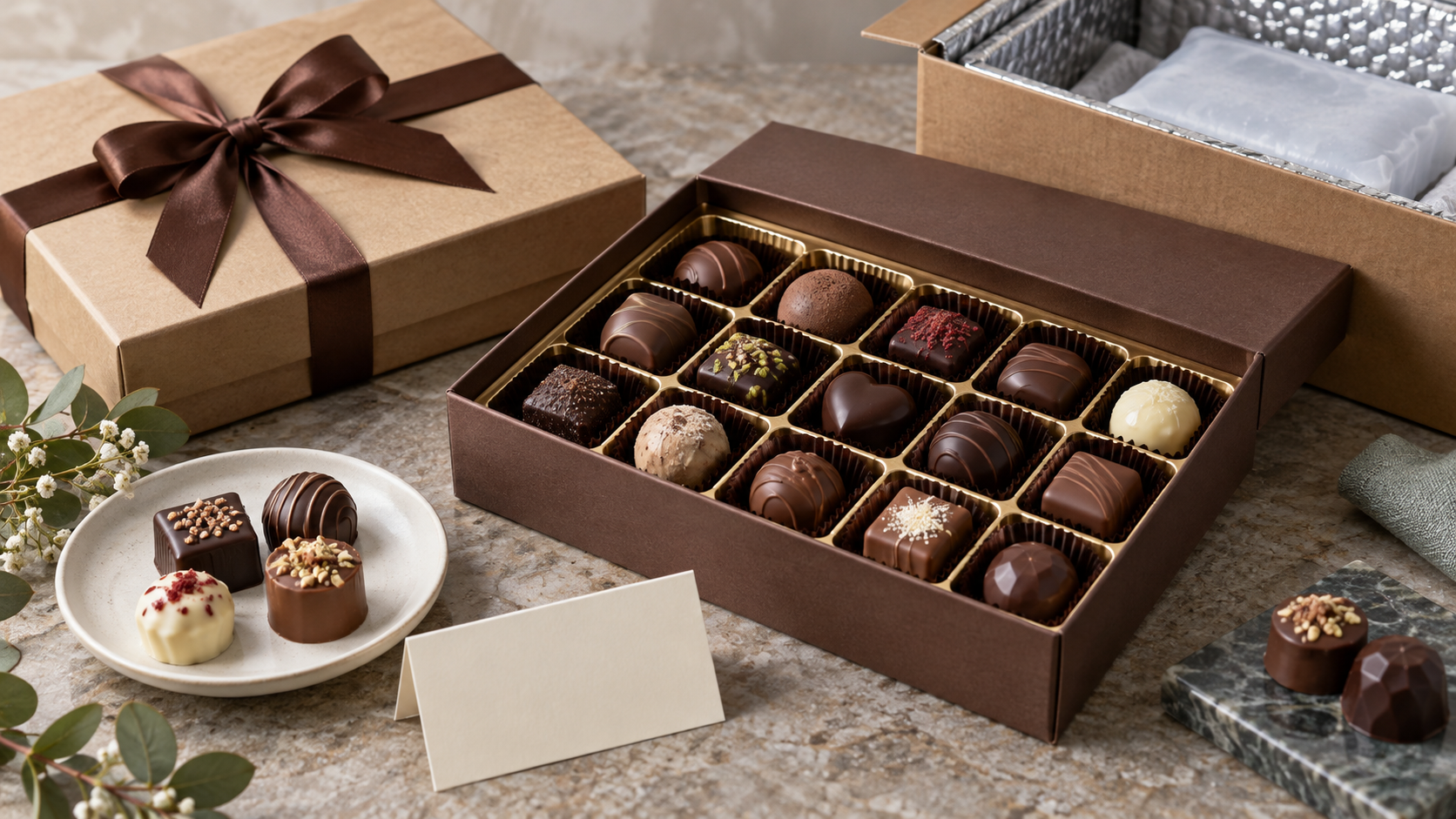
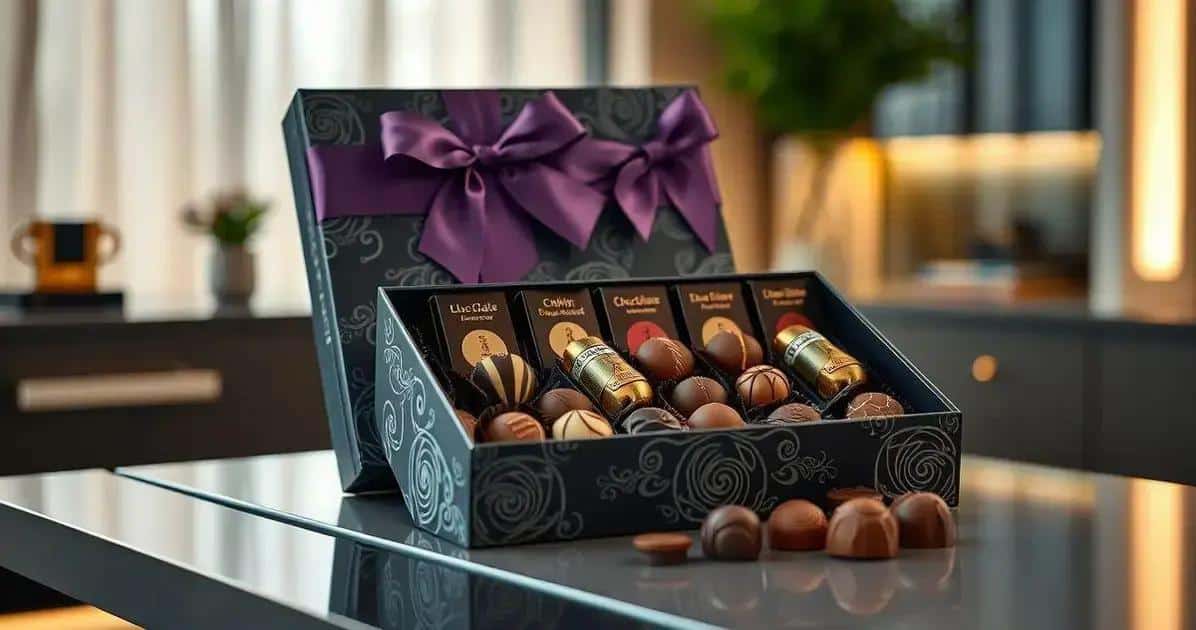
Use a balanced, manageable assortment with clear flavour names. More pieces and gold decoration do not automatically create better quality.
Make allergens easy to find
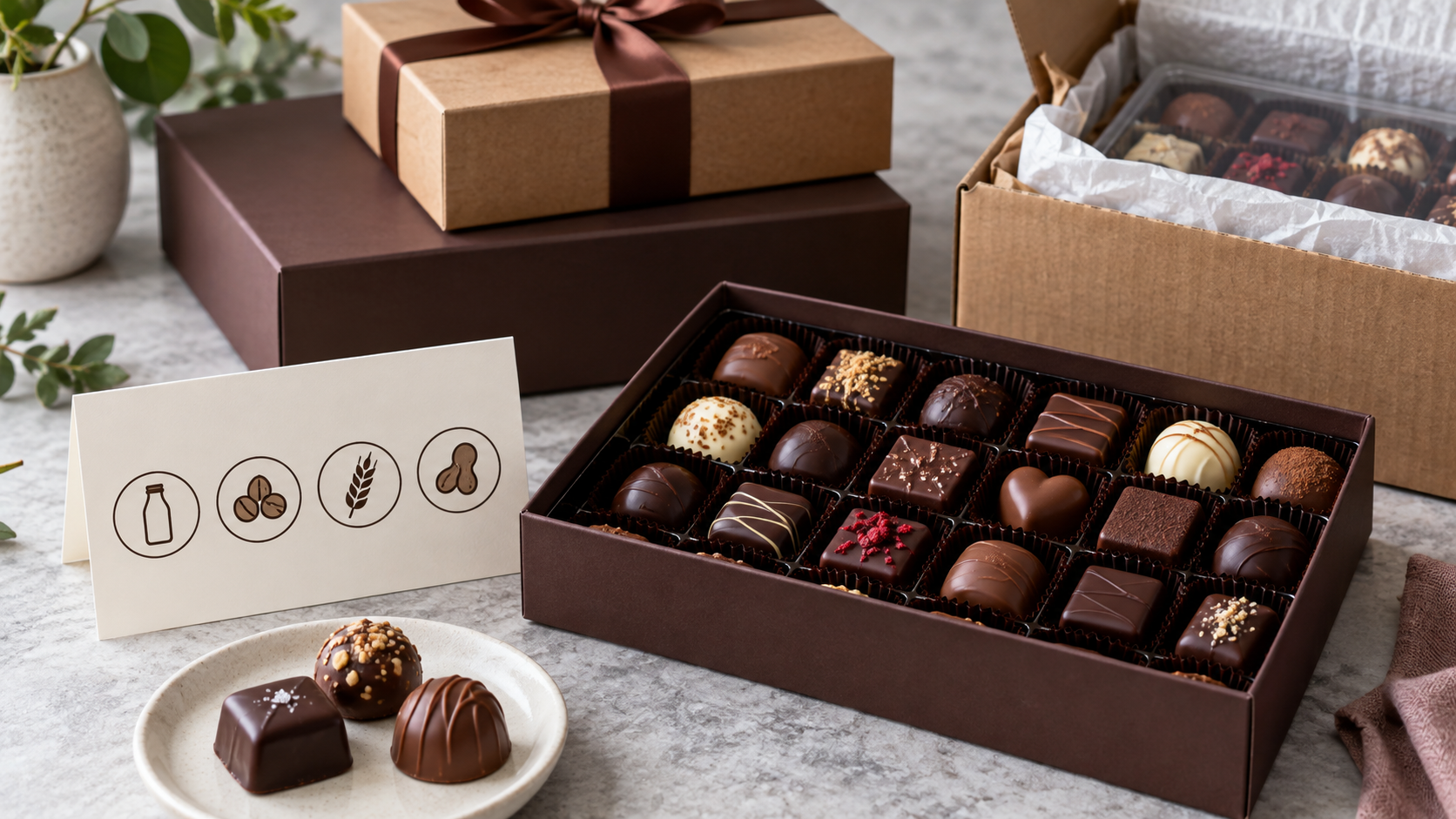
Provide an ingredient and allergen card linked clearly to each piece. Offer suitable alternatives rather than claiming one box suits everyone.
Use protective packaging
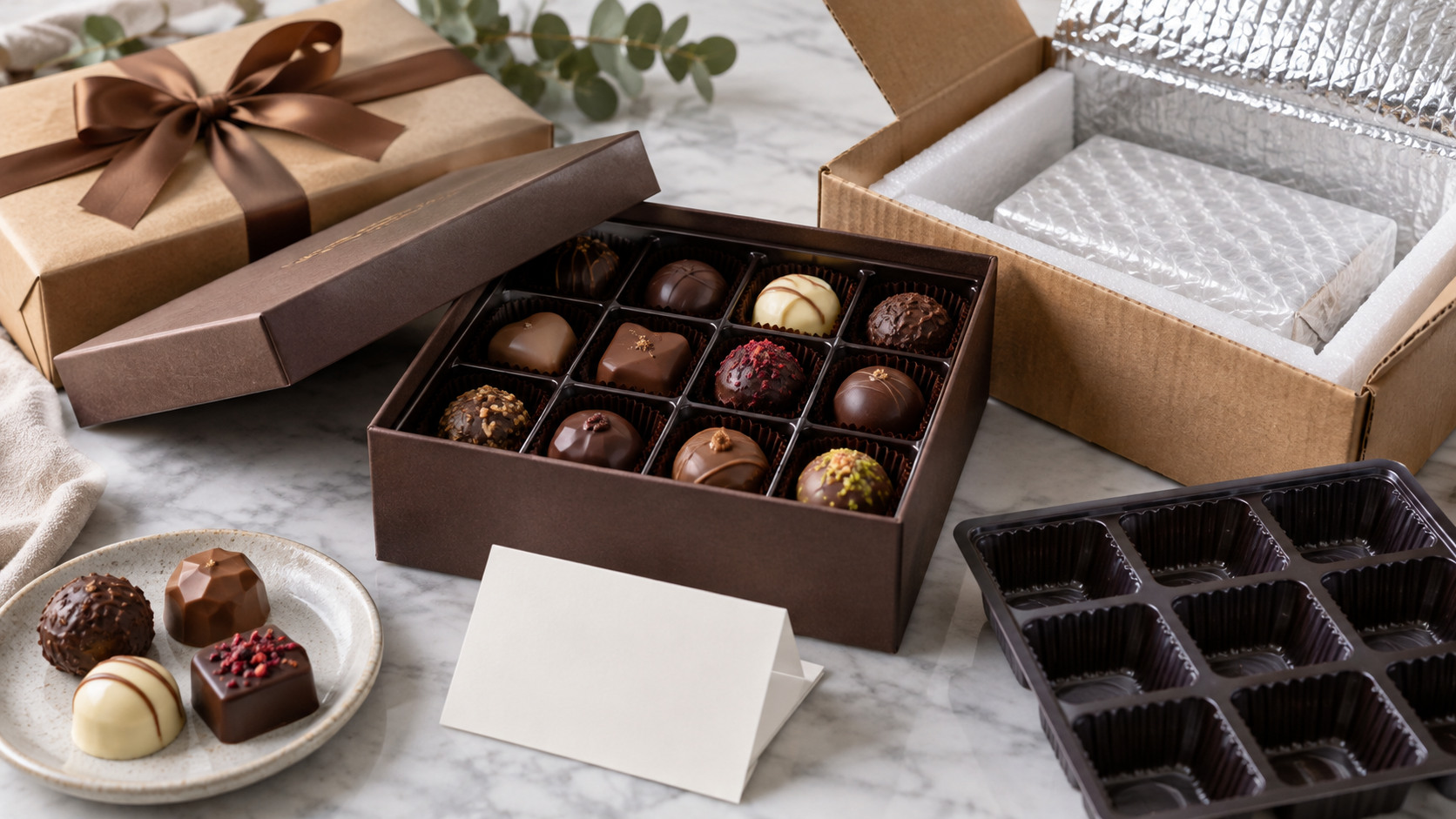
Use food-safe trays and a strong outer box that prevents movement. Decorative weight should not replace protection or clear labelling.
Plan delivery conditions
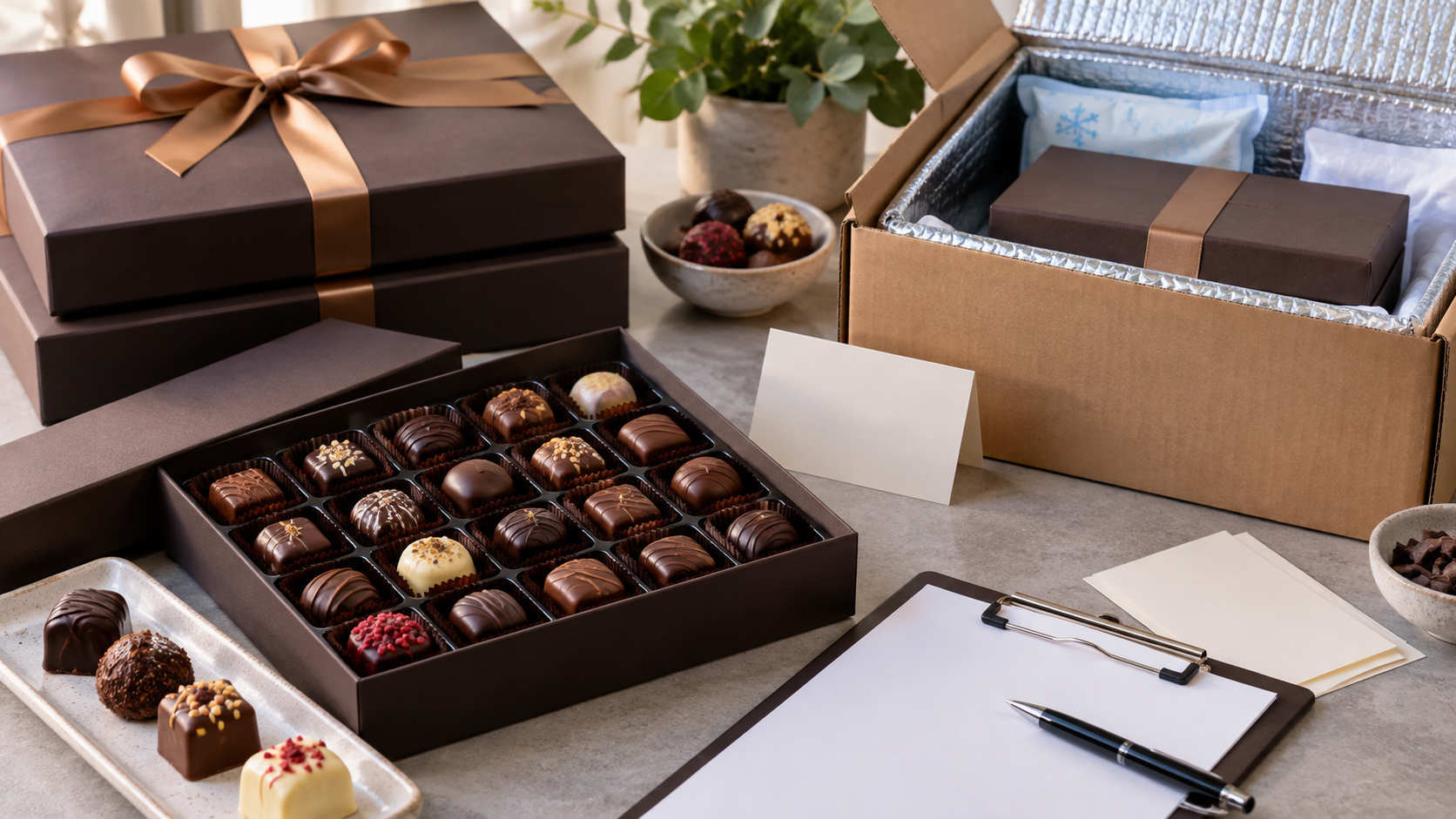
Schedule delivery around heat, weekends and recipient availability. Keep batch records and a plan for damaged or undeliverable boxes.
Frequently asked questions
Can any eating chocolate bar be used for moulding?
No. Check whether it is plain cocoa-butter chocolate and test its fluidity, temper and release.
How should filled chocolate be stored?
Follow the needs of the filling; cream, fruit and custard can require shorter life and refrigeration.
Does melting chocolate make it tempered?
No. Tempering is a controlled crystallisation process used for shine, snap and mould release.
How should wholesale prices be compared?
Compare delivered cost per kilogram, minimum order, storage, waste and usable finished yield.
Which allergens are common in chocolate sweets?
Milk, soya, nuts and gluten are common, but every current ingredient label and cross-contact risk must be checked.
What records should a seller keep?
Keep supplier labels, batch codes, recipes, temperatures, yields, dates, allergen information and customer orders.