
Choose the right product
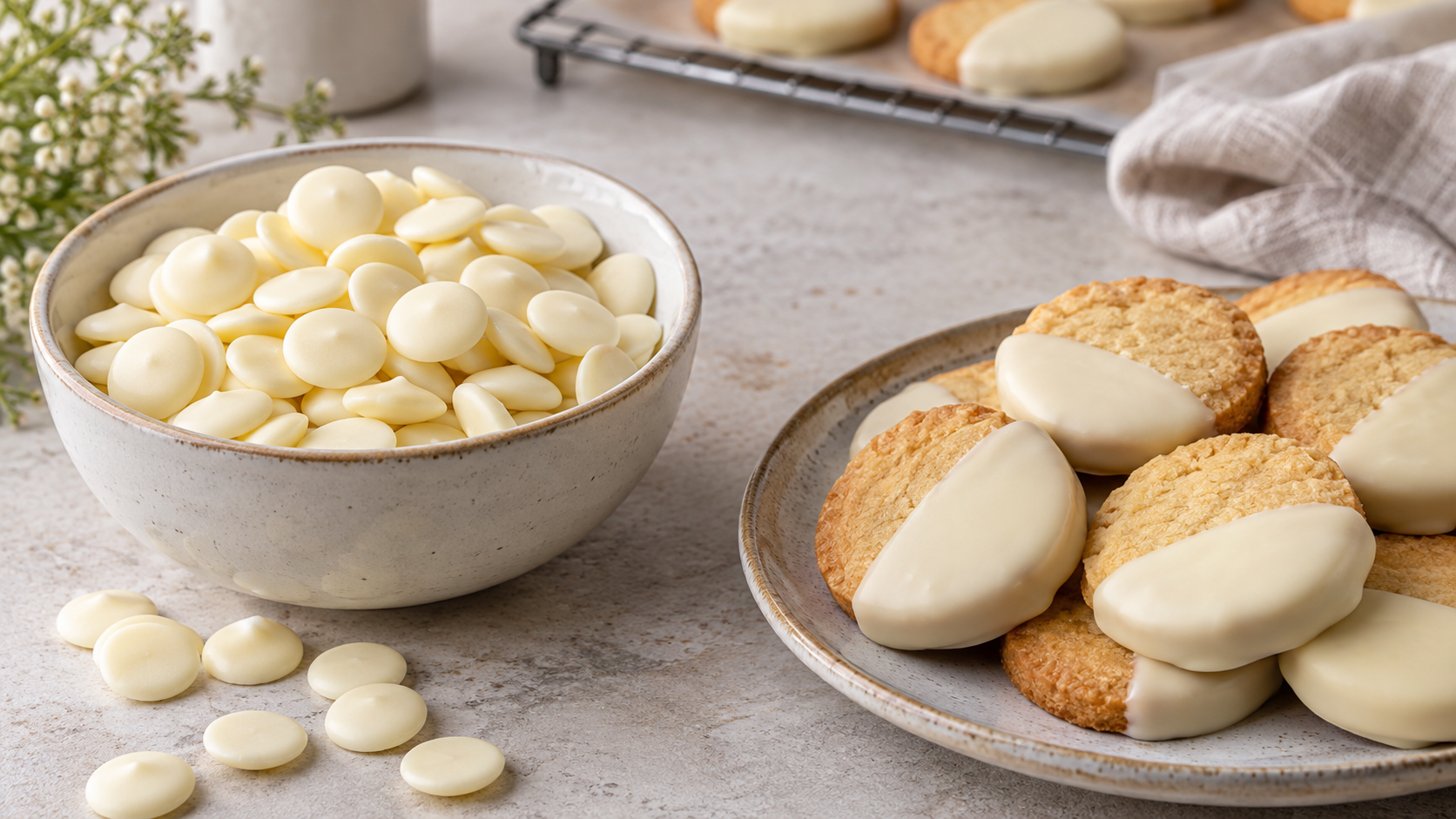
Select a compound coating intended for dipping or moulding and read the packet before starting. Products differ in fat composition, viscosity, flavour and recommended working temperature.
Keep every tool dry
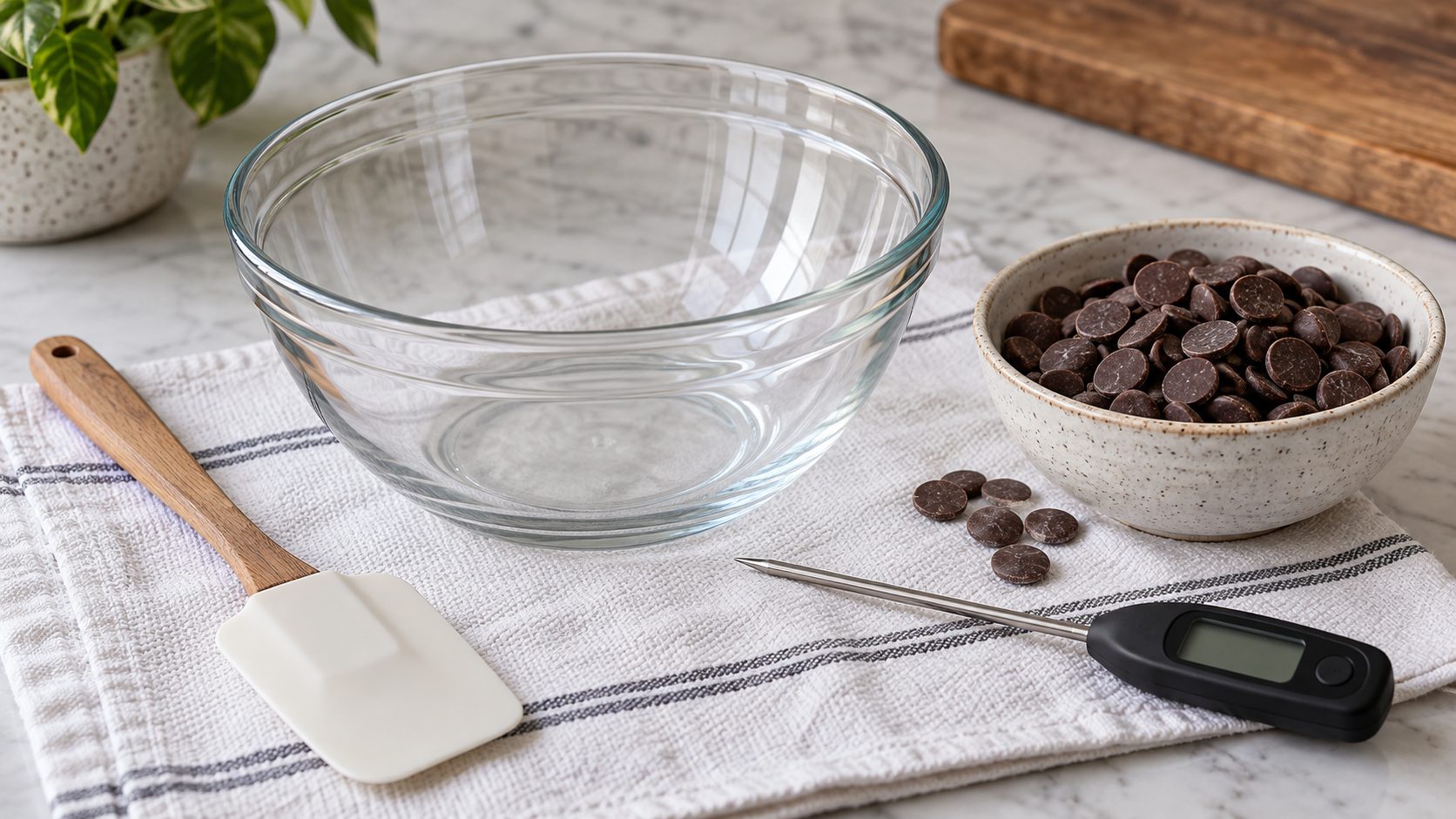
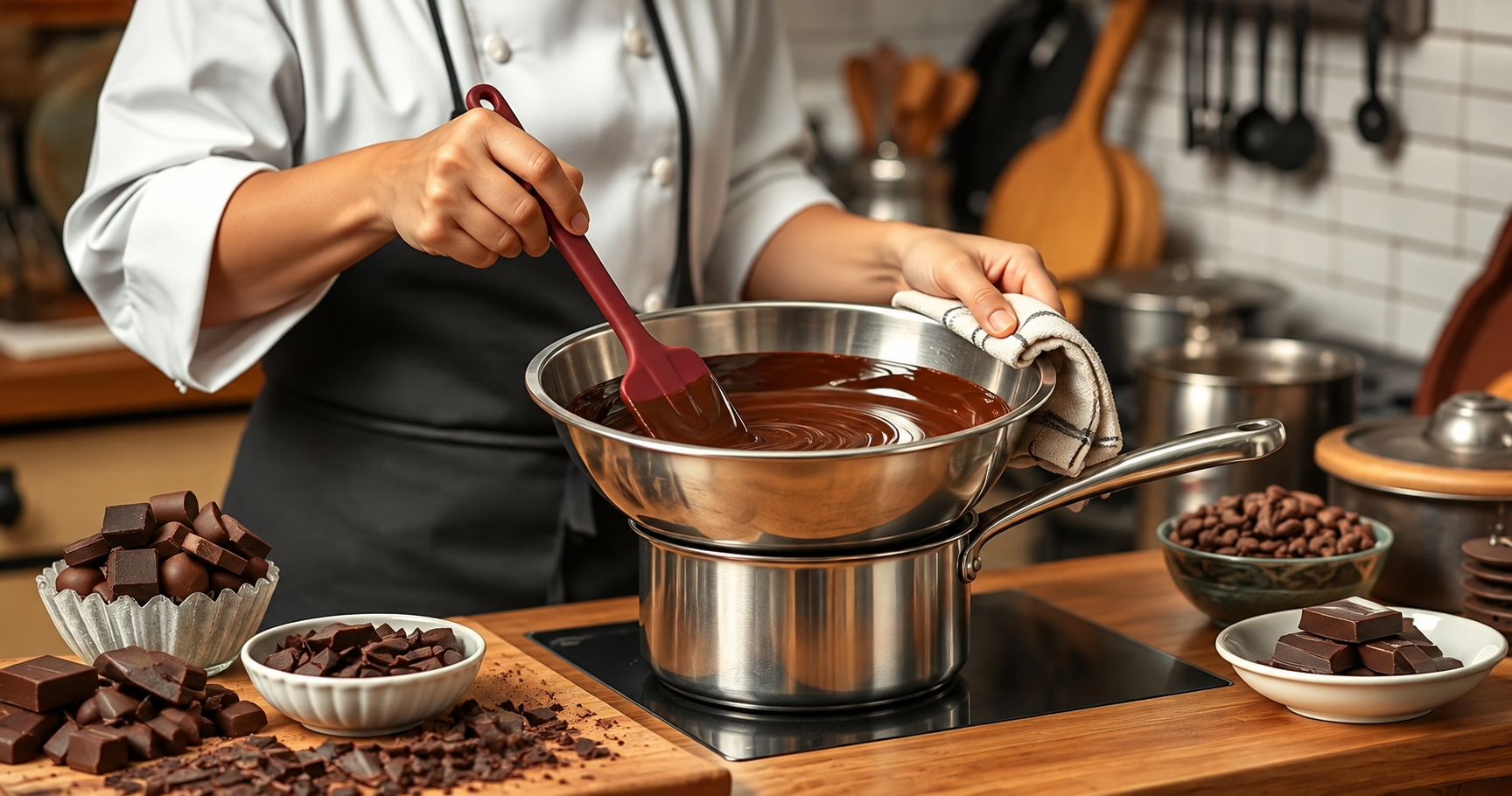
Water can make melted coating thick or grainy. Dry bowls, spatulas and moulds completely, and keep steam from a bain-marie away from the product.
Melt slowly and stir often
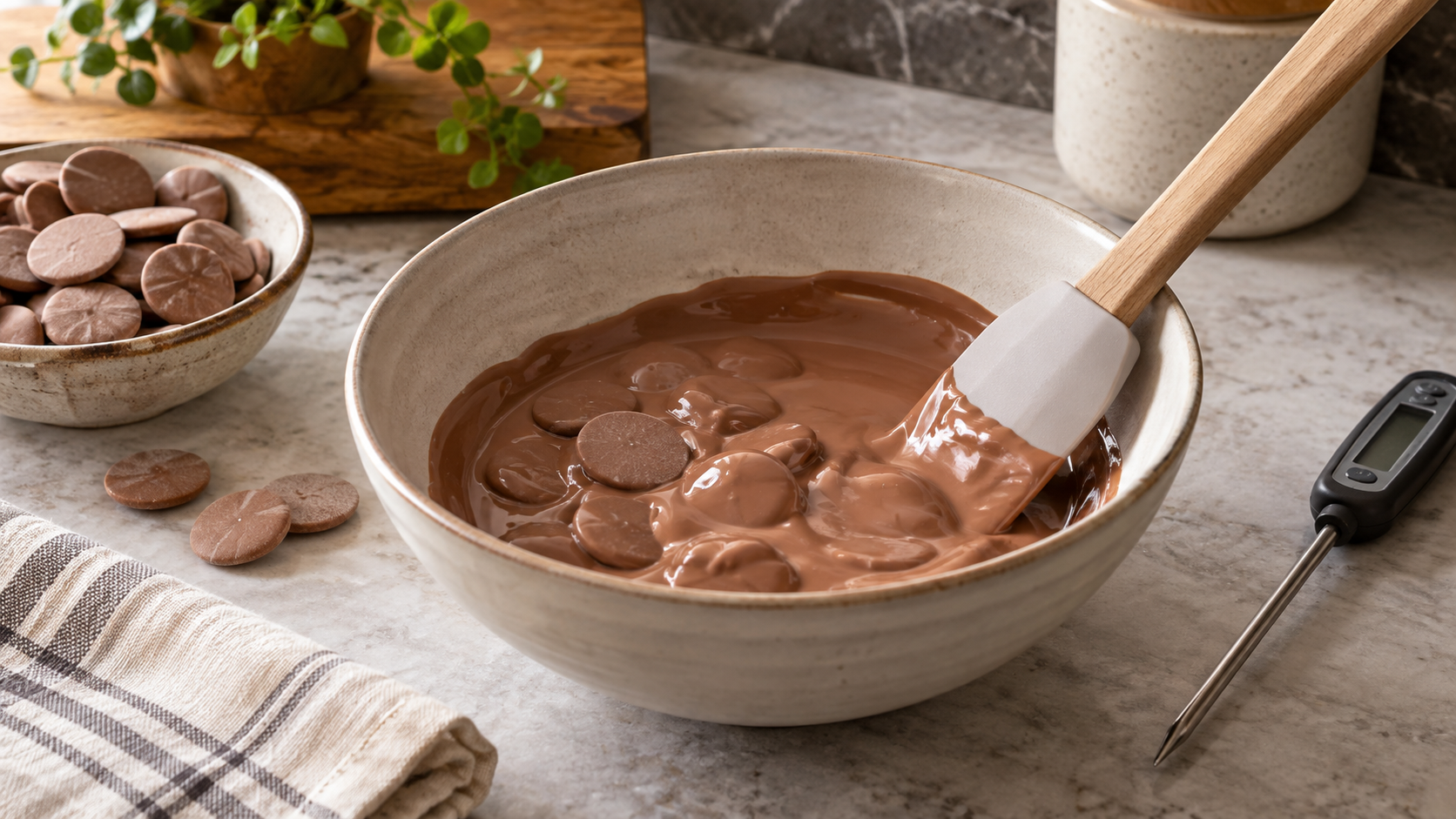
Use short microwave bursts or gentle indirect heat, stirring between each interval. Compound coating usually does not need tempering, but it can still scorch or thicken when overheated.
Prepare centres before coating
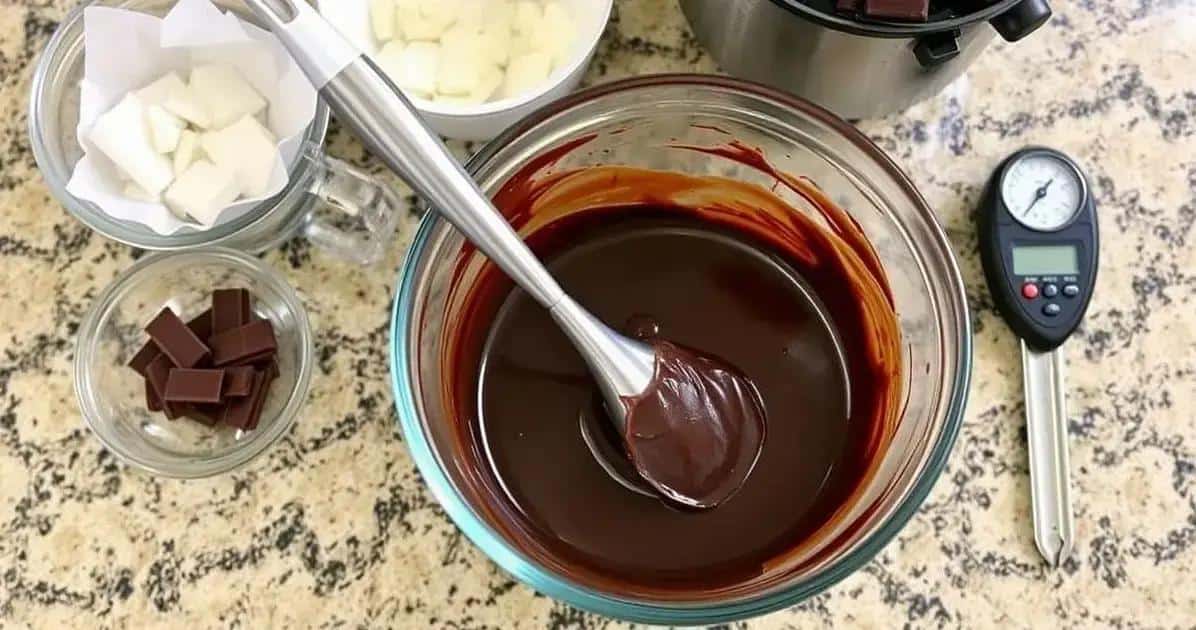
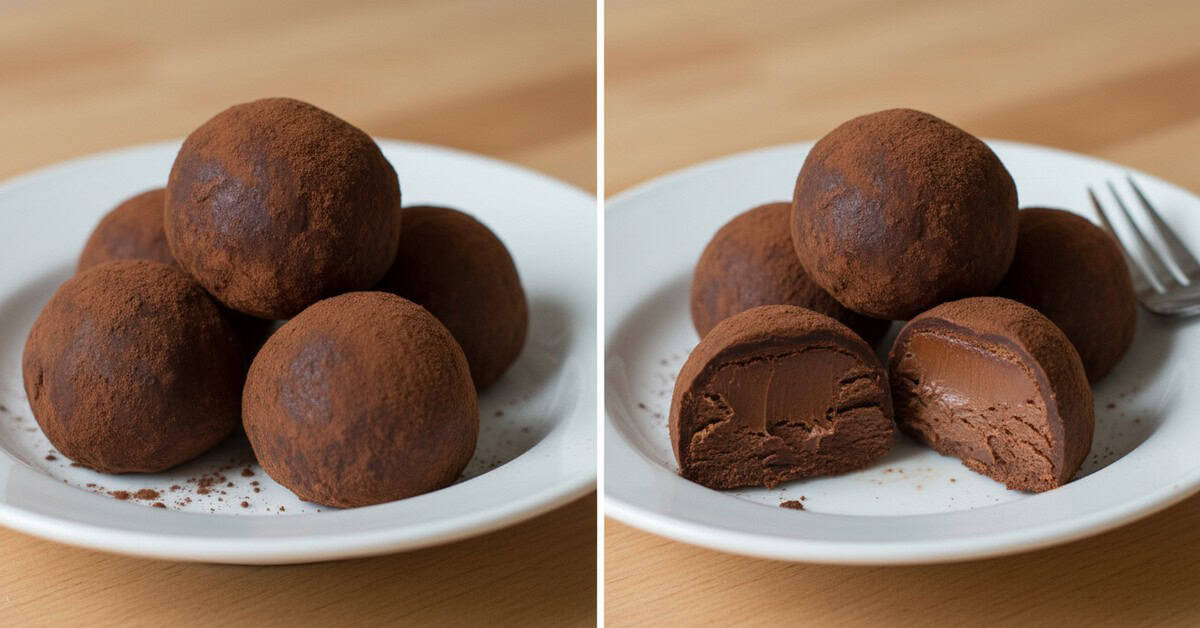
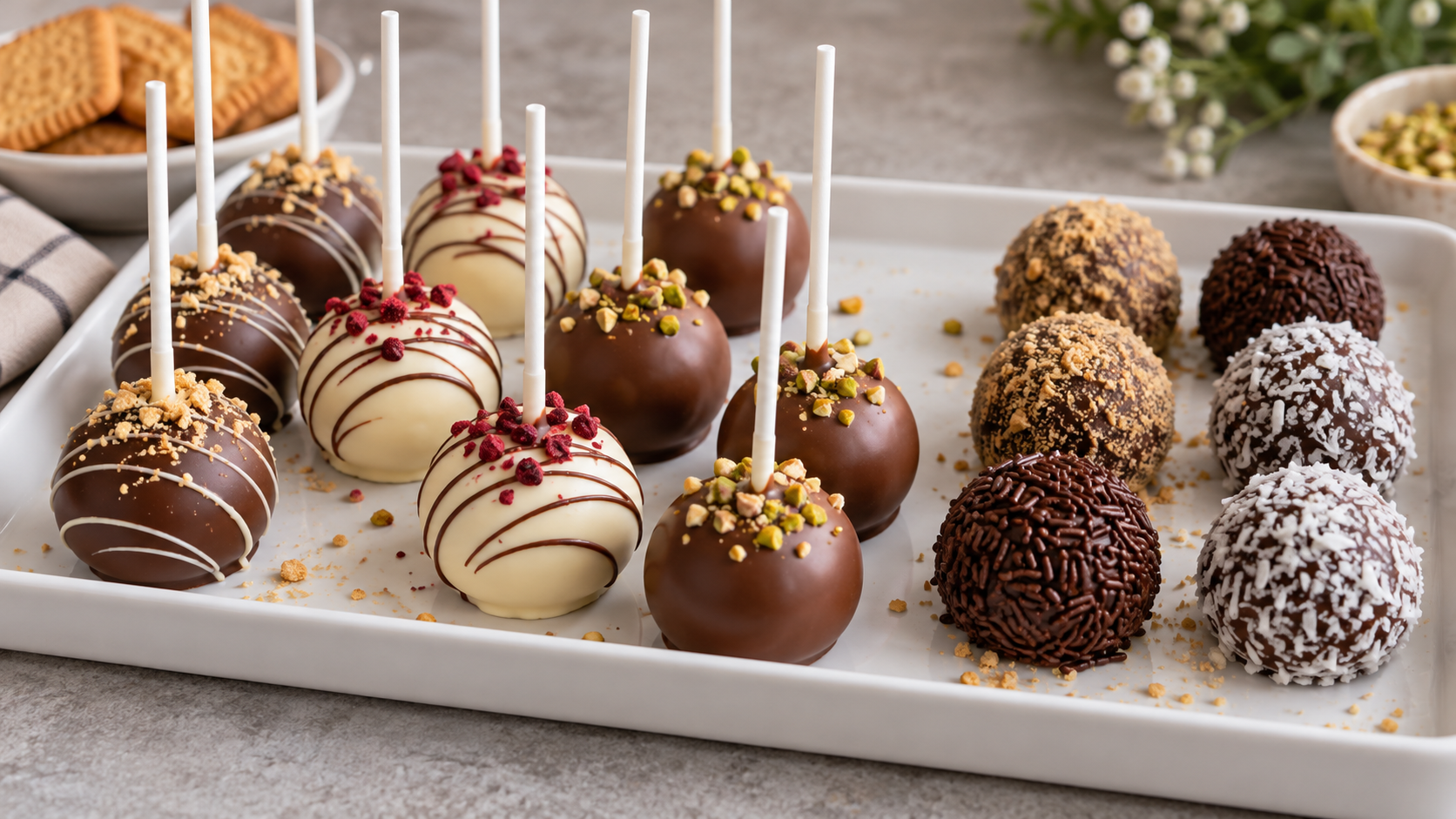
Biscuits, cake pops and truffle centres should be firm, cool and free from loose crumbs. Very cold or frozen centres can create condensation or crack a rapidly setting shell.
Work with a thin even layer

Dip, lift and tap away excess so the shell is comfortable to bite. If the coating becomes too thick, follow the manufacturer’s guidance rather than adding water, milk or an unsuitable oil.
Let pieces set steadily
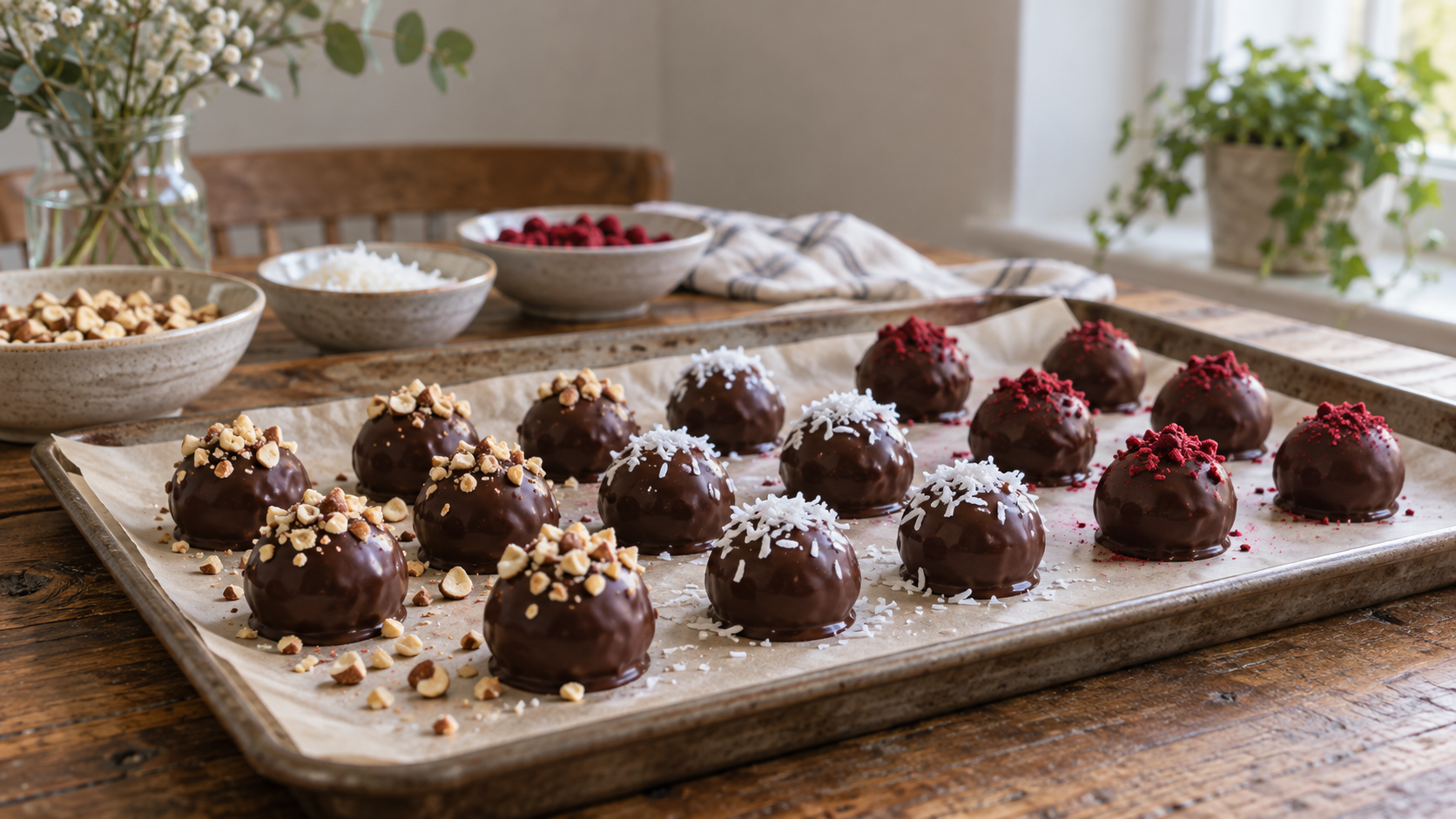
Allow pieces to set in a cool, dry, stable room. Package them only when firm and dry, then store according to the filling because a coating does not make cream or fruit shelf-stable.
Frequently asked questions
Do I need a thermometer?
A thermometer is recommended whenever melting, tempering or holding chocolate within a working range.
Can I substitute one chocolate product for another?
Only when the recipe allows it, because cocoa butter, vegetable fat, sugar and milk change texture and setting.
How do I avoid moisture problems?
Keep tools dry, protect chocolate from steam and let cold closed containers warm gradually before opening.
Which allergens should I check?
Read every label for milk, soya, nuts, gluten and other required allergens, including cross-contact warnings.
Can I sell the finished product?
Follow current local food-business, hygiene, labelling and tax rules and use a defensible storage period.
What should I do before a large batch?
Test one small batch with the actual ingredients, room temperature, packaging and transport conditions.