
What couverture means

Couverture is chocolate formulated with enough cocoa butter to flow well for coating, enrobing and moulding. Legal definitions differ, so the ingredient list and manufacturer’s description are more useful than marketing terms.
Cocoa butter affects fluidity

More cocoa butter can improve fluidity, but recipes and brands still vary. Some couvertures are designed for thin shells, while others suit ganache or baking.
When couverture is useful

Use it when chocolate flavour, clean melt, shine and snap matter, such as moulded bars, bonbons and fine coatings. It can also be used in ganache with an appropriate liquid ratio.
Why tempering matters
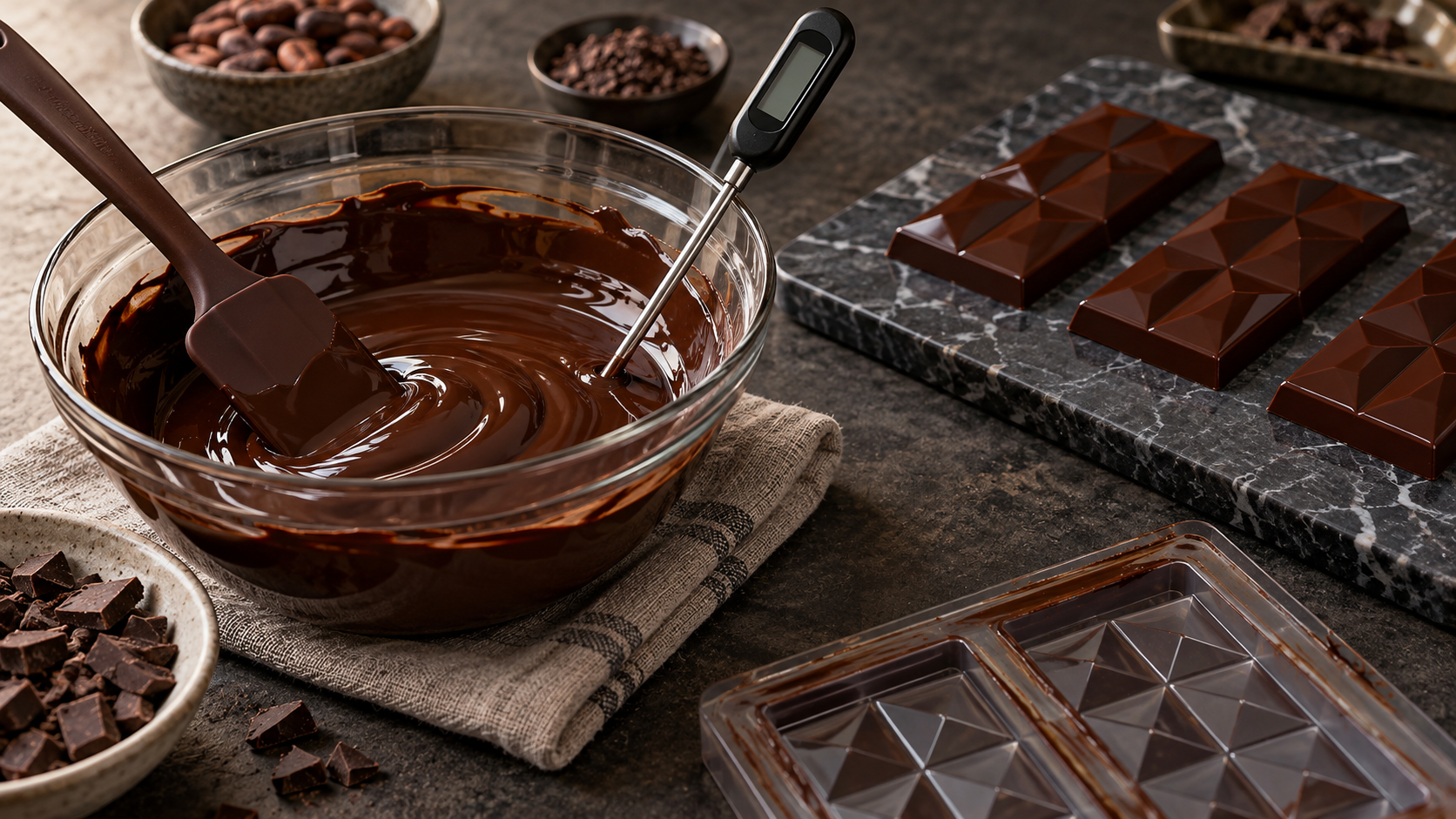
Because it contains cocoa butter, couverture must normally be tempered for glossy shells and moulded pieces. Ganache and cake batters use different methods and do not always require tempering.
How it differs from compound coating

Compound coating uses other vegetable fats and generally sets without tempering. It is convenient but has a different flavour, mouthfeel and behaviour, so the products are not interchangeable in every recipe.
Choose by recipe, not percentage alone

A high cocoa percentage does not automatically mean the right viscosity or flavour for a task. Check usage guidance, taste the chocolate and test a small batch.
Read the label and store it well

Keep couverture sealed in a cool, dry place away from odours and sunlight. Check milk, soya, nuts and other allergen statements before serving or selling it.
Frequently asked questions
Do I need a thermometer?
A thermometer is recommended whenever melting, tempering or holding chocolate within a working range.
Can I substitute one chocolate product for another?
Only when the recipe allows it, because cocoa butter, vegetable fat, sugar and milk change texture and setting.
How do I avoid moisture problems?
Keep tools dry, protect chocolate from steam and let cold closed containers warm gradually before opening.
Which allergens should I check?
Read every label for milk, soya, nuts, gluten and other required allergens, including cross-contact warnings.
Can I sell the finished product?
Follow current local food-business, hygiene, labelling and tax rules and use a defensible storage period.
What should I do before a large batch?
Test one small batch with the actual ingredients, room temperature, packaging and transport conditions.