
Choose a transfer made for chocolate
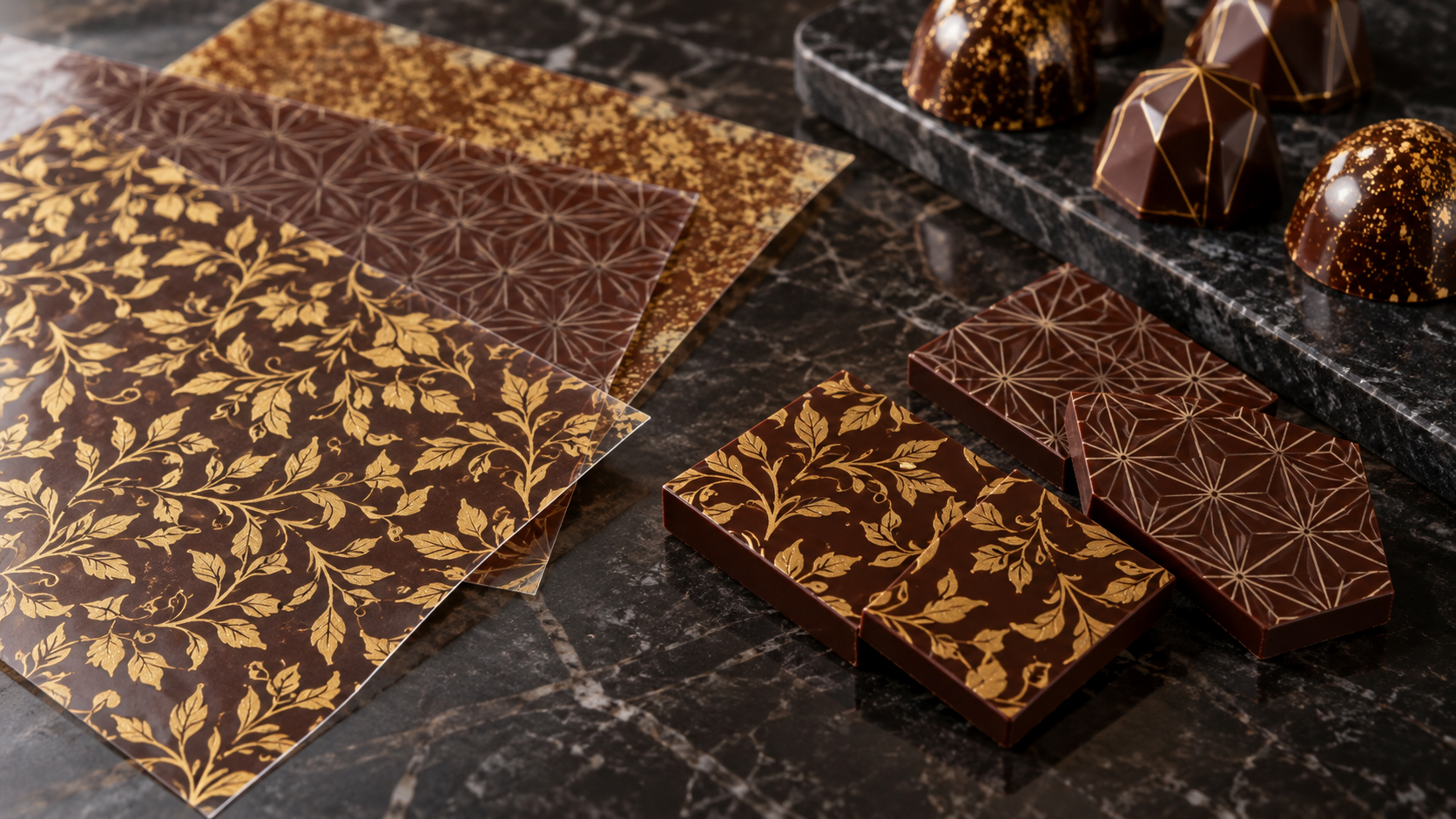
Chocolate transfer sheets carry a food-safe coloured cocoa-butter design on a flexible film. Check that the product is intended for chocolate, within date and suitable for the food you are making.
Prepare a flat stable surface
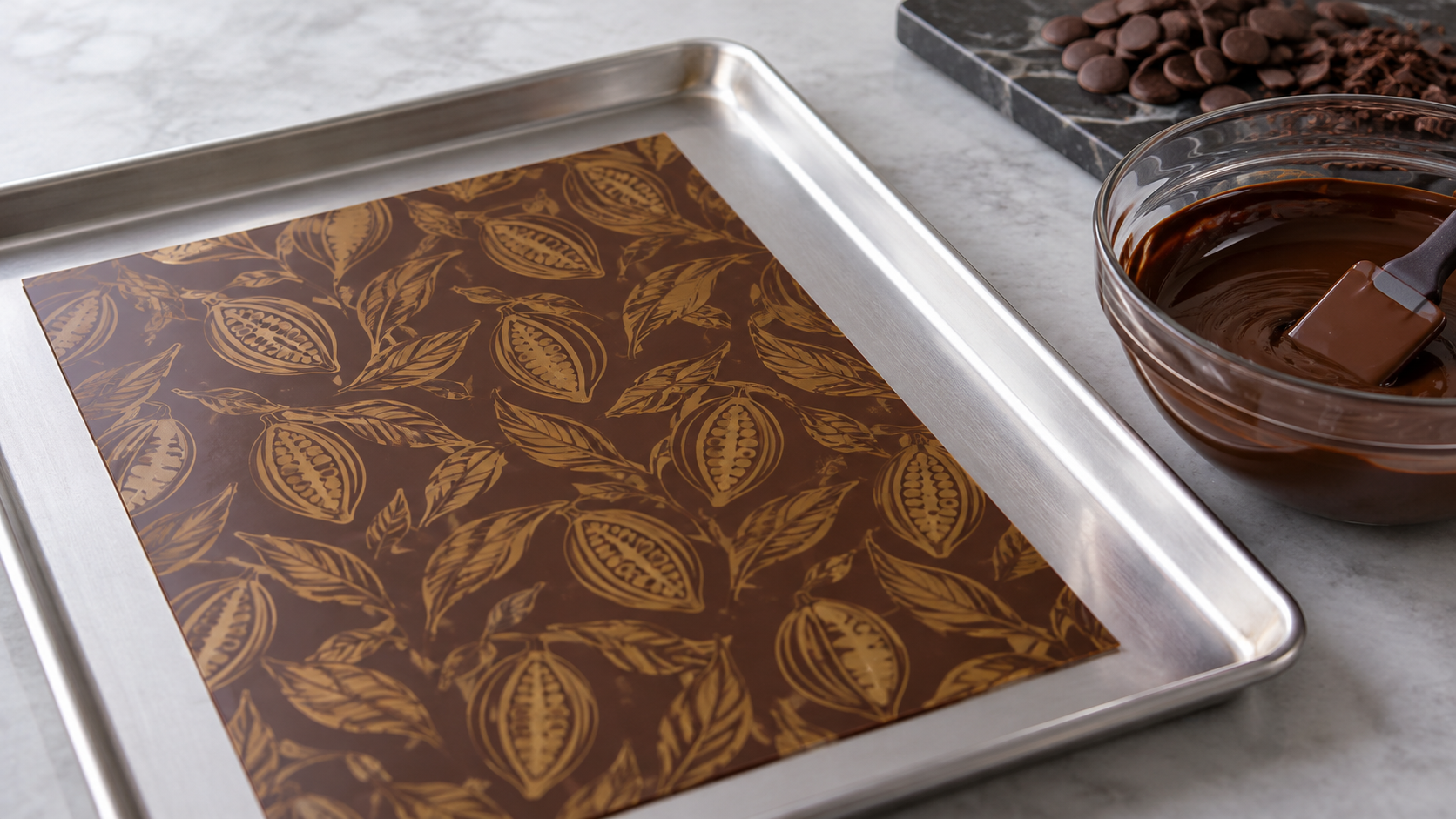
Place the printed cocoa-butter side facing the chocolate on a clean flat tray. Keep the sheet dry, avoid fingerprints and cut it to size before working with tempered chocolate.
Spread tempered chocolate evenly
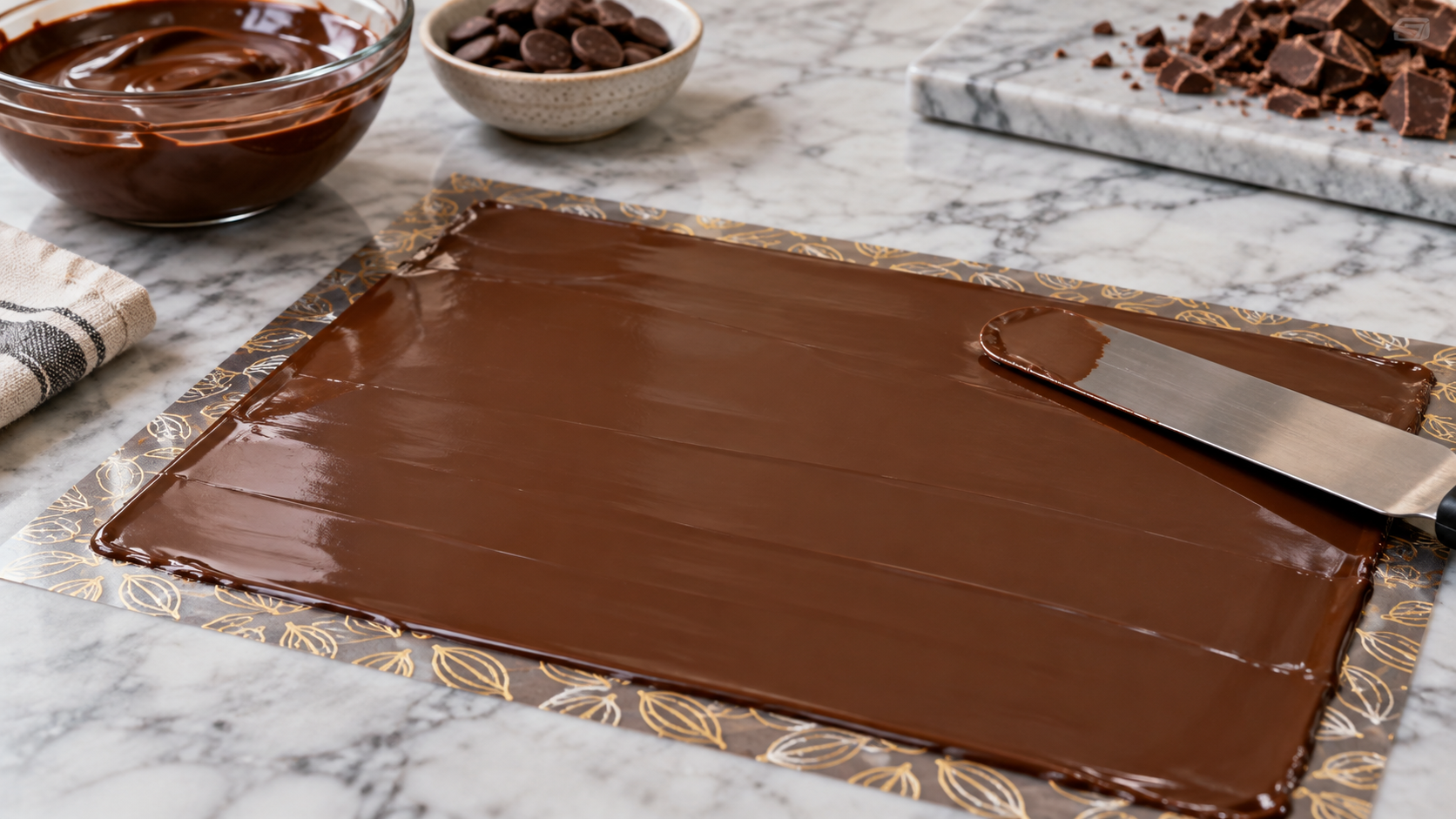
Spread a thin even layer of correctly tempered chocolate across the sheet or press the sheet onto a freshly coated surface. Trapped air and uneven thickness can leave gaps.
Cut or shape at the right moment
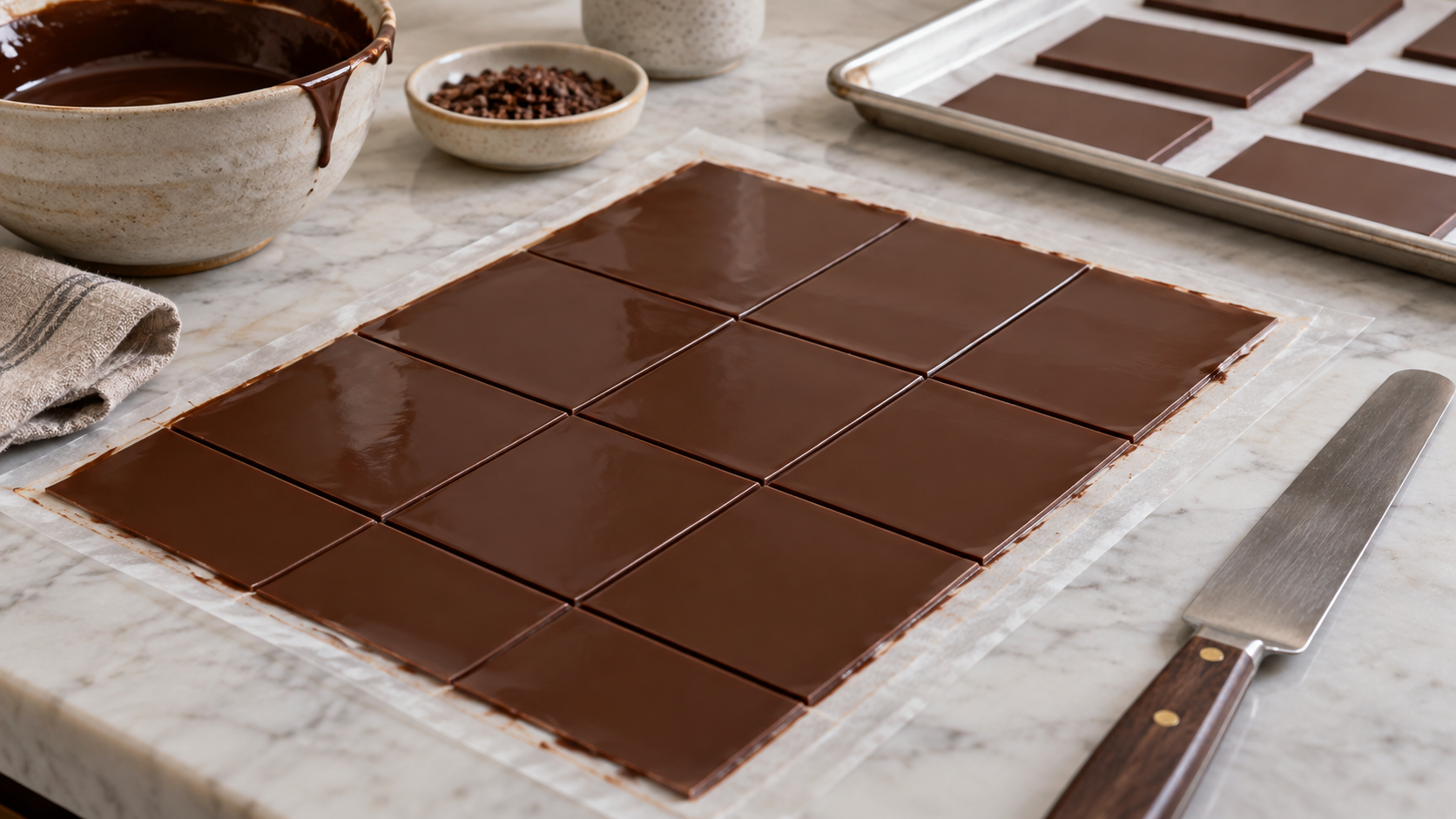
For individual plaques, score or cut the chocolate when it is partly set but still flexible. Cutting too early smears the design; waiting until fully hard can cause cracks.
Peel only after full crystallisation
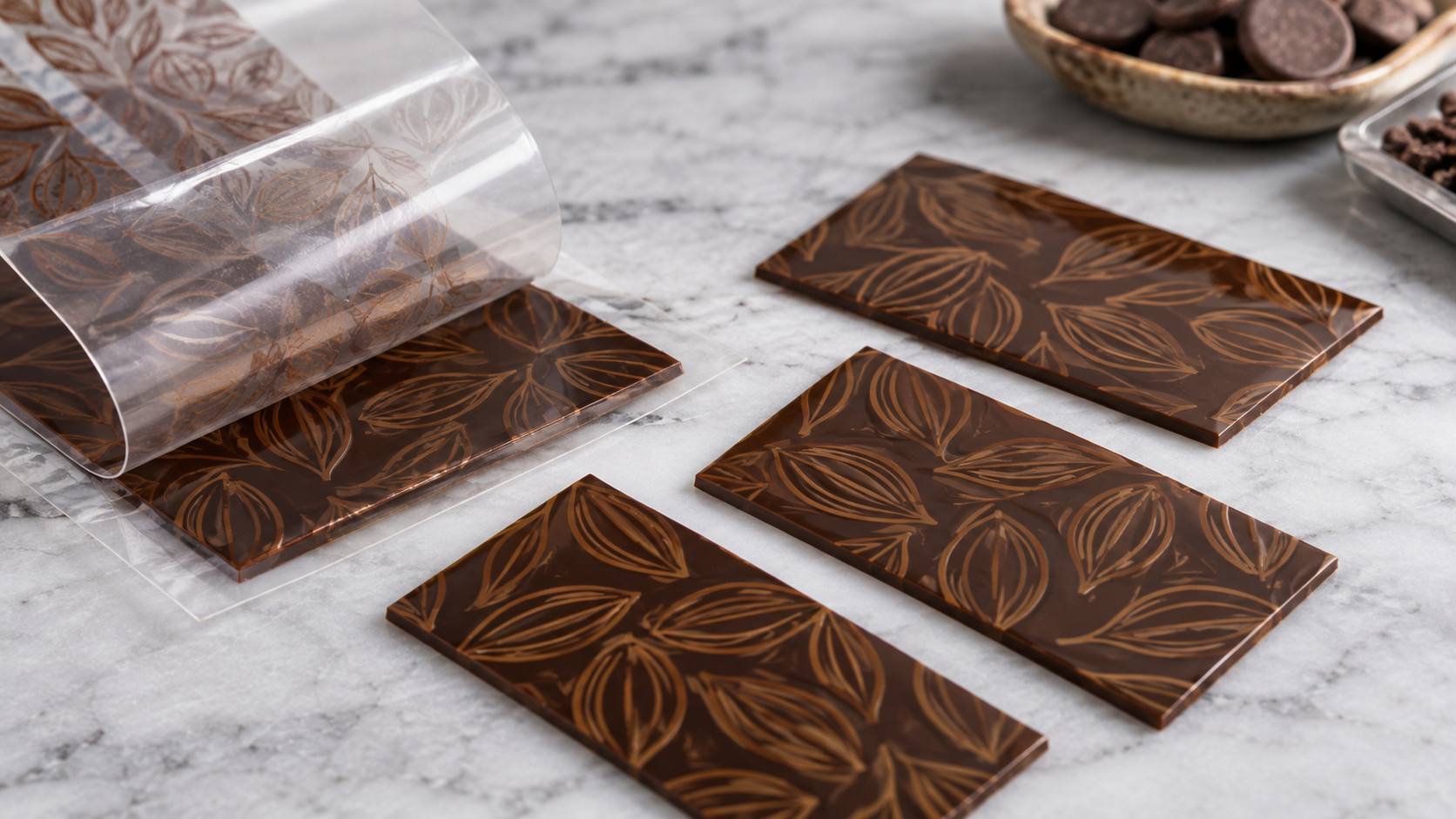
Allow complete crystallisation in a cool stable room, then peel the film away smoothly. If the design stays on the sheet, check temper, contact and setting temperature.
Avoid condensation and heat
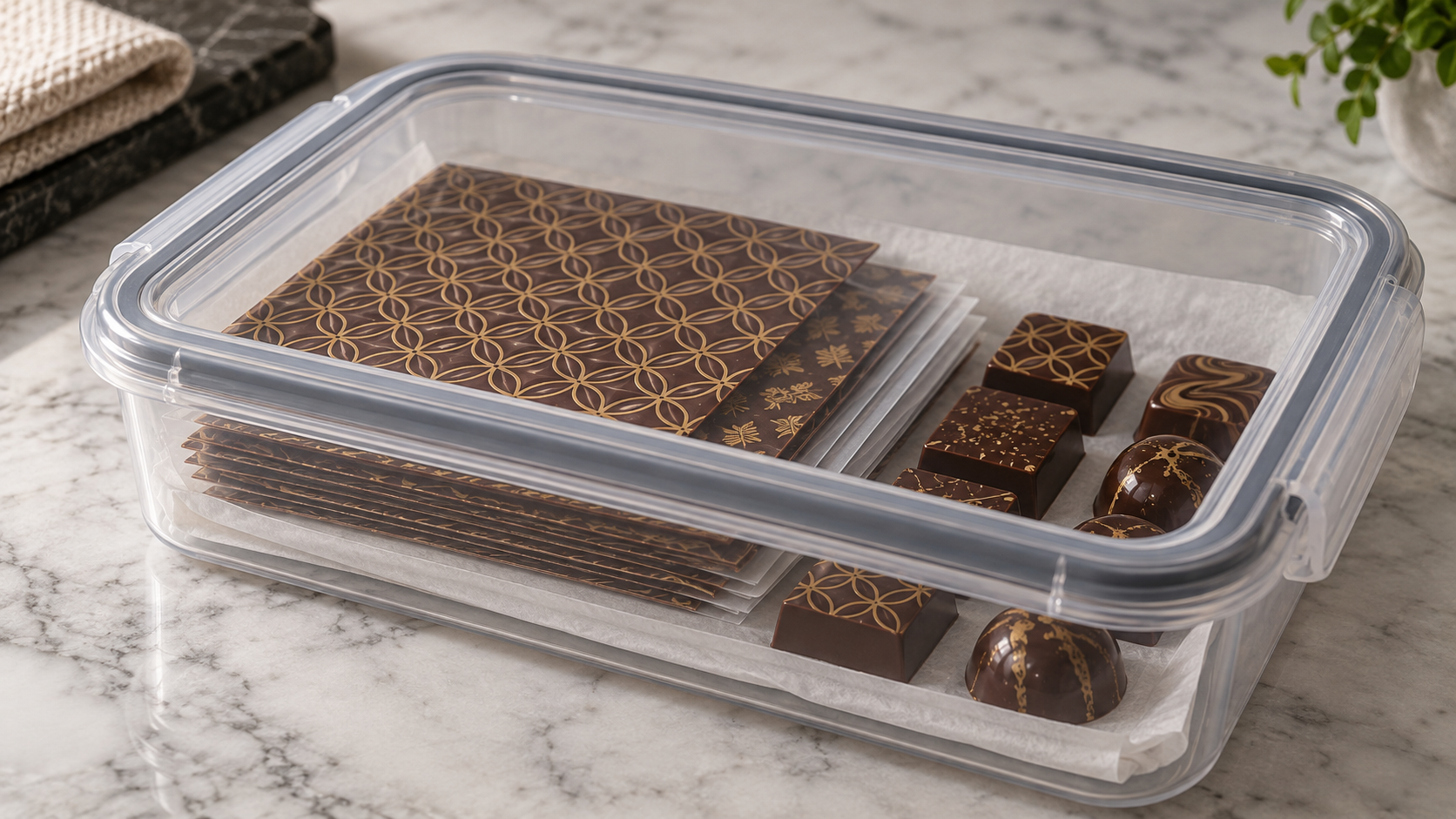
Cold sheets brought into humid air can collect moisture and prevent transfer. Keep steam away and avoid sudden moves between refrigerator and warm room.
Store sheets and finished pieces flat
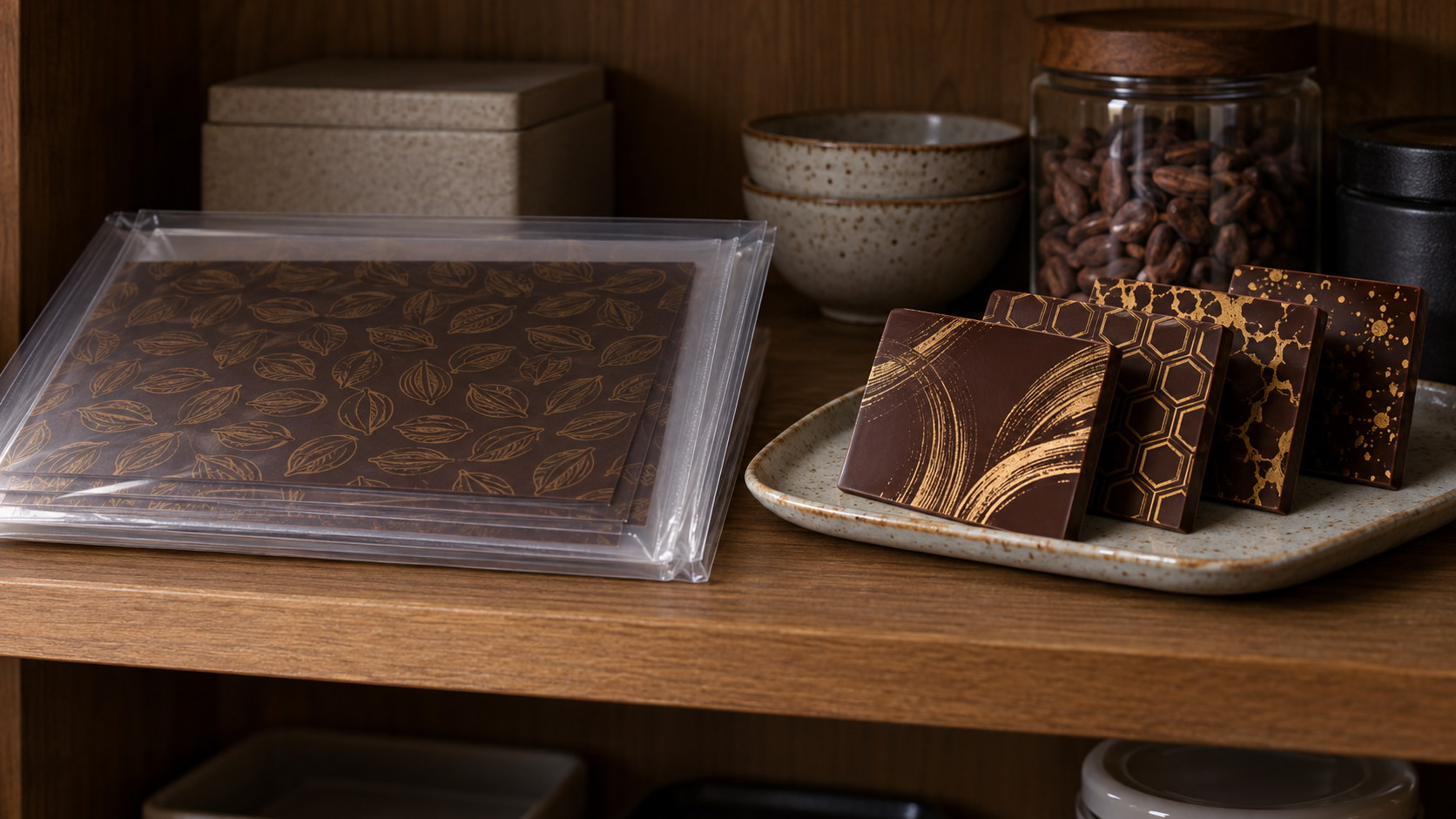
Keep unused sheets sealed, flat and protected from heat, light and strong odours. Store finished decorations in a dry container and handle them with clean gloves or tools.
Frequently asked questions
Do I need a thermometer?
A thermometer is recommended whenever melting, tempering or holding chocolate within a working range.
Can I substitute one chocolate product for another?
Only when the recipe allows it, because cocoa butter, vegetable fat, sugar and milk change texture and setting.
How do I avoid moisture problems?
Keep tools dry, protect chocolate from steam and let cold closed containers warm gradually before opening.
Which allergens should I check?
Read every label for milk, soya, nuts, gluten and other required allergens, including cross-contact warnings.
Can I sell the finished product?
Follow current local food-business, hygiene, labelling and tax rules and use a defensible storage period.
What should I do before a large batch?
Test one small batch with the actual ingredients, room temperature, packaging and transport conditions.