
Cocoa butter forms different crystals
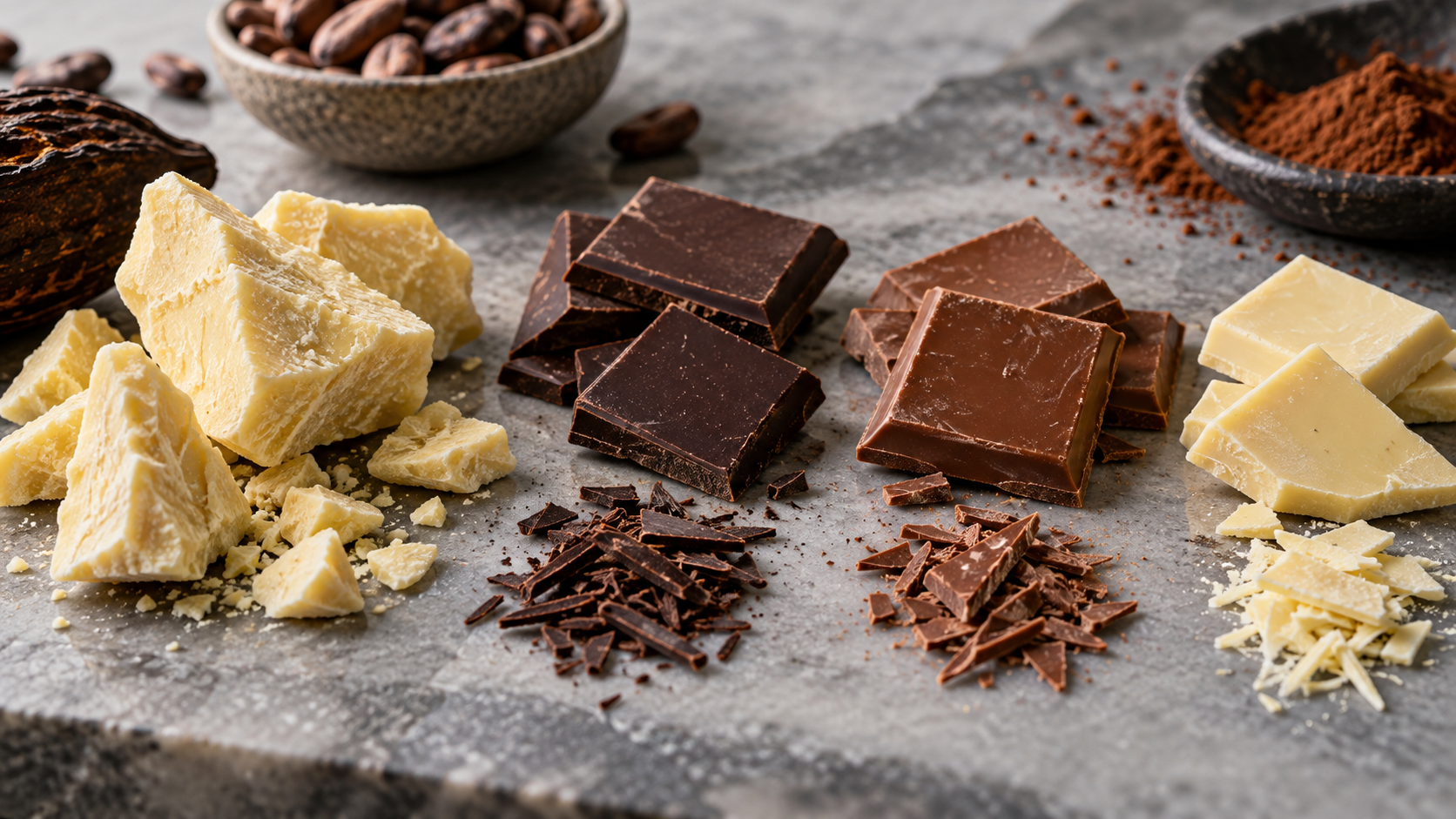
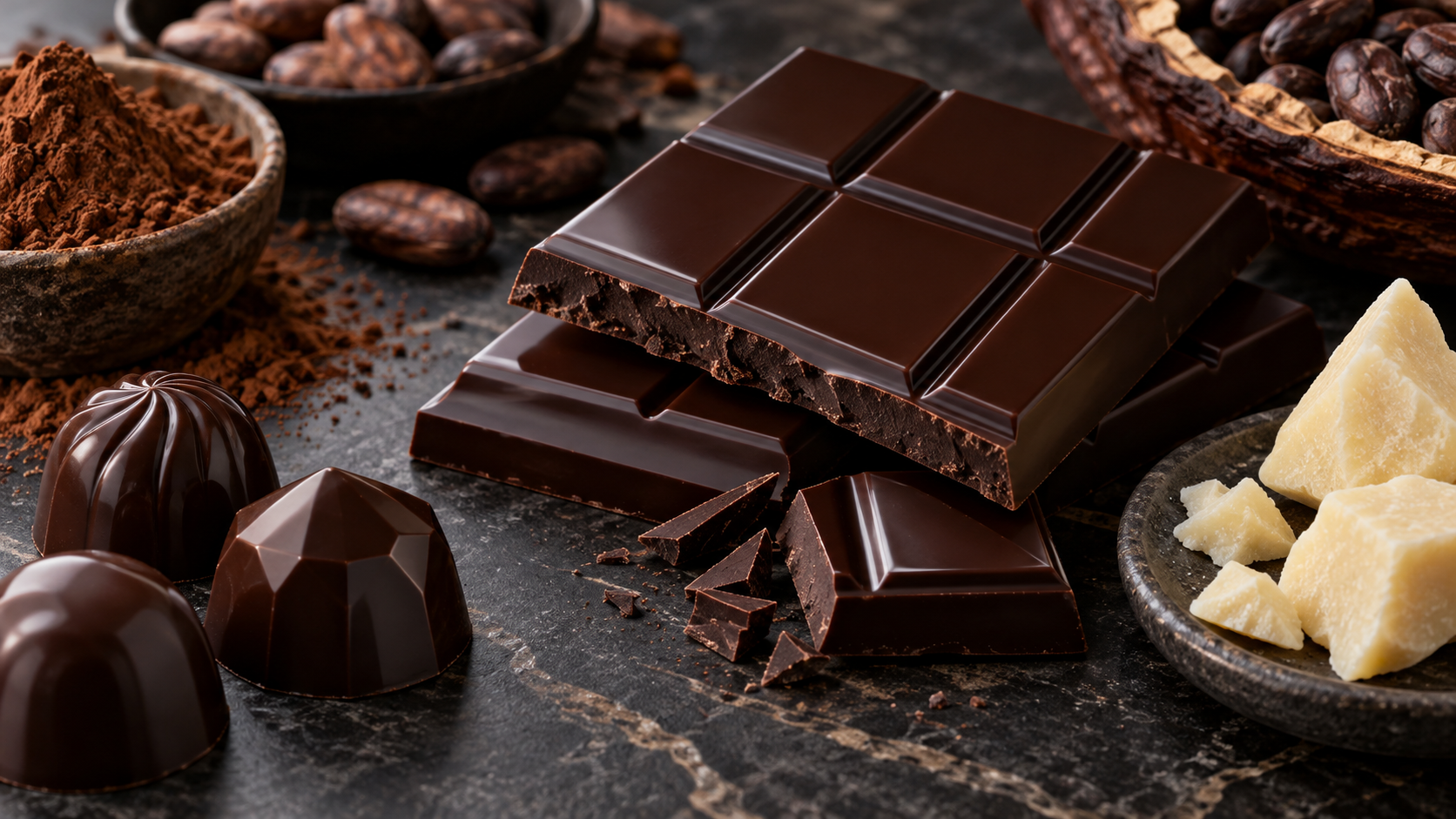
Cocoa butter can solidify in several crystal forms. They do not all melt at the same temperature or create the same texture, which is why simply melting and cooling chocolate can produce dull or soft results.
Stable crystals give shine and snap
Well-tempered chocolate contains enough stable crystals to contract from moulds, break cleanly and resist rapid fat bloom. Tempering improves structure and appearance; it does not make an unsafe or contaminated product safe.
Melt away unwanted crystals
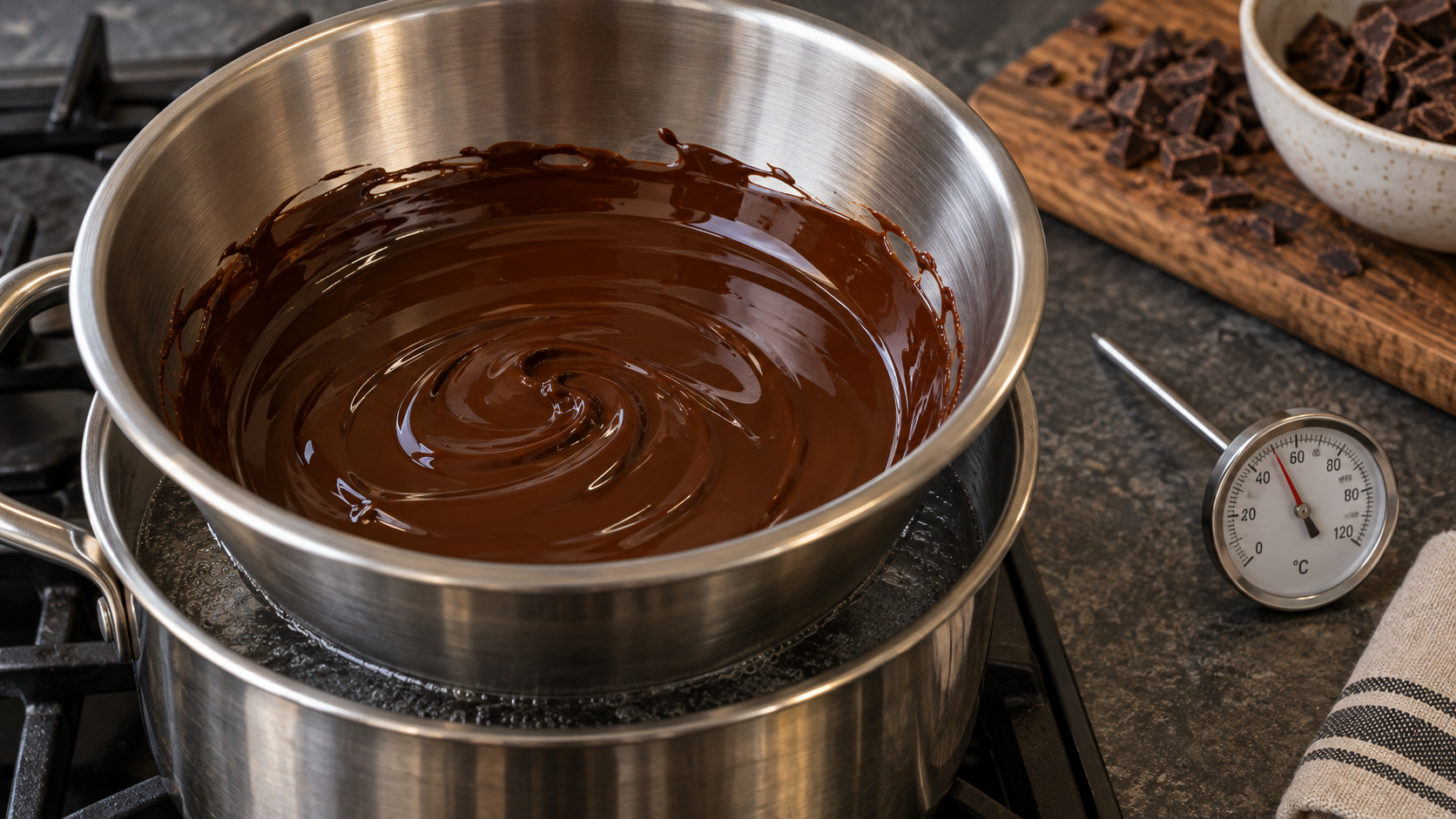
Begin by melting the chocolate gently enough to dissolve existing crystals without scorching sugar or milk solids. Exact temperatures depend on dark, milk or white chocolate and on the manufacturer’s guidance.
Cool while creating seed crystals
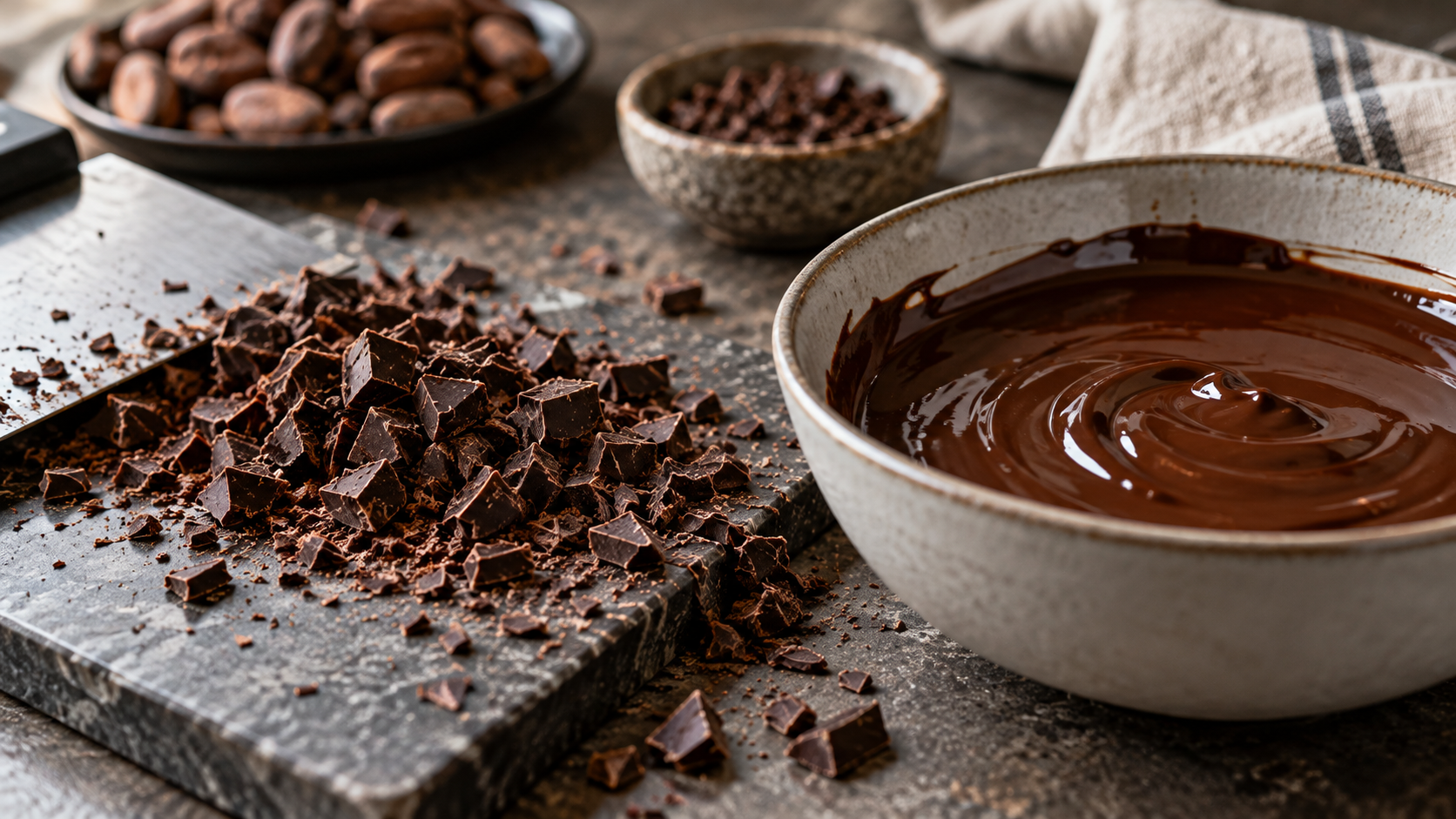
Lower the temperature while stirring and introduce stable seed crystals using chopped tempered chocolate or another reliable tempering method. Keep tools completely dry and avoid trapping unmelted lumps.
Warm to a practical working range
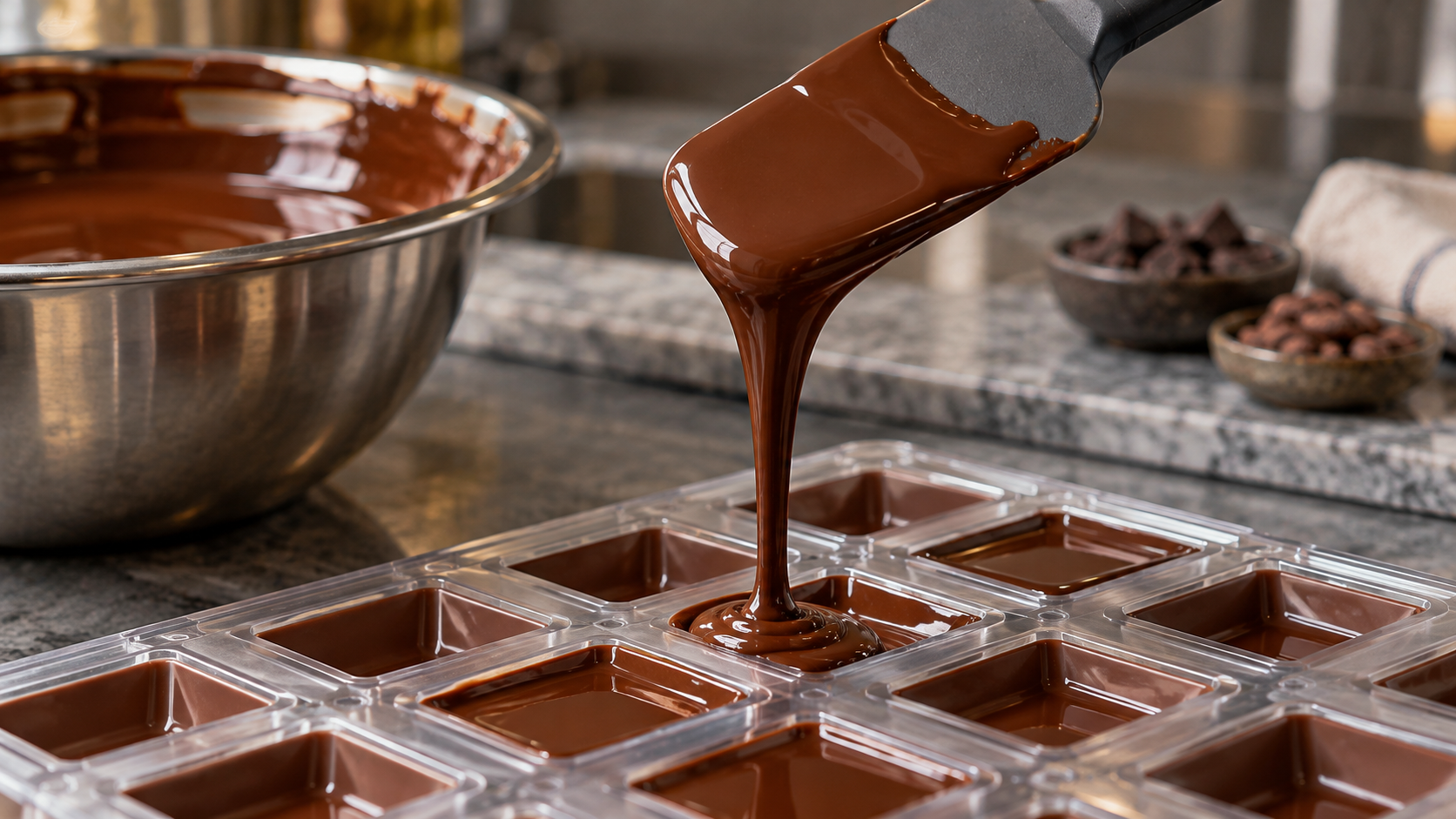
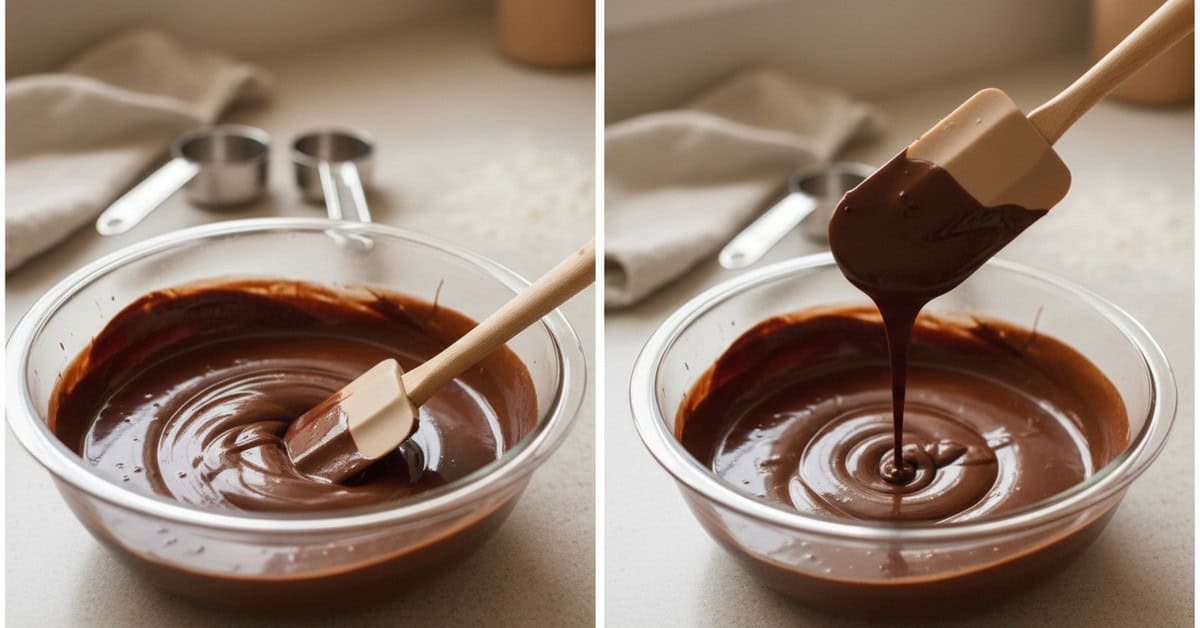
Gently rewarm to the working range so the chocolate flows while stable crystals remain. Overheating at this point removes the temper and means the crystallisation cycle must be repeated.
Test before moulding
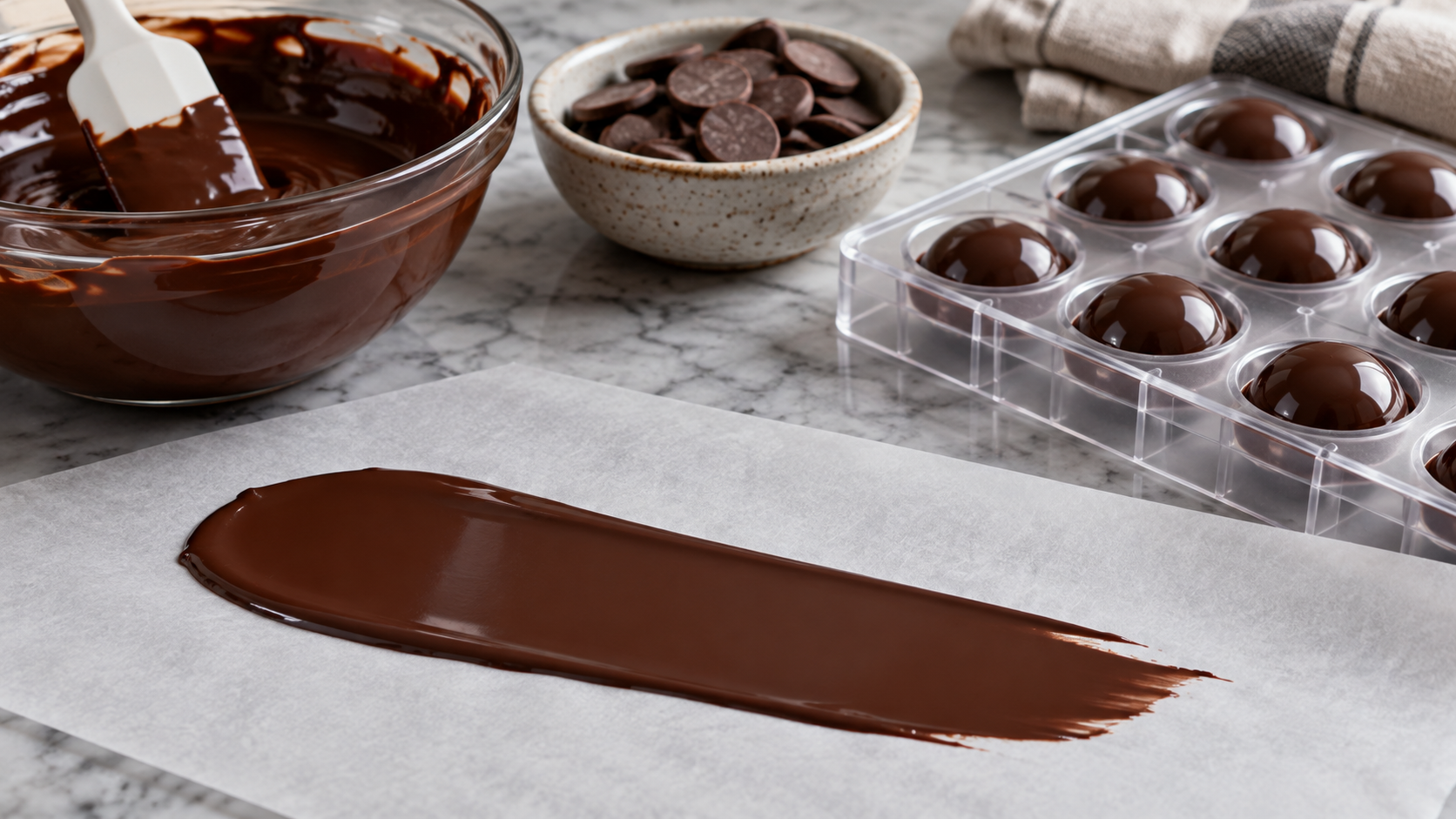
Spread a thin smear on parchment or a clean palette knife. It should begin setting within a few minutes at a suitable room temperature and look even rather than streaky.
Store finished chocolate steadily
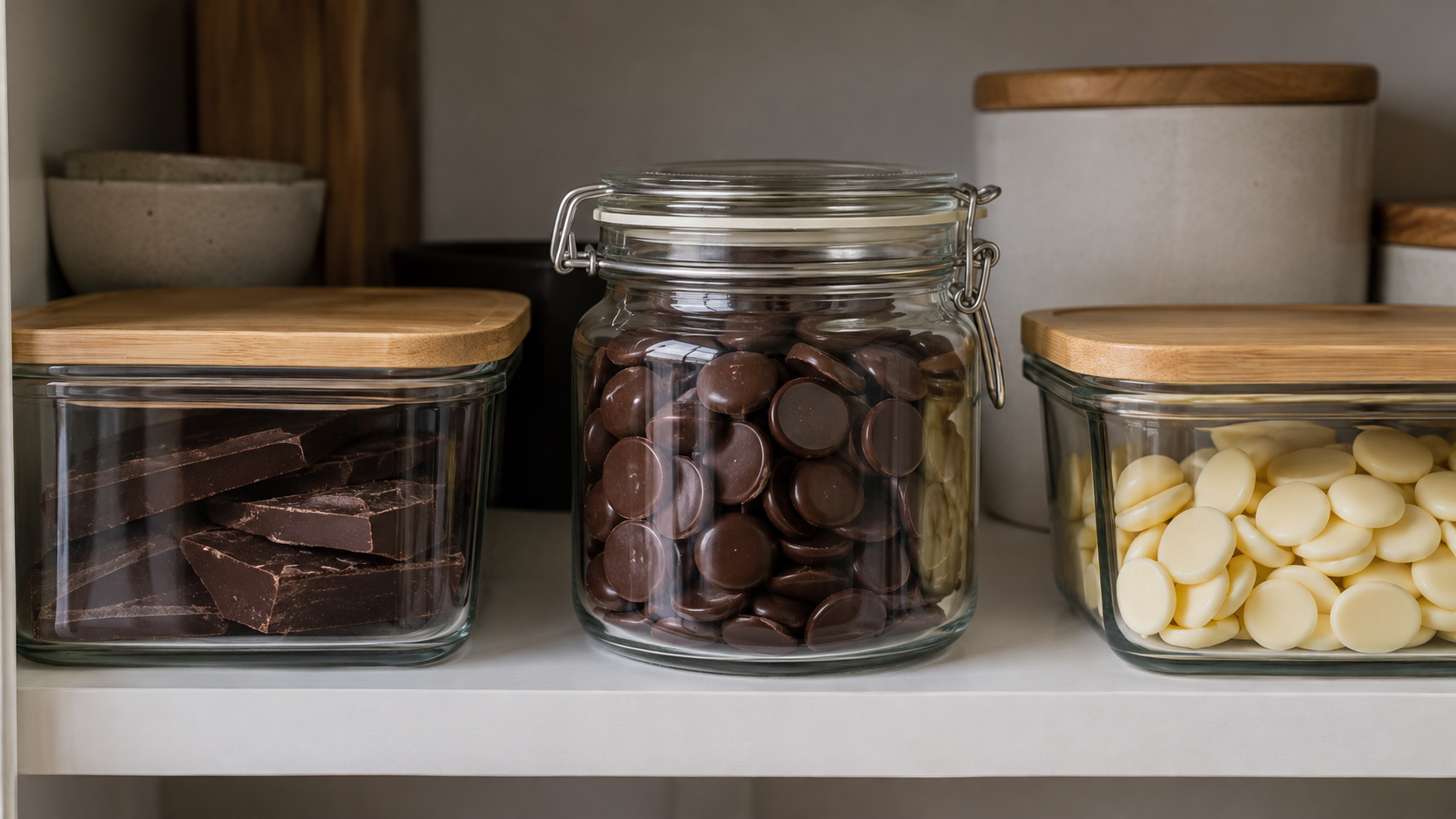
Let moulded chocolate crystallise in a cool, dry, stable environment. Large temperature swings, warm storage and condensation can still cause bloom after a successful temper.
Frequently asked questions
Do I need an accurate thermometer?
It is strongly recommended for repeatable chocolate work because small temperature differences affect texture and setting.
Can I substitute another chocolate product?
Only when the recipe is designed for it; cocoa butter, vegetable fat, sugar and milk change the result.
How should finished items be stored?
Use a cool, dry place for plain chocolate and refrigeration for any filling that contains perishable ingredients.
Which allergens should I declare?
Check every label for milk, soya, nuts, gluten and other required allergens, including cross-contact warnings.
Can I sell or gift the result?
Use food-safe packaging, accurate labels and a conservative storage period, and follow current local food rules.
What should I do if the texture looks wrong?
Stop, check temperature and contamination, and test a small correction rather than adding ingredients at random.