
Chocolate entered European visual culture
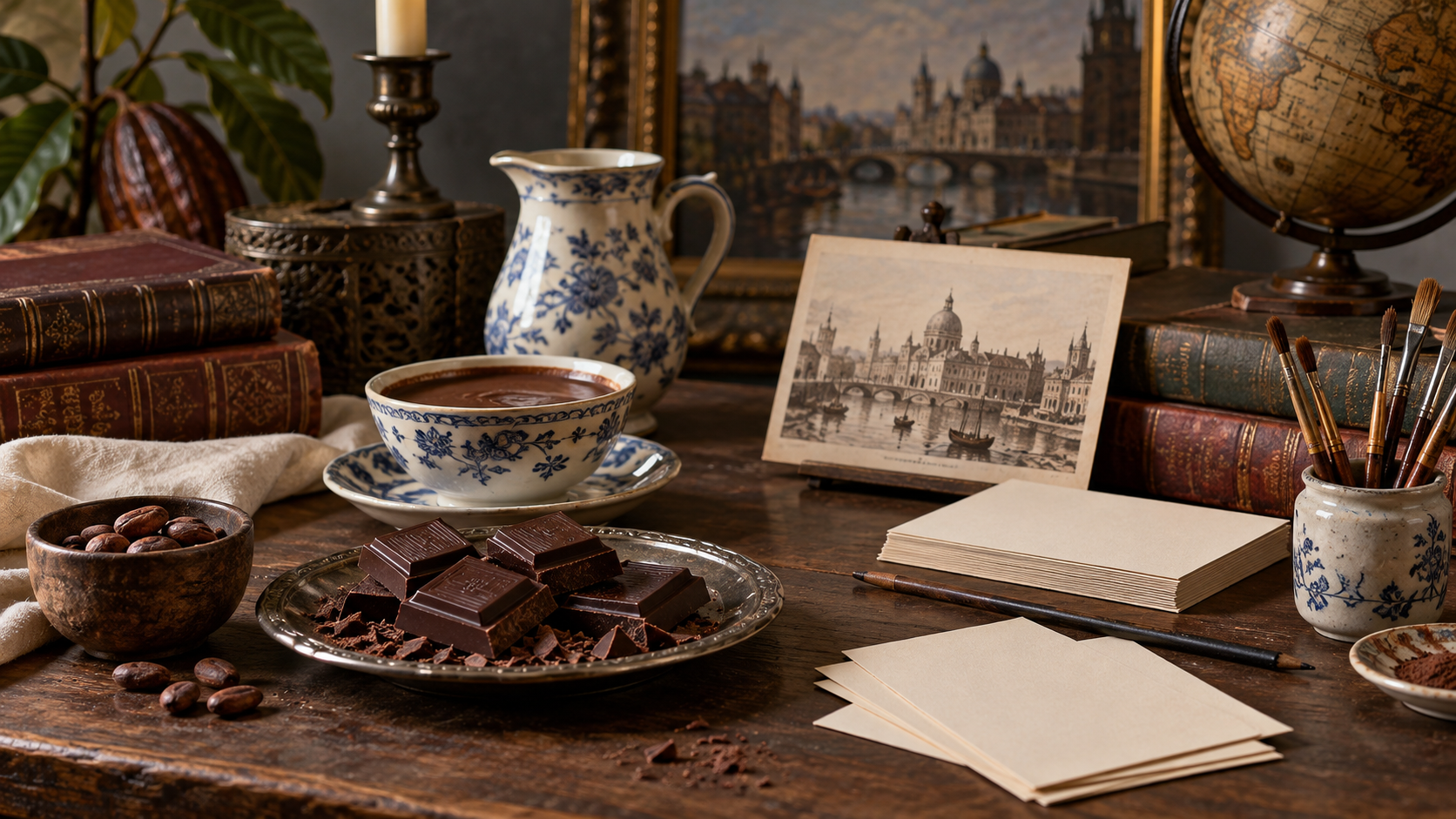
As drinking chocolate spread among wealthy Europeans, cups, serving pots and related objects appeared in portraits and domestic scenes. Their presence could signal refinement, trade or status.
Still lifes displayed trade and status
Still-life paintings often arranged imported foods and luxury objects to display abundance and skill. Cacao or chocolate must be identified carefully rather than assumed from every brown drink.

Novelists and diarists have used chocolate to mark hospitality, appetite, fashion, comfort or excess. A food reference gains meaning from its scene and period.
Advertising borrowed artistic styles
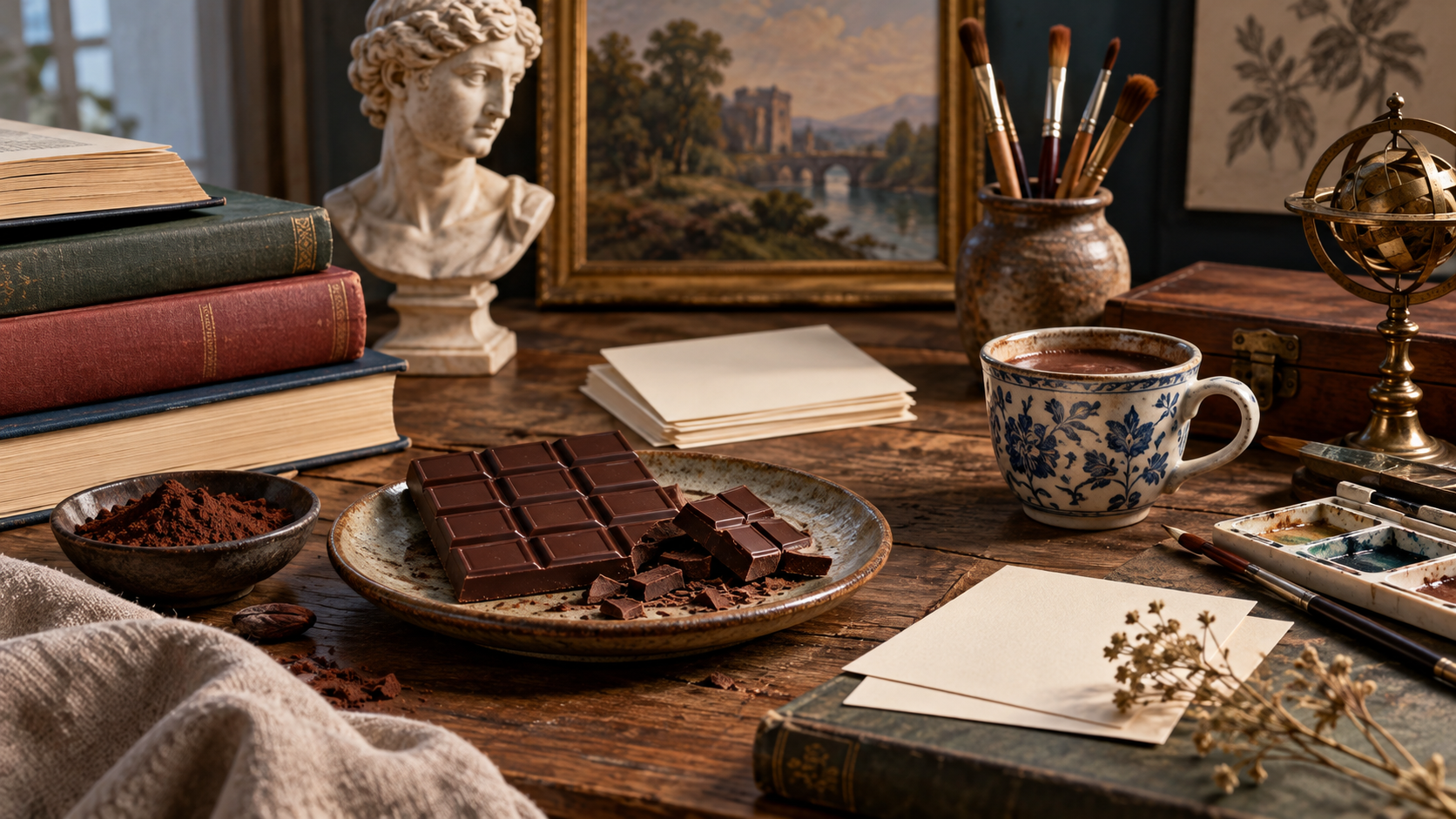
Commercial posters and wrappers adapted illustration, Art Nouveau, modernism and other styles. Advertising helped shape the visual idea of chocolate as romance, childhood or reward.
Modern stories use many meanings
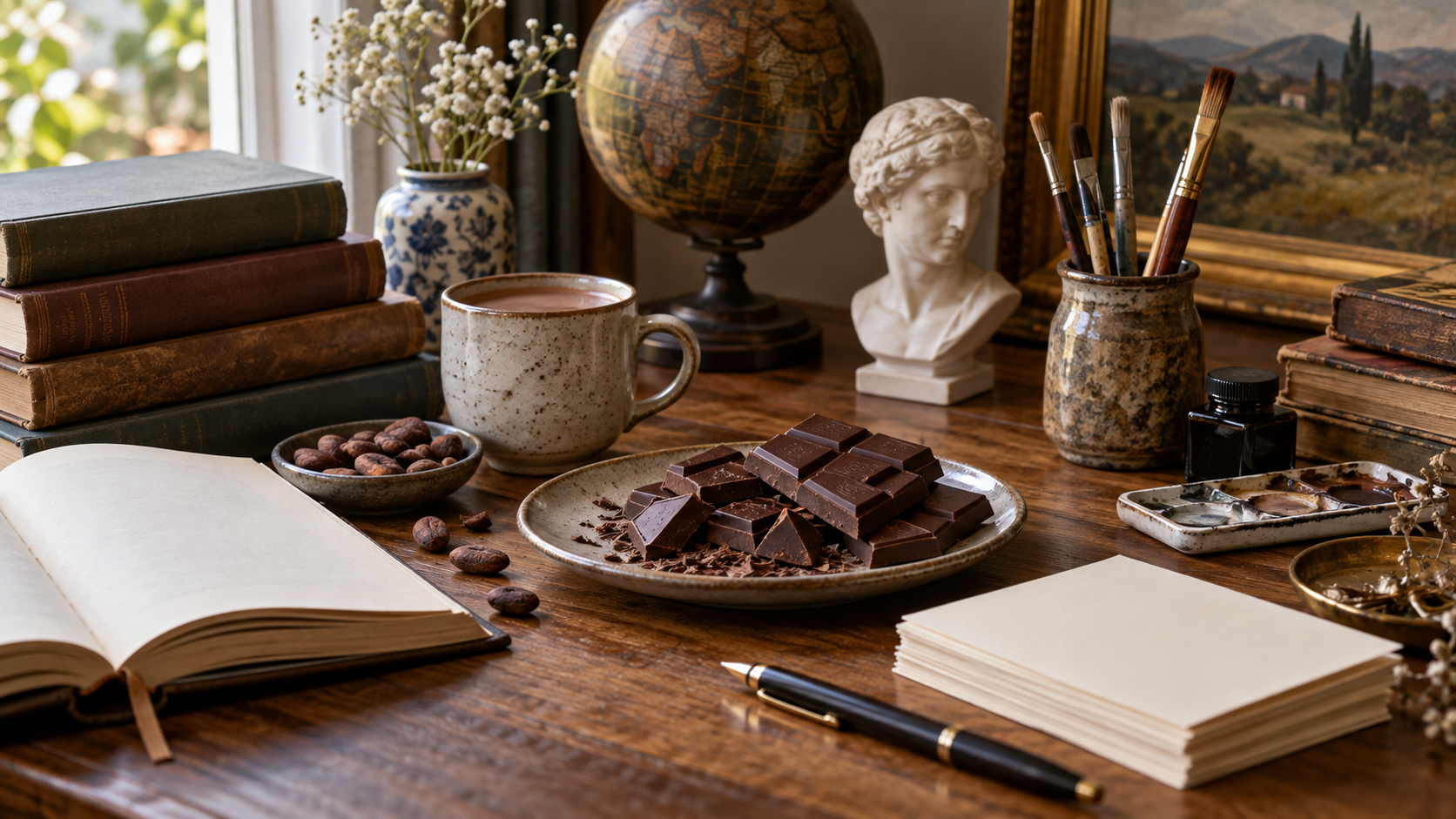
Contemporary films, novels and artworks use chocolate for memory, migration, labour, pleasure and identity. There is no single universal symbol.
Attribution needs evidence
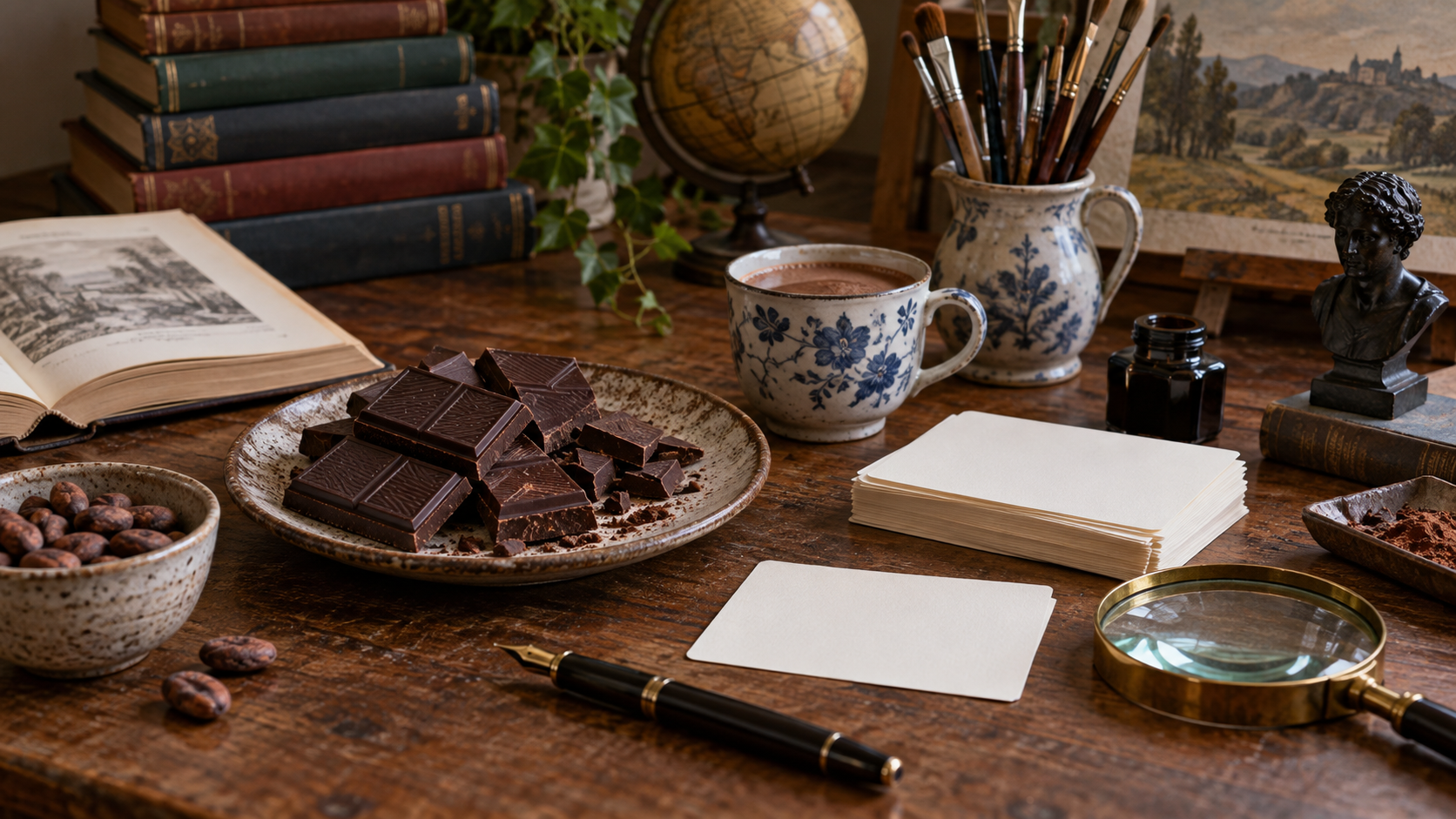
Online quotations and artwork captions are frequently misattributed. Check a reliable edition, museum catalogue or archive before repeating a claim about an artist or poet.
Interpret works in historical context
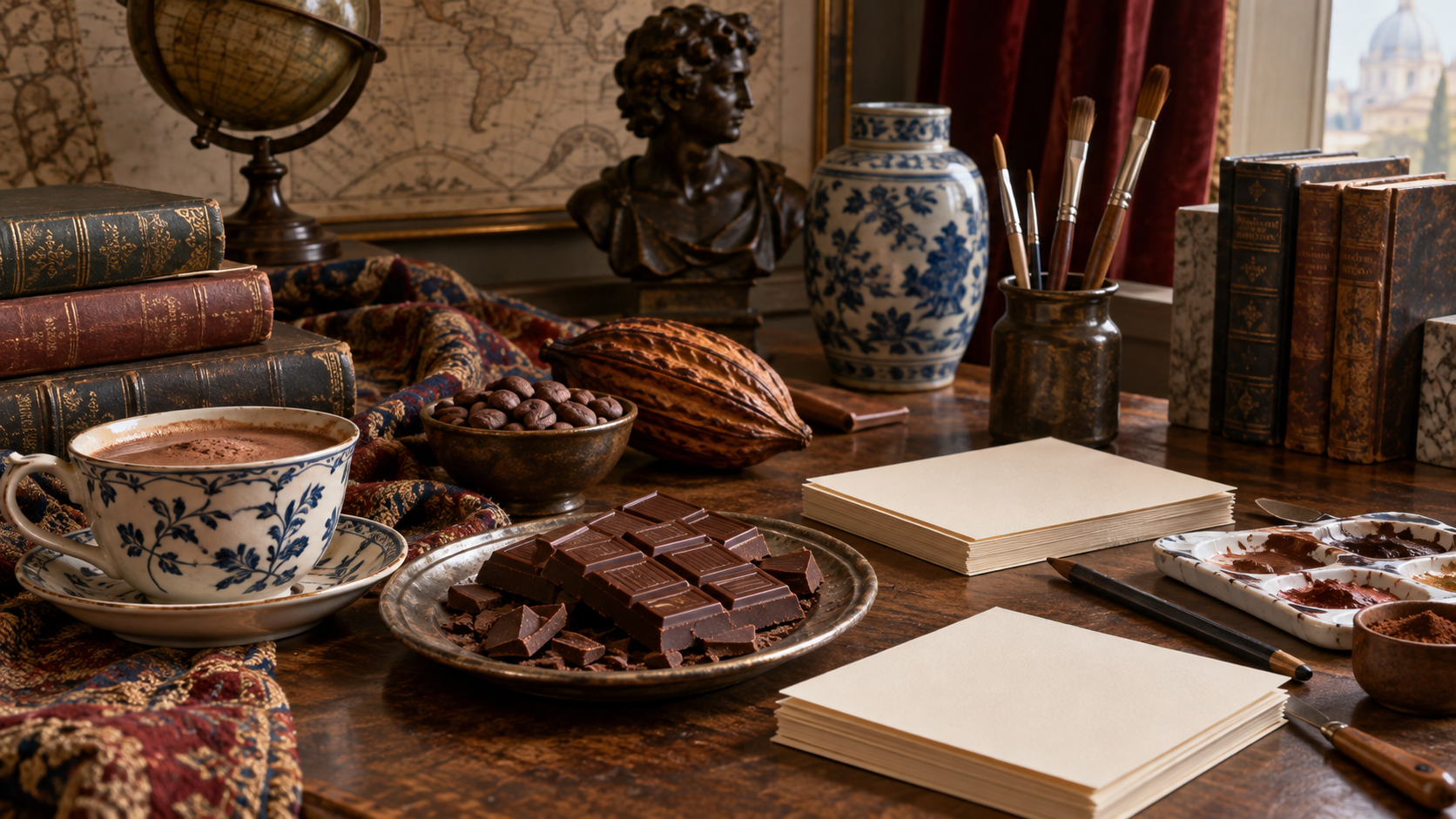
Some historical imagery exoticised cacao-producing regions while hiding colonial labour. Responsible interpretation discusses both visual appeal and the power relations behind it.
Frequently asked questions
Are all popular chocolate-history stories reliable?
No. Many repeat marketing legends, so check dates, sources and the difference between evidence and interpretation.
Did chocolate always mean the same thing?
No. Recipes, status and symbolism changed across communities, centuries and markets.
Can chocolate treat low mood or improve desire?
Ordinary chocolate is not a treatment. Enjoyment and expectation may affect an experience, but medical concerns need qualified advice.
Why does packaging matter?
It protects chocolate and communicates ingredients, allergens, dates, origin and brand information.
How should international rankings be compared?
Use the same year, category, unit and method, and distinguish total volume from per-person figures.
How should historical images and quotations be used?
Verify them through museums, archives or reliable editions and explain their period and context.